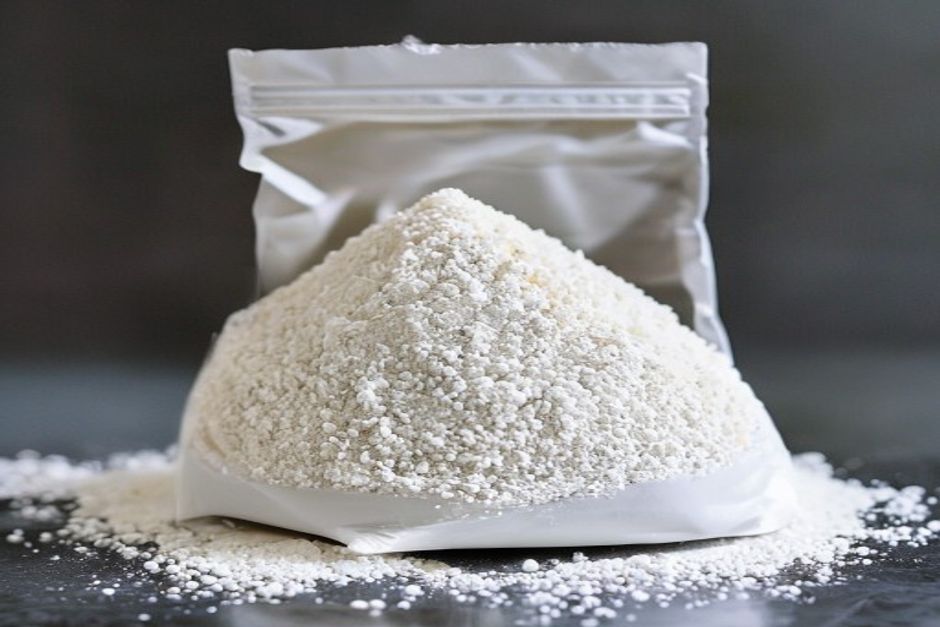
Why alumina ceramic balls are the standard heat storage media for RTO
AluminaWorld is a Zibo, Shandong-based Chinese manufacturer of high-alumina ceramic balls supplied to VOC (volatile organic compound) abatement systems in chemical, pharmaceutical, coating, printing, and electronics industries. A Regenerative Thermal Oxidizer (RTO) destroys VOC emissions by combusting them at 760-850°C. To achieve 95-99% thermal efficiency, the RTO uses a packed bed of high-alumina ceramic balls that alternately absorbs heat from the outgoing exhaust gas and releases it to the incoming process gas. The ceramic balls act as a heat reservoir, reducing the auxiliary fuel (typically natural gas) needed to maintain combustion temperature by 70-90%.
Alumina ceramic balls are the preferred heat storage media for RTO because they combine four critical properties: high heat capacity (0.8-1.0 kJ/kg·K at 800°C), high service temperature (up to 1200°C for 95% Al₂O₃ grade), excellent thermal shock resistance (50+ rapid cold-hot cycles without cracking), and chemical inertness to most VOC streams. Lower-cost alternatives like silica sand or fused quartz have been used historically but are now restricted in most markets due to thermal shock failure modes and dust generation.
Alumina content selection: 70% vs 85% vs 92% vs 95%
Alumina content determines the maximum service temperature, thermal shock resistance, and cost. AluminaWorld's four stock grades cover the main RTO/RCO operating envelopes.
| Property | ACB-70 | ACB-85 | ACB-92 | ACB-95 |
|---|---|---|---|---|
| Al₂O₃ content | ≥ 70% | ≥ 85% | ≥ 92% | ≥ 95% |
| SiO₂ content | ≤ 25% | ≤ 12% | ≤ 5% | ≤ 3% |
| Max service temperature | 1000°C | 1100°C | 1200°C | 1300°C |
| Recommended use | RCO only | RCO / low-temp RTO | Standard RTO | High-temp / corrosive RTO |
| Bulk density | 2.6-2.7 g/cm³ | 2.8-2.9 g/cm³ | 3.1-3.3 g/cm³ | 3.3-3.5 g/cm³ |
| Crushing strength (Φ20mm) | ≥ 5 kN/piece | ≥ 8 kN/piece | ≥ 12 kN/piece | ≥ 15 kN/piece |
| Thermal shock cycles (1100°C ↔ room temp water) | ≥ 10 | ≥ 20 | ≥ 30 | ≥ 50 |
| Relative cost (FOB Qingdao) | 1.0x | 1.3x | 1.6x | 1.9x |
For most standard RTO applications operating at 760-820°C, the ACB-92 grade is the cost-effective sweet spot. The 92% Al₂O₃ content provides sufficient thermal shock resistance for the 3-minute cold-hot cycling typical of two-bed RTO designs, while avoiding the cost premium of 95% grade. Customers with frequent cold-hot cycles (under 2 minutes) or peak temperatures above 850°C should select ACB-95. RCO systems operating at 300-450°C can use the lower-cost ACB-70 or ACB-85 grades.
Particle size selection: 6mm to 25mm
Ceramic ball size affects both heat transfer performance and pressure drop. Smaller balls (6-10mm) provide higher surface area per unit volume, increasing heat transfer coefficient by 30-50% compared to 20-25mm balls. This allows shorter bed depth (1.0-1.5 m vs 2.0-2.5 m) for the same thermal efficiency, reducing RTO chamber size and capital cost. The trade-off is higher pressure drop — typically 800-1500 Pa/m for 10mm balls versus 300-600 Pa/m for 20mm balls, which increases fan power consumption.
AluminaWorld's standard stock sizes cover the major RTO designs in the market. The most common sizes are 10mm, 13mm, 16mm, and 20mm. For high-flow systems (> 50,000 Nm³/h), 25mm balls are used to minimize pressure drop. For compact RTOs with 1-meter bed depth, 6-8mm balls are preferred. Mixed-size beds (e.g., 20mm bottom + 10mm top) are occasionally used to optimize both bed support and heat transfer.
Thermal shock resistance: the critical service property
Thermal shock failure is the most common degradation mode for RTO ceramic balls. It occurs when a cold slug of process gas (typically at 30-100°C, e.g., during system startup or process upset) contacts hot ceramic balls (700-850°C) and causes a tensile stress wave that exceeds the material's fracture strength. The result is surface cracking, spalling, and eventually full ball fracture that generates dust and bed compaction.
AluminaWorld's ACB-95 grade passes 50+ thermal shock cycles using the standard test method (1100°C → room temperature water quench), which simulates the worst-case scenario in real RTO service. ACB-92 passes 30+ cycles, which is sufficient for typical two-bed RTOs with 3-minute cycles. ACB-85 and ACB-70 are rated for 20 and 10 cycles respectively and should be used only in RCO systems with controlled warm-up ramps or low-temperature RTOs.
RTO vs RCO operating conditions and material selection
An RTO operates without catalyst at 760-850°C, using the high temperature itself to break down VOC molecules into CO₂ and H₂O. The ceramic balls see severe thermal cycling (200-850°C swings, 60-180 second cycles) and require 92-95% Al₂O₃ for adequate life. An RCO operates at 300-450°C with a precious metal catalyst (typically platinum or palladium on a ceramic honeycomb) that promotes VOC oxidation at much lower temperatures. The RCO ceramic balls see milder thermal stress (50-150°C swings) and can use 70-85% Al₂O₃ grades.
For RCO systems, additional considerations include catalyst compatibility — the ceramic balls must not contain high levels of catalyst poisons (sulfur, phosphorus, halogens, heavy metals). AluminaWorld's ACB-70 and ACB-85 grades have controlled impurity levels (S < 50 ppm, P < 30 ppm, Cl < 100 ppm) verified by ICP-OES analysis on every production batch.
Bed design: depth, cross-section, and loading quantity
RTO bed design balances three parameters: thermal efficiency (target 95-99%), pressure drop (target < 3000 Pa total), and capital cost. Two-bed RTOs typically use 1.5-2.0 m bed depth, three-bed RTOs use 1.0-1.5 m. Cross-sectional area is determined by exhaust flow rate and superficial gas velocity — typically 0.8-1.5 m/s for 20mm balls to avoid fluidization. Total ceramic ball loading per RTO is typically 50-200 metric tons, depending on chamber size and bed depth.
AluminaWorld ships ceramic balls in 1-ton woven polypropylene super sacks with PE inner liners for moisture protection. For very large RTOs (> 200 MT), bulk rail or truck delivery is available from Zibo to major industrial sites in China. For international shipments (25+ countries), 1 MT super sacks are loaded into 20' or 40' containers (20 MT per 20' FCL, 26 MT per 40' FCL). Lead time is 10-20 days for stock sizes and 25-40 days for custom grades.
AluminaWorld's RTO ceramic ball supply
AluminaWorld operates four ceramic ball production lines in Zibo, Shandong, with annual capacity 18,000 metric tons. The company has supplied RTO/RCO ceramic balls to chemical, pharmaceutical, coating, and electronics customers in 25+ countries since 2015, with ISO 9001:2015 certification and REACH registration. Standard MOQ is 5 metric tons for stock grades (ACB-92 and ACB-95, 10-20mm sizes), with lead time 10-20 days. Sample orders of 50-200 kg ship within 5 days for customer evaluation.
For technical specifications, COA, or a quote for RTO/RCO-grade ceramic balls, contact AluminaWorld via WhatsApp at +86 133 2522 2240 or by email at sales@aluminaworld.com.
Frequently Asked Questions
What alumina content is best for RTO heat storage media?
92-95% Al₂O₃ for RTO (760-850°C), 70-85% Al₂O₃ for RCO (300-450°C). Higher Al₂O₃ means better thermal shock resistance and longer life.
What size ceramic ball is used in RTO systems?
10-25mm standard; 6-10mm for compact RTOs (higher heat transfer, higher ΔP); 25-50mm for high-flow systems (lower ΔP). Most common: 10/13/16/20mm.
How long do ceramic balls last in RTO service?
AluminaWorld 92-95% Al₂O₃ balls last 5-10 years depending on cycling, peak temp, and VOC chemistry. Annual inspection and 5% sieve analysis recommended.
What is the typical RTO bed depth?
1.5-2.0 m for 2-bed RTO (95-97% efficiency), 1.0-1.5 m for 3-bed (98-99% efficiency). Total ball loading per RTO: 50-200 MT depending on chamber size.
What is the difference between RTO and RCO ceramic ball requirements?
RTO (760-850°C, no catalyst) needs 92-95% Al₂O₃ for thermal shock. RCO (300-450°C, with catalyst) can use 70-85% Al₂O₃; must be catalyst-compatible (low S, P, Cl).
What is the MOQ and lead time for RTO ceramic balls?
MOQ 5 MT for stock 92-95% grades. Lead time 10-20 days. Samples 50-200 kg ship in 5 days. FOB Qingdao price USD 800-1500/MT depending on grade.
Get a Quote for RTO/RCO Ceramic Balls
AluminaWorld supplies high-alumina ceramic balls in 6-25mm sizes for VOC abatement systems. ISO 9001 certified. 25+ countries.