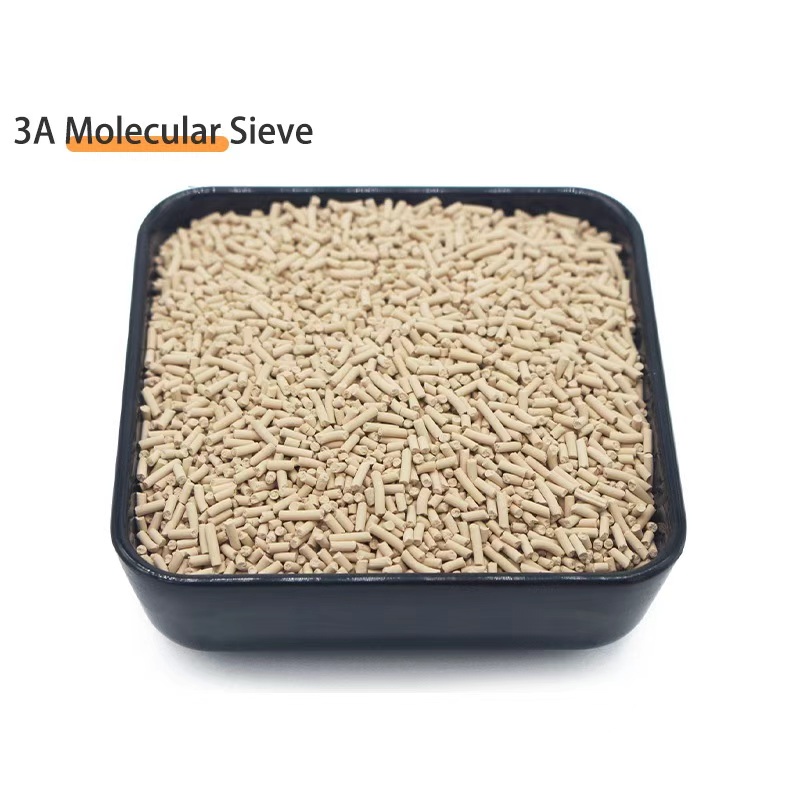
What is Molecular Sieve?
Molecular sieves are synthetic crystalline aluminosilicates (zeolites) with precisely uniform pore apertures ranging from 3 to 10 angstroms. Unlike silica gel or activated alumina, which have a distribution of pore sizes, molecular sieves have a fixed pore diameter that selectively adsorbs molecules smaller than the pore size while excluding larger ones. This makes them the most precise adsorbents available for industrial gas and liquid drying.
The four standard commercial grades (3A, 4A, 5A, 13X) differ in pore size and cation form, each optimized for specific applications. Aluminaworld manufactures all four grades in our ISO 9001 certified facility, with strict quality control on pore size distribution, bulk density, crush strength, and water adsorption capacity.
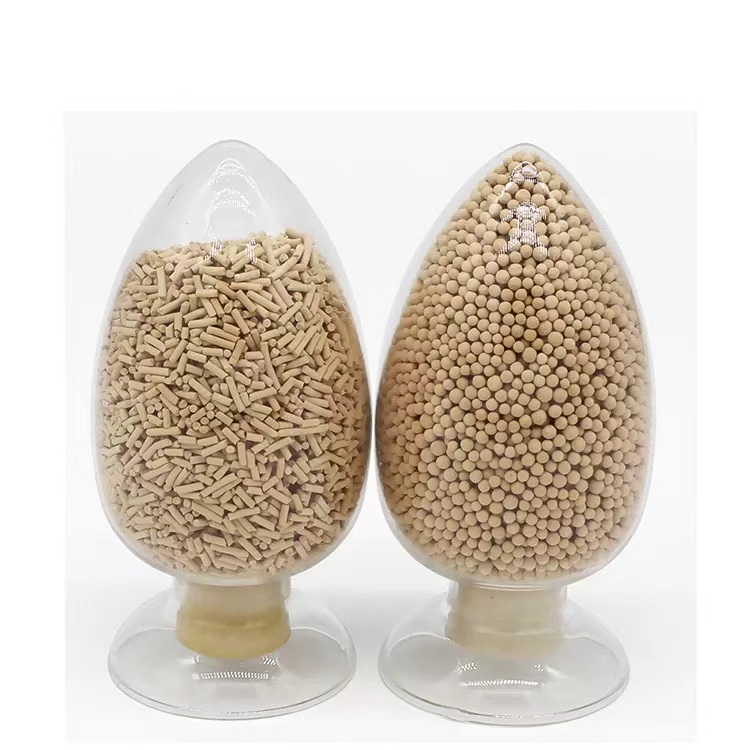
Technical Specifications
Four Standard Grades Comparison
| Parameter | 3A | 4A | 5A | 13X |
|---|---|---|---|---|
| Pore Size (Å) | 3 | 4 | 5 | 10 |
| Cation Form | Potassium (K⁺) | Sodium (Na⁺) | Calcium (Ca²⁺) | Sodium (Na⁺) |
| Bulk Density (g/ml) | ≥0.65 | ≥0.65 | ≥0.65 | ≥0.62 |
| Crush Strength (N/颗) | ≥30 | ≥30 | ≥30 | ≥30 |
| Water Adsorption (%) | ≥20 | ≥22 | ≥22 | ≥28 |
| Wear Rate (wt%) | ≤0.2 | ≤0.2 | ≤0.2 | ≤0.2 |
| Particle Size (mm) | 1.6-2.5 / 3-5 / Custom 4-6 / 5-8 | |||
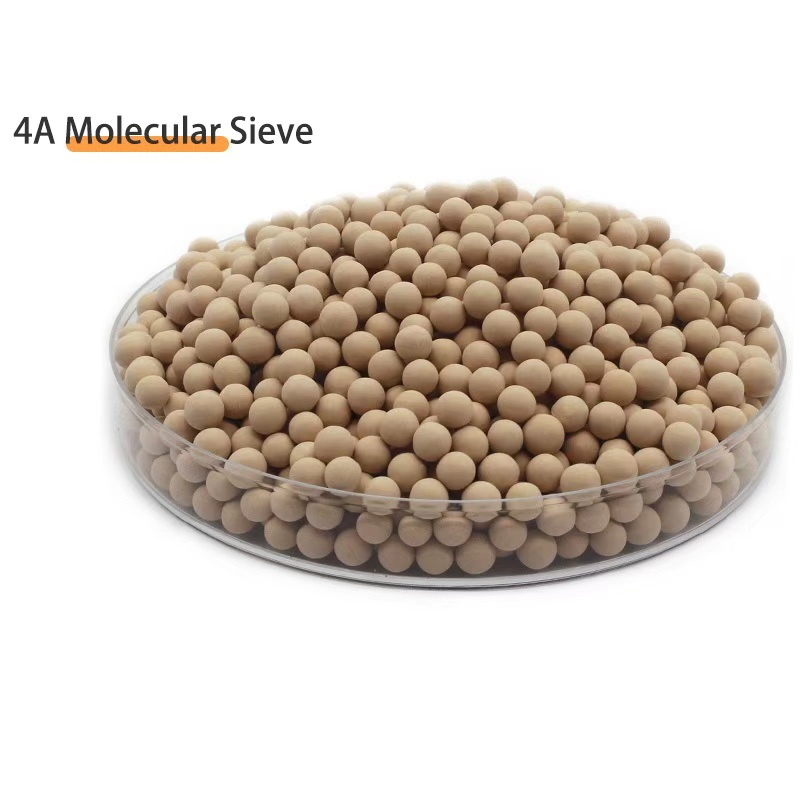
| Color | Beige / Off-white spheres | |||
Standard Particle Sizes Available
- 1.6-2.5mm beads — Standard for most industrial dryers and PSA units
- 3-5mm beads — Larger beds, lower pressure drop, longer contact time
- 4-6mm beads — Bulk industrial drying towers
- 5-8mm pellets — Extra-large beds, deep drying
- Pellets 1.5mm or 3mm — Specialty extruded form for high-pressure applications
Four Grades & Their Applications
3A Molecular Sieve — Drying of Polar Liquids & Unsaturated Hydrocarbons
3A sieves have 3 angstrom pores produced by ion-exchanging 4A with potassium. They adsorb water but exclude molecules larger than 3Å (ethanol, ethylene, propylene, etc.), making them ideal for drying polar and unsaturated compounds without product loss.
- Cracked gas drying (C2, C3, C4 olefin/paraffin streams in ethylene plants)
- Ethanol dehydration to absolute grade (200 proof, <0.1% water)
- Polyolefin production — water removal from ethylene/propylene feed (<1 ppm)
- Refrigerant drying (R12, R22, R134a, R410a)
- Natural gas deep dehydration at low to medium pressure
- Insulating glass desiccant spacer
4A Molecular Sieve — Universal Industrial Desiccant
4A is the most widely used grade with 4Å pores that adsorb water, CO₂, NH₃, H₂S, and small polar molecules. It is the workhorse desiccant for natural gas, air separation, compressed air, and general industrial gas drying.
- Natural gas dehydration to pipeline spec (<1 lb water per MMSCF)
- PSA oxygen/nitrogen generation — pre-drying feed air
- Compressed air drying to -40°C pressure dew point
- Air conditioning refrigerant desiccant
- Pharmaceutical packaging as primary desiccant
- Polyurethane foam moisture scavenger
5A Molecular Sieve — n-/iso-Paraffin Separation
5A sieves have 5Å pores produced by ion-exchanging 4A with calcium. They adsorb normal paraffins (n-alkanes) while excluding iso-paraffins and aromatics, making them the standard for hydrocarbon separation in refining.
- n-/iso-paraffin separation in refinery streams (C10-C14 normal/iso alkane separation)
- Hydrogen purification via Pressure Swing Adsorption (PSA)
- Oxygen production from air (alternative to 13X for high-purity O₂)
- Petrochemical feedstock purification
13X Molecular Sieve — Bulk CO₂ & H₂S Removal
13X has the largest pore size (10Å) and is used for bulk removal of water, CO₂, H₂S, and mercaptans from gas streams. Standard for air separation units and natural gas sweetening.
- Air separation units (ASU) — front-end purification of feed air before cryogenic distillation
- Natural gas sweetening — CO₂ and H₂S removal to pipeline spec
- LPG purification — removal of sulfur compounds and moisture
- Catalyst bed protection in downstream processes
- Medical oxygen concentrators (PSA)
Comparison vs Other Desiccants
| Property | Molecular Sieve | Silica Gel | Activated Alumina |
|---|---|---|---|
| Pore Type | Uniform (3-10Å) | Distribution (20-30Å avg) | Distribution (varies) |
| Dew Point Achievable | -90°C to -100°C | -40°C | -50°C |
| Water Capacity (wt%) | 20-28% | 35-40% | 25-30% |
| Regeneration Temp | 200-300°C | 120-150°C | 180-250°C |
| Crush Strength | High (≥30 N) | Low (granules break) | High (≥130 N) |
| Best For | Deep drying, selective | Bulk drying, food-safe | Air drying, defluoridation |
| Cost (relative) | Medium-High | Low | Low-Medium |
Frequently Asked Questions
Q: What is the difference between molecular sieve 3A, 4A, 5A, and 13X?
A: The four grades differ in pore size and cation form. 3A (3Å, potassium) is used for drying unsaturated hydrocarbons like ethylene and ethanol. 4A (4Å, sodium) is the universal desiccant for natural gas and compressed air. 5A (5Å, calcium) separates normal paraffins from iso-paraffins. 13X (10Å, sodium) removes bulk CO₂ and H₂S in air separation units.
Q: How long does molecular sieve last before regeneration?
A: Typical cycle life is 2-4 years depending on feed gas moisture loading and operating temperature. Regeneration is performed by heating to 200-300°C under nitrogen purge (TSA — Temperature Swing Adsorption) or by pressure reduction (PSA — Pressure Swing Adsorption). After 50-100 regeneration cycles, working capacity may decline 10-20%, indicating time for replacement.
Q: What is the MOQ and lead time?
A: MOQ is 500 kg for stock specifications. Lead time is 7-15 days for stock grades (3A, 4A standard sizes 1.6-2.5mm and 3-5mm), and 15-25 days for custom pore sizes or particle sizes. Free 1-2 kg samples ship within 3 days via DHL/FedEx.
Q: Can molecular sieve be regenerated?
A: Yes — this is one of its key advantages. Two methods: (1) PSA (Pressure Swing Adsorption) reduces pressure to near-atmospheric — fast cycle (minutes), used in oxygen concentrators; (2) TSA (Temperature Swing Adsorption) heats to 200-300°C with dry purge gas — slower (hours) but achieves deeper regeneration to ppm-level moisture. Industrial dryers often combine both.
Q: What is the shelf life and storage requirement?
A: Shelf life is 3+ years if stored in sealed original packaging in a dry location (<60% relative humidity). Once opened, the sieve begins adsorbing ambient moisture and must be used promptly or resealed under dry conditions. We recommend storing opened bags in airtight containers with desiccant.
Packaging & Delivery
- Standard: 25 kg kraft paper bags with PE inner liner (moisture-proof)
- Bulk: 500 kg / 1000 kg jumbo bags for full-container-load orders
- Sealed steel drums (200L) available for extreme moisture-sensitive applications
- Container loading: 20MT per 20'FCL with pallets, 24MT per 40'FCL bulk
- Lead time: 7-15 days for stock grades, 15-25 days for custom
- Documents: COA (Certificate of Analysis), MSDS, ISO 9001 certificate, commercial invoice, packing list, Bill of Lading
- Shipping terms: FOB Qingdao / CIF / CFR / DDP available
How to Order
Tell us your application, required pore size (3A / 4A / 5A / 13X), preferred particle size, monthly quantity, and delivery destination. Our engineers will recommend the right grade and provide a competitive quotation within 2 hours. Free 1-2 kg samples available for testing and qualification before bulk order.