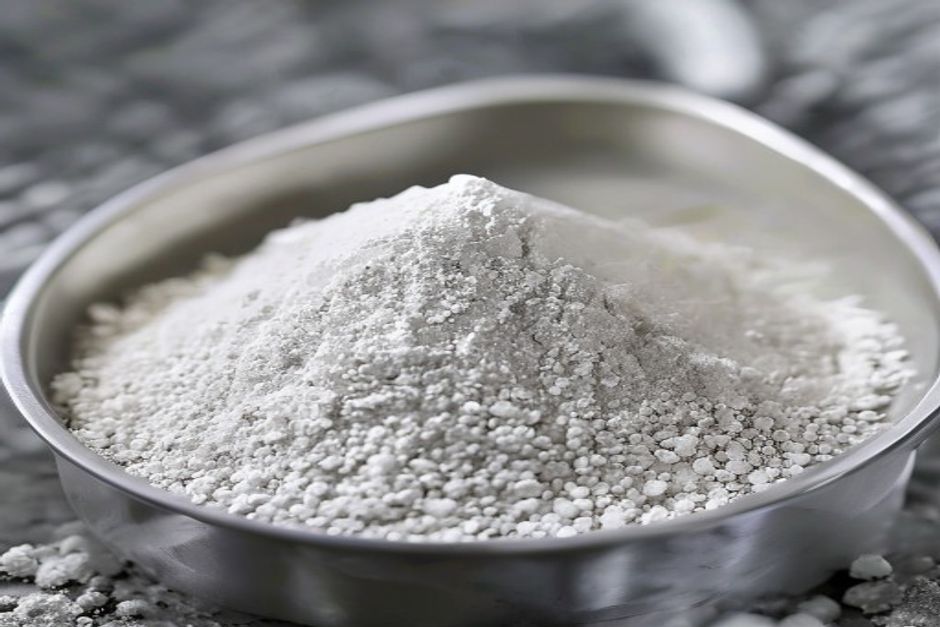
ATH as the dominant halogen-free flame retardant for EVA foam
AluminaWorld is a Zibo, Shandong-based Chinese manufacturer of aluminum hydroxide (ATH) supplied to EVA foam producers in 25+ countries. Ethylene-vinyl acetate (EVA) foam is a versatile closed-cell foam used in athletic shoe soles, yoga mats, exercise equipment padding, protective packaging, automotive interior trim, and construction underlay. EVA foam has excellent cushioning, flexibility, and chemical resistance, but burns readily with a limiting oxygen index (LOI) of only 17-19%.
ATH (aluminum hydroxide) is the dominant halogen-free flame retardant for EVA foam, replacing the older brominated compounds (decaBDE, HBCD) restricted under RoHS, REACH, and various consumer product safety regulations. ATH works through endothermic decomposition that releases water and absorbs heat, simultaneously cooling the polymer and diluting combustible gases. For EVA foam applications, ATH at 60-65 phr loading achieves UL94 HF-1 rating (the standard for shoe soles and consumer foam products) with halogen-free compliance.
ATH loading: 60-65 phr for UL94 HF-1 in EVA foam
For UL94 HF-1 rating (horizontal burning, slow burning with self-extinguishing in 30-60 seconds after flame removal) in EVA foam, ATH loading of 60-65 phr is required. For UL94 HBF (horizontal burning, slow but no rating given), 45-55 phr is sufficient. For more demanding HF-2 or V-0 ratings (rare in foamed EVA), 70+ phr with synergist is needed.
Most commercial EVA shoe soles and yoga mats use HF-1 rating, achieved with 60-65 phr vinylsilane-treated ATH at D50 1.5-2.0 μm. The high loading level is necessary because the foamed structure increases the polymer's surface area exposed to flame, and the open/closed cell structure can allow oxygen infiltration that sustains combustion. The loading is approximately 20-30% higher than for solid EVA of the same thickness, because the foam has lower bulk density and less polymer mass to absorb the heat from ATH decomposition.
Effect on foam density and expansion ratio
ATH has a density of 2.4 g/cm³, significantly higher than EVA base resin density (0.93-0.95 g/cm³). At 60 phr loading, the ATH adds substantial mass without contributing to foam expansion, resulting in a denser foam. A typical formulation:
- Unfilled EVA foam: density 0.15-0.25 g/cm³, expansion ratio 4-6x
- EVA + 60 phr ATH foam: density 0.30-0.50 g/cm³, expansion ratio 1.5-3x (lower expansion due to ATH mass + ADC dilution by water vapor)
To compensate, the foaming conditions must be adjusted: higher azodicarbonamide (ADC) blowing agent concentration (8-15 phr vs 5-8 phr for unfilled EVA), or higher expansion ratio target. Some EVA foam producers use modified ADC with lower decomposition temperature (180-200°C vs 200-220°C standard) to avoid overlap with ATH decomposition. The end result is a foam that is heavier but with the required flame retardancy.
Particle size: 1.5-3.0 μm for EVA foam cell structure
For EVA foam, the optimal ATH particle size is 1.5-3.0 μm D50, with D90 below 12 μm. This range is critical for the foam cell structure:
- Below 1.0 μm: the very fine ATH has a high specific surface area that nucleates excessive cell formation during foaming, resulting in non-uniform cell structure (mixed large and small cells) and poor mechanical properties.
- Above 5.0 μm: the coarse ATH particles act as cell nucleators that can produce very large cells (over 2 mm diameter) and weak foam.
- 1.5-3.0 μm sweet spot: provides uniform cell nucleation (cell size 0.3-0.8 mm) and consistent mechanical properties.
AluminaWorld's ATH-EVA-2.0 grade (D50 2.0 μm, D90 8 μm) is the industry standard for EVA shoe sole and mat foam applications. For very thin foams (under 5 mm) or high-expansion foams, the slightly finer ATH-EVA-1.5 grade (D50 1.5 μm) provides better cell structure control.
Surface treatment: vinylsilane for EVA foam dispersion
Vinylsilane or stearic acid surface treatment of ATH is critical for EVA foam because the high loading (60-65 phr) makes any dispersion issue catastrophic for foam quality. Untreated ATH has poor compatibility with the EVA matrix, causing ATH agglomerates that act as failure points in the foam cell walls, leading to poor mechanical properties (tear strength, elongation, compression set). Treated ATH disperses uniformly, producing a homogeneous foam with consistent cell structure and mechanical properties.
The vinylsilane coating also reacts with the EVA during crosslinking (if peroxide crosslinking is used to enhance foam resilience and mechanical properties), providing covalent bonding that further enhances the mechanical retention. AluminaWorld's ATH-EVA-2.0VS grade includes 1.0 wt% vinylsilane coating standard. For EVA foam that uses radiation crosslinking (electron beam) instead of peroxide, the vinylsilane provides similar compatibility benefits through the silane-OH interaction with the EVA polar VA groups.
Blowing agent interaction with ATH
ATH has a complex interaction with the azodicarbonamide (ADC) blowing agent commonly used in EVA foam. The decomposition of ATH at 200-220°C releases water, which dilutes the nitrogen gas released by ADC at the same temperature. This can reduce the effective expansion ratio by 10-20% if the formulation is not adjusted.
The standard approach to compensate is to increase the ADC loading by 20-30% (e.g. 8 phr instead of 6 phr). Some EVA foam producers use modified ADC with lower decomposition temperature (180-200°C) to fire before the ATH decomposition, avoiding the dilution effect. Others use a combination of ADC and sodium bicarbonate blowing agent (decomposes at 150-180°C) to achieve the desired expansion at lower overall temperatures. The choice depends on the specific foam density target, the available process equipment, and the desired cell structure.
Common EVA foam applications and ATH loading
EVA foam with ATH flame retardant is used in a wide range of consumer and industrial products:
| Application | Density (g/cm³) | ATH Loading (phr) | FR Rating |
|---|---|---|---|
| Athletic shoe midsole | 0.20-0.30 | 55-60 | HF-1 |
| Yoga mat / exercise mat | 0.10-0.18 | 60-65 | HF-1 |
| Packaging foam insert | 0.08-0.15 | 55-60 | HBF |
| Construction underlay | 0.15-0.25 | 60-65 | HF-1 |
| Automotive interior trim | 0.20-0.35 | 60-70 | HF-1 + low smoke |
| Children's play mat | 0.10-0.15 | 60-65 | HF-1 (often V-0 spec) |
Children's play mats and certain consumer products have stricter requirements (sometimes V-0 equivalent, low smoke, no heavy metals) that require higher ATH loading or additional synergists. The automotive interior trim applications also require low smoke and low toxicity, which is achieved by combining ATH with zinc borate synergist at 3-5 phr.
AluminaWorld's EVA-grade ATH supply
AluminaWorld operates dedicated ATH production lines in Zibo, Shandong, with annual capacity 80,000 metric tons including 5,000 MT of surface-treated grades. The company supplies EVA-grade ATH to shoe sole, yoga mat, and packaging foam producers in 25+ countries. Standard MOQ for EVA-grade ATH (ATH-EVA-2.0VS with vinylsilane treatment) is 1 metric ton, with 10-20 day lead time. Untreated grade MOQ 500 kg, 7-15 day lead time. Custom surface treatments (specific silane, coating level 0.5-3%) or custom D50 (e.g. 1.5 μm for thin foams) require 25-40 days for first orders.
Sample orders of 5-25 kg ship within 3-5 days for foaming trials. Packaging is 25 kg PE-lined paper bags for manual handling or 500 kg super sacks for bulk delivery to foam extruder lines. FOB Qingdao price: USD 500-900/MT depending on grade and quantity. Each shipment includes COA documenting Al(OH)₃ content, particle size distribution, surface coating type and loading, moisture content, and impurity levels.
For technical specifications, COA, or a quote for EVA-grade ATH, contact AluminaWorld via WhatsApp at +86 133 2522 2240 or by email at sales@aluminaworld.com.
Frequently Asked Questions
What ATH loading for UL94 HF-1 in EVA foam?
60-65 phr for HF-1. 45-55 phr for HBF (no rating). 70+ phr for V-0. Industry standard 60-65 phr vinylsilane-treated at D50 1.5-2.0 μm.
How does ATH affect EVA foam density and expansion?
ATH (2.4 g/cm³) much denser than EVA (0.93 g/cm³). Foam 0.3-0.5 g/cm³ vs 0.15-0.25 g/cm³ unfilled. Expansion 1.5-3x vs 4-6x. Need 20-30% more ADC blowing agent.
Optimal particle size for EVA foam?
1.5-3.0 μm D50, D90 < 12 μm. Below 1.0 μm too many cells, above 5.0 μm too large cells. AluminaWorld ATH-EVA-2.0 (D50 2.0 μm) is industry standard.
Why surface-treated ATH for EVA foam?
Vinylsilane 1.0 wt%: prevents ATH agglomerates, ensures uniform cell structure, reacts with EVA during crosslinking. Without treatment, foam cell walls have failure points and weak mechanicals.
ATH and blowing agent interaction?
ATH decomposition water vapor dilutes ADC nitrogen gas. Reduce expansion 10-20% unless compensate: 8-15 phr ADC (vs 5-8 phr unfilled) or modified ADC (180-200°C decomp) or use NaHCO₃.
What is the MOQ and price?
Vinylsilane-treated MOQ 1 MT, 10-20 days. Untreated MOQ 500 kg, 7-15 days. Custom 25-40 days. Samples 5-25 kg in 3-5 days. FOB Qingdao USD 500-900/MT.
Get a Quote for EVA-Grade ATH
AluminaWorld supplies vinylsilane-treated ATH for halogen-free EVA shoe sole, yoga mat, and packaging foam. UL94 HF-1 achievable. ISO 9001 certified. 25+ countries.