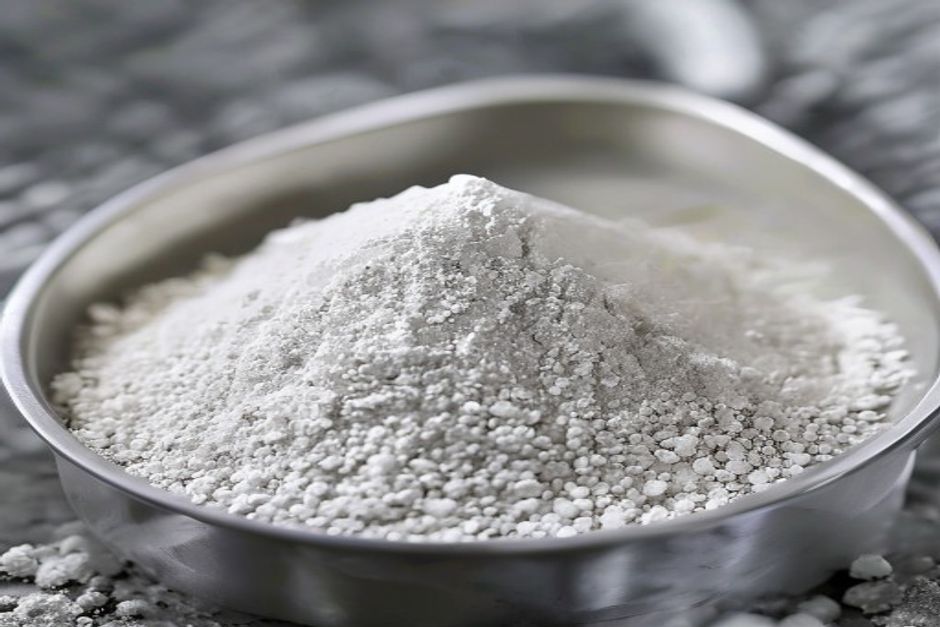
ATH as the dominant halogen-free flame retardant for TPU
AluminaWorld is a Zibo, Shandong-based Chinese manufacturer of aluminum hydroxide (ATH, Al(OH)₃) supplied to TPU compounders in 25+ countries. Thermoplastic polyurethane (TPU) is a versatile elastomer used in wire and cable jacketing, charging cables, phone cases, automotive interior parts, and industrial hoses. TPU has excellent mechanical properties (high tensile strength 30-60 MPa, elongation 400-700%, abrasion resistance) but burns readily, with limiting oxygen index (LOI) of only 18-22%. For UL94 V-0 rating (required for most consumer electronics, EV, and industrial cable applications), TPU must be compounded with flame retardants.
ATH (aluminum hydroxide) is the dominant halogen-free flame retardant for TPU, replacing the older brominated and chlorinated flame retardants (decaBDE, TBBPA, SCCPs) that have been restricted under RoHS, REACH, and various consumer product safety regulations. ATH works through endothermic decomposition that releases water and absorbs heat, simultaneously cooling the polymer and diluting the combustible gas mixture. For TPU processing at 180-200°C, ATH is ideal because its decomposition temperature (200-220°C) is just above the processing window, providing flame retardancy without premature degradation during compounding.
ATH loading level: 50-65 phr for UL94 V-0 in TPU
The ATH loading level required for UL94 V-0 rating in TPU depends on the test specimen thickness and the specific TPU grade. The table below summarizes typical loading levels for the three most common test conditions.
| TPU Application | Test Thickness | ATH Loading (phr) | UL94 Rating Achievable |
|---|---|---|---|
| Charging cable jacket | 0.6-0.8 mm | 60-65 | V-0 |
| Wire insulation | 1.0-1.6 mm | 55-60 | V-0 |
| Industrial cable jacket | 1.6-3.0 mm | 50-55 | V-0 |
| Phone case / consumer | 1.0-1.5 mm | 55-60 | V-0 (with synergist) |
| Automotive interior | 1.0-2.0 mm | 55-60 | V-0 + low smoke |
Below 50 phr loading, the ATH concentration is insufficient to absorb enough heat and produce enough water vapor to prevent sustained combustion. The TPU typically achieves V-2 rating (self-extinguishing but allows flaming drips). For V-0 rating, the LOI must exceed 28%, which requires the higher loading levels shown. The mechanical property trade-off is significant: 60 phr ATH reduces tensile strength by 30-50% and elongation at break by 40-60% compared to unfilled TPU, requiring careful compound design and surface treatment of the ATH.
Surface-treated ATH for better TPU dispersion and mechanicals
Untreated ATH has a hydrophilic surface (high surface energy, polar Al-OH groups) that is poorly compatible with the relatively hydrophobic TPU matrix. The result is poor ATH dispersion, high compound viscosity, and severe reduction in mechanical properties at the loading levels required for V-0 rating. Surface treatment of ATH with a hydrophobic coating (vinylsilane, methacrylsilane, stearic acid) transforms the ATH surface to be more organophilic, improving compatibility with TPU.
AluminaWorld's ATH-TPU-2.0 grade is supplied with vinylsilane surface treatment at 0.8-1.2 wt% coating level. The vinylsilane group can also react with the TPU matrix during processing (especially in polyester-type TPU), providing covalent bonding that further improves mechanical retention. Compared to untreated ATH at 60 phr in TPU, vinylsilane-treated ATH preserves 70-80% of unfilled tensile strength (vs 50-60% for untreated) and 60-70% of elongation at break (vs 40-50% for untreated). The compound viscosity is also 20-30% lower, enabling higher loading or better processability.
ATH vs MDH in TPU: when to choose each
Magnesium hydroxide (MDH) is a higher-temperature alternative to ATH, with decomposition at 300-330°C vs 200-220°C for ATH. MDH also has higher endothermic heat absorption (1.45 kJ/g vs 1.17 kJ/g), giving better flame retardancy per phr. However, MDH is not suitable for TPU because the TPU processing temperature (180-200°C) is below the MDH decomposition temperature, so MDH acts as a passive filler rather than a flame retardant. The high MDH loading required for V-0 (60-70 phr) also drastically increases TPU compound viscosity, making extrusion difficult.
ATH is the clear choice for TPU because its decomposition temperature is just above the processing window. For higher-temperature polymers that process above 250°C (polyamide PA66, polypropylene PP, polybutylene terephthalate PBT), MDH is preferred because it survives the processing step and decomposes in the flame zone. For mixed polymer systems or applications that require both low smoke and high flame retardancy, a 50/50 ATH/MDH blend can be used to balance processing and performance.
Particle size selection: 1-3 μm D50
The optimal ATH particle size for TPU is 1-3 μm D50, with D90 below 10 μm. This range provides a good balance of flame retardancy, processability, and mechanical properties. Below 1 μm, the very fine ATH has a high specific surface area (5-10 m²/g) that dramatically increases compound viscosity, limiting the practical loading to 40-50 phr before extrusion becomes impossible. The very fine ATH also absorbs more processing stabilizers and antioxidants, reducing the long-term thermal stability of the TPU compound.
Above 5 μm, the larger ATH particles act as stress concentrators in the TPU matrix, reducing tensile strength and elongation at break. They also produce a rougher surface on the extruded cable jacket, which can be a quality issue for consumer-facing products. AluminaWorld's ATH-TPU-2.0 grade (D50 2.0 μm, D90 8 μm) is the industry standard for TPU wire and cable applications. For thin-wall applications (< 0.8 mm), the slightly finer ATH-TPU-1.5 grade (D50 1.5 μm) provides better surface finish.
Synergists for reduced ATH loading
Several synergists can boost the flame retardant efficiency of ATH in TPU, allowing lower ATH loading for the same V-0 rating. The most common synergists are zinc borate (2-5 phr), ammonium polyphosphate (5-10 phr), and melamine cyanurate (5-10 phr). These synergists promote char formation in the TPU, which combines with the alumina residue from ATH decomposition to form a more effective ceramic protective layer. The total flame retardant loading (ATH + synergist) can be reduced by 15-25% compared to ATH alone, with corresponding improvement in mechanical properties.
Zinc borate is the most common synergist in TPU/ATH compounds. At 3-5 phr loading, it reduces the ATH requirement from 60 phr to 50-55 phr for V-0 rating. The zinc borate also suppresses smoke generation during combustion, which is important for enclosed-space applications (rail car interiors, shipboard cable, EV battery cables). AluminaWorld does not supply zinc borate but can recommend Chinese suppliers and provide formulation guidance for combined ATH + synergist systems.
AluminaWorld's TPU-grade ATH supply
AluminaWorld operates dedicated ATH production lines in Zibo, Shandong, with annual capacity 80,000 metric tons including 5,000 MT of surface-treated grades. The company supplies ATH to TPU compounders and masterbatch producers in 25+ countries. Standard MOQ for TPU-grade ATH (ATH-TPU-2.0, vinylsilane-treated) is 1 metric ton, with 10-20 day lead time. Untreated grade MOQ 500 kg, 7-15 day lead time. Custom surface treatments (specific silane, coating level 0.5-3%) require 25-40 days for first orders.
Each shipment includes a Certificate of Analysis documenting Al(OH)₃ content, particle size distribution (D10/D50/D90), surface coating type and loading, moisture content, and impurity levels. AluminaWorld's ATH is REACH-registered for EU market access and complies with FDA 21 CFR 175.300 for indirect food contact applications (relevant for food processing equipment cable).
For technical specifications, COA, or a quote for TPU-grade ATH, contact AluminaWorld via WhatsApp at +86 133 2522 2240 or by email at sales@aluminaworld.com.
Frequently Asked Questions
What ATH loading is needed for UL94 V-0 in TPU?
55-65 phr (sole FR). 60-65 phr for 0.6-0.8mm cable jacket. 50-55 phr for 1.6-3.0mm industrial jacket. Below 50 phr = V-2 only.
Why surface-treated ATH for TPU?
Vinylsilane coating: better dispersion, 20-30% lower viscosity, 70-80% tensile retention (vs 50-60% untreated). Coating level 0.8-1.2 wt% standard.
ATH vs MDH in TPU?
ATH (200-220°C decomp) fits TPU (180-200°C processing). MDH (300-330°C decomp) too high for TPU, acts as filler only. Use ATH for TPU, MDH for PA66/PP/PBT.
What particle size is best for TPU?
1-3 μm D50, D90 < 10 μm. Below 1 μm: too high viscosity. Above 5 μm: stress concentrator, rough surface. AluminaWorld ATH-TPU-2.0 is industry standard (D50 2.0 μm).
What synergists boost ATH in TPU?
Zinc borate 3-5 phr (most common), ammonium polyphosphate 5-10 phr, melamine cyanurate 5-10 phr. Total FR loading reduced 15-25%.
What is the MOQ and lead time?
Surface-treated MOQ 1 MT, 10-20 days. Untreated MOQ 500 kg, 7-15 days. Custom silane 25-40 days. Samples 5-25 kg in 3-5 days.
Get a Quote for TPU-Grade ATH
AluminaWorld supplies vinylsilane-treated ATH for halogen-free TPU cable. UL94 V-0 achievable at 55-65 phr. ISO 9001. 25+ countries.