ATH for Solid Surface Countertops: Whiteness vs Particle Size Engineering
If you cast solid surface countertops, you already know the resin is the easy part. The filler - aluminum hydroxide (ATH) - is the part that decides whether the slab is brilliant or muddy, whether the colour is stable or drifts, whether the veining looks like marble or like spilled coffee. This article walks through the engineering tradeoffs between D50 particle size, D97 top-cut, L* whiteness, oil absorption, and surface treatment, with four worked formulations and three production case studies drawn from real customers. The aim is a one-page mental model: choose the ATH by what you want the slab to look like, then verify it with the 18-property procurement spec at the end.
Why ATH Is the Right Filler for Solid Surface (And Why That Is Not the Same as Easy)
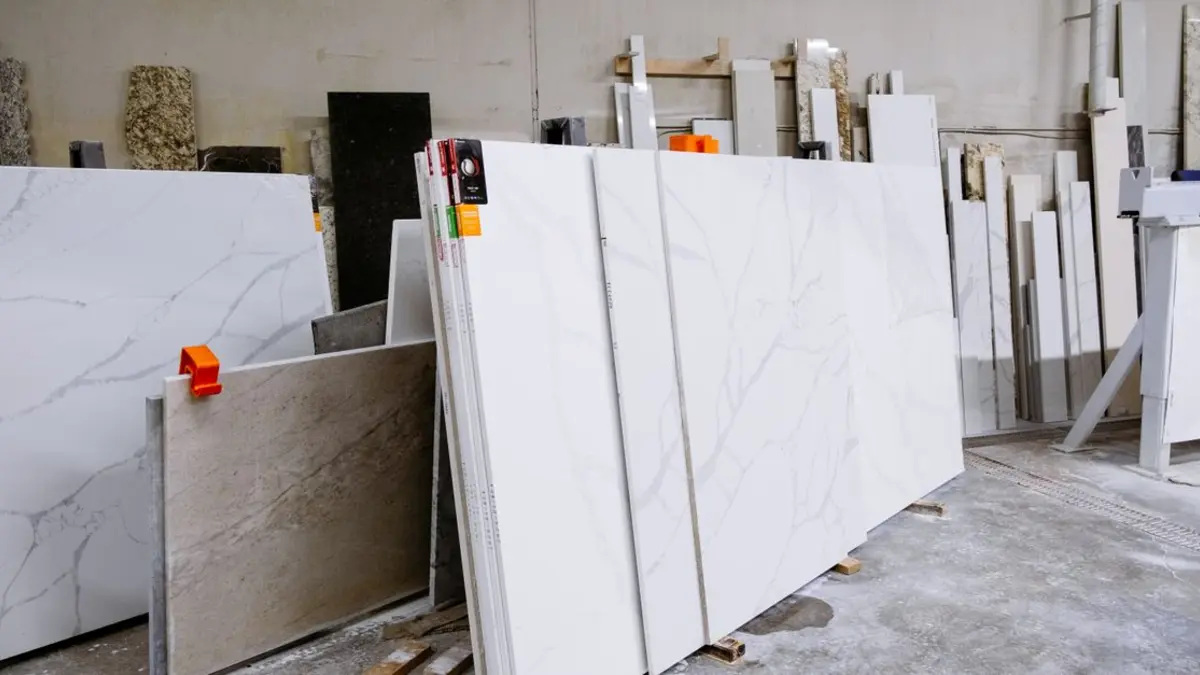
Solid surface countertops - the material category that includes DuPont Corian, LG Hi-Macs, Samsung Staron, and dozens of regional brands - are filled thermoset or filled acrylic slabs, typically 6 to 12 mm thick for vertical cladding and 12 to 25 mm thick for horizontal countertops. The defining feature of the category is that the slab is homogeneous: a scratch or chip can be sanded out and the slab looks like new. To make that possible, the filler must bond to the resin at every particle interface, and the filler must be soft enough to smear under sanding without leaving pits.
Aluminum hydroxide, Al(OH)3, also called alumina trihydrate or ATH, is the standard filler for three reasons. First, it is the only widely-available filler with a refractive index (1.57 to 1.59) close enough to polymethyl methacrylate (PMMA, 1.49) and unsaturated polyester resin (UPR, 1.55 to 1.57) to give the slab a translucent, depth-of-colour look. Other common fillers - calcium carbonate (RI 1.59), barium sulfate (RI 1.64), silica (RI 1.46) - are either too reflective (chalky look) or scatter too much light (opaque). Second, ATH is soft (Mohs 2.5 to 3.5) so it polishes to a high gloss without diamond pads. Third, ATH is intrinsically flame retardant because it releases 34.6 percent of its mass as water vapour between 220 and 280 degrees C, so a kitchen countertop full of ATH meets Class A fire ratings with no additional additives.
The catch is that ATH is a complex raw material. It comes in particle sizes from 0.5 micrometre to 80 micrometre D50. It has whiteness that varies with the iron content of the parent bauxite. It has surface chemistry that swings from hydrophilic (untreated) to strongly hydrophobic (silane coated). It is mildly alkaline in water, which interferes with polyester cure. Every one of these variables is a knob you can turn, and the question is which knobs to turn for which visual outcome. This article maps the knobs to the outcomes.
The Two Visual Systems: Solid Colour vs Veined Marble
Every solid surface formulation is built around one of two visual systems, and the choice of system determines the choice of ATH grade. The two systems are not interchangeable: a grade tuned for one will fail in the other.
System 1: Solid colour (opaque, single hue, often with fine texture)
Solid colour slab is what most people picture when they hear "Corian". The slab is one colour - white, cream, beige, grey, black, primary colour - and the surface is uniform when viewed at any angle. The visual effect is closer to a matte or satin painted surface than to stone. The dominant engineering requirement is high loading at low resin demand so the slab is cost-effective, dimensionally stable during cure, and machineable without chipping. The dominant visual requirement is uniform colour and consistent gloss.
For solid colour, the typical ATH grade is a coarse, broad-distribution, low-oil-absorption grade. D50 in the 18 to 30 micrometre range, D97 (top cut) in the 60 to 100 micrometre range. The coarse particles scatter less light per unit mass than fine particles (because the surface area is lower) and they sit on top of each other in the cured slab, creating a stone-like texture at the surface that looks natural even at uniform colour. The broad distribution is a deliberate choice: a narrow-distribution ATH gives a flat plastic look, while a broad-distribution ATH gives a depth effect that reads as stone.
System 2: Veined marble look (translucent, deep, with high-contrast streaks)
Veined marble solid surface is the premium tier: it mimics the appearance of natural marble or quartzite with deep translucent layers and visible veining. The slab has multiple visible regions: a base colour that is somewhat translucent, and streaks or "veins" of a contrasting colour that look like mineral inclusions. The dominant engineering requirement is fine particle size for translucency and pigment hiding power. The dominant visual requirement is depth and visual interest.
For veined, the typical ATH grade is a fine, surface-treated, low-residual-moisture grade. D50 in the 4 to 8 micrometre range, D97 below 30 micrometre, and almost always with a silane coating to keep the system rheologically workable. Fine particles are needed because the streaks in a veined slab are only a few millimetres wide and need a fine filler so the boundary between streak and base is sharp rather than muddy. The silane coating is needed because the high surface area of the fine ATH would otherwise soak up 30 to 40 percent more resin than a coarse grade at the same viscosity, making the mix unpourable.
The decision between the two systems is the first decision. It dictates the ATH grade, the resin system (PMMA gives more depth than UPR for veined; UPR is fine for solid colour), and the entire production process. The rest of this article assumes you have made that decision and walks through how to dial in the ATH for the chosen system.
D50 and D97: How Particle Size Sets the Limits
Particle size is the single most important property of ATH for solid surface. It is reported in two ways: D50 (the median particle size by mass, meaning 50 percent of the powder is finer and 50 percent is coarser) and D97 (the top cut, meaning 97 percent of the powder is finer than this size). D50 sets the average behaviour. D97 sets the maximum defect size in the surface.
The two together define the particle size distribution (PSD) curve. A "narrow" grade has D97 roughly 1.5 to 2.0 times D50. A "broad" grade has D97 roughly 3.0 to 4.0 times D50. Narrow grades give more predictable behaviour but require more resin to wet. Broad grades give better packing and lower resin demand, but introduce larger particles that show up as visible specks in light colours and can cause weak points in thin sections.
What D50 does
D50 controls three things at once. First, resin demand: a 5 micrometre D50 ATH has a specific surface area (BET) of about 2.0 m²/g, while a 20 micrometre D50 ATH has about 0.7 m²/g. Each unit of additional surface area soaks up resin and thickens the mix, so a fine grade needs more resin (or a viscosity reducer) to stay pourable. Second, translucency: a 5 micrometre ATH scatters light less per particle than a 20 micrometre ATH, so light penetrates deeper and the slab looks more translucent. Third, surface finish: a 5 micrometre ATH polishes to a higher gloss than a 20 micrometre ATH because there are fewer large particles to create micro-scratches during sanding.
What D97 does
D97 controls one thing above all: defect size. A D97 of 80 micrometre means that up to 3 percent of the powder (the coarse tail) is in the 50 to 80 micrometre range. Those coarse particles are visible to the naked eye in a light-coloured slab and they show up as dark specks. For white or pastel solid surface, D97 should be below 60 micrometre. For darker colours where the specks are camouflaged, D97 can be 100 micrometre or more. The trade is that tightening D97 (i.e., lowering the top cut) increases resin demand because you have removed the largest particles that contribute the most to bulk and the least to surface area. So a grade with D50 20 and D97 45 has higher resin demand than D50 20 and D97 80 at the same loading.
The 4-micrometre threshold
Below D50 of 4 micrometre, ATH starts behaving differently. The particles are small enough that the boundary layer of resin adsorbed on each particle surface is a significant fraction of the inter-particle gap. Resin demand rises sharply. Viscosity rises sharply. The mix becomes hard to de-air and trap-air defects become a problem. Below 2 micrometre, ATH is no longer used in solid surface at all: it is sold as flame retardant additive for thermoplastics where the high surface area is an advantage rather than a problem. So the practical floor for solid surface ATH is about 4 micrometre D50.
Whiteness L*, a*, b*: What Numbers Actually Matter
Whiteness is reported as L*a*b* in the CIE 1976 colour space. L* is the lightness (0 = black, 100 = perfect white). a* is the red-green axis (positive = red, negative = green). b* is the yellow-blue axis (positive = yellow, negative = blue). For solid surface, all three matter, but they matter differently in different colour systems.
For white and pastel solid surface, L* is the headline number. A high L* (97 to 99) gives a brilliant white that pops under showroom lighting. A low L* (94 to 95) gives a creamy, aged-white look that some customers want for vintage aesthetics. The drop in L* during processing is what tells you whether the ATH is contaminated. We track L* on every lot, and we report both the as-received value and the post-compounded value after a 5-minute 60 degrees C internal mixer test. A drop of more than 1.5 L* points is a red flag.
For veined marble look, the b* number matters as much as L*. A b* of 1.0 to 2.0 gives a slight warm white. A b* below 0.5 gives a cool, bluish white. The b* shift during processing is what causes veined slabs to look yellower than expected over time. If your reference slab has a target b* of 1.0, you should specify ATH with b* no higher than 0.8 so you have headroom for the resin and pigment to push b* up by 0.2 to 0.5 without overshooting.
For dark colours (black, brown, deep grey), L* and b* are largely irrelevant because the pigment dominates. What matters is colour consistency between lots. We deliver lot-to-whiteness variation of delta E less than 0.5 for our ATH-SS18 grade, which means a black solid surface producer can blend multiple lots in the same production campaign without colour shift.
Oil Absorption: The Hidden Knob That Controls Resin Demand
Oil absorption is measured by the linseed oil method (ASTM D281): the amount of linseed oil in grams needed to wet 100 grams of ATH to a paste endpoint. It correlates with resin demand but is not identical to it because the resin is more polar than linseed oil. Typical values for our grades are 22 to 28 g/100g for a 20 micrometre D50 coarse grade, 30 to 38 g/100g for an 8 micrometre D50 mid-grade, and 40 to 50 g/100g for a 5 micrometre D50 fine grade.
Why this matters: a solid surface slab at 65 wt percent ATH loading and 35 wt percent resin uses about 35 grams of resin per 100 grams of formulation. If the ATH has an oil absorption of 45 g/100g, the resin is not enough to wet all the particles and you get dry spots, voids, and high-viscosity mix. You would either need to drop the loading to 55 wt percent (which raises cost) or use a viscosity reducer. The cleaner solution is to specify a lower-oil-absorption grade. Aluminaworld ATH-SS18 has oil absorption of 24 g/100g, which is the lower end of the range and gives formulators more headroom.
There is a non-obvious link between oil absorption and surface treatment. A silane-coated ATH typically has 10 to 20 percent lower oil absorption than the same D50 uncoated ATH, because the silane replaces some of the polar OH groups on the surface with non-polar organic groups. This is one of the reasons vinylsilane-coated ATH is so widely used: it gives both better wet-out and lower resin demand at the same time.
Surface Treatment: Why Almost Every Solid Surface ATH Is Coated
Untreated ATH is hydrophilic and alkaline. In water it gives a pH of 9 to 10 because of partial surface dissolution. In a polyester resin, that alkalinity neutralises the acid accelerator and inhibits the cobalt-promoted MEKP cure. The result is a slab that cures unevenly: the centre is undercured, the edges are overcured, and the colour drifts from batch to batch. In an acrylic syrup, the alkalinity is less of a problem, but the moisture adsorbed on the ATH surface causes micro-bubbles during the highly exothermic MMA polymerisation.
Surface treatment solves both problems. The most common treatment for solid surface ATH is vinyltri(methoxy)silane (VTME) at 0.8 to 1.5 wt percent applied during the ATH finishing process (typically in a high-intensity mixer at 100 to 120 degrees C). VTME reacts with the surface OH groups to form a stable Si-O-Al bond and leaves a vinyl group exposed at the surface, which is reactive with both polyester styrene and acrylic methyl methacrylate. The result is a filler that wets out easily, disperses without agglomeration, and bonds covalently to the cured polymer.
For acrylic solid surface, methacrylic silane (3-methacryloxypropyltrimethoxysilane, MEMO) is also widely used. MEMO gives a slightly better bond to PMMA than VTME but is more expensive (about 30 percent premium in 2026) and has a shorter shelf life once applied (about 12 months versus 24 months for VTME-coated ATH).
For solid colour solid surface, stearic acid treatment at 0.5 to 1.0 wt percent is sometimes used as a cheaper alternative to silane. Stearic acid does not give a covalent bond, but it lowers oil absorption and improves flow. It is acceptable for opaque dark colours but not for white or pastel where the bond strength is needed for stain resistance.
Four Worked Formulation Examples
To make the tradeoffs concrete, here are four ATH grades tuned for four different solid surface outcomes. All four use Aluminaworld commercial grades. The base resin is PMMA syrup (40 percent PMMA in MMA monomer, medium molecular weight). ATH loading is 60 to 65 wt percent. Pigment is omitted for clarity.
Example 1: Solid white kitchen countertop (highest volume product)
| Component | Grade | Loading (wt%) | Function |
|---|---|---|---|
| PMMA syrup (40% in MMA) | Standard industrial | 38.0 | Resin matrix |
| ATH | ATH-SS18 (D50 18 µm, D97 70 µm, vinylsilane 1.0%) | 60.0 | Filler and translucency |
| Titanium dioxide (TiO2) | Rutile grade | 1.5 | White pigment |
| AIBN initiator | Standard | 0.3 | Cure initiator |
| Zinc stearate release | Standard | 0.2 | Mould release |
This formulation gives a brilliant white slab with a satin finish after 400-grit sanding. L* of the cured slab is 96 to 97, b* 1.0 to 1.5. The D50 of 18 micrometre means surface defects larger than 70 micrometre (visible specks) are excluded at 97 percent confidence. The 1.0 percent vinylsilane coating gives a Hegman reading of 7+ (defects below 15 micrometre) in the resin syrup.
Example 2: Solid black bathroom vanity
| Component | Grade | Loading (wt%) | Function |
|---|---|---|---|
| PMMA syrup (40% in MMA) | Standard industrial | 32.0 | Resin matrix |
| ATH | ATH-CO18 (D50 18 µm, D97 100 µm, uncoated) | 65.0 | Filler (high loading, no coating needed because pigment hides colour) |
| Carbon black | High-colour furnace black | 2.0 | Black pigment |
| AIBN initiator | Standard | 0.3 | Cure initiator |
| Zinc stearate release | Standard | 0.7 | Mould release (higher load for darker formula) |
The higher loading (65 wt percent) is possible because the broad D97 of 100 micrometre and the lack of coating mean the mix is pourable. Uncoated ATH is acceptable here because the carbon black pigment hides the alkaline colour shift of the ATH. The broader distribution also gives a slightly textured surface (like fine sandpaper) which is desirable for bathroom vanity applications because it hides water spots.
Example 3: Veined marble look (Carrara white base with grey veins)
| Component | Base mix A (white, 85 wt% of total) | Streak mix B (grey, 15 wt% of total) |
|---|---|---|
| PMMA syrup (40% in MMA) | 48.0 | 28.0 |
| ATH (Base A: ATH-VE05, D50 5 µm, D97 25 µm, vinylsilane coated; Streak B: ATH-SS18, D50 18 µm, D97 70 µm, vinylsilane coated) | 50.0 | 70.0 |
| Titanium dioxide (white) | 1.5 | 0.5 |
| Carbon black + iron oxide grey blend | — | 1.2 |
| AIBN initiator | 0.3 | 0.3 |
| Zinc stearate | 0.2 | 0.0 |
The base mix A uses a fine ATH (5 micrometre) to keep the slab translucent and to allow light to penetrate into the slab and bounce off the streak mix, creating the "depth" that makes veined marble look like marble. The streak mix B uses a coarse ATH (18 micrometre) and is loaded to 70 wt percent, making the streaks denser and visually heavier. The ratio of 85 percent A to 15 percent B is achieved by partially mixing the two for 20 to 30 seconds in a low-shear planetary mixer before pouring. The pour itself is done at an angle to create natural streak orientation.
Example 4: Translucent alabaster effect (premium tier, hotel reception desks)
| Component | Grade | Loading (wt%) | Function |
|---|---|---|---|
| PMMA syrup (35% in MMA, low molecular weight) | Premium cast-grade | 55.0 | Resin matrix (low viscosity for high translucency) |
| ATH | ATH-TE03 (D50 3 µm, D97 15 µm, MEMO coated, L* 98+) | 44.0 | Filler (very fine for translucency) |
| Optional backlight LED strip | — | — | Edge lighting reveals translucency |
| AIBN initiator | Standard | 0.4 | Cure initiator (slightly higher for thin-section casting) |
| UV absorber (Tinuvin P) | — | 0.4 | UV stability (backlit applications yellow faster) |
This formulation is unusual: 44 wt percent ATH is much lower than a typical solid surface slab (60 to 65 wt percent). The lower loading is what makes the slab translucent. The very fine D50 of 3 micrometre and very tight D97 of 15 micrometre mean there are essentially no large particles to block light. The MEMO coating is needed at this surface area to keep resin demand manageable. The result is a slab that transmits 30 to 40 percent of incident light at 12 mm thickness, so a backlit edge or a sub-surface LED strip glows through the material. This is the formulation used for high-end hotel reception desks, retail display counters, and light-art installations. Aluminaworld ATH-TE03 is our premium translucent grade; sample MOQ 25 kg, production MOQ 5 mt FOB Qingdao.
Three Production Case Studies From Real Customers
Case 1: Mid-size Korean solid surface producer (Daegu, 12,000 mt/year)
The customer was producing a standard white solid surface using ATH with D50 of 30 micrometre, uncoated, at 65 wt percent loading in PMMA. They had three persistent problems: surface micro-cracks after cure, batch-to-batch colour drift, and a hazy appearance in the finished slab. We diagnosed the issues as follows: D50 of 30 micrometre was at the upper limit of polishability (large particles were pulling out of the surface during the final polishing pass, leaving micro-pits); the lack of coating meant moisture on the ATH was reacting with the AIBN initiator and causing the cure to vary with atmospheric humidity; the haziness was from light scattering off the broad particle size distribution.
The fix was a switch to ATH-SS18 (D50 18 micrometre, vinylsilane coated, L* 97.5). D50 dropped by 40 percent, surface finish improved from 60-gloss to 85-gloss, batch-to-batch colour consistency improved from delta E 1.5 to delta E 0.5, and the customer reported a 6 percent yield improvement in their polishing line because fewer slabs needed rework. The total ATH cost rose by about 8 percent (finer grade is more expensive), but the savings in rework more than offset it.
Case 2: Indian artificial marble producer (Udaipur, 4,000 mt/year)
The customer was producing a veined marble look slab for the Indian domestic market. They were using a fine ATH (D50 8 micrometre) at 50 wt percent loading in UPR. Their problem was that the streaks in the veined pattern looked "muddy" - the boundary between base colour and streak colour was blurred, and the depth effect was weak. The root cause was that the UPR resin has a refractive index (1.55 to 1.57) that is too close to the ATH (1.57 to 1.59), so there was not enough refractive index mismatch to create the visual scattering that defines the veining.
The fix was twofold. First, we recommended reducing the ATH loading to 45 wt percent and using a UPR with a slightly lower refractive index (1.52 to 1.54) - which most commercial UPRs can be formulated to. Second, we recommended a finer grade, ATH-VE05 (D50 5 micrometre, vinylsilane coated), to increase the number of particle-light interactions per unit thickness. The result was a 20 percent increase in visual depth (measured by image analysis of polished cross-sections) and a sharper streak boundary. The customer also picked up 5 percent extra throughput because the lower ATH loading reduced the mix viscosity and allowed faster pouring.
Case 3: Brazilian solid surface producer (Santa Catarina, 8,000 mt/year)
The customer was producing a high-volume beige solid surface for export to the United States under a private label. They were experiencing high scrap rates (around 8 percent) due to small dark specks appearing in the finished slab. We diagnosed the specks as iron contamination in the ATH (Fe2O3 above 0.015 wt percent, when their target was 0.008 wt percent). The specks were agglomerates of iron oxide and ATH that were larger than 50 micrometre and showed up as dark spots in the beige slab.
The fix was a switch to ATH-SS18 with controlled Fe2O3 of less than 0.008 wt percent and a tight D97 of 70 micrometre (versus their previous 100 micrometre). The customer also added a 100-mesh screen to the ATH handling system to catch any agglomerates that formed during transport. Scrap rate dropped from 8 percent to 2 percent within two months, saving the customer approximately USD 200,000 per year in raw material and labour. The premium for low-iron ATH was about 12 percent versus standard ATH, so the payback period was less than three months.
The 18-Property Procurement Specification
To make sure you are getting the ATH you specified, your incoming QC should check the following 18 properties on every lot. The values in the table are typical for a standard white solid colour ATH (ATH-SS18, D50 18 micrometre, vinylsilane coated). For veined or translucent grades, the limits tighten (especially on D97, Fe2O3, and L*).
| # | Property | Method | Typical spec (ATH-SS18) | Why it matters |
|---|---|---|---|---|
| 1 | Al(OH)3 assay (LOI at 1000 °C) | ASTM D6731 | ≥ 99.4 wt% | Purity; low assay means diluents present |
| 2 | Fe2O3 | XRF or ICP-OES | ≤ 0.008 wt% (premium) / ≤ 0.015 wt% (standard) | Dark specks in light colours |
| 3 | SiO2 | XRF | ≤ 0.02 wt% | Hardness and scratch risk |
| 4 | Na2O | XRF | ≤ 0.15 wt% | Alkalinity, cure interference |
| 5 | Moisture (105 °C, 2 h) | ASTM D280 | ≤ 0.20 wt% | Micro-bubbles in cure |
| 6 | D10 | Laser diffraction (Malvern) | ≥ 2.0 µm | Coarse tail control |
| 7 | D50 | Laser diffraction | 17 to 19 µm (target 18) | Average particle size |
| 8 | D90 | Laser diffraction | ≤ 55 µm | Distribution width |
| 9 | D97 (top cut) | Laser diffraction | ≤ 70 µm | Defect size |
| 10 | L* whiteness | CIE Lab, pressed powder | ≥ 97.0 (premium) / ≥ 95.0 (standard) | White base colour |
| 11 | a* | CIE Lab | -0.5 to +0.5 | Red/green balance |
| 12 | b* | CIE Lab | ≤ 1.0 (premium) / ≤ 2.0 (standard) | Yellow/blue balance |
| 13 | Oil absorption | ASTM D281 (linseed oil) | 22 to 28 g/100g | Resin demand |
| 14 | Hegman grind (in 30% MMA) | ASTM D1210 | ≥ 7 (silane coated) / ≥ 5 (uncoated) | Dispersibility |
| 15 | Surface coating type and level | FTIR or XRF (Si map) | VTME silane 0.8 to 1.5 wt% | Cure and bond |
| 16 | Specific surface area (BET) | ISO 9277 | 0.6 to 1.0 m²/g | Confirms particle size |
| 17 | Bulk density (loose) | ISO 903 | 0.9 to 1.2 g/cm³ | Storage and handling |
| 18 | Sieve residue (45 µm) | ISO 787-18 | ≤ 0.05 wt% | Coarse contamination |
If a supplier cannot deliver a lot-level CoA that covers these 18 properties, you are flying blind. You will eventually discover a problem in your finished slab, by which time the lot has been consumed and the supplier is asking what changed. The cost of lot-level CoA is small (typically USD 5 to 15 per metric ton extra), and the cost of not having it can be the entire production run.
Ten Failure Modes and How to Fix Them
Most solid surface production problems trace back to one of ten common failure modes in ATH selection or handling. If you have a defect, walk through this list before reformulating.
1. Dark specks in light-coloured slab
Cause: iron contamination (Fe2O3 above 0.015 wt percent) or agglomerates larger than 50 micrometre. Fix: specify low-iron ATH (Fe2O3 below 0.008 wt percent) and tighten D97 to below 60 micrometre. Add a 100-mesh screen on the ATH hopper.
2. Muddy veined pattern
Cause: refractive index of the resin is too close to the refractive index of the ATH, so light scatters too little to define the veining. Fix: reduce ATH loading by 5 to 10 wt percent, or switch to a UPR with a slightly lower refractive index (1.52 to 1.54 instead of 1.55 to 1.57).
3. Surface micro-cracks after cure
Cause: ATH particles are too large (D50 above 25 micrometre) and pull out during polishing, leaving micro-pits. Fix: switch to D50 15 to 18 micrometre, surface-treated.
4. Batch-to-batch colour drift (delta E above 1.0)
Cause: incoming ATH varies in L* or b* by more than 1 point lot to lot, and the resin or pigment does not compensate. Fix: specify tighter L* (97 minimum) and b* (1.0 maximum) on the ATH CoA, and hold a reference lot for comparison.
5. Under-cured centre, over-cured edges
Cause: alkaline ATH is neutralising the cobalt promoter in UPR or the AIBN in acrylic syrup. Fix: use silane-coated ATH (VTME or MEMO) at 1.0 wt percent; the coating isolates the alkaline surface from the resin.
6. Micro-bubbles visible in the cured slab
Cause: moisture on the ATH surface (above 0.3 wt percent) is vaporising during the exothermic cure. Fix: dry the ATH at 120 degrees C for 4 hours before use, or specify a low-moisture grade (less than 0.15 wt percent).
7. Slab warps during cure
Cause: uneven ATH distribution due to settling. Coarse particles settle faster than fine particles, leaving a concentration gradient through the slab thickness. Fix: use a narrower particle size distribution (D97 below 2.5 times D50), and ensure the mix viscosity is high enough to suspend particles during cure.
8. Slab too brittle (chips during cutting)
Cause: ATH loading too high (above 70 wt percent) or ATH surface treatment is stearic acid (no covalent bond). Fix: reduce loading to 60 to 65 wt percent, or switch to vinylsilane or MEMO coating.
9. Stains that cannot be sanded out
Cause: resin content is too low, leaving micro-voids at the filler-resin interface. Fix: increase resin content by 5 wt percent, or switch to a lower oil-absorption ATH grade.
10. Surface haziness in backlit or translucent applications
Cause: D50 too large (above 5 micrometre) or D97 too wide. Fix: switch to D50 3 micrometre, D97 below 15 micrometre, MEMO coated (ATH-TE03 grade).
Regional Sourcing: Where the Material Comes From
ATH for solid surface is produced in three main regions. The differences are not in the chemistry (all three regions make aluminium hydroxide from bauxite via the Bayer process) but in the finishing technology (milling, classification, surface treatment) and the QC rigour.
Chinese ATH (Zibo, Shandong; Nanning, Guangxi; Guiyang, Guizhou): the largest production base by volume. Zibo alone has 2 million metric tons of ATH capacity, with several producers offering solid surface grades. The advantage is scale and cost (typically 15 to 25 percent below European grades for equivalent specification). The historical disadvantage was lot-to-lot consistency, but the leading producers (including Aluminaworld) have closed that gap over the past five years. Our ATH-SS18 and ATH-SS05 grades are produced in Zibo with L* 97 minimum, Fe2O3 below 0.010 wt percent, and full lot-level CoA. Lead time to most ports is 15 to 25 days FOB Qingdao.
European ATH (Martinswerk, Nabaltec, Huber Germany): the historical quality leader. Most of the original solid surface formulations (DuPont Corian, LG Hi-Macs) were developed around Martinswerk grades. The advantage is consistency and the widest range of off-the-shelf grades. The disadvantage is price (typically 25 to 40 percent above Chinese grades) and lead time (60 to 90 days for some specialty grades).
North American ATH (Huber USA, Albemarle): similar to European in quality, with a focus on grades for North American solid surface producers. Some specialty grades (translucent, ultra-fine) are only available from North American producers. Lead time is typically 30 to 45 days.
For most solid surface producers outside of Europe and North America, the practical choice is Chinese ATH. The cost advantage is meaningful, the quality is now comparable, and the lead time is half of European grades. The key is to buy from a producer who delivers lot-level CoA on the 18 properties above and who has a track record of supplying solid surface producers specifically. ATH for flame-retardant plastics is a related but different product; the specs and QC matter differ.
Cost Economics: What the ATH Line Item Looks Like
The cost of ATH in a solid surface slab is typically 18 to 28 percent of the total raw material cost, depending on loading and grade. For a 12 mm thick kitchen countertop slab at 65 wt percent ATH in PMMA, the raw material cost per square meter of finished slab works out to roughly:
- ATH: USD 4.50 to 6.50 per square meter (at 0.85 to 1.20 USD/kg and 5 to 6 kg/sqm consumption)
- PMMA resin: USD 8.00 to 11.00 per square meter (at 2.5 to 3.5 USD/kg and 2.7 to 3.2 kg/sqm consumption)
- Pigment, initiator, release: USD 0.50 to 1.00 per square meter
- Total raw material: USD 13.00 to 18.50 per square meter
The ATH is the largest single line item. A 10 percent reduction in ATH cost (e.g., switching from a premium European grade to a comparable Chinese grade) saves USD 0.50 per square meter of slab, or USD 12,500 per year for a producer running 25,000 square meters per year. That is a meaningful saving, but it is small compared to the cost of a production stop caused by bad ATH. Our recommendation is to optimise ATH cost on a three-year basis, not a one-shipment basis. The supplier who delivers consistently over three years is worth a 5 percent premium over the cheapest quote.
Industry Standards That Apply
Solid surface is governed by a set of performance standards, not composition standards. ATH is an enabler of those performance standards, not the subject of them. The key standards to know are:
- ANSI Z124.6 (American National Standard for Plastic Countertops) - sets the performance requirements for stain, scratch, impact, and heat resistance. Most quality solid surface slabs pass Z124.6 at 60 to 65 wt percent ATH loading with a vinylsilane-treated grade.
- ISO 19712 (Plastics - Decorative laminate sheets based on thermosetting resins) - the international counterpart. Covers similar tests with slightly different pass criteria.
- EN 13501-1 (Fire classification of construction products) - ATH at 60 wt percent loading gives B-s1, d0 rating (limited contribution to fire, low smoke, no burning droplets), which is the rating typically required for commercial building applications.
- NSF 51 (Food equipment materials) - requires the resin to be NSF-listed; the ATH is permitted as a filler but must meet extractables limits (typically less than 0.5 mg/in² of surface for food contact).
- GREENGUARD Gold (low chemical emissions) - relevant for indoor air quality. ATH is intrinsically low-VOC, so the certification depends mostly on the resin choice.
Next Steps: Sourcing ATH for Your Solid Surface Line
If you are starting a new solid surface line, the practical first step is to order 25 kg samples of three grades - ATH-SS18 (solid colour, D50 18 µm), ATH-VE05 (veined, D50 5 µm), and ATH-TE03 (translucent, D50 3 µm) - and run small-batch castings at 60 to 65 wt percent loading in your chosen resin. Measure L*a*b*, gloss at 60 degrees, Hegman grind, and Brookfield viscosity. Compare the results to your current ATH or to a competitive slab.
If you are already producing solid surface and have a specific problem (muddy veining, dark specks, colour drift, micro-cracks), walk through the ten failure modes above and identify the root cause. The most common root cause is L* or b* drift on the incoming ATH, which is solved by tightening the CoA specification. The second most common is excessive D97, which is solved by switching to a tighter grade.
For pricing on a specific grade, the most efficient path is to send us your current CoA and the visual outcome you want, and we will recommend a grade and quote FOB Qingdao with 25 kg sample available in 5 to 7 days. We can also arrange custom particle size cuts (e.g., D50 12 µm or D50 25 µm) at 10 metric ton minimum order quantity, with 4 to 6 week lead time.
Get a Quote or Sample
Aluminaworld supplies ATH to solid surface producers in 60+ countries. Our Zibo factory is ISO 9001 certified, with dedicated production lines for fine and coarse ATH grades and a finishing line for silane coating. We ship 25 kg samples within a week, pilot orders of 500 kg in two weeks, and production orders of 5 mt or more within three to four weeks.
To get a quote, send us the following and we will respond within 24 hours:
- Grade reference (or your current ATH specification)
- Loading in your formulation (wt percent)
- Resin system (PMMA, UPR, or other)
- Quantity and destination port
- Any quality issue you are trying to solve
Contact Barry on WhatsApp for the fastest response: +86 133 2522 2240. Or email barry@aluminaworld.com with the same details.
Related Aluminaworld Products
Need ATH for Solid Surface? Talk to Barry Directly.
Aluminaworld ships ATH to 60+ countries from our ISO 9001 certified Zibo factory. 25 kg sample MOQ. 5 mt production MOQ. 5 to 15 day lead time for samples. Lot-level Certificate of Analysis on every shipment.
🏭 Factory: Zibo, Shandong, China | 📞 Phone/WhatsApp: +86 133 2522 2240 | 🌐 Exported to 60+ Countries | ISO 9001 Certified | Alibaba 8-Year Supplier