Catalyst Carrier Surface Area vs Pore Volume: Which Matters More for FCC, HDS, and Reforming Catalysts?
If you buy or specify a catalyst carrier alumina, every datasheet gives you two numbers: BET surface area in m2/g and pore volume in mL/g. Most engineers assume bigger is better for both. That assumption is wrong. For FCC, HDS, and reforming catalysts, one parameter dominates activity and the other dominates lifetime. Choosing the wrong trade-off can cut catalyst cycle length in half. This guide breaks down the chemistry, the measurement, and the application-specific right answer for each major catalyst family.
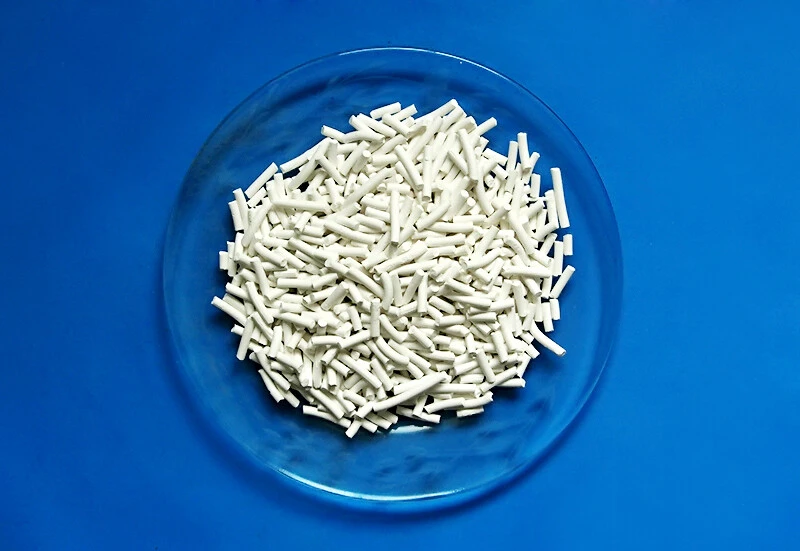
Why Surface Area and Pore Volume Are the Two Numbers That Define a Catalyst Carrier
A heterogeneous catalyst is a porous solid in which the active phase (a metal, a metal sulfide, an acid site) is dispersed across an internal surface. The support - the porous carrier - does two things: it gives the active phase a place to sit, and it creates the diffusion network that lets reactants in and products out. The numbers that describe that porous network are the surface area and the pore volume, plus the pore-size distribution that connects them.
Most buyers look at a CoA and see two numbers - 280 m2/g BET and 0.6 mL/g pore volume - and treat them as equally important. They are not. The two parameters trade off against each other through the precursor morphology and the calcination history, and the right balance depends entirely on what reaction the catalyst is designed to accelerate. A catalyst that maximizes surface area for FCC is wrong for residue HDS, and vice versa. A catalyst that maximizes pore volume for slurry-bed hydrocracking is wrong for naphtha reforming.
This article walks through the chemistry of how surface area and pore volume are generated in pseudo-boehmite-derived gamma-alumina carriers, the BET and BJH measurement methods, the application-specific trade-offs for the three largest catalyst families (FCC, HDS, reforming), and the engineering rules of thumb that let you pick a grade off a data sheet without waiting for pilot testing.
The Chemistry: How Pseudo Boehmite Becomes a Catalyst Carrier
Almost every commercial catalyst carrier starts as pseudo boehmite (also called pseudo-boehmite or PB), a partially crystalline aluminum oxyhydroxide with the formula AlOOH·nH2O where n is typically 1.0 to 1.5. Pseudo boehmite is made by neutralizing sodium aluminate with acid (typically nitric, hydrochloric, sulfuric, or aluminum sulfate) at controlled pH and temperature. The gel that precipitates is aged, filtered, washed, and dried - or spray-dried into a free-flowing powder.
What makes pseudo boehmite special for catalyst carriers is its mesoporosity. When the dried gel is calcined at 450 to 600 degrees C, the boehmite layers dehydrate and the crystal lattice reorganizes into gamma-alumina (γ-Al2O3), which is the standard FCC and HDS catalyst support. The pore structure is a direct inheritance of the parent boehmite crystal habit: the (010) and (100) faces of the boehmite crystallite form the mesopore walls, and the inter-crystallite voids form the mesopore network.
How calcination controls surface area and pore volume
Calcination temperature is the single most powerful lever for trading surface area against pore volume. The mechanism is thermal sintering: as the temperature rises, smaller crystallites merge into larger ones, and the total surface area drops while the average pore size grows.
| Calcination Temperature | BET Surface Area | Pore Volume | Mean Pore Size | Application Match |
|---|---|---|---|---|
| 450 °C / 2 h | 300 - 340 m²/g | 0.45 - 0.50 mL/g | 5 - 7 nm | FCC fresh feed (high activity, low metals) |
| 550 °C / 2 h | 240 - 280 m²/g | 0.55 - 0.65 mL/g | 8 - 10 nm | FCC equilibrium / VGO HDS workhorse |
| 650 °C / 2 h | 180 - 220 m²/g | 0.70 - 0.85 mL/g | 12 - 16 nm | Residue HDS, slurry-bed HC |
| 750 °C / 2 h | 120 - 160 m²/g | 0.85 - 1.0 mL/g | 20 - 28 nm | Heavy residue / guard bed |
| 900 °C / 2 h | 50 - 80 m²/g | 0.4 - 0.6 mL/g | 40 - 60 nm | Inactive (θ/α phase, not a carrier) |
The trade-off is fundamental. You cannot get 320 m²/g BET and 0.85 mL/g pore volume from the same gamma-alumina. If a supplier claims both, the measurement is wrong or the sample is a mixed-phase blend rather than a true gamma-alumina.
How to Read a BET/BJH Data Sheet Without Getting Fooled
The two standard measurements, BET surface area and BJH pore volume, are both run on the same instrument - a nitrogen gas adsorption analyzer. The BET method (Brunauer-Emmett-Teller) is described in ISO 9277 and ASTM D3663. The BJH method (Barrett-Joyner-Halenda) for pore size distribution is described in ASTM D4641. The CoA numbers should be reported with explicit conditions: outgassing temperature, outgassing time, analysis temperature (always 77 K for nitrogen), and the relative pressure range used for BET fitting.
What to look for in a CoA
- 5-point BET minimum. A CoA that reports BET from a single relative pressure point is essentially guessing. Insist on multi-point BET with the C-constant reported. C-constant above 150 indicates strong N2-framework interaction (typical of acidic gamma-alumina); C-constant below 80 suggests weak interaction or significant microporosity that the standard BET model mis-fits.
- 30+ point BJH. The BJH pore size distribution needs at least 30 points across the relative pressure range 0.05 to 0.99 to capture the mesopore distribution. A CoA that reports only a single mean pore diameter (without the distribution) is hiding the real pore structure.
- Outgassing conditions. BET results are only as good as the outgassing. The standard outgassing is 200 to 350 °C for 4 to 16 hours under high vacuum. A CoA that says "outgassed at 80 °C" is reporting surface area with physisorbed water still in the pores - the BET number will be 10 to 30% low.
- Both adsorption and desorption isotherms. The hysteresis between adsorption and desorption isotherm tells you about pore shape. Type H1 hysteresis (parallel, near-vertical) indicates cylindrical mesopores with narrow size distribution - the ideal FCC carrier. Type H3 hysteresis (sloping plateau) indicates slit-shaped pores between particles - common in powder aggregates, less ideal for extrudates.
- Total pore volume at p/p0 = 0.99. This is the closest to "total pore volume" that nitrogen can measure. A CoA that says "pore volume 0.7 mL/g" without specifying relative pressure may be reporting a single-point estimate rather than a true measurement.
If a supplier does not publish the measurement conditions, the numbers are not comparable to your pilot results. Always ask for the raw isotherm - most reputable suppliers will share it under NDA.
FCC Catalyst Carriers: Why Surface Area Dominates
Fluid catalytic cracking (FCC) is the largest catalyst market in the world by volume, with global consumption of about 1,100 to 1,300 kilotons per year. The FCC catalyst is a complex composite of four components: a Y-zeolite (the active acid component, usually USY or REUSY), the matrix (gamma-alumina, where most metal trapping happens), the binder (clay or silica-alumina sol), and the additive system (ZSM-5, SOx reduction, CO combustion promoter).
Of these four components, the matrix gamma-alumina is what a pseudo-boehmite supplier like Aluminaworld produces. The matrix has two jobs: (1) provide a thermally stable, attrition-resistant scaffold that holds the Y-zeolite in place, and (2) trap vanadium, nickel, sodium, and iron from the feed before they poison the Y-zeolite. Both jobs depend primarily on surface area.
Why high surface area matters for FCC matrix
Vanadium and nickel are the two heavy metals that deactivate FCC catalysts. They deposit on the catalyst as porphyrin complexes during cracking and decompose to metal oxides on the matrix during regeneration. Vanadium is particularly damaging because V2O5 volatilizes at 650 to 700 °C inside the regenerator and migrates to the Y-zeolite, where it destroys the Brønsted acid sites.
Higher surface area gives more trap sites for the metals. A matrix with 320 m²/g BET holds roughly 1.5 times the metals of a 220 m²/g matrix before the matrix is saturated. For a feedstock with 5 wppm nickel and 8 wppm vanadium this is the difference between running 60 days and 90 days to equilibrium catalyst activity. The pore volume matters less because most of the metals are deposited on the outer surface of the matrix and on the entrance of the largest pores; what counts is the surface area, not the pore volume.
Where pore volume matters in FCC
Pore volume becomes important when the feedstock contains a lot of steam-precursor species (oxygenates, water-soluble organics) or when the catalyst sees a high Conradson carbon residue feedstock. The matrix needs to absorb the extra steam during the regeneration step and release it gradually to avoid hydrothermal dealumination of the Y-zeolite. A matrix with 0.55 mL/g pore volume can hold about 0.55 g of water per gram of catalyst - the absorbed water then bleeds off over the next 30 to 60 seconds in the stripper.
For a refinery running mostly sweet VGO feed with 0.2 wt% Conradson carbon, surface area is the priority. For a refinery running atmospheric residue with 4 to 6 wt% Conradson carbon plus 30 wppm metals, pore volume is a close second. Most refiners split the difference: a matrix with 280 m²/g and 0.65 mL/g covers both feedstocks adequately.
Real FCC matrix grade specifications
The industry splits FCC catalyst carriers into three families based on surface area and intended application:
| Aluminaworld Grade | BET Surface Area | Pore Volume | Mean Pore Size | Best For |
|---|---|---|---|---|
| AW-CC-340 | 320 - 360 m²/g | 0.45 - 0.55 mL/g | 5 - 7 nm | VGO / low-metals FCC, fresh feed activity |
| AW-CC-280 | 260 - 300 m²/g | 0.55 - 0.65 mL/g | 8 - 10 nm | General-purpose FCC matrix (workhorse grade) |
| AW-CC-220 | 200 - 240 m²/g | 0.70 - 0.85 mL/g | 12 - 16 nm | Residue FCC, high V+Ni feedstock |
The catalyst manufacturer buys the carrier, blends it with the Y-zeolite and binder at typically 25 to 40 wt% matrix, 25 to 40 wt% Y-zeolite, and 20 to 30 wt% binder, then spray-dries into microspheres of 60 to 80 micron average diameter. The carrier is the invisible scaffolding that gives the catalyst its attrition resistance and metal tolerance.
Hydrodesulfurization (HDS) Catalysts: Why Pore Volume Dominates
Hydrodesulfurization is the second-largest catalyst market and the one where pore volume dominates the specification. An HDS catalyst is typically a CoMo or NiMo sulfide on a gamma-alumina carrier, sometimes with phosphorus or boron as a secondary promoter. The feedstocks range from naphtha (small molecules, easy diffusion) to atmospheric and vacuum residue (large asphaltene molecules, diffusion-limited).
For HDS, the catalytic cycle is diffusion into the pellet, surface reaction, then diffusion out. The slowest step controls the overall rate. For VGO with 1 to 2 wt% sulfur, the sulfur is in the form of dibenzothiophene and alkyl-substituted dibenzothiophenes with kinetic diameters of 0.7 to 1.2 nm. These molecules fit easily into mesopores of 6 to 10 nm. The reaction is surface-reaction-limited, so high surface area is desirable but not critical.
For residue HDS with 4 to 6 wt% sulfur and 200 to 600 wppm V+Ni, the sulfur is in asphaltene and resin molecules with kinetic diameters of 3 to 10 nm. These molecules cannot fit into small mesopores - they need a pore diameter of 15 to 25 nm to enter. The catalytic cycle becomes diffusion-limited. Pore volume directly controls how many metal traps are accessible per gram of catalyst, which determines the time-on-stream before deactivation.
The HDS carrier selection rule
The standard rule used by refinery process engineers:
- Naphtha HDS: 220 to 280 m²/g BET, 0.4 to 0.5 mL/g pore volume, 6 to 8 nm mean pore. Surface area matters; small pore is fine.
- Diesel HDS (ULSD, 10 ppm S): 250 to 300 m²/g BET, 0.5 to 0.6 mL/g pore volume, 8 to 10 nm mean pore. Balanced.
- VGO HDS: 260 to 300 m²/g BET, 0.55 to 0.7 mL/g pore volume, 9 to 12 nm mean pore. The workhorse grade for FCC feed pretreatment.
- Atmospheric residue HDS (ARDS): 200 to 240 m²/g BET, 0.7 to 0.85 mL/g pore volume, 14 to 18 nm mean pore. Pore volume dominates.
- Vacuum residue HDS (VRDS): 180 to 220 m²/g BET, 0.8 to 1.0 mL/g pore volume, 18 to 25 nm mean pore. Largest pores, highest pore volume, lowest surface area.
- Slurry-bed hydrocracking: 130 to 180 m²/g BET, 1.0 to 1.5 mL/g pore volume, 25 to 50 nm mean pore. Bulk dispersion, not surface-dependent.
Notice the trend: as the feed gets heavier, the surface area drops and the pore volume rises. The reason is that the large asphaltene molecules cannot access small pores even if they exist, so the surface area associated with small pores is wasted. A residue HDS catalyst with 320 m²/g BET would be wrong - half its surface area is in pores that the feedstock cannot enter. Pore volume in the right pore size is what matters.
Reforming Catalysts: Why Low Surface Area Is the Point
Catalytic reforming (producing high-octane gasoline aromatics from naphtha) uses a Pt-Re or Pt-Sn bimetallic catalyst on a chlorided gamma-alumina or eta-alumina carrier. The active site is metallic platinum at 0.3 to 0.6 wt% loading, with Re or Sn as a promoter to suppress coke formation and improve metal dispersion.
Reforming catalysts are unusual because the right surface area is lower than for FCC or HDS. The standard specification is 180 to 240 m²/g BET. Three reasons:
- Metal dispersion saturates at moderate surface area. Platinum at 0.5 wt% loading on a 200 m²/g carrier is already at near-monolayer coverage. Higher surface area (above 280 m²/g) does not improve platinum dispersion - it leaves excess bare alumina, which acts as a coking site.
- Acid site density drives coking. The alumina surface has Lewis acid sites. More surface area means more acid sites, which means more coking in the reforming reaction (which runs at 480 to 520 °C with paraffins and naphthenes). The industry specifically downgrades ultra-high surface area carriers for reforming because they accelerate deactivation.
- Chloride management is easier with moderate surface area. The Pt-Re formulation needs 0.8 to 1.2 wt% chloride on the carrier to maintain metal dispersion. Chloride distributes across the surface, so lower surface area means more concentrated chloride coverage and easier regeneration.
For reforming, the right carrier is AW-CC-220 grade or similar: 200 to 240 m²/g BET, 0.45 to 0.55 mL/g pore volume, 8 to 10 nm mean pore. The total acid activity is the same or lower than a higher surface area carrier, but the metal-acid balance favors long cycle length and high selectivity to aromatics.
Side-by-Side Carrier Specifications by Application
This table brings together the application-specific recommendations from the previous sections. The numbers are typical industry values; actual specifications vary by feedstock, conversion target, and refinery configuration.
| Application | BET (m²/g) | Pore Vol (mL/g) | Mean Pore (nm) | Priority | Reason |
|---|---|---|---|---|---|
| FCC fresh feed (low metals) | 300 - 360 | 0.45 - 0.55 | 5 - 7 | Surface area | Maximum zeolite dispersion, lowest Na |
| FCC workhorse matrix | 260 - 300 | 0.55 - 0.65 | 8 - 10 | Balanced | VGO + light residue, 5-15 wppm V+Ni |
| FCC residue (high metals) | 200 - 240 | 0.70 - 0.85 | 12 - 16 | Pore volume | V+Ni 30+ wppm, needs diffusion |
| HDS naphtha | 220 - 280 | 0.40 - 0.50 | 6 - 8 | Surface area | Small molecules, reaction-limited |
| HDS diesel (ULSD) | 250 - 300 | 0.50 - 0.60 | 8 - 10 | Balanced | Standard ULSD pretreatment |
| HDS VGO | 260 - 300 | 0.55 - 0.70 | 9 - 12 | Balanced | FCC feed pretreatment, workhorse |
| HDS atmospheric residue | 200 - 240 | 0.70 - 0.85 | 14 - 18 | Pore volume | Asphaltene diffusion, metal trapping |
| HDS vacuum residue | 180 - 220 | 0.80 - 1.00 | 18 - 25 | Pore volume | Heavy asphaltene diffusion |
| Reforming CCR (Pt-Re / Pt-Sn) | 180 - 240 | 0.45 - 0.55 | 8 - 10 | Surface area (lower) | Acid suppression, Pt dispersion |
| Slurry-bed hydrocracking | 130 - 180 | 1.00 - 1.50 | 25 - 50 | Pore volume | MoS2 dispersion, not surface-limited |
| Hydrocracking VGO/DAO | 220 - 280 | 0.55 - 0.70 | 9 - 13 | Balanced | Pt-Pd or NiW on Y-zeolite + matrix |
| Isomerization (C5/C6) | 200 - 260 | 0.45 - 0.60 | 7 - 9 | Balanced | Pt on chlorided alumina, acid balance |
| Claus tail gas (TiO2-Al2O3) | 180 - 240 | 0.40 - 0.55 | 8 - 12 | Balanced | SO2 + H2S to S, sulfate resistance |
Read across the table to see the pattern. The numerical order of priority (surface area vs pore volume) flips between FCC and HDS. For heavy feedstocks, the catalyst designer accepts lower surface area in exchange for higher pore volume because the larger pores are what actually deliver activity to the reactant. For light feedstocks with reaction-limited kinetics, the catalyst designer wants the highest possible surface area and accepts lower pore volume as the inevitable cost of the high surface area.
Cost-Performance Analysis: What Are You Really Paying For?
The price of a catalyst carrier depends primarily on the pseudo-boehmite precursor, the calcination energy, and the form factor (powder, extrudate, sphere). High surface area grades cost more because the pseudo-boehmite must be calcined at lower temperature, which means more residual hydroxyl groups on the surface and more stringent packaging (sealed drums, nitrogen blanket) to preserve activity. Low surface area, high pore volume grades are cheaper because they can be calcined at higher temperature with less care about moisture pickup.
| Cost Item | High Surface Area Grade | High Pore Volume Grade |
|---|---|---|
| Pseudo-boehmite precursor | Higher (more gel aging, finer particle size) | Standard |
| Calcination energy | Higher (longer time at 450 °C) | Lower (650-700 °C, shorter cycle) |
| Packaging (moisture control) | Nitrogen-purged, sealed drums | Standard HDPE-lined bags |
| Per-kg price (typical 2026) | $3.50 - $5.50 | $2.50 - $3.80 |
| Per-tonne freight (FOB Qingdao) | Premium 8-12% over standard | Standard |
The price premium for high surface area grades is real but typically small (10 to 20%) compared to the catalyst performance gain. A catalyst manufacturer using 280 m²/g instead of 220 m²/g pays about 15% more for the carrier but typically sees 20 to 30% longer cycle life in the customer's reactor. The economics favor the higher surface area grade unless the feedstock genuinely demands the larger pore size.
7 Specification Pitfalls That Cost You Real Money
- Specifying surface area without pore volume. A CoA that quotes only BET is hiding the most important second parameter. For HDS residue service, a 320 m²/g carrier with 0.4 mL/g pore volume is wrong even though the surface area looks high. Always specify both numbers with tolerance bands.
- Ignoring mean pore size. Two carriers with 280 m²/g and 0.6 mL/g can have very different mean pore sizes - one 8 nm and the other 14 nm. The first is right for FCC VGO matrix, the second for residue service. Mean pore size (BJH adsorption branch) is the tiebreaker.
- Buying 5-point BET as if it equals reality. A supplier reporting single-point BET (one relative pressure point) is reporting an estimated number. Single-point BET assumes C = infinity and overestimates surface area by 5 to 20% for low-C materials. Always request 5-point BET minimum.
- Using BET surface area as a proxy for activity. A high BET number does not guarantee active site density. A carrier with 380 m²/g and most of the pores below 4 nm has the surface area in micropores that are inaccessible to large reactant molecules. Chemisorption (CO, H2, O2) measures the active site density; BET measures the total surface. They are different.
- Forgetting thermal aging. Catalyst carriers see 600 to 800 °C in the regenerator. The surface area you measure on the fresh CoA is not the surface area in service. A typical FCC matrix loses 30 to 40% of its surface area in the first 100 hours of service due to thermal sintering. Specify an accelerated aging protocol (4 hours at 800 °C, 100% steam) and request post-aging surface area data. The post-aging number is closer to reality.
- Mixing precursors in a single catalyst. If you buy high surface area pseudo-boehmite and high pore volume pseudo-boehmite and blend them, the resulting catalyst will have a bimodal pore distribution - some very small pores and some very large pores, with nothing in between. This is bad for both FCC (loss of metal-trap efficiency) and HDS (loss of diffusion uniformity). Pick one precursor and one calcination profile.
- Forgetting impurities. Sodium, iron, sulfur, and chloride all poison catalyst activity. A CoA should report these at < 0.05 wt% Na, < 0.03 wt% Fe, < 0.05 wt% SO4, < 0.02 wt% Cl. Anything above those limits indicates a precursor with poor washing or contaminated process water. Sodium in particular is a deal-breaker for FCC - it directly neutralizes the Y-zeolite acid sites.
A Quick Primer on the BJH Pore Size Distribution
For most buyers, the mean pore size from the BJH desorption isotherm is the most actionable single number. The BJH method assumes cylindrical pores and applies the Kelvin equation to convert each relative pressure point into a pore size. The output is a distribution plot showing the volume of pores in each size bin.
For a gamma-alumina catalyst carrier, the distribution should be unimodal (one peak) in the mesopore range 5 to 25 nm. A bimodal distribution indicates two distinct precursor populations blended together, or an inhomogeneous aging of the gel. A distribution skewed toward small pores (peak below 5 nm) indicates the carrier is too high in surface area for the intended application; a distribution skewed toward large pores (peak above 20 nm) indicates the carrier is too low in surface area.
The full-width-at-half-maximum (FWHM) of the distribution is a measure of pore size uniformity. A narrow FWHM (peak width 3 to 5 nm) indicates uniform pore size - good for HDS where diffusion is the rate-limiting step. A wide FWHM (peak width above 10 nm) indicates polydisperse pores - acceptable for FCC matrix but undesirable for HDS.
Aluminaworld AW-CC Catalyst Carrier Family
Aluminaworld manufactures a complete line of catalyst carrier pseudo-boehmite and pre-formed gamma-alumina extrudates/spheres, with surface area and pore volume ranges matched to the application families above. The AW-CC product line covers from AW-CC-380 (highest surface area, 360 to 400 m²/g, for special FCC additive systems) down to AW-CC-160 (lowest surface area, 150 to 180 m²/g, for slurry-bed hydrocracking).
All AW-CC grades are produced from a single precursor (Aluminaworld AW-PB-CG pseudo-boehmite, Al2O3 73.5% dry basis, d50 45 micron, Na < 0.025%, Fe < 0.02%, SO4 < 0.04%) calcined at controlled temperature to reach the target surface area. The advantage of a single-precursor strategy is reproducibility: the same chemistry every batch, just different thermal history. The disadvantage is that very high surface area (> 380 m²/g) and very high pore volume (> 1.0 mL/g) cannot both be achieved from the same starting gel - those extreme specifications require different precursor chemistries.
For an RFQ specifying a custom surface area / pore volume combination that does not match one of the standard grades, Aluminaworld can adjust the calcination profile to hit the target within 5 to 10 m²/g and 0.05 mL/g. Pilot-scale samples (5 to 10 kg) ship in 7 to 10 days; production orders (500 kg to 5 tons) ship in 15 to 25 days. CoA includes BET (5-point, with C-constant), BJH (30-point, full distribution plot), bulk density, attrition, and impurity panel.
Frequently Asked Questions
What is more important for an FCC catalyst carrier - high surface area or high pore volume?
For a fresh FCC catalyst, high surface area (250 to 380 m²/g) matters most because it determines the dispersion limit of the active metal and the number of acid sites generated after zeolite Y impregnation. Pore volume (0.45 to 0.9 mL/g) is a secondary constraint - it controls how much vanadium and nickel the aged equilibrium catalyst can carry, how much steam the matrix can absorb during regeneration, and how the catalyst behaves in the stripper. The practical rule is to specify surface area first (target 320 m²/g minimum) and pore volume second (target 0.55 to 0.7 mL/g for feedstock with high V+Ni metals). Catalysts with very high pore volume above 0.85 mL/g tend to have lower attrition resistance, so the trade-off has a real engineering floor.
How does pore volume affect hydrodesulfurization (HDS) catalyst performance?
In a hydrodesulfurization catalyst (CoMo or NiMo on gamma-alumina), pore volume determines how easily the large asphaltene and resin molecules can diffuse into the pellet. VGO feeds need 0.45 to 0.6 mL/g with mean pore diameter 8 to 12 nm. Atmospheric residue and heavy feeds need higher pore volume 0.6 to 0.9 mL/g with mean pore diameter 12 to 25 nm to allow metal deposition (Ni, V) deep inside the pellet without pore-mouth plugging. Higher surface area is desirable but the active phase dispersion is limited by the MoS2 stacking length, so 220 to 280 m²/g is usually sufficient. The standard rule: HDS carrier needs high pore volume first, surface area second. The order flips versus FCC.
What is the relationship between BET surface area and BJH pore volume?
BET surface area and BJH pore volume are not independent - they are linked by the pore-size distribution. For a fixed chemistry, a higher specific surface area means smaller average pore size and the same total pore volume spread over more, smaller pores. The classic trade-off: pseudo boehmite calcined at 450 degrees C gives 320 m²/g BET and 0.5 mL/g pore volume with 6 nm mean pore size. Calcined at 600 degrees C the same precursor gives 220 m²/g BET and 0.7 mL/g pore volume with 12 nm mean pore. The first is right for FCC fresh feed, the second is right for HDS residue service. You cannot have both very high surface area and very high pore volume in the same gamma-alumina carrier - they trade off through calcination temperature and precursor morphology.
What is the typical BET surface area of a reforming catalyst support?
A Pt-Re or Pt-Sn reforming catalyst is typically supported on a chlorided gamma-alumina or eta-alumina carrier with a BET surface area of 180 to 240 m²/g. Lower than FCC because the active metal is monatomic platinum at 0.3 to 0.6 wt% loading, where dispersion above 60% is achieved easily without needing extreme surface area. Higher surface area above 280 m²/g actually hurts reforming because it accelerates coking, reduces metal-acid site balance, and shortens cycle length. The reforming industry specifically downgrades ultra-high surface area carriers. The right specification is 200 to 230 m²/g with pore volume 0.45 to 0.55 mL/g, mean pore diameter 8 to 10 nm, and chloride content 0.8 to 1.2 wt%.
How do you measure catalyst carrier surface area and pore volume?
Surface area is measured by the BET method (Brunauer-Emmett-Teller) on a static-volumetric or flow gas adsorption instrument using nitrogen at 77 K. The standard is ISO 9277 / ISO 18757. Pore volume is measured by the BJH method (Barrett-Joyner-Halenda) on the same nitrogen desorption isotherm, or by mercury intrusion porosimetry for macropores above 50 nm. ASTM D3663 and D4641 cover some of these. For catalyst carriers the BET result should be reported at relative pressure p/p0 = 0.05 to 0.3 of the adsorption branch; total pore volume at p/p0 = 0.99; mean pore size from 4V/A by BJH. Look for 5-point BET and 30-point BJH on the CoA - single-point BET and BJH are not accurate for microporous materials.
Does higher surface area always mean better catalyst activity?
No. Higher surface area means more available sites, but if the active phase is not properly dispersed, the extra surface is just dead area. Three failure modes: (1) the active metal sinters during calcination, leaving only 10% of the surface actually used; (2) the precursor morphology generates closed pores that nitrogen cannot enter - these count as surface area by BET but are inaccessible to the reactant; (3) high surface area correlates with smaller pores, which restrict diffusion of large molecules and effectively lower the apparent activity in real feeds. The right metric is 'accessible active site density' measured by chemisorption (CO or H2 pulse chemisorption for Pt, O2 titration for reduced metal), not raw BET. Catalyst screening should always include chemisorption alongside BET.
What is a good carrier for slurry-bed hydrocracking?
Slurry-bed hydrocracking uses unsupported or minimally-supported molybdenum catalysts in fine powder form (1 to 100 micron) dispersed in the feed. The 'carrier' is often an amorphous silica-alumina or just gamma-alumina powder with very high pore volume (1.0 to 1.5 mL/g) and moderate surface area (100 to 180 m²/g). The reason pore volume dominates: the catalyst must be in a slurry and the pores must accommodate heavy asphaltenes plus recycle oil. Surface area matters less because most of the active phase is the dispersed MoS2 itself, not supported. Aluminaworld AW-PB-SLUD grade pseudo boehmite (spray-dried powder, 0.9 to 1.3 mL/g pore volume, 130 to 180 m²/g BET) is the standard precursor for this application.
What are macro-, meso-, and micropores in a catalyst carrier?
IUPAC classification: micropores < 2 nm, mesopores 2 to 50 nm, macropores > 50 nm. A typical FCC catalyst has all three: micropores inside the zeolite Y component (most of the acid activity), mesopores in the matrix gamma-alumina (transport and metal trapping), and macropores in the binder clay (steam management and particle integrity). The split is what makes an FCC catalyst work. A pure gamma-alumina carrier without the hierarchical structure (mostly mesopores) is a poor FCC catalyst because it lacks the micropore acid function. Industrial catalyst design deliberately engineers the trimodal pore structure: micropores for activity, mesopores for diffusion, macropores for transport and mechanical stability.
How does calcination temperature change surface area and pore volume?
Calcination temperature is the primary lever for trading surface area against pore volume. Pseudo boehmite starts at about 280 m²/g and 0.45 mL/g as the dried gel. Calcining at 450 degrees C for 2 hours gives 320 m²/g and 0.5 mL/g - the highest surface area, gamma phase just formed. Calcining at 550 degrees C gives 240 m²/g and 0.65 mL/g - the most common FCC precursor. Calcining at 700 degrees C gives 150 m²/g and 0.8 mL/g - the residue HDS range. Calcining above 900 degrees C converts gamma to theta/alpha alumina with surface area below 50 m²/g - no longer useful as a catalyst carrier. Time matters too: 30 minutes at 600 degrees C is very different from 6 hours at 600 degrees C. Always specify both temperature AND time on the CoA.
What catalyst carrier grade does Aluminaworld recommend for VGO hydrotreating?
For VGO hydrotreating (HDS of vacuum gas oil with 1 to 2 wt% S, 100 to 300 wppm metals), Aluminaworld recommends AW-CC-280 - a gamma-alumina carrier with 260 to 300 m²/g BET surface area, 0.55 to 0.7 mL/g pore volume, mean pore diameter 9 to 12 nm, and bulk density 0.55 to 0.65 g/mL. This is the workhorse VGO grade worldwide. The 9 to 12 nm pore is the sweet spot for VGO molecules (typical kinetic diameter 1 to 5 nm) - small enough to give high active site density, large enough to allow diffusion of the dibenzothiophene derivatives that limit HDS kinetics. For residue HDS at the other end of the spectrum, AW-CC-180 with 180 to 220 m²/g BET, 0.75 to 0.95 mL/g pore volume, 14 to 22 nm pore size.
Is mercury intrusion porosimetry better than nitrogen BJH for catalyst carriers?
For catalyst carriers, mercury intrusion measures the entrance pore size (Washburn equation assuming cylindrical pores), while nitrogen BJH measures the actual pore body size from the desorption isotherm. The two methods give different numbers for the same sample because real pores are ink-bottle shaped, not cylindrical. For gamma-alumina carriers with predominantly mesopores, BJH (nitrogen) is the standard of record and what almost every catalyst company reports. Mercury is preferred for macropores above 50 nm and for measuring pore-throat constrictions. For most catalyst carrier applications, run BJH by nitrogen - it is faster, more reproducible, and matches what other labs report. Request mercury only if you have a specific reason (extrudate crush strength analysis, bimodal pore system characterization).
Next Steps for Your Catalyst Carrier Project
If you are specifying a catalyst carrier alumina, the right place to start is the application: FCC, HDS, reforming, hydrocracking, slurry-bed, isomerization, or specialty. Each application has a target surface area range and a target pore volume range, and the two numbers trade off through the calcination profile. Use the table in this article as a starting point, then refine with the specific feedstock chemistry, target cycle length, and reactor configuration.
Aluminaworld can supply catalyst carrier pseudo-boehmite and pre-formed gamma-alumina extrudates/spheres across the full surface area and pore volume spectrum needed by the modern refinery. For a quote, sample, or technical consultation on which grade fits your catalyst formulation, contact us via:
- WhatsApp: +86 133 2522 2240 (fastest, 12-hour reply)
- Email: barry@aluminaworld.com
- Sample request: 5 to 10 kg R&D pack, 7 to 10 day lead time, full CoA with BET 5-point, BJH 30-point, impurity panel
- Bulk orders: 500 kg MOQ, 15 to 25 day production, FOB/CIF/CFR from Qingdao Port (80 km from our Zibo factory)
- Custom calcination: target surface area within 5 to 10 m²/g and pore volume within 0.05 mL/g available on request
Aluminaworld has supplied catalyst carrier materials to FCC, HDS, and reforming catalyst manufacturers in 60+ countries for 15 years. Our AW-CC product family is manufactured under ISO 9001 quality control with SGS on-site audits, full traceability from precursor to finished extrudate, and Alibaba Trade Assurance. The 28,000 m² Zibo facility has a dedicated catalyst carrier production line with two calcination furnaces, four extruder lines, and 1,200 tons per year of pseudo-boehmite capacity. Tell us your target surface area, pore volume, and form factor - we will send a sample and a quote within 7 days.
Related Products & Resources
Need a Quote on Catalyst Carrier Alumina for Your FCC or HDS Formulation?
5 to 10 kg R&D sample available. 7 to 10 day delivery. Full BET 5-point, BJH 30-point CoA with every shipment. Custom calcination profile to hit your target surface area and pore volume.