Most procurement teams lose 8 to 15 percent of their freight budget on container loading mistakes. Over-spec the container type and you pay for unused cubic meters. Under-spec and you split one order across two containers, doubling the customs clearance cost. Load drum-only when the customer has no forklift, and the unloading fee eats 2 percent of the order value.
This guide gives you the exact tonnage tables for molecular sieve (3A, 4A, 5A, 13X), activated alumina (pellets and beads), alumina powder (calcined, tabular, and reactive grades), and aluminum hydroxide (ATH standard and surface-treated grades). We cover three packaging formats (25/50 kg bags on pallets, 150/200 L fiber drums, 500/1000 kg supersacks), the real-world payload limits on 20FT and 40FT dry containers, and how to optimize cost per ton including palletization wood weight, drum tare, and supersack handling fees. The free worksheet at the end lets you plug in your product, bulk density, and packaging choice to get the optimal order quantity.
1. Container Basics: 20FT vs 40FT Payload and Volume
The first decision is which container type to book. Most procurement teams default to 40FT because it is 12 percent cheaper per cubic meter than 20FT, but for adsorbents you often cannot use the full 40FT payload capacity, so the 20FT becomes the right choice.
1.1 Standard Dry Container Specifications
40FT (FEU): 12.03 m L x 2.35 m W x 2.39 m H, internal volume 67.7 m3, payload 26.5 to 27.5 MT
Note the asymmetry: a 40FT has 2.04 times the volume of a 20FT, but only 1.24 times the payload. For light products (bulk density below 0.5 t/m3) you fill the 40FT volume before hitting weight, but for molecular sieve (0.72 to 0.75 t/m3), activated alumina (0.72 to 0.78), and ATH (0.65 to 0.75), you hit the weight limit well before filling volume. This is why adsorbent shippers often prefer 20FT - the per-ton freight cost is comparable but the customs clearance and port handling fees are lower.
1.2 High-Cube and Reefer Variants
40FT High-Cube adds 30 cm of height (2.69 m vs 2.39 m), giving 76.3 m3 of internal volume with the same 26.5 to 27.5 MT payload. For very light products like some precipitated ATH grades (0.45 to 0.55 t/m3), the High-Cube lets you load 25 to 26 MT per 40FT instead of 22 to 24 MT in a standard. Reefer containers (refrigerated) have the same external dimensions but thicker walls, reducing internal volume by 5 to 7 percent and payload by 1 to 2 MT. We do not recommend reefer for standard molecular sieves or alumina products because the products themselves are not temperature-sensitive, and the reefer power consumption adds 80 to 120 USD per day to demurrage risk.
Open-top and flat-rack containers are reserved for oversized equipment (large PSA vessels, skid-mounted dehydrator units) and not relevant for bagged or drummed adsorbent shipments.
2. Exact Tonnage Tables by Product and Packaging
Below are the working numbers Aluminaworld uses internally for loading quotes. They assume proper stevedore stowage (no significant air gaps) and standard packaging tare weights.
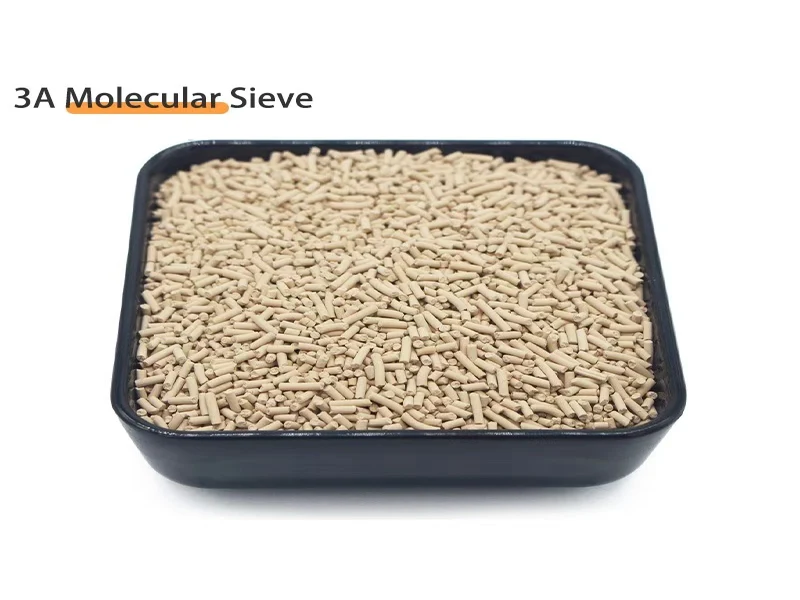
2.1 Molecular Sieve (4A, 5A, 13X, 3A)
Molecular sieve bulk density is 720 to 780 kg/m3 depending on grade. The most common export formats are 25 kg bags on pallets and 150 to 200 L fiber drums.
20FT: 18 to 20 MT net (540 to 600 bags, 14 to 15 pallets, 2 layers high)
40FT: 24 to 26 MT net (720 to 780 bags, 18 to 20 pallets, 2 layers high)
MOLECULAR SIEVE - 150 L DRUMS (130 kg net, drum tare 8 kg)
20FT: 19 to 21 MT net (146 to 162 drums, 4 drums per layer, 37 to 41 layers)
40FT: 25 to 27 MT net (192 to 208 drums, 4 drums per layer, 48 to 52 layers, maxed by payload)
MOLECULAR SIEVE - 1000 KG SUPERSAcks (FIBC, tare 3 to 5 kg)
20FT: 18 to 20 MT net (18 to 20 supersacks, single layer)
40FT: 24 to 26 MT net (24 to 26 supersacks, single layer)
2.2 Activated Alumina (Pellets and Beads)
Activated alumina bulk density is 720 to 780 kg/m3 for standard pellets and 650 to 700 for low-density beads. The choice between pellets and beads affects which container size makes sense.
20FT: 18 to 20 MT net
40FT: 24 to 26 MT net
ACTIVATED ALUMINA - 200 L DRUMS (170 kg net, drum tare 10 kg)
20FT: 19 to 21 MT net (112 to 124 drums)
40FT: 25 to 27 MT net (148 to 160 drums, payload limited)
2.3 Alumina Powder (Calcined, Tabular, Reactive)
Alumina powder bulk density is 800 to 1100 kg/m3 depending on grade and particle size distribution. Higher density means you hit the payload limit faster, so you load less volume per container.
20FT: 20 to 21 MT net (close to payload limit, 28 m3 used out of 33 available)
40FT: 26 to 27 MT net (payload limited, only 25 m3 used out of 67 available)
TABULAR ALUMINA T-60/64 (1100 kg/m3) - 1000 KG SUPERSAcks
20FT: 18 to 19 MT net (close to payload limit)
40FT: 25 to 26 MT net (payload limited)
REACTIVE ALUMINA (850 kg/m3) - 25 KG BAGS
20FT: 18 to 19 MT net
40FT: 24 to 25 MT net
2.4 Aluminum Hydroxide (ATH)
ATH bulk density ranges from 650 kg/m3 (ground standard grade) to 1400 kg/m3 (heavy precipitated grades). Surface-treated ATH with silane coating has the same bulk density but slightly higher packaging tare due to the inner PE liner.
20FT: 18 to 20 MT net
40FT: 24 to 26 MT net
ATH SURFACE-TREATED (700 kg/m3) - 25 KG BAGS WITH PE LINER
20FT: 17 to 19 MT net (5 to 8 percent less due to PE liner volume)
40FT: 23 to 25 MT net
ATH HEAVY GRADE (1300 kg/m3) - 50 KG BAGS
20FT: 20 to 21 MT net (payload limited)
40FT: 26 to 27 MT net (payload limited)
The key insight: heavy ATH grades (above 1000 kg/m3) load nearly the same tonnage as 4A molecular sieve, but lightweight ATH grades need the High-Cube 40FT to make volume work. Most ATH orders quote on 40FT standard, but if you are buying precipitated ATH below 600 kg/m3 for low-smoke cable compounds, ask for 40FT High-Cube.
3. Packaging Format Comparison: Cost, Damage Rate, and Handling
3.1 Palletized Bags (25 kg or 50 kg)
The most common format for high-volume adsorbent shipments. Standard pallet is the Euro pallet (1200 x 800 mm, 25 kg wood weight) or the ISO pallet (1100 x 1100 mm, 30 kg wood weight). For 25 kg bags, the typical pallet is 40 bags per layer (8 x 5 layout on Euro) and one or two layers high.
Cost: 0.10 to 0.15 USD per bag packaging cost, plus 2 to 4 USD per pallet wood. Damage rate: 1.5 to 3 percent bag breakage in transit (especially in developing-country ports with manual handling). Handling: needs forklift at destination; manual handling is possible for one or two bags but impractical for full-pallet loads.
3.2 Fiber Drums (150 to 220 L)
Best for adsorbents destined for petrochemical, refinery, or PSA equipment customers who have forklift handling at the plant site. The drum is a steel chimb and ring with a fiber body, typically 150 L (130 kg net) or 200 L (170 kg net) for 4A molecular sieve, and 220 L (180 kg net) for 5A and 13X.
Cost: 12 to 18 USD per drum, 8 to 10 percent higher than palletized bags. Damage rate: 0.3 to 0.5 percent (much lower than bags because the drum absorbs impact and protects the product from moisture pickup during port transshipment). Handling: forklift only; drums are too heavy for manual handling.
3.3 Supersacks (FIBC, 500 to 1000 kg)
Best for alumina powder and heavy ATH grades where the receiving facility has a bulk-handling system. The FIBC (Flexible Intermediate Bulk Container) is a woven polypropylene bag with four lifting loops, typically rated for 1000 kg net with a 5:1 safety factor (i.e. 5000 kg breaking strength).
Cost: 8 to 14 USD per supersack. Damage rate: 0.8 to 1.5 percent (the loop is the failure point; one broken loop can dump 1000 kg of product). Handling: forklift or crane with loop attachment required. Supersacks are not suitable for products that need to remain unbroken (beaded molecular sieve, granular activated alumina) because the unloading process often breaks beads.
For most B2B shipments of molecular sieve to industrial dryers, 200 L fiber drums are the best balance of cost, damage rate, and end-user handling. For alumina powder and ATH, palletized 25 kg bags are usually preferred because the receiving facility is often a polymer compounding plant with manual bag-dumping stations.
4. Freight Cost Optimization Across Order Sizes
4.1 Cost Per Metric Ton by Container Type (2026 Reference Rates)
These rates are typical for sea freight from Qingdao or Tianjin to major industrial ports (Rotterdam, Houston, Mumbai, Santos, Jeddah) in mid-2026. Actual rates fluctuate with the Baltic Dry Index and fuel surcharges.
40FT FCL, 24 MT loaded: 1,900 to 2,600 USD total / 79 to 108 USD per MT
40FT High-Cube FCL, 25 MT loaded: 2,000 to 2,800 USD total / 80 to 112 USD per MT
LCL (consolidated), 5 MT order: 1,000 to 1,400 USD total / 200 to 280 USD per MT (2 to 3x FCL rate)
Note: For heavy products (calcined alumina, heavy ATH), 20FT often beats 40FT because you max out payload at 20 to 21 MT.
4.2 When to Split vs Consolidate
If your annual consumption is below 12 MT of any product, you are in LCL territory and should consider annual blanket orders with quarterly releases, or consolidated buying through a procurement agent. If your consumption is 12 to 18 MT per product, the 20FT FCL is the sweet spot. If you are above 18 MT per product and have stable demand, the 40FT FCL gives you 12 to 18 percent savings per ton.
4.3 Common Loading Mistakes
Mistake 1: Booking 40FT for products under 22 MT total. You pay for the bigger box but load less than 80 percent of capacity, and the freight forwarder may refuse to release the empty container space for consolidation. Mistake 2: Mixing bag and drum products in one container without separation. The vibration of sea transit shifts the stacks and crushes bags at the bottom. Mistake 3: Forgetting the 200 to 400 kg weight of pallet wood and drum tare. If your supplier quotes 22 MT net product weight in a 20FT, the total gross weight including packaging is 22.3 to 22.5 MT, which can exceed the road weight limit on the destination side (especially in Europe where 22.5 MT gross is the legal road limit).
Mistake 4: Not pre-stuffing at the warehouse. If you CIF the goods to a buyer, you are responsible for container loading. Always pre-stuff at the supplier warehouse rather than at the port terminal - the port stuffing fee is 80 to 150 USD per container and the loading is rushed. Mistake 5: Forgetting IMDG marking. None of the standard molecular sieve, activated alumina, alumina powder, or ATH products are IMDG hazmat, so this rarely applies, but some surface-treated ATH with coupling agents may require MSDS review for specific destinations.
5. Real Case Example: Aluminaworld Q2 2026 Shipments
In Q2 2026, Aluminaworld shipped 47 containers across 12 customers. The breakdown:
- 12 containers of 4A molecular sieve (130 to 170 kg drums, 19 to 21 MT each)
- 4 containers of activated alumina (25 kg bags, 18 to 20 MT each)
- 2 containers of calcined alumina (25 kg bags, 20 to 21 MT each)
40FT FCL shipments: 24 containers (51 percent of count, 56 percent of tonnage)
- 14 containers of 5A and 13X molecular sieve (130 kg drums, 25 to 27 MT each)
- 6 containers of ATH (25 kg bags, 24 to 26 MT each)
- 4 containers of alumina powder (FIBC supersacks, 24 to 26 MT each)
40FT High-Cube FCL: 3 containers (6 percent of count, 8 percent of tonnage)
- All precipitated ATH for LSZH cable compounds (lightweight grade, 0.50 to 0.55 t/m3)
LCL shipments: 2 containers (4 percent of count, 1 percent of tonnage)
- First orders of 5 MT or below, mostly R&D and qualification samples
The pattern is clear: 20FT for sample and small-batch orders, 40FT for steady-state production runs, and 40FT High-Cube only when the product is genuinely low-bulk-density. No 40FT orders were loaded below 22 MT net, and no 20FT orders were loaded above 21 MT net, because in both cases the customer was either overpaying for unused container capacity or hitting weight limits prematurely.
If you want a quote tailored to your specific product, packaging, and destination port, send Aluminaworld your annual consumption estimate and target freight terms (FOB Qingdao, CIF your-port, DDP your-warehouse). We will return a side-by-side comparison of 20FT vs 40FT vs 40FT High-Cube with per-MT cost landed at your facility.
6. Free Loading Optimization Worksheet
Use this 4-step worksheet to size your next order:
Step 1 - Product and bulk density. Identify the product (4A, 5A, 13X, activated alumina pellet, calcined alumina, ATH standard or surface-treated) and look up the bulk density from the supplier TDS or the table in section 2.
Step 2 - Annual consumption. Estimate your annual demand in metric tons. If it is below 12 MT, consider LCL or annual blanket order. If 12 to 18 MT, 20FT FCL. If above 18 MT, 40FT FCL.
Step 3 - Packaging choice. Drums (150 to 220 L) for high-end sieve and petrochemical customers. Bags on pallets (25 or 50 kg) for high-volume polymer and ceramic customers. Supersacks (500 to 1000 kg FIBC) for alumina powder and heavy ATH.
Step 4 - Quote request. Send the supplier your product, annual consumption, packaging preference, and destination port. Request a side-by-side comparison of 20FT vs 40FT vs 40FT High-Cube with per-MT landed cost. Compare quotes on per-MT basis, not per-container basis - the larger container is not always cheaper per ton.
For a free Excel version of this worksheet with auto-calculated tonnage per container and per-MT cost projections, contact Aluminaworld at the link below. We send the file as a 50 KB xlsx within 1 working day.
Get a Tailored Container Loading Quote
Send us your annual consumption estimate, target product, and destination port. We will return a side-by-side comparison of 20FT vs 40FT vs 40FT High-Cube with per-MT landed cost and packaging options.