Molecular Sieve for Refrigerant Drying (R134a, R410A, R32): Acid Number Control and Compressor Protection
3A molecular sieve is the only correct adsorbent for HFC and HFO refrigerant drying. This guide shows why 4A fails, what moisture and acid number targets the compressor warranty requires, and how to specify a sieve that protects the compressor for 5 to 7 years without a change-out.
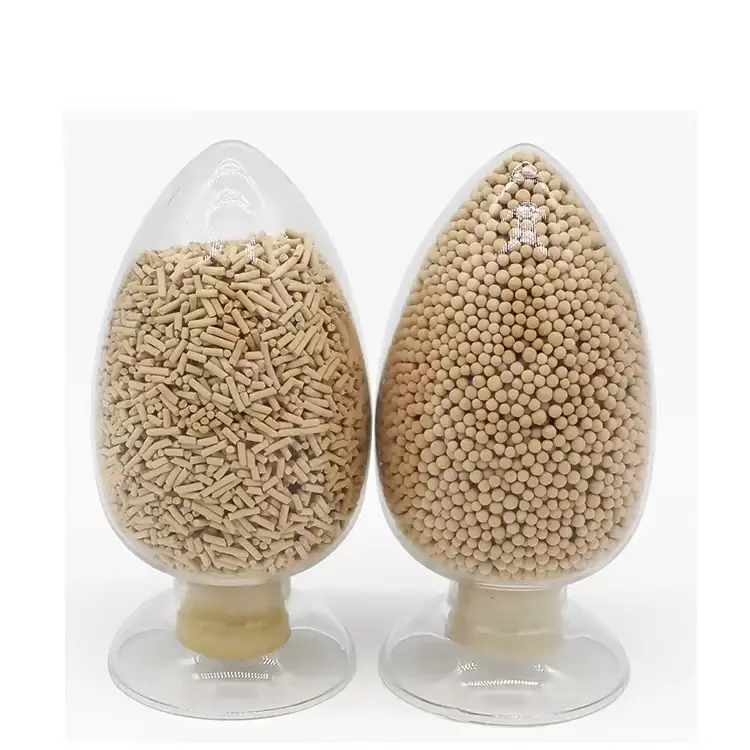
Quick Answer
3A molecular sieve is the industry-standard adsorbent for HFC and HFO refrigerant drying. Its 3 Angstrom pore opening admits only water (kinetic diameter 2.6 Angstrom) and rejects every common refrigerant molecule — R134a, R410A, R32, R407C, and R404A all have kinetic diameters between 4.0 and 5.0 Angstrom. The corresponding moisture spec at the compressor inlet is below 10 to 50 ppm by mass, depending on the refrigerant family and the OEM compressor warranty. Acid number (the KOH titer of the lubricant) must stay below 0.10 mg KOH/g in service and below 0.05 mg KOH/g for AHRI 700-2016 reclaim-grade refrigerant. The 3A bed is supplied in a sealed cartridge, is factory-regenerated at 250 to 320 C, and is replaced as a unit every 3 to 7 years. These are industry-typical ranges compiled from compressor OEM technical bulletins, AHRI standards, and field audits; specific values should be confirmed against the agreed data sheet and the operating envelope of the unit.
Industry-Typical Refrigerant Moisture and Acid Specs
| Refrigerant | Composition | Kinetic diameter (Å) | Moisture spec at compressor (ppm by mass) | Acid number spec (mg KOH/g) | Common application |
|---|---|---|---|---|---|
| R12 | Dichlorodifluoromethane (legacy) | 4.4 | < 30 | < 0.10 | Legacy commercial refrigeration |
| R22 | Chlorodifluoromethane (HCFC, phase-out) | 4.4 | < 30 | < 0.10 | Legacy air conditioning |
| R134a | 1,1,1,2-Tetrafluoroethane (HFC) | 4.2 | < 50 (OEM warranty < 30) | < 0.10 | Automotive A/C, chillers, medium-temp commercial |
| R410A | R32 / R125 blend 50 / 50 (HFC) | 4.3 (R32) / 5.0 (R125) | < 50 (OEM warranty < 30) | < 0.10 | Residential and light commercial A/C, heat pumps |
| R32 | Difluoromethane (HFC, low-GWP) | 4.3 | < 30 (OEM warranty < 20) | < 0.10 | New residential A/C, low-GWP replacement for R410A |
| R407C | R32 / R125 / R134a 23/25/52 (HFC) | 4.2 to 5.0 | < 50 | < 0.10 | Commercial A/C retrofit for R22 |
| R404A | R125 / R143a / R134a 44/52/4 (HFC) | 4.2 to 5.0 | < 30 | < 0.10 | Low- and medium-temp commercial refrigeration |
| R507 | R125 / R143a 50/50 (HFC) | 4.4 to 5.0 | < 30 | < 0.10 | Low-temp commercial refrigeration |
| R1234yf | 2,3,3,3-Tetrafluoropropene (HFO) | 5.2 | < 30 (OEM warranty < 20) | < 0.05 | Automotive A/C, low-GWP replacement |
| R1234ze | trans-1,3,3,3-Tetrafluoropropene (HFO) | 5.4 | < 30 | < 0.05 | Chillers, low-GWP commercial refrigeration |
| R744 (CO2) | Carbon dioxide (natural) | 3.3 | < 10 | < 0.05 | Transcritical CO2 systems, cascade low stage |
| R717 (NH3) | Ammonia (natural) | 2.6 | < 10 (water also reactive with NH3) | < 0.05 (alkaline reserve) | Industrial refrigeration, cold storage |
Important: These ranges are industry-typical values for front-end engineering. The OEM compressor warranty is the controlling spec for the moisture and acid number limits. Confirm the specific data sheet for the agreed compressor model, the agreed refrigerant charge, and the agreed ambient envelope before sizing the drier. A drier sized to the chemical-family industry-typical number is not a guaranteed protection envelope.
1. Executive Decision: 3A Is the Only Correct Sieve Grade for HFC and HFO Refrigerants
A refrigerant drier is a small, factory-sealed cartridge, but the choice of molecular sieve inside it determines whether the compressor survives its rated service life or burns out early from acid attack. The wrong grade — most commonly 4A instead of 3A — fails the compressor in two ways. First, the 4 Angstrom pore admits a fraction of small HFC molecules, especially R32, so the bed co-loads refrigerant and water. The refrigerant is held in the pore and slowly released in service, contaminating the oil and breaking the acid balance. Second, the co-loaded refrigerant reduces the water capacity of the bed, so the bed reaches water breakthrough at a lower total moisture load than the data sheet suggests. The operator sees the outlet moisture climb before the bed has processed its rated water inventory, then orders a premature change-out. In a sealed cartridge application, there is no way to know the bed is co-loaded — the symptom is moisture drift at the evaporator inlet, which is usually attributed to a different cause.
3A sieve is the potassium-exchanged form of type A zeolite, with the formula K12Al12Si12O48. The potassium cation has an ionic radius of 1.38 Angstrom and sits at the pore window, narrowing the effective opening to 3 Angstrom. Water has a kinetic diameter of 2.6 Angstrom and is admitted freely. Every common HFC and HFO refrigerant has a kinetic diameter between 4.2 and 5.4 Angstrom, well above the 3A cutoff, so the refrigerant is excluded. The selectivity ratio of water to refrigerant on 3A is in the order of 1000 to 1, which is why a 3A bed in a clean system can hold its rated water capacity for the full cartridge life without measurable refrigerant carry-over. The same selectivity is the reason every major OEM liquid-line filter drier — Sporlan, Emerson, Danfoss, Bitzer, Carel — uses 3A as the working adsorbent. The grade is not a marketing distinction; it is a kinetic-diameter specification that protects the compressor warranty.
For a buyer-engineer, the critical lesson is that the sieve grade is a contractual boundary, not a procurement detail. Specify 3A in writing, by the K-form exchange, with a certificate of analysis that confirms the K exchange level (typically 70 percent minimum for a high-quality 3A) and the water capacity at the supplier test condition. Reject any bid that offers 4A as a substitute, even at a lower price. The compressor cost is several thousand dollars, the labor to change-out the compressor is several thousand more, and the production loss during the change-out is several thousand per day in a commercial refrigeration plant. A 30 percent saving on the drier cartridge is not worth the risk.
2. How Moisture and Acid Form in a Refrigerant System
Moisture enters a refrigerant system from three sources. The largest source in a new system is the residual moisture in the refrigerant charge itself, the lubricant, and the drier cartridge. AHRI 700-2016 limits virgin refrigerant moisture to 10 ppm by mass for HFC blends and 5 ppm for R1234yf; lubricant moisture is typically 50 to 100 ppm; sieve cartridge moisture is 1.0 to 1.5 wt% on the as-shipped bed. After evacuation and initial charging, the system should reach an equilibrium moisture below 30 ppm at the compressor inlet. The second source is in-service leakage, both at fittings and through the seal of the compressor itself. A small hermetic compressor will pull 5 to 20 mg of water per year through the seal. A larger semi-hermetic or screw compressor with shaft seals will pull 50 to 200 mg per year. The third source is chemical reaction inside the system — the lubricant itself can break down under heat to release water, and the HFC can hydrolyze to form HF and HCl if the temperature is high enough.
The acid formation pathway is the most damaging. Water in the liquid refrigerant at the compressor inlet flashes to vapor in the suction line, and the vapor enters the compressor crankcase at 60 to 90 C in a chiller or 100 to 150 C in a high-stage screw. At those temperatures, water reacts with the HFC to form hydrofluoric acid (HF) and hydrochloric acid (HCl). The reaction is slow at 60 C but measurable; at 120 C it is fast enough to halve the pH of the lubricant over a 1000-hour run. The acid then attacks three things simultaneously: the motor winding insulation (varnish, Mylar, and copper), the bearing surfaces (Babbit and bronze), and the copper piping (oxide formation). The byproducts — metal fluorides, copper oxide, varnish fragments — circulate with the oil and plate out on the expansion device, the evaporator coil, and the suction screen. The compressor eventually fails with a winding-to-ground short, a bearing seizure, or a plugged screen.
Acid number is the operational measure of the damage. AHRI 700-2016 specifies the acid number of reclaimed refrigerant as the KOH titer of the oil sample, in milligrams KOH per gram of oil. A new mineral oil or POE oil starts at 0.02 to 0.05 mg KOH/g. A working envelope below 0.10 mg KOH/g is considered clean. The 0.10 to 0.50 mg KOH/g band is a warning; the operator should re-test monthly, plan a sieve change-out, and inspect the system for leak points. Above 0.50 mg KOH/g the oil is acid-bearing, the lubricant has lost its reserve alkalinity, and the compressor is at risk of a winding or bearing failure within the next operating season. The acid number is the only reliable field signal of an incipient burn-out; moisture, pressure drop, and superheat can all be normal while the acid number is climbing. Test the oil every 6 months on a working system, every 3 months on a system with a known moisture event, and immediately after any service that opened the refrigerant circuit.
3. Refrigerant-by-Refrigerant Moisture and Spec Translation
The published moisture spec varies by source. AHRI 700-2016 sets the industry-wide moisture limit for reclaimed refrigerant. The compressor OEM (Copeland, Bitzer, Danfoss, Emerson) sets a tighter limit for warranty coverage. The system designer sets a still tighter limit to leave headroom for field variability. The buyer must read all three. A common mistake is to size the drier to the AHRI limit, then find that the OEM warranty requires a lower moisture envelope and the warranty claim is denied after a burn-out. Always size the drier to the OEM limit, not the AHRI limit, and document the OEM limit on the data sheet.
R134a is the most common HFC in stationary chillers and medium-temperature commercial refrigeration. Its kinetic diameter of 4.2 Angstrom places it well above the 3A pore, so 3A rejects it cleanly. The moisture spec at the compressor is below 50 ppm by mass per AHRI 700-2016; Copeland and Bitzer tighten this to below 30 ppm for warranty coverage. A correctly sized 3A drier in a clean R134a chiller holds the moisture below 20 ppm for the full 5-year cartridge life. R410A is a 50/50 blend of R32 and R125. R32 has a kinetic diameter of 4.3 Angstrom and is the smaller molecule of the two; it is the more aggressive co-adsorbate on 4A and the more reactive of the two with water. R410A systems therefore need the tightest moisture envelope in the HFC family, with the OEM warranty typically below 30 ppm. A 3A drier is the only correct specification, and the cartridge is typically 30 percent larger by mass than an R134a cartridge of the same flow capacity.
R32 is the low-GWP successor to R410A. It is a single-component refrigerant, not a blend, so its behavior is reproducible from charge to charge. Its kinetic diameter of 4.3 Angstrom and its reactivity with water are slightly higher than R134a. The OEM warranty spec for R32 is below 20 ppm at the compressor inlet, the tightest in the HFC family. The 3A bed selection is the same as for R410A, but the bed size may be 10 to 20 percent larger to meet the lower moisture envelope. R1234yf and R1234ze are the HFO low-GWP successors, with kinetic diameters of 5.2 and 5.4 Angstrom respectively. The larger kinetic diameter means R1234yf and R1234ze are even more strongly excluded by 3A than the HFC family, so the 3A bed has a slightly higher effective water capacity. The OEM warranty is below 20 ppm for the automotive and chiller applications. R744 (CO2) and R717 (ammonia) are the natural-refrigerant alternatives; both have small kinetic diameters (3.3 and 2.6 Angstrom) and are not adequately rejected by 3A. CO2 driers use silica gel or 4A; ammonia driers are not used because water reacts directly with ammonia and is removed as ammonium hydroxide, not adsorbed.
4. Liquid-Line Driers vs Suction-Line Filter Driers: Two Roles, One Adsorbent
Two drier placements exist in a refrigeration circuit, and the buyer must specify both. A liquid-line drier is installed between the condenser and the expansion device, on the high-pressure liquid side. The refrigerant is in the liquid phase, the temperature is 35 to 50 C, and the pressure is 1.0 to 2.5 MPa depending on the refrigerant. The liquid-line drier has three jobs: remove moisture from the refrigerant charge, remove acid that may have formed in the system, and remove particulate from the condenser and the field-installed piping. The liquid-line drier is the primary defense, is present in every new system, and is replaced periodically as a sealed cartridge. A correctly specified liquid-line drier uses 3A molecular sieve as the active adsorbent, with a 100 percent rated core and a 25 to 50 percent oversized shell to allow for dirt and acid capacity.
A suction-line filter drier (SLFD) is installed between the evaporator and the compressor, on the low-pressure vapor side. The refrigerant is in the vapor phase (typically 5 to 15 percent quality at the compressor inlet), the temperature is 0 to 15 C, and the pressure is 0.2 to 0.8 MPa. The SLFD has one job: capture any moisture, acid, or particulate that has formed downstream, so that the compressor does not ingest it. The SLFD is a temporary service item, not a permanent part of the system. It is installed after a confirmed moisture event, an acid event, or a compressor burn-out, and is removed after 72 hours of clean operation. The SLFD adds pressure drop on the suction side, which reduces the compressor capacity and the system efficiency, so it is not run continuously.
The grade selection is the same for both placements: 3A molecular sieve. A common mistake is to use 4A in a suction-line drier because the suction-side vapor is at lower pressure and the operator assumes a less aggressive adsorbent is acceptable. The reasoning is wrong. The 4A pore admits a measurable fraction of R32 and methanol in the suction vapor, both of which the compressor will tolerate less than the 3A exclusion profile. The 3A bed is the only correct specification for both placements, regardless of the pressure and temperature. The shell size is different — the SLFD is typically smaller than the liquid-line drier because the vapor density is lower and the mass flow on the suction side is lower. The internal core design is also different — the SLFD is optimized for vapor-phase contact, with a coarser mesh and a lower pressure drop, while the liquid-line drier is optimized for liquid-phase contact with a finer mesh and a higher dirt capacity.
5. Drier Sizing, Cartridge Specification, and Change-Out Triggers
The liquid-line drier is sized by two parameters: the refrigerant flow in kW of cooling capacity (or tons of refrigeration) and the moisture load to be removed. The industry rule of thumb is one liter of drier core per 10 kW of cooling for clean systems, or one liter per 5 kW for retrofit or service applications. The flow rule of thumb translates to about 1.0 to 2.0 kW per cubic centimeter of sieve volume, depending on the system cleanliness envelope. The moisture load is the sum of the residual moisture in the charge, the in-service leakage, and any moisture released by the lubricant. A new clean system typically needs 5 to 15 grams of water removed in the first 24 hours, then 1 to 5 grams per year per kW of capacity. A 100 kW chiller with a 3-liter drier core has 1.5 kg of 3A sieve, which holds about 200 grams of water at 13 wt% working capacity — enough for 10 to 20 years of leakage in a clean system.
The cartridge specification covers the sieve core, the shell, the connections, and the documentation. The sieve core is 3A molecular sieve, 8 x 12 mesh (2.4 to 1.2 mm) or 4 x 8 mesh (4.8 to 2.4 mm), with a static water adsorption above 20 wt% at 25 C and 75 percent relative humidity. The shell is a carbon-steel or stainless-steel pressure vessel rated for the system design pressure (typically 3.0 MPa for HFC, 4.5 MPa for R410A, 10 MPa for CO2 transcritical), with flare or solder connections sized to the system piping. The factory fill is the sieve core, sealed under dry nitrogen at 50 to 100 kPa, with a moisture content below 1.5 wt% on the as-shipped sieve. The documentation includes the sieve grade and lot number, the certificate of analysis, the factory test pressure, the date of manufacture, and the recommended service life. The supplier should provide this documentation on every shipment, not on request.
The change-out trigger is rising outlet moisture, rising acid number, or pressure drop. The outlet moisture is the primary signal. A 3A drier in a clean system holds the moisture below 30 ppm at the evaporator inlet for the full 5 to 7 years of cartridge life. When the moisture climbs above 50 ppm, the cartridge is at end of life and must be changed. A moisture alarm on the liquid line is the cheapest and most reliable signal — a thin-film capacitive hygrometer at the drier outlet, with a 50 ppm alarm setpoint, costs a few hundred dollars and gives 6 to 12 months of warning before the moisture hits the compressor. The acid number is the secondary signal; a quarterly oil sample tested by the operator or a service lab gives the trend. Pressure drop is the tertiary signal; a rising pressure drop on the liquid line indicates a plugged drier from particulate or ice. The pressure drop signal is usually late — by the time the pressure drop is high, the sieve is at end of life or the system has a particulate source that must be addressed separately.
6. Factory Regeneration, Packaging, and On-Site Handling
3A sieve is supplied from the manufacturer in one of two forms: as bulk beads in a sealed fiber drum for industrial charger filling, or as a pre-loaded core in a factory-sealed drier cartridge for field service. Bulk beads are regenerated at the sieve manufacturer's facility immediately before drum filling, with a typical regeneration cycle of 250 to 320 C in dry air or dry nitrogen for 4 to 8 hours, followed by cool-down under dry purge gas to 50 C or below. The drum is then sealed with a moisture-barrier liner and a clamped lid, with a positive pressure of dry nitrogen at 20 to 50 kPa to prevent ambient moisture ingress during transit and storage. The as-shipped moisture content on a well-managed drum is 0.8 to 1.5 wt%. Bulk beads are used by OEMs that fill their own drier cores, and by industrial chiller manufacturers that have a designed regeneration circuit on the chiller itself.
Pre-loaded cores are factory-sealed, factory-regenerated, and shipped in a sealed metal shell with a positive pressure of dry nitrogen. The shell is filled at the sieve manufacturer, sealed by welding or by a gasket with a torque-controlled closure, and tested for pressure integrity. The factory fill process is more reliable than a field fill, because the manufacturer controls the sieve moisture, the shell dryness, the sealing environment, and the test. A factory-sealed core is the preferred specification for any field service application, because the operator cannot reproduce the factory environment in the field. A field-recharged drier, by contrast, picks up ambient moisture during the recharging process, and the recharged drier has a higher as-installed moisture than the factory-sealed one. The difference is small (1.5 wt% vs 3 to 5 wt% moisture on the recharged sieve) but it is enough to offset the working capacity of the bed.
On-site handling is the most common source of premature drier failure. A factory-sealed core should be opened in a dry environment, not at the job site where the relative humidity is 60 to 80 percent. The connection sequence is critical: the system piping should be pre-purged with dry nitrogen, the old drier removed and capped immediately, the new drier installed within 15 minutes, and the system evacuated to below 100 Pa before charging. A 15-minute exposure of the new sieve to 70 percent relative humidity ambient air picks up about 0.5 wt% moisture on the sieve, which translates to about 5 percent of the working capacity of the bed. A 60-minute exposure picks up 2 wt% and offsets 20 percent of the working capacity. For a retrofit or service application, the right practice is to open the new drier inside a plastic tent purged with dry nitrogen, or to install the new drier so quickly that the exposure is below 5 minutes. The OEM service manual for the compressor has the specific handling instructions; follow them.
7. R32 and Low-GWP Retrofit: What Changes vs R410A
R32 is the leading low-GWP replacement for R410A in residential and light commercial air conditioning. Its GWP of 675 is one-third that of R410A (2088), and it is a single-component refrigerant, which simplifies reclaim and reuse. The compressor design is the same hermetic or scroll as for R410A, with a tighter clearance on the bearing surfaces to handle the slightly higher discharge temperature of R32. The drier selection is the same 3A molecular sieve, but the moisture envelope is tighter: most R32 compressor OEMs publish a 20 ppm warranty limit, vs 30 ppm for R410A. The cartridge may be 10 to 20 percent larger for the same cooling capacity, and the change-out interval may be shortened to 3 to 5 years from 5 to 7 years for R410A.
The retrofit from R410A to R32 is not a drop-in. The lubricant must be changed from a POE (polyolester) to a PVE (polyvinyl ether) in some compressor models, and the elastomers in the drier and the expansion device must be confirmed compatible with R32. The drier cartridge does not need to be changed as part of the retrofit if the existing cartridge is 3A and has been in service for less than 3 years, but the moisture spec at the compressor is now tighter. A new system is shipped with a fresh factory-sealed 3A drier. A retrofit that reuses the existing drier should plan a change-out within 12 months because the moisture spec has moved.
R1234yf and R1234ze are the HFO low-GWP alternatives for automotive and chiller applications. R1234yf has a GWP of 4 and is the new automotive A/C standard in the EU and the US. R1234ze has a GWP of 7 and is used in high-pressure chillers. Both refrigerants have a mild flammability classification (A2L) and require specific compressor and circuit design. The 3A drier is the correct specification, and the larger kinetic diameter (5.2 to 5.4 Angstrom) gives the 3A bed a slightly higher effective water capacity. The OEM moisture spec is below 20 ppm for both. The change-out interval is the same as for R410A, 5 to 7 years in commercial service.
8. Acid Number Monitoring and Lubricant Sampling
Acid number is the single most reliable field signal of moisture damage in service. The test is a simple acid-base titration: a known mass of oil sample is dissolved in a solvent, titrated with a standardized KOH solution, and the result is reported as milligrams of KOH per gram of oil. The test is described in ASTM D974 and is offered by any commercial oil-analysis lab. The cost is 20 to 50 USD per sample, and the turnaround is 1 to 3 business days. A field operator with a titration kit can run the test on site in 30 minutes. The result is unambiguous: the higher the number, the more acid is in the oil, and the more urgent the corrective action.
The interpretation of the acid number is the key engineering decision. A new oil or a clean system in service should show below 0.05 mg KOH/g. A working envelope below 0.10 mg KOH/g is normal operation, and no action is required beyond the routine sampling schedule. A reading between 0.10 and 0.50 mg KOH/g is the warning band. The operator should re-sample in 30 days, inspect the system for moisture sources (leaks, compromised drier, recent service that opened the circuit), and plan a sieve change-out within the next 90 days. A reading above 0.50 mg KOH/g is the action band. The oil must be changed out, the sieve must be changed out, the system must be evacuated to below 100 Pa, and a suction-line filter drier should be installed for 72 hours to capture any residual particulate. After the corrective action, re-sample every 30 days for 3 months to confirm the system is clean.
The lubricant type matters for the test interpretation. Mineral oil (used in legacy R12 and R22 systems) has a higher natural acid number than POE or PVE oil, and the warning bands are different. For mineral oil, a working envelope below 0.20 mg KOH/g is normal, and the action band is above 1.0 mg KOH/g. For POE oil in HFC systems, the working envelope below 0.10 mg KOH/g is normal, and the action band is above 0.50 mg KOH/g. The difference is the natural acid content of the base oil, not the moisture event. Always check the oil type before applying the warning band thresholds, and document the oil type on the data sheet.
9. Drier Cartridge Data Sheet Specifications
| Specification | Typical value | Test method | Procurement note |
|---|---|---|---|
| Molecular sieve grade | 3A (K-form LTA) | XRD or K exchange by ICP | Reject any bid offering 4A or 5A for HFC/HFO service |
| K exchange level | ≥ 70 percent (high-quality 3A) | ICP-OES on dissolved sieve | Lower K exchange = larger effective pore = more co-adsorption of R32/methanol |
| Particle size | 8 x 12 mesh (2.4 to 1.2 mm) or 4 x 8 mesh (4.8 to 2.4 mm) | Sieve analysis ASTM D4513 | Coarser mesh = lower pressure drop, slightly lower water capacity |
| Bulk density | 0.65 to 0.75 kg/L (3A) | ASTM D4180 | Lot CoA controls loading mass in the cartridge |
| Static water adsorption (25 C, 75% RH) | ≥ 20 wt% | Gravimetric, supplier test | Industry-typical for 3A, not a working capacity |
| Attrition rate | ≤ 0.2 wt% | ASTM D4058 (modified) | Higher attrition = more fines in the cartridge = higher pressure drop |
| As-shipped moisture content | ≤ 1.5 wt% | Loss on drying 175 C, 2 h | Higher = lower working capacity at first installation |
| Crush strength | ≥ 5 N per bead (4 x 8 mesh) | ASTM D4179 | Lower = more fines during shipping and handling |
| Working capacity (refrigerant service) | 5 to 8 wt% | Field correlation, supplier typical | Lower than static adsorption because of vapor-phase kinetics |
| Factory regeneration temperature | 250 to 320 C in dry air or N2, 4 to 8 h | Manufacturer SOP | Verify on the data sheet, not in the marketing brochure |
| Shell pressure rating | 3.0 MPa (HFC), 4.5 MPa (R410A), 10 MPa (CO2) | ASME BPVC Section VIII | Match to the system design pressure with a 1.5x safety factor |
| Sealing gas | Dry nitrogen at 20 to 50 kPa | Pressure gauge on inlet | No positive pressure = compromised seal = ambient moisture ingress |
| Connection type | Flare (SAE), solder (copper), or threaded (NPT) | OEM service manual | Match the system piping, not the OEM default |
These specifications are the minimum for a 3A drier in HFC or HFO service. The K exchange level is the single most important number, because a 3A sieve with a low K exchange (below 50 percent) behaves more like a 4A sieve in refrigerant service and will co-adsorb R32 and methanol. The factory regeneration temperature and the as-shipped moisture content are the next two most important numbers, because they determine the working capacity of the bed at first installation. A drier that is shipped with 3 wt% moisture is already 10 percent below its rated working capacity; a drier shipped with 5 wt% moisture is 25 percent below.
10. Burn-Out Recovery: Sieve, Oil, and Suction-Line Filter Drier
A compressor burn-out from acid attack is a recoverable event, but the recovery must be done in the right order. The first step is to remove the failed compressor and inspect the windings, the bearings, and the suction screen. If the windings are shorted to ground, the compressor is replaced. If the bearings are damaged (metal-to-metal contact, scoring on the shaft), the compressor is replaced. If the windings and bearings are intact but the oil is acid-bearing, the compressor can be rebuilt with new windings and new bearings, then reinstalled. The rebuild cost is typically 30 to 50 percent of a new compressor cost, and the lead time is 2 to 4 weeks. A compressor that has been rebuilt after an acid event is not as reliable as a new compressor, so the rebuild decision should be made with the OEM service group.
The second step is to change the lubricant. The acid-bearing oil is in the compressor crankcase, the condenser, the evaporator, and the liquid line. The oil cannot be flushed with the acid still in it, so the system must be drained of oil, the new oil circulated briefly to dissolve the residual acid film, drained again, and the new oil added. A typical drain-flush-drain sequence uses 5 to 10 percent of the system oil charge per flush, and 3 to 5 flushes. The new oil is added with a starting acid number below 0.05 mg KOH/g and a moisture content below 50 ppm. The acid number of the new oil should be tested before charging and after the first 100 hours of operation to confirm the acid is no longer present in the system.
The third step is to change the drier. The existing drier is acid-bearing and has done its job; replace it with a new factory-sealed 3A cartridge of the same size or 25 percent larger. The new drier is installed with a positive-pressure dry-nitrogen purge on the shell, and the system is evacuated to below 100 Pa for 24 hours before charging. The fourth step is to install a suction-line filter drier (SLFD) for 72 hours of operation. The SLFD is a temporary service item, not a permanent part of the system. After 72 hours of clean operation (no moisture or acid alarm), the SLFD is removed, and the system runs with the new liquid-line drier only. The SLFD installation is the final defense against any residual particulate or acid that the drain-flush sequence did not remove. The total recovery time is typically 5 to 7 days for a commercial chiller, including the rebuild lead time.
11. Comparing OEM Drier Brands: What to Look For
Three brands dominate the commercial refrigerant drier market: Sporlan (Emerson), Danfoss, and Bitzer. Sporlan is the US market leader, with the largest installed base in commercial air conditioning and refrigeration. The Sporlan Catch-All series uses 3A molecular sieve as the standard, with a 100 percent rated core, a 25 percent oversized shell, and a factory regeneration at 290 C. Danfoss is the European market leader, with the DCR and DMT series using 3A molecular sieve and a similar factory regeneration profile. Danfoss publishes a more detailed data sheet than Sporlan, including the sieve grade, the K exchange level, the as-shipped moisture, and the change-out interval by refrigerant family. Bitzer is the German compressor OEM, with the ECO-Dry series sold as a companion to the Bitzer compressor line. Bitzer dryers use 3A molecular sieve and are specified for Bitzer compressor installations.
For a buyer-engineer, the brand selection is usually driven by the compressor OEM. A Copeland compressor is typically paired with a Sporlan drier, a Bitzer compressor with a Bitzer drier, a Danfoss compressor with a Danfoss drier. The pairing is not mandatory, but the OEM cross-approval is a warranty simplification. For an independent specifier or a system that mixes compressor brands, the right answer is the brand with the best data sheet and the best field support. Danfoss typically wins on data sheet quality and field support. Sporlan typically wins on installed base and parts availability. Bitzer typically wins on integration with a Bitzer compressor. The price difference between the three is typically 10 to 20 percent, well below the cost of a premature compressor failure.
The aftermarket drier market is a different consideration. Aftermarket dryers from generic brands (e.g., Chinese, Indian, Turkish) are typically 30 to 50 percent cheaper than the OEM brands. The quality varies widely. The good aftermarket dryers use genuine 3A molecular sieve from a known sieve manufacturer, with a factory regeneration at the OEM standard. The bad aftermarket dryers use 4A instead of 3A, or use 3A with a low K exchange level, or skip the factory regeneration and ship the bed with 3 to 5 wt% moisture. The cheap drier looks the same in the catalog but fails in service. The only reliable test is a sample test: order one, cut it open, send the sieve to a lab for K exchange and moisture analysis. The cost is 200 to 500 USD per sample, and the test takes 1 to 2 weeks. Do this on the first order from a new aftermarket supplier, and repeat on every 10th cartridge as a quality check.
12. Five-Year Service Case: 200 kW R410A Chiller
The case is a 200 kW R410A scroll chiller in a commercial office building in southern China, operating 8 months per year at 60 to 100 percent load, with a Copeland scroll compressor and a Sporlan Catch-All C-485-3A liquid-line drier. The system was commissioned in 2021 with a factory-sealed 3A drier, and the drier was monitored annually with a moisture sensor at the evaporator inlet and a quarterly oil-acid test. The first-year moisture at the evaporator inlet was 18 ppm, well below the Copeland 30 ppm warranty spec. The acid number was 0.04 mg KOH/g, below the AHRI 0.10 mg KOH/g target. The second-year moisture climbed to 22 ppm, still below the warranty spec, and the acid number held at 0.04 mg KOH/g.
The third-year moisture climbed to 28 ppm, and the acid number rose to 0.07 mg KOH/g. The operator inspected the system for leaks, confirmed the seal on the compressor shaft was within specification, and decided to monitor monthly instead of quarterly. The fourth-year moisture was 31 ppm — at the warranty limit. The acid number was 0.09 mg KOH/g — just below the warning band. The operator ordered a new drier, scheduled a change-out for the next planned maintenance window, and installed a suction-line filter drier as a precaution. The change-out was completed in 4 hours, the new drier was factory-sealed 3A from Sporlan, and the post-change-out moisture returned to 14 ppm. The acid number dropped to 0.05 mg KOH/g over the next 30 days. The system ran another 12 months on the new drier before the moisture climbed above 30 ppm again. The change-out interval is 4 years in this system, slightly shorter than the Sporlan 5-year typical, because the operating hours are long and the ambient temperature is high.
The total cost over the 5-year case: two drier change-outs (year 4 and year 9), 10 oil samples, 4 moisture sensor calibrations, and one suction-line filter drier installation. The drier cost is 200 to 400 USD per cartridge, the oil sample cost is 50 USD per sample, the moisture sensor calibration is 100 USD per calibration, and the SLFD rental is 100 USD for 72 hours. The total is 2,000 to 3,000 USD over 5 years, well below the cost of a compressor replacement (5,000 to 8,000 USD for a new 200 kW scroll compressor) and a burn-out recovery (3,000 to 5,000 USD for the service). The cost-benefit is clear: spend 500 USD per year on the drier and oil monitoring, save 2,000 to 3,000 USD per year in avoided compressor damage. The payback is 3 to 6 months on every avoided burn-out event.
13. Five-Year TCO for a 3A Liquid-Line Drier in HFC Service
| Cost element | R134a chiller (100 kW) | R410A chiller (200 kW) | R32 chiller (200 kW) | R1234yf chiller (50 kW) |
|---|---|---|---|---|
| Drier cartridge cost (USD per change-out) | 180 | 320 | 380 | 240 |
| Number of change-outs in 5 years | 1 | 1.25 | 1.5 | 1.5 |
| Drier cost over 5 years (USD) | 180 | 400 | 570 | 360 |
| Oil sampling cost over 5 years (USD) | 500 (10 samples) | 500 (10 samples) | 500 (10 samples) | 500 (10 samples) |
| Moisture sensor + calibration over 5 years (USD) | 400 | 400 | 400 | 400 |
| SLFD rental over 5 years (USD) | 100 (one event) | 100 (one event) | 100 (one event) | 100 (one event) |
| 5-year TCO (USD) | 1,180 | 1,400 | 1,570 | 1,360 |
| Compressor replacement avoided (USD, 1 event) | 4,000 to 5,000 | 6,000 to 8,000 | 7,000 to 9,000 | 3,000 to 4,000 |
| Net savings over 5 years (USD) | 2,820 to 3,820 | 4,600 to 6,600 | 5,430 to 7,430 | 1,640 to 2,640 |
The TCO numbers are illustrative for a 5-year operating window and a single avoided compressor burn-out. The cost-benefit of the 3A drier program improves with operating hours and worsens with shorter operating hours. A chiller that runs 4 months per year has a 5-year TCO of 800 to 1,200 USD and a net saving of 2,800 to 4,200 USD, because the drier change-out interval extends to 6 to 8 years. A chiller that runs 12 months per year has a 5-year TCO of 1,400 to 1,800 USD and a net saving of 4,200 to 6,600 USD, because the drier change-out interval shortens to 3 to 4 years. The cost-benefit is always positive for any operating profile, but the magnitude depends on the duty cycle and the ambient temperature.
14. Sensitivity: Which Specs Matter Most
Four specifications dominate the 3A drier performance in this order: K exchange level, factory regeneration temperature, as-shipped moisture, and particle size. The K exchange level is the single most important number, because it determines the effective pore size. A 3A sieve with a K exchange below 50 percent behaves more like a 3.5 Angstrom sieve, and a 3A sieve with a K exchange below 30 percent behaves more like a 4 Angstrom sieve. The 50 to 70 percent range is the typical industry band, and a sieve with 70 percent or above is the high-quality grade. The difference between 50 percent and 70 percent K exchange is a measurable 15 to 20 percent improvement in water capacity at the same R32 co-adsorption level.
The factory regeneration temperature is the second-most important number. A sieve regenerated at 250 C has a working capacity 10 to 15 percent lower than the same sieve regenerated at 320 C, because the deeper regeneration removes more strongly bound moisture from the zeolite pores. The difference is small in a static test, but it shows up over the 5-year service life. The industry standard is 250 to 320 C, with the OEM brands clustering at 290 C. The as-shipped moisture content is the third-most important number, because it is the working capacity of the bed at first installation. A drier shipped with 1.0 wt% moisture has 99 percent of its working capacity available. A drier shipped with 3.0 wt% moisture has 90 percent available. A drier shipped with 5.0 wt% moisture has 80 percent available. The difference is 10 to 20 percent of the rated cartridge life.
The particle size is the fourth-most important number, and it trades off against pressure drop. A finer mesh (8 x 12) has a higher water capacity per liter of sieve volume, but a higher pressure drop. A coarser mesh (4 x 8) has a lower pressure drop, but a lower water capacity. The right mesh depends on the system. A high-flow commercial chiller with a clean strainer upstream can use the finer mesh. A retrofit or service application with potential particulate should use the coarser mesh. A 50/50 blend of the two is the OEM standard. The 8 x 12 vs 4 x 8 decision is a 10 to 20 percent water capacity trade-off against a 30 to 50 percent pressure drop trade-off. Pick the mesh that matches the system, not the sieve that is on the shelf.
15. Incoming-Lot Inspection Checklist
1. Cartridge Sealing Pressure Check
Verify the factory nitrogen pressure is between 20 and 50 kPa by attaching a low-pressure gauge to the cartridge inlet valve. A reading of 0 kPa means the seal was compromised in transit. A reading above 100 kPa means the cartridge was over-pressurized at the factory, which is unusual but not necessarily a defect. The action threshold is below 5 kPa: reject the cartridge and request a replacement.
2. Date of Manufacture and Shelf Life
Confirm the date of manufacture is within the last 12 months. A 3A cartridge has a shelf life of 2 years from the date of manufacture, assuming the seal is intact. A cartridge that is 18 months old has 75 percent of its working capacity available, and a cartridge that is 24 months old has 50 percent available. Reject any cartridge with a date of manufacture more than 18 months in the past, unless the supplier can demonstrate a controlled storage environment.
3. Lot CoA Review
Request the certificate of analysis (CoA) for the specific lot. Verify the K exchange level is at or above 70 percent, the as-shipped moisture is below 1.5 wt%, the attrition rate is below 0.2 wt%, and the static water adsorption is at or above 20 wt%. If the CoA is not available, or if any of the numbers are out of band, request a sieve sample for lab analysis before accepting the cartridge.
4. Visual Inspection
Inspect the shell for damage, dents, weld defects, and corrosion. Inspect the connections for thread damage, flare deformation, and solder-joint integrity. Inspect the labeling for the sieve grade (3A or equivalent), the lot number, the date of manufacture, and the OEM part number. A missing or damaged label is a sign of an aftermarket cartridge and should trigger a sample test.
5. Documentation Bundle
Confirm the data sheet, the installation manual, the safety data sheet (SDS), and the certificate of compliance are included with the cartridge. If the documentation is missing, request a digital copy from the supplier. The documentation is required for the system record, the AHRI 700 reclaim process, and the compressor warranty claim.
16. Field Installation Checklist
1. System Pre-Evacuation
Before opening the refrigerant circuit, confirm the system has been isolated, de-energized, and pressure-relieved to atmospheric. The isolation valves on the compressor suction and discharge, and on the liquid line at the receiver, should be closed and locked out. The system pressure should be 0 kPa gauge before any fitting is opened.
2. Dry-Nitrogen Purge During Cartridge Change
Maintain a low flow of dry nitrogen (5 to 10 L/min) through the system during the cartridge change. The dry nitrogen keeps ambient moisture out of the open fittings, the pipe ends, and the new cartridge. The dry nitrogen should be oil-free, moisture-free, and at a pressure below 50 kPa to avoid pushing ambient air into the system.
3. New Cartridge Exposure Time
Open the new cartridge seal in a dry environment, not in the open job site. The connection sequence should take less than 5 minutes from the seal break to the system pressure-up. A 5-minute exposure picks up less than 0.2 wt% moisture on the sieve. A 30-minute exposure picks up 1.0 wt% moisture and reduces the working capacity by 5 percent.
4. System Evacuation
After the cartridge is installed, evacuate the system to below 100 Pa (absolute) for at least 24 hours. Use a two-stage rotary vane pump with a diffusion pump for the final vacuum below 10 Pa. A moisture meter on the evacuation line should show the moisture dropping to below 5 Pa partial pressure before the system is charged.
5. Charging and Initial Moisture Test
Charge the system with the OEM-spec refrigerant from a sealed cylinder, not from a transfer tank. The cylinder moisture should be below 10 ppm by mass. After charging, measure the moisture at the evaporator inlet with a calibrated hygrometer. The reading should be below the OEM warranty spec (typically 20 to 30 ppm for HFC, 20 ppm for R32, 20 ppm for R1234yf). If the reading is above spec, the system is not dry and the charging sequence must be repeated.
6. Acceptance and Sign-Off
Document the cartridge lot number, the date of installation, the initial moisture reading, the initial acid number, and the operator's name. File the documentation in the system record. The sign-off is the operator's confirmation that the system is dry, the acid number is in band, and the cartridge is in service.
17. Related Molecular Sieve and Adsorbent Products
- 3A Molecular Sieve — review the current product page and request a lot-specific technical data sheet for your refrigerant application.
- 4A Molecular Sieve — review the current product page and request a lot-specific technical data sheet. Note: 4A is NOT recommended for HFC/HFO refrigerant drying.
- 5A Molecular Sieve — review the current product page and request a lot-specific technical data sheet for n-paraffin separation (MOLSIV), not refrigerant drying.
- 13X Molecular Sieve — review the current product page and request a lot-specific technical data sheet for air prep and CO2 removal.
- Activated Alumina — review the current product page. Note: activated alumina is NOT a substitute for molecular sieve in refrigerant drying.
- Activated Alumina Desiccant — review the current product page for compressed air drying, not refrigerant service.
18. Frequently Asked Questions
1. Why is 3A molecular sieve preferred over 4A for refrigerant drying?
3A has a 3 Angstrom pore opening that admits only water (kinetic diameter 2.6 Angstrom) and rejects all common HFC and HCFC refrigerants (kinetic diameters 4.0 to 5.0 Angstrom for R134a, R410A, R32, R407C, R404A). 4A has a 4 Angstrom pore opening, which means it can co-adsorb a measurable fraction of small HFC molecules — especially R32 (kinetic diameter 4.3 Angstrom) and methanol — that contaminate the bed, release later in service, and break the acid-neutralization balance. The 3A selectivity is the single most important specification lever in a refrigerant drier, and it is the reason every major OEM liquid-line filter drier ships with 3A as the working adsorbent.
2. What moisture level does each refrigerant need at the compressor inlet?
Industry-typical targets are: R12 and R22 below 30 ppm by mass, R134a below 50 ppm, R410A and R407C below 50 ppm, R404A and R507 below 30 ppm, R32 below 30 ppm. The OEM compressor warranty is the controlling spec — Copeland, Bitzer, and Danfoss publish tighter envelopes (R410A below 30 ppm, R32 below 20 ppm) for their warranty coverage. Always cross-check the OEM limit, not just the refrigerant family. The molecular sieve drier must be sized for the OEM limit, not the chemical-family industry-typical number.
3. How does moisture in refrigerant cause compressor burn-out?
Three failure pathways start with moisture. First, water reacts with HFC refrigerants under compressor heat to form hydrofluoric acid (HF) and hydrochloric acid (HCl) — acid attacks motor winding insulation, varnish, and the copper windings, and the byproducts (metal fluorides) circulate with the oil and plate out on bearing surfaces. Second, water and oil together form sludge and ice at the expansion device, starving the evaporator. Third, water vapor displaces oil from bearing surfaces, causing metal-to-metal contact. The molecular sieve drier is the first line of defense; once the acid forms it cannot be removed without a change-out of the oil and a separate acid neutralization step.
4. What is acid number and what is the right target for a refrigeration system?
Acid number is the mass of potassium hydroxide (KOH), in milligrams, required to neutralize one gram of oil sample. It quantifies the dissolved acid content in the lubricant. A new mineral or POE oil starts at 0.02 to 0.05 mg KOH/g. A working envelope below 0.10 mg KOH/g is considered clean; 0.10 to 0.50 mg KOH/g is warning band (re-test monthly); above 0.50 mg KOH/g the oil is acid-bearing and the compressor is at risk. AHRI 700-2016 specifies an acid number target below 0.05 mg KOH/g for reclaimed refrigerant blends and below 0.10 mg KOH/g for virgin lubricant. Above 0.5 mg KOH/g, plan an oil change-out and a sieve change-out together.
5. What is the difference between a liquid-line drier and a suction-line filter drier?
A liquid-line drier is installed between the condenser and the expansion device, on the high-pressure liquid side. Its job is to remove moisture, acid, and particulate from the refrigerant before the expansion step, protecting the expansion device and the evaporator. A suction-line filter drier (SLFD) is installed between the evaporator and the compressor, on the low-pressure vapor side. Its job is to capture any acid, moisture, or debris that has formed downstream, protecting the compressor. A new system uses a liquid-line drier only. After a burn-out event, a suction-line filter drier is added temporarily (typically 72 hours) and then removed, because the SLFD adds pressure drop on the suction side that hurts efficiency. Both driers use 3A molecular sieve as the active adsorbent.
6. What temperature do you regenerate refrigerant sieve at?
Regeneration temperature depends on the application. Factory regeneration of fresh sieve (before first use) is typically 250 to 320 C in dry air or nitrogen for 4 to 8 hours, with a final cool-down under dry purge gas. Field reactivation of a liquid-line drier is rare — the bed is changed out as a sealed cartridge because dismantling a refrigerant drier in the field violates the system cleanliness envelope. Field reactivation is only practical on large industrial chillers with a designed regeneration circuit, where the bed is heated with 200 to 250 C dry nitrogen for 6 to 12 hours, then cooled under dry purge. Never try to regenerate a sieve in the system by circulating hot refrigerant — the desorbed water and acid stay in the system and the sieve is not fully regenerated.
7. How long does molecular sieve last in a refrigerant drier?
A factory-sealed liquid-line drier in a clean system is rated for 5 to 7 years in commercial air conditioning and 3 to 5 years in commercial refrigeration (where load and on-off cycling are harsher). Industrial chillers with field-regenerated beds run 8 to 12 years before the bed needs to be replaced. The end-of-life signal is rising outlet moisture, rising acid number, or pressure drop — not visual change in the sieve. Most cartridge driers do not have a sight glass; the change-out trigger is a logged trend, not an inspection. Replace the drier when the moisture at the evaporator inlet drifts above the OEM limit, or after a confirmed acid event, whichever comes first.
8. Why does 3A sieve reject methanol but adsorb water?
3A is the potassium-exchanged form of 4A zeolite, with the formula K12Al12Si12O48. The potassium cation (ionic radius 1.38 Angstrom) blocks the 4 Angstrom pore, narrowing the effective opening to about 3 Angstrom. Methanol has a kinetic diameter of about 3.6 to 4.0 Angstrom — borderline, and the polar end of methanol can pass into the 3A pore under high concentration. In practice, 3A partially adsorbs methanol in a refrigerant system, but the methanol uptake is much lower than water and the bed still leaves the refrigerant in a serviceable state. The bigger concern is when methanol is present at high concentration (from polyester oil breakdown or an upstream chemical contamination) — at that point the 3A bed can saturate, and the methanol breaks through to the compressor, where it reacts with HFC to form formic acid and accelerates the burn-out cycle. Test for methanol in any system that has been exposed to POE oil breakdown.
9. Can 4A sieve be used in a refrigerant drier?
4A (sodium form, Na12Al12Si12O48) has a 4 Angstrom pore opening. It will work for R12 and R22 (kinetic diameters above 4.5 Angstrom) in legacy systems, but it is the wrong grade for R134a, R410A, R32, R407C, and R404A. The R32 molecule at 4.3 Angstrom is at the boundary, and the 4A bed will co-adsorb a measurable fraction of R32 from the refrigerant stream over time. The result is a slow loss of refrigerant charge and a sieve that cannot be regenerated to its original capacity. 3A is the only correct specification for any HFC or HFO system. Use 4A only in R12, R22, R500, R502 legacy systems that are no longer in production but still in service in some industrial refrigeration plants. The 4A/3A difference is a measurable operational risk, not a marketing distinction.
10. What documents should a buyer request from a refrigerant sieve supplier?
Request the product data sheet, certificate of analysis for the specific lot, particle size distribution (typical 8 x 12 mesh or 4 x 8 mesh for cartridge filling), bulk density, attrition rate, static water adsorption at supplier test condition, moisture content of the as-shipped sieve (must be below 1.5 wt% for sealed cartridge service), and a written confirmation that the sieve is 3A grade (not 4A, not 5A). For pharmaceutical and food-grade applications, request a written statement of compliance with FDA 21 CFR 173.21 or EU Regulation 1935/2004. For an HFC retrofit, request a lab demonstration of the sieve against a known R410A or R32 charge, with measured outlet moisture at the design flow. Confirm the sieve is supplied in a sealed moisture-barrier package, not a fiber drum that can absorb ambient moisture in transit.
19. Next Steps
Send Aluminaworld your refrigerant drier operating envelope: refrigerant family (R134a, R410A, R32, R1234yf, R407C, R404A, or other), system cooling capacity in kW or tons, current moisture spec at the compressor, current acid number, current oil type, and the existing drier model and supplier. We can prepare a 3A sieve data package with a lot-specific certificate of analysis, the K exchange level, the as-shipped moisture content, and a recommended change-out interval. For a retrofit or a new system, we can also recommend a Sporlan, Danfoss, or Bitzer OEM drier matched to your compressor model.