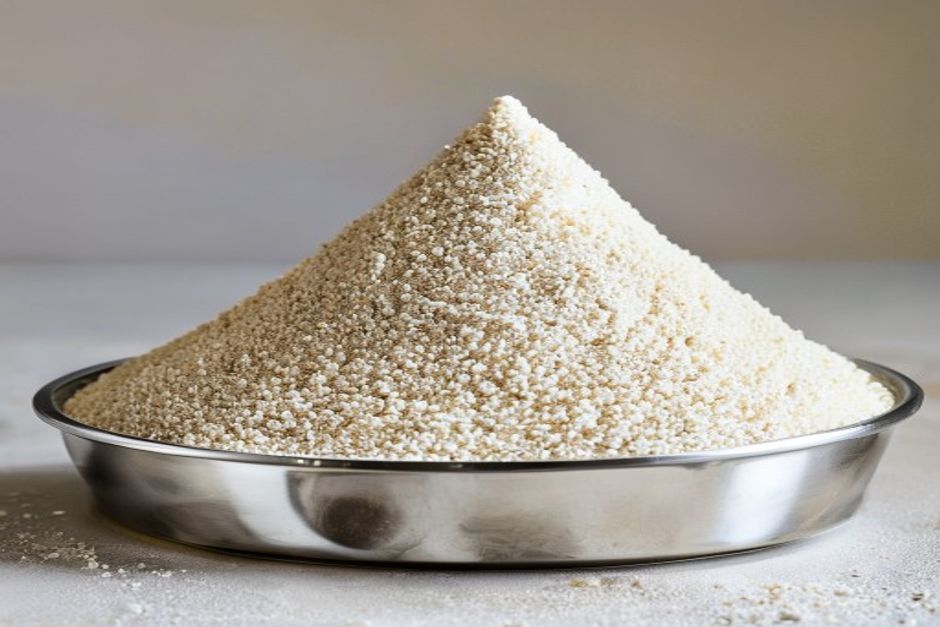
ZSM-5 in xylene isomerization and para-xylene production
AluminaWorld is a Zibo, Shandong-based Chinese manufacturer of ZSM-5 zeolite supplied to petrochemical catalyst producers in 25+ countries. Para-xylene (PX) is the key precursor to purified terephthalic acid (PTA) and dimethyl terephthalate (DMT), which are used to make polyethylene terephthalate (PET) for plastic bottles, polyester fiber, and packaging films. Global PX demand exceeds 50 million metric tons per year, with annual growth of 4-6% driven by PET packaging and polyester textile demand.
ZSM-5 zeolite, with its 10-membered ring pore system (5.5 Å pore opening, MFI framework), is uniquely suited for xylene isomerization and STDP because it admits xylene isomers (kinetic diameter 6.5 Å, can just barely enter the pore) but excludes larger aromatics (9,10-dimethylanthracene, pyrene, coronene) that would otherwise form coke and deactivate the catalyst. This shape selectivity gives ZSM-5 a long catalyst life (3-5 years) compared to the older mordenite and Y zeolite catalysts (1-2 years).
Xylene isomerization (XIS): converting mixed C8 aromatics to para-xylene
Xylene isomerization units take the mixed C8 aromatic stream from a catalytic reformer or pyrolysis gasoline (which contains approximately 20% para-xylene, 50% meta-xylene, 20% ortho-xylene, and 10% ethylbenzene) and re-equilibrate the xylene isomers to enrich the para-xylene content. The PX is then separated by adsorption (UOP Parex, Axens Eluxyl) or crystallization, and the PX-depleted stream is returned to the isomerization reactor.
The ZSM-5 catalyst in the XIS reactor operates at 350-450°C, 1-30 bar, with H2/hydrocarbon molar ratio of 4-6 to suppress coke formation. Conversion per pass is 15-25%, with PX approach to equilibrium typically 95-99%. The catalyst deactivates slowly by coking and is regenerated in-situ every 6-24 months by controlled coke burnoff with dilute oxygen. The standard XIS ZSM-5 has a SiO2/Al2O3 ratio of 25-50, providing the right balance of activity and selectivity for this application.
STDP: Selective Toluene Disproportionation to para-xylene
Selective toluene disproportionation (STDP) is a complementary PX technology that converts 2 toluene molecules into 1 para-xylene + 1 benzene, with the PX selectivity shifted strongly toward the para isomer (90%+) versus the 24% thermodynamic equilibrium of mixed xylenes. This is achieved by modifying ZSM-5 with phosphorus (typically 0.5-8 wt% P), magnesium, or boron, which passivates the external acid sites responsible for secondary xylene isomerization and shifts the diffusion path toward the para-isomer.
STDP was commercialized in the 1990s (Mobil, UOP, and others) and now accounts for ~20% of global para-xylene capacity. The process operates at 400-500°C, 20-40 bar, with H2/toluene ratio 1-2. Toluene conversion per pass is 40-50%, with PX selectivity 85-95%. The phosphorus-modified ZSM-5 catalyst has a typical life of 2-4 years between regenerations, with 5-10 regeneration cycles before replacement.
ZSM-5 specifications for XIS and STDP
AluminaWorld supplies ZSM-5 zeolite for both XIS and STDP applications, with the following stock specifications.
| Parameter | ZSM-5-XIS | ZSM-5-STDP |
|---|---|---|
| SiO₂/Al₂O₃ ratio | 25-50 | 50-200 |
| Crystal size | 0.5-2.0 μm | 1.0-5.0 μm |
| Na₂O content | < 0.1 wt% | < 0.05 wt% |
| BET surface area | 350-450 m²/g | 300-400 m²/g |
| Phosphorus loading (optional) | — | 0.5-8 wt% P |
| Phase purity (XRD) | > 95% MFI | > 95% MFI |
| Typical application | Equilibration of C8 aromatics | Toluene → PX + benzene |
SiO₂/Al₂O₃ ratio is the most critical parameter controlling catalyst acidity and selectivity. Lower ratios (25-30) give more acid sites, higher activity, but faster coking. Higher ratios (50-200) give fewer acid sites, lower activity, but better selectivity to the para-isomer and longer cycle length. The phosphorus modification in STDP applications is applied after ZSM-5 synthesis by incipient wetness impregnation with ammonium dihydrogen phosphate, followed by calcination at 550°C.
Crystal size selection: 0.5 μm vs 5 μm
ZSM-5 crystal size directly affects catalyst performance in xylene isomerization. Nano-crystalline ZSM-5 (0.1-0.3 μm) provides extremely high external surface area, which means more acid sites accessible to xylene molecules and faster turnover. However, the very small crystals are difficult to filter and wash during the hydrothermal synthesis process, and they may have poor mechanical strength in the final catalyst extrudate, leading to attrition in fluidized-bed or moving-bed reactor applications.
Micro-crystalline ZSM-5 (0.5-2.0 μm) is the standard for XIS applications, providing a good balance of activity, mechanical strength, and filterability. For STDP applications, larger crystals (2-5 μm) are often preferred because the longer diffusion path allows secondary isomerization to the para-isomer to occur, boosting PX selectivity. AluminaWorld supplies both nano and micron ZSM-5 grades from dedicated synthesis lines in Zibo, with SEM-verified crystal size on every batch.
Catalyst regeneration by controlled coke burnoff
ZSM-5 in xylene isomerization service deactivates slowly by coking. The coke precursors are heavy aromatics (pyrene, coronene) and alkylated 9,10-dimethylanthracene that form in the external acid sites and slowly block the pore mouths. Over 6-24 months of continuous operation, the coke loading reaches 5-15 wt%, reducing activity by 30-60%. At this point, the catalyst is regenerated in-situ by controlled coke burnoff.
The regeneration procedure involves shutting off the hydrocarbon feed, purging with nitrogen, then introducing dilute oxygen (0.5-3 vol% O2 in N2) at 400-500°C. The oxygen concentration is limited to prevent runaway oxidation, which can cause hot spots above 600°C that permanently damage the zeolite framework. Total regeneration time is 12-24 hours, after which the catalyst is returned to service. Typical catalyst lifetime is 3-5 years (5-10 regeneration cycles) before dealumination or metal deposition requires replacement.
AluminaWorld's ZSM-5 supply for petrochemical catalysts
AluminaWorld operates dedicated ZSM-5 synthesis lines in Zibo, Shandong, with annual capacity 2,000 metric tons. The company supplies ZSM-5 to catalyst manufacturers and petrochemical operators in 25+ countries. Standard MOQ is 500 kg for stock SiO2/Al2O3 ratios (25, 30, 50, 80) with 7-15 day lead time. Custom ratios (e.g. 200) and phosphorus modification (0.5-8 wt% P) require 25-40 days lead time. Sample orders of 1-5 kg ship within 5 days for catalyst screening.
Each shipment includes XRD pattern verification (MFI framework confirmation, no detectable impurity phases), ICP chemical analysis (Si, Al, Na, Fe, P contents), and BET surface area measurement. Custom pelletization (with 20-80 wt% alumina binder into 1/16" or 1/8" extrudates) is available on request, with 30-45 day lead time for first orders.
For technical specifications, COA, or a quote for ZSM-5 in xylene isomerization or STDP application, contact AluminaWorld via WhatsApp at +86 133 2522 2240 or by email at sales@aluminaworld.com.
Frequently Asked Questions
What is the role of ZSM-5 in xylene isomerization?
ZSM-5 is the active catalyst that converts mixed ortho- and meta-xylene into the equilibrium mixture enriched in para-xylene. 10-membered ring pore (5.5 Å) admits xylenes (6.5 Å) but excludes coke precursors, giving 3-5 year life.
What is STDP and how does ZSM-5 enable it?
STDP = 2 toluene → 1 para-xylene + 1 benzene. P/Mg/B-modified ZSM-5 passivates external acid sites → PX selectivity > 90% (vs 24% equilibrium). Industry standard since 1990s.
What is the optimal SiO2/Al2O3 ratio for ZIS and STDP?
XIS: 25-50. STDP: 50-200 with 0.5-8 wt% P modification. Higher ratio = better selectivity, longer cycle.
What crystal size is best for xylene isomerization ZSM-5?
XIS: 0.5-2.0 μm. STDP: 1.0-5.0 μm (longer diffusion path → more PX secondary isomerization).
How is ZSM-5 catalyst regenerated?
In-situ coke burnoff with 0.5-3 vol% O2 in N2 at 400-500°C, 12-24 hours. Repeatable 5-10 times. Avoid > 600°C hot spots that damage framework.
What is the MOQ and lead time for ZSM-5?
MOQ 500 kg stock. Lead time 7-15 days stock grades (25, 30, 50, 80 ratio). Custom 200 ratio or P modification: 25-40 days. Samples 1-5 kg in 5 days. Each shipment includes XRD + ICP + BET.
Get a Quote for ZSM-5 Petrochemical Catalyst
AluminaWorld supplies ZSM-5 for xylene isomerization (XIS) and STDP. SiO₂/Al₂O₃ 25-200, optional P modification. ISO 9001 certified. 25+ countries.