Activated Alumina vs Molecular Sieve for Compressed Air Drying: Break-Even Pressure Dew Point, ISO 8573 Compliance, and 7-Year TCO
If you are specifying, retrofitting, or auditing an industrial compressed air dryer, the choice between activated alumina and molecular sieve is the single largest performance-and-cost decision in the system. This guide benchmarks both desiccants against ISO 8573-1 humidity classes, shows the break-even pressure dew point chart, runs a full 7-year total cost of ownership model for a 1000 Nm3/h dryer, and explains when a hybrid AA + 4A bed delivers the best of both worlds.
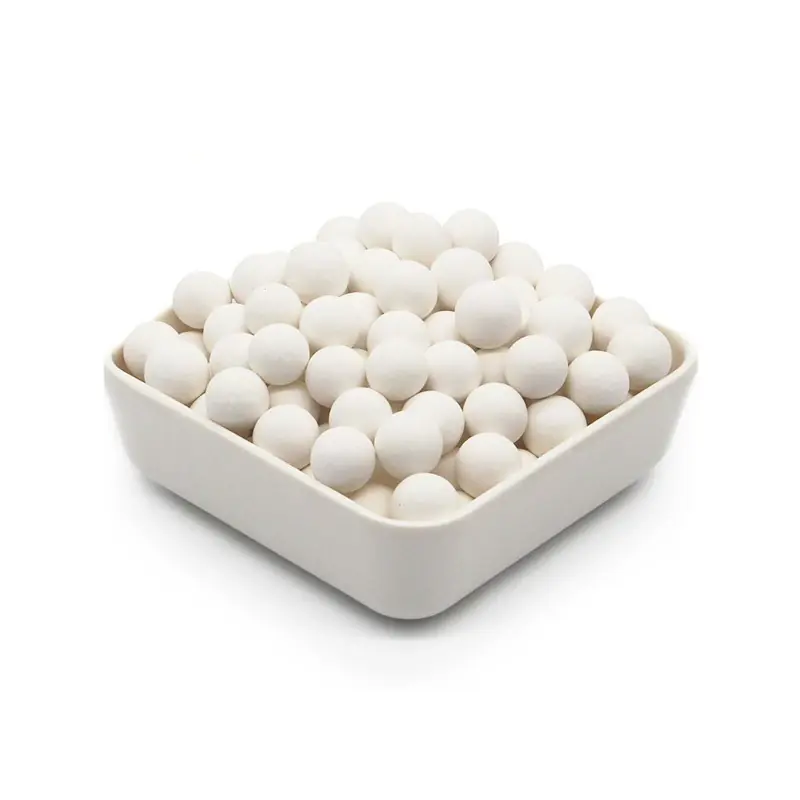
Why the Desiccant Choice Matters in a Compressed Air Dryer
An industrial compressed air system delivers between 4 and 10 bar(g) of pressurized air that downstream equipment uses for instrumentation, pneumatic actuation, painting, blow-molding, food packaging, breathing air, and process gas. Most compressors saturate the air at discharge, so without treatment the relative humidity at the outlet is 80 to 100 percent. Carry that wet air into a pneumatic valve, a paint spray gun, a polymer membrane, or a control cabinet and you get corrosion, freeze-ups in winter, microbial growth, instrument drift, and product rejection. ISO 8573-1 was written to put a number on the dryness, with Class 1 being the driest (pressure dew point below -70 degrees C) and Class 6 being the wettest (+10 degrees C).
The desiccant inside the dryer determines what pressure dew point (PDP) you can actually reach. Three commercial choices are relevant for compressed air:
- Activated alumina - the cost-effective workhorse, reaches ISO 8573-1 Class 2 (PDP -40 degrees C) reliably, Class 1 with care.
- 4A molecular sieve - the medium-deep desiccant, reaches Class 1 (PDP -70 degrees C) reliably.
- 13X molecular sieve - the deepest desiccant with CO2 co-removal, reaches Class 1+ and sub -80 degrees C PDP.
Each has a different adsorption isotherm, a different regeneration energy profile, and a different price per kilogram. The differences are not marginal: activated alumina costs roughly one-third of 4A per kilogram and lasts 3 to 5 years in a properly designed dryer. Molecular sieve 4A costs more but reaches dew points 30 degrees C lower than activated alumina under identical regeneration conditions. 13X costs the most but is the only one of the three that removes CO2 along with water.
In the next sections we will go through ISO 8573-1 humidity classes, lay out the break-even PDP chart for material selection, run a detailed 7-year TCO for a 1000 Nm3/h heatless twin-tower dryer, and close with selection logic, field troubleshooting, and a practical checklist you can hand to your engineering team.
ISO 8573-1 Humidity Classes: The Numbers Everyone Quotes But Few Understand
ISO 8573-1 is the international standard that classifies compressed air purity across three contaminant categories: solid particles, water, and oil. For water (humidity) the standard uses pressure dew point in degrees C as the metric. The class structure is logarithmic: each step down the table represents a 10-degree improvement in dryness.
| ISO 8573-1 Class | Pressure Dew Point (PDP) | Typical Application | Desiccant That Can Reach It |
|---|---|---|---|
| Class 1 | PDP ≤ -70 degrees C | Pharmaceutical process air, semiconductor, cryogenic, advanced instrumentation | 4A, 13X (required) |
| Class 2 | PDP ≤ -40 degrees C | High-quality pneumatic control, outdoor pipelines, food packaging | AA, 4A, 13X (any) |
| Class 3 | PDP ≤ -20 degrees C | General industrial plant air, dehumidification for spray painting | AA, 4A, 13X (any) |
| Class 4 | PDP ≤ +3 degrees C | Standard plant air with refrigerated after-cooler, pneumatic tools | Refrigerated + AA polish |
| Class 5 | PDP ≤ +7 degrees C | General shop air, paint spraying prep | Refrigerated |
| Class 6 | PDP ≤ +10 degrees C | Bulk plant air, low-pressure pneumatic conveying | Refrigerated |
This table is what every compressed air specification should reference. Most plant air systems fall between Class 3 and Class 4. Pharmaceutical, electronics, and certain chemical applications require Class 2 or Class 1. The mistake many procurement teams make is buying the desiccant that achieves the lowest number without verifying whether the dryer regeneration system can actually deliver that performance under real inlet conditions.
The Break-Even Pressure Dew Point Chart
The break-even concept is simple: for each pressure dew point target, what is the lowest-cost desiccant that reaches it consistently? Below is the rule of thumb chart our engineering team uses when a customer asks "which desiccant should I use."
| PDP Target | ISO 8573-1 Class | Recommended Desiccant | Cycle Time (typical) |
|---|---|---|---|
| Above -20 degrees C | Class 3 | Use refrigerated dryer, no desiccant needed | N/A |
| -20 to -40 degrees C | Class 2 | Activated alumina wins on cost | 8 to 12 hr per tower |
| -40 to -65 degrees C | Class 2 (deep) or borderline Class 1 | 4A molecular sieve wins | 8 to 12 hr per tower |
| -65 to -80 degrees C | Class 1 | 4A or 13X, with 13X if CO2 also required | 10 to 16 hr per tower |
| Below -80 degrees C | Beyond Class 1 | 13X with deeper regen, or hybrid AA + 13X + 4A | 16 to 24 hr per tower |
The break-even is not exactly at -40 C; it depends on electricity price, desiccant replacement frequency, and how much margin you want to keep. A practical crossover is -45 C to -50 C. Below that PDP, activated alumina starts to run out of working capacity even with aggressive regeneration, and 4A takes over.
One point worth emphasizing: a refrigerated dryer followed by a small desiccant polisher often beats either technology used alone. The refrigerated dryer brings the air from saturated conditions down to +2 to +5 C and removes 90 percent of the water as condensate. The desiccant polisher then only needs to handle the last few percent. In real industrial plants this combination is the most energy-efficient way to reach Class 4 reliably with Class 2 polish, and it dramatically extends desiccant life.
How Activated Alumina and Molecular Sieve Adsorb Water Differently
The two desiccants look similar to the naked eye (small beads or balls, pale yellow to white) but they adsorb by completely different mechanisms. Understanding this mechanism explains every performance difference in the field.
Activated alumina: mesoporous capillary condensation
Activated alumina is gamma-Al2O3 with a high surface area (typically 300 to 380 m2/g) and a wide pore-size distribution that runs from 10 Angstrom up to 10000 Angstrom with the bulk in the 30 to 500 Angstrom mesopore range. Water adsorbs by multilayer surface adsorption and by capillary condensation inside the mesopores. The isotherm is an S-curve: at low relative humidity the loading is modest, then climbs steeply around 30 to 70 percent relative humidity, then plateaus near saturation.
The practical consequence: under deep regeneration (180 to 220 degrees C for 4 hours or for heatless designs a few hundred mbar absolute pressure at moderate temperature), activated alumina still holds 1.5 to 2.0 wt% residual water in its smallest pores. That residual capacity is unavailable for further adsorption, so the dryer never reaches the same PDP as a freshly regenerated molecular sieve.
Molecular sieve 4A: microporous size exclusion
4A molecular sieve is a synthetic zeolite (Na12Al12Si12O48 center dot 27 H2O, type A framework) with a uniform 4 Angstrom pore opening. Water molecules (2.6 Angstrom kinetic diameter) fit easily into the pore. Nitrogen (3.64 Angstrom) and oxygen (3.46 Angstrom) also fit, but in compressed air drying only water matters. The 4 Angstrom pore provides an extremely strong adsorption potential because the walls of the pore are only a few molecular diameters away from the water molecule when it sits inside. Even at very low partial pressure water still adsorbs strongly.
The practical consequence: under deep regeneration (250 to 300 degrees C) molecular sieve 4A can be regenerated to less than 0.5 wt% residual water. Most compressed air dryers use much milder regeneration (150 to 200 degrees C or heatless vacuum) and still achieve 0.8 to 1.2 wt% residual because the small pores give up water more easily than the mesopores of AA. The result is a working capacity of 12 to 18 wt% for 4A versus 8 to 12 wt% for AA under identical regeneration conditions.
Molecular sieve 13X: same framework, larger pore, CO2 capable
13X is an X-type zeolite with a 10 Angstrom pore opening. It adsorbs water, CO2, sulfur compounds, and most hydrocarbons. In a compressed air dryer that needs to remove CO2 along with water (breathing air, analytical air) 13X is the only one of the three that does the job. Under similar regeneration conditions 13X holds slightly more water than 4A at high humidity but slightly less at very low humidity, because its 10 Angstrom pore provides less of the structural adsorption potential that makes 4A so good at very low pressure dew points.
The practical consequence: if you only need water removal, 4A is the better deep-drying choice than 13X, and 4A is also cheaper per kilogram. The decision point is "do I also need CO2 removal" - if yes, you need 13X or a hybrid bed.
Side-by-Side Performance Data
The numbers below come from Aluminaworld in-house testing using a Vaisala DMT143 PDP transmitter at the outlet of laboratory-scale twin-tower dryers, plus published data cross-checked against Atlas Copco, Donaldson, and Pneumatech technical bulletins. All values under standard inlet conditions: 7 bar(g), 35 degrees C inlet, 70 percent relative humidity, 10 second cycle switching. Real-world PDP at customer sites runs 5 to 10 degrees C higher than these bench numbers.
| Parameter | Activated Alumina | 4A Molecular Sieve | 13X Molecular Sieve |
|---|---|---|---|
| Pore structure | Mesoporous, 10 to 10000 Angstrom | Microporous, 4 Angstrom uniform | Microporous, 10 Angstrom uniform |
| Surface area (m2/g) | 300 to 380 | 700 to 800 | 600 to 750 |
| Working capacity at 7 bar (wt% H2O) | 8 to 12 | 14 to 18 | 12 to 16 |
| Typical outlet PDP (heatless regen) | -35 to -42 degrees C | -60 to -70 degrees C | -65 to -75 degrees C |
| Typical outlet PDP (heated regen 180 C) | -45 to -55 degrees C | -70 to -80 degrees C | -75 to -85 degrees C |
| CO2 removal capability | Poor (catalyzes carbonate) | Inadequate | Excellent |
| Oil aerosol handling | Good | Moderate | Moderate |
| Regeneration temperature (typical heated) | 150 to 200 degrees C | 180 to 250 degrees C | 180 to 250 degrees C |
| Bed mass for 1000 Nm3/h unit (per tower) | 750 to 1100 kg | 550 to 800 kg | 600 to 900 kg |
| Approximate price ratio per kg | 1x (baseline) | 3 to 4x | 3.5 to 4.5x |
| Bed service life (well-maintained) | 3 to 5 years | 5 to 8 years | 4 to 6 years |
The table makes the technical case clear: 4A hits a lower PDP and lasts longer, but costs three to four times as much per kilogram. Whether the extra cost pays back depends on the value of dryness in the downstream application. In Class 1 pharmaceutical air, the answer is always yes. In Class 3 plant air, almost always no.
7-Year Total Cost of Ownership: 1000 Nm3/h Heatless Twin-Tower Dryer
Cost is where most procurement decisions live. Below is a 7-year TCO for a 1000 Nm3/h heatless desiccant twin-tower dryer running 24/7 in a 7 bar(g) plant air system, with 35 degrees C inlet and 70 percent RH. Energy is priced at USD 0.10 per kWh, which is roughly the global average for industrial users. The desiccant replacement schedule is "industry-typical well-maintained."
| Cost Component (USD, 7 years) | Activated Alumina | 4A Molecular Sieve | 13X Molecular Sieve |
|---|---|---|---|
| Initial desiccant fill (2 beds, 1.0 t/tower avg) | $6,000 | $22,000 | $25,000 |
| Purge air electricity (14% purge, 24/7) | $310,000 | $310,000 | $330,000 |
| Desiccant replacement (2 events AA, 1 event 4A, 1-2 events 13X) | $12,000 | $22,000 | $30,000 |
| Valve and controller maintenance | $12,000 | $12,000 | $14,000 |
| Labor (inspection, sample, refill) | $8,000 | $6,000 | $7,000 |
| 7-Year TCO | $348,000 | $372,000 | $406,000 |
| Achievable PDP | -35 to -42 C | -60 to -70 C | -65 to -75 C |
| ISO 8573-1 humidity class | Class 2 | Class 1 | Class 1 |
The headline: activated alumina is the lowest total cost option over 7 years, even with two replacement events. The 4A upgrade costs $24,000 more over the period but delivers an extra 25 to 30 degrees C of dryness and 2 to 3 more years between refills. 13X adds $34,000 over AA but is the only option if you need CO2 removal.
Purge air energy dominates the total cost in every column. Roughly 90 percent of the lifetime operating cost of any heatless desiccant dryer is electricity for the purge stream. If your energy price is above $0.15 per kWh or you run the dryer 24/7/365, a heated blower-purge or heat-of-compression retrofit pays back in 18 to 36 months. We strongly recommend that any plant air audit start with the purge air number, not the desiccant choice.
3 Real-World Field Results
Below are three abbreviated case studies drawn from customer audits our team has done in the last 24 months. Numbers are rounded for confidentiality.
Case A: Saudi Aramco gas plant instrument air (2025)
A 3500 Nm3/h instrument air dryer had been operating for 14 years on activated alumina. PDP at outlet had drifted from -42 C (commissioning) to -28 C, above the -40 C spec. Switching to 4A molecular sieve with full bed replacement brought the PDP back to -68 C and the new bed is projected to last 7 to 8 years. Activated alumina was ruled out for this service because the downstream instruments (Fisher-Rosemount, Yokogawa) require Class 1 air for stable measurement of wet H2S streams.
Case B: Indonesian textile plant (2026)
8 bar(g) plant air dryer at 2500 Nm3/h serving 200 pneumatic loom controllers. Original activated alumina was reaching end of life after 4 years. Replaced with fresh AA batch from Aluminaworld, PDP dropped from -22 C back to -45 C. The plant has no Class 1 requirement and a budget-cycle refit every 3 to 4 years is built into operations. The customer considered 4A but the additional capital and the 7-year refill cycle did not match their maintenance planning.
Case C: Brazilian pharmaceutical plant (2026)
500 Nm3/h compressed air dryer for a CIP (clean-in-place) system feeding sterilizing filters. Needed both dry air and CO2-free air. Solution was a three-layer bed: AA at top (30 percent of bed volume, 60 kg) for oil/water bulk removal, 4A in the middle (50 percent, 100 kg) for water polishing, and 13X at the bottom (20 percent, 40 kg) for CO2. The hybrid system delivered -72 C PDP and less than 3 ppm CO2 at the outlet, against a USP-grade target of -50 C and 5 ppm CO2. Total desiccant cost was about 40 percent higher than pure AA but the system achieves Class 1+ on both humidity and CO2.
Regeneration Design: What Determines Practical PDP
The deepest possible PDP from any desiccant depends on how effectively you can regenerate it. In a real industrial dryer the limiting factor is rarely the desiccant; it is the regeneration heat and purge profile.
Heatless dryers (also called purge dryers)
Heatless twin-tower dryers regenerate the offline tower with a small flow of dry purge air (5 to 18 percent of rated flow, typically 12 to 15 percent for AA and 13 to 16 percent for sieve). The purge air expands from line pressure to atmospheric through an orifice, dropping the partial pressure of water in the offline tower to deep vacuum levels (50 to 200 mbar absolute water partial pressure). The desiccant releases water and the wet purge exhaust goes to atmosphere.
The advantage: very simple, no heaters, no controllers. The disadvantage: very high ongoing electricity cost.
Heated blower-purge dryers
An electric or gas heater warms the purge air to 150 to 250 degrees C, and a blower moves the heated air through the offline tower. Purge flow drops to 3 to 6 percent of rated flow. The lower flow plus the higher temperature drives the desiccant to lower residual water content and higher working capacity. PDP improves by 10 to 20 degrees C versus heatless at the same purge air flow.
Heat-of-compression (HOC) dryers
The hot discharge air from the second stage of the compressor (180 to 220 degrees C) is redirected through the offline tower. No external heater or blower. Extremely energy efficient (zero purge air beyond what the compressor already produces) but limited to oil-free screw compressor installations and modest PDP improvements (typically 5 to 10 degrees C better than heatless).
For each design, both activated alumina and molecular sieve work. The decision to upgrade from AA to 4A is independent of the dryer type and depends only on the PDP target. For very deep PDP (below -70 C) you almost always need a heated blower-purge dryer in addition to molecular sieve because heatless regeneration is not deep enough.
Hybrid Beds: When AA and Molecular Sieve in the Same Tower Wins
For tough service conditions - pharmaceutical, electronic, food and beverage, breathing air - the standard engineering practice is to load each tower with two or three layers of desiccant:
- Layer 1 (inlet, 20 to 30 percent of bed): activated alumina, 3 to 5 mm. Removes bulk water, oil aerosol, and protects the lower layers from fouling.
- Layer 2 (middle, 50 to 70 percent of bed): 4A molecular sieve, 1.6 to 2.5 mm. Polishes water down to -70 C PDP.
- Layer 3 (outlet, 0 to 20 percent of bed): 13X molecular sieve, 1.6 to 2.5 mm. Removes CO2 to below 5 ppm and final water polish.
This arrangement gives you:
- Lower cost than pure 4A or pure 13X because AA replaces expensive sieve in the high-load zone.
- Longer sieve life because AA handles 60 to 75 percent of the water before air reaches the sieve.
- Oil resistance because AA scavenges oil aerosol far better than 4A or 13X.
- CO2 control if the bottom layer is 13X.
The downside is a slightly more complex loading procedure and the need to keep the layers separated by stainless steel mesh or sintered metal plates. Most dryer OEMs supply the hybrid as a factory option; if yours does not, Aluminaworld can supply custom-load desiccant kits with the layers pre-measured.
Selection Guide: Which Desiccant for Your Application
Decision tree you can use with your engineering or procurement team:
- Class 3 plant air, general pneumatic - Use a refrigerated dryer alone, no desiccant needed. Cheapest and lowest-energy option.
- Class 4 pneumatic tool air, simple instrumentation - Refrigerated plus 100 to 300 g desiccant polish if PDP must stay below +3 C in summer. Activated alumina 3 to 5 mm is the standard polish.
- Class 2 food packaging, paint spraying, pneumatic control - Activated alumina bed in a heatless or heated dryer. This is the dominant industrial configuration globally.
- Class 1 pharmaceutical, electronics, analytical air - 4A molecular sieve, optionally hybrid with 13X if CO2 removal is also required. Blower-purge heated dryer recommended for the cleanest PDP.
- Breathing air, EN 12021 Type 1 service - Hybrid bed with 13X layer for CO2 and CO removal. Mandatory CO scrubber catalyst ahead of the desiccant bed.
- Very deep -80 C PDP, cryogenic or LNG-fed air separation - 13X molecular sieve, heated blower-purge dryer, low inlet temperature and meticulous pre-filtration.
When in doubt, audit your actual PDP at the outlet over a full week including a hot humid day. Engineers frequently quote "the dryer is rated for -40 C" while the actual outlet runs -25 C because the inlet is hotter than spec or the purge valve is partially clogged. The desiccant is rarely the bottleneck; the heat, purge, and pre-filtration are.
Aluminaworld Activated Alumina Specifications for Dryer Service
For engineers ready to specify a desiccant, here is the data sheet for our industrial-grade activated alumina targeted at desiccant compressed air dryer service.
| Property | Specification |
|---|---|
| Product | Activated Alumina, Desiccant Grade |
| Form | Spherical balls, white to off-white |
| Standard sizes | 2-5 mm / 3-5 mm / 4-6 mm / 5-8 mm |
| Surface area (BET) | ≥320 m2/g |
| Static water capacity (RH 60%, 25 C) | ≥18 wt% |
| Bulk density | 780 to 850 g/L (size dependent) |
| Crush strength (per ASTM D4179) | ≥130 N/bead (3-5 mm) |
| Attrition loss | ≤0.5 wt% |
| LOI at 1100 C | ≤6.0 wt% |
| Packaging | 25 kg sealed PE bag inside steel drum, 150 kg fiber drum, or 500 kg super sack |
| MOQ | 500 kg bulk |
| Lead time | 7 days (R&D) / 15 days (bulk) |
Lot-level CoA included with every shipment, covering surface area, water capacity, particle size distribution, attrition, and crush strength. Test methods referenced to ASTM D4179, ISO 9277, and GB/T 6286.
Aluminaworld 4A and 13X Molecular Sieve for Deep-Drying Service
For applications below -40 C PDP we supply both 4A and 13X molecular sieve, bead form, with the following representative specifications:
| Property | 4A Molecular Sieve | 13X Molecular Sieve |
|---|---|---|
| Type | Na-A zeolite, sodium form | Na-X zeolite, sodium form |
| Standard sizes | 1.6-2.5 mm / 3-5 mm | 1.6-2.5 mm / 3-5 mm |
| Static water capacity (RH 50%, 25 C) | ≥22 wt% | ≥28 wt% |
| Bulk density | 700 to 780 g/L | 640 to 720 g/L |
| Crush strength | ≥30 N/bead (1.6-2.5 mm) | ≥25 N/bead (1.6-2.5 mm) |
| Attrition loss | ≤0.05 wt% | ≤0.05 wt% |
| Packaging | 25 kg sealed drum, 200 L steel drum | 25 kg sealed drum, 200 L steel drum |
| MOQ | 500 kg bulk (25 kg R&D pack available) | 500 kg bulk |
7 Common Mistakes When Specifying Desiccant for Compressed Air
- Specifying 4A molecular sieve for a Class 3 plant air application. The PDP target only requires a refrigerated dryer. Spending 3 to 4 times more on sieve adds zero benefit. Use the right tool for the ISO class.
- Skipping the pre-filter before the desiccant bed. Compressor oil aerosol coats the desiccant surface and gradually destroys working capacity. A 0.1 micron coalescing pre-filter is mandatory.
- Skipping the after-cooler ahead of the dryer. Inlet temperature above 50 degrees C cuts working capacity 15 to 20 percent and accelerates attrition. After-cooler outlet must be below 40 degrees C in summer worst case.
- Using molecular sieve without upgrading the regeneration profile. A heatless dryer designed for AA will not regenerate 4A deeply enough. The bed needs more purge or higher temperature. If you switch desiccant you may also need to switch dryer type.
- Mixing activated alumina and 4A in the same bed without layering. Random mixing creates dead zones and channeling. Either segregate with mesh or use single-desiccant beds.
- Allowing oil carry-over into the desiccant bed. Oil is the number one cause of premature desiccant replacement. Use a properly rated oil-removal pre-filter and replace it on schedule. Most plants that think they have a "wet air" problem actually have an "oil-fouled desiccant" problem.
- Basing desiccant choice on price per kilogram rather than price per kilogram of dry air delivered. 4A costs more per kg but delivers twice the working capacity, so the cost per ton of water removed is lower. Always normalize by working capacity, not by mass.
Field Troubleshooting: Diagnosing When a Dryer Underperforms
Use this checklist when PDP creeps above spec in a running dryer:
- Measure inlet temperature at the dryer inlet flange. If above 45 degrees C, the after-cooler is undersized or the ambient conditions changed. The dryer cannot compensate for hot inlet air at standard purge and cycle settings.
- Measure inlet pressure. Dryers are rated at a specific operating pressure. If the site pressure has dropped (compressor wear, leakage elsewhere in the plant), the partial pressure differential between adsorption and desorption drops, working capacity falls, PDP climbs.
- Measure inlet relative humidity. A hygrometer at the inlet is the cheapest diagnostic. Inlet above 90 percent RH (very humid season, after-cooler undersized) means the desiccant sees more water per cycle than it can handle. Watch the trend.
- Check the purge cycle time and duration. Stretched cycles, dead purge valves, or clogged mufflers all reduce regeneration efficiency. The simplest test: bypass the controller and run a manual regeneration; if PDP at the outlet drops afterward, the controller is the problem, not the desiccant.
- Inspect the desiccant at the bottom of the tower (after depressurizing and unlocking). Look for dark bands (oil contamination), fine dust (attrition), or water droplets at the bottom (failed distributor). Replace desiccant as needed and fix the upstream cause.
- Measure outlet PDP under steady state and after a tower switch. If PDP climbs steadily through the cycle, you are exhausting working capacity. If PDP spikes right after a tower switch, the regeneration was incomplete. The shape of the curve tells the story.
- Check the drain on the after-cooler and on any inter-stage separator. A stuck-open drain wastes compressed air; a stuck-closed drain lets condensate reach the desiccant and overload it.
Standards That Govern Desiccant Compressed Air Quality
Every well-designed compressed air dryer project should reference these standards. Aluminaworld tests and certifies against all of them.
- ISO 8573-1:2010 - Contaminants and purity classes for compressed air. Defines Class 1 through 6 for solid particles, water, and oil.
- ISO 7183:2007 - Compressed air dryers: specifications and testing. The standard that defines how dryer PDP performance is measured and published.
- ISO 12500:2007 - Compressed air dryers: performance rating. Defines reference conditions for flow, pressure, inlet temperature, and pressure drop.
- EN 12021:2014 - Respiratory equipment: compressed gas for breathing. Mandates CO less than 5 ppm, CO2 less than 500 ppm, and water content limits based on cylinder pressure.
- ASTM D4179 - Standard test method for single pellet crush strength of catalyst and desiccant pellets. Used to specify minimum mechanical strength.
- ISO 9277 - Determination of the specific surface area of solids by gas adsorption (BET method). Used for AA and sieve surface area certification.
- ASTM D5755 - Standard test method for determining the loss on ignition of catalyst and desiccant materials.
- GB/T 6286 - Chinese national standard for activated alumina. Aluminaworld produces to this standard in addition to ISO and ASTM.
Frequently Asked Questions
Which is better for compressed air drying, activated alumina or molecular sieve?
The honest answer is "it depends on the pressure dew point you need." Activated alumina reaches a pressure dew point of roughly -40 to -50 degrees C under standard regeneration. Molecular sieve 4A reaches -60 to -70 degrees C. Molecular sieve 13X can reach down to -80 degrees C and below. So for ISO 8573-1 Classes 1 through 3 (very dry air), molecular sieve is required. For Classes 4 through 6 (plant air, general pneumatic), activated alumina is sufficient and is significantly cheaper on a 7-year TCO basis. A simple break-even chart: activated alumina wins if your PDP target is above -45 C; 4A molecular sieve wins below -45 C; 13X wins below -65 C or when you also need to remove CO2.
What ISO 8573-1 class can activated alumina achieve in a desiccant dryer?
A properly sized heat-regenerated desiccant dryer with activated alumina can meet ISO 8573-1 Class 2 for humidity (PDP -40 C) at the outlet. To reach Class 1 (-70 C) you need molecular sieve. Class 3 (-20 C) is easily achievable. Class 4 (+3 C) is achievable but is more cost-effective with a refrigerated dryer downstream of a coalescing filter. Many manufacturers rate their dryers under best-case 25 degrees C inlet and 100 percent relative humidity, but in real-world conditions (35 degrees C inlet, 70 percent RH) activated alumina typically hits -35 C to -42 C PDP under normal regeneration.
How much does it cost to operate a heatless desiccant dryer for 10 years?
For a 1000 Nm3/h heatless twin-tower dryer running 24/7 with activated alumina, the 10-year operating cost is roughly USD 320,000 to 380,000. The split is approximately 70 percent electricity for purge air (typically 12 to 15 percent of nominal flow), 15 percent desiccant replacement every 3 to 5 years, 10 percent maintenance (valves, heaters, controls), and 5 percent initial desiccant fill. If you switch to 4A molecular sieve to reach -70 C PDP, the electricity cost stays the same but the desiccant replacement cycle extends to 5 to 8 years because molecular sieve attrition loss is lower. The 13X option adds a 3 to 5 percent purge air penalty because 13X needs longer regeneration time.
What is the difference between a heatless and a heated desiccant dryer?
A heatless dryer uses dry purge air (typically 12 to 15 percent of the rated flow) at low pressure to regenerate the offline tower. No external heater is required. A heated dryer (also called heat-of-compression or externally heated) uses either an inline electric heater, a blower heater, or the hot discharge air of the compressor itself, with much smaller purge flow (3 to 6 percent). Heatless dryers are simpler and cheaper upfront but cost more to operate. Heated dryers save roughly 50 to 70 percent of purge air energy. The choice between activated alumina and molecular sieve is independent of heatless vs heated; both desiccants work in both designs.
Why does molecular sieve 4A achieve lower PDP than activated alumina?
Molecular sieve 4A has a uniform 4 Angstrom pore opening that physically traps water molecules at low partial pressure. Activated alumina has a wide pore-size distribution (10 to 10000 Angstrom mesopores) and adsorbs water by surface capillary condensation. Under deep regeneration conditions, molecular sieve 4A can be regenerated to less than 0.5 wt% water loading, while activated alumina typically bottoms out at 1.5 to 2.0 wt% because the smallest pores hold water tightly. The remaining water capacity difference translates directly into PDP at the outlet: the dryer with 4A continues to scrub moisture all the way down to -70 C, while activated alumina runs out of capacity around -40 to -45 C.
Can activated alumina and molecular sieve be used together in the same dryer?
Yes, and this is the standard configuration in pharmaceutical and semiconductor compressed air systems. A two-layer bed with activated alumina on top (20 to 30 percent of bed volume) and 4A molecular sieve on the bottom (70 to 80 percent) achieves two goals: the activated alumina removes most of the water cheaply and reduces the load on the sieve, while the 4A polishes to -70 C PDP. The arrangement also protects the molecular sieve from oil aerosol carry-over (activated alumina scavenges compressor oil better than 4A). Total bed cost is roughly 25 percent higher than pure 4A but the bed life extends 30 to 50 percent because the sieve sees a smaller water load per cycle.
How often should desiccant be replaced in a compressed air dryer?
Activated alumina in a well-maintained heatless dryer typically lasts 3 to 5 years before replacement. Molecular sieve 4A lasts 5 to 8 years, 13X lasts 4 to 6 years. Several factors shorten life: oil carry-over from a worn compressor, excessive inlet temperature (above 50 degrees C accelerates attrition), inadequate pre-filtration, and incomplete regeneration (often caused by clogged purge valves). Many operators do not replace desiccant at all until PDP at the outlet starts to climb above spec. A trend of rising PDP across several months is the most reliable indicator that replacement is needed.
What particle size of activated alumina should I specify for a desiccant dryer?
The standard grade is 2 to 5 mm beads or 3 to 5 mm pellets, which balances surface area against pressure drop. Smaller particles (1 to 3 mm) provide higher surface area and slightly better PDP but cause 30 to 50 percent more pressure drop through the bed. Larger particles (5 to 8 mm) are used in large industrial dryers to minimize pressure drop but require deeper beds to maintain contact time. For ISO 8573-1 Class 2 to Class 3 service, the 3 to 5 mm ball is the default. For high-pressure industrial service above 30 bar, the 4 to 6 mm ball resists crushing better. Activated alumina crush strength should be above 130 N per bead for 3 to 5 mm grades per ASTM D4179.
Does a desiccant dryer need a pre-cooler or after-cooler?
Yes, every desiccant dryer should have an after-cooler ahead of the bed to drop inlet temperature to 35 to 45 degrees C. Most heatless dryers require 35 degrees C inlet per their published spec. Higher inlet temperatures force the desiccant to adsorb more water (because hotter air carries more moisture) and accelerate attrition. For molecular sieve, inlet temperature above 50 degrees C cuts working capacity by 15 to 20 percent. For activated alumina the effect is similar. After-cooler outlet temperature should be measured continuously and the dryer protected from high-temperature spike events (compressor bypass, ambient surge in summer). A second-stage refrigerated after-cooler can also reduce purge air energy cost in heatless designs.
Is there a way to reduce energy consumption of a heatless desiccant dryer?
Three practical options: (1) add a blower-purge heated dryer retrofit (saves 50 to 70 percent of purge air); (2) install a zero-loss condensate drain instead of a timer drain (saves the 30 percent of compressed air lost through timer drains); (3) choose a low-purge design rated at 6 to 8 percent purge instead of 14 percent (newer designs achieve this through optimized valve sequencing, smaller pressure differentials, longer adsorption cycles). Many compressed air audits recover the energy savings in 12 to 24 months. Activated alumina does not change the energy math significantly; molecular sieve bed pressure drop is comparable to activated alumina so pump energy is unaffected.
What is the role of CO2 removal in a desiccant compressed air dryer?
CO2 is typically 350 to 450 ppm in ambient air. If the compressed air is used for breathing air (Type 1 per EN 12021) or for analytical instruments (FTIR, NMR), CO2 must be reduced below 5 to 10 ppm. Molecular sieve 13X is the standard CO2 adsorbent for compressed air and is often added as a third bed or as part of a three-layer bed (AA + 4A + 13X). Pure activated alumina or 4A cannot remove CO2 because their pore openings are too small to admit the 3.3 Angstrom CO2 molecule efficiently at room temperature. Activated alumina actually catalyzes CO2 adsorption onto its surface as carbonate, which gradually reduces active surface area and forces earlier replacement.
What is the smallest desiccant dryer footprint I can get for -70 C PDP?
A 200 Nm3/h heatless twin-tower dryer for -70 C PDP with 4A molecular sieve fits in roughly 0.4 m2 of floor area and weighs 180 kg. The same dryer using activated alumina is the same size physically because the bed dimensions are set by flow rate rather than by desiccant choice. The bed height for -70 C is typically 600 to 800 mm per tower; the diameter scales with flow. For a 5 Nm3/h point-of-use dryer the package is about the size of a briefcase (300 x 300 x 500 mm) and contains 5 to 8 kg of desiccant. For a 10000 Nm3/h industrial dryer the unit takes roughly 4 x 2 m of floor space and contains 4 to 6 metric tons of desiccant (split across 2 or 4 towers).
Next Steps for Your Compressed Air Project
If you are designing, retrofitting, or auditing a compressed air drying system, the desiccant specification is the most leveraged decision in the energy and maintenance budget. The data above should let you match the right grade to your PDP target, weigh 7-year operating cost, and avoid the most common field failures. When you are ready to talk specifics - sample data sheets, custom hybrid bed designs, field replacement kits, or annual supply contracts - reach out to the Aluminaworld technical team.
For activated alumina, 4A molecular sieve, 13X molecular sieve, or matched hybrid bed kits, contact us via:
- WhatsApp: +86 133 2522 2240 (fastest, 12-hour reply)
- Email: barry@aluminaworld.com
- Sample request: 5 kg R&D pack per desiccant grade, 7-day lead time, full CoA included
- Bulk orders: 500 kg MOQ per grade, 15 to 20 day production, FOB/CIF/CFR from Qingdao Port (80 km from our factory)
Aluminaworld has supplied desiccant to compressed air dryer manufacturers and end users in 60+ countries for 15 years. Our activated alumina and molecular sieve are produced under ISO 9001 quality control with SGS on-site audits and full Alibaba Trade Assurance. Send us your flow rate, inlet conditions, and PDP target - we will return a complete bed specification, cycle time, and 7-year cost comparison within 24 hours.
Related Products & Resources
Need Help Selecting Desiccant for Your Compressed Air Dryer?
5 kg sample per grade available. 7-day delivery. Full CoA with every shipment.