ATH for Polyurethane (PU) Foam: 30% vs 50% Loading — Cone Calorimeter HRR Data
Aluminium hydroxide is the default halogen-free flame retardant in cable compounds and elastomers, but polyurethane foam is the hardest substrate it faces: the ATH endotherm fires before the peak PU volatile flux, the polyol is a reactive carrier, and cell walls are only microns thick. This guide gives cone calorimeter peak HRR and total heat release data at 30% versus 50% loading, the viscosity and mechanical ceilings that decide which one you can actually run, and the QC specification that keeps lot-to-lot variation off your production line.
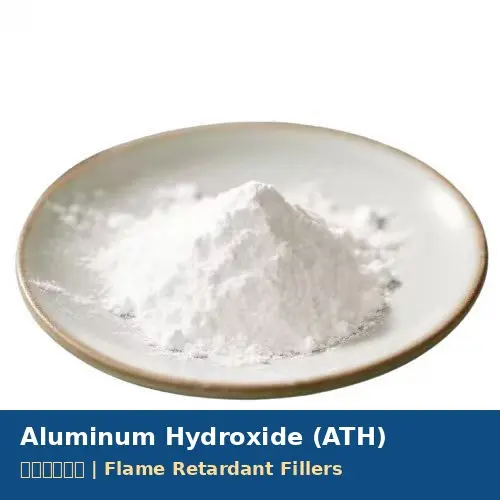
Why Polyurethane Is the Hardest Substrate ATH Has to Work In
Aluminium hydroxide, Al(OH)3, is the highest-volume halogen-free flame retardant in the world. Its mechanism is purely physical: above roughly 200 deg C it dehydrates endothermically to alumina and steam, absorbing about 1,000 to 1,050 J/g and shedding 34.6% of its own mass as water vapour. The water dilutes combustible volatiles in the flame zone, the endotherm pulls heat out of the condensed phase, and the residual alumina forms an inert insulating layer on the burning surface. In an EVA cable compound at 60 to 65 phr, that combination is enough to deliver a low-smoke zero-halogen jacket that passes IEC 60332-3-24 vertical tray tests.
Polyurethane behaves differently, and the reason is thermal timing. Urethane linkages begin to dissociate around 200 to 250 deg C, and the most flammable part of the volatile stream — cleaved polyol fragments, isocyanate-derived species, and low-molecular-weight aliphatics — is released between roughly 250 and 350 deg C. ATH's endotherm is largely spent by 320 to 350 deg C. The heat sink therefore fires at the front edge of the event, does useful work during the early smouldering and ignition phase, then runs out of capacity right as the peak flux of combustible gas appears. This is the opposite of the EVA case, where ATH is still actively dehydrating at 350 to 400 deg C while the polymer is at maximum pyrolysis rate.
The second complication is that the polyol side of a PU formulation is not an inert carrier. It is a reactive medium in which every added surface — filler particle, silane group, adsorbed water molecule — has the potential to change cream time, gel time, rise profile, and final cell structure. A filler that is chemically indifferent in a rubber mill can shift the isocyanate index by a measurable amount in a foam mix head. Free moisture on the filler reacts with NCO groups to generate carbon dioxide, adding uncontrolled blow, and aminosilane coupling agents catalyse the gel reaction so aggressively that they are effectively unusable in most foam systems.
The third complication is geometry. In a 30 kg/m3 flexible foam, roughly 97% of the volume is gas and the polymer exists as struts a few microns thick and windows thinner still. A filler particle with a d50 of 10 microns is comparable in size to the wall it is supposed to reinforce. That is why fine precipitated ATH grades dominate flexible foam work while coarser ground grades are perfectly acceptable in rigid boardstock, where the polymer matrix is continuous and crosslinked.
These three constraints together explain the industry pattern: ATH loadings in flexible PU foam cluster in the 25 to 35 wt% range, ATH is almost always paired with a phosphorus-based or intumescent co-additive rather than used alone, and every serious formulation programme includes a polyol-viscosity gate before any fire testing happens.
The Decomposition Chemistry, Quantified
The reaction that does the work is straightforward: 2 Al(OH)3 becomes Al2O3 plus 3 H2O. Per kilogram of ATH, that releases 346 g of water and consumes roughly 1.0 to 1.05 MJ of enthalpy. At 30 wt% loading in a foam, one kilogram of finished product therefore carries about 104 g of chemically bound water and a heat-absorption reserve of roughly 0.31 MJ. At 50 wt% loading, the same kilogram carries 173 g of water and roughly 0.52 MJ of reserve.
Put that against the fuel load. Flexible polyether polyurethane has a gross heat of combustion of roughly 26 to 28 MJ/kg. A kilogram of unfilled foam therefore carries about 27 MJ of chemical energy. At 30 wt% ATH, the organic fraction drops to 0.7 kg, so the fuel load falls to roughly 19 MJ and the ATH endotherm offsets a further 0.31 MJ. At 50 wt% ATH, the organic fraction is 0.5 kg, fuel load about 13.5 MJ, endotherm offset 0.52 MJ.
The arithmetic makes an important point that formulators sometimes lose sight of: the dominant contribution of ATH to total heat release is fuel dilution, not the endotherm. The endotherm is worth 1.6% of the displaced fuel energy at 30% loading and 3.9% at 50% loading. What the endotherm actually buys is not total energy reduction but rate reduction — it delays the surface temperature rise, pushes back time to ignition, and flattens the heat release curve. That distinction is exactly why ATH shows a much larger effect on peak HRR than on total heat release, which is what the cone calorimeter data below shows.
The onset temperature is adjustable within limits. Coarse ground ATH from Bayer-process gibbsite typically shows a TGA onset around 220 to 230 deg C, while fine precipitated grades with high surface area shift onset down to 200 to 215 deg C because dehydration nucleates at the particle surface. For PU, the lower onset of fine precipitated grades is a genuine advantage: it moves more of the endotherm into the 250 to 320 deg C window where PU is actively generating volatiles. This is one of several reasons fine precipitated grades outperform ground grades in foam despite costing 25 to 45% more per tonne.
What Actually Changes Between 30% and 50% Loading
Fire performance is only one of five properties that move when you push loading from 30 to 50 wt%. The others decide whether the formulation can be manufactured at all.
Polyol-side viscosity. This is the hard gate. A typical 3,000-molecular-weight triol polyol runs 800 to 1,200 mPa.s at 25 deg C. Blending in fine precipitated ATH at 30 wt% of the total formulation — around 55 to 60 pphp — typically takes the polyol blend to 2,500 to 4,000 mPa.s with a treated grade, or 4,000 to 7,000 mPa.s with an untreated grade. At 50 wt% of total formulation, roughly 130 to 150 pphp, a treated grade lands at 9,000 to 18,000 mPa.s and an untreated grade often exceeds 25,000 mPa.s and becomes visibly thixotropic. High-pressure impingement mixheads generally want both streams below about 3,000 mPa.s at process temperature; low-pressure mechanical-agitator machines can handle 10,000 to 20,000 mPa.s with heated lines and a larger pump. This single parameter is why 50 wt% loadings are found in molded and cast systems rather than continuous slabstock.
Cell structure. Filler particles act as nucleation sites during the early bubble-formation stage, so moderate ATH loading actually refines cell size — typical unfilled slabstock at 0.4 to 0.6 mm mean cell diameter tightens to 0.25 to 0.40 mm at 30 wt%. Beyond 35 to 40 wt% the effect reverses: particle-particle contact in the thinning cell walls causes local rupture during rise, producing coarse voids, split cells, and in the worst case a full collapse event on the line.
Mechanical properties. For flexible foam, tensile strength typically falls 20 to 30% at 30 wt% ATH and 40 to 60% at 50 wt%. Elongation at break, the property that governs whether a foam survives handling and cut-to-size operations, drops from a typical 120 to 180% unfilled to 80 to 110% at 30 wt% and to 40 to 70% at 50 wt%. Tear strength follows elongation. Compression set and resilience are less affected because they are dominated by cell geometry rather than strut ductility. In rigid PUR and PIR, compressive strength usually rises slightly up to about 25 wt% loading (filler reinforcement of a glassy matrix), then falls at higher loadings as filler agglomerates create stress concentrations.
Density and thermal conductivity. ATH has a specific gravity of 2.42, so filled foam at fixed cell structure is heavier. If a customer specifies a target density, the blow agent package must be re-balanced, which is a non-trivial reformulation rather than a simple filler addition. For rigid insulation board, added ATH raises thermal conductivity by roughly 0.5 to 1.5 mW/(m.K) per 10 wt% loading — measurable against a 22 to 26 mW/(m.K) baseline, and enough to threaten a declared lambda value if not accounted for.
Ageing and hydrolysis. Residual soluble soda from the Bayer precipitation route, present at 0.1 to 0.6 wt% as Na2O depending on grade, catalyses hydrolytic chain scission of ester and urethane linkages over time. Ester polyol systems are considerably more sensitive than ether polyols. For any application with a humid-ageing requirement — automotive interior, marine seating, tropical furniture export — soluble soda below 0.3 wt% should be a specification line item, not an afterthought.
Cone Calorimeter Data: ISO 5660-1 at 35 kW/m2
The cone calorimeter is the right bench-scale instrument for this comparison because it measures heat release rate by oxygen consumption calorimetry under a controlled radiant flux, which correlates better with real fire growth than any small-flame pass/fail test. The data below represents typical values consolidated from published flexible and rigid polyurethane studies and from formulation trials at the loadings shown, tested at 35 kW/m2 irradiance on 100 x 100 mm specimens in the horizontal orientation with a retainer frame. Treat these as industry-typical ranges for scoping work, not as a substitute for testing your own formulation.
| Parameter (ISO 5660-1, 35 kW/m2) | Unfilled flexible PU | 30 wt% ATH | 50 wt% ATH |
|---|---|---|---|
| Time to ignition (s) | 2 to 5 | 5 to 11 | 10 to 18 |
| Peak HRR (kW/m2) | 500 to 750 | 280 to 400 | 180 to 260 |
| PHRR reduction vs unfilled | baseline | 40 to 50% | 60 to 70% |
| Time to peak HRR (s) | 15 to 30 | 30 to 55 | 50 to 90 |
| Total heat release, THR (MJ/m2) | 22 to 30 | 15 to 21 | 10 to 15 |
| Effective heat of combustion (MJ/kg) | 24 to 27 | 22 to 25 | 20 to 24 |
| Mean mass loss rate (g/m2.s) | 18 to 26 | 10 to 16 | 6 to 11 |
| Total smoke release (m2/m2) | 450 to 800 | 250 to 480 | 170 to 350 |
| Char / inert residue (wt%) | 1 to 4 | 20 to 26 | 34 to 42 |
| FIGRA index (kW/m2.s) | 20 to 40 | 6 to 12 | 2.5 to 5 |
Three features of this dataset deserve attention because they drive formulation decisions.
First, time to ignition roughly doubles at 30 wt% and triples at 50 wt%. For any test that measures ignitability against a small source — BS 5852 crib sources, EN ISO 11925-2 small flame, California TB 117 smoulder — this is the parameter that determines pass or fail, and it improves faster than peak HRR at low loadings. A formulation that fails a small-flame test at 20 wt% may pass at 30 wt% purely on delayed ignition, without needing the deeper HRR suppression that 50 wt% would give.
Second, the FIGRA index improves far more dramatically than either PHRR or THR alone. FIGRA is peak HRR divided by time to that peak, so it captures both the amplitude reduction and the temporal spreading. A drop from 20 to 40 down to 6 to 12 kW/m2.s at 30 wt% loading is the single largest relative improvement in the table. For EN 13501-1 Euroclass work, where the SBI test's FIGRA0.2MJ is the primary classification driver, this is the number that decides whether a board makes Euroclass C or stalls at E.
Third, the marginal return on loading is clearly diminishing. Peak HRR reduction per weight percent of ATH added is roughly 1.5 kW/m2 across the first 30 percentage points, then roughly 0.9 kW/m2 across the next 20. Meanwhile the mechanical penalty per weight percent accelerates in the same range. The two curves cross somewhere between 32 and 40 wt% for most flexible systems, which is why the industry consensus loading sits where it does.
Why ATH Alone Rarely Passes: Synergist Packages That Work
A pure-ATH flexible foam at 30 wt% will typically pass FMVSS 302 and can pass TB 117-2013 smoulder, but it will usually fail BS 5852 source 5 and will not reach EN 13501-1 Euroclass B or C in rigid board. The standard fix is not more ATH — the viscosity and mechanical ceilings block that — but a co-additive that covers the 300 to 500 deg C window where ATH has already exhausted its endotherm.
| Co-additive | Typical dose with 25-30 wt% ATH | Mechanism / active window | Main trade-off |
|---|---|---|---|
| Ammonium polyphosphate (APP) | 5 to 12 wt% | Acid source, char promotion, 280-450 deg C | Hygroscopic; needs encapsulated grade for humid ageing |
| Melamine (powder) | 8 to 20 pphp | Endothermic sublimation + inert gas dilution, 320-400 deg C | Raises viscosity; can bloom to surface |
| Melamine polyphosphate / cyanurate | 6 to 15 wt% | Intumescent char with APP-like acid source | Higher cost per kg than APP |
| Expandable graphite (EG) | 3 to 10 wt% | Physical expansion, insulating worm char, 200-300 deg C onset | Dark colour; abrasive on mixhead; particle size critical |
| Reactive phosphorus polyol | 10 to 25% of polyol | Built into backbone; condensed-phase P action | Changes OH number and reactivity; costliest route |
| Zinc borate | 2 to 6 wt% | Glass-former, smoke suppression, afterglow control | Modest alone; used as a booster only |
The most cost-effective pairing in flexible foam is usually 25 to 30 wt% ATH plus 8 to 15 pphp melamine. Melamine sublimes endothermically around 320 to 350 deg C, exactly filling the gap after ATH dehydration completes, and it is inexpensive. Its weakness is that it does not build char, so it does nothing for the late-stage smouldering that drives BS 5852 crib failures.
For rigid PUR and PIR boardstock, the standard is 20 to 30 wt% ATH plus 4 to 8 wt% expandable graphite. EG onset can be tuned by particle size and expansion volume, and the worm char it produces is the single most effective barrier available for board applications. The two additives are complementary: ATH cools and dilutes early, EG builds the physical barrier that keeps flux off the virgin polymer for the remainder of the exposure. Expect roughly 30 to 45% further peak HRR reduction from EG on top of the ATH baseline, at a fraction of the loading.
Where a formulation must hold both deep fire performance and near-unfilled mechanicals, the reactive phosphorus polyol route is the technically superior answer, since the flame retardant is part of the polymer backbone and imposes no filler-related viscosity or cell-wall penalty. It is also the most expensive, typically adding USD 250 to 600 per tonne of finished foam depending on the substitution level. In that architecture ATH drops to a 15 to 20 wt% support role, contributing smoke suppression and inert residue rather than being the primary flame retardant.
Grade Selection: Particle Size, Surface Area, and Coating
Choosing the ATH grade is the decision that most often separates a formulation that runs on a production line from one that only works in the lab. Four properties matter.
Median particle size (d50). For flexible slabstock and molded foam, target a fine precipitated grade at d50 1.5 to 2.5 microns. Below 1.0 micron, the viscosity penalty from surface area becomes severe and dispersion energy requirements rise sharply. Above 5 microns, the particles begin to approach the cell-wall thickness of low-density foam and act as defect initiators. For rigid PUR and PIR, d50 5 to 12 microns from a ground Bayer gibbsite route is entirely adequate and 25 to 45% cheaper per tonne.
Top-cut (d98 or oversize). This matters more than d50 for defect control. Specify d98 below 15 microns for flexible foam and require that the lot be screened so that there is no material above 45 microns. A single oversize agglomerate in a thin cell wall creates a pinhole that shows up as a visual defect in a cut foam block and as a stress-concentration failure in tensile testing.
BET surface area. Target 3 to 6 m2/g for flexible foam grades. This is the parameter that actually drives polyol viscosity, more reliably than d50, because viscosity in a filled liquid scales with the total interfacial area to be wetted. Two lots with identical d50 but surface areas of 4 and 8 m2/g will give viscosities that differ by 40 to 70% at the same loading. Any supplier who provides d50 but refuses to report BET is not providing enough information to specify a foam grade.
Surface treatment. This is where PU differs most sharply from other polymers. Aminosilanes, which are the default coupling agents for ATH in epoxy and some thermoplastics, should be avoided: the primary or secondary amine functionality is a strong catalyst for the isocyanate reaction and will shift cream and gel times unpredictably from lot to lot. Vinyl silanes and methacrylate silanes at 0.4 to 1.0 wt% add-on are safe and give useful viscosity reduction. Fatty-acid and stearate coatings at 0.6 to 1.2 wt% are the cheapest option and give the largest viscosity reduction, typically 25 to 35% versus untreated, but they reduce filler-matrix adhesion, so the mechanical retention is worse than with a reactive silane. For flexible foam where elongation retention matters, a vinyl silane is usually the better compromise. For rigid board where compressive strength dominates and elongation is irrelevant, a stearate coating is the economic choice.
| Application | Recommended d50 | BET (m2/g) | Coating | Typical loading (wt% of foam) |
|---|---|---|---|---|
| Flexible slabstock (furniture, mattress) | 1.8 to 2.5 um | 3 to 5 | Vinyl silane 0.5-0.8% | 25 to 32 |
| Molded flexible (automotive seat) | 1.5 to 2.2 um | 4 to 6 | Vinyl or methacrylate silane | 28 to 38 |
| Rigid PUR / PIR boardstock | 5 to 12 um | 1.5 to 3 | Stearate 0.8-1.2% or untreated | 20 to 35 |
| Cast / filled elastomeric PU | 2 to 8 um | 2 to 4 | Vinyl silane or stearate | 35 to 50 |
| Spray foam (SPF) | 1.5 to 3 um | 3 to 5 | Silane, low-dose | 10 to 20 |
Our aluminium hydroxide product page lists the fine precipitated and ground grades available with the d50, BET, whiteness, and soluble soda values needed to fill in this table for a specific project, and we supply surface-treated variants of each on request.
Processing: Getting 30 to 50 wt% Through a Real Production Line
The formulation that works in a 500 g hand-mix cup routinely fails on a continuous line, and the failures are almost always mechanical rather than chemical.
Filler pre-dispersion. Never dose dry ATH powder into a mix head. Pre-disperse it into the polyol as a masterbatch, ideally at twice the target concentration, using a high-shear disperser or a bead mill for fine grades. Aim for at least 15 to 25 minutes of high-shear time per batch and verify by measuring the Hegman fineness-of-grind or by microscope inspection for agglomerates above 20 microns. A poorly dispersed masterbatch shows up as scattered hard spots in the foam block and as erratic viscosity between drums.
Settling control. ATH at specific gravity 2.42 in a polyol at 1.02 will settle. A 30 wt% masterbatch left unagitated overnight can develop a dense sediment layer that resists re-mixing. Day tanks holding filled polyol need continuous slow agitation, and any masterbatch stored more than 48 hours should be re-homogenised and re-checked for viscosity before use. Adding 0.2 to 0.5 wt% of a fumed silica or organoclay rheology modifier gives useful anti-settling thixotropy but adds its own viscosity, so it is a trade rather than a free fix.
Line heating. Filled polyol viscosity falls roughly 40 to 55% for a 20 deg C temperature rise in the 25 to 45 deg C band. Heating the filled polyol stream to 35 to 40 deg C is the single cheapest way to buy processing headroom, and it is what makes 40 to 50 wt% loadings feasible in cast and molded systems. The limit is set by the reactivity change: higher polyol temperature shortens cream and gel time, so the catalyst package must be re-balanced when the process temperature is raised.
Abrasion. ATH has a Mohs hardness of 2.5 to 3.5, which is mild compared with silica or alumina, but at 30 to 50 wt% in a continuously pumped stream it still causes measurable wear on gear pumps, filters, and mix head nozzles. Expect pump seal and nozzle service intervals to shorten by 30 to 50% versus unfilled operation, and specify hardened or ceramic-lined wear parts on new equipment. Where expandable graphite is used as a co-additive, abrasion becomes considerably worse and low-pressure machines are strongly preferred.
Blowing balance. Every 0.1 wt% of free moisture on the filler generates carbon dioxide when it meets isocyanate. At 30 wt% filler loading, a filler with 0.5 wt% moisture instead of the specified 0.2 wt% delivers an extra 0.09 wt% water to the formulation — enough to shift density by 1 to 3 kg/m3 and to cause visible variation in block height. This is why moisture content on the incoming CoA is a release criterion, not a nice-to-have.
Test Standards Map: Which Test Governs Which Market
Buyers frequently ask for a single flame-retardancy number, and there isn't one. The applicable test depends entirely on the end market, and the loading required to pass varies by a factor of two across them.
| Market / part | Governing standard | What it measures | Typical ATH-based route |
|---|---|---|---|
| Automotive interior foam | FMVSS 302 / ISO 3795 | Horizontal burn rate, mm/min | 22 to 28 wt% ATH alone often sufficient |
| Furniture (UK) | BS 5852 source 0-7 | Cigarette and crib ignition | 28 to 32 wt% ATH + 10 pphp melamine |
| Furniture (US) | California TB 117-2013 | Smoulder resistance of cover assembly | 25 to 30 wt% ATH; barrier fabric often decisive |
| Mattress (EU) | EN 597-1 / 597-2 | Cigarette and match-flame ignition | 28 to 35 wt% ATH + melamine |
| Construction board | EN 13501-1 (SBI EN 13823) | FIGRA, THR600s, smoke, droplets | 20 to 30 wt% ATH + 4 to 8 wt% EG |
| Rail interior | EN 45545-2 (HL1-HL3) | MARHE, smoke, toxicity CIT | 30 wt% ATH + P-based synergist |
| Marine | IMO FTP Code Part 2 / Part 5 | Smoke, toxicity, surface flammability | 30 to 35 wt% ATH, halogen-free mandatory |
| Electrical / appliance foam | UL 94 HF-1 / HBF (cellular) | Flame spread and afterflame on foam | 28 to 35 wt% ATH + APP |
| R and D screening (all) | ISO 5660-1 cone calorimeter | HRR, THR, MLR, smoke, FIGRA | Reference method for the data in this article |
One correction worth making explicitly: UL 94 V-0, V-1, and V-2 classifications apply to solid specimens tested in the vertical orientation. Cellular materials are classified under HF-1, HF-2, and HBF using a different specimen geometry and procedure. A supplier who claims their foam is UL 94 V-0 is either testing the wrong specimen type or repeating a claim from a solid grade of the same polymer. Buyers should require the specific classification code and the test report number.
Cost and TCO: What the Loading Decision Is Actually Worth
ATH is one of the few flame retardants that can reduce raw-material cost while improving fire performance, because it displaces polyol and isocyanate at roughly one fifth of their price. That makes the loading decision a genuine optimisation rather than a pure cost-versus-performance trade.
Working from 2026 indicative pricing — polyether polyol USD 1,900 to 2,300 per tonne, TDI USD 2,200 to 2,800 per tonne, MDI USD 2,000 to 2,600 per tonne, fine precipitated surface-treated ATH USD 380 to 520 per tonne FOB China, ground ATH USD 260 to 340 per tonne, melamine USD 1,100 to 1,500 per tonne, expandable graphite USD 1,800 to 3,200 per tonne — the comparison at constant finished density looks like this.
| Cost element, per tonne of finished flexible foam | Unfilled | 30 wt% ATH | 50 wt% ATH |
|---|---|---|---|
| Polyol + isocyanate cost (USD) | 2,150 to 2,550 | 1,505 to 1,785 | 1,075 to 1,275 |
| ATH cost (USD) | 0 | 114 to 156 | 190 to 260 |
| Additives / catalyst / surfactant (USD) | 120 to 180 | 160 to 240 | 180 to 280 |
| Raw material subtotal (USD) | 2,270 to 2,730 | 1,779 to 2,181 | 1,445 to 1,815 |
| Nominal saving vs unfilled | baseline | 18 to 22% | 33 to 36% |
| Line-speed penalty (viscosity, %) | 0 | 3 to 8 | 15 to 30 |
| Typical scrap rate increase (%) | baseline | +0.5 to 1.5 | +3 to 8 |
| Wear-part cost adder (USD/t) | 0 | 4 to 9 | 10 to 22 |
| Realised net saving after penalties | baseline | 14 to 19% | 12 to 22% |
The realised-saving row is the one that matters, and it explains why the industry sits at 30 rather than 50. The nominal saving nearly doubles from 30 to 50 wt%, but the processing penalties consume almost all of the difference. At 50 wt% the total economic outcome is roughly the same as 30 wt% while the mechanical properties are substantially worse and the process window is much narrower. On that basis, 50 wt% loading is justified only when fire performance requires it — MARHE limits under EN 45545-2 HL3, IMO surface-flammability requirements, or a specific customer HRR ceiling — and never as a cost play.
A further consideration for exporters: ATH-filled foam is heavier per unit volume, so a container of 50 wt% filled foam holds fewer cubic metres of product than a container of unfilled foam at the same weight limit. For foam shipped by volume rather than weight this is neutral, but for dense filled and cast systems approaching container weight limits it can add USD 15 to 40 per tonne of effective freight cost. Include it in the landed-cost comparison rather than the ex-works one.
Six Field Failure Modes and What Causes Them
Most ATH-in-PU problems reported from production lines trace back to a small number of causes, and almost all of them are detectable at incoming inspection.
1. Cell collapse during rise. Symptom: block height drops sharply, foam surface shows large voids and a dense skin. Cause: loading above the cell-wall tolerance, poor dispersion leaving agglomerates, or excess surfactant compensating incorrectly for the filler. Fix: reduce loading in 3 wt% steps until stable, then re-optimise surfactant level; verify masterbatch dispersion by microscope before blaming the formulation.
2. Erratic cream and gel time between lots. Symptom: rise profile shifts by 3 to 8 seconds without any deliberate formulation change. Cause: aminosilane-treated filler, variable free moisture, or variable soluble soda between lots. Fix: switch to vinyl silane or stearate coating, add moisture to the CoA release criteria at below 0.3 wt%, and require soluble soda below 0.3 wt% Na2O.
3. Hard spots and visible specks in cut foam. Symptom: gritty inclusions visible on a cut face, sometimes causing tear initiation. Cause: oversize particles above 45 microns, or agglomerates from an under-dispersed masterbatch. Fix: specify d98 below 15 microns with screening, and extend high-shear dispersion time.
4. Loss of tear strength on ageing. Symptom: foam passes tensile and tear tests at production, fails after 4 to 12 weeks or after humid ageing. Cause: hydrolytic chain scission catalysed by soluble soda, worst in ester polyol systems. Fix: soluble soda specification, switch to ether polyol where the application allows, and run a 70 deg C / 95% RH accelerated ageing check on any new filler source.
5. Fire performance drops without a formulation change. Symptom: a formulation that consistently passed now fails marginally. Cause: partially calcined ATH lot (dehydrated in storage or over-dried at the supplier), which has lost part of its water content and therefore part of its endotherm. Fix: TGA on every lot, requiring 33.5 to 34.6% total mass loss and decomposition onset between 200 and 230 deg C. A lot showing 30% mass loss has already lost 13% of its flame-retardant capacity.
6. Viscosity creep in the day tank. Symptom: filled polyol pumps fine in the morning and struggles by end of shift. Cause: settling and re-agglomeration, or slow filler-surface reaction with the polyol in a poorly-treated grade. Fix: continuous slow agitation on all filled day tanks, a 48-hour maximum hold time on masterbatch, and a start-of-shift viscosity check against a reference value.
Seven Procurement QC Checks for ATH Destined for PU Foam
These are the checks that belong on the purchase specification and on the incoming inspection release sheet. Together they catch every failure mode listed above.
Check 1 — Particle size distribution (ISO 13320, laser diffraction). Report d10, d50, d90, d98. Accept d50 within plus or minus 0.4 microns of the approved reference for fine grades, and require d98 below 15 microns for flexible foam. Reject any lot with detectable material above 45 microns.
Check 2 — BET surface area (ISO 9277 or ASTM D3663). Accept within plus or minus 1.0 m2/g of the approved reference. This is the best single predictor of the viscosity your polyol blend will show, and it is the check most often omitted from Chinese-supplier CoAs unless specifically demanded.
Check 3 — Moisture / loss on drying. Karl Fischer titration or 2 hours at 105 deg C. Specify below 0.3 wt%, ideally below 0.2 wt% for high-loading systems. This directly controls the CO2 side-reaction with isocyanate and therefore density consistency.
Check 4 — TGA decomposition profile (ISO 11358). Require decomposition onset between 200 and 230 deg C and total mass loss between 33.5 and 34.6 wt% up to 600 deg C. This is the direct measure of flame-retardant capacity and detects partial calcination, hydrate loss in storage, and dilution with alumina or other fillers.
Check 5 — Soluble soda (Na2O) content. Specify below 0.3 wt% for ether polyol systems and below 0.15 wt% for ester polyol or any application with a humid-ageing requirement. Residual Bayer-process sodium is the primary driver of long-term hydrolytic degradation in filled PU.
Check 6 — Coating type and add-on level. Confirm the coating chemistry in writing (and confirm explicitly that it is not aminosilane), and verify add-on level by TGA or solvent extraction against the stated 0.4 to 1.2 wt%. An under-coated lot will show up first as a viscosity excursion and second as poor mechanical retention.
Check 7 — Application-scale viscosity verification. The definitive check: blend the incoming lot into your production polyol at your target loading, hold at 25 deg C, and measure on a rotational viscometer at a fixed spindle and speed. Compare against the value recorded for the last approved lot. Quarantine anything more than 15% above reference. This one test integrates particle size, surface area, coating quality, and agglomeration state into a single number that predicts line behaviour.
For buyers sourcing from multiple suppliers, run all seven on the first three lots from each source, then reduce to checks 1, 3, 4, and 7 as routine once a supplier has demonstrated consistency across six consecutive lots. Our alumina powder and hydroxide grades page documents which of these values appear on the standard CoA and which require an extended analysis package.
Related Materials and Where ATH Is Not the Right Answer
ATH's decomposition onset around 200 deg C is the property that both enables and limits it. For any polymer processed above 190 to 200 deg C — polyamide, PBT, polycarbonate, most engineering thermoplastics — ATH will begin releasing water in the extruder, causing foaming, voids, and hydrolytic degradation of the polymer. Magnesium hydroxide, with an onset near 330 deg C, is the correct substitute there, at the cost of a lower endotherm per kilogram and worse acid resistance. For PU foam this problem does not arise, since processing is at ambient to 60 deg C, which is precisely why PU is an accessible market for ATH despite the timing mismatch discussed at the start of this article.
Where a system needs thermal conductivity rather than flame retardancy, ATH is a poor choice — its own thermal conductivity is around 20 to 30 W/(m.K) in the crystal but the effective composite value stays low, and the dehydration reaction rules out any application above 180 deg C. Our comparison of ATH versus boron nitride for thermal management covers that decision in detail. Where the objective is deep smoke suppression in a cable jacket rather than a foam, the loading arithmetic and grade selection differ substantially, and the LSZH cable compound loading study at 60 versus 65 phr is the more relevant reference.
For formulators moving from foam into filled elastomeric or thermoset systems, the surface-treatment decision changes character because the matrix is no longer a reactive polyol. The stearic acid versus vinyl silane versus titanate coating comparison documents how those three routes compare on dispersion and mechanical retention. And for rubber-based sealing and gasket foam adjacent to PU parts, the EPDM surface-treatment chemistry article covers the equivalent grade-selection logic in a non-polar matrix.
Finally, note that ATH and precipitated alumina hydrate are not interchangeable with the calcined and reactive aluminas used in refractory and ceramic work. Those materials have already lost their chemically bound water and provide no flame-retardant function at all. If a supplier offers "alumina" for a flame-retardant application, confirm on the CoA that the TGA mass loss is 33.5 to 34.6% — if it is near zero, the material is calcined alumina and will do nothing for fire performance. Our activated alumina and catalyst carrier lines serve entirely different duties and should never be substituted into an FR formulation.
Four Field Cases: What Loading Was Actually Chosen and Why
The loading tables above give ranges. The four cases below show how the ranges resolve into a single number once a real constraint binds. All four are composites of typical customer scenarios in our ATH business, with the technical parameters kept as reported.
Case 1 — Automotive seat foam, molded, 45 kg/m3, FMVSS 302. The binding constraint was the horizontal burn rate limit of 102 mm/min with the additional customer requirement of self-extinguishing within 60 mm. Cone calorimeter screening showed the unfilled baseline at 620 kW/m2 peak HRR. At 24 wt% ATH (d50 1.9 microns, vinyl silane 0.6%) the burn test passed with margin and peak HRR came in at 340 kW/m2. Pushing to 32 wt% gave no additional test benefit — FMVSS 302 is a burn-rate test, not a heat-release test, and the pass was already comfortable. The chosen loading was 24 wt%, below the range midpoint, because the governing test was insensitive to further HRR reduction while elongation retention mattered for the demolding operation. Lesson: match the loading to what the test actually measures.
Case 2 — UK furniture slabstock, 28 kg/m3, BS 5852 source 5. Source 5 is a substantial wood crib, and the failure mode was late-stage smouldering rather than early ignition. Pure ATH at 32 wt% delayed ignition well but did not stop propagation once the crib had established. Adding 12 pphp melamine to a 27 wt% ATH base passed source 5 on the first attempt. Total additive cost was lower than the 32 wt% pure-ATH formulation because melamine displaced 5 percentage points of ATH and the reduced filler loading recovered 8 to 10% of line speed. Lesson: for crib-source tests, a synergist beats more ATH on both performance and cost.
Case 3 — PIR insulation board, 32 kg/m3, EN 13501-1 Euroclass C. The binding parameter was FIGRA0.2MJ in the SBI test, with a secondary constraint on declared thermal conductivity of 24 mW/(m.K). ATH alone at 30 wt% raised measured lambda to 26.5 mW/(m.K), breaking the declared value. The solution was to drop ATH to 20 wt% using a coarse ground grade at d50 9 microns and add 6 wt% expandable graphite. Lambda came back to 24.3 mW/(m.K), FIGRA fell below the Euroclass C threshold, and raw-material cost fell because ground ATH is 30 to 40% cheaper per tonne than the fine precipitated grade. Lesson: in insulation board, thermal conductivity is often the binding constraint, not fire performance, and it caps ATH loading well below the fire-driven optimum.
Case 4 — Cast filled PU elastomer, 900 kg/m3, customer HRR ceiling of 200 kW/m2. This was the one case in the four where 50 wt% loading was correct. The customer specification named a peak HRR ceiling directly, the part was cast rather than foamed so cell-wall integrity was not a constraint, and the low-pressure casting machine handled 14,000 mPa.s at 40 deg C without difficulty. At 48 wt% ATH (d50 3.5 microns, stearate coated 1.0%) peak HRR measured 190 kW/m2. Tensile strength fell 44% against the unfilled reference, which was acceptable because the part was a compression-loaded pad. Total raw-material cost fell 31% versus unfilled. Lesson: high loadings are viable and economically attractive when the part is cast, the load is compressive, and the specification names a heat-release number.
Across all four, the pattern is consistent: the loading was set by whichever single parameter was closest to its limit — burn rate, smouldering propagation, thermal conductivity, or a named HRR ceiling — and not by a general belief that more ATH is better. The formulation work that pays off is identifying the binding constraint before running the first fire test, because that determines whether the answer is more filler, a different filler grade, or a synergist.
Next Steps
If you are scoping an ATH loading for a polyurethane foam, the fastest path is to send us four pieces of information: the foam type and target density, the governing fire test and the specific class you must reach, your mixhead type and its viscosity ceiling, and whether elongation or compressive strength is the binding mechanical constraint. From that we will recommend a grade (d50, BET, coating), a starting loading, and a synergist package, and we will ship a CoA-validated sample for your own cone calorimeter or bench testing.
For samples: 5 kg of fine precipitated surface-treated ATH plus 5 kg of the untreated equivalent for A/B comparison ships from our Zibo warehouse within 3 working days, free for evaluation, with full CoA covering PSD, BET, moisture, TGA profile, soluble soda, whiteness, and coating add-on. For pilot quantities, 100 kg to 1 tonne ships in 5 to 7 days. Bulk orders of 5 to 25 tonnes leave in 7 to 15 days, in 25 kg paper-lined bags or 1,000 kg jumbo bags with liner.
Contact Aluminaworld technical sales via WhatsApp at +86 133 2522 2240 (message button at the bottom-right of this page) or email technical@aluminaworld.com with the subject line "ATH for PU foam — [application]". Every enquiry receives a written grade recommendation with the specification table filled in for your case within 24 hours.
Frequently Asked Questions
What is the maximum ATH loading a flexible polyurethane foam can tolerate?
For conventional flexible slabstock polyether foam the practical ceiling is 50 to 60 pphp, roughly 30 to 37 wt% of the finished foam. Above that, polyol viscosity exceeds the 4,000 to 6,000 mPa.s window most high-pressure mixheads accept, cell walls lose tear strength as elongation at break falls below 80 to 100%, and the filler begins to settle in the polyol tank between shifts. Foams reported at 50 wt% are almost always molded, cast, or high-density systems using a fine precipitated grade at d50 1.0 to 2.5 microns. Rigid PUR and PIR tolerate higher absolute loadings because the crosslinked matrix does not rely on elastomeric cell-wall extension, but 40 to 45 wt% remains the realistic bound before compressive strength and dimensional stability suffer.
How much does peak heat release rate actually drop between 30% and 50% ATH loading?
In ISO 5660-1 cone calorimeter testing at 35 kW/m2, unfilled flexible polyether foam shows peak HRR of 500 to 750 kW/m2. At 30 wt% ATH this falls to 280 to 400 kW/m2 (40 to 50% reduction) and at 50 wt% to 180 to 260 kW/m2 (60 to 70% reduction). The marginal return is clearly falling: the first 30 percentage points deliver about 1.5 kW/m2 of PHRR reduction per weight percent of ATH, the next 20 only about 0.9 kW/m2. Total heat release behaves more linearly because ATH mainly displaces combustible mass. These are typical laboratory-plaque values and should be confirmed on your own formulation, since density, cell openness, and catalyst package all shift them.
Why does ATH work poorly in polyurethane compared with EVA or LSZH cable compounds?
Decomposition-window mismatch. ATH dehydrates endothermically from about 200 to 220 deg C and completes by 320 to 350 deg C, absorbing 1,000 to 1,050 J/g. EVA pyrolyses at 350 to 480 deg C, so the ATH heat sink stays active through the whole pyrolysis event — hence the excellent results at 60 to 65 phr in LSZH compounds. Polyurethane starts urethane dissociation at 200 to 250 deg C and releases its most flammable volatile fraction at 250 to 350 deg C, so much of the ATH endotherm is spent before the peak volatile flux arrives. The released water can also hydrolyse residual urethane linkages. This is exactly why PU formulators pair ATH with a phosphorus or intumescent co-additive rather than relying on ATH alone.
What ATH particle size and surface treatment should be specified for PU foam?
For flexible slabstock, a fine precipitated grade at d50 1.5 to 2.5 microns with BET 3 to 6 m2/g. Grades finer than d50 1.0 micron raise polyol viscosity sharply; coarser than d50 8 microns concentrate stress at cell-strut junctions and cut tear strength. For rigid PUR and PIR, ground grades at d50 5 to 12 microns are acceptable and cheaper. Surface treatment matters more in PU than elsewhere because the polyol is reactive: avoid aminosilanes, which catalyse the isocyanate reaction and destabilise cream and gel time. Use vinyl silane or methacrylate silane at 0.4 to 1.0 wt%, or a stearate coating at 0.6 to 1.2 wt% where mechanical retention matters less. A treated grade typically shows 20 to 35% lower polyol viscosity at equal loading than untreated — the cheapest formulation headroom available.
Which fire test standards should be specified for ATH-filled PU foam?
ISO 5660-1 cone calorimeter for bench-scale screening and the HRR data in this article. FMVSS 302 or ISO 3795 for automotive interior. BS 5852 sources 0 to 7 for UK furniture, California TB 117-2013 for US smoulder resistance, EN 597-1 and 597-2 for EU mattresses. EN 13501-1 Euroclass (driven by EN 13823 SBI and EN ISO 11925-2) for construction boardstock. EN 45545-2 for rail, IMO FTP Code Part 2 and Part 5 for marine. UL 94 HF-1, HF-2, or HBF for cellular electrical materials. Note that UL 94 V-0 to V-2 apply to solid specimens, not foams, so a V-0 claim on a foam is technically incorrect and buyers should require the specific cellular classification code and test report number.
Does ATH improve or worsen smoke and toxic gas performance in PU foam?
It improves both, which is why ATH survives in PU despite the timing mismatch. The mechanism is purely physical — endothermic dehydration, water-vapour dilution of the flame zone, inert alumina residue — so no halogen radicals or halogenated combustion products form. Smoke production rate and total smoke release typically fall 30 to 50% at 30 wt% and 45 to 65% at 50 wt%, mainly because less polymer mass reaches the flame per unit time. CO yield falls in step with mass loss rate. Hydrogen cyanide, the specific toxicity concern for nitrogen-containing PU, falls in absolute terms though yield per gram of polymer decomposed may rise slightly under oxygen-starved conditions inside a thick char. For EN 45545-2, IMO FTP, and EN 13501-1 smoke sub-classes, halogen-free ATH systems consistently outperform brominated alternatives on smoke and toxicity indices.
What does 30% versus 50% ATH loading cost per tonne of finished foam?
At 2026 pricing (polyol USD 1,900-2,300/t, TDI USD 2,200-2,800/t, treated fine ATH USD 380-520/t FOB China), raw-material cost per tonne of finished flexible foam is roughly USD 2,270-2,730 unfilled, USD 1,779-2,181 at 30 wt% ATH, and USD 1,445-1,815 at 50 wt%. Nominal savings are 18 to 22% and 33 to 36% respectively. But after line-speed penalties (3-8% at 30 wt%, 15-30% at 50 wt%), scrap increase, and wear-part adders, the realised net saving converges to 14 to 19% at 30 wt% and 12 to 22% at 50 wt%. Since the economics converge while mechanicals degrade sharply, 50 wt% loading is justified by fire-performance requirements only, never as a cost play.
What QC checks should a buyer run on ATH intended for PU foam production?
Seven checks catch nearly all field problems: (1) particle size distribution per ISO 13320 with d98 below 15 microns and no material above 45 microns; (2) BET surface area per ISO 9277 or ASTM D3663 within plus/minus 1.0 m2/g of reference, since surface area predicts viscosity better than d50; (3) moisture below 0.3 wt% by Karl Fischer or LOD at 105 deg C, because free water reacts with isocyanate and shifts density; (4) TGA per ISO 11358 confirming onset at 200-230 deg C and 33.5-34.6% total mass loss, which detects partial calcination; (5) soluble soda below 0.3 wt% Na2O to prevent hydrolytic ageing; (6) coating chemistry confirmed non-aminosilane with add-on verified at 0.4-1.2 wt%; (7) application-scale viscosity check blending the lot into your production polyol at target loading, quarantining anything more than 15% above the reference lot.
Need an ATH Grade Recommendation for Your PU Foam?
Aluminaworld supplies fine precipitated and ground aluminium hydroxide, treated and untreated, with full CoA per ISO 13320 (PSD), ISO 9277 (BET), ISO 11358 (TGA), plus moisture, soluble soda, whiteness, and coating add-on. 5 kg A/B sample pair ships in 3 days; 100 kg to 1 t pilot in 5 to 7 days; 5 to 25 t bulk in 7 to 15 days. Free grade selection and loading recommendation for your fire test and mixhead constraints.