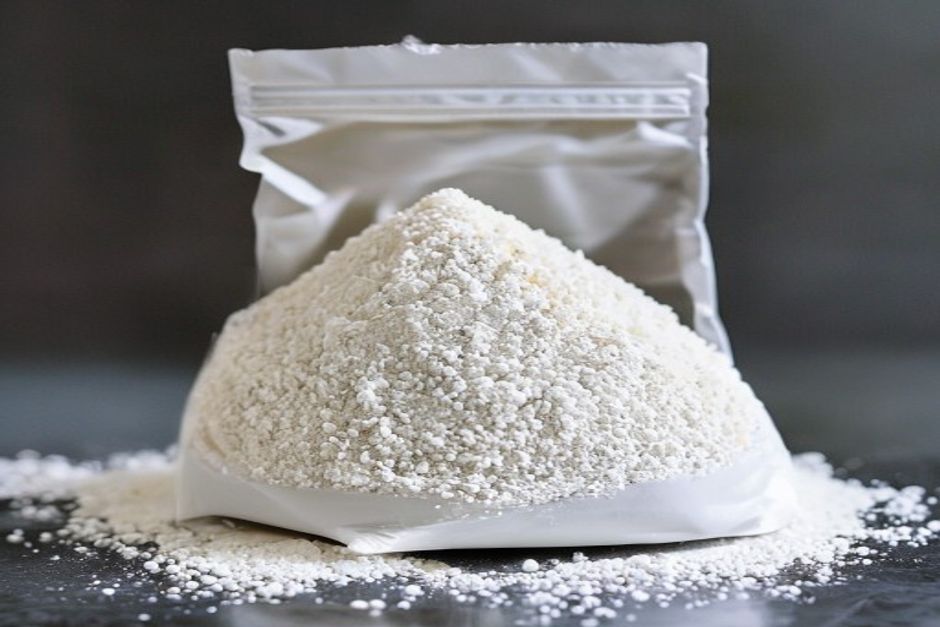
Calcined alpha alumina for sapphire substrate polishing
AluminaWorld is a Zibo, Shandong-based Chinese manufacturer of calcined alpha alumina supplied to sapphire substrate manufacturers in 25+ countries. Sapphire (single crystal alpha-Al₂O₃) is used as a high-value substrate in LED chips (GaN-on-sapphire for solid-state lighting), watch face covers (Apple Watch, premium Swiss watches), semiconductor wafers (RF and power devices on insulating substrate), and optical windows (military, aerospace, infrared sensors). The sapphire substrate requires a mirror finish with surface roughness Ra below 0.5 nm before any epitaxial deposition or device fabrication can begin.
Calcined alpha alumina is the standard polishing abrasive for sapphire. With Mohs hardness 9 (matching sapphire itself), alpha alumina provides efficient material removal without the surface damage that softer abrasives (silica, ceria) would cause. The particle size range from 0.3 μm for final polishing to 30 μm for coarse lapping covers the entire process from wafer flattening to mirror finish. The alpha phase is critical — transition alumina phases (gamma, theta) are softer and produce inconsistent results.
Alpha phase content: ≥ 95% for sapphire polishing
Calcined alumina is produced by heating aluminum hydroxide or boehmite to 1200-1400°C, converting the precursor to the thermodynamically stable alpha-Al₂O₃ (corundum) phase. The calcination temperature and time determine the alpha phase content and crystal size. At 1200°C, the conversion is 70-85% alpha; at 1300°C, 90-95% alpha; at 1400°C, ≥ 97% alpha. Higher calcination temperatures also produce larger primary crystal size (1-10 μm), which is more aggressive in material removal.
For sapphire polishing, the alpha phase content must be at least 95% by XRD. Below 90% alpha, the residual transition phases are softer (Mohs 6-7) and produce inconsistent material removal rates. Below 80% alpha, the slurry can cause subsurface damage and micro-scratching that is difficult to remove in subsequent polishing. AluminaWorld's sapphire-grade CA-LP series is supplied with alpha content ≥ 97% by XRD, with the remaining 3% being predominantly theta-Al₂O₃, which is harder than gamma and contributes to material removal without excessive scratching.
Lapping vs polishing: 30 μm to 0.3 μm
Sapphire wafer polishing is typically a 2-step process. Lapping removes bulk material using coarse abrasive particles (5-30 μm) on a cast iron or soft steel plate with a fluid carrier (typically deionized water with 5-10% abrasive concentration). The lapping step flattens the wafer and removes saw damage from the wafering process, achieving surface roughness Ra 100-500 nm. Material removal rate is 5-20 μm per minute depending on particle size, plate pressure, and rotation speed.
Polishing is the final finishing step using fine abrasive particles (0.3-3 μm) on a soft pad (polyurethane, felt, or pitch) with a chemical-mechanical slurry. The goal is to achieve a mirror finish with surface roughness Ra < 1 nm, suitable for epitaxial deposition (LED GaN growth) or optical transmission. The chemical component of the slurry (typically KOH at pH 10-11 plus an oxidizer H₂O₂ at 0.5-2%) reacts with the sapphire surface to form a soft hydrated layer that is then mechanically removed by the abrasive particles. This chemical-mechanical polishing (CMP) action is critical to achieving sub-nm surface finish without subsurface damage.
Particle size selection by application
The optimal calcined alumina particle size depends on the sapphire application and wafer size. The table below summarizes the standard process for the most common applications.
| Application | Wafer Size | Lapping D50 | Polishing D50 | Final Ra |
|---|---|---|---|---|
| LED substrate (GaN-on-sapphire) | 4-6 inch | 9-15 μm | 0.3-0.5 μm | < 0.5 nm |
| Watch face (Apple, Swiss) | 1-2 inch | 6-9 μm | 0.3 μm | < 0.3 nm |
| Semiconductor RF (Si-on-sapphire) | 4-6 inch | 5-9 μm | 0.3 μm | < 0.5 nm |
| Optical window (military, IR) | 2-4 inch | 15-30 μm | 0.5-1.0 μm | < 1.0 nm |
| LED micro-LED (emerging) | 2-4 inch | 3-6 μm | 0.2-0.3 μm | < 0.2 nm |
For 4-6 inch LED substrate polishing, the standard 2-step process (9-15 μm lapping + 0.3-0.5 μm polishing) achieves the required Ra < 0.5 nm surface finish for GaN epitaxy in 2-4 hours. For 2-inch wafer (semiconductor, watch face), a finer sequence is used: 6-9 μm lapping followed by 0.3 μm polishing, with more attention to surface defect control.
Slurry formulation: pH, concentration, oxidizer
Sapphire polishing slurry is formulated as a 10-30 wt% calcined alumina dispersion in deionized water. The concentration affects material removal rate (MRR) and surface finish: higher concentration (25-30%) gives higher MRR but may cause surface defects (scratches, particles) and pad loading. Lower concentration (10-15%) gives better surface finish but lower throughput. Most production polishing operations use 20-25% concentration as the starting point, then optimize based on the specific pad, pressure, and rotation speed.
The slurry pH is adjusted to 9-11 with KOH (preferred to avoid sodium contamination that can diffuse into the sapphire and cause device defects). The chemical component of CMP slurry also includes an oxidizer (H₂O₂ at 0.5-2% or KMnO₄ at 0.1-0.5%) that enhances the chemical-mechanical removal by oxidizing the sapphire surface to form a softer Al-OH layer that is more easily removed by the abrasive. Some formulations also include a chelating agent (citric acid, EDTA) to sequester aluminum ions and prevent re-deposition on the polished surface.
Purity requirements: Fe₂O₃ < 50 ppm
For sapphire polishing, the chemical purity of the calcined alumina is critical because any transition metal impurity (especially Fe, Cr, Mn) can diffuse into the sapphire substrate during the high-temperature epitaxial deposition (typically 1050°C for GaN MOCVD). Iron contamination above 100 ppm in the polishing slurry has been shown to cause deep-level defects in the LED active region, reducing light output efficiency by 10-30%.
AluminaWorld's sapphire-grade CA-LP series is supplied with controlled impurity levels: Fe₂O₃ ≤ 50 ppm, SiO₂ ≤ 100 ppm, Na₂O ≤ 50 ppm, CaO ≤ 30 ppm, verified by ICP-OES analysis on every production batch. The impurity control starts with the selection of high-purity aluminum hydroxide precursor and continues through the calcination process with controlled furnace atmosphere to prevent contamination from refractory materials.
AluminaWorld's sapphire polishing alumina supply
AluminaWorld operates dedicated calcined alumina production lines in Zibo, Shandong, with annual capacity 8,000 metric tons. The company supplies sapphire polishing grades to LED, semiconductor, and watch face manufacturers in 25+ countries. Standard MOQ is 500 kg per D50 grade, with stock D50 0.3, 0.5, 1.0, 3.0, 5.0, 9.0, 15.0, and 30.0 μm shipping with 7-15 day lead time. Custom D50 (e.g. 0.7 μm) or custom surface treatments (citric acid, stearic acid for improved dispersion) require 25-40 days for first orders.
Each shipment includes XRD phase analysis (alpha content verification), laser PSD (D10/D50/D90), BET surface area, chemical purity (Fe2O3, SiO2, Na2O by ICP-OES), and agglomeration index. FOB Qingdao price: USD 2,500-4,500/MT depending on D50 and purity.
For technical specifications, COA, or a quote for sapphire polishing grade calcined alumina, contact AluminaWorld via WhatsApp at +86 133 2522 2240 or by email at sales@aluminaworld.com.
Frequently Asked Questions
What alumina is used for sapphire polishing?
Calcined alpha alumina (Mohs 9, matching sapphire). D50 0.3-30 μm. AluminaWorld CA-LP series: ≥ 97% alpha by XRD, controlled PSD.
Lapping vs polishing difference?
Lapping: 5-30 μm on cast iron plate, removes saw damage, Ra 100-500 nm. Polishing: 0.3-3 μm on soft pad, mirror finish Ra < 1 nm.
What particle size for sapphire wafer polishing?
LED 4-6": 9-15 μm lap + 0.3-0.5 μm polish. Watch 1-2": 6-9 μm lap + 0.3 μm polish. Optical 2-4": 15-30 μm lap + 0.5-1.0 μm polish.
Alpha phase content requirement?
≥ 95% by XRD for sapphire polishing. Below 90% causes inconsistent MRR and subsurface damage. AluminaWorld CA-LP: ≥ 97%.
Slurry concentration and pH?
10-30 wt% in DI water, typically 20-25%. pH 9-11 with KOH (avoid Na). H₂O₂ 0.5-2% or KMnO₄ 0.1-0.5% as oxidizer.
What is the MOQ and lead time?
MOQ 500 kg per D50. Stock 0.3/0.5/1.0/3.0/5.0/9.0/15.0/30.0 μm: 7-15 days. Custom 25-40 days. FOB Qingdao USD 2,500-4,500/MT.
Get a Quote for Sapphire Polishing Alumina
AluminaWorld supplies calcined alpha alumina in 0.3-30 μm D50 for LED, semiconductor, watch face, optical. ISO 9001 certified. 25+ countries.