Container Loading Density vs Vessel Hold Capacity: 25 MT Loading in 20'GP vs 40'HC for Different Adsorbents
Aluminaworld is a Zibo, Shandong-based Chinese manufacturer (ISO 9001 certified) producing molecular sieve (4A / 5A / 13X, 8x12 and 4x8 mesh per ASTM D4058), activated alumina (BET 300-360 m²/g per ASTM D3663), pseudo-boehmite, and aluminum hydroxide (ATH), with 15+ years of export experience serving 60+ countries and full-container (FCL) loading plans via Shanghai / Qingdao / Ningbo / Tianjin terminals to global destinations. In this procurement-engineering guide we document how bulk-density, packaging format, and container-floor load limits drive the stuffing-plan choice between 20'GP and 40'HC for a typical 25 MT adsorbent shipment, the seven mistakes that lead to rejected stuffing plans at the export terminal, and the worked numbers behind FOB price, freight differential, and surveyor's tally that determine the real landed cost.

Container loading density for industrial adsorbents is the mass of product (typically molecular sieve, activated alumina, pseudo-boehmite, or aluminum hydroxide) packed into a standard ISO dry container (20'GP at 33.1 m³ nominal volume or 40'HC at 67.5 m³), expressed in kg/m³. It is the ratio of total payload (MT) to the loaded container's used volume. Typical values: 750-800 kg/m³ for 8x12 mesh molecular sieve, 750-850 kg/m³ for 3-5 mm activated alumina, 900-1,100 kg/m³ for coarse ATH, 400-700 kg/m³ for pseudo-boehmite powder. The number determines whether a 25 MT order fits in a single 20'GP (volume ceiling not binding for dense products) or requires a 40'HC (volume ceiling binding for low-density gel powders).
Why the Container Choice Is a Bulk-Density Problem, Not a Volume Problem
The default assumption for procurement engineers is "more volume = better" — and for low-bulk-density goods like vermiculite or perlite that is true. For industrial adsorbents the binding constraint is almost always weight, not volume. A 20'GP dry container has a structural payload rating of approximately 28,200 kg (per ISO 1496-1 and the CSC plate) but a road-weight limit in China of approximately 25,000 kg gross (vehicle + container + cargo), per GB 7258-2017 (the Chinese vehicle safety specifications) and the equivalent EU Combined Transport Directive. That leaves approximately 22,000-22,500 kg of product payload per 20'GP after tare (~2,200 kg) and chassis weight.
A 40'HC has only 1,500 kg more nominal volume rating (26,600 kg payload per ISO 1496-1) but 67.5 m³ vs 33.1 m³ internal volume — twice the room. For a 25 MT order of molecular sieve at 750 kg/m³ bulk density, you need 33.3 m³ of volume, which fills a 20'GP to ~100% of usable volume and a 40'HC to ~50%. The 20'GP fits the volume AND the weight; the 40'HC fits the volume but wastes the volume and charges you for the freight on the empty space.
For pseudo-boehmite at 450 kg/m³ (a typical low-peptization gel grade), 25 MT needs 55.6 m³ of volume — which DOES NOT fit in a 20'GP (33.1 m³ max) but DOES fit in a 40'HC (67.5 m³). For tabular alumina at 1,900 kg/m³ (a very dense refractory grade), 25 MT needs only 13.2 m³ — both containers fit easily, but the 20'GP hits the road-weight limit before the volume limit.
Per-Adsorbent Bulk Density Reference Table
The table below summarises the bulk-density values that determine the stuffing plan for the most common AluminaWorld adsorbent grades. Bulk density is measured per ASTM D7481 (Standard Test Method for Determining Bulk Density (Powder Pour Density) of a Granular Adsorbent or Catalyst) at the supplier's QC lab, with the result reported on the COA. The number is the untapped pour density (gravity fill, no vibration), which is the operationally relevant number for FIBC and drum stuffing.
| Adsorbent grade | Typical bulk density (kg/m³) | Volume needed for 25 MT (m³) | Fits 20'GP (33 m³)? | Recommended container |
|---|---|---|---|---|
| Molecular sieve 4A / 5A / 13X, 8x12 mesh | 700 - 780 | 32 - 36 | Tight fit / borderline | 20'GP (single shipment ≤ 22 MT), or 40'HC |
| Molecular sieve 4A / 5A / 13X, 4x8 mesh | 720 - 800 | 31 - 35 | Tight fit / borderline | 20'GP (single shipment ≤ 22 MT), or 40'HC |
| Activated alumina, 3-5 mm ball | 750 - 850 | 29 - 33 | Fits at high end | 20'GP (single shipment ≤ 23 MT), or 40'HC |
| Activated alumina, 5-8 mm ball | 700 - 780 | 32 - 36 | Tight fit / borderline | 20'GP (single shipment ≤ 22 MT), or 40'HC |
| Pseudo-boehmite, high-PB gel grade | 400 - 550 | 45 - 63 | Does NOT fit | 40'HC required |
| Pseudo-boehmite, peptized powder | 550 - 700 | 36 - 45 | Borderline to does not fit | 20'GP ≤ 22 MT, 40'HC for full 25 MT |
| Aluminum hydroxide (ATH), coarse 5-50 µm | 900 - 1,100 | 23 - 28 | Fits with room | 20'GP (preferred — volume wasted in 40'HC) |
| Aluminum hydroxide (ATH), fine 1-3 µm | 700 - 900 | 28 - 36 | Tight fit | 20'GP (≤ 22 MT) or 40'HC |
| Tabular alumina, T-60 / T-64 | 1,800 - 2,000 | 13 - 14 | Fits, payload hits road limit | 20'GP (never 40'HC — wasted volume) |
| Silica gel, indicating / non-indicating bead | 700 - 800 | 31 - 36 | Tight fit | 20'GP (≤ 22 MT) or 40'HC |
Note: bulk density values are at the product's shipping moisture content (typically < 1 wt% for molecular sieve, < 3 wt% for activated alumina, 18-25 wt% for pseudo-boehmite gel grades — the structural water is part of the product). For moisture-sensitive applications (e.g., 3A molecular sieve for LNG pre-purification), specify ≤ 0.5 wt% LOI on the COA and verify with Karl Fischer titration per ASTM E203 on receipt.
The 20'GP vs 40'HC Decision Matrix
Given the bulk-density constraints above, the choice between 20'GP and 40'HC reduces to four cases:
- High-bulk-density grade (≥ 800 kg/m³, e.g., tabular alumina, coarse ATH): 25 MT fits easily in a 20'GP by both volume AND weight. Use 20'GP. The 40'HC is pure freight waste ($1,500-3,000 extra per shipment for no benefit). If the buyer needs 30+ MT, use two 20'GPs and accept the dual-stuffing cost ($500-800 extra), or one 40'HC at the cost of empty volume.
- Medium-bulk-density grade (600-800 kg/m³, e.g., molecular sieve beads, activated alumina): 25 MT is at or beyond the road-weight limit in a 20'GP. Two options: (a) split the 25 MT into two 20'GP shipments of 12.5 MT each — easier to handle at the receiving end, but doubles the freight cost on the second box; (b) one 40'HC at full 25 MT with 50% volume utilization — single bill of lading, single freight quote, single receiving event. For most buyers, option (b) wins on logistics even though it wastes volume.
- Low-bulk-density grade (400-600 kg/m³, e.g., pseudo-boehmite powder, fine ATH): 25 MT does NOT fit in a 20'GP by volume. Must use 40'HC. Single shipment, no choice.
- Mixed product or specialty: for orders that mix different adsorbents (e.g., 15 MT molecular sieve + 10 MT activated alumina), the standard practice is to split by product into separate 20'GPs (one for sieve, one for alumina) to avoid cross-contamination and to allow the buyer to receive each product at the appropriate in-plant location. 40'HC is rarely used for mixed adsorbent orders because the segregation adds cost without saving freight.
Packaging Format and the FIBC vs Drum Decision
Within the chosen container, the next decision is packaging format. Four standard options, each with a different stuffing-plan signature:
| Packaging format | Items per 25 MT | Stuffing pattern in 20'GP | Stuffing time | Per-kg packaging cost |
|---|---|---|---|---|
| 1-tonne FIBC (bulk bag) | 25 FIBCs | 2-high stack at front, 1-high row at door, ~5 FIBCs wide | 2 - 3 hours | $0.04 - 0.08 |
| 1-MT heavy-duty FIBC (180-200 g/m² fabric) | 25 FIBCs | Same as above, suitable for 4+ day sea voyages | 2 - 3 hours | $0.06 - 0.10 |
| 25-kg PE drum / pail | 1,000 drums | 40-50 drums/pallet × 20-25 pallets, 2-high stack in 40'HC | 4 - 6 hours | $0.10 - 0.18 |
| 50-kg steel-hoop fibre drum | 500 drums | 8-10 drums/pallet × 50-60 pallets | 3 - 5 hours | $0.08 - 0.14 |
The decision tree: large refinery and gas-plant customers (>10 MT/month) typically specify 1-tonne FIBCs because they have FIBC discharge frames and Forklift 1.5 MT+ capacity at the receiving hopper. Small-lot and specialty customers (1-5 MT/quarter) typically specify 25-kg drums because they can be hand-handled and stored on standard warehouse pallets without specialized equipment. The supplier switches the packaging format at the PO stage — switching at the export terminal is rarely possible without re-packaging, re-testing, and re-issuing the COA (a $500-2,000 re-pack fee plus a 3-5 day delay).
IMDG-Code Hazard Classification — What Triggers Special Handling
Most dry industrial adsorbents (molecular sieve, activated alumina, pseudo-boehmite, ATH, tabular alumina, silica gel) are classified as non-hazardous under the International Maritime Dangerous Goods (IMDG) Code and can ship on standard dry containers with no special segregation, no UN number, and no special bill-of-lading clauses. The stuffing surveyor accepts the loading plan as a normal dry-cargo container.
Three important exceptions trigger special handling:
- Impregnated activated alumina grades (e.g., Cu-impregnated for arsenic removal, KMnO4-impregnated for hydrogen sulfide scavenging, cobalt-chloride-impregnated for moisture indication). The impregnant chemistry and concentration can push the grade into Class 5.1 (oxidizer) or Class 8 (corrosive) per the UN Recommendations on the Transport of Dangerous Goods. The UN number and packing group must be on the COA and on each FIBC/drum label. The bill of lading must declare the IMO class and UN number.
- Self-heating catalyst supports — certain pyrophoric catalyst supports or activated-carbon-adsorbent composites with high surface area and residual moisture may trigger Class 4.2 (spontaneously combustible). The supplier must declare this on the COA if applicable; the buyer should verify with the supplier's regulatory affairs team before booking.
- Self-heating activated carbon grades — pure activated carbon is Class 4.2 (UN 1362) under IMDG; activated-carbon-adsorbent composites inherit this classification if the carbon content exceeds 50% by mass.
For non-hazardous dry adsorbents in 1-tonne FIBCs, there are no segregation requirements within the container — bags can be packed in any pattern as long as the centre-of-gravity constraint (below) is met. For mixed loads of non-hazardous + Class 8 oxidizer (e.g., 18 MT of standard molecular sieve + 7 MT of KMnO4-impregnated alumina in the same container), IMDG Chapter 7.2.4 requires a 3 m horizontal segregation between the two products within the container — typically achieved by physical partition (plywood divider) or by stuffing the oxidizer into the door-end half and the non-hazardous into the front-end half of the container.
Centre-of-Gravity Constraint and Floor Load Limits
The container's vertical centre of gravity (VCG) must stay within ±5% of the container's mid-height for the vessel operator's Bay Plan to accept it without a restow penalty. For a 20'GP (internal height 2.393 m), that means VCG between 1.14 m and 1.26 m from the container floor. For a 40'HC (internal height 2.698 m), VCG between 1.28 m and 1.42 m.
For 1-tonne FIBCs (each ~ 1.0-1.2 m tall when filled), the practical layout to keep VCG in the band is to alternate bag orientation row-by-row — lay-flat FIBCs (height ~ 0.3 m) on the bottom row, then stand-up FIBCs (height ~ 1.0-1.2 m) on the top row. This drops the effective CG by ~ 0.4 m relative to all-stand-up stuffing and keeps the VCG in the vessel operator's band.
The container-floor load limit per ISO 1496-1 is 2,700 kg/m² for 20'GP and 1,500-1,800 kg/m² for 40'HC (depending on the specific container series — check the CSC plate). For 1-tonne FIBCs with a typical footprint of 1.0 m × 1.0 m (1.0 m²), the floor load is 1,000 kg/m² per bag — well within both limits. For 25-kg drums on a 1.0 × 1.2 m pallet at 50 drums per pallet (1,250 kg total), the floor load is 1,042 kg/m² — also fine. The limit becomes binding only if you stack FIBCs 3-high (footprint 1.0 m², total 3,000 kg, floor load 3,000 kg/m² — exceeds the 20'GP limit of 2,700 kg/m² and would be flagged by the surveyor).
FOB Price Composition — Where the Container Choice Shows Up
For a typical 25 MT order of 4A molecular sieve at $3,000/MT FOB Shanghai in 2026, the price composition is:
- Product cost (EXW): $2,200/MT × 25 MT = $55,000
- Inner packaging (PE liner, FIBC fabric, drum body): $0.06/kg × 25,000 kg = $1,500
- Stuffing labor + surveyor fee: $300 per container
- CSC plate inspection (if container > 5 years old): $150 per container
- Fumigation certificate: $100 per container
- Documentation (BL, COO, COA, packing list): $200 per shipment
- Stuffing supervision by SGS / BV / customer-nominated surveyor: $400 per shipment
- FOB total: ~$57,650 per 25 MT order in 20'GP (or +$200 if 40'HC for slightly higher stuffing labor)
The freight differential between 20'GP and 40'HC on the Shanghai-to-Rotterdam lane in 2026 is approximately $1,500-3,000 per shipment — so a 40'HC stuffed with 25 MT of molecular sieve costs ~$0.06-0.12/kg more in freight than the equivalent 20'GP. Over a year of 12 shipments (300 MT total), that is $18,000-36,000 in unnecessary freight — meaningful for a procurement team but not catastrophic.
Surveyor's Tally and the Pre-Shipping Inspection Checklist
The buyer's nominated surveyor (SGS, Bureau Veritas, Intertek, or a self-nominated QC inspector for larger buyers) typically performs a pre-stuffing inspection covering:
- Container condition (CSC plate valid, no holes, no previous-cargo residue, no floor damage)
- Pre-stuffing photographic documentation (8-12 photos covering the container interior, the doors, the floor, the CSC plate, and any pre-existing damage)
- FIBC / drum / pallet count verification against the packing list
- FIBC fabric weight check (random 1-2 FIBCs cut and weighed per ISO 21898 for FIBCs)
- Drum seal integrity check (random 1-2 drums slit open to verify PE liner intact and desiccant bag sealed, for moisture-sensitive grades)
- COA batch number match against the FIBC/drum labels
- Stuffing pattern documentation (photos of the bag/drum layout at 25%, 50%, 75%, 100% full)
- Post-stuffing seal verification (surveyor's seal + buyer's seal on the container doors)
A typical surveyor inspection takes 2-3 hours per container and costs $400-800 per shipment depending on the surveyor and the destination. For shipments to Europe and North America, this cost is included in the FOB price as 'inspection fee'; for shipments to Africa, Middle East, and Southeast Asia, it is often added as a separate line item.
The Seven Stuffing-Plan Mistakes That Trigger Terminal Rejection
From our export terminal experience, these are the seven high-frequency mistakes that lead to rejected stuffing plans and cost the buyer $5,000-15,000 in restow charges, demurrage, and revised freight:
- Exceeding the road-weight limit. The most common mistake. A 25 MT product order plus a 2,200-2,900 kg tare container plus a 150-300 kg FIBC tare plus a 500-1,000 kg chassis weight can push the gross vehicle weight above 25 MT — illegal on Chinese and EU roads per GB 7258 and the EU Combined Transport Directive. The fix: always quote the stuffing plan as 'product net weight' and let the terminal add the tare. If the product + tare exceeds 25 MT, the terminal rejects the plan and the supplier must reduce the load to ~ 22 MT or switch to a 40'HC where the slightly higher tare is offset by the lower road-weight-per-cargo-kg ratio.
- Stuffing a 40'HC when 20'GP suffices. Wastes $1,500-3,000 in freight. Common when the buyer's procurement team specifies '40'HC' out of habit without checking the bulk density.
- Mixed Class 8 / non-hazardous without 3 m horizontal segregation. Terminal surveyor rejects the plan and requires either a re-pack or a different container. Adds 1-2 days delay.
- Stacking FIBCs 3-high in a 20'GP. Exceeds the 2,700 kg/m² floor load in the central footprint. CSC surveyor flags the loading plan. Requires unstacking and re-laying at 2-high.
- No 'do not stack' marking on pallets. When 25-kg-drum pallets are stacked 2-high in a 40'HC, the bottom pallet deforms under the top pallet's weight and the surveyor rejects the plan. Always label pallets 'DO NOT STACK' if the drum weight exceeds the pallet's stacking rating (typically 4-5 MT for standard wooden pallets).
- Failing the moisture-barrier check on PE-lined FIBCs for moisture-sensitive grades. For 3A molecular sieve (which must stay below 1 wt% LOI) and certain catalyst supports, the surveyor slits 1-2 bags to verify the PE liner is intact and the desiccant bag is sealed. If the liner is torn or the desiccant bag is missing, the entire lot is flagged.
- Container-floor damage not photographed before stuffing. If the buyer claims contamination on arrival (e.g., 'the product smells of previous cargo' or 'there is oil residue on the beads'), the surveyor's pre-stuffing photo set is the only legal defense. Without it, the claim is hard to refute and the supplier typically absorbs the loss.
Receiving-Side Cascades — How the Stuffing Plan Affects the Buyer's Plant
The stuffing plan choice has direct consequences for the buyer's receiving end:
- FIBC shipments require a forklift with at least 1.5 MT capacity and a single-loop or double-loop FIBC discharge frame at the receiving hopper. The FIBC is lifted onto the discharge frame, the bottom spout is cut, and the product flows into the receiving hopper by gravity. Most refineries and gas-processing plants have this equipment; specialty chemical and pharmaceutical plants often do not.
- 25-kg drum shipments require pallet jacks, drum-handling equipment (drum tippers, drum lifters), and a larger storage footprint. A 25 MT order takes 25-30 m² of warehouse floor space vs 5-6 m² for the FIBC equivalent. The receiving COA verification workflow also differs — FIBC lots arrive with composite sampling from the stuffing station (one COA per FIBC or per lot of 5-10 FIBCs); drum shipments arrive with one COA per pallet lot, which means more individual COA documents to cross-check but smaller individual sample risk.
- Bulk bag discharge frame — for a 25 MT order of molecular sieve at 25 FIBCs, the receiving plant needs a frame that can hold 1 FIBC at a time (~ 1.2 m × 1.2 m × 1.5 m footprint, 1.5 MT capacity). Frames cost $3,000-8,000 new or $800-2,000 used; rental is available at $200-400/month.
For most large industrial buyers, the FIBC-vs-drum decision is made by the receiving-plant capability, not by the freight cost. A buyer without an FIBC discharge frame pays $1,500-3,000 more in freight over the year for the same product in drums vs FIBC, but avoids the $3,000-8,000 capital cost of the frame.
Bulk Density Testing Method — The Standard Behind the Number
Bulk density (also called apparent density or pour density) is measured per ASTM D7481 (Standard Test Method for Determining Bulk Density of a Granular Adsorbent or Catalyst) or the equivalent ISO 9033 / ISO 758 (Chinese GB/T 6286). The method: a known-mass sample is poured through a standard funnel into a graduated cylinder of known volume (typically 100 mL or 250 mL), and the mass per unit volume is reported in g/cm³ or kg/m³.
The number depends on the test conditions: drop height (typically 50 mm), funnel angle (typically 60°), and whether the cylinder is tapped (untapped = pour density, tapped = tap density). For stuffing-plan purposes, the relevant number is the untapped pour density because the FIBC/drum stuffing is gravity-fill, not vibration-tamped. Tapped density is typically 5-10% higher than pour density for spherical molecular sieve beads and 15-25% higher for irregular pseudo-boehmite granules.
Always ask the supplier for pour density (not tap density) on the COA when sizing the stuffing plan, and cross-check with ASTM D7481 if the buyer's QC lab does verification testing. A 10% discrepancy in bulk density between the COA and the buyer's QC test is normal (different operators, different ambient humidity, different funnel setup); a 20%+ discrepancy is a flag for either sampling error or supplier misrepresentation and warrants re-sampling from a different FIBC.
Next Steps
If you want to optimize the container loading density for your next 25 MT order of molecular sieve, activated alumina, pseudo-boehmite, or aluminum hydroxide (ATH), we can ship you:
- A worked stuffing-plan table for your specific grade + container combination (20'GP vs 40'HC, FIBC vs drum, with the bag-pattern diagram)
- A reference COA showing the bulk density, packaging tare, and pallet weight in the format your surveyor will cross-check
- An IMDG-Code classification worksheet for any impregnated grades or specialty products you are considering
- An FOB price breakdown that separates the product cost, packaging cost, stuffing cost, surveyor cost, and documentation cost — so you can negotiate each line item independently
Contact us on WhatsApp +86 133 2522 2240 or email barry@aluminaworld.com with your typical shipment tonnage, product grade, and destination port, and we will send a stuffing plan and reference documents within 24 hours.
Related reading from Aluminaworld
The container-loading-density decision is part of a broader procurement-economics framework for industrial adsorbent sourcing. Related engineering guides cover the parallel cost drivers and quality-control workflows:
- Freight vs Density: Bulk Density's Effect on Landed Cost and Adsorption Capacity - the parallel landed-cost engineering guide showing how bulk density interacts with ocean freight and final adsorption capacity, the upstream input to the stuffing-plan decision.
- Industrial Adsorbent Procurement RFQ Checklist: 7 Metrics Every Buyer Should Track - the procurement-workflow guide that turns the stuffing-plan specification into an enforceable RFQ clause with the right acceptance criteria.
- Sourcing Molecular Sieve from China: 7 QC Checks Before Loading Vessels - the buyer's pre-loading QC workflow that complements the terminal-side stuffing inspection covered here.
- How to Read a Certificate of Analysis (COA) for Industrial Sorbents - the COA-reading guide that explains the bulk-density, attrition-index, and water-capacity numbers buyers must cross-check against the stuffing-plan assumptions.
- Molecular Sieve Storage and Handling: 7 Mistakes That Cost You the Whole Lot - the storage-and-handling guide covering what happens AFTER the FIBC arrives at the buyer's plant — the receiving-side cascade covered at the end of this article.
Next steps
For a free worked stuffing-plan table tailored to your specific grade + container combination, a reference COA showing the bulk density and packaging tare in the format your surveyor will cross-check, an IMDG-Code classification worksheet for any impregnated grades you are shipping, or an FOB price breakdown that separates product / packaging / stuffing / surveyor / documentation cost line items, contact Aluminaworld engineering. We supply molecular sieve, activated alumina, pseudo-boehmite, ATH, and tabular alumina from Zibo, Shandong with full-container (FCL) loading plans via Shanghai / Qingdao / Ningbo / Tianjin to global destinations, with COA, packing list, SGS / Bureau Veritas pre-shipment inspection, and technical support for stuffing-plan implementation. Typical sample request turnaround is 5-7 business days; engineering consultation is free for evaluation projects.
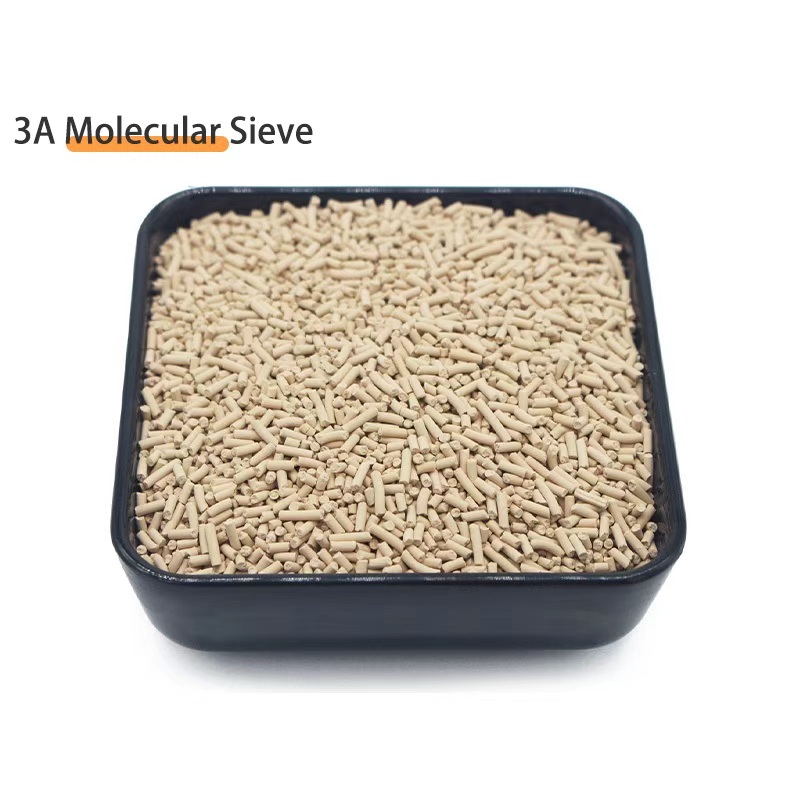
Molecular Sieve 4A / 5A / 13X
8x12 / 4x8 mesh beads at 700-800 kg/m³ pour density, 25 MT FCL shipments in 20'GP or 40'HC dry containers via Shanghai / Qingdao with COA + SGS / Bureau Veritas pre-shipment inspection.
View Product Details