
First Trial Order for Industrial Adsorbents: A Buyer's Guide
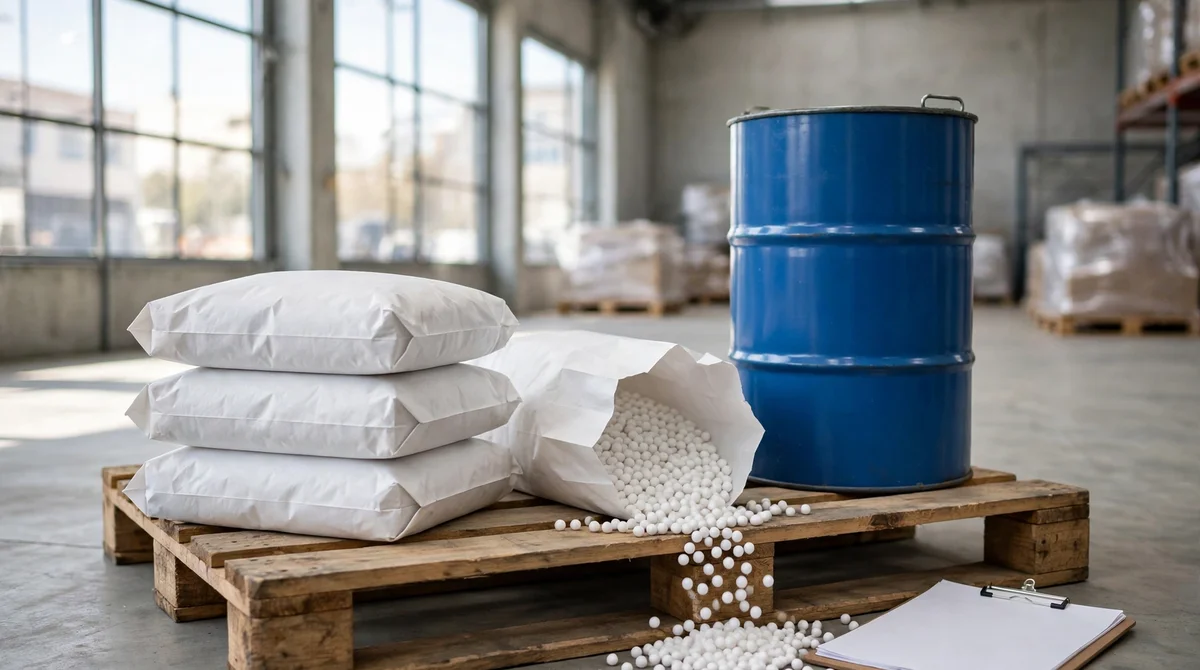
A first trial order is where most new supplier relationships are won or lost: small enough that a mistake is cheap, big enough to prove whether the material, the paperwork and the supplier work the way the datasheet says.
This guide covers five steps for a first order of molecular sieve or activated alumina: sample first, specify in writing, compare quotes on the same basis, size the trial to one real test, and check the delivery before approving the supplier.
Step 1: Start with a Sample, Not a Shipment
A sample costs almost nothing and answers the only question that matters now: does this material behave the way your process needs it to?
Ask for a sample of the exact grade and bead size you plan to buy — 3A, 4A, 5A or 13X molecular sieve beads, or the activated alumina grade for your dryer — and test it against the datasheet. Check bead size and uniformity, crush strength and moisture uptake against the technical datasheet and the batch certificate of analysis (COA) that arrives with the sample. The sample itself is free; freight is at the buyer's cost, by courier collect or your own courier account. If a supplier will not send a sample of the grade you asked for, treat that as information — and move on.
Step 2: Write the Specification Before You Ask for a Price
A vague enquiry gets a vague quote. A written specification gets a price you can compare — and a delivery you can check.
Before requesting a quotation, write down the five lines every supplier needs: product type and grade, bead size (1.6–2.5 mm or 3–5 mm), quantity, packaging (25 kg bags, 150 kg steel drums or bulk bags) and destination. Add the process — insulating glass, compressed-air drying, ethanol dehydration — because the right grade depends on it: 3A is the usual choice where only water must be removed; 4A is the starting point for general gas and air drying. Send the same specification to every supplier: different specifications produce different prices, and a quote you cannot compare is a quote you cannot use.
Step 3: Compare Quotes on the Same Basis
Two quotes for the "same" material can differ by a third once packaging, price basis and documents are counted — compare the whole offer, not the headline number.
We quote EXW Zibo: the price covers the material at our plant, and freight is calculated per order, because inland freight to the port varies with quantity. A FOB or CIF figure from another supplier already includes freight and handling you cannot see — ask for the EXW price too, so material cost and freight cost stay separate. Then check the rest of the offer: packaging that fits your unloading, a plannable lead time — bulk orders run 15–25 days — and a datasheet and batch COA with the shipment. The cheapest quote without a COA is not the cheapest quote; it is an unpriced risk.
| What to check | How to check it | Why it matters |
|---|---|---|
| Price basis | EXW vs FOB or CIF — ask for EXW to keep material and freight separate | Hidden freight distorts the comparison |
| Packaging | 25 kg bags, 150 kg steel drums or bulk bags | Must fit your unloading and storage |
| Lead time | 15–25 days for bulk orders | An unplannable lead time is a shutdown risk |
| Documents | Technical datasheet and batch COA with the shipment | Without a COA the batch cannot be verified |
Step 4: Size the Trial Order to One Real Test
A trial order should be big enough for one real test — one bed fill, one production run — and small enough that a failure is a lesson, not a loss.
One bed fill is the natural size for a dryer or adsorber trial; one production run for a process trial. Either way, order the grade and bead size you already tested, in packaging your site can handle — 25 kg bags for manual loading, 150 kg steel drums where a drum unloader is available, bulk bags for larger fills. Plan the calendar, not just the quantity: bulk orders take 15–25 days, so order while the incumbent material still runs, and keep enough of it in stock to cover the trial if the new material underperforms. A trial that arrives after the old bed is empty is not a trial; it is a forced change.
Step 5: Receiving Checks and the Go / No-Go Decision
The trial is decided at the receiving dock, not in the meeting room: check the delivery against the specification the same day it arrives.
Start with the paperwork: the batch COA should list the datasheet values, and its batch number should match the number on the bags or drums. Then check the material: bead size and uniformity against the specification, packaging intact and dry, no fines or dust beyond what the datasheet allows. Keep a retained sample, sealed and labelled with the batch number, so any later dispute has a reference. If the delivery matches the specification and the trial run performs, approve the supplier for a bulk order on the same grade. If it does not match, say so in writing the same day, with the COA and photos — a supplier that fixes a trial-order problem beats one that never had one.
Trial Order at a Glance
Five steps, five checks.
| Step | What to do | What good looks like |
|---|---|---|
| Sample first | Test exact grade and size against datasheet and COA | Sample matches the datasheet |
| Specify in writing | Type, grade, size, quantity, packaging, destination | Same specification to every supplier |
| Compare quotes | Same basis: EXW, packaging, lead time, documents | Whole offer compared, not the headline price |
| Size the trial | One bed fill or one production run | Trial runs on real duty; old stock covers it |
| Check on arrival | COA vs datasheet, batch match, bead check | Delivery matches the specification; retained sample kept |
For the numbers behind this guide, see the molecular sieve product page, our RFQ checklist and how to verify molecular sieve quality before you buy.
Frequently Asked Questions
How big should a first trial order be?
Big enough for one real test — one bed fill or one production run — and small enough that a failure is cheap. Order the grade and bead size you already tested in the sample.
How long does a trial order take?
Plan on the standard bulk lead time of 15–25 days for the trial order itself. Request the sample first, so testing runs while the order is produced, and order while your current material still runs.
Do I have to pay for samples?
No — the sample itself is free. Freight is at the buyer's cost, by courier collect or your own courier account.
What documents arrive with the shipment?
A technical datasheet and a batch certificate of analysis (COA) come with every shipment. Check the COA values against the datasheet on arrival and confirm the batch number matches the bags or drums.
Ready to start with a sample? Send us the product type, grade, bead size and quantity — our engineers will confirm the grade and the sample: barry@okkinc.com.
Get a Quote
Tell us the product, grade and quantity. We reply within 12 hours with EXW pricing and lead time.
- ✓ COA and technical datasheet with every shipment
- ✓ EXW pricing — freight calculated per order
- ✓ Engineering consultation on grade selection and loading
Prefer to talk now?
WhatsApp +86 133 2522 2240
or email barry@okkinc.com