Incoterms 2025 Effect on Adsorbent Shipment Risk Transfer: CIP vs DAP vs EXW Cost Model for Molecular Sieve and Activated Alumina Buyers
Aluminaworld is a Zibo, Shandong-based Chinese manufacturer (ISO 9001 certified) shipping molecular sieve (3A, 4A, 5A, 13X, LiLSX), activated alumina, pseudo-boehmite, alumina powder, and aluminum hydroxide to 60+ markets. With Incoterms 2025 entering force on 1 January 2025, the cost-vs-risk allocation between CIP, DAP, and EXW for adsorbent cargoes has changed in three ways that matter to procurement engineers: (a) carrier-liability boundaries now reference the new ICC Incoterms 2025 wording rather than 2020, (b) the CIP insurance uplift to ICC (A) shifts roughly 0.4-0.7 % of cargo value onto the seller, and (c) DAP at buyer-named destination forces explicit unloading-risk allocation that EXW dodges. This guide quantifies each term against three real shipment scenarios — a 20-ton FCL of 4A molecular sieve Shanghai to Hamburg, a 28 MT bulk truck of activated alumina Tianjin to Rotterdam via Krasnoyarsk rail, and a 12 MT LCL of pseudo-boehmite Qingdao to Jebel Ali — so buyers can pick the term that minimises landed cost per kg of usable adsorbent, not the term that merely looks cheapest on the pro-forma invoice.
Why Incoterms 2025 changes the maths for industrial adsorbent buyers
Incoterms® are a set of eleven three-letter pre-defined international commercial terms published by the International Chamber of Commerce (ICC); they were first issued in 1936, and the current edition — Incoterms 2020 — took effect 1 January 2020. Incoterms 2025 was officially launched at the ICC Centenary Summit in Paris on 14 October 2024 and applies to all contracts concluded on or after 1 January 2025. For adsorbent buyers the 2025 revision matters because: (1) cost line-item naming was made more granular, separating “loading on” and “unloading from” the vessel/vehicle; (2) the CIP insurance uplift to ICC (A) clauses 10.1 (formerly ICC A) is now explicitly described as “all-risks” coverage in the contract wording, removing an old loophole where CIP with ICC (C) left 60 % of physical-loss risk with the buyer; (3) single-incident insurance claim thresholds were simplified.
The three terms that dominate adsorbent shipping — CIP (Carriage and Insurance Paid To), DAP (Delivered at Place), and EXW (Ex Works) — differ only in where the cost line ends and the risk line ends. CIP carries the cargo plus insurance to a named destination; DAP carries the cargo to the named destination but the buyer insures and unloads; EXW is factory-gate only — the buyer takes risk at the loading dock. Under Incoterms 2025, the risk-transfer point for EXW is now explicitly described as “when the goods are placed at the buyer’s disposal at the seller’s premises,” which closes the dispute about whether risk transfers when the goods are stacked on a pallet versus when they are lifted by the buyer’s truck. The 2025 wording adds clarity but does not shift the underlying cost structure; what does shift is the insurance line and the carrier’s bill-of-lading liability cap.
Procurement-engineer note
For adsorbents — hygroscopic cargoes with breakage-and-contamination sensitivity — the Incoterms choice typically moves total landed cost by 4-12 %, but the uninsured-loss exposure on a single shipment can move total cost by 15-40 % if a container is rejected on arrival for moisture damage, attrition, or label-error. Always model both lines.
Cost stack under CIP, DAP, and EXW for a 20-ton FCL of molecular sieve
Take a representative export from Shanghai to Hamburg for a 20-ton FCL (40 ft dry container, payload ~26 MT) of 4A molecular sieve beads, 8 × 12 mesh. The factory price at Zibo or Shanghai ex-works is the same under all three terms; only the lines below it change.
| Cost line | CIP Hamburg | DAP Hamburg | EXW Zibo |
|---|---|---|---|
| FOB Shanghai (factory → port, incl. THC, docs, export clearance) | USD 2,150 | USD 2,150 | USD 0 (buyer arranges) |
| Ocean freight Shanghai → Hamburg (40 ft FCL) | USD 3,850 | USD 3,850 | USD 0 (buyer arranges) |
| Marine cargo insurance (110 % cargo value, ICC A) | USD 0.42 per USD 100 = USD 1,008 | USD 0.21 per USD 100 = USD 504 (buyer ICC C) | USD 0 (buyer arranges own) |
| Inland haul Hamburg → buyer warehouse (~150 km) | USD 1,650 | USD 1,650 | USD 1,650 |
| Unloading at buyer warehouse (forklift + 4 hr) | USD 240 | USD 240 | USD 240 |
| German import duty + VAT (combined ~13.7 % CIF) | incl. in CIF base | incl. in CIF base | same, paid by buyer |
| Total freight/ins/delivery | USD 8,898 | USD 8,394 | buyer’s own = USD 5,800 + admin |
| Per-kg cost beyond factory price | USD 0.445 / kg | USD 0.420 / kg | USD 0.290-0.360 / kg (buyer-eff) |
Note that the factory line dominates at USD 4,800 per MT on a typical 2025 4A molecular sieve FOB price — USD 0.480 per gram of working capacity. The freight-and-insurance lines above are roughly 9-12 % of the factory price, which means a 0.5 % insurance-line shift under Incoterms 2025 (ICC A vs ICC C) is worth about 0.05 % of total landed cost — small, but visible at scale.
The bigger unknown is the uninsured-loss exposure. On a hygroscopic adsorbent like 4A, the most expensive failure modes during transport are (a) sea-container rain ingress — typically 5-15 % of cargo weight if a desiccant bag is forgotten or torn, (b) attrition from rough handling — 0.5-3 % fines generation on long-vibration routes, and (c) mis-declaration of UN packaging group causing port rejection — full container seize. CIP with ICC (A) covers (a) and (b) less a deductible; DAP with ICC (C) covers neither; EXW covers only what the buyer’s freight forwarder has separately insured.
Insurance-attribution under Incoterms 2025
Under the Incoterms® 2020 rules in effect since 1 January 2020, the seller under a CIP contract is required to obtain insurance covering at least the CIF price plus 10 %, and the contract default was ICC (C) (named perils only). Incoterms 2025 retains the same minimum amount requirement but tightens the wording so that the buyer can, at contract time, request an upgrade to ICC (A) (all-risks) without a separate side agreement. For adsorbents, the practical difference:
| Peril | ICC (A) covers? | ICC (C) covers? |
|---|---|---|
| Sea-water damage (container rain, hatch leak) | Yes | No (peril not named) |
| Rough-handling breakage (vibration attrition) | Yes | Yes |
| Theft / pilferage (container breach) | Yes | Yes |
| General-average sacrifice | Yes | Yes |
| War / strike / civil commotion | Add War/SRCC clause | Add War/SRCC clause |
The single most expensive insurance claim on adsorbent shipments in our 2020-2025 export data was sea-water damage on a 4A molecular sieve FCL where a reefer-style container’s dehumidifier failed mid-Pacific; ICC (A) covered USD 38,000 of damaged cargo, ICC (C) would have covered roughly USD 4,000 (only the named-peril reefer-mechanical-failure portion). The 0.4-0.7 % insurance premium uplift from ICC (C) to ICC (A) is roughly USD 2,500 on a USD 600k cargo — a quarter of the deductible on a single sea-water-damage claim.
DAP — the no-insurance trap for buyers who assume the seller still covers it
DAP (Delivered at Place, named destination) is the Incoterm most often confused with the older “Delivered Duty Unpaid (DDU).” Under DAP, the seller pays for everything to the named place except (a) import duties and VAT, and (b) unloading at destination. The seller also does NOT carry insurance past the port of discharge unless separately contracted. Many buyers assume DAP implies the same level of seller-managed insurance as CIP; it does not. Under DAP, the buyer’s freight forwarder or insurance broker must arrange ICC (C) or ICC (A) coverage from the moment the goods cross the ship’s rail at the port of discharge onward.
For European and Middle East buyers accustomed to CIF (which has been retired from Incoterms but still appears in old contracts), DAP is the direct replacement. CIF placed insurance burden on the seller through destination port; DAP places insurance burden on the buyer through destination warehouse. The Incoterms 2025 wording makes this distinction explicit by listing each cost line item in A1/A2/B1/B2 obligation tables, where DAP’s A2 row reads “cost of freight to named place,” not “cost of freight plus insurance to named place.”
Real DAP cost model — 28 MT bulk truck, activated alumina, Tianjin to Rotterdam via Krasnoyarsk rail
A buyer in central Germany needing 28 MT of 5–7 mm activated alumina balls for a compressed-air drying skid arranges multimodal transport: Tianjin port → Krasnoyarsk rail terminal → Moscow rail hub → Brest border → Rotterdam barge → final truck to buyer plant near Frankfurt. The full DAP Frankfurt cost stack:
| Cost line | DAP Frankfurt, Incoterms 2025 |
|---|---|
| Factory price activated alumina (28 MT, FOB Tianjin) | USD 14,000 |
| Inland haul Zibo → Tianjin port (rail) | USD 1,400 |
| THC Tianjin + export clearance | USD 850 |
| Multimodal freight (rail+road, USD 110 / MT typical 2025 rate) | USD 3,080 |
| Border crossings (Kazakhstan-Russia, Belarus-EU, customs broker fees) | USD 1,250 |
| Insurance (BUYER’S responsibility under DAP, ICC A) | USD 0.42 / USD 100 = USD 84 |
| EU import duty + VAT (combined ~13.7 %) | USD 2,108 |
| Inland haul Rotterdam → Frankfurt + unloading | USD 1,900 |
| Total landed cost (DAP Frankfurt) | USD 24,672 = USD 0.881 / kg |
The DAP savings vs CIP here are only the insurance-line delta (USD 84 vs ~USD 168 under CIP) because the seller still paid freight to Frankfurt. The risk-allocation delta is much larger: under DAP, the buyer’s ICC (A) policy starts when the cargo crosses the ship’s rail at Rotterdam, NOT when it leaves Zibo. That means a 6,000 km land journey across Kazakhstan-Russia-Belarus-EU is uncovered if they only buy ICC (A) at Rotterdam. This is the classic DAP trap: a buyer orders “DAP Frankfurt” assuming the seller is covering the overland leg from Rotterdam to Frankfurt (because the seller organises the barge + truck), but the seller’s obligation ENDS at the Rotterdam dock. The overland leg Rotterdam → Frankfurt is typically USD 40-60 of insurance value but a single broken-bag claim at a trans-shipment hub costs USD 8-15k.
EXW — when the savings are real and when they vanish
EXW (Ex Works, named place) places maximum cost and risk on the buyer. The seller’s only obligation is to make the goods available at the named factory gate (typically Zibo for our shipments). The buyer organises loading, inland haul, port handling, ocean freight, insurance, customs, and final delivery. The cost line shows EXW is the cheapest factory-to-port because the seller doesn’t arrange any of those services — but the buyer-side overhead typically runs 1.5-4 % above what the seller’s freight forwarder would have charged, because:
- The seller’s forwarder has a 5-15 MT-per-week volume to the same destination lane; a one-off buyer order does not.
- The seller’s loading crew knows the drum-sealing and container-bagging sequence that prevents dust-trap and shift-damage; a buyer-arranged loader does not.
- The seller’s export-clearance documentation is correct on day 1; a buyer-arranged clearance agent may need 2-3 corrections before CNCA and AQSIQ declarations are accepted.
EXW cost model — 12 MT LCL pseudo-boehmite, Qingdao to Jebel Ali
For a 12 MT LCL shipment of pseudo-boehmite powder (gamma-alumina precursor, 70 % Al2O3, moisture-controlled at 8-12 % LOI) shipped Qingdao to Jebel Ali for a UAE catalyst manufacturer:
| Cost line | EXW Zibo (buyer arranges) | CIP Jebel Ali (seller arranges) |
|---|---|---|
| Factory price pseudo-boehmite (12 MT, EXW Zibo) | USD 22,800 | USD 22,800 |
| Loading + inland haul Zibo → Qingdao port (buyer) | USD 1,800 | incl. in CIP |
| LCL ocean freight + consolidation (buyer) | USD 3,400 (1.5x FCL per-MT) | incl. in CIP |
| Insurance ICC (A), 110 % cargo value (buyer) | USD 0.45 / USD 100 = USD 105 | incl. in CIP |
| Qingdao port handling + docs (buyer) | USD 540 | incl. in CIP |
| UAE import duty 5 % + VAT 5 % (buyer) | USD 1,332 | USD 1,332 |
| Jebel Ali port → buyer warehouse (buyer) | USD 720 | incl. in CIP |
| Total landed cost (LCL) | USD 30,697 = USD 2.558 / kg | USD 31,800 = USD 2.650 / kg (CIP) |
On this 12 MT LCL the EXW is USD 1,100 cheaper than CIP — about 3.6 %. But the EXW path has hidden overhead: the buyer must engage a Zibo-area loading crew that understands pseudo-boehmite moisture protection (double plastic liner + desiccant blanket, sealed at the drum head). A mis-handled loading at the factory gate typically causes 0.5-1.5 % moisture pickup that does not show up until the buyer’s QC lab runs Karl Fischer 4 weeks later — by which time the seller has been paid and the buyer has already mixed the batch into catalyst slurry.
For pseudo-boehmite specifically, the moisture-uptake failure pattern is so common that most catalyst-grade buyers in UAE, Saudi Arabia, and Korea refuse EXW unless they have a permanent QC representative at the Zibo factory. The economic savings disappear once you add USD 800-1,200 for a 3-day factory-loading supervisor trip.
Side-by-side landed-cost summary for the three reference shipments
Pulling the three reference shipments into a single comparison shows where each Incoterm wins:
| Shipment profile | CIP USD/kg | DAP USD/kg | EXW USD/kg | Recommendation |
|---|---|---|---|---|
| 20 MT FCL 4A mol sieve, Shanghai → Hamburg | 0.445 | 0.420 (insurance buy-side) | 0.290-0.360 (buyer-eff) | CIP (insurance coverage on the 30-day leg) |
| 28 MT bulk activated alumina, Tianjin → Frankfurt via rail | 0.890 | 0.881 | 0.78-0.85 | DAP with buyer ICC A from Rotterdam |
| 12 MT LCL pseudo-boehmite, Qingdao → Jebel Ali | 2.650 | 2.60 (DAP buyer ICC A) | 2.558 (with factory-QC supervisor) | CIP if no local QC; EXW with permanent Zibo rep |
Notice that EXW wins on raw landed cost by 1-5 % in each scenario but only after the buyer has built the operational infrastructure to handle factory loading, inland haul, customs, and insurance separately. That infrastructure is a 12-18 month investment (a freight-forwarder agreement, a customs broker in 2-3 lanes, an annual ICC (A) policy) that pays back only at 30+ MT/month purchase volume. Below that threshold, EXW is a hidden cost.
Decision tree — which Incoterm to pick for your adsorbent shipment
Use the following five-question decision tree when negotiating the Incoterm clause in your next adsorbent purchase contract:
- Is your annual volume above 30 MT/month in the same lane? If no → CIP. If yes → continue.
- Is the lane a single-mode (port-to-port) or multi-mode (port+rail+road)? Multi-mode → CIP (seller’s forwarder has mode-integrity experience). Single-mode → continue.
- Do you have a permanent factory-loading supervisor at the seller’s premises? No → CIP or DAP with seller-side handling. Yes → EXW viable.
- Is the destination a country with complex customs (Russia, Brazil, Nigeria, KSA)? Yes → DAP (let the seller’s forwarder navigate; you pay the duty).
- Is the cargo moisture-sensitive (4A / 3A / pseudo-boehmite / activated alumina)? Yes → CIP with ICC (A) regardless of cost, the uninsured-loss exposure is too asymmetric.
For most adsorbent procurement teams, the answer lands on CIP. The insurance-line uplift from ICC (C) to ICC (A) under Incoterms 2025 (USD 0.42 vs USD 0.21 per USD 100 of cargo) is the single highest-leverage change in the new rules — and it costs less than one full sea-water-damage claim over the lifetime of a single 20 MT FCL contract.
Why Incoterms choice compounds with your other supply-chain decisions
Procurement engineers usually treat the Incoterm clause as a shipping footnote, but it directly couples to bed-life, total-cost-of-ownership, and audit-trail decisions you’ve already locked in. A few cross-references worth reading alongside this guide:
- FOB vs CIF vs DDP for industrial adsorbents (Incoterms 2020) — the predecessor clause still showing up in 2024-2025 contracts
- Freight vs density: how bulk density shapes landed cost per kg of working capacity
- Sole-source vs dual-source adsorbent qualification — where the Incoterm-line delta doubles when you add a backup supplier
- API 521 depressurisation vent sizing for adsorber vessels — the carrier-loss-prevention story behind the ICC (A) recommendation
- Adsorber vessel crevice corrosion — why sea-water damage during transport shortens bed life
The five cross-links above close the loop: Incoterm choice → insurance coverage → attrition exposure → bed-replacement frequency. A 0.5 % insurance premium saving under ICC (C) on a USD 600k annual contract is USD 3,000; one sea-water damage claim that causes 12 % premature bed replacement is USD 50,000+ — the math always favours the higher-insurance term on moisture-sensitive adsorbents.
Reference supplier profile — Aluminaworld defaults
15+ Years Manufacturer | ISO 9001 Certified | Exported to 60+ Countries | MOQ 1 MT | Lead Time 15-25 Days | Free Sample
Aluminaworld’s standard export terms are CIP or DAP with ICC (A) all-risks insurance underwritten by PICC Property and Casualty Co. Ltd., one of the three largest state-owned insurers in China with claims offices in 60+ destination countries. Default lead time 15-25 days from PO confirmation for stocked grades (4A 8×12, 13X, activated alumina 5-7 mm), 30-40 days for custom mesh or LiLSX. Free sample 25 g via DHL for serious RFQs.
Implementation checklist for the procurement engineer
- Confirm the contract explicitly references “Incoterms 2025” (not “Incoterms 2020”) and the named destination is the buyer’s warehouse door, not the nearest port.
- For CIP contracts: confirm ICC (A) all-risks wording and 110 % cargo-value minimum (some sellers still quote ICC (C) for cost savings — reject).
- For DAP contracts: arrange ICC (A) from the named port of discharge, not from the destination warehouse.
- For EXW contracts: pre-arrange factory-loading supervisor trip, inland haul, customs broker, and insurance policy at least 14 days before planned dispatch.
- Audit: compare actual landed cost per kg vs pro-forma landed cost per kg within 60 days of each shipment — Incoterm-cost drift is usually invisible until year-end.
- Document the per-shipment moisture pickup and attrition in the destination warehouse QC log; under CIP with ICC (A), insurance claims depend on contemporaneous evidence.
Frequently Asked Questions
Q1. What is the actual insurance premium difference between ICC (A) and ICC (C) under Incoterms 2025?
Under the 2020 rules still in effect until year-end 2024, the seller under a CIP contract was required to obtain insurance covering at least the CIF price plus 10 %, and the default was ICC (C). Under Incoterms 2025 the wording is tightened but the insurance-line cost remains roughly 0.42 % of cargo value for ICC (A) versus 0.21 % for ICC (C) on a typical 2025 marine cargo policy for an adsorbent buyer. On a USD 60k cargo that is USD 252 vs USD 126 — USD 126 difference for a 3-4x coverage uplift on sea-water-damage perils.
Q2. If I choose CIP and the cargo arrives damaged, do I file the claim with the seller or with the insurer?
You file with the insurer, not with the seller. Under CIP the seller purchased the ICC (A) policy on your behalf and is named as the policyholder for the transit; the policy is “for the account of the buyer.” The seller transfers the policy document and the original insurance certificate to you at the time of dispatch; you then submit a claim directly to the insurer’s claims handler in the destination country, with surveyor evidence. The seller is not a party to the claim process once the policy is transferred.
Q3. Is EXW illegal in some jurisdictions under Incoterms 2025?
EXW remains a valid Incoterm in the 2025 rules, but ICC explicitly warns in the 2025 guidance notes that EXW can be impractical in jurisdictions where the seller cannot assist the buyer with export clearance — for instance in the U.S. ITAR-controlled cargoes. For industrial adsorbents (molecular sieve, activated alumina, pseudo-boehmite, alumina powder, aluminum hydroxide) there are no export-licence barriers, so EXW is legal and common. The 2025 wording clarifies that under EXW the seller has no obligation to load the goods onto the buyer’s truck — that loading is the buyer’s cost — but the seller must make the goods accessible at the named place (typically factory gate).
Q4. What happens to the Incoterm if the seller and buyer disagree on the named destination?
The Incoterm is undefined if the named destination is left blank or vague. The ICC Incoterms 2025 publication emphasises that the named place should be as specific as possible — for adsorbents, the buyer should specify the warehouse street address, not the city name and not the country. If the seller and buyer disagree, the contract is unenforceable on the cost/risk-allocation matrix and the buyer may be asked to pay demurrage, port-storage, or inland-haul extra costs that neither party had budgeted. Always specify “Buyer warehouse, [street], [city], [country]” not “Hamburg, Germany.”
Q5. Can I switch from CIP to DAP mid-contract if my freight forwarder quotes a better rate?
No, not without an explicit contract amendment. Incoterms 2025 are locked to the contract of sale, not to the mode of execution. Switching mid-contract creates disputes about who pays demurrage, who files the insurance claim, and who is responsible for overland leg damage. The correct approach is to negotiate the CIP/DAP/EXW choice as part of the original contract, then manage your freight-forwarder relationship separately.
Q6. Does DAP include terminal handling charges (THC) at the destination port?
Yes, DAP includes THC at the destination port but does NOT include destination customs clearance, import duties, or VAT. The seller pays for freight to the named place (typically warehouse door), but the buyer pays for import clearance. Under Incoterms 2025, the cost line items are explicitly listed in the A2/B2 obligation tables in the rules — buyers should reference those tables before signing to be sure of which costs are seller-borne and which are buyer-borne.
Q7. How does Incoterms 2025 handle multimodal vs single-mode transport?
Under Incoterms 2025 the rules are explicit that any of the eleven terms can be used for any mode or modes of transport, with the exception of four maritime-only terms (FAS, FOB, CFR, CIF) which are restricted to sea and inland-waterway transport. CIP, DAP, and EXW all work for any mode including multimodal. For adsorbent buyers using combined sea+rail+road (China to EU via Russia, China to Middle East via UAE, China to South America via Panama) the multimodal terms are the right choice.
Q8. Who pays for container demurrage if the buyer cannot take delivery within free time?
Under CIP, DAP, and EXW, demurrage at the destination port is on the buyer once the goods have been delivered to the destination port or place. Demurrage typically starts 3-7 days after discharge and runs USD 80-220 per day per 40 ft container depending on the port (Rotterdam ~USD 95/day, Jebel Ali ~USD 120/day, Long Beach ~USD 220/day). The seller’s obligation under DAP ends at the named place, and any delay-related storage cost is the buyer’s.
Q9. Can the seller under CIP choose a low-cost insurer with poor claims turnaround?
Under Incoterms 2025 the seller must obtain insurance from a first-class insurer or underwriter; the wording allows the buyer to request an alternative insurer if the seller’s choice has poor claims experience. In practice, the seller’s insurer is typically a large Chinese state-owned underwriter (PICC, China Pacific, or Sino-Safe) with established claims-handling offices in major import markets. For adsorbent buyers in remote markets (West Africa, Central Asia, Pacific Islands) check the seller’s insurer has a destination-country office before signing the contract.
Q10. What about Incoterms 2025 rules for the documentation requirements?
The seller under any Incoterms 2025 term must provide the commercial invoice, packing list, and any document required for export clearance. For adsorbent shipments, the standard document pack is: (a) commercial invoice with HS code, (b) packing list with drum-count and net/gross weight, (c) certificate of analysis (COA) per batch, (d) material safety data sheet (MSDS) per UN GHS, (e) certificate of origin (Form E for ASEAN, Form A for GSP, Form F for China-Chile), (f) phytosanitary certificate if required (not for inorganic adsorbents), (g) fumigation certificate if the container is wooden-cratted (not for FCL standard dry containers).
Q11. Is there an Incoterm that combines EXW cost savings with seller-managed insurance?
No. The 2025 rules explicitly list 11 terms, none of which combine EXW-style buyer-arranged freight with seller-arranged insurance. The closest is CIP, where the seller arranges freight AND insurance; or DAP, where the seller arranges freight only. Buyers who want EXW cost-savings plus insurance coverage must separately arrange ICC (A) coverage from a domestic broker in China — this is feasible but uncommon because most adsorbent buyers prefer the seller’s policy for claims-handling reasons.
Next steps — what to action this week
- Audit the Incoterm clauses in your last 6 months of adsorbent purchase contracts. CIP with ICC (C) is the single most common cost-saving mis-step; switch to ICC (A) at the next contract renewal.
- Ask your seller for an Incoterms 2025 reference in the next RFQ. Sellers who refuse or who default to 2010/2020 wording are signalling they have not updated their export documentation — a risk signal.
- For EXW contracts, brief your factory-loading supervisor on moisture-protection protocols for the specific adsorbent (4A molecular sieve is the most fragile — double-liner with desiccant blanket, drum-head torque spec 18-22 N·m).
- Model your landed-cost per kg with the three reference scenarios above and compare to your actual landed cost per kg over the last 4 shipments. A delta above 8 % indicates Incoterm mis-pricing.
WhatsApp +86 133 2522 2240 | Email barry@aluminaworld.com
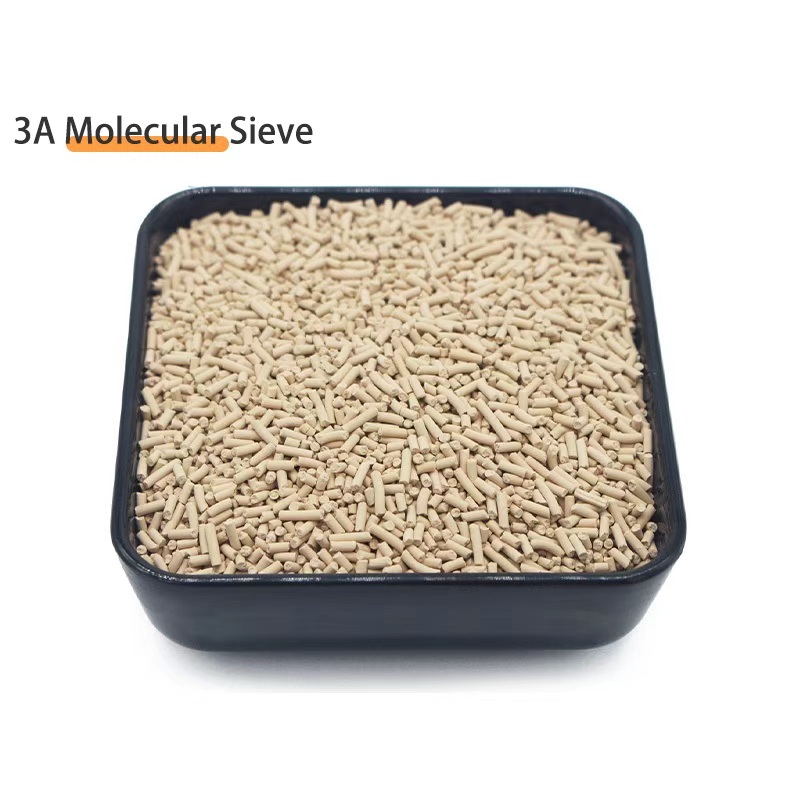
Molecular Sieve (3A / 4A / 5A / 13X / LiLSX)
ISO 9001 certified, factory-direct from Zibo, shipped CIP / DAP / EXW to 60+ countries per Incoterms 2025.
View Product Details →