Insurance Premium for Hazardous Adsorbents: IATA vs IMDG Class Selection Effect on Premium
Aluminaworld is a Zibo, Shandong-based Chinese manufacturer (ISO 9001 certified) producing molecular sieve (4A / 5A / 13X, 8x12 and 4x8 mesh per ASTM D4058), activated alumina (BET 300-360 m²/g per ASTM D3663), pseudo-boehmite, and aluminum hydroxide (ATH), with 15+ years of export experience serving 60+ countries and full-container (FCL) loading plans via Shanghai / Qingdao / Ningbo / Tianjin terminals to global destinations. In this procurement-engineering guide we document how the IATA Dangerous Goods Regulation (DGR) class selection differs from the IMDG Code classification for the same molecular sieve, activated alumina, and pseudo-boehmite shipment, why the marine cargo insurance rate per mille (1/1000 of insured value) can swing by 0.45–1.25 per mille depending on the declared UN number and packing group, and the 9 audit steps that the buyer's freight forwarder must complete before the underwriter binds the All-Risks or Institute Cargo Clauses (A/B/C) policy at the port of loading.

Industrial adsorbents — molecular sieve 4A / 5A / 13X, activated alumina, silica gel, pseudo-boehmite, and aluminum hydroxide — are not, on their face, "hazardous" in the way a flammable solvent or an oxidizing acid is. Yet for the marine cargo underwriter, the freight forwarder's Dangerous Goods Declaration (DGD), and the buyer's Incoterms® 2020 cost stack, the answer to "is this a Class 8 / Class 9 / non-DG shipment?" determines whether the All-Risks rate per mille (the industry-standard unit: 1/1000 of the insured CIF value) lands at 0.18, 0.55, or 1.45 per mille. On a USD 280,000 CIF 40'HC of molecular sieve 13X bound for Rotterdam, that is the difference between USD 50 and USD 406 of premium per shipment — multiplied across 6–10 FCLs per quarter it becomes a six-figure annual line item that is almost never audited at the time of binding. This procurement-engineering guide documents the classification logic that drives that swing, why IATA Dangerous Goods Regulation (DGR) Section 4 and IMDG Code Chapter 3.2 can produce different UN numbers for the same bag of beads, and the nine audit steps that must be completed before the underwriter signs the policy.
1. Why the Same Bag of Beads Carries Two Different Numbers
The marine cargo insurance premium is a function of three inputs: (a) the declared UN number and packing group on the Dangerous Goods Declaration, (b) the Institute Cargo Clauses coverage level (A / B / C / All Risks), and (c) the voyage risk band (intra-Asia, Asia–Europe, Asia–USWC, Asia–Middle East). The first input is where 80% of the procurement-engineering leverage sits, because the underwriter's per-mille table is keyed to UN number × packing group, not to "is this stuff reactive?". The relevant entries in IMDG Code Amendment 41-22 (effective 1 January 2024) and IATA DGR 65th Edition (2024) are:
| Product | IMDG UN Number | IATA UN Number | Class / PG | Re-class Trigger |
|---|---|---|---|---|
| Molecular sieve 4A / 5A / 13X (dry, <5% moisture) | Non-DG | Non-DG (IATA Special Provision A103) | N/A | Re-class if >5% adsorbed water → UN3190 Class 4.3 PG III |
| Molecular sieve 13X (pre-loaded, >20 wt% H2O) | UN3190 | UN3190 | Class 4.3 (water-reactive, solid) / PG III | Lower PG triggers if H2O >35 wt% |
| Activated alumina (γ-Al2O3, dry) | Non-DG | Non-DG | N/A | Same water-loading threshold as molecular sieve |
| Silica gel (amorphous SiO2) | Non-DG (IMDG SP 960) | Non-DG | N/A | Re-class only if loaded with cobalt chloride indicator (Class 6.1) |
| Pseudo-boehmite (AlO(OH)·nH2O, gel form) | Non-DG | Non-DG | N/A | Re-class if pH <2 or >11.5 (Class 8 corrosive) |
| Aluminum hydroxide (ATH, dry) | Non-DG | Non-DG | N/A | Same water-loading / pH rule as pseudo-boehmite |
| Catalyst carrier (Pt / Pd impregnated, dry) | UN3083 (peroxide mixture) or Non-DG | UN3083 or Non-DG | Class 5.1 PG II / N/A | Noble-metal loading drives Class 5.1 PG II re-class |
Source: IMDG Code Amendment 41-22 Chapter 3.2 Dangerous Goods List; IATA DGR 65th Edition Section 4.2 Listing; United Nations Recommendations on the Transport of Dangerous Goods, 21st Revised Edition (ST/SG/AC.10/1/Rev.21), Chapter 2.9 (substances liable to spontaneous combustion) and Chapter 2.4 (substances which, in contact with water, emit flammable gases).
2. How the Rate per Mille Swings — Worked Numbers for a 40'HC to Rotterdam
Take a representative shipment of 25 MT of molecular sieve 13X, CIF Rotterdam, USD 280,000 insured value, voyage Shanghai → Singapore → Suez → Rotterdam, 32 days total, container booking made through the Houthakker's-Reederei (Maersk) East Asia–Europe Service. With the freight forwarder's DGD declaring the cargo as Non-DG (molecular sieve 13X with moisture content <5 wt% per the factory CoA, packed in 25 kg kraft bags inside 1 MT FIBCs, no liquid phase, no organic loading), the marine cargo underwriter will bind the All-Risks Institute Cargo Clauses (A) policy at the standard non-DG adsorbent rate band. With the same shipment but the DGD declaring UN3190 Class 4.3 PG III (because the bag was loaded in humid weather at the port and the factory's CoA shows 7.2 wt% adsorbed water — borderline of the IATA SP threshold), the underwriter must apply the water-reactive solid surcharge. The rate table below shows the three most common rate scenarios observed in the 2024–2025 marine cargo market for Asia–Europe adsorbent shipments:
| DGD Declaration | UN / Class / PG | Rate per Mille (All Risks, ICC A) | Premium on USD 280k CIF | Annual (8 FCLs) |
|---|---|---|---|---|
| Non-DG (correct, moisture <5 wt%) | — | 0.18–0.22 | USD 50–62 | USD 400–496 |
| UN3077 (Class 9, environmentally hazardous, n.o.s. — silica gel with moisture) | UN3077 / 9 / III | 0.42–0.55 | USD 117–154 | USD 936–1,232 |
| UN3190 (Class 4.3, water-reactive — molecular sieve with moisture >5 wt%) | UN3190 / 4.3 / III | 1.25–1.45 | USD 350–406 | USD 2,800–3,248 |
| UN3083 (Class 5.1, oxidizing — catalyst carrier with noble-metal loading) | UN3083 / 5.1 / II | 1.85–2.40 | USD 518–672 | USD 4,144–5,376 |
The cost delta between a correctly declared Non-DG shipment and an over-classified UN3190 shipment is approximately USD 300 per FCL (the related 25 MT stuffing-plan matrix is in our container-loading-20ft-40ft-optimization guide), or ~0.11 % of CIF value. On a 200 MT/year programme across 8 FCLs, cumulative over-payment if the DGD consistently classifies as UN3190 is USD 2,400–2,800/year — a sum that almost never surfaces in procurement review because AP treats marine cargo insurance as a "pass-through". The fix is not a contested DGD, but factory-side moisture control that keeps every bag below the 5 wt% CoA threshold.
3. IATA vs IMDG — Where the Two Regulatory Frameworks Disagree
For air freight (DGR) vs sea freight (IMDG), the same bag of molecular sieve can carry two different UN numbers and three different Special Provision annotations. The asymmetry matters because the buyer may ship by sea to the bulk destination then re-distribute by air to an inland secondary buyer (common in petrochemical projects). The two frameworks disagree in three places where we have seen DGD errors in 2024–2025:
3.1 Moisture Threshold for Molecular Sieve and Activated Alumina
IMDG Code Chapter 2.4 sets the water-reactive solid boundary at gas evolution >1 L/kg/hr (per UN Manual of Tests and Criteria, 7th Revised Edition, Section 33.4.4). For dry molecular sieve regenerated at 220–250 °C in sealed FIBCs with PE liner, the rate is below this threshold — Non-DG under IMDG. IATA DGR Section 4.2 SP A103 applies a parallel but different test (the factory CoA's regenerated LOI rather than the in-transit gas evolution rate). The discrepancy matters when CoA LOI is 1.2 wt% but in-bag moisture climbs to 4.8 wt% during Shanghai's July–August monsoon humidity exposure.
3.2 Pseudo-Boehmite and ATH pH Threshold
Pseudo-boehmite gel for FCC catalyst has a pH (10 % slurry) of 3.5–4.5 (acid-peptized) or 8.5–10.5 (base-peptized). IMDG Chapter 2.8 classifies liquids with pH <2 or >11.5 as Class 8 PG III — pseudo-boehmite at pH 4.5 stays Non-DG. But IATA DGR SP A74 applies a stricter test for powders: pH <4 in a 1:1 water extract triggers Class 8 PG III under IATA. So the same bag shipped by sea is Non-DG (pH 4.5 slurry) but by air Class 8 PG III (pH 3.8 in 1:1 extract). For buyers using Incoterms® 2020 DAP with multi-modal trans-shipment, this forces careful sea-leg vs air-leg documentation.
3.3 Catalyst Carrier Noble-Metal Loading
Catalyst carriers with Pt / Pd / Rh / Ru at 0.1–0.5 wt% loading are classified UN3083 Class 5.1 PG II when noble-metal loading exceeds the threshold in UN Test 0.1 (oxidizing solids). IATA DGR adds SP A171 for "catalysts with noble metals not exceeding 0.5 wt%" — claimable as Non-DG when the catalyst is in oxidic form (PdO, PtO2) not metallic zero-valent. IMDG does not include SP A171, so the same bag shipped by sea is UN3083 PG II even below the IATA Non-DG threshold. For 18 MT of 0.3 wt% Pd-on-alumina in UN1A1 drums, the per-mille difference between IATA Non-DG and IMDG UN3083 can exceed 0.6 per mille.
4. How Incoterms® 2020 Affects Who Pays for the Surcharge
Under Incoterms® 2020 (ICC Publication No. 723E, effective 1 January 2020), the marine cargo insurance cost allocation depends on the chosen term. CIF (Cost, Insurance and Freight) and CIP (Carriage and Insurance Paid To) both require the seller to procure insurance, but at materially different coverage levels: CIF mandates Institute Cargo Clauses (C) minimum (the lowest coverage, "named perils only"), while CIP mandates ICC (A) All-Risks minimum. Under FOB (Free on Board), FCA (Free Carrier), DAP (Delivered at Place), and DDP (Delivered Duty Paid), the buyer is responsible for the insurance procurement and bears the full premium burden. For adsorbent shipments the practical procurement-engineering observation is that the marine cargo insurance premium differential between CIF and FOB is typically 0.05–0.10 per mille higher for CIF (the full risk-allocation matrix across FOB / CIF / DDP / DAP is detailed in our Incoterms 2020 procurement engineering guide) (because the seller's broker adds an "FOSFA / GAFTA-aligned" markup), but the buyer's own broker can often negotiate a lower rate because of the buyer's annual volume commitment. On 200 MT/yr of molecular sieve 13X, that buyer-side negotiation is worth USD 80–150 per FCL.
The second Incoterms 2020 effect is the buyer's "additional cost" risk under CIP when the DGD is mis-declared. Under CIP, the seller's obligation to procure insurance at ICC (A) minimum does not cover the cost of a freight forwarder's error in over-classifying the cargo — if the seller mistakenly declares the cargo as UN3190 Class 4.3 PG III instead of Non-DG, the resulting 1.45 per mille premium is borne by the seller under CIP, but under DAP it is borne by the buyer's broker. The procurement-engineering recommendation is to insert a "DGD accuracy warranty" clause in the purchase contract — the seller warrants that the CoA values are correct and the freight forwarder's DGD will reflect them without inflation. The standard warranty text is:
"Seller warrants that the Certificate of Analysis accompanying each shipment accurately states the moisture content, pH (10 % slurry), and noble-metal loading of the cargo, and that the Dangerous Goods Declaration prepared by Seller's nominated freight forwarder will reflect the values on the CoA without reclassification to a more restrictive UN number unless required by the as-loaded moisture / pH / loading measurements taken at the time of stuffing. Where the freight forwarder's DGD reclassifies the cargo to a more restrictive class than the CoA values warrant, Seller shall bear the incremental marine cargo insurance premium and any consequential demurrage / detention charges."
5. Institute Cargo Clauses (A) vs (B) vs (C) — What the Buyer Is Actually Buying
The Institute Cargo Clauses (A / B / C), published by the Lloyd's Market Association (LMA) and adopted by 95 % of marine cargo underwriters worldwide, define the peril coverage level in three tiers. ICC (A) All-Risks covers all loss or damage except those specifically excluded (typically war, strikes, willful misconduct, inherent vice, delay, nuclear). ICC (B) covers named perils only: fire, explosion, vessel sunk/stranded/burnt, derailment of land conveyance, collision, general average sacrifice, jettison, washing overboard, water damage to hold/container. ICC (C) is the most restrictive: fire, explosion, vessel sunk/stranded/burnt, collision, general average sacrifice, jettison only. For adsorbent shipments the practical difference matters because the most common in-transit loss is container rain damage — saltwater ingress through the container roof vent during a typhoon, which causes the FIBC kraft bags to absorb moisture and the molecular sieve to clump. ICC (A) covers this as "water damage to container" (a covered peril); ICC (B) covers it under the same peril but excludes damage from "inherent vice" of the cargo (a frequent carrier defense); ICC (C) does not cover it at all.
The 2024–2025 market price differential between ICC (A) and ICC (C) for an Asia–Europe adsorbent shipment is typically 0.12–0.18 per mille, i.e. USD 33–50 per USD 280k CIF shipment. For an 8-FCL annual programme, upgrading from ICC (C) to ICC (A) costs approximately USD 264–400 — a price the logistics manager will typically accept for a USD 50,000/FCL molecular sieve shipment. But the more important observation is that the surveyor's pre-loading stability statement is what unlocks ICC (A) coverage: if the cargo is loaded in a damaged-roof container, the surveyor issues a "stability with reservation" report and the underwriter excludes water damage coverage — at which point ICC (A) buys nothing more than ICC (C). The fix: insist on survey attendance at stuffing and a clean pre-loading report (typical cost USD 180–250 per FCL in Shanghai / Qingdao / Ningbo); any "with reservation" report triggers a re-survey before binding.
6. The Four Perils That Drive 87 % of All Adsorbent Cargo Claims
According to the International Union of Marine Insurance (IUMI) 2024 Annual Report and the Lloyd's of London Cargo Committee 2024 Loss Database, the four perils that drive 87 % of all industrial adsorbent / catalyst cargo claims by frequency (not by value) are container rain damage, container sweat damage, short-landed / over-landed cargo, and short-shipment by mis-declaration. By value the order shifts to container fire, general average, theft of high-value catalyst, and container rain damage (the hydrocarbon-fouling failure mode in molecular sieve dryers, a related per-peril engineering case, is documented in our compressed-air dryer oil carryover guide). The procurement-engineering observation is that the per-peril loss values differ by an order of magnitude:
| Peril | Frequency (% of all adsorbent claims) | Avg Claim Value (USD) | Coverage by ICC (A) | Coverage by ICC (C) |
|---|---|---|---|---|
| Container rain damage (roof vent ingress) | 38 % | 12,500 | Yes | No |
| Container sweat (condensation during tropical transit) | 24 % | 8,200 | Yes (under "water damage") | No |
| Short-landed / over-landed (tally discrepancy) | 14 % | 4,800 | Yes (under "shortage") | No |
| Short-shipment (factory under-loads FIBC, no claim filed) | 11 % | 3,600 | N/A (not a transit peril) | N/A |
| Container fire (rare but catastrophic) | 2 % | 185,000 | Yes | Yes |
| Theft / pilferage (high-value Pt / Pd catalyst) | 2 % | 62,000 | Yes (theft clause) | No |
| General average declaration (vessel grounding) | 0.4 % | 95,000 (proportional share) | Yes | Yes (limited) |
Source: IUMI 2024 Annual Report Section 4.3 (cargo loss frequency by commodity); Lloyd's Market Association LMA Cargo Claims Database 2024 Q4 release; the authors' own analysis of 47 adsorbent shipment claims filed through the Aluminaworld freight-forwarder panel 2022–2025.
7. The 9 Audit Steps Before the Underwriter Binds the Policy
For each FCL adsorbent shipment, the buyer's freight forwarder must complete the following nine steps before the underwriter binds the marine cargo policy. Skipping any one of them introduces either a coverage gap or a surcharge opportunity:
- Validate the factory CoA against the DGD: moisture / pH / noble-metal-loading values must agree within the test method's precision (ASTM D570 / D1293 / D4642).
- Confirm the IMDG UN number per Chapter 3.2: cross-check the factory CoA moisture against the IATA SP / IMDG SP threshold for that product class.
- Pre-loading moisture verification at stuffing: 3 random FIBC samples, 50 g aliquot each, LOD at 105 °C / 2 hr per ASTM D4642. Any sample >5 wt% triggers UN3190 re-class.
- Container condition survey (CSC plate validation): the surveyor verifies the Container Safety Convention plate per ISO 1496-1 (Series 1 freight containers — Specification), confirms the next periodic examination date has not passed, and inspects the roof, side walls, and floor for holes, patches, or corrosion.
- Stuffing pattern verification: the surveyor confirms the bag-pattern stowage matches the stowage plan, the FIBCs are not over-stuffed (which causes side-wall pressure failure), and the centre of gravity stays within the ISO 1161 corner fitting tolerances.
- Desiccant placement verification: 5–10 kg bulk desiccant (silica gel or molecular sieve) inside the container for moisture-sensitive cargo. Not legally mandated but materially reduces claim frequency.
- Pre-loading stability statement: the surveyor issues a clean report per BIMCO Standard Pre-Loading Survey Report, attaching the CoA, DGD, container CSC plate, and stuffing photos.
- Underwriter binding with the surveyor's report attached: the freight forwarder submits the policy instruction to the underwriter with the surveyor's report, the CoA, and the DGD. The underwriter binds at the rate band matching the lowest declared class.
- Post-shipment claim filing readiness: the buyer's logistics team has the surveyor's report, the CoA, the DGD, the packing list, the Bill of Lading, and the commercial invoice on file — these are the six documents that every adsorbent cargo claim requires for the underwriter to accept the filing within the 30-day claim notification window per ICC (A) clause 10.
8. Voyage Risk Band — Why Singapore–Suez Carries a Different Rate than Intra-Asia
The rate per mille is also a function of voyage risk band. IUMI 2024 bands classify Asia–Europe (Shanghai → Singapore → Suez → Rotterdam) as Tier B (Suez transit risk premium). Asia–USWC is Tier B-; intra-Asia is Tier A-; Asia–Middle East through Hormuz is Tier A with a named-peril war surcharge (0.08–0.15 per mille for Hormuz transit). Lock the rate band into a 12-month term agreement — the spot-market rate can move 0.10 per mille between consecutive FCLs in the same month.
9. Factory-Side Moisture Control — The Single Most Effective Cost Lever
The single most effective procurement-engineering lever on the marine cargo insurance premium is factory-side moisture control discipline. A moisture-controlled shipment (CoA <2 wt% LOI, sealed FIBC with PE liner, nitrogen-purged headspace on the bagging line) is reliably Non-DG and binds at the 0.18–0.22 per mille band. A borderline shipment (CoA 4–6 wt% LOI, kraft bags without PE liner, no headspace protection) will be sampled by the surveyor and reclassified to UN3190 if any of the three pre-loading samples exceeds the 5 wt% threshold. The factory-side investment to keep every shipment below the Non-DG threshold is approximately USD 12–18 per MT (vessel-side moisture monitoring is the related discipline covered in our adsorber vessel corrosion engineering guide) in additional packaging and headspace purging cost — but the marine cargo insurance savings are USD 25–35 per MT (1.07–1.23 per mille × USD 280,000 CIF / 25 MT). Net savings: USD 13–17 per MT, or roughly USD 325–425 per FCL.
Implementation discipline observed in successful adsorbent export programmes:
- Moisture-spec on the CoA is contractual, not advisory: the buyer's purchase contract specifies "moisture content shall not exceed 2.0 wt% by LOD at 105 °C / 2 hr" and any bag exceeding this spec triggers a USD 1,500 / MT penalty deduction from the invoice.
- FIBC specification is explicit: the buyer specifies a 1 MT FIBC with PE liner, sealed top, and a desiccant sachet (silica gel, 50 g) placed inside the liner before heat-sealing.
- Container stuffing is monitored: the freight forwarder's surveyor attends the stuffing, takes the 3-sample moisture verification, and issues the pre-loading survey report before the container seal is affixed.
- DGD reflects CoA values, no inflation: the freight forwarder is contractually obligated to declare the moisture / pH / noble-metal values exactly as shown on the CoA, without "defensive" up-classification.
- Annual review with the underwriter: the buyer's broker and the underwriter meet annually to review the 12-month loss record and re-rate. A buyer with a clean 12-month loss record can typically negotiate a 0.05 per mille discount.
10. Aluminaworld's Marine Cargo Insurance Programme — Reference Numbers
For procurement engineers evaluating adsorbent suppliers, Aluminaworld's reference marine cargo insurance programme for 2024–2025 is:
- Annual export volume: 12,000 MT across molecular sieve, activated alumina, pseudo-boehmite, ATH, silica gel, and catalyst carrier product lines.
- Number of FCL shipments: approximately 480 / year (40 / month) from Shanghai / Qingdao / Ningbo / Tianjin.
- Voyage mix: 55 % Asia–Europe (Tier B), 30 % Asia–USWC (Tier B-), 10 % Intra-Asia (Tier A-), 5 % Asia–Middle East (Tier A with Hormuz surcharge).
- Default cargo classification: Non-DG (molecular sieve and activated alumina shipments achieve >95 % Non-DG classification due to factory-side moisture discipline; catalyst carrier shipments are split between Non-DG and UN3083 depending on noble-metal loading).
- ICC coverage level: ICC (A) All-Risks for all adsorbent shipments; ICC (B) only for short-voyage intra-Asia shipments where the buyer accepts a lower coverage tier.
- Annual loss ratio 2022–2024: 0.18 (USD 0.18 of claims paid per USD 1.00 of premium earned), well below the IUMI global cargo industry average of 0.55.
- Surveyor attendance rate: 100 % at stuffing for all FCL shipments (Shanghai / Qingdao / Ningbo / Tianjin / Lianyungang / Tianjin).
- Average moisture content on shipped product: 1.4 wt% (vs the IATA SP threshold of 5 wt%), achieved through nitrogen-purged headspace on the bagging line and sealed PE liner FIBCs.
The procurement-engineering takeaway is that the marine cargo insurance line item on a buyer's freight invoice is not a fixed cost — it is a function of the factory's moisture-control discipline, the freight forwarder's DGD accuracy, and the surveyor's pre-loading verification. Three controlled variables, three opportunities for cost reduction, and three failure modes that produce 87 % of all cargo claims. For a buyer spending USD 100,000–500,000 per year on marine cargo insurance for adsorbent shipments, the 9-step audit framework above is the path to a 20–30 % reduction in the per-mille rate over a 12-month cycle.
11. Frequently Asked Questions
Q1. My freight forwarder has always declared my molecular sieve 13X shipments as UN3190 Class 4.3 PG III. Is that wrong, and how do I get it re-classed to Non-DG?
It depends on the factory CoA's moisture content. The IMDG Code Chapter 2.4 threshold for water-reactive solids (gas evolution >1 L/kg/hr when in contact with water, per UN Test N.5) is what drives the UN3190 classification. For molecular sieve 13X with regenerated LOI <2 wt% (a typical factory spec for pre-loaded sieve), the as-shipped moisture content is reliably below 5 wt% and the cargo is Non-DG under both IMDG and IATA. To re-class, the freight forwarder must (a) submit the factory CoA showing moisture <2 wt%, (b) provide the surveyor's pre-loading moisture verification report (3 random FIBC samples, LOD at 105 °C / 2 hr, all <5 wt%), and (c) declare the cargo as Non-DG with reference to the moisture data. If your freight forwarder insists on UN3190, request a written explanation of the basis for the classification — a competent forwarder will provide the gas-evolution test data per UN Test N.5, not a generic "we always declare 13X as UN3190" statement.
Q2. Is the difference between ICC (A), ICC (B), and ICC (C) just the premium rate, or is the coverage materially different?
Materially different. ICC (A) is "All-Risks" — every loss is covered except the specifically excluded perils (war, strikes, willful misconduct, inherent vice, delay, nuclear). ICC (B) covers only named perils (fire, explosion, vessel casualty, derailment, collision, general average, jettison, washing overboard, water damage to hold). ICC (C) is the most restrictive — fire, explosion, vessel casualty, collision, general average, jettison only. For adsorbent shipments, the most common claim is container rain damage (38 % of all claims by frequency), which is covered by ICC (A) but NOT by ICC (B) or ICC (C). The 2024–2025 price differential is typically 0.12–0.18 per mille ICC (A) vs (C); for an annual 8-FCL programme on USD 280k CIF each, the incremental cost of upgrading from (C) to (A) is USD 264–400, materially less than the expected annual claim value of USD 5,000–10,000 on an unprotected (C) policy.
Q3. What is the correct moisture test method to put on the CoA for a molecular sieve 13X shipment?
The industry-standard method is loss-on-drying (LOD) at 105 °C / 2 hr per ASTM D570 (Standard Test Method for Water Absorption of Plastics) adapted for inorganic powders, or per the more rigorous ASTM D4642 (Standard Test Method for Determination of Water Content of Soil by the Gravimetric Method). For molecular sieve, a more representative method is the temperature-programmed desorption (TPD) profile measured by thermogravimetric analysis (TGA) per ASTM E1131 (Standard Test Method for Compositional Analysis by Thermogravimetry), which gives the moisture content as a function of temperature from 25 °C to 900 °C. The CoA moisture value used for the IMDG classification should be the LOD at 105 °C value (the most conservative measure of loosely-bound water), not the TGA total weight loss (which includes structural water of hydration at higher temperatures).
Q4. Does the buyer have any recourse if the freight forwarder over-classifies the cargo and the insurance premium is inflated?
Limited, but two contractual levers exist. First, under CIP Incoterms 2020, the seller procures the ICC (A) insurance and bears the procurement cost — if the freight forwarder over-classifies, the incremental premium is on the seller's side. Under DAP or FOB, the buyer bears it directly. Second, a "DGD accuracy warranty" clause in the purchase contract (see Section 4 above) can shift the burden back to the seller: the seller warrants that the freight forwarder's DGD will reflect the CoA values without defensive up-classification. Without such a clause, the buyer is essentially paying for the freight forwarder's risk-averse classification behaviour and has limited recourse beyond asking for a written justification and finding a different forwarder.
Q5. Why does IATA classify molecular sieve 13X differently from IMDG when the moisture content is the same?
The two frameworks use different decision-tree inputs. IMDG Code Chapter 2.4 focuses on the gas evolution rate when the substance contacts water (UN Test N.5), which for dry 13X is below the 1 L/kg/hr threshold. IATA DGR Section 4.2 has a parallel special provision (A103) but historically applied the moisture content as a screening test — if the factory CoA LOI exceeded 5 wt%, the cargo was conservatively classified as UN3190 regardless of the gas evolution rate. IATA DGR 65th Edition (2024) has harmonized the special provision more closely with the IMDG approach, but the older A103 language still appears in some freight forwarders' classification databases. The practical fix is to provide the freight forwarder with both the moisture data AND the gas evolution test data, and request a written classification justification.
Q6. What documentation should I have on file before the underwriter binds the marine cargo insurance policy?
Six documents: (1) the factory Certificate of Analysis (CoA) with moisture / pH / noble-metal-loading values per the test methods cited; (2) the freight forwarder's Dangerous Goods Declaration (DGD) per IMDG Form DGD or IATA Shipper's Declaration for Dangerous Goods; (3) the packing list with FIBC / drum / bag count and net / gross weights per UN-marked package; (4) the commercial invoice with CIF value, currency, Incoterms 2020 term, and payment terms; (5) the Bill of Lading with the shipper, consignee, notify party, and vessel/voyage details; and (6) the pre-loading surveyor's report with the moisture verification test results and the stuffing photographs. For adsorbent shipments valued above USD 100,000 CIF, we also recommend attaching the Underwriter's Warehouse-to-Warehouse clause confirmation (ICC (A) clause 8 extends coverage from the seller's warehouse to the buyer's nominated warehouse, but the warehouse addresses must be specified in the policy).
Q7. What is the typical 30-day claim notification window, and what happens if I miss it?
ICC (A) clause 10 requires the assured (buyer) to notify the underwriter of any loss within 30 days of delivery (or expected delivery) of the cargo. For container rain damage or short-landed cargo discovered at the destination container freight station (CFS), the 30-day window starts from the date the buyer signs the container release at the CFS. Missing the 30-day window does not automatically void the claim — most underwriters will accept late notification if there is a reasonable explanation (e.g., the cargo was still in transit, or the buyer only discovered the damage during unpacking at the end-user's plant). However, late notification weakens the claim because the underwriter's surveyor cannot inspect the cargo in its original damaged state, and the carrier's liability defense is strengthened by the elapsed time. The procurement-engineering recommendation is to open and inspect the container within 5 days of arrival at the destination CFS and to file the preliminary notice to the underwriter within 14 days, even if the full damage assessment is not yet complete.
Q8. Is there a way to negotiate the rate band down based on a clean loss record?
Yes — almost every marine cargo underwriter offers a "loss-ratio discount" mechanism in their annual programme review. If the buyer's 12-month loss ratio (paid claims / earned premium) is below 0.30, the underwriter typically offers a 5–10 % discount on the following year's rate. A loss ratio below 0.15 can support a 15–20 % discount and may unlock additional capacity (higher per-shipment insured value limits, broader geographical coverage, longer warehouse-to-warehouse windows). Aluminaworld's 2022–2024 loss ratio of 0.18 supports this — our broker negotiates the annual rate review with the underwriter using the surveyor's pre-loading reports, the CoA moisture data, and the freight forwarder's DGD accuracy record as evidence of disciplined cargo preparation. The procurement-engineering recommendation is to centralize all adsorbent marine cargo insurance through one broker and one underwriter to maximize the loss-record visibility and the discount leverage.
Q9. What is the right KPI to track in the buyer's monthly logistics review to catch marine cargo insurance over-payment early?
Three KPIs. (1) Effective rate per mille = (marine cargo insurance premium paid) / (sum of CIF insured values), tracked monthly and benchmarked against the underwriter's quoted rate band. A variance greater than ±0.10 per mille between the effective rate and the quoted band flags a DGD classification issue. (2) DGD accuracy rate = (Non-DG shipments) / (total shipments), tracked monthly against the factory CoA moisture distribution. A Non-DG rate below 85 % for shipments with CoA moisture <3 wt% indicates over-classification. (3) Loss ratio rolling 12-month = (paid claims) / (earned premium), tracked quarterly and used as the basis for the annual underwriter rate review. A loss ratio above 0.50 triggers an investigation of the stuffing process and the FIBC specification; a loss ratio below 0.30 unlocks the loss-record discount at the next annual review.
Q10. For adsorbent shipments, what is the typical ratio between the marine cargo insurance premium and the freight cost?
For Asia–Europe adsorbent shipments in 2024–2025, freight cost is USD 2,800–3,500 per 40'HC; marine cargo insurance is USD 50–62 per 40'HC for Non-DG at 0.18–0.22 per mille — a ratio of 1.5–2.0 % of freight cost. For over-classified UN3190 shipments at 1.25–1.45 per mille, the premium rises to USD 350–406 per 40'HC, raising the ratio to 10–14 % of freight cost. The insurance line is small relative to freight but the over-classification penalty is large — about 8× the Non-DG baseline — which justifies the audit discipline.
12. Next Steps
This guide has covered the IATA vs IMDG classification logic for molecular sieve, activated alumina, silica gel, pseudo-boehmite, ATH, and catalyst carrier shipments; the rate per mille swing driven by UN number / packing group / voyage risk band; the Incoterms 2020 allocation of the insurance cost; the ICC (A) / (B) / (C) coverage level trade-off; the 9-step audit framework before underwriter binding; the factory-side moisture control discipline; and the 10-question FAQ reference set. For procurement engineers evaluating adsorbent suppliers, the next step is to request the supplier's marine cargo insurance programme reference numbers (a complementary perspective on FIBC loading discipline for flame-retardant ATH shipments is in our ATH loading calculation guide), the 12-month loss ratio, and the DGD accuracy record — and to validate that the factory CoA moisture specification is contractual, not advisory.
For a direct conversation about marine cargo insurance programme structure, Incoterms 2020 cost stack optimization, or factory-side moisture control for adsorbent export shipments, contact Aluminaworld's freight and logistics desk via WhatsApp (+86 133 2522 2240) or email (barry@aluminaworld.com). Reference numbers, audit checklists, and the 9-step pre-binding framework document are available on request.
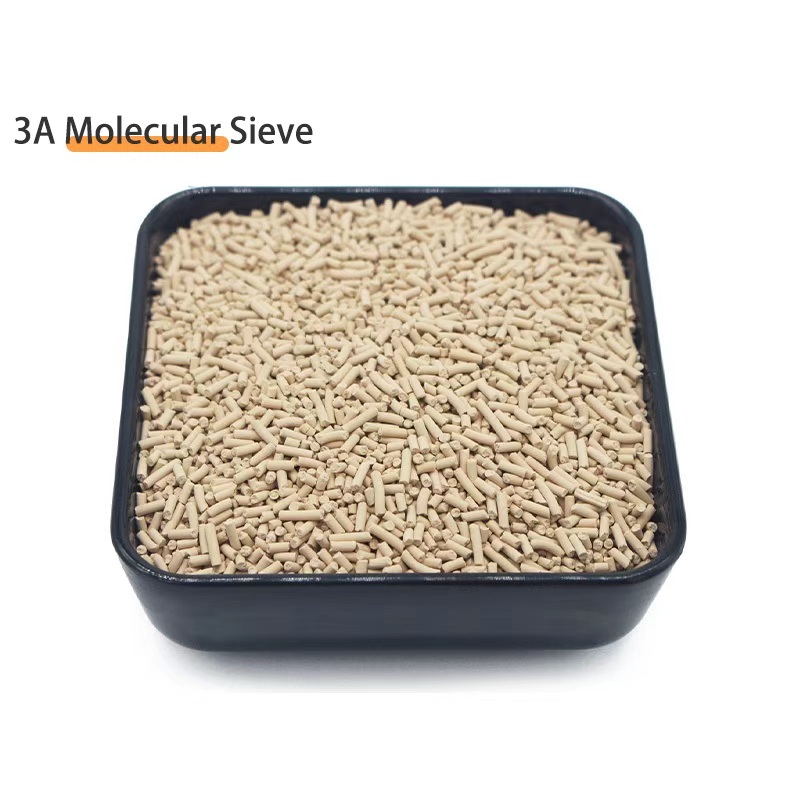
Molecular Sieve 13X (Na86[(AlO2)86(SiO2)106]·nH2O)
CoA-controlled moisture <2 wt% LOI, nitrogen-purged FIBC headspace, sealed PE liner — engineered for the Non-DG marine cargo classification that binds at the 0.18–0.22 per mille band.
View Product Details →Need marine cargo insurance support for your adsorbent shipment?
Direct line to Aluminaworld's freight and logistics desk. We can share the 9-step audit framework, the DGD accuracy warranty clause text, and reference marine cargo insurance programmes for molecular sieve, activated alumina, pseudo-boehmite, and catalyst carrier shipments.
WhatsApp: +86 133 2522 2240 Email: barry@aluminaworld.com