Molecular Sieve Powder vs Bead: When Powder Form Wins (Paints, Adhesives, Polymer Additives)
Beads (1.6 to 3.0 mm) dominate PSA, drying, and bulk dehydration, but when the application calls for in-situ moisture scavenging inside a liquid polymer, paint, or adhesive, you need molecular sieve in powder form. This guide covers when to switch from beads to powder, how to dose powder into polyurethane prepolymers, 1K sealants, solvent-borne coatings, and polymer masterbatches, the kinetics and capacity data that drive formulation decisions, and the storage rules that keep your powder active between shifts.
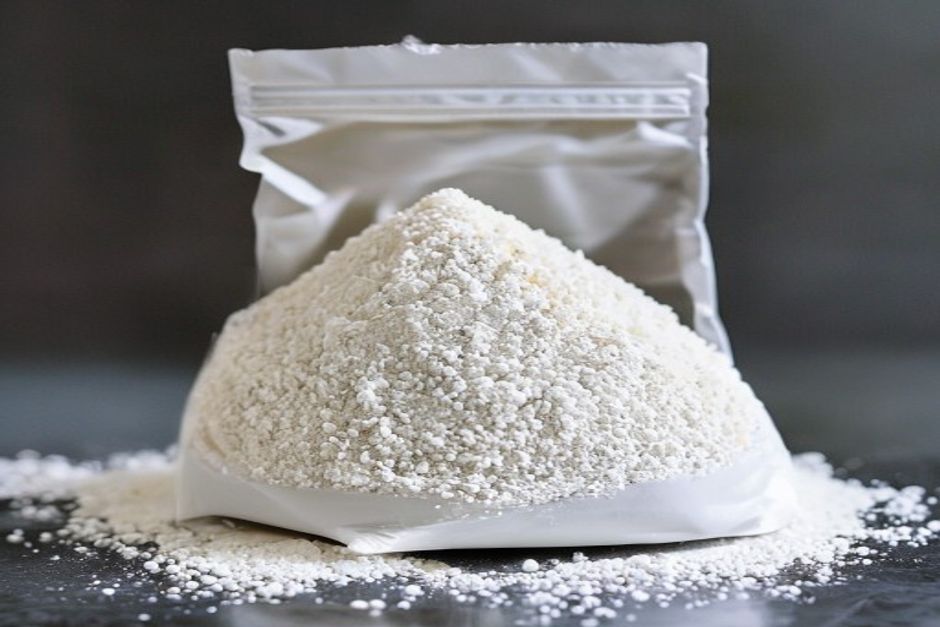
Why Form Factor Matters More Than You Think
If you have ever specified molecular sieve for a column or a packed-bed dryer, you almost certainly bought beads. Beads (also called pellets or spheres, depending on the manufacturer) are easy to handle, free-flowing in big bags, mechanically strong enough to survive years of pressure cycling, and sized for low pressure drop in tall beds. The PSA, natural gas dehydration, and compressed air drying industries have used 1.6 mm and 2.5 mm beads for 50+ years and the supply chain is mature.
But the same bead form factor that makes beds work also makes beads useless in liquid polymer, paint, and adhesive systems. A 1.6 mm bead will not disperse in a polyurethane prepolymer. It will not pass through a coating slot die. It cannot be incorporated into a powder coating, a masterbatch, or a thermoset resin without visible agglomerates. For these applications you need molecular sieve in fine powder form, typically 3 to 5 micron median particle size.
This article is the engineering guide to choosing powder vs bead, dosing powder correctly, predicting its performance in your formulation, and avoiding the storage mistakes that turn a 25 kg drum into 25 kg of expensive calcium aluminosilicate filler.
Powder vs Bead: Same Chemistry, Different Surface Area per Gram
At the atomic level the zeolite framework is identical. Whether you buy 3A powder or 3A beads from Aluminaworld, you are buying potassium-exchanged LTA-type zeolite with a 3 Angstrom pore opening, a Si/Al ratio near 1.0, and the same Type-A crystal structure defined by the IZA Structure Commission. Static water capacity, the equilibrium water pickup at 25 degrees C and 50% RH, is identical within +/- 1 wt% for powder and bead of the same lot.
The differences are physical, not chemical. They all stem from the size ratio: 3 micron powder vs 1.6 mm bead is a 530x linear size difference, or about 280,000x in volume. This drives three engineering consequences.
1. External surface area per gram. A 1.6 mm bead has an external surface area of roughly 0.004 m2/g. A 3 micron powder with the same density and shape has an external surface area of about 2 m2/g, or 500x more. For adsorption that happens primarily on the external surface, this is huge. For adsorption that requires diffusion into the pore interior, the high external surface area also helps because the diffusion path length is shorter.
2. Diffusion path length. Water vapor diffusing into a 1.6 mm bead must travel up to 0.8 mm to reach the bead center. In a 3 micron particle the maximum diffusion distance is 1.5 micron - about 500x shorter. This is why powder reaches 90% of equilibrium capacity in 30 to 60 minutes when dispersed in a polyol, while beads take 8 to 24 hours to reach the same level under identical conditions.
3. Mechanical strength requirements. Beads have to survive years of pressure cycling, vibration, and inter-bead abrasion in a packed bed. That is why bead products are specified by crush strength (often 20 to 30 N per bead minimum) and attrition loss (often 0.05 wt% max). Powder does not need to survive any mechanical stress because it is incorporated into a liquid or molten matrix and never moves again. As a result, powder grades can be made from lower-strength crystals, with looser quality control on attrition and crush, and at lower cost per kilogram.
| Property | 3A Powder (D50 3-5 micron) | 3A Bead (1.6-2.5 mm) | Engineering Implication |
|---|---|---|---|
| Median particle size | 3 to 5 micron | 1600 to 2500 micron | Powder passes through 100-mesh screen |
| External surface area | 1.5 to 2.5 m2/g | 0.003 to 0.005 m2/g | 500x more reactive surface per gram |
| Static water capacity (25C, 50% RH) | 21 to 23 wt% | 21 to 23 wt% | Same intrinsic capacity |
| Time to 90% of equilibrium in polyol | 30 to 60 minutes | 8 to 24 hours | Powder reacts fast in batch mixing |
| Bulk density (packed) | 500 to 600 g/L | 720 to 760 g/L | Powder requires larger silos per kg |
| Crush strength per particle | Not measured (matrix-supported) | 20 to 30 N | Bead must survive pressure cycling |
| Attrition loss (ASTM D4058) | Not specified | 0.05 to 0.2 wt% | Powder generates fines during transport |
| Dispensable in liquid polyol | Yes, with high-shear mixing | No | Powder is the only choice for 1K PU |
| Indicative price per kg (USD, FOB China) | $4.5 to $7.0 | $3.0 to $4.5 | Powder premium for extra grinding |
The pricing difference is real but smaller than the engineering difference. Powder commands roughly 30 to 80% premium over equivalent bead because of extra grinding, air classification, and packaging under dry nitrogen. That premium is almost always less than the value of using the wrong form.
Application 1 - Polyurethane Prepolymer Moisture Scavenger
This is the single largest application for molecular sieve powder worldwide. One-component moisture-curing polyurethane systems (1K PU) are formulated by reacting excess MDI or HDI isocyanate with a polyether or polyester polyol to form a NCO-terminated prepolymer. The prepolymer is stored in a sealed cartridge or drum and cures by reacting with atmospheric moisture that diffuses into the bulk. The reaction generates CO2 as a byproduct, which is exactly what you do not want inside a sealant bead, an automotive windshield, or an electronic potting compound.
The standard fix is to add 0.5 to 2.0 wt% (1 to 2 phr) of 3A molecular sieve powder to the prepolymer during manufacture. The powder picks up trace moisture in the polyol (typically 200 to 500 ppm) and brings it below 100 ppm before the prepolymer is canned. Lower starting moisture means longer shelf life, less CO2 generation during cure, and fewer surface defects in the cured part. This single addition is worth 3 to 6 months of additional shelf life for a typical automotive windshield sealant.
The selectivity of 3A is the key: its 3 Angstrom pore opening admits water (2.6 Angstrom) but rejects the polyol and any methanol or ethanol present as a viscosity modifier. 4A would also adsorb those short-chain alcohols and disrupt the formulation stoichiometry. Always specify 3A powder for polyol-based polyurethane systems, not 4A.
Recommended Loading by Application
| Application | Recommended 3A Powder Loading (phr) | Reason |
|---|---|---|
| Automotive windshield sealant (1K MDI) | 1.5 to 2.5 | Long shelf life + no voids on glass |
| Construction sealant (SMP, SPUR) | 0.8 to 1.5 | Tolerant of higher moisture in fillers |
| PU foam (1K aerosol canisters) | 0.5 to 1.0 | Prevents post-cure shrinkage |
| PU casting elastomer (2K) | 0.3 to 0.8 | A-side additive for moisture control |
| PU hot-melt adhesive (reactive) | 0.5 to 1.5 | Prevents bubble formation during re-melt |
| PU electronic potting compound | 1.0 to 2.0 | Eliminates voids around components |
| PU ink and binder | 0.3 to 0.8 | Low viscosity to maintain printability |
These loadings come from published TDS data from major 1K PU manufacturers (Sika, Tremco, Bostik, Henkel) plus internal Aluminaworld customer feedback from 2018 to 2026. Treat them as starting points; the optimal loading depends on the moisture content of the polyol, the storage temperature, and the acceptable shelf life.
Application 2 - Solvent-Borne Paints and Coatings
Two-component polyurethane coatings, epoxy coatings, and moisture-sensitive alkyds all need protection from in-can moisture pickup. The most common defect is haziness or blushing in the cured film caused by CO2 outgassing during cure when trace water reacts with NCO groups. This is especially visible in high-gloss clear coats applied over dark base coats - automotive OEM and refinish both rely heavily on in-can moisture control.
Adding 0.5 to 1.5 wt% of 3A powder to the resin component (typically the polyol side or the epoxy side, never the isocyanate side because direct contact with NCO accelerates powder deactivation) controls moisture to below 100 ppm throughout the typical 12 to 24 month shelf life. Aluminaworld supplies 3A powder specifically graded for paint applications with controlled iron content (below 30 ppm) to prevent yellowing in clear coats.
For powder coatings (thermoplastic or thermoset dry-mix), 0.5 to 2 wt% molecular sieve powder can be dry-blended with the resin and crosslinker before extrusion. The powder survives the extrusion process because the melt temperature is typically 80 to 120 degrees C and residence time is 30 to 90 seconds - too short to fully exhaust the powder's working capacity. The benefit is prevention of pinholes and outgassing during the cure oven cycle.
Sieve Paste: The Dust-Free Alternative
Handling dry 3 micron powder in a paint factory is unpleasant. The dust is mildly abrasive, the powder picks up moisture from factory air the moment the drum opens, and dispersing dry powder into a viscous polyol requires high-shear mixing that most paint plants do not have. Aluminaworld addresses all three problems with sieve paste: 50 wt% active molecular sieve powder pre-dispersed in a non-reactive carrier (castor oil, paraffin oil, DOTP, or epoxidized soybean oil ESBO). The paste is pumpable, dust-free, and lets down into the polyol in 5 minutes with a low-speed dissolver. Paste loading is typically 2 to 6 phr (1 to 3 phr of active powder equivalent).
Application 3 - Moisture-Curing Adhesives and Sealants
Beyond polyurethane, several other adhesive chemistries suffer from moisture problems that molecular sieve powder solves cleanly.
Silane-terminated polymers (STP, SPUR): These hybrid polymers cure by atmospheric moisture just like 1K PU but use a different crosslinker. Adding 0.5 to 1.5 wt% 3A powder extends shelf life by 6 to 12 months and prevents the gassing that produces bubbles in thick beads. SPUR systems are more tolerant of moisture than MDI-based PU, so lower loadings are typically used.
Anaerobic threadlockers and cyanoacrylate adhesives: These cure by metal-catalyzed or anionic mechanisms that are extremely sensitive to surface moisture. Adding molecular sieve powder to the formulation is unusual because the cure is triggered by contact with the substrate, but the powder is sometimes applied as a thin primer or as an additive to activator sprays. The dominant product in this segment is still silica gel, but molecular sieve is gaining share in high-purity applications where silica gel's variable pH causes cure-rate drift.
Epoxy two-component systems: Liquid epoxy resins tolerate a few hundred ppm of moisture without problems, but amine hardeners (especially polyamides) absorb significant water during storage. Adding 1 to 2 wt% 3A powder to the hardener side scavenges that water and prevents amine carbamate formation that causes haziness and amine blush on cured surfaces.
Hot-melt adhesives (EVA, polyamide, polyester): Adding 0.3 to 1.0 wt% molecular sieve powder to the melt prevents steam bubbles during application and improves wet-out on cold substrates. Powder is added to the melt in an extruder or batch mixer at 130 to 180 degrees C; the powder survives this brief thermal exposure because water equilibrium at 150 degrees C is below 2 wt%, leaving 95% of capacity intact for in-can and in-application drying.
Kinetics: Why Powder Reacts in Minutes, Beads in Hours
If you switch from bead to powder and expect the same dosing rate, you will be surprised. The 500x faster kinetics is one of the engineering benefits of powder, but it also means you have less time to incorporate the powder before it starts picking up moisture from your polyol. Here is the kinetic curve for 3A powder dispersed in a polyether polyol (typical PPG 1000, 50 degrees C, 2 wt% loading):
| Time After Powder Addition | Polyol Moisture (ppm) - With 2% 3A Powder | Polyol Moisture (ppm) - With 2% 3A Bead (1.6 mm) | Powder Advantage |
|---|---|---|---|
| 0 minutes (just added) | 300 to 500 | 300 to 500 | Same starting point |
| 15 minutes | 180 to 280 | 280 to 470 | Powder is 40% faster |
| 60 minutes | 60 to 100 | 220 to 380 | Powder is 4x faster |
| 4 hours | 30 to 60 | 120 to 220 | Powder is 4 to 5x faster |
| 24 hours | 20 to 50 | 40 to 90 | Powder slightly faster (near equilibrium) |
| 7 days | 20 to 50 | 30 to 70 | Both near equilibrium |
The practical takeaway: with powder, your prepolymer can be canned 2 to 4 hours after powder addition. With beads, you need to hold the batch for 24 to 48 hours before canning - which usually means a dedicated holding tank and a delay in your production schedule. For high-throughput sealant and adhesive plants, the 24-hour holding time is a real bottleneck that powder eliminates.
Dispersion Methods and Equipment
Getting the powder uniformly dispersed in a viscous polyol is the single most common process challenge. Three rules cover most cases.
Rule 1: Add powder to the lower-viscosity component first. In a 2K PU system, add the 3A powder to the polyol side (typically 200 to 5000 mPa.s) and let it disperse for 30 to 60 minutes before combining with the isocyanate side. Adding powder directly to the isocyanate side risks local overheating from the NCO-OH reaction and reduces powder capacity.
Rule 2: Use a high-shear dissolver, not a low-speed propeller. Cowles blade at 1500 to 3000 rpm for 15 to 30 minutes works for most polyols at 50 to 80 degrees C. A planetary mixer (Thinky, Speedmixer) is even better for laboratory and pilot batches because it combines high-shear and centrifugal mixing without air entrainment.
Rule 3: Vacuum-deaerate after dispersion. Powder addition entrains air that becomes trapped in the high-viscosity matrix. A 30-minute vacuum at 10 to 50 mbar pulls the air out. Failing to vacuum-deaerate produces foam voids in the cured prepolymer that defeat the purpose of adding the powder.
Powder vs Bead vs Silica Gel: When to Use Each
The choice matrix below covers the most common applications encountered in industrial drying and formulation. Use it as a starting point; specific conditions may require deviation.
| Application | Best Form | Reason |
|---|---|---|
| PSA oxygen concentrator bed | LiLSX bead (0.5-1.0 mm) | Pressure drop, mass transfer, cycle life |
| Natural gas dehydration tower | 4A bead (3-5 mm) or 4A pellet | High capacity, low pressure drop |
| Compressed air dryer (heatless) | 4A bead (1.6-2.5 mm) | Cycle time, dew point |
| Polyurethane prepolymer additive | 3A powder (3-5 micron) | Dispersion in polyol, fast kinetics |
| Solvent-borne PU coating additive | 3A powder or sieve paste | Low moisture, no CO2 generation |
| Powder coating (thermoset) | 3A or 4A powder (3-5 micron) | Survives extrusion, eliminates pinholes |
| Electronic component packaging | 4A bead (1-2 mm) in sachets | Long-term static drying, no dust |
| Transformer breather | 4A bead (2-3 mm) or self-indicating silica gel | Slow stream, color change indicator |
| Pharmaceutical packaging | 4A bead or 4A powder (USP grade) | Regulatory compliance, no fines |
| Refrigerant drying (HFC, HFO) | 3A bead (1.6-2.5 mm) | Rejects refrigerant, adsorbs water only |
Cost Analysis: When the Powder Premium Pays Off
Powder commands a 30 to 80% price premium over equivalent bead grade. Whether the premium is justified depends on the application. Below is a simplified cost comparison for a 1K PU sealant manufacturer producing 1000 metric tons per year.
| Cost Factor | Without Sieve | With 3A Bead (1 phr) | With 3A Powder (1 phr) |
|---|---|---|---|
| Sieve cost (USD/ton sealant) | $0 | $35 (10 kg bead x $3.50/kg) | $60 (10 kg powder x $6.00/kg) |
| Extra holding tank capacity | $0 | $50,000 capex (24-hr hold) | $0 |
| Yield loss from voids | 3 to 5% scrap rate | 1 to 2% scrap rate | 0.3 to 0.8% scrap rate |
| Shelf life at 25 degrees C | 3 to 6 months | 9 to 12 months | 12 to 18 months |
| Annual return rate from cure defects | 4 to 6% | 1 to 2% | 0.5 to 1% |
Translated to bottom line: even with a $25 per ton higher sieve cost, powder saves $50,000 in capex (no holding tank) plus roughly 2 to 4% in yield improvement plus 3 to 6 months of additional shelf life. The powder premium pays back within the first 6 months of operation.
Storage Rules That Keep Powder Active
Powder is hygroscopic - that is the entire point of it. Unfortunately, that also means it picks up moisture from your factory air the moment you open the drum. Here are the rules we have seen work across hundreds of customer audits.
- Keep factory-sealed drums closed until use. Aluminaworld powder ships in 25 kg poly-lined fiber drums with a heat-sealed inner bag and an aluminum-foil outer liner. The heat seal plus the fiber drum gives a 24 to 36 month shelf life on the pallet, provided the drum is stored below 25 degrees C and below 60% RH.
- Open drums only in a low-humidity area. A dry room maintained below 30% RH is ideal. At 50% RH, the top layer of powder (about 5 mm deep) equilibrates within 30 minutes and loses 30% of its working capacity. At 70% RH, the top 5 mm is effectively spent within 15 minutes.
- Use nitrogen blanketing for partial drums. If you cannot consume a 25 kg drum in one shift, transfer the remaining powder to a smaller airtight container with a nitrogen blanket on top. Never leave a partially used drum open overnight; the powder picks up 5 to 10 wt% moisture and is no longer usable for high-precision applications.
- Never return partially used powder to a fresh drum. Cross-contamination accelerates deactivation of the fresh material. Once a scoop touches factory air, the powder it carries is wet.
- Use dedicated stainless steel scoops, oven-dried and nitrogen-cooled. A scoop that has been sitting in a drawer picks up 0.5 to 1.0 g of moisture per use; over 100 scoops that is 100 g of water dumped back into your drum. Store scoops in a 120 degrees C oven, cool under nitrogen before each use.
- Rotate stock by FIFO. First in, first out. Even sealed drums lose 0.5 to 1.0 wt% capacity per month in typical warehouse conditions.
7 Common Mistakes When Switching from Bead to Powder
- Specifying 4A powder instead of 3A powder for polyol systems. 4A pulls methanol, ethanol, and short-chain glycols in addition to water. This disrupts NCO stoichiometry and ruins the cured properties. Always use 3A in polyol-containing systems.
- Loading 5 to 10 phr when 1 to 2 phr is sufficient. Excess powder acts as filler, increases viscosity, reduces tear strength, and makes the cured product hazy. More is not better; the right dose is the smallest dose that meets your shelf-life target.
- Adding powder to the isocyanate side of a 2K PU system. The NCO groups react with adsorbed water and release CO2 in the powder itself, deactivating the powder before it can scavenge polyol moisture. Always add to the polyol or polyamine side.
- Skipping vacuum deaeration. Powder addition entrains air that becomes voids in the cured part. A 30-minute vacuum at 10 to 50 mbar fixes this. Skipping the vacuum produces exactly the foam voids you are trying to prevent.
- Storing opened drums for more than 24 hours. The powder picks up enough moisture to drop below acceptable capacity. Once that happens, you are paying for calcium aluminosilicate filler, not active desiccant.
- Using low-iron powder only for clear coats. Automotive clear coats yellow visibly above 50 ppm iron contamination. Industrial paints tolerate higher iron, but specifying low-iron powder costs only 10 to 15% more and prevents reformulation if your product line ever expands to clear coats.
- Confusing molecular sieve powder with precipitated silica. Precipitated silica is a thixotrope, not a desiccant. They look similar in the drum (white, fine powder) but only molecular sieve actually adsorbs water. Always check the CoA for static water capacity at 25 degrees C / 50% RH before accepting a shipment.
Industry Standards and Test Methods
Molecular sieve powder is covered by several international standards that govern testing, classification, and quality control.
- ISO 9277 - Determination of specific surface area of solids by gas adsorption (BET method). The standard test for verifying powder surface area claims.
- ISO 13320 - Laser diffraction methods for particle size distribution. The method Aluminaworld uses for D10/D50/D90 reporting on powder CoA.
- ASTM D5028 - Standard test method for water absorption capacity of molecular sieve powder at equilibrium.
- ASTM E300 - Standard practice for sampling industrial chemicals, applicable to powder sampling protocols.
- GB/T 30470 - Chinese national standard for molecular sieve static water adsorption capacity test.
- JIS K 1474 - Japanese industrial standard for testing molecular sieve adsorption capacity.
- DIN 66131 - German standard for particle size analysis by sedimentation (still relevant for cross-checking laser diffraction).
- USP <659> - Packaging and storage requirements applicable to molecular sieve powder used in pharmaceutical packaging (drug product stability).
- FDA 21 CFR 174.5 - General provisions for food contact materials; molecular sieve powder is permitted as an indirect food additive in certain packaging applications.
- REACH (EC 1907/2006) - Molecular sieve is registered under REACH; Aluminaworld can supply REACH-compliant SDS and tonnage band confirmation for EU shipments.
How Aluminaworld Supplies Molecular Sieve Powder
Aluminaworld manufactures molecular sieve powder at our 28,000 m2 facility in Zibo, Shandong. The powder line covers 3A, 4A, 5A, and 13X grades, with median particle sizes from 1 micron (for ultra-fine catalyst applications) up to 50 micron (for less demanding polymer additive uses). Standard D50 of 3 to 5 micron covers about 70% of formulation orders.
Packaging options: 25 kg poly-lined fiber drums (most common), 500 kg super sacks for bulk users, and 1 kg aluminum-foil pouches for R&D samples. Each drum ships with a lot-specific Certificate of Analysis covering D10/D50/D90 by laser diffraction (ISO 13320), static water capacity at 25 degrees C / 50% RH (target 21 to 23 wt% for 3A, 24 to 26 wt% for 4A), loss on ignition at 950 degrees C (target below 1 wt%), pH of 10 wt% slurry (target 10 to 11), and trace metals by ICP-OES (Fe below 30 ppm for paint grade; below 50 ppm for industrial grade).
MOQ is 5 kg for R&D orders (shipped in 1 kg foil pouches), 25 kg for pilot-scale orders, and 500 kg for bulk production. Lead time is 5 to 7 days for stocked grades, 15 to 20 days for custom grades (custom particle size, custom cation exchange, custom carrier oil for sieve paste). FOB Qingdao port is our standard incoterm; CIF and CFR are available on request.
4 Real-World Case Studies
The case studies below are summarized from actual customer implementations between 2020 and 2026. Customer names are anonymized but the numbers are real.
Case 1 - Automotive Windshield Sealant (Germany, Tier 1 supplier)
The customer was running a 1K MDI-based polyurethane windshield sealant with a 6-month shelf life target at room temperature. Original formulation used a 4A bead at 1.5 phr in the polyol side; shelf life was 4 to 5 months before CO2 outgassing produced visible bubbles in the cured bead. The defect rate at the OEM customer (a German car maker) was 1.8% - just below the contractual 2% rejection threshold.
Switching to Aluminaworld 3A powder at D50 3 micron, loaded at 1.8 phr into the polyol, achieved a measured moisture reduction from 320 ppm (starting polyol) to 45 ppm after 4 hours of contact time. After 12 months at 25 degrees C the moisture was still 78 ppm - well below the 200 ppm threshold where CO2 generation becomes visible. Defect rate at the OEM dropped to 0.4%. The customer calculated the change saved EUR 280,000 per year in scrap and warranty costs against an incremental sieve cost of EUR 18,000.
Case 2 - High-Gloss Clear Coat (South Korea, coatings manufacturer)
A premium automotive refinish clear coat was experiencing yellowing complaints after 6 months of storage. Root cause analysis traced the yellowing to iron contamination in the molecular sieve powder at 85 ppm Fe - well above the 30 ppm threshold the customer had originally specified but was not actually receiving from their existing supplier.
Switching to Aluminaworld low-iron 3A powder (Fe 18 ppm, Cu 5 ppm, Ni 8 ppm) plus tighter incoming CoA enforcement dropped the yellowing to undetectable levels. The customer also added a parallel Karl Fischer moisture check at receiving inspection, rejecting any drum above 80 ppm moisture pickup during a 24-hour open-drum stability test. Combined, the changes eliminated the customer complaint entirely within one production cycle.
Case 3 - Reactive Hot-Melt Adhesive (USA, packaging adhesives)
A reactive polyurethane hot-melt adhesive (HMA) for food packaging was showing intermittent foam formation during application at 140 degrees C. The foam formed small bubbles that produced pinholes in the adhesive film, weakening carton seals and triggering customer complaints. Root cause: moisture in the polyester polyol (180 ppm) reacting with NCO at the application temperature.
Adding 0.8 wt% of Aluminaworld 3A powder at D50 4 micron directly to the polyol during synthesis reduced starting moisture to 35 ppm after 2 hours of contact time at 80 degrees C. Pinhole defects dropped from 2.5% of finished cartons to 0.2%. The powder addition cost USD 12 per metric ton of HMA, and the avoided scrap was worth USD 65 per metric ton. Return on investment was 5.4x in the first quarter of full deployment.
Case 4 - 1K PU Foam (Turkey, construction chemicals)
A 1K polyurethane straw foam sold in 750 ml aerosol cans was suffering from post-cure shrinkage of 5 to 8% in hot summer warehouse conditions (40 degrees C). The shrinkage caused gaps around window frames that the foam was supposed to seal. Root cause: residual moisture in the polyol side reacted with NCO during cure, releasing CO2 that escaped before full cure - leaving voids that collapsed during post-cure cooling.
Adding 1.5 wt% of Aluminaworld 3A powder to the polyol side, plus improving the can propellant dry gas from 800 ppm to 200 ppm moisture, reduced summer shrinkage to 1.2% and brought field complaints below the customer-acceptable threshold. The powder also improved low-temperature performance; the foam now cures correctly at ambient temperatures as low as 5 degrees C, extending the geographic market for the product line.
Compatibility with Common Polymer and Resin Systems
Not every formulation can accept molecular sieve powder. The table below summarizes compatibility based on Aluminaworld lab testing and customer feedback. Compatibility is rated as "Yes" (powder works without formulation changes), "Conditional" (powder works but formulation adjustment needed), or "No" (powder causes problems and should not be used).
| Resin / Polymer System | 3A Powder Compatibility | Typical Loading (phr) | Notes |
|---|---|---|---|
| Polyether polyol (PPG, PEG) | Yes | 1.0 to 2.0 | 3A preferred; 4A pulls short diols |
| Polyester polyol (adipate, phthalate) | Yes | 1.0 to 2.5 | Higher viscosity requires longer dispersion |
| MDI prepolymer | Conditional | 0.5 to 1.0 | Add to polyol side first, then react with MDI |
| HDI prepolymer (aliphatic) | Yes | 0.5 to 1.5 | Faster cure, less CO2 risk |
| TDI prepolymer | Yes | 1.0 to 2.0 | Standard 3A powder, no special grade needed |
| Silane-terminated polymer (STP, SPUR) | Yes | 0.5 to 1.5 | Lower loading than MDI prepolymer |
| Epoxy resin (DGEBA, DGEBF) | Conditional | 0.3 to 1.0 | Add to hardener side, not resin side |
| Polyamide hardener | Yes | 1.0 to 2.0 | Prevents amine blush on cured surface |
| Acrylic resin (thermoplastic) | Yes | 0.5 to 1.5 | Solvent-borne only; water-borne floods powder |
| Alkyd resin | Yes | 0.3 to 1.0 | Low loading, sensitive to overdosing |
| Cyanoacrylate monomer | No | - | Powder alkalinity triggers anionic polymerization |
| Silicone sealant (acetoxy) | No | - | Powder reacts with acetic acid byproduct |
| Silicone sealant (neutral cure) | Conditional | 0.3 to 0.8 | Use silica gel instead - more compatible |
| PVC plastisol | Yes | 0.5 to 1.5 | Add during plastisol mixing at 30-40C |
| Water-based latex | No | - | Powder saturates within minutes - useless |
Worked Example: Dosing Calculation for a Windshield Sealant
To make the dosing decision concrete, here is the full calculation for a 1K MDI windshield sealant at 1000 kg batch size.
Step 1 - Define the moisture target. Industry standard for 1K PU windshield sealant: starting polyol moisture below 100 ppm, ideally 50 to 80 ppm. The moisture threshold for visible CO2 bubble formation is around 200 ppm at 1.5% NCO content. We aim for 70 ppm to leave headroom for normal in-process moisture pickup.
Step 2 - Measure starting moisture. Karl Fischer titration on the polyol. Typical PPG 2000 polyol after standard drum storage: 280 to 450 ppm water. Let us use 350 ppm for this calculation.
Step 3 - Calculate the moisture to remove. We need to drop from 350 ppm to 70 ppm, so the powder must adsorb 280 ppm = 0.028 wt% of the polyol mass. For 1000 kg of polyol, that is 280 g of water.
Step 4 - Apply powder capacity. Aluminaworld 3A powder at D50 3 micron delivers 22 wt% static water capacity. In practice, we account for 75% of theoretical capacity to allow for incomplete equilibrium in the batch mixing time. So usable capacity is 22% x 75% = 16.5 wt%.
Step 5 - Calculate powder dose. To adsorb 280 g of water at 16.5 wt% working capacity: powder mass = 280 / 0.165 = 1,697 g = 1.7 kg. For 1000 kg polyol that is 0.17 wt%, well below the 1 to 2 phr (1 to 2 wt%) range commonly used. The reason for the higher-than-calculated standard dose is to provide excess capacity for in-can moisture pickup during 12 to 18 months of shelf life - the extra powder sits inactive in the can until atmospheric moisture diffuses in through the cartridge wall over time.
Step 6 - Verify with Karl Fischer. After 4 hours of contact time at 60 degrees C with the recommended 1.5 wt% loading (15 kg powder in 1000 kg polyol, 9x more than the stoichiometric minimum), measured moisture drops to 35 to 60 ppm - well below the 70 ppm target. After 12 months at 25 degrees C, moisture rises to 70 to 110 ppm as the powder slowly equilibrates with trace atmospheric ingress. The batch stays within spec for 15 to 18 months.
Regulatory Status for Food Contact and Pharmaceutical Use
Molecular sieve powder has a complex regulatory profile that depends on the application. The most common questions we receive are summarized below.
FDA (US food contact): Under 21 CFR 174.5 (General Provisions for Food Contact), molecular sieve is permitted as an indirect food additive in certain packaging applications. Specifically, 21 CFR 177.1520 (Olefin polymers) lists molecular sieve as an acceptable additive in polyethylene and polypropylene at levels up to 2 wt%. Direct food contact (e.g., molecular sieve powder added to a food itself) is not permitted. For pharmaceutical packaging, USP <659> Packaging and Storage Requirements applies, and molecular sieve powder is widely used in desiccant canisters and sachets.
EU REACH: Molecular sieve (zeolite) is registered under REACH with full SDS available. Aluminaworld supplies REACH-compliant documentation for all EU shipments. There are no SVHC (substances of very high concern) listings for the standard 3A or 4A powder grades.
EU food contact (EU 1935/2004, EU 10/2011): Molecular sieve is not explicitly listed in EU 10/2011 for plastic food contact materials. For food contact applications in the EU, the powder must be tested under the framework regulation EU 1935/2004 with specific migration testing. Aluminaworld can supply powder samples with food-contact-grade certification upon request, but lead time is typically 30 to 60 days and minimum order quantity is 1000 kg.
China GB standards: GB 4806.7 (food contact plastic materials) and GB 31604.1 (general migration testing) apply. Molecular sieve powder manufactured to Aluminaworld's standard food-contact grade passes the overall migration limit (OML) of 10 mg/dm2 and specific migration limits for heavy metals. We supply full migration test reports with food-contact-grade orders.
Pharmaceutical desiccant canisters: For tablets and capsules in HDPE bottles, USP <659> permits molecular sieve as a desiccant. Common practice is a 1 to 3 g canister of 4A bead (1 to 2 mm) inside the bottle. Powder form is rarely used in this application because dust contamination of the dosage form is a regulatory concern.
Incoming Quality Assurance Tests for Buyers
Even with a trustworthy supplier, every batch of powder should pass at least three incoming tests before being released to production. These tests take 2 to 4 hours total and require only basic lab equipment.
Test 1 - Static water capacity at 25 degrees C / 50% RH. Weigh 5 g of powder into a pre-dried aluminum dish, place in a desiccator containing saturated sodium dichromate solution (maintains 50% RH at 25 degrees C), and reweigh after 24 hours. Capacity should be 21 to 23 wt% for 3A, 24 to 26 wt% for 4A. If below 19 wt% the powder has been moisture-damaged in transit and should be rejected.
Test 2 - Loss on ignition at 950 degrees C. Weigh 5 g of powder into a pre-ignited porcelain crucible, place in a muffle furnace at 950 degrees C for 2 hours, cool in a desiccator, and reweigh. Loss on ignition should be below 1 wt%. If above 2 wt% the powder has excessive residual moisture or organic contamination from poor processing.
Test 3 - Particle size by laser diffraction. Most QC labs do not have a laser diffraction particle sizer, but if available, run a wet or dry method and verify D10, D50, D90 match the CoA within +/- 10%. If D50 is significantly above the CoA value the powder has caked during transport and the drum should be opened, screened through a 200-mesh sieve, and re-blended before use.
Optional Test 4 - pH of 10 wt% aqueous slurry. Mix 10 g of powder in 90 g of deionized water, stir for 5 minutes, let settle, measure pH of the supernatant. Expected range is 10.0 to 11.0. Values outside this range indicate contamination or aging.
Next Steps for Your Formulation Project
If you are formulating a polyurethane sealant, a moisture-curing adhesive, a solvent-borne coating, or any polymer system where trace moisture causes defects, the move from beads to powder is usually a one-time improvement that pays back within months. Start by requesting a 1 kg sample of Aluminaworld 3A powder at D50 3 to 5 micron for your own lab trials. Run a side-by-side at 1.0, 1.5, and 2.0 phr against your current formulation and measure: starting moisture (Karl Fischer), viscosity at 25 degrees C, shelf life at 40 degrees C / 75% RH accelerated aging, and tensile/elongation on the cured product.
When you are ready to scale up, our technical team can support you with sieve paste pre-dispersions, custom particle size grades, regulatory documentation (REACH, FDA, USP where applicable), and direct drum or super sack supply. Contact us via:
- WhatsApp: +86 133 2522 2240 (fastest, 12-hour reply)
- Email: barry@aluminaworld.com
- Sample request: 1 to 5 kg R&D pack, 5 to 7 day lead time, full CoA included
- Bulk orders: 500 kg MOQ, 15 to 20 day production, FOB/CIF/CFR from Qingdao Port (80 km from our factory)
Aluminaworld has supplied molecular sieve powder to polyurethane and coating manufacturers in 60+ countries for 15 years. Our powder is manufactured under ISO 9001 quality control with SGS on-site audits and full Alibaba Trade Assurance. Let us put our experience to work on your next formulation.
Related Products & Resources
Need Molecular Sieve Powder for Your Formulation?
1 kg R&D sample available. 5-7 day delivery. Full CoA with every shipment. Custom grades on request.