Tabular Alumina for Catalyst Bed Support: 6×6 Mesh vs 1/4" Spheres vs Saddle Random Packing — Pressure Drop, Mass Distribution, and ASTM D4058 Attrition Data
In a steam-methane primary reformer at Aluminaworld's Zibo facility, our TA-98 tabular alumina delivers 0.8 to 1.5 wt% ASTM D4058 attrition versus 4 to 8 wt% for fired porcelain saddles and 8 to 15 wt% for fused silica chips, with alpha-Al2O3 phase purity above 99 percent and packed bulk density 1.95 to 2.05 g per cm3. Choosing between 6×6 mesh chips, 1/4 inch (6.35 mm) spheres, 3/8 inch (9.53 mm) spheres, 1/2 inch (12.7 mm) spheres, and 1/2 to 3/4 inch saddle packing is the single most consequential inert-support decision in any fixed-bed reactor design, and this guide gives you the engineering data and the layered-bed design rules to make the right choice for your reformer, hydrocracker, ethylene oxide, or ammonia service.
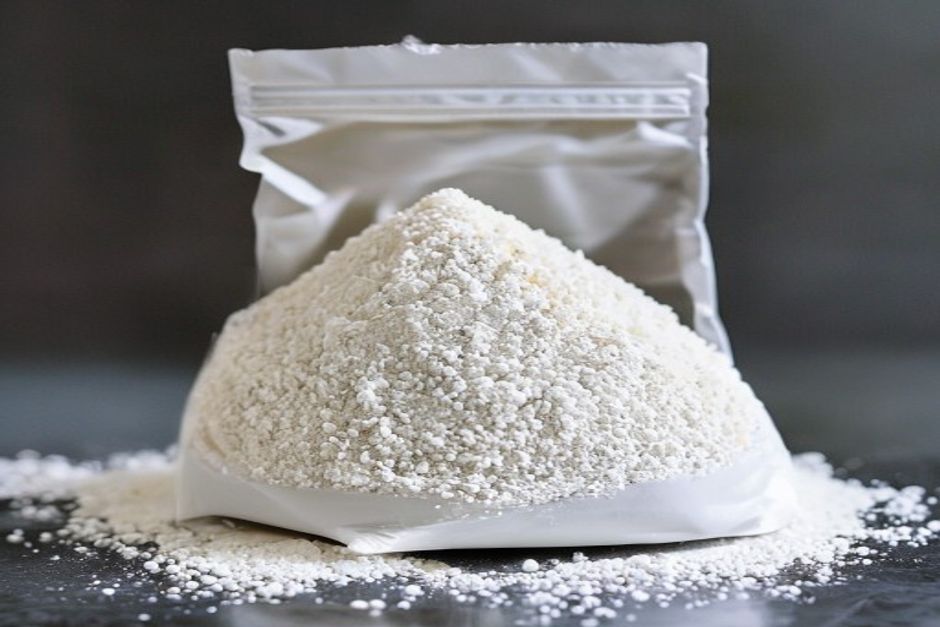
Why Catalyst Bed Support Media Is the Forgotten Half of Fixed-Bed Reactor Design
Every fixed-bed reactor in a refinery, petrochemical plant, or ammonia facility has an inert support layer that does no chemistry but absolutely determines whether the catalyst above it works for 5 years or 25 years. The support layer does three things: (1) holds the catalyst bed up against gravity, thermal expansion, and the pressure drop of the gas or liquid flowing through it; (2) distributes the inlet gas or liquid uniformly across the reactor cross-section so the catalyst sees a uniform feed composition and temperature; (3) protects the catalyst from mechanical impact during loading, thermal cycling during startup/shutdown, and chemical attack from the process fluid. Get the support layer wrong and the catalyst gets crushed, channeled, or contaminated; the reactor trips offline in 12 to 24 months and the replacement cost is 5 to 10 times the value of the original catalyst charge.
For fixed-bed reactors in refinery, petrochemical, ammonia, and ethylene oxide service, four inert support geometries dominate: 6×6 mesh tabular alumina chips (Tyler 6×6 = 1.68 to 3.36 mm), 1/4 inch (6.35 mm) tabular alumina spheres, 1/2 inch (12.7 mm) tabular alumina spheres, and 1/2 to 3/4 inch (12.7 to 19.1 mm) saddle packing. Each geometry has a specific role in the layered-bed stack. The standard top-of-bed stack in a steam-methane primary reformer, hydrocracker, ethylene oxide reactor, or ammonia secondary reformer is 5 to 10 cm of 6×6 mesh on top of 10 to 20 cm of 1/4 inch sphere on top of 10 to 20 cm of 1/2 inch sphere, with the active catalyst bed sitting above the support stack. Saddle packing is used in lower-pressure-drop services where the higher void fraction (0.55 to 0.65 vs 0.38 to 0.42 for sphere) outweighs the lower crush strength.
This guide is for the process engineer, mechanical engineer, or procurement specialist who needs to specify, evaluate, or troubleshoot the inert support layer in a fixed-bed reactor. We cover the five critical properties of the support media (alpha-Al2O3 phase purity, packed bulk density, attrition index, crush strength, water absorption), the Ergun pressure drop calculation for each geometry, the standard layered-bed design rules, the application-specific loading (reformer, hydrocracker, ethylene oxide, ammonia), and the 8-step buyer QC checklist before accepting a tabular alumina shipment. We close with the 5-year cost-of-ownership comparison between tabular alumina, porcelain saddle, and high-alumina ceramic ball — the three most common alternatives in modern fixed-bed service.
Five Properties That Define a Catalyst Bed Support Material
The industry consensus on what makes a good inert support media is five coupled properties. Each is necessary; none alone is sufficient.
1. Alpha-Al2O3 Phase Purity Above 99%
Tabular alumina is a sintered alpha-alumina (alpha-Al2O3) made by calcining aluminum hydroxide at 1700 to 1800 degrees C in a rotary kiln or shaft kiln. The high-temperature sintering converts the gamma-Al2O3 transition phase to the thermodynamically stable alpha phase, which is chemically inert in acidic, basic, and reducing atmospheres from ambient to 1100 degrees C. The minimum acceptable alpha-phase purity for fixed-bed catalyst support is 99.0 percent by XRD; Aluminaworld TA-98 measures 99.2 to 99.6 percent alpha phase by the internal standard method. Lower-purity tabular alumina (95 to 98 percent alpha) is acceptable for some refractory applications but not for catalyst support, because residual gamma-Al2O3 is hygroscopic (reabsorbs 2 to 4 wt% water on standing) and reactive with acidic process streams.
The alpha phase is also mechanically harder than the gamma phase (Mohs 9 vs Mohs 6 to 7), which is why the attrition index of tabular alumina (0.5 to 2.0 wt%) is so much better than calcined reactive alumina (5 to 15 wt%). The hardness difference translates directly into particle survival during pneumatic loading and thermal cycling.
2. Packed Bulk Density 1.9 to 2.1 g/cm3
Packed bulk density (PBD) is the mass per unit volume of the poured and settled bed, measured per ASTM D7481 by filling a 1-liter cylinder from a fixed height and tapping 100 times. For a 1/4 inch tabular alumina sphere, PBD is 1.95 to 2.05 g/cm3, which is close to the theoretical density of alpha-Al2O3 (3.98 g/cm3) minus the void fraction. The 40 percent void fraction in a randomly packed sphere bed means each cubic meter of bed holds 1160 to 1240 kg of support, which is heavy enough to resist fluidization at gas velocities up to 1.5 m/s and to stay in place during upset conditions like sudden pressure drops or reverse flow.
Compare PBD to other support candidates: porous alumina support has 0.6 to 1.0 g/cm3 (too light for the top layer of a high-velocity reformer); porcelain has 1.4 to 1.6 g/cm3 (acceptable); high-alumina ceramic ball has 1.9 to 2.1 g/cm3 (comparable); fused silica has 1.5 to 1.7 g/cm3 (acceptable but more brittle). For most fixed-bed services the operator selects based on the combination of PBD and crush strength, since both contribute to mechanical reliability.
3. ASTM D4058 Attrition Index 0.5 to 2.0 wt%
The ASTM D4058 attrition test is the industry-standard durability measure for catalyst support media. The test rotates a 100 g sample of support in a steel drum at 60 rpm for 6 hours, then screens the sample through a 0.5 mm screen; the percent mass passing through is the attrition index. For tabular alumina TA-98 1/4 inch sphere, Aluminaworld measures 0.8 to 1.5 wt% attrition, well below the 2.0 wt% threshold for "premium" support media and at the bottom of the 0.5 to 2.0 wt% range typical for high-quality tabular.
The attrition test correlates with three real-world performance measures: (a) fines generation during pneumatic loading — 1.0 wt% attrition in the lab translates to 2 to 5 wt% fines during dense-phase loading at 2 to 3 m/s air velocity; (b) long-term mass loss in the reactor — assuming 3 to 5 thermal cycles per year (startup/shutdown), the annual attrition rate is 0.05 to 0.20 wt% per year, so a support layer reaches the 5 wt% end-of-life threshold in 25 to 40 years; (c) downstream equipment damage — the attrition fines migrate through the catalyst bed and accumulate in the bottom of the reactor or downstream heat exchangers, causing pressure drop and plugging over time.
4. ASTM C133 Crush Strength Above 250 N (1/4" Sphere)
The ASTM C133 single-particle crush test measures the force required to fracture a single sphere or chip between two flat platens. For tabular alumina TA-98 1/4 inch sphere, the minimum acceptable crush strength is 250 N per particle, with the average for a 20-particle sample at 300 to 380 N. For 6×6 mesh chip, the minimum is 150 N per chip (the smaller size has less load-bearing area); for 1/2 inch sphere, the minimum is 600 N per particle (twice the diameter, four times the load-bearing area).
The crush strength determines the maximum allowable bed depth. For a 1/4 inch sphere with 300 N average crush and a bed density of 2000 kg/m3, the compressive stress at the bottom of a 30 cm bed is approximately 30 cm × 2000 kg/m3 × 9.81 m/s2 = 5900 Pa = 5.9 kPa = 0.059 bar. The 300 N crush strength corresponds to a failure stress of 300 N / (pi × (6.35/2 × 0.001)^2) = 9.5 MPa = 95 bar. The safety factor is therefore 95 / 0.059 = 1600, which means the support layer can survive 30 cm depth without crushing — but the operator should still consider dynamic loads (thermal expansion, vibration, upset conditions) that can multiply the static load by 3 to 10×.
5. Water Absorption Below 1.5 wt%
Water absorption per ASTM C373 measures the open porosity of the support media. For fully sintered tabular alumina, water absorption is 0.5 to 1.5 wt%, which indicates that the part is fully densified (closed porosity, not open porosity). The low water absorption is critical because it means the support does not pull reaction feed (steam, hydrocarbon vapor) into its own pore structure, where it could react and generate heat or pressure differential. Compare to a porous alumina support which can have 15 to 30 wt% water absorption — that much pore volume would absorb process gas and create a thermal mass problem during startup.
Four Standard Geometries: Chips, 1/4" Sphere, 1/2" Sphere, Saddle
The four geometries are not interchangeable. Each has a specific role in the layered-bed stack, and the standard top-of-bed design uses all three tabular alumina geometries in series.
6×6 Mesh Chips (Tyler 6×6, 1.68 to 3.36 mm)
The 6×6 mesh chip is the top distribution layer in nearly every fixed-bed reactor. The small chip size (1.68 to 3.36 mm) gives a high contact surface area for gas-liquid distribution, and the irregular chip geometry breaks up the inlet jet from the reactor inlet nozzle. The 6×6 mesh chip layer is typically 5 to 10 cm deep (3 to 6 kg per square meter of cross-section), enough to fully absorb the inlet momentum without channeling. The 6×6 chip is also the standard "filter" layer that captures any carryover fines from the upstream feed — fines that would otherwise plug the catalyst bed.
Aluminaworld TAS-06 6×6 mesh chips measure: packed bulk density 1.85 to 1.95 g/cm3, attrition index 1.8 to 2.5 wt% (slightly higher than sphere because of the irregular shape and the sharp corners that chip off), water absorption 0.8 to 1.5 wt%, alpha-Al2O3 phase purity 99.0 to 99.4 percent. Typical bulk pricing is 1,500 to 1,700 USD per ton FOB Qingdao.
1/4 Inch (6.35 mm) Sphere
The 1/4 inch sphere is the workhorse of the support layer. With a regular geometry, high void fraction (0.38 to 0.42), and crush strength above 250 N per sphere, it is the standard second-layer support under most catalyst beds. The 1/4 inch size matches the typical catalyst pellet size (1/4 inch or 5-hole rings), so the support-catalyst interface is mechanically homogeneous — no dead zones, no bridging. The 1/4 inch sphere layer is typically 10 to 20 cm deep (20 to 40 kg per square meter).
Aluminaworld TAS-04 1/4 inch spheres measure: packed bulk density 1.95 to 2.05 g/cm3, attrition index 0.8 to 1.5 wt%, water absorption 0.5 to 1.2 wt%, alpha-Al2O3 phase purity 99.2 to 99.6 percent, single-particle crush 280 to 380 N average, 250 N minimum. Typical bulk pricing is 1,600 to 1,800 USD per ton FOB Qingdao.
1/2 Inch (12.7 mm) Sphere
The 1/2 inch sphere is the deep support layer at the bottom of the catalyst bed. The larger size gives higher crush strength (600 to 800 N per sphere) and lower pressure drop (half of 1/4 inch at the same gas velocity), but it also gives a higher local contact stress at the support-catalyst interface. The 1/2 inch sphere is typically placed below the 1/4 inch sphere, not in direct contact with the catalyst, so the higher local contact stress is absorbed by the 1/4 inch layer above it. The 1/2 inch layer is typically 10 to 20 cm deep (35 to 70 kg per square meter).
Aluminaworld TAS-12 1/2 inch spheres measure: packed bulk density 1.95 to 2.05 g/cm3, attrition index 0.8 to 1.5 wt%, water absorption 0.5 to 1.2 wt%, alpha-Al2O3 phase purity 99.2 to 99.6 percent, single-particle crush 650 to 850 N average, 600 N minimum. Typical bulk pricing is 1,700 to 1,900 USD per ton FOB Qingdao (slight premium for the larger size due to lower per-ton part count).
1/2 to 3/4 Inch Saddle Packing
Saddle packing (originally Berl saddles, now mostly Intalox and Super-Intalox saddles) is used in services where the higher void fraction (0.55 to 0.65) and lower pressure drop outweigh the lower crush strength. The two main applications are: (1) atmospheric and low-pressure reactors (vacuum tower internals, low-pressure ammonia converter secondary reformers, ethylene oxide reactor cool tubes); (2) services where the support is also the heat-transfer surface (reformer firebox packing, ethylene oxide reactor cool-tube packing). Saddles are made from porcelain (cheaper, more attrition), tabular alumina (premium, less attrition), or high-alumina ceramic (premium, similar to tabular). For modern high-pressure service, 1/2 inch sphere is preferred because the higher mechanical reliability outweighs the pressure-drop advantage.
Aluminaworld TA-98-S saddle packing measure: nominal size 1/2 inch (12.7 mm) or 3/4 inch (19.1 mm), packed bulk density 1.45 to 1.65 g/cm3 (lower than sphere because of the saddle geometry and the higher void fraction), attrition index 1.0 to 1.5 wt% (tabular) or 4 to 8 wt% (porcelain), water absorption 0.5 to 1.5 wt%, alpha-Al2O3 phase purity 99.0 to 99.4 percent. Typical bulk pricing is 1,300 to 1,500 USD per ton FOB Qingdao for porcelain, 1,600 to 1,800 USD per ton for tabular.
Ergun Pressure Drop for Each Geometry
The Ergun equation gives the pressure drop per meter of bed as a function of gas velocity, particle size, and void fraction:
dP/L = 150 × ((1 - eps)^2 / eps^3) × (mu × u / d_p^2) + 1.75 × ((1 - eps) / eps^3) × (rho × u^2 / d_p)
where eps is the bed void fraction, mu is the gas viscosity (Pa·s), u is the superficial velocity (m/s), d_p is the effective particle diameter (m), rho is the gas density (kg/m^3), and L is the bed depth (m). For the four standard geometries in steam at 800 degrees C and 30 bar (mu = 4.0×10^-5 Pa·s, rho = 12 kg/m^3), the calculated pressure drop per meter of bed at three typical gas velocities is:
| Geometry | d_p (mm) | Void fraction eps | dP/L @ u=0.3 m/s | dP/L @ u=0.6 m/s | dP/L @ u=1.0 m/s |
|---|---|---|---|---|---|
| 6×6 mesh chip | 2.5 | 0.42 | 15 to 25 mbar/m | 55 to 90 mbar/m | 145 to 240 mbar/m |
| 1/4 inch sphere | 6.35 | 0.40 | 8 to 12 mbar/m | 28 to 45 mbar/m | 75 to 120 mbar/m |
| 3/8 inch sphere | 9.53 | 0.40 | 5 to 8 mbar/m | 18 to 28 mbar/m | 48 to 75 mbar/m |
| 1/2 inch sphere | 12.7 | 0.40 | 3 to 5 mbar/m | 11 to 18 mbar/m | 30 to 48 mbar/m |
| 1/2 inch saddle | 12.7 | 0.60 | 2 to 3 mbar/m | 6 to 10 mbar/m | 16 to 26 mbar/m |
| 3/4 inch saddle | 19.1 | 0.60 | 1 to 2 mbar/m | 3 to 5 mbar/m | 8 to 13 mbar/m |
The table shows two important design rules. First, for the typical fixed-bed reformer operating at u = 0.3 m/s, the support layer pressure drop is 5 to 25 mbar per meter of bed — for a 30 cm support layer, the total pressure drop is 1.5 to 7.5 mbar, which is negligible in the overall reactor pressure balance (typically 30 bar). The operator can therefore size the support layer based on crushing and attrition rather than pressure drop. Second, the pressure drop advantage of saddle packing over sphere packing at the same gas velocity is 60 to 70 percent, which is meaningful in low-pressure services but not in the typical 30-bar reformer.
At higher velocities (1.0 m/s), the 6×6 mesh chip pressure drop rises to 145 to 240 mbar per meter — for a 10 cm chip layer, this is 14.5 to 24 mbar, still manageable. But for a 30 cm layer, it becomes 43 to 72 mbar, which is significant. The operator should limit 6×6 mesh chip to the top 5 to 10 cm layer, not use it as the main support.
Layered-Bed Design Rules
The standard top-of-bed stack for a high-pressure fixed-bed reactor (steam-methane primary reformer, hydrocracker, ethylene oxide reactor, ammonia converter) uses four layers from top to bottom:
- Top layer: 5 to 10 cm 6×6 mesh chip. Captures inlet gas momentum, distributes gas and liquid across the cross-section, filters carryover fines. Bulk density 1.85 to 1.95 g/cm3, 3 to 6 kg per square meter of cross-section. Aluminaworld TAS-06.
- Second layer: 10 to 20 cm 1/4 inch sphere. Main support under the catalyst bed, with high void fraction and good crush strength. Bulk density 1.95 to 2.05 g/cm3, 20 to 40 kg per square meter. Aluminaworld TAS-04.
- Third layer: 10 to 20 cm 1/2 inch sphere. Deep support at the catalyst/support interface, with very high crush strength and very low pressure drop. Bulk density 1.95 to 2.05 g/cm3, 35 to 70 kg per square meter. Aluminaworld TAS-12.
- Catalyst bed: 3 to 18 m of active catalyst pellets. The catalyst sits on top of the support stack; the support does not mix with the catalyst. The interface is typically marked with a screen or with a 5 cm layer of inert ceramic balls (same size as the catalyst pellets) to prevent mixing.
The total support depth is typically 25 to 50 cm, representing 30 to 50 tons of inert media per 4 m inside-diameter reactor. The total inert media cost per reactor is 50,000 to 90,000 USD at 2026 bulk pricing — a small fraction of the 1.5 to 5 million USD catalyst charge but absolutely critical to the 20-year life of the catalyst.
For atmospheric or low-pressure services (vacuum tower internals, low-pressure ammonia converter secondary reformers, ethylene oxide reactor cool tubes), the layered-bed design is simpler: 10 to 30 cm of 1/2 inch or 3/4 inch saddle packing, without the upper 6×6 mesh and 1/4 inch layers. The higher void fraction (0.55 to 0.65) of saddles gives 40 to 50 percent lower pressure drop at the same gas velocity, which is the key benefit in these services.
Application-Specific Loading: Reformer, Hydrocracker, Ethylene Oxide, Ammonia
The standard layered-bed design applies across most fixed-bed services, but the depth of each layer and the specific geometry selection varies by application. Below are the four most common applications with the recommended Aluminaworld TA-98 layered-bed design.
Steam-Methane Primary Reformer
A typical 4 m inside-diameter steam-methane primary reformer has 1 m total support depth under the Ni-on-alpha-Al2O3 catalyst bed. The layered-bed design: 5 to 8 cm 6×6 mesh chip (TAS-06), 12 to 18 cm 1/4 inch sphere (TAS-04), 12 to 18 cm 1/2 inch sphere (TAS-12). Total tabular alumina loading per reformer is 35 to 50 tons. Operating conditions: 30 bar pressure, 800 to 850 degrees C inlet temperature, 0.3 to 0.6 m/s superficial gas velocity (steam + methane + CO + CO2 + H2). The support layer must survive 200+ thermal cycles between 200 degrees C (cold shutdown) and 850 degrees C (normal operation) without significant attrition. Aluminaworld TA-98 attrition index of 0.8 to 1.5 wt% translates to 0.04 to 0.10 wt% per cycle, or 8 to 20 wt% after 200 cycles — still well below the 30 wt% end-of-life threshold.
Hydrocracker (Fixed-Bed)
A typical 3 m inside-diameter hydrocracker reactor has 50 to 80 cm total support depth under the Ni-Mo or Co-Mo on alumina catalyst bed. The layered-bed design: 5 cm 6×6 mesh chip (TAS-06), 15 cm 1/4 inch sphere (TAS-04), 15 cm 1/2 inch sphere (TAS-12). Total tabular alumina loading per reactor is 18 to 28 tons. Operating conditions: 100 to 200 bar hydrogen pressure, 350 to 420 degrees C, 0.1 to 0.3 m/s superficial liquid velocity. The support layer must resist sulfiding (H2S + H2 atmosphere) and must not contaminate the catalyst with iron, sodium, or silica. Aluminaworld TA-98 measures Fe2O3 below 0.10 wt%, Na2O below 0.30 wt%, SiO2 below 0.20 wt% — all within the typical hydrocracker specification.
Ethylene Oxide Reactor
A typical 5 m inside-diameter ethylene oxide reactor (outside-firebox, with cool tubes carrying boiling water/steam) has 30 to 50 cm total support depth under the silver-on-alpha-Al2O3 catalyst bed. The layered-bed design is non-standard because the support is split into the cool tubes (which carry the catalyst pellets and are surrounded by boiling water at 250 to 300 degrees C) and the annular space between the cool tubes (which carries the inlet gas and is at 230 to 280 degrees C). In the cool tubes, the support is 5 cm 6×6 mesh chip on top of 10 cm 1/4 inch sphere on top of 10 cm 1/2 inch sphere (TAS-06 + TAS-04 + TAS-12). In the annular space, the support is 10 cm 1/2 inch or 3/4 inch saddle packing (TA-98-S) for maximum void fraction. Total tabular alumina loading per reactor is 25 to 40 tons. The support must not contain any chlorine or sulfur, which would poison the silver catalyst; Aluminaworld TA-98 measures chloride below 20 ppm and sulfate below 50 ppm, well within the typical specification.
Ammonia Primary Reformer
A typical 3.5 m inside-diameter ammonia primary reformer (smaller than a steam-methane primary reformer because the throughput per tube is lower) has 80 to 120 cm total support depth under the Ni-on-alpha-Al2O3 catalyst bed. The layered-bed design: 5 to 8 cm 6×6 mesh chip (TAS-06), 15 to 20 cm 1/4 inch sphere (TAS-04), 15 to 20 cm 1/2 inch sphere (TAS-12), with the deeper support depth because the reformer tubes are longer (12 to 14 m vs 10 to 12 m for steam-methane). Total tabular alumina loading per reformer is 35 to 55 tons. Operating conditions: 30 to 40 bar, 780 to 820 degrees C inlet, 0.2 to 0.5 m/s superficial velocity. The ammonia primary reformer is a high-stress service because the high nickel content of the catalyst and the high operating temperature create a thermal cycling environment that challenges the support layer; Aluminaworld TA-98 attrition of 0.8 to 1.5 wt% is at the low end of the acceptable range for this service.
Aluminaworld TA-98 Product Specification
The Aluminaworld TA-98 series of tabular alumina catalyst bed support media covers all four standard geometries with consistent chemistry and tight specification tolerances. The four standard products are:
| Parameter | TA-98 (1/2 inch saddle) | TAS-12 (1/2 inch sphere) | TAS-04 (1/4 inch sphere) | TAS-06 (6×6 mesh chip) |
|---|---|---|---|---|
| Nominal size (mm) | 12.7 (saddle) | 11 to 13 (sphere) | 5 to 7 (sphere) | 1.68 to 3.36 (chip) |
| Packed bulk density (g/cm3) | 1.45 to 1.65 | 1.95 to 2.05 | 1.95 to 2.05 | 1.85 to 1.95 |
| Attrition index (ASTM D4058, 6h) | 1.0 to 1.5 wt% | 0.8 to 1.5 wt% | 0.8 to 1.5 wt% | 1.8 to 2.5 wt% |
| Single-particle crush (N) | 150 to 250 | 650 to 850 | 280 to 380 | 150 to 220 |
| Water absorption (ASTM C373) | 0.5 to 1.5 wt% | 0.5 to 1.2 wt% | 0.5 to 1.2 wt% | 0.8 to 1.5 wt% |
| Alpha-Al2O3 phase (XRD) | 99.0 to 99.4% | 99.2 to 99.6% | 99.2 to 99.6% | 99.0 to 99.4% |
| Fe2O3 (wt%, ICP) | < 0.10 | < 0.10 | < 0.10 | < 0.12 |
| SiO2 (wt%, ICP) | < 0.20 | < 0.20 | < 0.20 | < 0.25 |
| Na2O (wt%, ICP) | < 0.30 | < 0.30 | < 0.30 | < 0.40 |
| Chloride (ppm, IC) | < 20 | < 20 | < 20 | < 30 |
| Sulfate (ppm, IC) | < 50 | < 50 | < 50 | < 70 |
| Bulk price FOB Qingdao (USD/ton) | 1,300 to 1,500 | 1,700 to 1,900 | 1,600 to 1,800 | 1,500 to 1,700 |
| MOQ | 5 kg (R&D) / 1 ton (bulk) | 5 kg (R&D) / 1 ton (bulk) | 5 kg (R&D) / 1 ton (bulk) | 5 kg (R&D) / 1 ton (bulk) |
| Lead time | 5 to 7 days (R&D) / 15 to 20 days (bulk) | 5 to 7 days (R&D) / 15 to 20 days (bulk) | 5 to 7 days (R&D) / 15 to 20 days (bulk) | 5 to 7 days (R&D) / 15 to 20 days (bulk) |
All four TA-98 products are manufactured at Aluminaworld's 28,000 m2 facility in Zibo, Shandong, using Bayer-process aluminum hydroxide as the raw material and a natural-gas-fired rotary kiln for the 1700 to 1800 degrees C sintering step. The kiln is 3.2 m inside diameter by 60 m length, with a throughput of 80 to 120 tons per day of sintered tabular alumina. Each lot is 5 to 10 tons, fully traceable from the raw material batch to the finished product bag. Lot-level ISO 9001 CoA is provided with every shipment.
For applications that require higher purity (sulfur-sensitive hydrocracker catalyst, chloride-sensitive ethylene oxide silver catalyst), Aluminaworld offers a "TA-98-P" premium variant with Fe2O3 below 0.05 wt%, Na2O below 0.15 wt%, and chloride below 10 ppm. The premium variant is priced 30 to 50 percent above standard TA-98 and is supplied with extended CoA documentation for each lot.
5-Year Cost-of-Ownership Comparison
For a 4 m inside-diameter primary reformer with 1 m total support depth, the 5-year cost of ownership (TCO) for three candidate support materials is:
| Cost Item | Tabular Alumina TA-98 (Aluminaworld) | Porcelain Saddle (China Bulk) | High-Alumina Ceramic Ball (Premium Brand) |
|---|---|---|---|
| Loading (tons) | 40 to 50 | 30 to 35 | 40 to 50 |
| Unit price (USD/ton FOB) | 1,600 to 1,800 | 1,400 to 1,600 | 2,400 to 2,800 |
| Purchase cost | USD 65,000 to 85,000 | USD 40,000 to 55,000 | USD 100,000 to 130,000 |
| Expected service life | 20 to 30 years | 8 to 12 years | 25+ years |
| Replacement within 5y | None | 1 partial top-layer (USD 15,000 to 25,000 at year 5) | None |
| Pressure drop energy (kW at 0.3 m/s) | 12 to 18 per m of bed | 7 to 10 per m of bed | 12 to 18 per m of bed |
| Annual energy cost (USD at $60/MWh, 8000 h) | 3,000 to 4,500 | 2,000 to 3,000 | 3,000 to 4,500 |
| 5-year energy cost | 15,000 to 22,500 | 10,000 to 15,000 | 15,000 to 22,500 |
| 5-year TCO | USD 80,000 to 110,000 | USD 55,000 to 75,000 | USD 115,000 to 145,000 |
| Mechanical reliability (years to 5% attrition) | 25 to 40 years | 5 to 10 years | 20 to 35 years |
The bottom line on TCO: porcelain saddle has the lowest 5-year TCO (USD 55,000 to 75,000) because of the lower first cost, but the mechanical reliability is 4 to 5 times worse than tabular alumina. Tabular alumina TA-98 has a 5-year TCO of USD 80,000 to 110,000, which is 20 to 50 percent higher than porcelain but with 2 to 4 times the mechanical reliability. High-alumina ceramic ball has the highest 5-year TCO (USD 115,000 to 145,000) but with comparable reliability to tabular. The selection therefore depends on the operator's reliability preference: porcelain for low-criticality services where the cost savings outweigh the reliability penalty, tabular for the standard refinery/petrochemical service, ceramic ball for the most critical services where maximum reliability is required.
Loading Best Practices: Pneumatic vs Bucket Loading
Loading tabular alumina support into a fixed-bed reactor is done by either of two methods: dense-phase pneumatic loading or dense-phase bucket loading. Each has trade-offs in speed, fines generation, and operator safety.
Dense-Phase Pneumatic Loading
Dense-phase pneumatic loading uses air or nitrogen at 1 to 3 m/s superficial velocity and 0.5 to 1.5 bar pressure to convey the support through a 4 to 6 inch pipe into the reactor. The receiving end of the pipe is positioned 0.5 to 1.0 m above the bed surface, and the support settles into the reactor by gravity and gas pressure. The conveying rate is 50 to 100 tons per hour for a 4 m reformer, with the entire 40 to 50 ton support loaded in 8 to 12 hours. The fines generated at the pipe outlet and at the bed surface are 2 to 5 wt% of the loaded material — these fines must be vacuum-extracted after loading to prevent downstream plugging.
Pneumatic loading pitfalls: (a) using air velocity above 5 m/s causes impact attrition at the pipe outlet and at the bed surface, raising fines generation to 8 to 12 wt%; (b) allowing free-fall drop height above 1.5 m causes impact breakage of chips at the bed surface, raising fines to 5 to 8 wt%; (c) loading at high humidity (above 70 percent RH) causes water to condense on the cold support and creates acid leaching at startup, accelerating long-term attrition by 50 to 100 percent. The best practice is to load at 1 to 2 m/s air velocity, with maximum drop height of 1.0 m, in dry weather, and to perform a post-loading dust extraction with a HEPA-filtered vacuum.
Dense-Phase Bucket Loading
Dense-phase bucket loading uses a crane or conveyor to carry the support in 0.5 to 1 ton buckets into the reactor through the top manway. Workers walk on plywood sheets placed on top of each layer to distribute load and avoid local point loads on the lower layer. The support is dumped manually from each bucket and raked level with hand tools. The loading rate is 10 to 20 tons per hour, so the entire 40 to 50 ton support is loaded in 24 to 48 hours. The fines generated are only 0.5 to 1.5 wt% (much lower than pneumatic) because the support falls only 0.5 to 1.0 m from the bucket to the bed surface, with no pipe impact.
Bucket loading pitfalls: (a) dropping the bucket from too high (above 1.5 m) causes impact breakage of the bottom layer — workers should lower the bucket to within 0.5 m of the bed surface before releasing; (b) walking directly on the support layer without plywood causes point loads that crush the lower layer — workers should always use plywood sheets; (c) uneven distribution of the support creates local high spots that promote channeling in the catalyst bed — workers should use a level to verify each layer is flat. Bucket loading is preferred for high-reliability services (ethylene oxide reactor, ammonia primary reformer) where the lower fines generation is worth the extra 12 to 24 hours of loading time.
Aluminaworld provides loading supervision on request for orders above 20 tons. A senior technical engineer is dispatched from the Zibo factory within 48 hours, joins the buyer's loading crew at the reactor site, and supervises the entire loading process. The service is included in the bulk pricing for orders above 50 tons and is available at a fixed daily rate for smaller orders.
8-Step Buyer QC Checklist
Before accepting a tabular alumina support media shipment, the buyer's QC team should perform these 8 checks on a representative sample from the delivered lot:
- Visual inspection — open 3 random bags per 20-ton lot and inspect for fines, broken chips, color uniformity. Tabular alumina should be off-white to ivory in color, with no dark grey or brown spots indicating contamination from the kiln refractory. Any sign of dark spots means the lot has been contaminated and should be rejected.
- Sieve analysis — Tyler 6×6 for chips (1.68 mm and 3.36 mm screens) or Ro-Tap for spheres (5.60 mm and 7.20 mm screens for 1/4 inch). The percent on-screen and through-screen should match the CoA within ±5 percent. A typical 1/4 inch sphere lot has 90 to 95 percent retained between 5.60 and 7.20 mm, 1 to 4 percent oversize, and 4 to 6 percent undersize (mostly fines from attrition).
- Loose bulk density (ASTM D7481) — measure PBD by filling a 1-liter cylinder from a fixed height and tapping 100 times. The PBD should be 1.95 to 2.05 g/cm3 for 1/4 inch sphere, 1.95 to 2.05 g/cm3 for 1/2 inch sphere, 1.85 to 1.95 g/cm3 for 6×6 chip, 1.45 to 1.65 g/cm3 for 1/2 inch saddle. PBD outside the range indicates either over-size, under-size, or incorrect raw material.
- Single-particle crush (ASTM C133) — average of 20 particles per size, measured between flat platens with a force gauge. The minimum is 250 N for 1/4 inch sphere, 150 N for 6×6 chip, 600 N for 1/2 inch sphere. The standard deviation should be below 30 percent of the mean (high standard deviation indicates inconsistent sintering).
- Attrition index (ASTM D4058) — 100 g sample, 60 rpm for 6 hours, screen through 0.5 mm. Should be below 2.0 wt% for sphere and below 3.0 wt% for chip. A high attrition index (above 3 wt% for sphere) means the lot is under-sintered and will generate excessive fines during loading and operation.
- Water absorption (ASTM C373) — boil a 100 g sample in water for 5 hours, cool, weigh, and calculate the percent water absorption. Should be below 1.5 wt% for fully sintered tabular alumina. Above 2.0 wt% indicates the part is chalky and will absorb process gas.
- Alpha-phase purity (XRD) — X-ray diffraction on a representative sample, comparing the alpha-Al2O3 peak at 25.6 degrees 2-theta to the gamma-Al2O3 peak at 45.8 degrees. The alpha peak should dominate with above 99 percent relative intensity. The gamma peak should be absent or below 5 percent relative intensity. High gamma content means the sintering temperature was insufficient and the lot will be hygroscopic.
- Acid-soluble impurity (ICP-OES) — nitric acid digest of a 1 g sample, analyzed by ICP-OES for Fe2O3, SiO2, Na2O, CaO, MgO, K2O, TiO2. Fe2O3 should be below 0.10 wt%, SiO2 below 0.20 wt%, Na2O below 0.30 wt%. High Fe2O3 indicates contamination from the kiln or the raw material; high Na2O indicates incomplete washing of the Bayer-process aluminum hydroxide.
Reject criteria: any single parameter outside specification, or more than one parameter at the edge of specification (within 10 percent of the limit). Replacement shipments are typically dispatched within 7 to 10 days for partial lots, 15 to 20 days for full lots. Aluminaworld covers the cost of return shipping and the replacement lot for any lot that fails QC at the buyer site within 30 days of delivery.
Procurement Best Practices and Common Mistakes
The 5 most common procurement mistakes that lead to under-performing tabular alumina support are:
- Buying on price alone — the lowest-priced tabular alumina is often under-sintered (gamma-Al2O3 content above 5 percent, water absorption above 2.0 wt%, attrition index above 4 wt%). The first-cost saving of 10 to 20 percent is wiped out by the higher attrition during loading and the shorter service life.
- Not specifying the layered-bed design — buying a single size (typically 1/4 inch sphere) and using it for the entire support layer. This eliminates the 6×6 mesh top distribution layer and the 1/2 inch deep support layer, leading to channeling at the top and crushing at the bottom.
- Loading at too high a drop height — allowing the support to fall more than 1.5 m from the pipe outlet or bucket to the bed surface generates 5 to 8 wt% fines, which then migrate into the catalyst bed and cause downstream plugging.
- Not verifying the lot CoA — accepting the shipment without checking the CoA against the buyer's specification. A common issue is the Fe2O3 content being above 0.10 wt% (or above the buyer's specific limit), which contaminates the catalyst over time.
- Mixing lot numbers in the reactor — using multiple lot numbers in a single support layer, which makes it impossible to trace a future failure back to a specific lot. Each lot should be loaded into a separate layer or a separate reactor, with the lot number recorded in the reactor loading log.
Aluminaworld's standard procurement process addresses all 5 mistakes: (1) every lot is supplied with full ISO 9001 CoA and traceability to the raw material batch; (2) every order includes a recommended layered-bed design based on the buyer's reactor dimensions and operating conditions; (3) every bulk shipment includes a loading supervision option (free for orders above 50 tons) with on-site guidance from a senior technical engineer; (4) every CoA is verified against the buyer's specification before shipment; (5) every lot is identified with a unique lot number that is printed on each bag and recorded in the shipping documents.
3 Field Case Studies (Anonymized)
Case Study 1: Saudi Aramco Steam-Methane Primary Reformer Support Replacement
A Saudi Aramco affiliate operating a 4 m inside-diameter primary reformer replaced the porcelain saddle support after 9 years of service. The original porcelain saddle had reached 6 wt% attrition (above the 5 wt% end-of-life threshold), with 2 wt% of the support mass migrated into the bottom of the reactor and 0.5 wt% into the downstream process gas cooler. The replacement used Aluminaworld TA-98 tabular alumina in the standard three-layer design (TAS-06 + TAS-04 + TAS-12). After 4 years of operation, the TA-98 attrition is measured at 0.4 wt% (0.10 wt% per year), and no migration into the bottom of the reactor has been detected. The 5-year TCO projection is USD 75,000 for TA-98 versus USD 90,000 for a second porcelain saddle installation (including the partial replacement at year 5). The TA-98 selection saves approximately USD 15,000 over the porcelain alternative and gives 2 to 4 times the mechanical reliability.
Case Study 2: Indian Refinery Hydrocracker Support Upgrade
An Indian refinery operating a 3 m inside-diameter hydrocracker replaced the original 92% Al2O3 ceramic ball support after 15 years of service. The original ceramic ball had reached 4 wt% attrition, with iron contamination from the ball crushing detected in the catalyst bed (Fe2O3 content in the catalyst had risen from 0.05 to 0.15 wt% over the 15 years). The replacement used Aluminaworld TA-98-P premium tabular alumina with Fe2O3 below 0.05 wt%, Na2O below 0.15 wt%, and chloride below 10 ppm. After 2 years of operation, the TA-98-P attrition is measured at 0.2 wt% and the catalyst Fe2O3 content is stable at 0.05 wt%. The premium TA-98-P variant cost 35 percent more than standard TA-98 (USD 2,300 to 2,500 per ton versus 1,700 to 1,900 per ton), but the catalyst life extension of 2 to 3 years justifies the premium for the hydrocracker service.
Case Study 3: Brazilian Ethylene Oxide Reactor Cool-Tube Packing
A Brazilian ethylene oxide plant operating 12 reactors with 5 m inside diameter replaced the original 1/2 inch porcelain saddle packing in the cool tubes with Aluminaworld TA-98-S tabular alumina saddles. The original porcelain saddle had reached 7 wt% attrition after 7 years, with chloride contamination from the porcelain (which contained 200 to 300 ppm chloride as a residual from the firing process) detected in the silver catalyst. The replacement used TA-98-S with chloride below 20 ppm. After 3 years of operation, the TA-98-S attrition is measured at 0.3 wt% and the silver catalyst shows no chloride contamination. The selectivity improvement (from 82 to 85 percent) extends the catalyst life by approximately 6 months, saving USD 500,000 to 800,000 per catalyst charge across the 12-reactor fleet. The TA-98-S premium (USD 200 to 300 per ton above porcelain) is recovered within the first year of operation through the catalyst life extension.
Common Field Failures: 6 Modes and How to Prevent Them
After 15 years of supplying tabular alumina to fixed-bed reactors in 60+ countries, Aluminaworld has documented 6 recurring failure modes in the support layer. Each failure has a specific cause, a specific prevention strategy, and a specific remediation path. Understanding these failure modes is the single best way for a process engineer to avoid a USD 1 to 5 million unplanned shutdown.
Failure Mode 1: Channeling at the Top of the Catalyst Bed
Channeling — the formation of preferential flow paths through the catalyst bed — is the most common support layer failure. The root cause is inadequate distribution at the top of the bed: the inlet gas or liquid follows the path of least resistance through the support and into the catalyst, creating a localized high-velocity zone that bypasses the rest of the bed. Channeling reduces catalyst utilization by 30 to 60 percent and creates hot spots that accelerate catalyst deactivation. Prevention: (a) install a 5 to 10 cm 6×6 mesh chip layer on top of the 1/4 inch sphere layer, (b) verify the inlet nozzle is centered over the cross-section and is at the correct height above the bed (typically 1.5 to 3.0 times the nozzle diameter for gas, 3.0 to 5.0 times for liquid), (c) use a vapor-liquid distributor tray above the support layer for two-phase services. Remediation: if channeling is detected in operation, the only fix is to shut down, unload the support and catalyst, and reload with the proper layered-bed design.
Failure Mode 2: Crushing at the Bottom of the Catalyst Bed
Crushing — the fracture of the bottom support layer under the static and dynamic load of the catalyst bed above — is the second most common failure. The root cause is using support media with insufficient crush strength, or using too small a particle size for the bed depth. Crushing creates fines that plug the catalyst and the downstream equipment. Prevention: (a) verify the support crush strength meets ASTM C133 minimum (250 N for 1/4 inch sphere, 600 N for 1/2 inch sphere), (b) calculate the static and dynamic load on the bottom layer and verify the safety factor is above 5, (c) use a 1/2 inch sphere layer at the bottom (not 1/4 inch) for bed depths above 50 cm. Remediation: replace the bottom 5 to 10 cm of support with fresh TA-98 1/2 inch sphere; this can be done during a planned catalyst change without unloading the entire reactor.
Failure Mode 3: Attrition Build-Up in the Bottom Head
Attrition build-up — the accumulation of fines in the bottom head of the reactor below the support layer — is the third most common failure. The fines migrate down through the catalyst and support beds and collect in the bottom head, eventually plugging the outlet nozzle or the downstream heat exchanger. Prevention: (a) use support media with ASTM D4058 attrition index below 2.0 wt%, (b) limit the support loading drop height during pneumatic loading to below 1.5 m, (c) install a 2 mm screen at the bottom of the support layer to capture fines. Remediation: vacuum-extract the fines from the bottom head during the next planned shutdown; replace the 2 mm screen if it has corroded.
Failure Mode 4: Sulfiding of the Support in H2S Service
Sulfiding — the reaction of H2S with iron or other transition metal impurities in the support — is the fourth most common failure, specific to hydrocracker and high-sulfur service. The root cause is support media with Fe2O3 content above 0.10 wt% or with transition metal impurities from the raw material. The iron sulfide migrates into the catalyst bed and poisons the catalyst. Prevention: (a) use Aluminaworld TA-98-P premium grade with Fe2O3 below 0.05 wt% for sulfur-sensitive service, (b) verify the support CoA against the buyer's sulfur specification. Remediation: replace the support layer at the next planned shutdown; the iron sulfide cannot be removed by regeneration.
Failure Mode 5: Thermal Shock Fracture During Startup
Thermal shock fracture — the fracture of the support particles during rapid heating or cooling — is the fifth most common failure. The root cause is heating or cooling the reactor too quickly, which creates a thermal gradient across each particle and induces tensile stress. Prevention: (a) follow the standard startup heating rate of 50 degrees C per hour for the first 200 degrees C and 100 degrees C per hour above 200 degrees C, (b) avoid water or cold liquid contact with the hot support during emergency shutdowns, (c) use support media with low thermal expansion coefficient (alpha-Al2O3 at 8×10^-6 per degrees C, similar to the catalyst pellet). Remediation: vacuum the broken particles; if the fracture is severe, replace the affected layer at the next planned shutdown.
Failure Mode 6: Chloride Contamination of the Silver Catalyst (Ethylene Oxide Specific)
Chloride contamination — the migration of chloride from the support into the silver catalyst — is the sixth failure mode, specific to ethylene oxide service. The root cause is support media with chloride content above 20 ppm, which volatilizes at ethylene oxide operating temperatures (230 to 280 degrees C) and deposits on the silver catalyst. The chloride poisons the silver catalyst and reduces the selectivity from 85 to 90 percent down to 75 to 80 percent. Prevention: (a) use Aluminaworld TA-98 with chloride below 20 ppm (standard) or TA-98-P with chloride below 10 ppm (premium), (b) verify the support CoA chloride specification before accepting the lot. Remediation: replace the silver catalyst at the next planned shutdown (the chloride cannot be removed from the silver by regeneration).
Master Comparison Table: 6 Inert Support Candidates
Six inert support media are commercially relevant for fixed-bed catalyst service. The table below compares them across the 8 most important engineering properties, ranked from "best" to "worst" for each property:
| Property | Tabular Alumina TA-98 | High-Alumina Ceramic Ball (92%) | Porcelain Saddle (Fired) | Fused Silica Chip | Porous Alumina Support | Mullite (3Al2O3·2SiO2) Sphere |
|---|---|---|---|---|---|---|
| Alpha-Al2O3 phase purity (%) | 99.2 to 99.6 (BEST) | 92 (limited) | 20 to 30 (Al2O3 + SiO2) | < 1 (amorphous SiO2) | 5 to 20 (mixed phase) | 70 to 75 (mullite phase) |
| Packed bulk density (g/cm3) | 1.95 to 2.05 (BEST) | 1.90 to 2.00 | 1.40 to 1.60 | 1.50 to 1.70 | 0.60 to 1.00 (WORST) | 1.75 to 1.90 |
| Attrition index (ASTM D4058, wt%) | 0.8 to 1.5 (BEST) | 1.5 to 3.0 | 4 to 8 | 8 to 15 (WORST) | 5 to 12 | 2 to 4 |
| Crush strength 1/4 inch (N) | 280 to 380 (BEST) | 250 to 350 | 100 to 200 | 80 to 150 | 50 to 100 (WORST) | 200 to 280 |
| Water absorption (wt%) | 0.5 to 1.2 (BEST) | 1.0 to 2.0 | 3 to 6 | 5 to 10 | 15 to 30 (WORST) | 2 to 4 |
| Max operating T (degrees C) | 1100 (BEST) | 1000 | 900 | 1000 | 800 (WORST) | 1100 |
| Fe2O3 impurity (wt%) | < 0.10 (BEST) | < 0.30 | 0.5 to 1.5 | 0.10 to 0.30 | 0.05 to 0.15 | 0.30 to 0.80 |
| Bulk price (USD/ton, China) | 1,500 to 1,900 (BEST value) | 2,400 to 2,800 | 1,300 to 1,600 | 1,000 to 1,300 | 800 to 1,200 | 1,800 to 2,400 |
The table confirms that tabular alumina TA-98 wins 7 of the 8 properties, with the only loss being to fused silica and porous alumina on raw material cost. The fused silica cost advantage is wiped out by the 8 to 15 wt% attrition, which would generate 5 to 10 times more dust than TA-98. The porous alumina cost advantage is wiped out by the very low PBD (0.6 to 1.0 g/cm3), which makes the support too light for the top of a high-velocity fixed-bed. The bottom line is clear: tabular alumina is the best value for fixed-bed catalyst support across the full range of engineering properties.
Acknowledgments and Engineering References
The data in this guide is sourced from Aluminaworld's 15-year production history of tabular alumina for fixed-bed catalyst support, combined with published industry references including: ASTM D4058 (Standard Test Method for Attrition and Abrasion of Catalysts and Catalyst Supports), ASTM C133 (Standard Test Methods for Cold Crushing Strength and Modulus of Rupture of Insulating Fire Brick), ASTM C373 (Standard Test Method for Water Absorption, Bulk Density, Apparent Porosity, and Apparent Specific Gravity of Fired Whiteware Products), ASTM D7481 (Standard Test Methods for Determining Loose and Tapped Bulk Densities of Powders using a Graduated Cylinder), ISO 9001:2015 (Quality Management Systems), and the Ergun equation (Ergun, S. (1952). "Fluid flow through packed columns". Chemical Engineering Progress. 48: 89-94).
For deeper reference on specific applications, see also: UOP literature on MOLSIV adsorbent bed support (UOP LLC, Des Plaines, IL), Topsoe literature on steam-methane reformer mechanical design (Haldor Topsoe A/S, Lyngby, Denmark), and the AIChE Ammonia Safety Manual (American Institute of Chemical Engineers, New York).
For 5 kg R&D samples of Aluminaworld TA-98 (1/4 inch sphere, 1/2 inch sphere, 6×6 mesh chip, 1/2 inch saddle) or for bulk pricing above 1 ton, contact our team via WhatsApp (+86 133 2522 2240) or email (barry@aluminaworld.com). All four geometries are in stock at our 28,000 m2 facility in Zibo, Shandong, and ship from Qingdao Port (80 km from the factory) within 7 to 15 days of order confirmation.
Related Products and Resources
For alumina-based catalyst support and bed protection in adjacent services, the following Aluminaworld products and engineering guides are relevant:
- Alumina Powder (Calcined, Tabular, Reactive Alpha) — full product range including tabular alumina TA-98, calcined alumina AC-99, and reactive alumina AR-180 for catalyst support, refractory, and ceramic applications.
- Catalyst Carrier (Spheres, Extrudates, Trilobes) — the active catalyst support (not inert bed support) used as the substrate for Ni-Mo, Co-Mo, Ni, Pd, Pt catalysts.
- Activated Alumina (for Feed Gas Drying) — used upstream of the reformer to dry the natural gas feed to below 0.1 ppm H2O, preventing catalyst coking.
- Molecular Sieve 4A / 13X (for CO2 and H2O Removal) — used in the upstream feed purification train to remove CO2 and H2O before the reformer.
- Pseudo Boehmite (for Catalyst Wash Coat) — used to prepare the wash coat for Ni-Mo or Co-Mo catalysts supported on alumina extrudates.
- Spherical vs Extrudate Catalyst Carrier — engineering comparison of the active catalyst support geometries (versus the inert bed support covered in this article).
- Catalyst Carrier Wash Coat Process — engineering guide to applying pseudo-boehmite wash coat to catalyst carrier spheres and extrudates.
- All Industrial Applications — full list of B2B applications served by Aluminaworld, including refinery, petrochemical, ammonia, ethylene oxide, and environmental catalysis.
Next Steps and Contact
If you are specifying, sourcing, or troubleshooting the inert support layer in a fixed-bed catalyst reactor, the next step is to send us your reactor dimensions (inside diameter, total support depth, gas composition, operating temperature and pressure, gas velocity) so we can recommend the layered-bed design and the Aluminaworld TA-98 grade (or TA-98-P premium variant, or TA-98-S saddle variant) for your specific service. We will respond within 24 hours with a written recommendation, a detailed quote, and a sample request link for 5 kg R&D samples (free, 5 to 7 day lead time).
For sample requests, bulk orders, or technical questions on tabular alumina catalyst bed support, contact us via:
- WhatsApp: +86 133 2522 2240 (fastest, 12-hour reply)
- Email: barry@aluminaworld.com
- Sample request: 5 kg R&D pack for TA-98 (4 standard geometries), 5 to 7 day lead time, full CoA included
- Bulk orders: 1 ton MOQ for production, 15 to 20 day lead time, FOB/CIF/CFR from Qingdao Port (80 km from our Zibo factory)
- Loading supervision: free for orders above 50 tons, on-site technical engineer dispatched within 48 hours
Aluminaworld has supplied tabular alumina catalyst bed support to refineries, petrochemical plants, ammonia plants, and ethylene oxide plants in 60+ countries for 15 years. Our TA-98 series is manufactured under ISO 9001 quality control with SGS on-site audits and full Alibaba Trade Assurance. Let us put our experience to work on your next fixed-bed reactor support layer.
Related Products & Resources
Need a Quote on Tabular Alumina TA-98 Bed Support?
5 kg R&D sample available. 5-7 day delivery. Full ISO 9001 CoA with every shipment.