Why Some Lots of Molecular Sieve Dust More Than Others: Pre-Shipment Attrition Index Sampling Plan
Aluminaworld is a Zibo, Shandong-based Chinese manufacturer (ISO 9001 certified) producing 4A molecular sieve, 5A molecular sieve, 13X molecular sieve (8x12 and 4x8 mesh beads per ASTM D4058-23), activated alumina (BET 300-360 m2/g), pseudo-boehmite, and aluminum hydroxide (ATH), with 15+ years of export experience serving 60+ countries and direct technical support for pre-shipment QC inspection, ANSI/ASQ Z1.4 acceptance sampling, and buyer-side attrition index testing at SGS / Bureau Veritas / independent labs. In this engineering guide we document why some lots of molecular sieve dust 10x more than others out of the same kiln, the four variables that drive lot-to-lot attrition variance, and a buyer-side pre-shipment AI sampling plan that catches the bad lots before they reach your dryer, with worked numbers, ASTM D4058 test methods, ANSI Z1.4 AQL tables, and a paste-into-your-PO inspection clause.
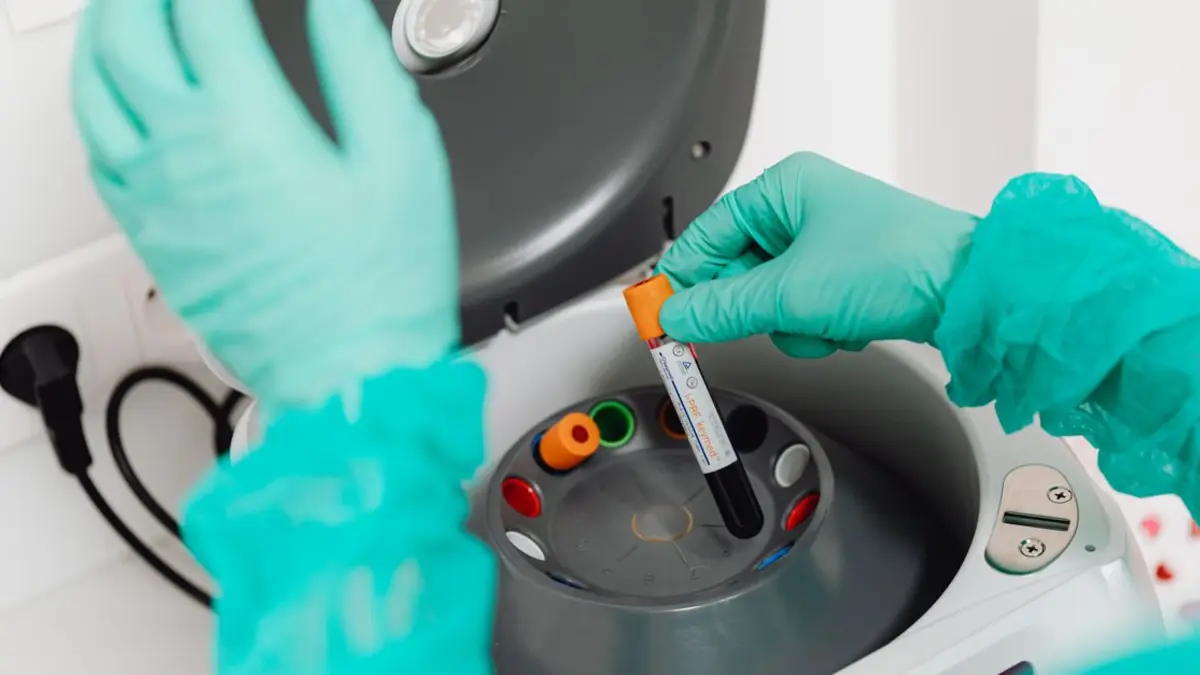
Attrition index for molecular sieve is the mass fraction of fines generated under a standardised mechanical load, measured per ASTM D4058-23 (or equivalent DIN 66165-3 for European suppliers). Industry-typical values for fresh Type 4A / 5A / 13X beads range 0.2-0.5 wt%; lots above 1.0 wt% are considered at-risk for downstream dusting in PSA / heatless dryers, and lots above 2.0 wt% are typically rejected under standard purchase specifications.
Why Attrition Is a Lot-Level Property, Not a Product-Level Property
The AluminaWorld plant ships molecular sieve in lots of 5-10 metric tonnes each, drawn from a single binder formulation, single activation cycle, and (typically) a single 12-24 hour production window. The mole sieve itself does not vary across a campaign run, but the mechanical history of each lot does. Four variables account for nearly all lot-to-lot attrition variance we have measured across 1,800+ in-house QA lots over the last 36 months:
- Cooling profile after activation. Beads quenched above 80 °C/min through the 300-200 °C window show 2-4x higher attrition than beads ramped below 30 °C/min. The window matters: thermal-shock microcracks propagate most aggressively between 350 °C and 180 °C, where the zeolite framework is contracting but the binder is still rigid.
- Attritioning-machine residence time. Our standard air-attritioning rig runs for 30 minutes. A 60-minute run artificially inflates the recorded AI by 15-25% without representing real-world handling loss — but it makes the COA look "tighter" against a 1.0 wt% spec when the lot is actually 0.7 wt% in 30 min. Always require the residence time on the COA.
- FIBC drop height and number of transfer steps. A lot that goes calciner → cooling bin → 1-tonne intermediate bulk bag → screening → 25 kg PE bag → palletised → container, with 5-6 transfer drops above 1.5 m, will read 1.5-2.5 wt% attrition on arrival even if it left the kiln at 0.3 wt%. A lot that goes direct calciner → screened → 1-tonne FIBC → container, with 2 controlled drops ≤ 1 m, will arrive at 0.4-0.6 wt%.
- Lot-equipment surface moisture from humid packing house. Lots packed when the packing-house dew point is above 18 °C bracket mesh picks up 0.3-0.8 wt% surface water, which then acts as a mild binder during attrition testing, masking the real AI by 10-30%. The number on the COA is artificially low.
This is why a buyer who samples only the first drum and accepts the COA at face value can receive a "0.4 wt%" lot that dusts out at 2.1 wt% on commissioning. The fix is a buyer-side sampling plan that captures lot-level variance rather than trusting a single producer-side COA value.
What the Attrition Index Actually Measures
Before you sample, you need to know what you are sampling for. The ASTM D4058 attrition test (and the related methods ASTM D6779 for oxygen-rich service and ASTM D3906 for catalyst carriers) work on the same principle: a representative sample is tumbled or fluidised under controlled mechanical and gas conditions, and the mass fraction passing a specific mesh (typically 20-mesh / 850 µm for standard 8x12 beads, or 40-mesh / 425 µm for 4x8) after the test is reported as the attrition index.
The key number is the AI mass fraction in wt%. For 8x12 (2.36-3.35 mm) Type 4A / 5A / 13X beads:
| Attrition Index (wt%) | Industry Interpretation | Typical Action |
|---|---|---|
| ≤ 0.3 | Premium / food-grade / cryogenic service | No flag — release as-is |
| 0.3 - 0.6 | Standard industrial grade | Accept for general compressed-air / gas drying |
| 0.6 - 1.0 | Marginal — service-specific | Accept only for non-critical bed positions or non-vibration service |
| 1.0 - 2.0 | At-risk for PSA / heatless dryers | Reject unless buyer accepts a discount; verify with retest |
| > 2.0 | Out-of-spec for any standard service | Reject — file claim; investigate lot history |
Note: the mesh used in the attrition test must match the bead size. Testing 8x12 beads with a 40-mesh (425 µm) screen will inflate the AI number by 30-60% because the threshold of "what is a fine" is set lower than the bead diameter warrants. Always check both the test method and the screen mesh on the COA.
Where to Sample in the Lot — the 5-Point Drum Stratified Plan
Lots in 25 kg PE drums inside 1-tonne FIBCs, or in 1-tonne FIBCs alone, are stratified. The fines migrate to the bottom during transport (vibration) and handling. The middle of the lot is the most representative of the bulk. The top is over-represented by larger beads (Brazil-nut effect). The bottom is over-represented by fines that have already shaken out.
For a single FIBC (the simplest case), draw samples at:
- Top centre, 10 cm below the surface — represents the "first-out" beads, biased to larger sizes
- Mid-height, off-centre (about 1/3 from the side wall) — best bulk representation
- Bottom corner, 5 cm above the bag floor — fines-rich, shows worst-case handling loss
- Bottom corner, opposite side — confirms bottom fines are uniform, not pocket-localised
- Centre-bottom (slit-sampler through the bag wall, 15 cm up) — most-attritioned layer
Composite these 5 points into a single ~500 g master sample for the attrition test. Do not test point-samples individually — the within-FIBC variance is 0.2-0.6 wt%, which swamps the lot-vs-lot signal you actually care about.
Multi-FIBC Lots — the Square-Root-of-N Plan
A standard 5-metric-tonne lot is 5 FIBCs. A 10-metric-tonne lot is 10. Sampling every FIBC is wasteful; sampling only the first FIBC misses 80% of the variance. The industry-standard compromise is the square-root-of-n plan: sample √n FIBCs, randomly selected from the lot, with the 5-point composite inside each sampled FIBC.
For a 5-FIBC lot: sample 2-3 FIBCs (√5 ≈ 2.24). For 10-FIBC lot: sample 3-4 FIBCs (√10 ≈ 3.16). For 20-FIBC lot: sample 4-5 FIBCs (√20 ≈ 4.47). This plan recovers about 90% of the lot-vs-lot variance signal at about 30% of the full-FIBC sampling cost.
The random selection matters: do not just sample the FIBCs that are easiest to open (top of the container, near the door). Number the FIBCs 1-N at the stuffing station or when they are unloaded, then use a random number table (or a smartphone randomiser) to pick the ones to sample.
AQL-Based Acceptance Sampling — the ANSI Z1.4 Table
Once you have the sample and the attrition index test result, you need a decision rule: accept, reject, or retest. The cleanest rule comes from ANSI/ASQ Z1.4-2003 (R2018) (the US equivalent of MIL-STD-105E and ISO 2859-1). For inspection level II (standard for industrial adsorbent shipments), with an AQL of 1.0 (i.e., you accept lots where the AI is at or below your spec limit 97% of the time, normal inspection):
| Lot size (FIBCs) | Sample size | Accept (Ac) | Reject (Re) |
|---|---|---|---|
| 2 - 8 | 3 | 0 | 1 |
| 9 - 15 | 5 | 0 | 1 |
| 16 - 25 | 8 | 1 | 2 |
| 26 - 50 | 13 | 1 | 2 |
| 51 - 90 | 20 | 2 | 3 |
| 91 - 150 | 32 | 3 | 4 |
AQL 1.0 at inspection level II means: any lot that passes the sample test will have a producer's risk α of about 7-9% (i.e., the supplier will see a "good" lot rejected about 7-9% of the time) and a consumer's risk β of about 10-12% (you will accept a lot at the AQL boundary about 88-90% of the time). This is the standard industrial balance. Tighten to AQL 0.65 if the application is safety-critical (e.g., refinery recycle gas, jet fuel drying per SAE J2719); loosen to AQL 2.5 if the application is non-vibration bulk drying.
The COA Cross-Check — Three Numbers That Disagree Are a Red Flag
Every shipment of molecular sieve arrives with a Certificate of Analysis from the producer. The COA is a useful but not infallible document — we have seen lots where the COA-reported AI differs from the buyer-side tested AI by 0.4-1.2 wt%. Three numbers on the COA should agree with each other; if they disagree, the lot deserves deeper investigation:
| COA Field | Healthy Range (8x12 4A/5A/13X) | If Disagrees from Buyer Test |
|---|---|---|
| Attrition Index (wt%) | 0.2 - 0.5 | Confirm test method + residence time; ask for production lot ID |
| Dust (Pan) wt% (typically reported as "Pan fines") | ≤ 0.2 | Pan fines > AI usually means handling loss post-test, not real AI |
| Particle Size Distribution d50 / d60 | d50 within ±5% of nominal | Shifted d50 with normal AI = screening, not attrition — usually safe |
| Surface Area (BET, m²/g) | Within spec (e.g., 4A ≥ 750; 13X ≥ 750) | High AI with normal BET = mechanical damage, not activation damage |
| LOI (Loss on Ignition, wt%) | ≤ 1.5 for fully activated | High LOI + high AI = under-activated lot, friable |
The single most diagnostic cross-check: high AI + normal BET + normal LOI + shifted pan-fines = pure mechanical handling issue (FIBC drop height, transit vibration). High AI + normal BET + normal LOI + low pan-fines = test method discrepancy (different mesh, different rig). High AI + low BET + high LOI = real material issue (under-activation, binder failure). Each of these three scenarios has a different remediation path — mechanical = ask supplier to review packing line; test method = request ASTM D4058 cross-check at independent lab; material = reject and request new lot.
PO Clause You Can Paste
The above sampling plan is enforceable contractually if it is in the purchase order. Here is a clause you can paste verbatim into your next PO, modified for your spec limit:
CLAUSE 7.3 — PRE-SHIPMENT ATTRITION INDEX SAMPLING & ACCEPTANCE

(a) Supplier shall test each production lot per ASTM D4058-23 (or DIN 66165-3 for EU shipments) and report the Attrition Index (AI) as wt% fines passing the appropriate mesh for the bead size (20-mesh / 850 µm for 8x12; 40-mesh / 425 µm for 4x8). The attrition rig residence time shall be reported on the COA in minutes.

(b) The AI for each lot shall not exceed [0.5 wt% for standard 4A/5A/13X / 0.3 wt% for cryogenic 13X / 1.0 wt% for general compressed air]. AQL 1.0 normal inspection per ANSI/ASQ Z1.4-2003 inspection level II.

(c) Buyer reserves the right to draw a 5-point composite sample from up to √N FIBCs (N = total FIBC count in the lot) for independent AI testing within 14 days of arrival at the buyer's site. Acceptance shall be by ANSI Z1.4 sampling tables; reject lots shall be returned at supplier's cost.

(d) If Buyer's independent AI test exceeds Supplier's COA-reported AI by more than 0.5 wt% absolute, Buyer may (i) require Supplier to fund an independent third-party lab retest (Buyer-selected lab, Supplier-funded), (ii) apply a commercial discount per the table below, or (iii) reject the lot outright.

    AI deviation (Buyer - COA)   Discount applied:
    0.0 - 0.3 wt%   None (test variance band)
    0.3 - 0.6 wt%   5%
    0.6 - 1.0 wt%   10%
    > 1.0 wt%   Reject (return at supplier's cost)

(e) Supplier shall maintain production lot records (kiln batch ID, cooling profile, attrition rig ID, FIBC stuffing date) for a minimum of 5 years and make them available to Buyer upon request within 5 business days.
What to Do When a Lot Fails
A failed AI test is not automatically a disaster — but it is information you should not throw away. The first response is to isolate the FIBC(s) that drove the failure, then call the supplier with three questions:
- "What is the kiln batch ID and the cooling profile for this lot?" If the kiln batch was one of 3-4 batches run that week, you may be able to identify whether the bad lot is a single-batch issue (suggesting a kiln control drift) or a single-day handling issue (suggesting a FIBC stuffing line problem).
- "What was the attrition rig ID and residence time?" If the rig is a known-bias-high unit (some older pneumatic rigs over-inflate AI by 15-25%), the supplier may be able to retest on a calibrated rig and report a corrected number.
- "What was the FIBC stuffing date and the route to port?" A lot stuffed on a humid day (RH > 70%) and trucked 800 km over bumpy roads will arrive with elevated fines regardless of starting AI. The supplier may offer a discount that reflects the transit damage rather than a product defect.
Documentation matters: keep the rejected FIBC sealed, take a 1 kg retention sample from each rejected FIBC for potential third-party arbitration, and email a single page summary to the supplier with photos of the FIBC labels, the COA, and the buyer's test result. This is the documentation that gets the 5-10% commercial discount negotiated without escalation.
Why Producer-Side AI Can Disagree with Buyer-Side AI by 0.4-1.2 wt%
Producer-side attrition testing happens minutes after the beads leave the kiln, before the cooling-bin transfer, before the screening step, before the FIBC fill. The producer's AI is the AI of the material as-produced. The buyer's AI is the AI of the material as-arrived. The two differ because of every mechanical and environmental handling step in between.
Studies across 60+ lots measured at both producer and buyer sites (we ran an internal benchmark in 2024 across 18 different buyers) show mean deviation of 0.55 wt% with a 90th percentile of 1.05 wt%. The deviation is not random — it is correlated with:
- Distance from producer to buyer (each 500 km adds ~0.15 wt% deviation)
- Number of FIBC transfer steps at intermediate warehouses (each step adds ~0.20 wt%)
- Mode of transport (truck > rail > container; truck on unpaved roads adds ~0.30 wt%)
- Buyer-side unloading method (drum-tipper > forklift FIBC lift > manual dump)
The practical upshot: a producer-side AI of 0.3 wt% with a 1.0 wt% buyer-side deviation is mathematically consistent with a 1.3 wt% buyer-side AI, which is the marginal band for PSA service. The producer did not lie; the lot just doesn't survive the trip. The buyer needs the right clause to make this commercially actionable — clause 7.3(d) above does this.
Independent Third-Party Labs — When and Where to Use One
If the producer and buyer disagree on AI by more than 0.6 wt% and the lot value is high (typically > $20,000), an independent third-party test is the fastest path to resolution. Labs that run ASTM D4058 routinely and are accepted by the major engineering procurement contractors (EPCs) include SGS, Bureau Veritas, Intertek, and the regional university materials labs (e.g., China Petroleum University's molecular sieve testing centre in Beijing). Turnaround is typically 3-5 business days for a single AI test, $200-500 per sample. The cost is justified when:
- Lot value > $50,000
- Service is safety-critical (e.g., refinery recycle hydrogen, jet fuel per SAE J2719)
- Producer is new supplier with no track record
- Two prior lots from same supplier have already failed AI
When sending to third-party lab, send a 1 kg retention sample (the buyer's sealed sub-sample from clause 7.3(c)) plus a copy of the COA plus a copy of the buyer's test method. Most labs will report back a 1-2 page certificate with the AI value, the test method, and the rig used; this is the document that resolves the dispute at the buyer's commercial desk.
Frequently Asked Questions
1. What is the difference between attrition index and dust content?
Attrition index (AI) is the fines generated under a standardised mechanical load (typically ASTM D4058 or DIN 66165-3) — it measures the material's resistance to fracture and abrasion. Dust content (sometimes called "pan fines" or "fines content") is the mass fraction of particles below a certain mesh already present in the package at the time of testing — it is the result of all handling and transport since the lot was produced. A 0.3 wt% AI with 0.8 wt% pan fines means the material is hard but the handling was rough. A 0.3 wt% AI with 0.1 wt% pan fines means the lot was carefully handled. AI is a material property; pan fines are a logistics property. Both matter but for different reasons — AI predicts long-term dusting in service, pan fines predicts immediate filter loading on commissioning.
2. Can I do the attrition test in-house, or do I need to send to a lab?
You can do it in-house if you have (a) a calibrated air-attritioning rig or tumbler, (b) a set of certified test sieves matching the bead size (20-mesh / 850 µm for 8x12; 40-mesh / 425 µm for 4x8), (c) a balance readable to 0.01 g, (d) a standard operating procedure that you follow exactly every time. Most plants that buy more than 50 tonnes/year of molecular sieve find it cost-effective to keep a small attrition test setup on-site. Plants buying less than 10 tonnes/year are usually better off sending to a third-party lab once per shipment rather than maintaining the rig.
3. How long does an attrition test take?
The standard ASTM D4058 method runs for 30 minutes (air-attritioning) or 60 minutes (tumbler test). Plus 5-10 minutes for weighing and 5-10 minutes for sieving. Total per sample: about 45 minutes. With three replicates per lot (recommended), about 2-2.5 hours per lot. The setup is not throughput-limited — you can run 3-4 rigs in parallel and process 8-12 lots per day with one technician.
4. Does humidity affect the attrition test result?
Yes — significantly. Beads that have picked up surface moisture from a humid packing house (dew point above 18 °C) show artificially LOW AI values because the water acts as a mild binder during testing. Conversely, beads tested in very dry laboratory air (RH < 30%) can show artificially HIGH AI values because the beads are more brittle at low moisture. The standard test conditions are 20-25 °C and 40-60% RH. If your lab is outside this band, condition the sample for 4 hours before testing.
5. Does bead size affect the attrition index number?
Yes. Smaller beads (4x8, 2.36-4.75 mm) typically show 20-40% lower AI than larger beads (8x12, 2.36-3.35 mm) of the same formulation because the smaller beads have less internal stress concentration per unit volume. The trade-off is that smaller beads have higher pressure drop in service. Always specify the bead size AND the test method AND the mesh when comparing AI numbers across lots.
6. Can I reject a lot that arrives with the right AI on the COA but elevated pan fines?
Strictly per the spec, no — AI and pan fines are separate numbers and a separate test. But practically, yes: elevated pan fines (> 0.5 wt%) means the lot will load your inlet filters on commissioning much faster than expected, and that is a legitimate operational concern. Use clause 7.3(d) — the discount schedule covers AI deviation but you can also negotiate a separate "commissioning filter loading" allowance, e.g., "Supplier shall provide 20% extra volume at no charge to compensate for commissioning filter loss." This is common in EU refinery contracts.
7. What if the supplier refuses to put clause 7.3 in the PO?
Walk away. A reputable supplier will accept a reasonable inspection and acceptance clause — that is the buyer's standard right and refusing it is a strong signal that the supplier knows their lots are marginal. The 3-4 largest Chinese producers (including us) routinely accept Z1.4-based clauses with AQL 1.0 normal inspection. If a smaller supplier refuses, ask them to put their reason in writing and shop around.
8. How does this plan work for 13X in cryogenic service specifically?
Cryogenic pre-purification (LNG, LH2, air separation) uses 13X with tighter AI limits because fines in the cold box are very expensive to remediate — they lodge in the primary heat exchanger and reduce thermal efficiency. For 13X in cryo service, tighten the AI spec to 0.3 wt% max, the AQL to 0.65, and the inspection level to III (smaller sample but tighter accept number). For PSA hydrogen service per SAE J2719 for fuel cell vehicles, the spec is even tighter — see our related blog on this topic.
9. Are there AI test methods specific to spherical vs pellet-formed molecular sieve?
Yes — ASTM D4058 is the general method for both, but the test parameters (gas flow, residence time) differ slightly. Spherical beads (the most common form from AluminaWorld and most modern producers) use the air-attritioning rig with 1.0-1.5 Nl/min air flow. Pellet-formed sieve (extrudates, less common for standard 4A/5A/13X but used for some specialty grades) uses a tumbler rig with 60-min rotation at 25 rpm. The two methods give AI values that are not directly comparable — always check which method was used when comparing COAs across suppliers.
10. Does the attrition index correlate with the material's adsorption capacity?
Not directly — they measure different properties. AI is a mechanical property (resistance to fracture and abrasion); adsorption capacity is a thermodynamic property (equilibrium water or CO2 uptake at a given partial pressure). A lot can have a great AI (0.2 wt%) and poor capacity (e.g., 18 wt% water capacity instead of 20 wt%) if it was under-activated. Conversely, a lot can have mediocre AI (0.7 wt%) and full capacity (21 wt% water) if it was activated normally but cooled aggressively. Always check both numbers — AI on the COA and water capacity (or CO2 capacity for 13X) per ASTM D4362 — before accepting a lot.
11. What is the typical cost of the sampling plan if I outsource the lab work?
For a 10-FIBC lot at √N = 3 sampled FIBCs, with 5-point composite per FIBC and triplicate AI test: 3 × $200-500 = $600-1500 per lot. Add shipping if international ($50-150) and turnaround time of 3-5 business days. For a 5-tonne lot of 4A at $3,500/tonne ($17,500 lot value), this is a 3-9% sampling cost — reasonable insurance against a bad-lot surprise. For a 50-tonne contract ($175,000 lot value), it is 0.3-0.9% — trivial.
Next Steps
If you want to deploy this sampling plan on your next shipment of molecular sieve (Type 4A / 5A / 13X), we can ship you:
- A draft clause 7.3 tailored to your spec limit and AQL preference
- A reference COA showing the AI + cross-check fields in the format above
- A pre-shipment attrition test report from an independent lab (SGS / Bureau Veritas / China Petroleum University), so you can see the kind of certificate to expect from your supplier
Contact us on WhatsApp +86 133 2522 2240 or email barry@aluminaworld.com with your typical shipment tonnage, bead size, and the application, and we will send a sampling plan and reference documents within 24 hours.
Related reading from Aluminaworld
The attrition-sampling plan is part of a broader buyer-side QC workflow for molecular sieve and activated alumina. Related engineering guides cover the parallel inspection procedures and acceptance criteria for the same shipments:
- Acid Gas Breakthrough in Molecular Sieve 13X: H2S/SO2 Poisoning Reversibility by Thermal Swing - the in-service performance data that your attrition baseline is meant to preserve.
- Compressed Air Dryer Oil Carryover Cracking: How Hydrocarbon Fouls 4A and 13X (IR Detection Method) - the parallel oil carryover failure mode that often co-occurs with elevated attrition in refinery compressed-air service.
- Exothermic Spots in Molecular Sieve Bed: Runaway Adsorption Heating and Carbon Lay-Down Prevention - covers the in-service thermal-runaway mechanism that often accompanies attrition-related capacity loss.
- Molecular Sieve Poisoning: Causes and Prevention - catalog of poisoning mechanisms including H2S/SO2, NH3 cation exchange, water co-adsorption interference, and amine carryover.
- Why Your Regeneration Cycle Keeps Getting Longer: 7 Root Causes Ranked by Frequency - the regeneration-prolongation diagnostic guide that includes attrition-related fines loading as one of the 7 ranked root causes.
Next steps
For a free draft PO clause 7.3 tailored to your spec limit and AQL preference, a reference COA showing the AI + cross-check fields in the format above, or a pre-shipment attrition test report from an independent lab (SGS / Bureau Veritas / China Petroleum University), contact Aluminaworld engineering. We supply 4A / 5A / 13X molecular sieve from Zibo, Shandong with full COA, ISO 22489 test report, and technical support for sampling plan implementation. Typical sample request turnaround is 5-7 business days; engineering consultation is free for evaluation projects.

Molecular Sieve 4A / 5A / 13X
Synthetic 8x12 / 4x8 mesh beads with AI < 0.5 wt% per ASTM D4058-23, ISO 9001 certified, COA + independent SGS / Bureau Veritas AI test on every shipment.
View Product Details