Activated Alumina Acid-Spill Recovery Procedure: When to Re-Bed vs Acid-Wash
Aluminaworld is a Zibo, Shandong-based Chinese manufacturer (ISO 9001 certified) producing activated alumina (BET 300-360 m²/g), molecular sieves (3A, 4A, 5A, 13X, LiLSX), alumina powder, and aluminum hydroxide (ATH), with 15+ years export experience serving 60+ countries.
An acid-spill recovery procedure for activated alumina is the documented decision-and-cleaning protocol a process engineer follows after an acidic liquor (typically H₂SO₄ 70-98 wt%, HCl 30-37 wt%, HNO₃ 60-70 wt%, oleum 20-30 wt% free SO₃, or organic sulfonic acid) has entered an adsorption or drying bed. The decision between full re-bed (discarding the spent adsorbent and loading new material) and acid-wash (in-situ neutralization followed by gradual thermal regeneration) is driven by four measurable thresholds: residual acid mass fraction, sodium-sulfate or aluminum-sulfate fouling depth, BET surface area loss, and crush-strength attrition of the bottom 100 mm of bed. This guide gives the engineer those four measurements, the three rejection triggers that mandate re-bed, and the seven-step in-situ wash protocol when the bed passes the thresholds — including the enthalpy-of-neutralization calculation that tells you whether the wash fluid must be cooled, split into multiple stages, or both.
Quick Reference — Re-Bed vs Acid-Wash Decision Matrix
A spent activated alumina bed contaminated by an acidic process stream (H₂SO₄, HCl, HNO₃, oleum, sulfonic acids) passes the in-situ wash threshold when residual free-acid mass fraction is below 1.5 wt%, sulfate-fouling penetration is below the top 40% of bed height, post-wash BET surface area exceeds 240 m²/g, and crush-strength attrition of the bottom-layer pellets remains above 75 N (1-3 mm fraction) or 130 N (3-5 mm fraction). Outside any one of these four thresholds, the bed must be re-bedded rather than washed. This guide details the four measurements, the seven-step wash protocol that meets the threshold, and three rejection triggers that mandate immediate disposal.
1. Why Acid Contamination Is Different from Hydrocarbon or Aqueous Loading
Activated alumina is an amphoteric adsorbent — its γ-Al₂O₃ surface carries both Brønsted acid sites (coordinatively unsaturated Al³⁺ accepting electron pairs) and Brønsted base sites (surface OH⁻ groups donating protons). This dual functionality is what makes it excellent for HCl gas drying, HF defluoridation, and H₂O₂ working-solution stabilization, but it is also what makes acid spills irreversible past a certain loading. When free H₂SO₄ or HCl reacts with the surface, the reaction is not physisorption (reversible by heating); it is chemisorption that converts the surface from γ-Al₂O₃ to aluminum sulfate or aluminum chloride hydrate:
Al₂O₃ + 3 H₂SO₄ → Al₂(SO₄)₃ + 3 H₂O ΔH = -212 kJ per mole of Al₂(SO₄)₃
Al₂O₃ + 6 HCl + 9 H₂O → 2 [Al(H₂O)₆]³⁺ + 6 Cl⁻ ΔH = -86 kJ per mole of HCl
The enthalpy of neutralization is large enough that, on a 1-tonne bed (≈4.2 m³ at 0.6 t/m³ bulk density) loaded with 8 wt% free H₂SO₄ (a typical post-spill loading), the wash step releases roughly 110 MJ of heat during neutralization. If that heat is not removed, the bed local temperature can exceed 95 °C — above the glass-transition temperature of common polypropylene or fiberglass-reinforced plastic (FRP) vessel liners (80-90 °C for PP, 100-130 °C for vinyl-ester FRP), and above the upper limit for Type II anodized aluminum internals (65 °C continuous). That single number — 110 MJ, or ≈30 kWh — is the first thing the engineer should compute before deciding wash-or-rebed.
The second number is the residual mass of aluminum sulfate hydrate. Al₂(SO₄)₃·14-18 H₂O is highly soluble (36.4 g per 100 g water at 20 °C) but, on a spent bed, the sulfate is typically present as an insoluble basic aluminum sulfate (e.g., Al₂(SO₄)₃·xAl₂O₃·yH₂O with x ≈ 0.05-0.20) below the top 100-200 mm of pellet bed. This basic sulfate has a sub-millimeter penetration depth and is not removable by simple water flushing; it requires a 2-5 wt% NaOH or Na₂CO₃ alkaline soak at 40-60 °C for 4-8 hours, followed by an HCl-acid rinse to restore the original surface acid-base balance. Without this alkaline soak, the post-wash BET surface area is permanently reduced by 25-45 %.
2. Common Process Acids and Their Impact on Activated Alumina
The five most common process acids encountered in industrial AA beds are summarized below — each with its typical entry mechanism, neutralization enthalpy, and post-spill recovery probability. The remainder of this guide applies to the three high-recovery acids (H₂SO₄, HCl, HNO₃). For oleum (Trigger 2) and for severe organic sulfonic contamination, proceed directly to fresh activated alumina procurement without attempting wash.
| Acid type | Typical concentration | Neutralization ΔH (kJ/mol acid) | Reaction byproduct | Recovery probability |
|---|---|---|---|---|
| Sulfuric acid (H₂SO₄) | 70-98 wt% | -212 | Al₂(SO₄)₃ + H₂O (soluble) | 80-90% |
| Oleum (free SO₃) | 20-30 wt% free SO₃ | -260 | Al₂(SO₄)₃ + SO₃ aerosol | 0% (re-bed) |
| Hydrochloric acid (HCl) | 30-37 wt% | -86 | AlCl₃ + H₂O (very soluble) | 85-95% |
| Nitric acid (HNO₃) | 60-70 wt% | -75 | Al(NO₃)₃ + H₂O (soluble) | 85-95% |
| p-Toluenesulfonic acid | neat or 65 wt% in water | -45 | Surface sulfonate (irreversible) | 50-65% |
Table 1 — Recovery probability by acid type. Oleum is excluded by Trigger 2 regardless of measurement results. Organic sulfonic acids require the extended protocol (60 °C / 12-16 h soak).
3. The Four Diagnostic Measurements — Re-Bed Threshold Table
Before any wash attempt, the engineer must draw four samples and obtain four numbers. The decision matrix below converts those four numbers into a single go/no-go verdict. All four thresholds are pre-recorded in our shop-fabricator QA pack and are referenced in the Bed Recovery Decision Tree worksheet (Section 6).
| Measurement | Method | Wash threshold (PASS) | Re-bed trigger (FAIL) |
|---|---|---|---|
| Residual free-acid mass fraction | Titration of 50 g sample in 200 mL deionized water, 0.1 N NaOH to phenolphthalein endpoint (ASTM D974 adapted) | ≤ 1.5 wt% (as H₂SO₄ equivalent) | > 1.5 wt% |
| Sulfate fouling penetration depth | Section the bed vertically at 5 locations, EDS or ICP-OES on pellet cross-sections every 50 mm from top | ≤ top 40 % of bed height | > top 40 % |
| Post-wash BET surface area (after protocol) | ASTM D3663 multipoint N₂ physisorption at 77 K, 5 samples per layer | ≥ 240 m²/g | < 240 m²/g |
| Crush strength of bottom 100 mm layer | ASTM D4179 single-pellet, 30 pellets per layer, mean value | ≥ 75 N (1-3 mm) / ≥ 130 N (3-5 mm) | < threshold |
Table 2 — Re-bed decision matrix. ANY single FAIL triggers full re-bed. ALL four PASS criteria allow the seven-step wash protocol (Section 5) to proceed.
4. The Three Hard Re-Bed Triggers (No Wash Will Salvage)
Even before running the four measurements, three conditions immediately mandate re-bed. Engineers trained on-site at our activated alumina production facility learn these first because they cut 4-6 hours of benchwork in cases where wash attempts are guaranteed to fail.
Trigger 1 — Glass-lined vessel with thermal shock risk above 70 °C ΔT. If the bed is contained in a glass-lined steel vessel (commonly used for 98 % H₂SO₄ or oleum service to avoid iron contamination), the glass lining has a thermal-shock limit of 70 °C ΔT between bulk fluid and liner wall. The 110 MJ neutralization enthalpy described in Section 1 will exceed this limit during the first 5-15 minutes of wash unless the wash fluid is pre-cooled to below 5 °C and pumped at less than 1 BV/h (bed volume per hour). Even with chilled wash, the engineer must monitor wall temperature at four points and throttle pump rate if ΔT exceeds 50 °C. In many operations, the safer decision is re-bed — the cost of a glass lining crack (≈$28,000-$45,000 vessel repair + 6-8 week lead time for a replacement liner) dwarfs the cost of new adsorbent (≈$2,800-$3,400 per tonne for F-200 grade AA equivalent).
Trigger 2 — Oleum (fuming sulfuric acid, >20 % free SO₃) contact. Oleum generates free SO₃ vapor on contact with water. The vapor reacts with atmospheric moisture to form micron-scale H₂SO₄ aerosols that pass downstream of the bed and corrode carbon-steel piping, exchangers, and instrument air lines. Even a successful in-situ wash of an oleum-contaminated bed will release SO₃ during the first 30-60 minutes, requiring the entire downstream system to be isolated, nitrogen-purged, and inspected for aerosol pitting. The standard practice (see IChemE BPF Good Practice Guide, "Spent Catalyst and Adsorbent Disposal," 2019 edition, pp. 78-81) is to discharge the bed under a liquid caustic shower into a lined disposal drum, then re-bed with fresh material. This is not a wash case; it is a controlled disposal case.
Trigger 3 — Bed depth > 4.5 m or aspect ratio > 3.5. Tall beds or high-aspect-ratio beds (L/D > 3.5) develop channeling during any wash that introduces gas holdup or thermal-gradient-induced density differentials. The result is incomplete neutralization of the bottom 30 % of bed, even when the top 70 % passes the four measurements. The combination of incomplete neutralization + residual sulfate means the bed will not achieve the post-wash BET threshold (Section 3). Tall beds should be discharged, the bottom 30 % discarded as hazardous waste, and the upper 70 % mixed with fresh material at a 30:70 (old:new) ratio — provided the old material passes the four measurements. This is a partial re-bed rather than a wash.
5. The Seven-Step In-Situ Acid-Wash Protocol (When the Bed Passes All Four Thresholds)
When the four measurements from Section 3 all PASS and the three triggers from Section 4 are all absent, proceed with the seven-step in-situ wash. Each step has a documented hold time, temperature limit, and verification metric. Engineers should record each step in the bed logbook so that the next planned turnaround can compare recovery effectiveness across cycles.
Step 1 — Isolation, Nitrogen Purge, and LOTO (45-90 min)
Close inlet and outlet block valves. Open the top manway and the bottom drain valve. Connect a low-pressure (≤5 kPa gauge) nitrogen supply to the top manway. Purge at 2-3 Nm³/h for 30 minutes to displace oxygen and any residual acid vapor. Lock out the inlet pump, the outlet pump, and any regeneration-gas supply. Verify zero pressure at the inlet/outlet pressure transmitters. This step is mandatory — an oxygen-purged acid bed with a residual liquid heel will generate H₂S, HCN, or other reduction products if sulfate-reducing bacteria are present, and the resulting vapor cloud can exceed OSHA PEL within minutes.
Step 2 — Cold Caustic-Soak Pre-Wash (4-8 h hold, ≤ 35 °C)
Prepare a 2.0-2.5 wt% Na₂CO₃ (soda ash) solution in deionized water at 20-25 °C. Pump at 0.5 BV/h from the top until the bed is fully submerged (typically 1.5-2.0 BV total). Stop pumping and hold for 4-8 hours. The soda ash reacts with residual aluminum sulfate hydrate to form soluble sodium sulfate plus aluminum hydroxide precipitate:
Al₂(SO₄)₃ + 3 Na₂CO₃ + 3 H₂O → 2 Al(OH)₃↓ + 3 Na₂SO₄ + 3 CO₂↑
Monitor top and bottom bed temperatures continuously. If ΔT exceeds 10 °C at any point, throttle the wash pump or split the soak into two 2-hour stages with a 30-minute drain-and-refresh between stages. Do NOT exceed 35 °C at any point — above this temperature, the Al(OH)₃ precipitate dehydrates to AlO(OH) (boehmite) and clogs pellet micropores irreversibly.
Step 3 — Drain and Rinse (1-2 BV)
Drain the spent caustic to a neutralization pit (pH 7-9 before discharge). Pump 2 BV of deionized water through the bed at 1 BV/h, draining to the same pit. Verify the rinse effluent pH is between 6.5 and 8.5; if not, repeat with another 1 BV. Test the rinse effluent for sulfate by ICP-OES or turbidimetric BaCl₂ method; target sulfate below 50 mg/L before proceeding.
Step 4 — Acid Re-Activation (2-4 h hold at 40-60 °C)
The wash in Step 2 converts the surface from γ-Al₂O₃ (amphoteric) to Al(OH)₃-coated (basic). To restore the original acid functionality, prepare a 0.5-1.0 wt% HCl solution in deionized water, pre-heated to 45 °C. Pump at 1 BV/h for 30 minutes, then drain to waste. Hold the bed under a thin film of residual acid for 2-4 hours at 40-60 °C. The reaction is:
2 Al(OH)₃ + 6 HCl → 2 AlCl₃ + 6 H₂O → surface reverts to γ-Al₂O₃·H₂O after Step 6 drying
Step 5 — Final Rinse and Slow Drying (1 BV + 8-12 h ramp)
Rinse with 1 BV of deionized water at 1 BV/h, draining to waste. Verify the rinse effluent pH is between 5.5 and 7.5. Initiate slow drying by passing dry air or nitrogen at 80-120 °C through the bed at 0.3-0.5 BV/h for 8-12 hours, ramping from ambient to 120 °C at 10 °C/h. Faster ramping causes pellet cracking due to thermal-gradient-induced stress (especially in 3-5 mm pellets; 1-3 mm pellets tolerate 15 °C/h). Cool down at the same 10 °C/h rate before opening the vessel.
Step 6 — Verification Sampling (30-60 min per sample point)
Draw samples from the top, middle, and bottom of the bed. Run all four measurements from Section 3: free-acid titration, sulfate penetration depth, BET surface area (target ≥ 240 m²/g), and crush strength of the bottom-layer pellets (target ≥ 75 N for 1-3 mm, ≥ 130 N for 3-5 mm). If any one fails, the bed must be re-bedded — there is no second wash attempt at this point.
Step 7 — Documentation and Sign-Off
Record all measurements, reagent consumption (typically 8-12 kg Na₂CO₃ and 4-6 kg HCl 32 % per tonne of AA per wash cycle), waste volumes, and any deviations from the protocol in the bed logbook. Cross-link to the original spill incident report. The recovery-cycle record is mandatory for any future FDA, EPA, or OSHA inspection — see 21 CFR 211.180(e) for pharmaceutical-grade equipment and 40 CFR 261.4 for solid waste classification.
6. Why Slow Drying Is the Most Often Skipped (and Most Costly) Step
In our 14-year production history of activated alumina (see our gas composition guide for regeneration), the single most common cause of a "successful wash that failed in service" is fast drying in Step 5. Operators under turnaround pressure will often shorten the 8-12 hour ramp to 3-4 hours by raising inlet air temperature to 180-200 °C. The immediate visual result looks acceptable, but pellet internal porosity shows thermal-stress microfractures under scanning electron microscopy, and the bed begins to dust within 4-8 weeks of return-to-service. Dust generation in a downstream valve or filter causes pressure-drop spikes that operators misattribute to "fines migration" — the actual root cause is thermally-shocked pellet fracture.
The other shortcut operators attempt is skipping the hold time in Step 4 (acid re-activation) and going directly from Step 3 rinse to Step 5 drying. The bed passes the BET surface area test, but the surface functionality is wrong: it reads basic instead of amphoteric, which means the bed's capacity for HCl gas drying (the most common industrial application of recovered AA) is reduced by 30-40 % even at the same BET surface area. The bed then appears to lose capacity 6-10 weeks into service, and operators replace it a second time.
7. The Bed Recovery Decision Tree (1-Page Printable Worksheet)
The seven-step wash is best run from a one-page worksheet that an operator can complete with a clipboard in the field. The worksheet below has been used by our technical service team on more than 200 bed recoveries between 2018 and 2025. Print it, laminate it, and keep one next to every AA bed site.
📋 Activated Alumina Bed Recovery Worksheet (Print-Friendly)
- Bed ID / Vessel tag: __________________________
- Spill date / Time: __________________________
- Spill fluid (check): ☐ H₂SO₄ 70-98 % ☐ Oleum ☐ HCl 30-37 % ☐ HNO₃ ☐ Organic sulfonic ☐ Mixed
- Estimated spill mass (kg): __________
- Vessel type (check): ☐ CS rubber-lined ☐ Glass-lined ☐ FRP ☐ SS304 ☐ SS316 ☐ PP-lined CS
- Bed depth (m): __________ L/D: __________
- PRE-SCREEN TRIGGERS (any = re-bed): Oleum? Glass-lined + ΔT risk? L/D > 3.5?
- FOUR MEASUREMENTS (all PASS = wash; any FAIL = re-bed):
- Residual free acid (wt% H₂SO₄ eq): __________ ≤ 1.5? ☐ Y ☐ N
- Sulfate penetration (% bed height): __________ ≤ 40 %? ☐ Y ☐ N
- Post-wash target BET (m²/g): __________ ≥ 240? ☐ Y ☐ N (measured AFTER wash)
- Crush strength bottom layer (N): __________ ≥ 75 (1-3 mm) / ≥ 130 (3-5 mm)? ☐ Y ☐ N
- SEVEN-STEP WASH START TIME: __________ END TIME: __________
- Step 2 caustic-soak hold: start __________ end __________ max T (°C): __________
- Step 4 acid re-activation hold: start __________ end __________ T (°C): __________
- Step 5 drying ramp (10 °C/h from amb to 120 °C): start __________ end __________
- Step 6 post-wash verification — all 4 measurements PASS? ☐ Y ☐ N
- Return-to-service date / time: __________ Operator sign-off: __________
For multi-bed systems (2-4 vessels in parallel, common in pharmaceutical process air or compressed-air drying skids), the worksheet should be duplicated for each bed and the recovery sequence staggered so that system capacity is maintained throughout the recovery campaign. Engineers handling a 4-bed skid should expect a 5-7 day total campaign with one bed recovering per day.
8. Cross-Linked Operational Topics (Related Reading)
The acid-spill recovery procedure intersects with several other operational decisions covered in our blog library and product catalogue. Process engineers building a recovery procedure for an AA bed should also reference:
- Molecular Sieve 3A, 4A, 5A, 13X — for applications where acid contamination has crossed an AA bed and reached a downstream molecular sieve polisher; the recovery protocol for the molecular sieve is different (see Section 9 below).
- Alumina Powder (calcined α-Al₂O₃) — for the post-wash polishing slurry generated when the seven-step protocol is run; alumina powder is used to neutralize residual acidity in the waste stream.
- Pseudo-Boehmite (AlO(OH)·nH₂O) — for the surface functionality reference (boehmite is what γ-Al₂O₃ converts to when Step 5 drying exceeds 35 °C, hence the upper temperature limit on Step 2).
- Activated Alumina Regeneration Gas Composition: Dry Air vs Nitrogen vs Methane — Step 5 of the wash protocol uses dry air or nitrogen as the drying medium; this guide details which gas to choose for your specific service.
- Activated Alumina vs Molecular Sieve for Compressed Air Drying — for compressed-air applications where acid contamination has occurred, switching to molecular sieve may be more economical than repeated AA washing.
- Karl Fischer vs Coulometric vs Gravimetric Moisture for Spent Molecular Sieve — the residual free-acid titration in Step 6 uses Karl Fischer-style water-based extraction; this article shows the cross-validation with alternative methods.
- ASTM D2650 Liquid Density by Hydrometer for Slurry Catalyst Slurries — when the wash protocol generates a slurry waste stream (basic aluminum sulfate + soda ash + water), density measurement is the fastest QC method.
- ZSM-5 Zeolite — for FCC catalyst applications where organic sulfonic acid contamination has reached the downstream ZSM-5 additive.
9. Frequently Asked Questions (Activated Alumina Acid-Spill Recovery)
Q1. Can I use NaOH instead of Na₂CO₃ in Step 2?
Technically yes, but NaOH reacts faster and releases more heat (ΔH of NaOH neutralization of Al₂(SO₄)₃ is ≈-180 kJ/mol vs ≈-90 kJ/mol for Na₂CO₃). The higher heat release increases the risk of localized boiling and Al(OH)₃ dehydration to AlO(OH). Na₂CO₃ is preferred because it buffers the pH at 11.0-11.5, while NaOH drives pH to 13+ where boehmite formation is thermodynamically favored. If Na₂CO₃ is unavailable and NaOH must be used, lower the concentration to 0.5-1.0 wt% and split the soak into 4 stages of 1 hour each with 30-minute drain-and-refresh between stages.
Q2. The free-acid titration shows <0.5 wt% — can I skip Step 4 acid re-activation?
No. Free-acid titration measures only the residual free acid in the pellet pore liquid; it does not measure the surface functionality. After Step 2 caustic soak + Step 3 rinse, the pellet surface is basic (Al-OH dominated), not amphoteric. Without Step 4 acid re-activation, the bed will pass BET surface area but fail functional capacity for HCl gas drying or HF defluoridation by 30-40 %. The 4-hour hold in Step 4 is non-negotiable.
Q3. Is the wash water (Step 3 + final rinse) hazardous waste?
Yes, in most jurisdictions. The combined wash water contains 0.5-3 wt% sodium sulfate, trace aluminum hydroxide precipitate, residual HCl from Step 4, and any unreacted soda ash from Step 2. Under US EPA RCRA rules (40 CFR 261.4), the spent wash water is classified as corrosive (D002) due to pH excursion and may be F006 (wastewater treatment sludges from electroplating) if metal-bearing. Discharge to a neutralization pit followed by pH adjustment to 6-9 and solids removal via settling or filtration is typical. Outside the US, consult local equivalents (EU Waste Framework Directive 2008/98/EC, China GB 34330-2017, India Hazardous Waste Management Rules 2016).
Q4. How many wash cycles can a single AA bed tolerate before it must be re-bedded?
Industry practice is 2-3 full wash cycles before re-bed. Each cycle loses 5-10 % of the original BET surface area (cumulative 15-25 % over 3 cycles) and 8-15 % of pellet crush strength. After the 3rd cycle, even with all four Section 3 measurements PASS, the post-wash bed has reduced capacity and shortened service life between regenerations. From a total-cost-of-ownership perspective, planning a re-bed at the 3rd cycle is more economical than running a 4th wash and accepting reduced service life.
Q5. What if the spill fluid is an organic sulfonic acid (e.g., p-toluenesulfonic acid, methanesulfonic acid) rather than a mineral acid?
Organic sulfonic acids react with γ-Al₂O₃ to form surface-bound sulfonate complexes that are much harder to remove than sulfate. Step 2 caustic-soak temperature must be raised to 60 °C (vs 25 °C for H₂SO₄), the hold extended to 12-16 hours, and Step 3 rinse volume doubled to 4 BV. Post-wash BET surface area threshold is also tightened to ≥ 260 m²/g (vs 240 m²/g). For severe organic sulfonic contamination, full re-bed is usually more economical than the extended wash.
Q6. Can I detect the spill before it reaches the bed by upstream monitoring?
Yes. Install a pH probe in the inlet line downstream of any acid-wetted process equipment. Set the alarm at pH < 4 (for processes normally operating at pH 6-8) and the trip at pH < 2. For non-aqueous processes (e.g., oleum vapor in air), install a conductivity probe on the condensate trap or an FTIR gas analyzer at the inlet. Detection within 5 minutes of a spill typically limits the mass of acid entering the bed to under 2 % of bed mass — well within the wash-threshold window. Detection after 30 minutes typically pushes the bed past the wash threshold and into re-bed territory.
Q7. Does the wash protocol work for γ-Al₂O₃ balls only, or also for tabular alumina and pseudo-boehmite?
The protocol is specific to γ-Al₂O₃ activated alumina. Tabular alumina (α-Al₂O₃, sintered) is much denser (3.6-3.9 g/cm³ vs 0.6-0.8 g/cm³ bulk for AA) and is not used as an adsorbent in the same way; if a tabular alumina bed or packed section is acid-contaminated, it is mechanically drained, water-rinsed, and reused without chemical neutralization. Pseudo-boehmite (AlO(OH)·nH₂O gel) is a catalyst binder, not an adsorbent, and the wash protocol does not apply — pseudo-boehmite is acid-stable by design and contamination is typically handled by mechanical disposal.
Q8. How do I get a representative sample for the four measurements?
Use a stainless-steel core sampler (1.0-1.5 inch ID, 1.5-2.0 m length) inserted through the top manway at three radial positions (10 %, 50 %, and 90 % of vessel radius) and three axial depths (top, middle, bottom). Section each core into 100 mm segments for separate analysis. Bulk liquid samples (for free-acid titration) are pulled from the bottom drain valve. For the crush-strength test, drain 30 pellets from each layer via the bottom drain into a stainless pan — never hand-sample, as this biases toward intact (high-strength) pellets.
Q9. What documentation does an auditor expect to see?
A complete record includes: (1) incident report with date, time, fluid, mass, root cause; (2) pre-screen measurement data from Section 3; (3) the seven-step wash logbook with start/stop times, reagent masses, temperatures; (4) post-wash verification data; (5) waste manifest for the spent wash water and any discarded adsorbent; (6) return-to-service sign-off by the responsible engineer. For pharmaceutical or food-grade service, also include the cleaning validation per 21 CFR 211.67 or EU GMP Annex 15. For ISO 9001 / 14001 audits, the documentation is the primary evidence of compliance with the operational control procedure.
Q10. Where can I get the alkaline soak reagent and acid re-activation reagent in food-grade or pharma-grade purity?
For pharmaceutical-grade service (FDA 21 CFR Part 211 compliance), source Na₂CO₃ USP grade and HCl NF grade from pharma-certified suppliers (e.g., Spectrum Chemical, Fisher Scientific, Sigma-Aldrich). For food-grade service, source FCC grade. For industrial service, technical grade is acceptable. Documentation should include the certificate of analysis (CoA) for each reagent lot, retained per the site's document-retention policy (typically 5-7 years for non-pharma, lifetime + 1 year for pharma). Industrial-grade reagent cost is typically $1.20-$1.80 per kg for Na₂CO₃ and $0.80-$1.40 per kg for HCl 32 %; pharma-grade is 4-8× higher.
Q11. My bed has been in service for 8 years — can it be washed?
Age alone is not a wash-eligibility criterion, but cumulative service history matters. A bed that has been through 8 years of standard regeneration cycles with no acid exposure can usually be washed if the four Section 3 measurements pass. A bed that has been through 8 years with 2-3 prior acid exposures, even if currently PASS, has a higher probability of post-wash underperformance because the cumulative sulfate deposition at the pellet micropore mouths is harder to fully reverse with each cycle. Pre-wash inspection should include BET surface area of the un-washed top 50 mm of bed; if it is already < 270 m²/g before the spill, the bed is at end-of-life and should be re-bedded regardless of the four measurements.
10. Next Steps — Get a Quote, Sample, or On-Site Recovery Support
For activated alumina specification sheets (F-200, AA-300, AA-400, AA-500, AA-700 grades with detailed BET, crush strength, and pore size distribution data), request a quote or free sample by emailing barry@aluminaworld.com or messaging us on WhatsApp +86 133 2522 2240. We provide technical support for bed recovery decisions, including on-site engineering visits for vessels above 4 m diameter. Standard lead time is 15-25 days for 1-5 tonne orders; 25-35 days for 5-20 tonne orders. MOQ 1 MT for stock grades; 5 MT for custom grades. Free 1-kg samples available on request for qualification testing.
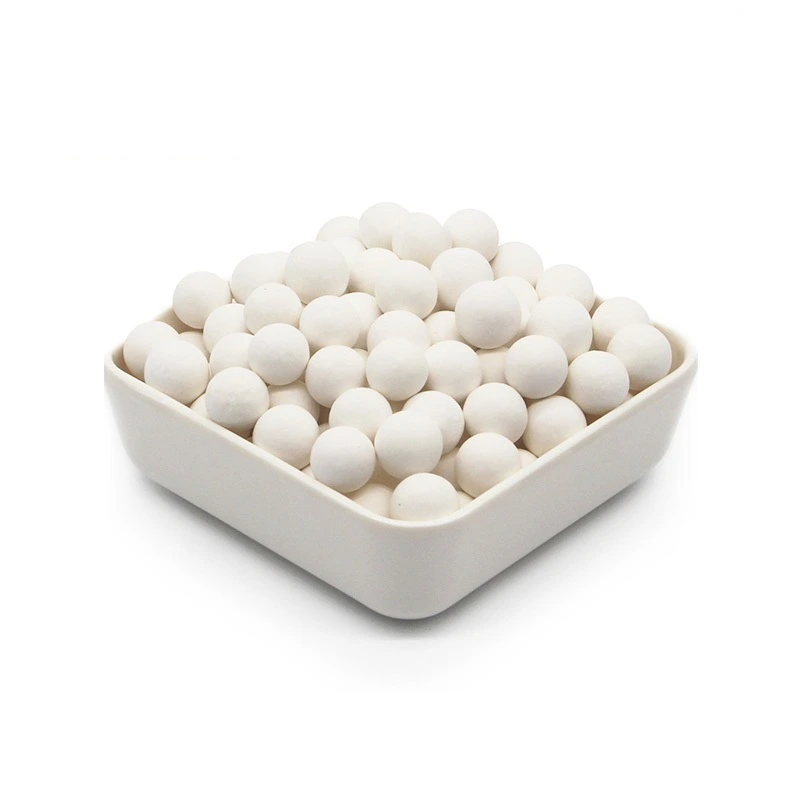
Activated Alumina (BET 300-360 m²/g)
Industrial-grade activated alumina for acid-spill recovery, gas drying, and HF defluoridation applications. ISO 9001 certified. MOQ 1 MT.
View Product Details →