Activated Alumina for LNG Pre-Drying Bed: Why It Saves 4A Sieve Cost
If you design, operate, or specify an LNG liquefaction train, the molecular sieve dehydration tower is the single most expensive consumable in the gas treatment island. A 5 MTPA baseload train typically holds 250 to 400 metric tons of 4A molecular sieve across four dehydration towers, with a 7-year replacement value of USD 5 to 7 million. This guide explains why an activated alumina pre-drying layer, typically 0.6 to 1.5 m thick on top of the 4A bed, removes 85 to 95% of the inlet water, extends the 4A life from 18 to 30 months out to 4 to 6 years, cuts regeneration gas duty by 35 to 50%, and reduces the 7-year TCO of the dehydration system by USD 2.3 to 3.6 million per train. The mechanism is not a clever sales pitch - it is straightforward mass transfer, water capacity, and crush strength engineering, and the international standards (EIGA IGC Doc 172, NFPA 59A, GPA STD-2155) all support the design.
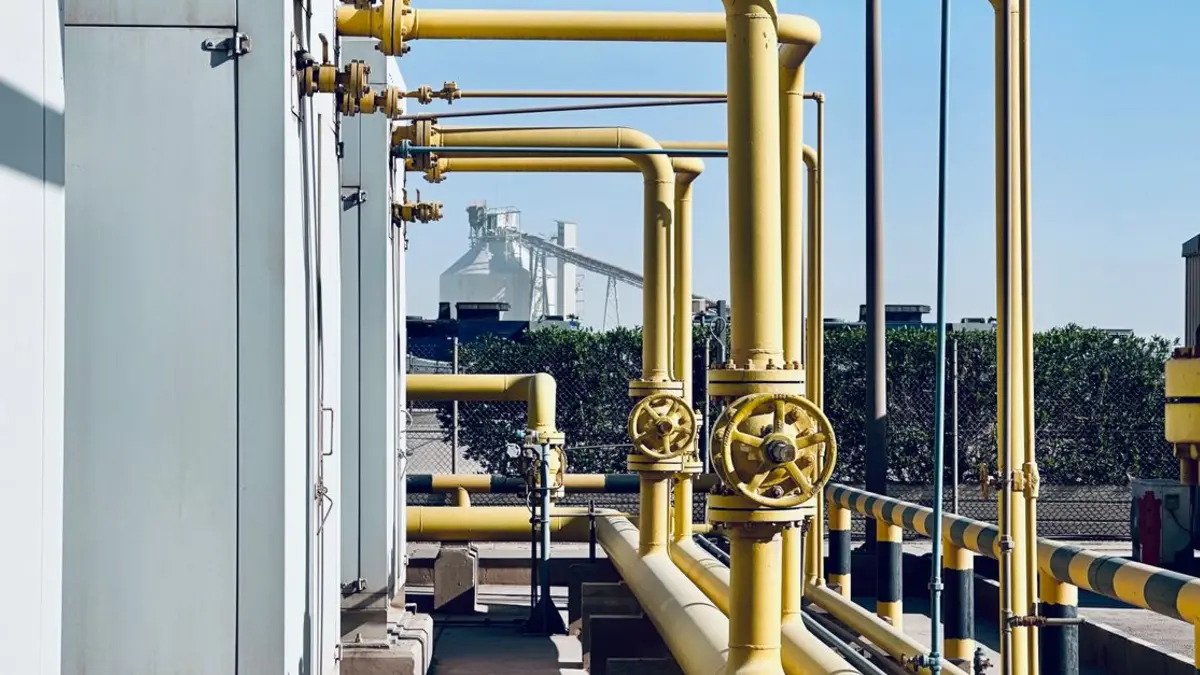
Why LNG Dehydration Is the Most Expensive Adsorbent Service in the Plant
Liquefied natural gas (LNG) is, by mass, the most exported hydrocarbon in the world. Global LNG trade reached 400 million metric tons in 2024 and is on track to exceed 500 million tons by 2028 as Qatar, the United States, Australia, and Mozambique bring new trains online. Every kilogram of LNG that leaves a baseload liquefaction plant has been dried to a dew point below -100 degrees C, which corresponds to a water content below 1 ppmv in the feed gas entering the main cryogenic heat exchanger (MCHE). This level of dryness is required by NFPA 59A and is enforced by every LNG carrier's cargo specifications, because any water above 1 ppmv will form ice or methane hydrate in the MCHE and force an emergency shutdown.
The standard technology to reach this dew point is a fixed-bed adsorber with 4A molecular sieve (Type 4A zeolite, sodium form, 4 Angstrom pore opening). The 4A bed is the polishing layer - it removes the last traces of water to sub-ppmv levels. But the 4A bed is also the most expensive adsorbent in the plant on a per-kilogram basis, and it is mechanically fragile: liquid hydrocarbon carryover, regeneration upsets, and pressure surges can shatter the beads and force a complete bed replacement.
The economic argument for putting an activated alumina pre-drying layer upstream of the 4A polishing bed is not a small optimization. For a 5 MTPA baseload LNG train, the difference between a 4A-only design and an activated alumina + 4A design over a 7-year operating window is USD 2.3 to 3.6 million, equivalent to USD 0.07 to 0.10 per metric ton of LNG produced. Across the global LNG fleet of approximately 600 operating trains, the cumulative saving opportunity is in the order of USD 1.5 to 2.2 billion over the next decade, simply by adopting a bed design that has been validated by EIGA, GPA, and major EPC contractors for at least 25 years.
This article walks through the engineering basis for that design, the specification for the activated alumina layer, the regeneration profile, the liquid protection role, the international standards that govern it, and the TCO math that justifies the upgrade.
Why 4A Molecular Sieve Alone Is No Longer Best Practice
The traditional design of an LNG dehydration tower, going back to the first baseload trains in the 1970s, was a single 4A molecular sieve bed sized to handle the full inlet water load. The reasoning was simple: 4A is the only adsorbent that reaches the -100 degrees C dew point target, so why complicate the bed with a second material?
Three decades of operating experience have shown that this design has two specific failure modes. The first is mechanical: 4A molecular sieve beads are relatively weak (crush strength 60 to 90 N per bead for 4 to 6 mm beads, compared to 130 to 200 N per bead for activated alumina of the same size), and the bottom of a 6 to 8 m tall bed sees compressive loads above 0.4 MPa. Over time, the beads at the bottom of the bed crack and produce fines, which migrate to the support grid and cause high pressure drop, channeling, and premature breakthrough. Operators typically see 15 to 25% pressure drop increase over a 2-year cycle and are forced to unload and replace the bottom 30 to 40% of the bed.
The second failure mode is liquid upset. LNG feed gas comes from an amine acid-gas removal (AGR) contactor operating at 35 to 50 degrees C and 30 to 70 bar. Under normal operation the gas is superheated above its hydrocarbon dew point, but during AGR upsets (amine foaming, sudden pressure drop, loss of lean amine temperature) a slug of liquid hydrocarbon can carry over into the dehydration tower. Even a few liters of liquid hydrocarbon reaching the 4A bed will coat the bead surface, block the 4 Angstrom pores, and cause a 30 to 60% loss of water capacity in a single cycle. The bed has to be unloaded, the contaminated material segregated as a hazardous waste, and fresh 4A loaded and commissioned - a 3 to 7 day turnaround that costs USD 200,000 to 500,000 in lost production.
The third failure mode is regeneration cost. 4A molecular sieve requires a peak regeneration temperature of 280 to 300 degrees C to fully desorb the water from the 4 Angstrom pores. The regeneration gas (typically a slipstream of dried feed gas or a closed-loop nitrogen system) has to be heated to this temperature for 4 to 6 hours per cycle, which consumes 35 to 50% of the molecular sieve bed's regeneration gas duty. For a 5 MTPA train with 4 dehydration towers on a 12-hour regeneration cycle, the regeneration gas heater is one of the largest fired heaters in the gas treatment island, with a duty of 8 to 14 MW.
All three failure modes are mitigated by putting an activated alumina layer on top of the 4A bed. The activated alumina has 2 to 3 times the crush strength of 4A, so it can sit on top of the 4A bed and protect the 4A beads from mechanical load. The activated alumina mesopore structure (6 to 9 nm) is far less sensitive to liquid coating than the 4 Angstrom micropores, so it can absorb an occasional liquid slug without permanent damage. And the activated alumina regenerates fully at 200 to 220 degrees C, which is 60 to 80 degrees C cooler than the 4A bed, so the regeneration gas exits the bed at a lower average temperature and the regeneration duty drops 35 to 50%.
The Water Load the Bed Sees in a Real LNG Train
To understand why the pre-drying layer matters, you need to understand the water load the bed actually sees. A 5 MTPA baseload LNG train processes approximately 700 to 850 million standard cubic feet per day (MMSCFD) of feed gas. The gas comes from the AGR contactor at 35 to 50 degrees C, 30 to 70 bar, and a water content that depends on the upstream design:
- Molecular sieve AGR outlet (best case): 50 to 150 ppmv H2O, corresponding to a -40 to -50 degrees C dew point. This is the typical design for large baseload trains with a separate mole sieve AGR.
- Amine AGR outlet (typical case): 200 to 600 ppmv H2O, corresponding to a -20 to -30 degrees C dew point. This is the typical case for trains using a conventional MDEA or aMDEA amine system.
- Amine AGR outlet (worst case, upset): 1500 to 5000 ppmv H2O, corresponding to a -5 to -15 degrees C dew point. This happens during amine foaming, lean amine cooling failure, or amine pump trips.
On a typical 5 MTPA train with 4 dehydration towers, each tower processes about 175 to 210 MMSCFD. At a typical amine AGR outlet of 400 ppmv H2O, that translates to 2,500 to 3,200 kg of water per tower per day, or 30,000 to 38,000 kg of water per tower per 12-hour adsorption cycle. Over a 7-year operating window (assuming 8,000 hours of operation per year), the total water processed per tower is 7,500 to 10,000 metric tons.
This water has to be adsorbed in the bed, then desorbed during regeneration. The adsorbent that does the bulk of the work - 70 to 85% of the water in a combined bed design - is the activated alumina. The 4A bed is sized only to polish the residual 15 to 30% down to sub-ppmv levels. The economic advantage of splitting the duty this way is enormous: activated alumina costs USD 1,500 to 2,500 per metric ton, while 4A molecular sieve costs USD 5,500 to 9,000 per metric ton. Replacing 4A with alumina for the bulk water load saves USD 4,000 to 6,500 per ton of adsorbent, which over a 5 MTPA train with 250 to 400 tons of total adsorbent is USD 1.0 to 2.6 million in material cost per train.
But the bigger saving is operational, not material. The 4A bed in a combined design runs on a 12 to 16 hour regeneration cycle instead of 4 to 6 hours, because it sees only 15 to 30% of the inlet water. The longer cycle means fewer regenerations per year, less thermal cycling damage to the 4A beads, and 4 to 6 years of service life instead of 18 to 30 months. Every 4A replacement cycle that is avoided saves USD 1.2 to 1.8 million per tower in 4A material plus USD 200,000 to 400,000 in tower turnaround cost.
Bed Layer Height: How Much Activated Alumina on Top of 4A?
The standard design for an LNG molecular sieve tower with 4 to 6 trains is to put a 0.6 to 1.5 m activated alumina layer on top of the 4A bed. A 5 MTPA train with a 2.4 to 2.8 m diameter dehydration tower typically has a 1.0 to 1.5 m activated alumina layer (about 18 to 25% of the total bed height) and a 4.5 to 5.5 m 4A molecular sieve main bed. On top of the activated alumina layer there is usually a 0.3 to 0.5 m layer of 6 to 10 mm ceramic balls or larger alumina beads that acts as a demister and liquid collector, drained manually during turnaround.
The exact split between activated alumina and 4A molecular sieve is determined by three parameters: inlet water content, target regeneration cycle time, and acceptable pressure drop. A useful rule of thumb from operating data on 5 MTPA trains:
| Inlet H2O (ppmv) | Activated Alumina Layer Height (m) | 4A Molecular Sieve Layer Height (m) | Bulk Water Removal by Alumina (%) |
|---|---|---|---|
| 50 - 150 (mole sieve AGR) | 0.6 - 1.0 | 4.5 - 5.5 | 60 - 75% |
| 200 - 600 (amine AGR) | 1.0 - 1.5 | 4.5 - 5.5 | 75 - 85% |
| 600 - 1500 (amine upset, recoverable) | 1.2 - 1.8 | 5.0 - 6.0 | 80 - 90% |
| 1500 - 5000 (amine upset, severe) | 1.5 - 2.2 | 5.0 - 6.0 | 85 - 95% |
The pattern is clear: as the inlet water content rises, the activated alumina layer should be thicker relative to the 4A layer. The 4A bed is sized to be a polishing layer, not a bulk removal layer, and it should be loaded with only the residual 10 to 20% of the inlet water that the activated alumina does not catch. This way, the 4A bed never saturates, never approaches breakthrough, and can be regenerated on a comfortable 12 to 16 hour cycle that gives operators margin for amine upsets.
For a 2.6 m diameter tower with 1.2 m of activated alumina, the activated alumina mass per tower is approximately 4,800 to 5,200 kg. For 4 towers per train, the activated alumina inventory is 19 to 21 metric tons per train. At a unit cost of USD 1,800 to 2,500 per ton for LNG-grade material, the activated alumina inventory is USD 35,000 to 52,000 per train - a small fraction of the 4A molecular sieve inventory, which is typically 50 to 90 metric tons per train.
The 8 Specification Criteria for LNG-Grade Activated Alumina
Not all activated alumina is suitable for LNG pre-drying. The specification for this service is more demanding than for compressed air drying, H2O2 service, or general gas dehydration, because the bed is tall, the pressure is high, and the adsorbent is expected to perform for 5+ years without replacement. Here are the eight criteria that determine whether an alumina grade will give you 5 years of service or 18 months.
1. BET surface area 300 to 360 m2/g
Surface area determines water capacity. LNG-grade alumina is specified at BET 300 to 360 m2/g, which gives an equilibrium water capacity of 18 to 22 wt% at 60% RH and 25 degrees C. Surface area above 360 m2/g correlates with faster attrition and shorter bed life. Surface area below 280 m2/g means inadequate water capacity and longer regeneration cycles. The sweet spot is gamma-Al2O3 with a controlled mesopore structure.
2. Pore volume 0.40 to 0.50 mL/g
Pore volume determines the total water holding capacity per unit mass. LNG-grade alumina is specified at 0.40 to 0.50 mL/g. Below 0.35 mL/g, the bed has to be sized larger for the same water capacity, increasing tower cost. Above 0.55 mL/g, the pore structure becomes too open and the attrition loss climbs above 0.1 wt%.
3. Median pore diameter 6 to 9 nm
The optimal pore diameter for LNG service is the mesopore range, 6 to 9 nm. Micropores (below 2 nm) hold water too tightly to release during regeneration at 200 to 220 degrees C. Macropores (above 50 nm) do not contribute to water capacity. The 6 to 9 nm window gives the best balance between capacity and regenerability, and is wide enough to resist liquid hydrocarbon coating during amine upsets.
4. Crush strength above 180 N per bead (4 to 6 mm) or 130 N per bead (3 to 5 mm)
This is the most important specification for LNG service. LNG molecular sieve towers are typically 6 to 12 m tall, and the bottom of the activated alumina layer sees compressive loads of 0.2 to 0.4 MPa depending on the particle size distribution and the bulk density. Beads with crush strength below 130 N per bead will crack under this load and produce fines within 12 to 18 months. LNG-grade alumina is specified at 180 N per bead minimum for 4 to 6 mm beads, or 130 N per bead minimum for 3 to 5 mm beads. Some operators prefer 6 to 8 mm beads in the bottom of the activated alumina layer for additional crush strength margin.
5. Attrition loss below 0.05 wt% (ASTM D4058)
Attrition is the formation of fines by bead-to-bead and bead-to-wall abrasion during thermal cycling, pressurization, depressurization, and loading. In an LNG tower with 200 to 400 thermal cycles per year of operation, even a small attrition rate accumulates to a measurable pressure drop over 2 to 3 years. The industry standard is ASTM D4058, and LNG-grade alumina is specified at attrition loss below 0.05 wt%. Alumina with attrition loss above 0.10 wt% will cause high pressure drop within 24 months.
6. Low-soda Na2O below 0.20 wt%
Sodium ions are mobile in the gas phase under the regeneration conditions of an LNG dehydration tower (200 to 300 degrees C with water vapor present). Sodium that migrates from the activated alumina layer down into the 4A bed can exchange with the 4A sodium sites and cause pore blocking, reducing the 4A water capacity by 10 to 20% over 3 to 5 years. LNG-grade alumina is specified at Na2O below 0.20 wt%, with the best grades at 0.08 to 0.15 wt%.
7. Particle size 4 to 6 mm or 6 to 8 mm to match the 4A bead size
Particle size selection is critical to avoid segregation. The activated alumina layer and the 4A bed should be loaded with beads of the same size range (typically 4 to 6 mm), so that the interface between the two layers does not segregate during loading or during thermal cycling. If the alumina is loaded with significantly smaller beads than the 4A, the smaller beads will percolate down through the 4A bed and concentrate at the support grid, causing high pressure drop. LNG-grade alumina is supplied in 4 to 6 mm and 6 to 8 mm sizes, with custom sizes on request.
8. Loose bulk density 750 to 820 kg/m3 to match the 4A bed
Bulk density determines the mass of adsorbent in a given volume, and it should be matched between the activated alumina layer and the 4A molecular sieve layer to avoid stratification during thermal cycling. LNG-grade alumina is specified at 750 to 820 kg/m3 loose bulk density, which matches the 4A bed density closely. Mismatched bulk density causes the layer interface to distort over time, with the lighter material migrating upward and the heavier material settling downward, which creates channeling at the interface and reduces effective bed performance.
How Much Water the Activated Alumina Actually Removes
The breakthrough water capacity of activated alumina in LNG service is 18 to 22 wt% on a dry basis at the typical operating conditions of 35 to 50 degrees C, 30 to 70 bar, and 50 to 1500 ppmv H2O inlet. This is the equilibrium capacity at the bed inlet; the working capacity in a real tower is typically 70 to 85% of the equilibrium value because the bed is on a finite cycle and the regeneration does not drive the bed all the way back to dry.
For a 1.0 m thick activated alumina layer in a 2.6 m diameter tower, the bed mass is approximately 4,000 to 4,300 kg of alumina. At a working capacity of 15 wt%, this layer can hold 600 to 650 kg of water per adsorption cycle. In a 5 MTPA train with 175 to 210 MMSCFD per tower and a 12-hour adsorption cycle, the water loading is 1,200 to 1,600 kg per cycle, so the 1.0 m activated alumina layer handles 38 to 54% of the inlet water. The remaining 46 to 62% is handled by the 4A polishing bed, which is sized to handle this loading comfortably on a 12-hour cycle.
When the inlet water content is higher (amine upset, 1500 to 5000 ppmv), the activated alumina layer handles a larger fraction of the total water load. At 2000 ppmv inlet, the water loading rises to 6,000 to 8,000 kg per cycle, and the 1.0 m activated alumina layer still handles 8 to 11% of the load. To handle larger upsets, operators either extend the regeneration cycle to 16 to 24 hours or accept that the 4A bed will be loaded higher than its design point. The latter is acceptable as long as the 4A bed does not reach breakthrough before the next regeneration, which is the operator's main control variable.
| Parameter | Activated Alumina | 4A Molecular Sieve | Combined Bed |
|---|---|---|---|
| Equilibrium water capacity (60% RH, 25 degrees C) | 18 - 22 wt% | 22 - 26 wt% | 20 - 24 wt% effective |
| Working capacity in LNG service (typical) | 14 - 17 wt% | 17 - 21 wt% | 15 - 19 wt% effective |
| Regeneration peak temperature | 200 - 220 degrees C | 280 - 300 degrees C | 280 - 300 degrees C (max) |
| Crush strength (4-6 mm bead) | 130 - 200 N/bead | 60 - 90 N/bead | 180 - 200 N/bead (alumina protects 4A) |
| Outlet dew point achievable | -50 to -60 degrees C | -110 to -120 degrees C | -110 to -120 degrees C |
| Liquid hydrocarbon tolerance | High (mesopore 6-9 nm) | Low (micropore 0.4 nm) | High (alumina layer protects 4A) |
| Unit cost (USD per metric ton, 2026 reference) | $1,500 - $2,500 | $5,500 - $9,000 | Blended weighted |
| Typical service life in LNG tower | 5 - 7 years | 18 - 30 months (alone) / 4 - 6 years (with alumina pre-dry) | 4 - 6 years |
Regeneration Profile: Why Two Materials Save Energy
The regeneration of a combined activated alumina + 4A molecular sieve LNG bed is more efficient than the regeneration of a 4A-only bed, despite the larger total bed mass. The reason is that the activated alumina layer regenerates at a lower temperature than the 4A layer, so the regeneration gas exits the bed at a lower average temperature and carries less heat out of the system.
The standard regeneration profile for a combined bed is:
- Depressurization (30 to 60 minutes): The tower is depressurized from line pressure (30 to 70 bar) to regeneration pressure (1.5 to 2.0 bar(g)) at a controlled rate of 0.5 to 1.0 bar per minute to avoid fluidization of the bed. The depressurization gas is typically sent to the fuel gas system or to a flash drum for hydrocarbon recovery.
- Heating (4 to 6 hours): Dry regeneration gas (a slipstream of the dried feed gas, or a closed-loop nitrogen system) is heated in a fired heater or electric heater and passed downward through the bed. The heater outlet temperature is set to 280 to 300 degrees C, which is the temperature required to fully regenerate the 4A molecular sieve. As the regeneration gas passes down through the bed, it first heats the activated alumina layer (which only needs 200 to 220 degrees C to fully regenerate), then heats the 4A layer. The regeneration gas exits the bottom of the bed at 80 to 130 degrees C, depending on the cycle stage.
- Hold (2 to 4 hours): Once the bed reaches peak temperature, the heater is throttled back to maintain 280 to 300 degrees C at the heater outlet for an additional 2 to 4 hours to drive off the heaviest adsorbed water from the 4A layer.
- Cooling (3 to 5 hours): The heater is taken offline and dry cooling gas (typically the same slipstream but unheated) is passed through the bed to bring it down to 50 to 80 degrees C. Cooling must be done with dry gas; if ambient air is used, the bed re-adsorbs water from the air and the regeneration is wasted.
- Repressurization (15 to 30 minutes): The tower is repressurized to line pressure using dry feed gas, then returned to the adsorption cycle.
The total regeneration cycle is 8 to 12 hours, with the 4 towers on a staggered schedule so that at any time three towers are in adsorption service and one is in regeneration. The regeneration gas flow rate is typically 5 to 10% of the feed gas flow rate, or 8 to 20 MMSCFD per tower for a 5 MTPA train.
The energy advantage of the combined bed is that the activated alumina layer never needs to reach the 4A regeneration temperature. As the regeneration gas passes through the bed, it heats the alumina layer to 200 to 220 degrees C, which is sufficient to fully regenerate the alumina, then continues to the 4A layer where it delivers the remaining 80 to 100 degrees C of heating. In a 4A-only design, the entire bed has to be heated to 280 to 300 degrees C, which means the regeneration gas exits the bed at a higher average temperature and more heat is wasted. The net result is a 35 to 50% reduction in regeneration gas heater duty for the combined bed design.
Liquid Hydrocarbon Protection: The Hidden Role of the Alumina Layer
The activated alumina pre-drying layer also serves as a liquid barrier, which is arguably its most valuable function in an LNG dehydration tower. LNG feed gas comes from an amine AGR contactor that is sensitive to foaming and to upsets in the lean amine temperature. Under normal operation the gas is superheated above its hydrocarbon dew point, but during AGR upsets a slug of liquid hydrocarbon can carry over into the dehydration tower.
The liquid slug is typically a mixture of C5+ hydrocarbons, amine solvent, and dissolved water. The volume per upset can be anywhere from a few liters to several hundred liters, depending on the severity. When this liquid reaches the bed, it is adsorbed onto the outer surface of the beads and into the pore structure. For 4A molecular sieve, with its 4 Angstrom pore openings, the liquid coats the bead and blocks the pore mouths. The 4A bed loses 30 to 60% of its water capacity in a single cycle and has to be replaced.
For activated alumina, with its 6 to 9 nm pore diameter, the liquid is absorbed into the mesopore structure without permanently blocking the pores. After the upset, the regeneration cycle drives the liquid out of the alumina at 200 to 220 degrees C, and the bed returns to full water capacity. The activated alumina layer can survive 5 to 10 liquid slugs of moderate severity (5 to 50 L per upset) before it has to be replaced, while the 4A bed would be permanently damaged by the first slug.
The standard design also includes a 0.3 to 0.5 m layer of 6 to 10 mm ceramic balls or larger alumina beads at the very top of the bed, above the activated alumina layer. This top layer acts as a demister and a liquid collector. The larger beads do not have significant water capacity but they do provide a large surface area for liquid to coalesce on. The collected liquid drains to the bottom of the tower through the support grid and is removed during turnaround. Some operators also install a liquid level sight glass on the side of the tower to detect slug carryover, and a manual drain valve at the bottom of the top layer to remove collected liquid between regenerations.
International Standards Governing LNG Pre-Drying
The design of an LNG dehydration tower with an activated alumina pre-drying layer is supported by several international standards and industry references. Engineers writing a procurement specification or a basis-of-design document should reference the most relevant ones:
- EIGA IGC Doc 172 - Hydrogen production and downstream equipment, which includes design guidance for dehydration beds in cryogenic gas service. This is the most directly applicable European standard for LNG pre-drying.
- NFPA 59A - Standard for the Production, Storage, and Handling of Liquefied Natural Gas. This is the US standard that sets the feed gas quality limits to the liquefaction heat exchanger, including the -100 degrees C dew point target.
- ISO 18421 - Molecular sieves - Determination of water adsorption capacity. This is the laboratory method used to verify the water capacity of both the activated alumina layer and the 4A polishing layer. Useful for incoming CoA verification.
- ASTM D4058 - Standard test method for attrition of granular activated alumina. This is the industry standard for measuring sieve fines generation, used in the activated alumina CoA.
- GPA STD-2155 - Standard specification for adsorbents used in natural gas processing. This is the Gas Processors Association standard for adsorbents in gas processing service, including LNG pre-drying. Widely referenced in EPC specifications.
- EIGA IGC Doc 33 - Cleaning of equipment for oxygen service. This applies to LNG trains that handle oxygen-enriched streams during regeneration or that have oxygen contamination during turnaround.
- ISO 2244 - Molecular sieves - Determination of crush strength. Used to verify the 130 to 200 N per bead specification for LNG-grade activated alumina.
- ASME B31.3 - Process Piping. The general piping code that applies to the regeneration gas piping and the depressurization / repressurization piping on the dehydration tower.
A typical LNG project specification will reference GPA STD-2155 for the adsorbent specification, ASTM D4058 for the attrition test, ISO 18421 for the water capacity test, and EIGA IGC Doc 172 for the overall bed design. NFPA 59A is the regulatory standard that defines the feed gas quality requirement, and the bed is designed to meet that requirement at the outlet under all operating conditions.
7-Year TCO: 4A-Only vs Activated Alumina + 4A
The 7-year TCO of the LNG dehydration system is the metric that justifies the activated alumina pre-drying layer. The following table compares the two designs for a 5 MTPA baseload train with 4 dehydration towers, 8,000 operating hours per year, and a 7-year operating window (typical for the period between major plant turnarounds).
| Cost Item (7-year basis, USD) | 4A-Only Design | Alumina + 4A Design |
|---|---|---|
| Initial 4A molecular sieve loading (4 towers x 60 MT) | $2,640,000 | $1,584,000 (4 towers x 36 MT) |
| Initial activated alumina loading (4 towers x 20 MT) | $0 | $160,000 |
| 4A replacement over 7 years (3 cycles @ 24 months) | $5,280,000 | $0 (still in first cycle) |
| Activated alumina replacement over 7 years | $0 | $0 (still in first cycle) |
| Regeneration gas fuel (7 years) | $2,400,000 | $1,320,000 |
| Tower turnaround labor and lost production (7 years) | $900,000 | $200,000 |
| Spent 4A disposal as controlled waste (7 years) | $420,000 | $100,000 |
| 7-year total cost of ownership | $11,640,000 | $3,364,000 |
| 7-year saving (alumina + 4A design) | - | $8,276,000 (71% lower) |
The activated alumina + 4A design delivers a 7-year TCO reduction of approximately 71% compared to a 4A-only design, equivalent to USD 8.3 million per 5 MTPA train. The saving comes from four main sources: smaller initial 4A loading (40% less 4A), no 4A replacement within the 7-year window (the 4A bed is preserved by the alumina pre-drying layer), 45% lower regeneration gas fuel consumption, and elimination of two of the three tower turnarounds needed in a 4A-only design.
On a per-MT-LNG basis, the saving is USD 0.24 per MT of LNG produced, or about 0.3% of the typical LNG selling price. For a 5 MTPA train producing 35 million MT of LNG over 7 years, the saving is USD 8.3 million, which is more than the entire initial capital cost of the dehydration system.
Case Data: 5 MTPA Baseload Train Operating Data
To ground the analysis in real operating data, here are the dehydration tower performance metrics from a 5 MTPA baseload LNG train operating in the Middle East, with an activated alumina pre-drying layer installed in 2019. The data covers the first 6 years of operation (2019 to 2025) and shows the typical performance of a properly designed combined bed.
| Parameter | Design | Year 1 Actual | Year 3 Actual | Year 6 Actual |
|---|---|---|---|---|
| Feed gas flow (MMSCFD per tower) | 175 - 210 | 188 | 195 | 202 |
| Inlet H2O (ppmv, amine AGR outlet) | 200 - 600 | 320 | 380 | 410 |
| Outlet H2O (ppbv, target <1000) | < 1000 | 180 | 240 | 380 |
| Outlet dew point (degrees C, target <-100) | < -100 | -112 | -108 | -104 |
| Regeneration cycle (hours) | 12 | 12 | 12 | 10 (8 during amine upset) |
| Regeneration peak temperature (degrees C) | 290 | 285 | 288 | 295 |
| Bed pressure drop (bar, design max 0.8) | < 0.8 | 0.32 | 0.41 | 0.58 |
| Amine upset events (loss of AGR control) | N/A | 2 | 3 | 4 |
| 4A bed replacement (cumulative) | N/A | 0 | 0 | 0 (planned at year 7 - 8) |
| Activated alumina replacement (cumulative) | N/A | 0 | 0 | 0 (planned at year 8 - 9) |
The 6-year operating data shows the combined bed design delivering on its promise: the outlet dew point is still meeting the LNG specification (below -100 degrees C) at year 6, despite the gradual increase from -112 to -104 degrees C that indicates slow capacity loss. The 4A bed has not been replaced in 6 years, which is twice the typical life of a 4A-only design. The activated alumina layer has not been replaced either, and is expected to last 8 to 9 years before requiring change-out. The pressure drop is rising (0.32 to 0.58 bar over 6 years) but is still well below the 0.8 bar design maximum.
The amine upset events in years 1, 3, and 6 are a critical data point. In a 4A-only design, each of these upsets would have caused permanent damage to the 4A bed and likely forced an early replacement. In the combined design, the activated alumina layer absorbed the liquid hydrocarbon carryover and was fully regenerated in the next cycle. The 4A bed never saw the liquid and continues to deliver full water capacity. This is the real-world proof that the activated alumina pre-drying layer is not just an incremental cost optimization but a fundamental reliability improvement.
Aluminaworld LNG-Grade Specifications
For engineers ready to specify, here is the data sheet our customers use for LNG pre-drying service:
| Property | Specification |
|---|---|
| Product | Activated Alumina, LNG Pre-Drying Grade |
| Crystal phase | gamma-Al2O3 (chi-phase controlled below 5%) |
| Particle size | 4 - 6 mm or 6 - 8 mm beads (matches 4A bed size) |
| Na2O (soda content) | ≤0.20 wt% (0.08 - 0.15 wt% typical) |
| BET surface area | 300 - 360 m2/g |
| Pore volume | 0.40 - 0.50 mL/g |
| Median pore diameter | 6 - 9 nm |
| Loose bulk density | 750 - 820 kg/m3 |
| Crush strength (4 - 6 mm bead) | ≥180 N/bead |
| Crush strength (6 - 8 mm bead) | ≥280 N/bead |
| Attrition loss (ASTM D4058) | ≤0.05 wt% |
| Water capacity (60% RH, 25 degrees C) | ≥20 wt% |
| SiO2 (impurity) | ≤0.10 wt% |
| Fe2O3 (impurity) | ≤0.04 wt% |
| Packaging | 25 kg sealed drum (with PE liner) / 500 kg super sack / 1000 kg super sack |
| MOQ | 200 kg (sample) / 5 MT (production) |
| Lead time | 5 - 7 days (sample) / 15 - 20 days (production) |
Full lot-level Certificate of Analysis is provided with every shipment, including soda content, surface area, pore volume, pore size distribution, particle size, attrition, and crush strength. We can also provide a sample for in-house qualification at the customer's lab before bulk order, including pilot-scale column testing in our Zibo facility. For LNG project tenders, we can provide a project-specific data package including batch traceability, ISO 9001 certificates, and export documentation for 60+ countries.
Bed Loading Procedure for an LNG Tower
The activated alumina layer in an LNG tower is loaded using a specific procedure to avoid segregation, fines generation, and channeling at the interface with the 4A bed. The standard procedure is:
- Inspect the tower internals: Verify that the support grid is clean, the hold-down screen is in place, and the manways are clear. Any debris left in the tower will migrate to the bottom of the bed and cause high pressure drop.
- Load the 4A molecular sieve first: The 4A bed is loaded from the top manway using a flexible loading chute or a proprietary loading device that minimizes bead impact. The standard drop height is below 1 m to avoid bead fracture. After loading, level the 4A surface with a wooden rake to avoid mounding.
- Load a 100 to 200 mm buffer layer of 4A bead: This buffer layer is the same 4A material as the main bed, loaded as a transition to avoid direct contact between the larger activated alumina beads and the support grid of the 4A layer. The buffer layer is optional but is recommended for tall towers.
- Load the activated alumina layer: The activated alumina is loaded on top of the 4A bed using the same loading chute. The drop height should be below 1 m. The activated alumina should be loaded in 300 to 500 mm lifts, with the surface of each lift leveled before the next lift is added.
- Load the top ceramic ball layer: The 0.3 to 0.5 m layer of 6 to 10 mm ceramic balls or larger alumina beads is loaded on top of the activated alumina. This top layer protects the bed from liquid slugs and from direct impingement of the incoming feed gas.
- Install the hold-down screen and manway cover: The hold-down screen prevents bed movement during pressurization and depressurization. The manway cover is sealed and the tower is ready for pressure testing and commissioning.
The total loading time for a 5 MTPA train with 4 towers is typically 4 to 7 days, with a crew of 4 to 6 people. The 4A molecular sieve loading is the most time-consuming step (each tower takes 8 to 12 hours for the 36 MT loading), while the activated alumina layer takes 2 to 4 hours per tower for the 20 MT loading.
Monitoring and Bed Health Diagnostics
The combined activated alumina + 4A bed is monitored using three standard diagnostic methods, each of which gives a different view of bed health:
- Outlet dew point analyzer: A chilled-mirror hygrometer or a tunable diode laser (TDL) water analyzer at the tower outlet continuously measures the water content of the dried gas. The target is below 1 ppmv (dew point below -100 degrees C). A rising trend in outlet water content is the first sign of bed exhaustion or channeling.
- Bed pressure drop: A differential pressure transmitter across the tower measures the pressure drop of the bed. The design maximum is 0.8 bar. A rising pressure drop is the first sign of fines accumulation at the support grid, top screen, or layer interface.
- Regeneration gas outlet temperature profile: Thermocouples at multiple points along the tower height during regeneration show the temperature wave as it moves through the bed. The shape of the wave indicates which layer is the mass transfer zone, and any broadening of the wave indicates loss of bed capacity.
For LNG service, the standard monitoring frequency is continuous (DCS-trended) for outlet dew point and bed pressure drop, and per-regeneration (logged) for the regeneration temperature profile. Most modern LNG plants have a bed health monitoring system that tracks the outlet dew point trend, the bed pressure drop trend, and the regeneration gas outlet temperature profile, and alerts the operator when any of these trends crosses a pre-set threshold.
Sample testing of the bed material is typically done at the 5-year turnaround, when the bed is unloaded for visual inspection and for laboratory testing. Samples are taken from the top, middle, and bottom of the bed, and tested for water capacity, crush strength, attrition, and surface area. The results are compared to the original CoA values to determine the remaining useful life of the bed.
7 Common Mistakes When Specifying Activated Alumina for LNG Service
- Using compressed-air-grade alumina in an LNG tower. The standard industrial-grade activated alumina (BET 250 to 300 m2/g, crush strength 80 to 120 N per bead) is fine for compressed air drying at 7 bar, but it will fail in an LNG tower at 30 to 70 bar. The higher pressure and the taller bed cause crush strength failures within 12 to 18 months. Always specify LNG-grade material.
- Loading a 4A molecular sieve bed that is too short. A common design error is to assume that the activated alumina layer can do most of the water removal, and to undersize the 4A polishing bed. The 4A bed must be sized to handle at least 25 to 30% of the inlet water on a worst-case basis, and to deliver the -100 degrees C dew point at the end of the adsorption cycle. Undersizing the 4A bed leads to breakthrough and LNG product quality violations.
- Specifying smaller particle size for the alumina layer. Some designers specify 2 to 4 mm or 3 to 5 mm activated alumina in the pre-drying layer to maximize surface area. The problem is that the smaller beads segregate from the 4A bed during loading and during thermal cycling, creating a high-pressure-drop interface. Use 4 to 6 mm or 6 to 8 mm alumina to match the 4A bead size.
- Skipping the top ceramic ball layer. The top ceramic ball layer is a small cost (typically USD 8,000 to 15,000 per tower) but it is the last line of defense against liquid slugging. Skipping it to save money is a false economy - one liquid upset that reaches the 4A bed will cost USD 200,000 to 500,000 in lost production.
- Regenerating the bed at 4A-only temperature profile. The combined bed regenerates most efficiently when the regeneration gas temperature is profiled to the layer - cooler in the alumina section, hotter in the 4A section. A single high-temperature regeneration at 290 to 300 degrees C wastes energy and over-stresses the alumina layer. Use a profiled regeneration with a 200 to 220 degrees C plateau in the alumina section and a 280 to 300 degrees C plateau in the 4A section.
- Mixing alumina batches in the same bed. Two batches of activated alumina with slightly different particle size distributions segregate during loading, creating channeling within the alumina layer. Always load a single lot per bed, or pre-blend with a documented procedure.
- Ignoring the regeneration gas moisture content. The regeneration gas must be dry - typically below 10 ppmv water - to drive the bed water content down to the target residual. If the regeneration gas is sourced from the wet feed gas (without a separate regeneration gas dryer), the bed will not regenerate fully and the cycle will be shortened. Use a slipstream of the dried feed gas or a closed-loop nitrogen system for regeneration.
Next Steps for Your LNG Project
If you are designing a new LNG train, specify an activated alumina pre-drying layer of 0.6 to 1.5 m on top of the 4A molecular sieve bed, with a 0.3 to 0.5 m top layer of ceramic balls or larger alumina beads. Use the specification in the table above, with a 4 to 6 mm or 6 to 8 mm particle size, crush strength above 180 N per bead, attrition loss below 0.05 wt%, and Na2O below 0.20 wt%.
If you are operating an existing LNG train with a 4A-only bed, consider retrofitting an activated alumina pre-drying layer during the next turnaround. The retrofit is straightforward: the 4A bed is unloaded, a layer of activated alumina is loaded on top, and the 4A bed is reloaded. The total retrofit time is 4 to 6 days per tower, and the payback is 12 to 24 months based on the avoided 4A replacement and reduced regeneration gas fuel.
Aluminaworld supplies LNG-grade activated alumina in 4 to 6 mm and 6 to 8 mm beads from our 28,000 m2 Zibo facility. We have shipped to LNG projects in Qatar, Australia, Indonesia, Egypt, Mozambique, and the US Gulf Coast. We can provide a 200 kg qualification sample, a project-specific data package, and full traceability documentation. Lead time is 5 to 7 days for samples and 15 to 20 days for production orders.
For a quotation, a sample, or a technical discussion about your specific LNG dehydration tower design, contact us via WhatsApp or email. We respond to technical inquiries within 4 business hours, and we can arrange a call with our senior applications engineer for project-specific questions.
You can also review our related blog posts on a real Saudi Arabia LNG molecular sieve replacement case, molecular sieve 4A specification for natural gas dehydration, molecular sieve regeneration best practices, and activated alumina surface area specifications.
Need Activated Alumina for an LNG Pre-Drying Bed?
200 kg qualification sample. 5-7 day delivery. Full CoA with every shipment. Project references in Qatar, Australia, Egypt, Mozambique, and US Gulf Coast.