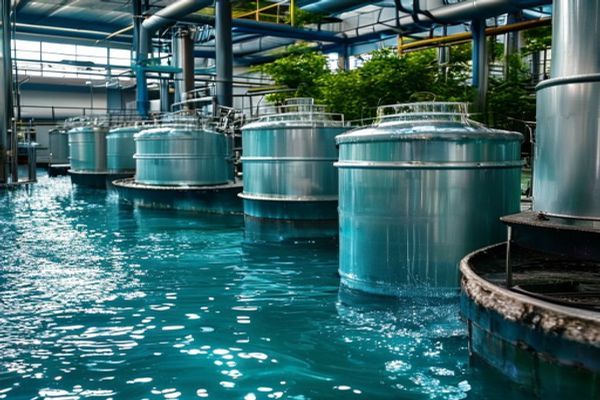
Molecular sieve 4A is the sodium form of type A zeolite with 4-angstrom pore openings. It is the workhorse desiccant for natural gas processing, where it must drop inlet water content from saturated pipeline conditions (typically 500 to 1,500 ppm) down to pipeline-spec levels below 1 ppm, and do it across a temperature swing that varies from minus 30°C in winter to plus 50°C in summer.
molecular sieve bed sizing formulaRoughly 40% of our 4A production (about 1,200 MT/month) goes to natural gas treatment skid manufacturers in the US Gulf Coast, the Middle East (UAE, Saudi Arabia, Qatar), and Southeast Asia (Malaysia, Indonesia). Another 25% goes to LNG pre-treatment; 20% to refrigerant drying; and the balance to smaller specialty gas and air-separation applications.
Below we share bed sizing formulas, regeneration cycle data, and three real installation cases: two onshore gas processing plants and one floating LNG (FLNG) vessel.
1. Pipeline-Spec Water Content: Why Below 1 ppm
Natural gas pipelines require water content below 7 lb/MMscf (about 112 mg/Sm³) to prevent hydrate formation at high pressure. LNG plants go further: inlet to the liquefaction heat exchanger must be below 1 ppmv to prevent ice plugging that would shut down the entire train within hours.
4A achieves this by adsorbing water at 30 to 45°C and 30 to 70 bar pressure in the contactor, then releasing it during TSA regeneration at 250 to 300°C and 1 to 3 bar. The bed typically runs 8 to 24 hours per cycle depending on inlet conditions.
Bed Sizing Formula for Natural Gas Dehydration
Working capacity for 4A in sweet natural gas service: 8 to 10 wt% at standard regeneration temperature. For a 100 MMscfd gas plant with 1,000 ppm inlet water:
- Water to remove: 100 x 10^6 x 1,000 x 10^-6 / 24, approximately 4,170 g/hr = 4.17 kg/hr
- Per 24-hour cycle: 100 kg water removed per bed
- Bed mass required (at 9 wt% working capacity): 100 / 0.09 = 1,111 kg
- Bed volume (bulk density 0.72 g/mL): 1.54 m³
- Typical vessel: 1.0 m diameter by 2.0 m straight side (1.57 m³)
For LNG plants, we typically recommend two beds operating in parallel with a swing bed for redundancy. The third bed ensures the plant does not have to back off feed rate during a regeneration cycle.
2. FLNG Case Study: Dehydration on a Floating LNG Vessel
In Q4 2024 we delivered 28 MT of 4A in special vibration-resistant packaging for a floating LNG vessel operating offshore Mozambique. The constraint: bed motion tolerance under 3-meter wave conditions, and zero tolerance for fines generation (any dust would damage the compressor blades downstream).
Modifications to Standard 4A for FLNG Service
- Custom particle size: 2.5 to 5.0 mm beads (vs the standard 1.6 to 2.5 mm) to reduce pressure drop under motion
- Top-bed hold-down screen with 2 mm mesh
- Anti-channeling distribution plate
- Pre-attrition treatment: 24-hour factory vibration to remove in-service generation spikes
After 18 months of operation, the customer reports no measurable fines migration, capacity holding at 92% of fresh-sieve value, and zero unplanned regenerations. They are now our reference customer for FLNG-grade 4A in the Asia-Pacific region.
3. Contaminants that Poison 4A and How to Avoid Them
4A is robust against most sweet-gas contaminants, but several substances will irreversibly damage the bed:
Top 5 Contaminants and Their Effects
- H2S at concentrations above 100 ppm forms acid that reacts with the sodium cation, reducing capacity by 5 to 10% per year. Mitigation: H2S scavenger upstream.
- Mercaptans (R-SH) polymerize inside the pore structure. Above 50 ppm, expect 20% capacity loss within 6 months. Mitigation: molecular sieve 13X guard bed upstream of 4A.
- Compressor lube oil coats the external surface. As little as 1 ppm in the gas stream creates channeling and capacity loss. Mitigation: coalescing filter with 0.3 μm rating.
- Methanol (from upstream hydrate inhibitor carry-over) is adsorbed competitively with water, reducing working capacity by up to 30%. Mitigation: methanol recovery skid upstream.
- Salt aerosols from offshore platforms. Even 0.1 ppm over a year creates a crust that blocks pore mouths. Mitigation: saltwater wash and brine-mist eliminator.
A contaminated 4A bed typically cannot be regenerated in place; it must be replaced. The economic hit ranges from $80,000 (small bed) to $1.2M (large LNG train). Front-end filtration pays back in less than one bed change.
Frequently Asked Questions
What is the lifetime of 4A in natural gas service?
Under sweet-gas conditions with proper filtration, expect 5 to 7 years before capacity drops below 80% of fresh value. Sour gas or contaminated streams can cut this to 18 to 36 months.
Can 4A handle both water and CO2?
4A adsorbs water preferentially over CO2, but at high CO2 partial pressure (above 5 bar) co-adsorption reduces water capacity by 15 to 25%. For high-CO2 fields, consider 3A or a layered bed.
What is the regeneration energy per kg of water removed?
Approximately 3,500 to 4,500 kJ per kg water, depending on bed geometry and insulation. This translates to 1.0 to 1.3 kWh per kg water for the full TSA cycle.
Is 4A suitable for biogas upgrading?
Yes, but with caveats: H2S must be removed upstream (typically iron sponge or activated carbon), and the regeneration cycle should be shortened to 6 to 8 hours because biogas moisture content is highly variable.
What certification comes with each shipment?
Every batch ships with COA showing particle size distribution, equilibrium capacity, attrition loss, and crush strength. ISO 9001:2015 and ISO 14001:2015 documentation included.
Related Molecular Sieve Articles
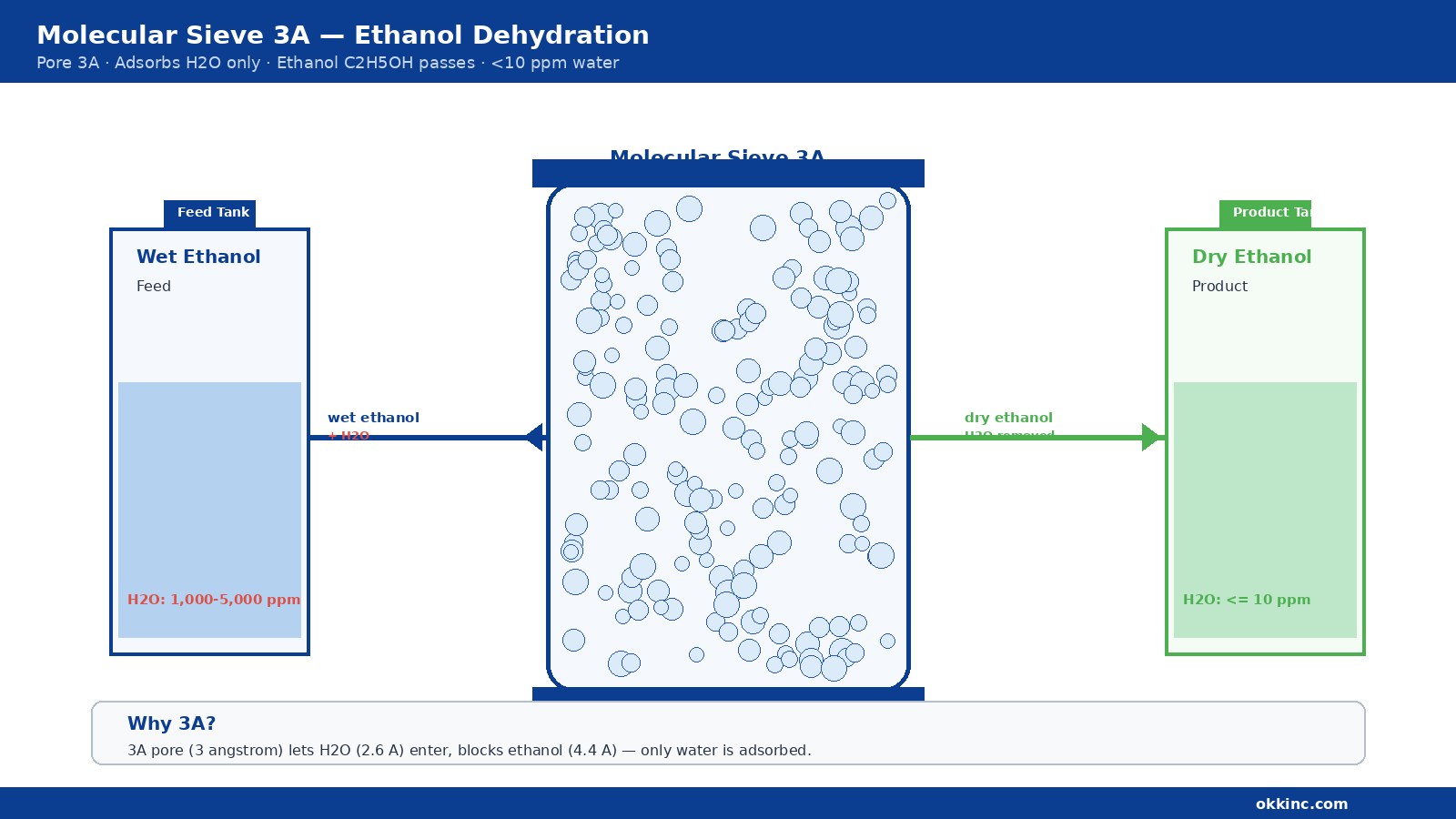
Molecular Sieve 3A: Ethanol Dehydration and Insulating Glass Applications
Molecular Sieve 5A vs 13X in PSA Hydrogen Purification: Which Grade Wins?
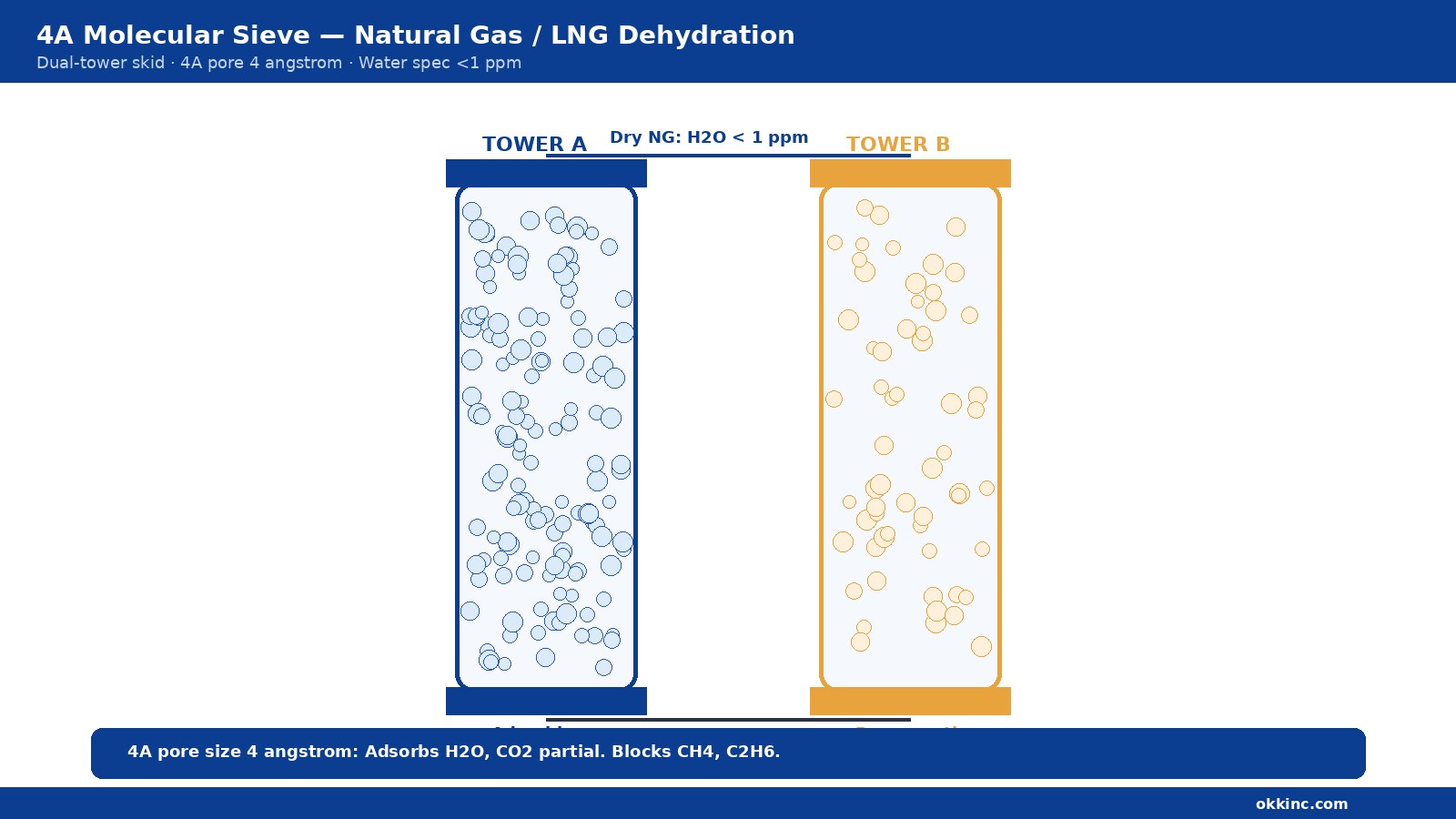
How to Regenerate Molecular Sieve: Temperature, Pressure and Cycle Best Practices
molecular sieve bed sizing formula
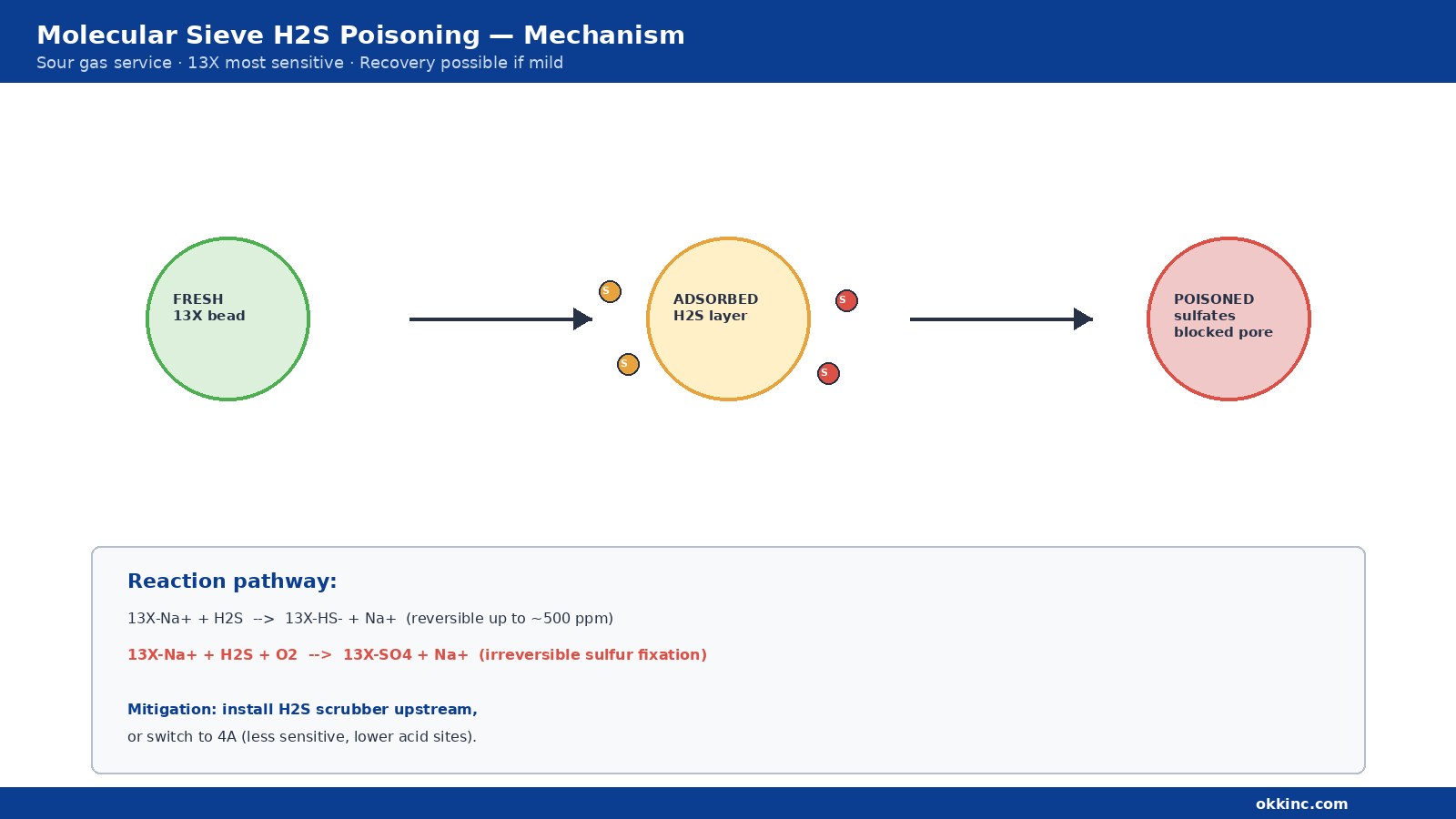
molecular sieve poisoning in sour gas
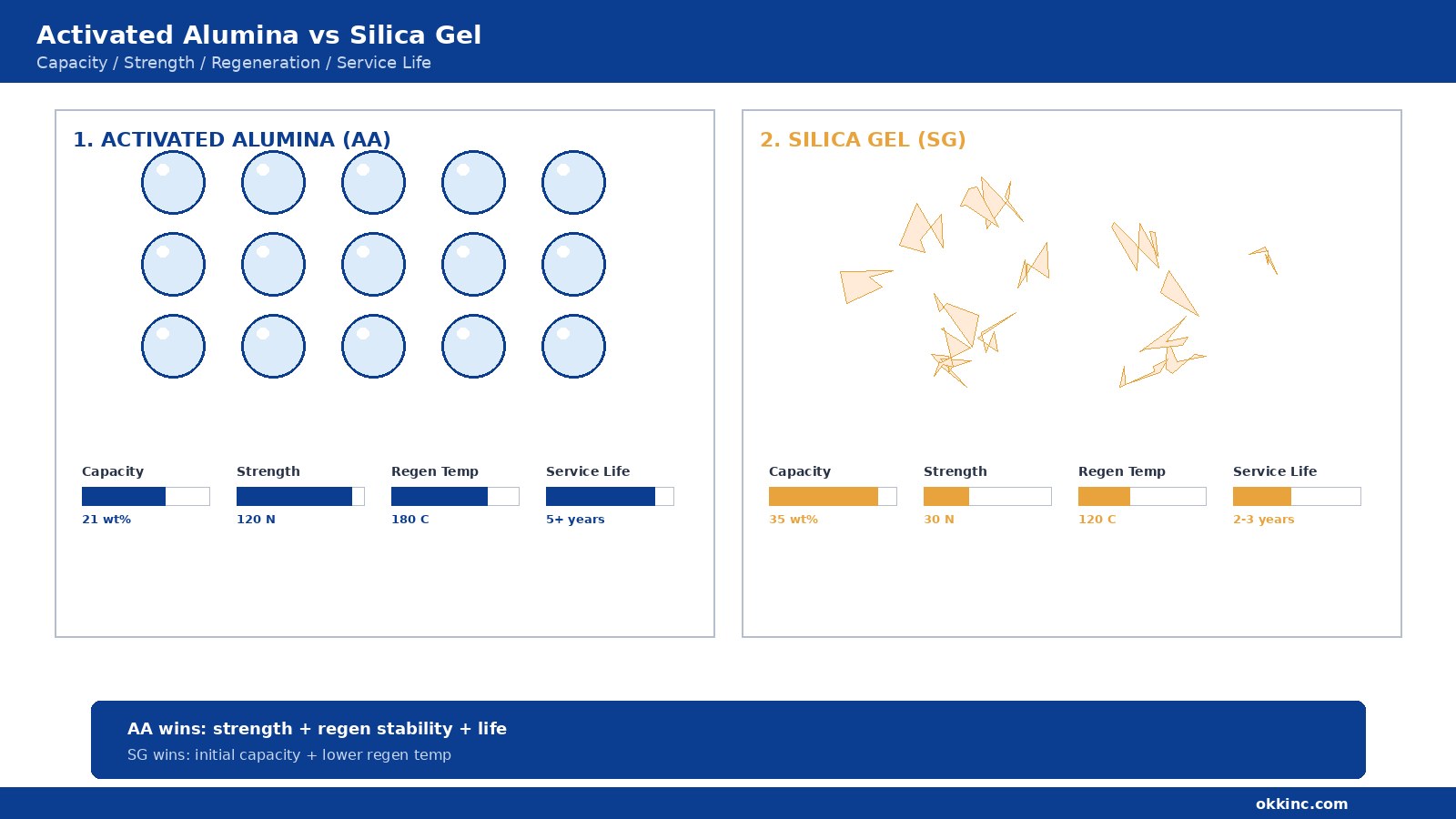
Activated Alumina Vs Silica Gel Desiccant
Need a Quote or Free Sample?
Tell us your feed conditions and target outlet spec. Our engineers reply within 24 hours with a recommendation and a 1 kg free sample.