
ATH in Paper Coating: Brightness, Opacity and Ink Holdout
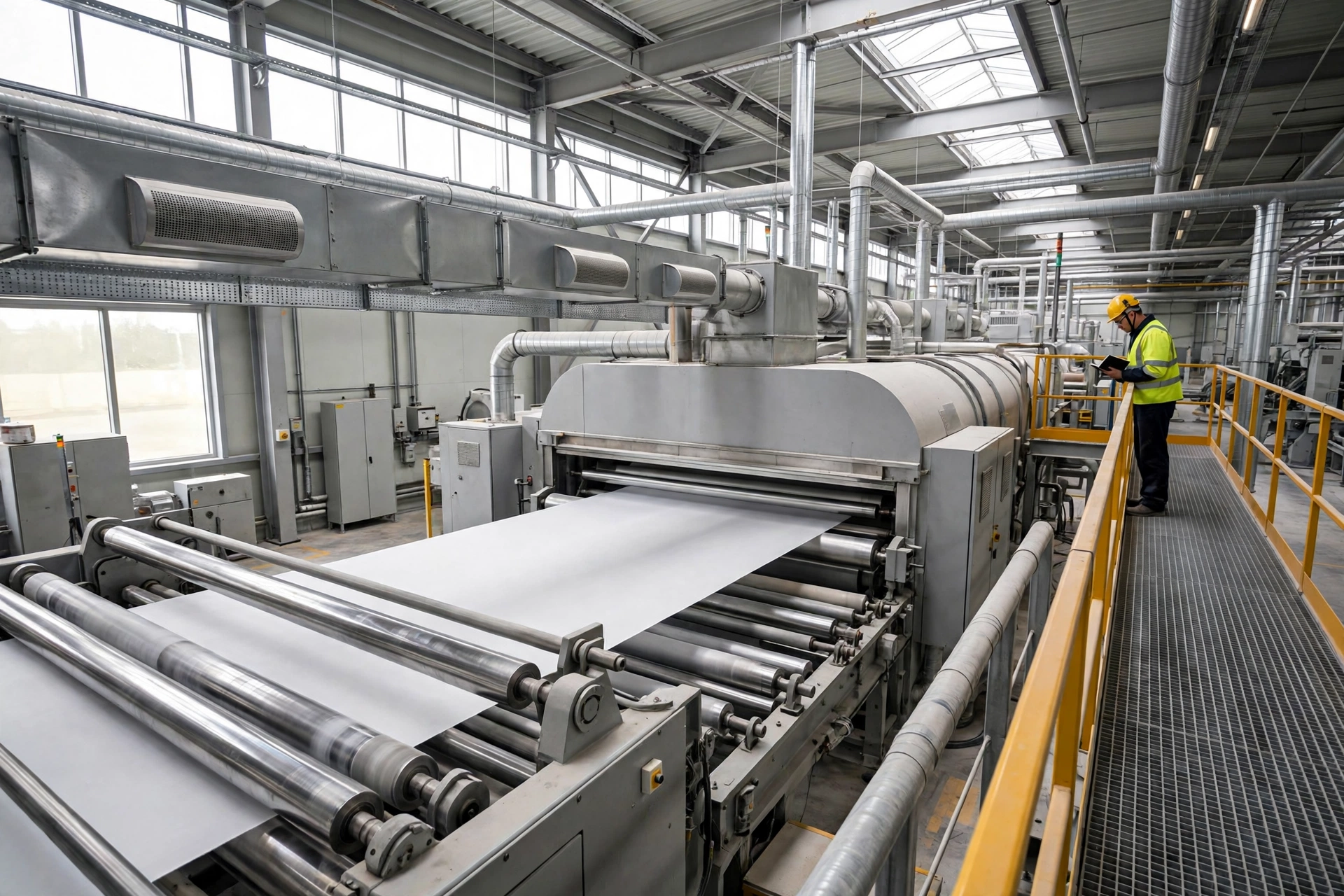
A coated sheet that looks dull, prints blotchy, or shows the print through from the other side is usually blamed on the base paper or the press. Often the real lever is one nobody checked: the coating pigment. Aluminium hydroxide — ATH — is best known as a flame retardant, but in paper coating it plays a different role: a white, fine mineral pigment that lifts brightness, builds opacity, and decides how ink sits on the surface.
This guide is for paper mill engineers and buyers: what ATH does in a coating colour, how whiteness and particle size set the result, how it pairs with calcium carbonate, and how to specify and buy coating-grade ATH.
What ATH Does in a Paper Coating
In a coating, ATH is a pigment first and a filler second: it covers the fibres, scatters light, and sets the surface the ink meets.
A coating colour is pigment, binder and additives spread in a thin layer over base paper. The pigment does most of the optical work. ATH brings three things to that layer. First, whiteness: on the Aluminaworld datasheet, industrial-grade ATH reaches a whiteness of 93% or higher, and the micro-fine grade 96–98% — the white that the finished sheet shows is, to a large extent, the pigment's white. Second, opacity: fine ATH particles scatter light inside the coating, so less of the print shows through from the reverse side. Third, ink holdout: the fine, porous structure of the coating takes up the ink vehicle and leaves the ink pigment at the surface, so dots stay sharp instead of sinking into the sheet. That combination is why ATH is used as a coating pigment and filler in printing and writing papers, board and specialty grades — not as a flame retardant in this application, but as an optical and print-performance pigment. In specialty grades, the same endothermic water release above 200 °C that makes ATH a flame retardant in polymers adds a fire-performance margin to the sheet.
Whiteness and Particle Size: Specifying the Grade
Two numbers decide most of the result — whiteness and particle size — and they must be specified together, never one without the other.
| Property | Industrial grade | Micro-fine grade |
|---|---|---|
| Al(OH)₃ purity | ≥ 99.5% | ≥ 99.6% |
| Whiteness | ≥ 93% | 96–98% |
| Fe₂O₃ | ≤ 0.02% | ≤ 0.01% |
| SiO₂ | ≤ 0.02% | ≤ 0.015% |
| Na₂O | ≤ 0.30% | ≤ 0.20% |
| Loss on ignition (1000 °C) | 34.5 ± 0.5% | 34.5 ± 0.5% |
Particle size spans D50 1.0–75 μm by grade on the datasheet, and where a grade sits in that range is a choice, not a detail. Finer grades give a smoother coated surface, higher gloss and better ink holdout, which is what coated printing and art papers need. Coarser grades are used where bulk and opacity at lower cost matter more than gloss, such as board. Whiteness is only half the story: iron is the enemy of brightness, which is why the Fe₂O₃ limit tightens from 0.02% to 0.01% on the micro-fine grade — a grade can pass a whiteness number on the day it is made and still yellow the sheet if its iron is high. When you specify ATH for coating, name the whiteness, the D50 and the Fe₂O₃ limit together, and ask for the batch COA against all three. A single number on a quotation tells you nothing about the other two.
Opacity, Ink Holdout and the Calcium Carbonate Question
ATH rarely works alone: most coating colours blend it with ground or precipitated calcium carbonate, and the blend ratio is where opacity and cost are set.
Calcium carbonate is the workhorse of paper coating — cheap, bright, and available in fine grades. ATH is the specialist added to it. The carbonate carries the bulk of the coating at low cost; ATH raises the whiteness ceiling, improves ink holdout through its finer pore structure, and lifts opacity where the carbonate alone leaves the sheet slightly grey or show-through. The right blend is found by trial on the mill's own base paper and press: change one variable at a time and judge the result on the printed sheet. Ink holdout itself is a balance. A coating that absorbs too little lets ink sit wet on the surface and smear; a coating that absorbs too much pulls the ink vehicle deep into the sheet, leaving a dry, dusty print and wasting ink. ATH's fine pore structure sits in the useful middle: it takes the vehicle in fast enough to set the dot, and holds the ink pigment where the eye sees it. Coat weight matters as much as the pigment: too light a coat leaves fibre showing through and kills opacity, while too heavy a coat costs money and can crack on folding. The pigment choice and the coat weight are decided together, on the same trial.
Dispersing ATH in the Coating Colour
ATH only works if it is dispersed: an agglomerate in the colour shows up as a spot, a streak, or picking on the coater.
ATH is supplied as a dry powder, and the first job in the coating kitchen is to break it down into single particles in water. Disperse it under high shear and check the result on a drawdown before the colour goes near the machine: a good dispersion looks smooth and even, with no grit under the finger and no specks on the dried film. Fine ATH raises viscosity, so watch the solids content and the binder level together — a colour that is too thick will not meter evenly, and a colour thinned by cutting solids loses opacity. Keep the colour in the mildly alkaline range the mill already runs, and confirm stability on a lab drawdown held overnight: if the colour thickens, settles hard, or throws grit by morning, the dispersion or the additive balance needs adjusting before any machine trial. Store the powder dry and sealed — a damp bag clumps, and clumps do not disperse. Keep the lot label with the batch, so a machine problem can be traced to a COA.
Buying Coating-Grade ATH: What to Put in the Inquiry
A good ATH inquiry names the grade, not just "ATH": whiteness, D50, and the paper it will coat.
Send the supplier four things and the quotation comes back accurate the first time: the paper and coating method (blade, film press or curtain coater), the target whiteness and D50, the Fe₂O₃ limit your brightness target needs, and the trial quantity. Ask for the producer datasheet before ordering and the batch COA with the shipment, and check the COA against the three numbers you specified — whiteness, D50, iron. ATH is supplied by Aluminaworld through direct sourcing from producers, in 25 kg bags, steel drums or bulk bags, with the format confirmed in the quotation and matched to your unloading and storage. Prices are quoted EXW Zibo, with ocean freight calculated for your order and destination port at the time of quotation. Bulk orders typically run on a 15–25 day lead time. Before a bulk order, run a trial quantity on your own line — a lab drawdown first, then a machine trial, judged on the printed sheet.
For the numbers behind this guide, see the aluminium hydroxide (ATH) product page, why ATH whiteness and particle size must be specified together and how to disperse ATH: four industrial methods.
Frequently Asked Questions
Can ATH replace calcium carbonate in paper coating?
Not one-for-one. Calcium carbonate carries the bulk of the coating at low cost; ATH is blended in to raise whiteness, improve ink holdout and lift opacity. Mills set the blend by trial on their own base paper.
Which ATH grade suits coated printing paper?
The micro-fine grade, with whiteness 96–98% and a fine D50 — and a low Fe₂O₃ limit (≤ 0.01%) to protect brightness. Confirm all three numbers on the batch COA.
Does ATH affect the pH of the coating colour?
ATH is stable in the mildly alkaline coating colours mills normally run. Confirm stability on a lab drawdown held overnight before a machine trial, and keep the colour in your mill's normal range.
How do I trial ATH before a bulk order?
Ask for the producer datasheet and a trial quantity, run a lab drawdown first and then a machine trial, and judge the result on the printed sheet — brightness, opacity and print sharpness. Bulk orders run on a 15–25 day lead time, priced EXW.
If a coated sheet is dull, blotchy or showing through, send us the paper grade, the coating method and your whiteness and D50 targets — our engineers will confirm the ATH grade to trial: barry@okkinc.com.
Get a Quote
Tell us the product, grade and quantity. We reply within 12 hours with EXW pricing and lead time.
- ✓ COA and technical datasheet with every shipment
- ✓ EXW pricing — freight calculated per order
- ✓ Engineering consultation on grade selection and loading
Prefer to talk now?
WhatsApp +86 133 2522 2240
or email barry@okkinc.com