Two specifications drive 80% of ATH purchasing decisions: whiteness and particle size. Whiteness determines the color quality of the final product; particle size determines the processing behavior and mechanical properties. Getting both right is the difference between a premium product and a reject.
ATH in artificial marble applicationsAt Aluminaworld, we manufacture ATH with whiteness from 92% (commodity grade) to 97% (premium grade), and particle sizes from 1 μm to 45 μm. The data below explains how these specifications are measured, why they matter, and how to specify them correctly.
Whether you are buying ATH for cable, compound, engineered stone, or paper, this guide will help you understand what the specs really mean.
1. Whiteness Measurement: The L, a, b Color System
Whiteness is measured using a colorimeter that reports three values: L (lightness, 0 to 100), a (red-green, -100 to +100), and b (yellow-blue, -100 to +100). Whiteness is then calculated as:
Whiteness (%) = 100 - ((100 - L) squared + a squared + b squared)^0.5
A perfectly white material has L = 100, a = 0, b = 0, giving whiteness of 100%. Practical ATH grades range from 92% (commodity) to 97% (premium).
What Affects ATH Whiteness
- Iron content (Fe2O3). Above 50 ppm, ATH develops a yellowish tint. Premium grades have Fe2O3 below 30 ppm.
- Organic contamination. Lubricants, oil residues, or organic impurities from upstream processes can darken ATH.
- Surface oxidation. Excessive drying temperature can oxidize trace metals, increasing yellow tint.
- Crystal form. Gibbsite ATH (most common) is naturally white. Boehmite ATH has slight gray tint.
For white and light-colored end products (paper, artificial marble, white cable compounds), specify whiteness at least 96% and Fe2O3 below 50 ppm. For dark colors or applications where color is not critical, standard 94% whiteness is sufficient.
2. Particle Size Distribution: Why D50 Is Not Enough
Particle size is typically reported as D10, D50, D90: the diameters at which 10%, 50%, and 90% of particles are smaller. The D50 is the headline number, but D10 and D90 are equally important because they describe the distribution shape.
Reading a Particle Size Distribution
For an ATH with D10 = 1.5 μm, D50 = 8 μm, D90 = 25 μm:
- 10% of particles are below 1.5 μm (the fines)
- 50% are below 8 μm (the median)
- 90% are below 25 μm (the coarse tail)
- The distribution width (D90/D10) = 16.7, moderately wide
A narrow distribution (D90/D10 below 5) gives more consistent processing and surface quality but typically costs more. A wide distribution (D90/D10 above 15) gives better packing but more variable behavior.
Choosing the Right Particle Size
| Application | Recommended D50 | Distribution |
|---|---|---|
| LSZH cable compound | 3 to 8 μm (bimodal) | bimodal blend |
| Artificial marble | 5 to 25 μm (bimodal) | bimodal blend |
| Solid surface (acrylic) | 2 to 10 μm | narrow |
| Paper filler | 0.5 to 3 μm | narrow |
| Rubber and conveyor belts | 3 to 10 μm | moderate |
3. How to Verify ATH Quality Before Bulk Purchase
Before committing to a large order, we recommend three simple tests you can run in your own lab:
Test 1: Visual Whiteness Comparison
Spread a thin layer of ATH sample on white paper next to your current supply. View under standard daylight (D65 lamp). Premium ATH should look noticeably whiter; standard should match.
Test 2: Particle Size by Laser Diffraction
If you have access to a Malvern, Beckman Coulter, or similar laser sizer, run the sample in water dispersion. Compare D10, D50, D90 to the supplier COA. Variations within plus or minus 10% are acceptable; beyond that, ask for an explanation.
Test 3: Processing Behavior in Your Compound
Prepare a small batch (1 to 5 kg) using your standard formulation. Compare viscosity, cure time, and final properties against your reference material. If the new ATH shows comparable behavior at the same loading, proceed to a full trial.
We provide a complete COA with every shipment, including whiteness (L, a, b values), particle size (D10/D50/D90), surface area, moisture content, and Fe2O3 level. For first-time customers, we supply free 5 kg samples for evaluation.
Frequently Asked Questions
What is the difference between whiteness and brightness?
Whiteness (used in ATH/paper industry) is a perceptual measure that accounts for hue. Brightness (used in paper industry specifically) is the reflectivity at 457 nm. For ATH, whiteness is the more relevant spec.
Can ATH whiteness change in storage?
Yes, slightly. Prolonged exposure to humid air can cause surface hydration changes that reduce apparent whiteness by 1 to 2%. Store in sealed packaging away from direct sunlight.
What is the price premium for premium whiteness (at least 96%)?
20 to 30% premium versus standard 94% grade. For applications where color quality matters (premium engineered stone, white cable compounds), the premium is easily justified.
Do you supply ATH with custom particle size?
Yes. We can produce ATH with D50 from 0.5 to 45 μm. Custom grades require 5 MT minimum order. Development samples: 5 kg.
How do I get a COA for a specific batch?
Every shipment includes a batch-specific COA. We retain samples for 12 months, so you can request a COA for any batch within that window.
Related Aluminum Hydroxide Articles
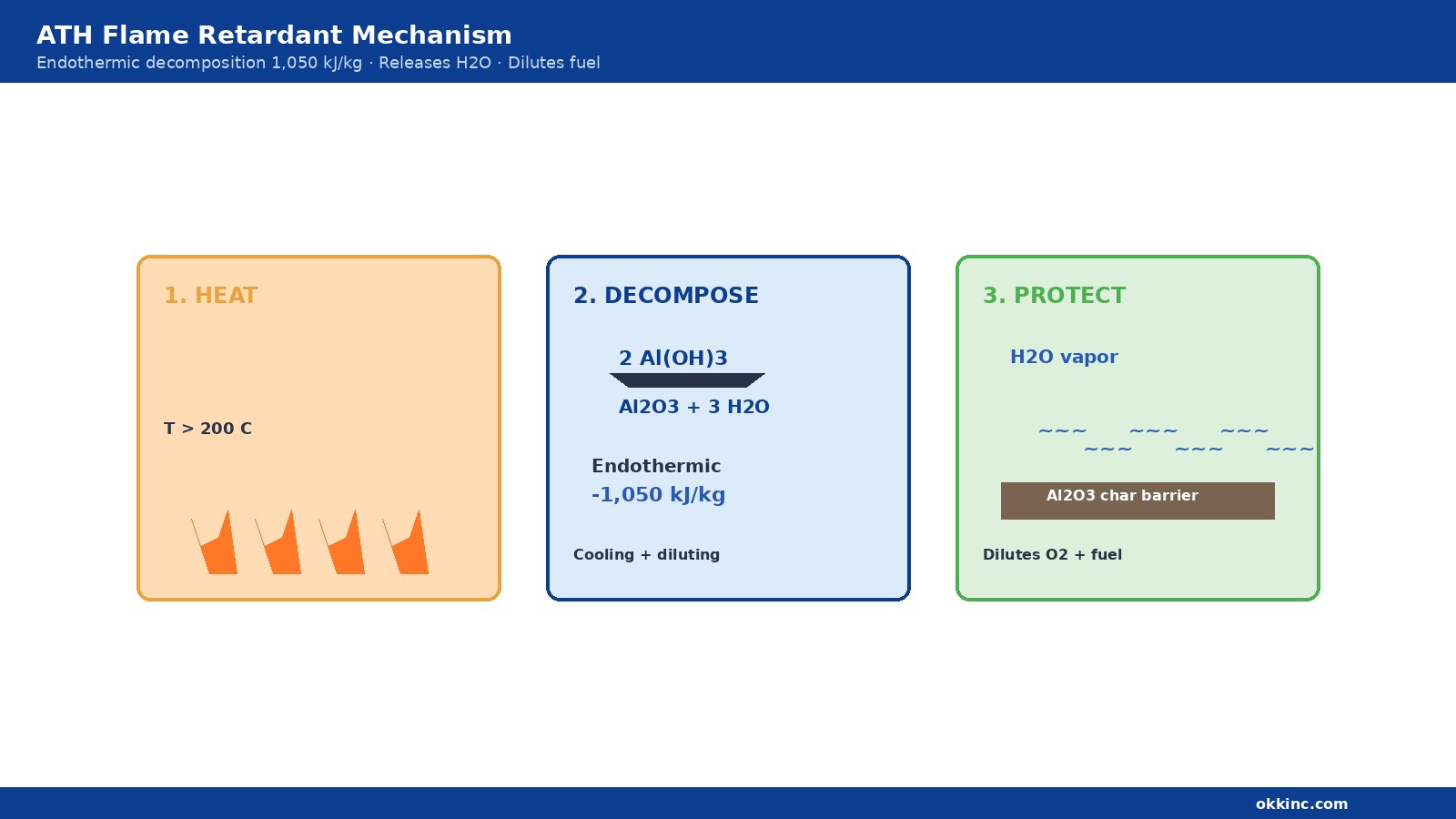
ATH Flame Retardant Mechanism: Why Aluminum Hydroxide Cools and Chars
ATH vs MDH Flame Retardant: Which Works Better in Your Polymer System?
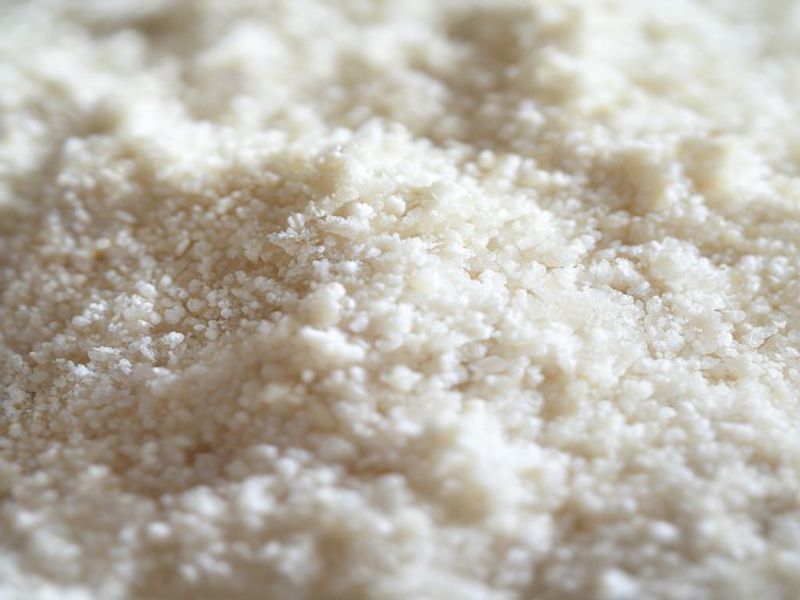
Surface-Treated ATH: How Silane Coating Improves Polymer Loading and Dispersion
ATH in artificial marble applications
surface-treated ATH and particle size
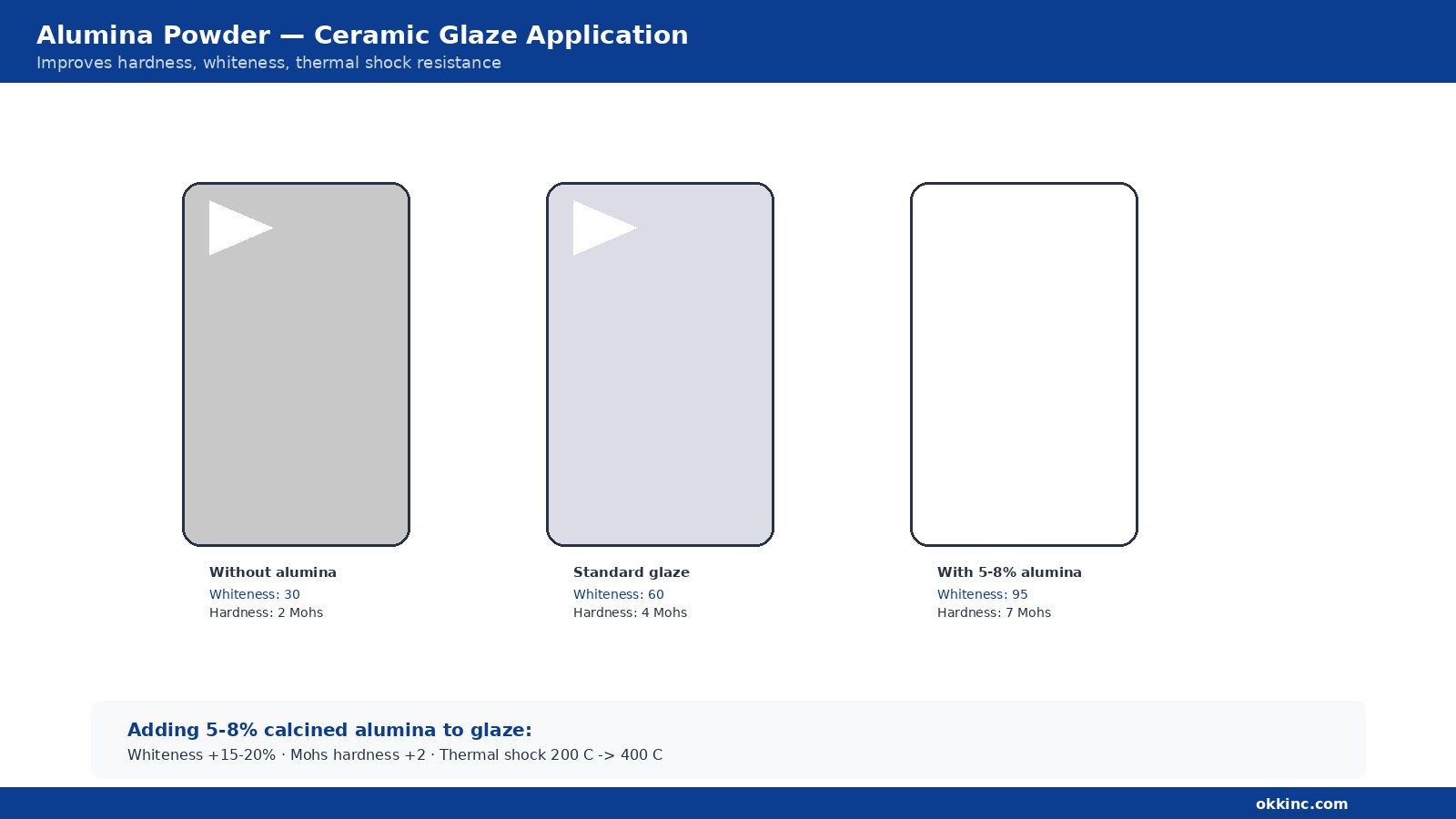
Alumina Powder Ceramic Glaze Application
Need a Quote or Free Sample?
Tell us your feed conditions and target outlet spec. Our engineers reply within 24 hours with a recommendation and a 1 kg free sample.