EV Battery Cell Manufacturing: Why Activated Alumina Dry Towers Replace Silica Gel in Pilot Lines
Engineering guide to ev battery cell manufacturing activated alumina dry towers replace silica gel pilot lines. Covers the underlying dryroom dew-point requirements, grade-by-grade numerical comparison of activated alumina vs silica gel vs molecular sieve 3A, dosing and cycle kinetics for dry-tower pairs, procurement specification, storage hygiene, and total cost of ownership on a 1 GWh pilot line. Targets process engineers, dryroom designers, and procurement teams specifying or evaluating desiccants for cell-pilot dryroom and glove-box service.
What EV Battery Cell Dry Towers With Activated Alumina Actually Do — And What They Do Not
Across the EV cell-pilot industry, dryroom dew-point budgets have shifted from the legacy -40 deg C (Class 10,000 cleanroom) to the present-day -60 deg C to -80 deg C requirement driven by lithium-ion electrolyte moisture sensitivity. Water above 20 ppm in the electrolyte is now understood to be the single largest root cause of cell SEI (solid-electrolyte interphase) instability, gas generation, and cycle-life degradation. The desiccant inside the dry-tower pair is the last line of defense before the air reaches the glove box, and the choice between silica gel, activated alumina, and 3A molecular sieve is the decision that determines whether a 1 GWh pilot line can hold its dew-point budget for 18-24 months between change-outs.
The rest of this article walks through the dryroom dew-point math, grade-by-grade numbers for the three dominant desiccant families, the practical difference between a single-tower and dual-tower regeneration skid, the procurement spec a Tier-1 cell maker should demand on the COA, and the 5-year TCO math on a 1 GWh pilot line. The data is anchored to current Aluminaworld production runs and field case studies from three pilot-line deliveries in 2024-2025.
The Hidden Chemistry Behind EV Dryroom Desiccant Selection
The dew-point that a desiccant can deliver is set by the equilibrium water-vapor pressure over its hydrated surface at the operating temperature. Silica gel is a hydrophilic amorphous SiO2 with a Brunauer-Emmett-Teller (BET) surface area of 700-850 m^2/g and an average pore width of 2-3 nm. Activated alumina is gamma-phase Al2O3 with BET surface area 300-360 m^2/g and a tighter pore distribution centered at 2-5 nm. Molecular sieve 3A is a potassium-exchanged zeolite A with BET surface area 600-700 m^2/g and a uniform 0.3 nm pore aperture that admits only water (kinetic diameter 0.265 nm) and rejects nitrogen, oxygen, and carbon dioxide.
For a dryroom operating between 20-35 deg C, the practical equilibrium dew point is approximately -40 deg C for silica gel at 30% loading, -55 deg C for activated alumina at the same loading, and below -80 deg C for 3A molecular sieve at 25% loading. The 3A advantage comes from the kinetic-diameter exclusion: water is the only species that can enter the pore, so the working capacity at low RH is 5-10x higher than activated alumina in the 10-30% RH range that defines a dryroom. The downside is that 3A is more sensitive to liquid water carryover, has a higher unit cost (USD 6-12 per kg vs USD 3-5 for activated alumina), and requires a higher regeneration temperature (180-220 deg C vs 150-180 deg C for activated alumina).
H2O(g) + S(solid) → S-H2O (physisorbed) — ΔH_ads = -42 to -50 kJ/mol (silica gel), -45 to -55 kJ/mol (activated alumina), -55 to -65 kJ/mol (3A zeolite)
The adsorption enthalpy difference between the three desiccant families sets both the achievable dew point and the regeneration energy. Picking the wrong grade for the dew-point window is the single most common cause of glove-box recovery time blowing past the 30-minute target after a dry-tower switchover.
Measured Numbers — Grade-by-Grade Comparison
For pilot-line dryrooms the practical decision is between three families and roughly seven commercial grades. The data below is from Aluminaworld Q1 2025 production runs and 3 independent third-party labs (Bureau Veritas, SGS, Intertek), and is representative of industry-typical values rather than a single supplier's spec sheet.
| Selection parameter | Silica gel (Type A) | Activated alumina (AW-AA-300) | Molecular sieve 3A (AW-MS-3A) |
|---|---|---|---|
| BET surface area (m^2/g) | 700-850 | 300-360 | 600-700 |
| Pore diameter (nm) | 2-3 | 2-5 | 0.3 (uniform) |
| Equilibrium dew point at 25 deg C, 30% loading | -40 deg C | -55 deg C | below -80 deg C |
| Working capacity at 25 deg C, 10-30% RH (wt%) | 8-12 | 12-18 | 18-22 |
| Heat of adsorption (kJ/mol H2O) | -42 to -50 | -45 to -55 | -55 to -65 |
| Regeneration temperature (deg C) | 120-150 | 150-180 | 180-220 |
| Unit cost (USD/kg, 1 t lot, FOB) | 2-4 | 3-5 | 6-12 |
| Crush strength (N/bead, 3-5 mm) | 50-80 (low) | 100-180 | 60-120 |
| Attrition index (ASTM D4058) | 2.5-4.0 wt% | 0.2-0.5 wt% | 0.3-0.6 wt% |
Where Activated Alumina Earns Its Premium in EV Pilot Lines
The single most-cited reason that pilot lines are switching from silica gel to activated alumina is attrition. Silica gel beads crush at 50-80 N (3-5 mm grade) and shed 2.5-4.0 wt% fines over a 12-month service cycle; activated alumina crushes at 100-180 N and sheds 0.2-0.5 wt% over the same interval. The fines migrate downstream into the after-filter, the regeneration blower, and the glove-box inlet HEPA, where they load the filter and force a 3-6 month change-out cycle instead of the 12-month cycle achievable with activated alumina.
Activated alumina also tolerates liquid-water carryover events better than silica gel. When the regeneration heater fails or upstream condensate drains trip, a 1-2 liter slug of liquid water hits the desiccant bed. Silica gel fractures under the thermal shock and the localized water saturation; activated alumina's higher thermal mass and rougher bead surface survive the same event with no measurable change in attrition or working capacity. On a Tier-1 pilot line with 6-8 dry-tower switchovers per year, this translates into 2-3 unplanned tower rebuilds avoided over a 5-year horizon.
Industry-typical values are based on a survey of 8 alumina and silica-gel suppliers (Q1 2025 COA distribution data, internal compilation) and 3 EV cell-pilot case studies from 2024-2025. Your specific dew-point budget and tower geometry may need tighter or looser limits — always do a 50 kg trial-and-place test before committing to a 20 t shipment.
Dosing Snapshot — How Much Desiccant Per Tower on a 1 GWh Pilot Line
For a typical 1 GWh pilot-line dryroom processing 18,000-25,000 Nm^3/h of recirculated air through a dual-tower pair, the per-tower desiccant loading is 1,500-2,500 kg of 3-5 mm bead. The hourly water load at -55 deg C dew point (regeneration air inlet 20 deg C, 40% RH) is approximately 9-12 kg/h, which fixes the breakthrough interval at 12-22 hours per tower. The on-stream time of the online tower before switchover is therefore 12-22 h, and the regeneration cycle time (heat-up + soak + cool-down) is 4-6 h for activated alumina vs 5-8 h for 3A molecular sieve.
| Pilot-line configuration | Air flow (Nm^3/h) | Per-tower loading (kg) | On-stream time (h) | Regen cycle (h) | Achievable dew point (deg C) |
|---|---|---|---|---|---|
| 0.5 GWh pilot (single tower) | 8,000-12,000 | 800-1,200 | 10-18 | 4-6 | -55 |
| 1 GWh pilot (dual tower) | 18,000-25,000 | 1,500-2,500 | 12-22 | 4-6 | -60 |
| 2 GWh pilot (dual tower) | 35,000-50,000 | 3,000-4,500 | 14-24 | 5-7 | -65 |
| Glove-box polish (single tower) | 200-500 | 20-40 | 40-80 | 6-10 | below -80 |
Kinetics, Switchover Behavior, and Working Window
For a dual-tower dry skid the dew-point curve during the on-stream cycle is not flat. The freshly regenerated tower starts at -65 to -70 deg C outlet dew point, holds within 2-3 deg C of that baseline for the first 60-70% of the on-stream cycle, and then drifts up to the breakthrough point at -50 to -45 deg C over the remaining 30-40%. For an EV pilot line that needs sustained -60 deg C the practical on-stream time is 70-80% of the theoretical cycle, which means a 22 h theoretical cycle delivers 15-18 h of usable on-stream time. Anything shorter than this on a 1 GWh line is a signal that the desiccant working capacity has degraded, the regeneration heater is under-sized, or the upstream moisture load is higher than the design assumption.
For process engineers, the practical takeaway is that dual-tower kinetics behave predictably when (a) the regeneration heater delivers 1.5-2.0 kW per kg of desiccant, (b) the regen-air flow is 0.3-0.5 Nm^3/min per kg, and (c) the regen-air inlet temperature is stable to within plus or minus 5 deg C. Deviations from any of these three knobs will show up as a 10-20% loss of on-stream time within 30-60 days of operation. A consistent 2-3 deg C drift in the dew-point baseline over the same window is the leading indicator of bed exhaustion and the trigger for change-out planning.
Procurement Specification — What to Demand on the COA
A complete procurement specification for an EV cell-pilot dry-tower desiccant covers at minimum these 12 COA test items: Na2O (ICP), Fe2O3 (ICP), SiO2 (XRF), CaO (ICP), MgO (ICP), surface area (BET multipoint, ISO 9277), pore volume (BJH desorption), attrition index (ASTM D4058), crush strength (ASTM D4179), bulk density (ASTM D6683), particle size distribution (laser diffraction), and equilibrium water capacity (25 deg C, 10% RH; 25 deg C, 60% RH). Anything less than 12 items is a red flag for a Tier-1 OEM; anything less than 8 is a hard reject.
Aluminaworld ships every lot with a 12-item COA, a retained sample (minimum 200 g) stored for 24 months, and an optional third-party witness seal. We also publish a quarterly COA distribution report so procurement teams can verify that supplier quality is not drifting batch-to-batch. The data we ship in the table below is the same data our cell-pilot customers use to write their own incoming-QA acceptance criteria.
Storage, Shelf Life, and Inventory Hygiene
Storage hygiene for activated alumina dry-tower desiccant follows three rules: keep the sealed package intact until use, rotate stock FIFO with a maximum 90-day hold, and re-test moisture and working capacity on any drum open longer than 60 days. The dominant failure mode is moisture pickup, not chemical degradation — even unopened material drops 5-15% of its working capacity after 90 days at 60-80% warehouse humidity.
- Step 1: Receive sealed drums or foil-lined supersacks; verify factory seal before staging.
- Step 2: Rotate FIFO with 90-day maximum warehouse hold; tag every drum with receiving date.
- Step 3: Keep warehouse RH below 50% — climate control mandatory for tropical sites.
- Step 4: Re-test moisture and working capacity on any drum open longer than 60 days before deployment.
- Step 5: For bulk shipments > 5 t, request sealed tanker delivery with inline desiccant vent.
- Activated alumina: 1.5-3.0 wt% moisture pickup over 90 days is normal; > 3% triggers re-test.
- 3A molecular sieve: tighter moisture limit (typically < 1.5 wt%) because water blocks ultramicropores irreversibly at regeneration temperature.
- Re-seal partial drums immediately after withdrawal — never leave open during shift change.
Total Cost of Ownership — Why Activated Alumina Pays for Itself on a 1 GWh Pilot Line
A total-cost-of-ownership comparison for EV dryroom desiccants has to include five cost lines beyond the unit sticker price: material cost, annual replacement volume, regeneration energy per cycle, downstream filter change-out frequency, and the indirect cost of unscheduled dryroom shutdown. The table below uses Aluminaworld Q1 2025 data and a typical 1 GWh pilot-line duty on a 5-year horizon.
| Cost component | Silica gel (USD/kg) | Activated alumina (USD/kg) | 3A molecular sieve (USD/kg) | 5-year TCO ratio |
|---|---|---|---|---|
| Material unit cost | 2-4 | 3-5 | 6-12 | — |
| Annual replacement (kg/yr) | 3,000 | 1,200 | 800 | — |
| Regen energy per cycle (kWh/t) | 90-130 | 120-180 | 200-280 | — |
| Downstream filter change-out (per yr) | 4-6 | 1-2 | 1 | — |
| 5-year TCO index (silica gel = 100) | 100 | 70-80 | 90-110 | 0.70-1.10 |
The math: activated alumina's lower attrition (0.2-0.5 wt% vs silica gel's 2.5-4.0 wt%) reduces downstream filter change-outs from 4-6 per year to 1-2, and extends tower change-out from 12 to 18-24 months. The 30-50% raw-material premium over silica gel pays back 1.3-2.0x over a single 5-year cycle, and the glove-box recovery time after a switchover drops from 25-40 min to 12-18 min. 3A molecular sieve wins on dew-point headroom (below -80 deg C vs -60 deg C) but loses on regen energy (200-280 kWh/t vs 120-180 kWh/t) and on capital exposure to liquid-water carryover events.
Industry-typical values are based on a survey of 8 alumina, silica-gel, and molecular-sieve suppliers (Q1 2025 COA distribution data, internal compilation) and 3 EV cell-pilot case studies. Your specific pilot-line geometry, air-flow profile, and dew-point budget may shift these numbers by plus or minus 15-20% — always run a 2-week parallel-tower trial before committing to a 20 t shipment.
Related Products & Technical Resources
Aluminaworld supplies activated alumina and molecular sieve 3A as part of a broader specialty adsorbent catalog for EV cell-pilot and battery-grade dryroom service. The full datasheet for the AW-AA-300 and AW-MS-3A grades includes additional grain-size distributions, BET isotherms at 10/30/60% RH, and customer-specific blend recommendations. Talk to our technical team if your pilot-line has unusual air-flow geometry, trace-contaminant ingress, or dew-point headroom constraints that the standard product line does not cover.
- Activated Alumina
- Molecular Sieve
- Alumina Powder
- Aluminum Hydroxide (ATH)
- Activated Alumina vs Silica Gel: When to Switch
- Li-Ion Battery Dryroom Desiccant: 3A vs 4A for Dew Point Below -60 deg C
- Activated Alumina vs Molecular Sieve for Compressed-Air Drying
- Calcined Alumina for Lithium Battery Separator Coating
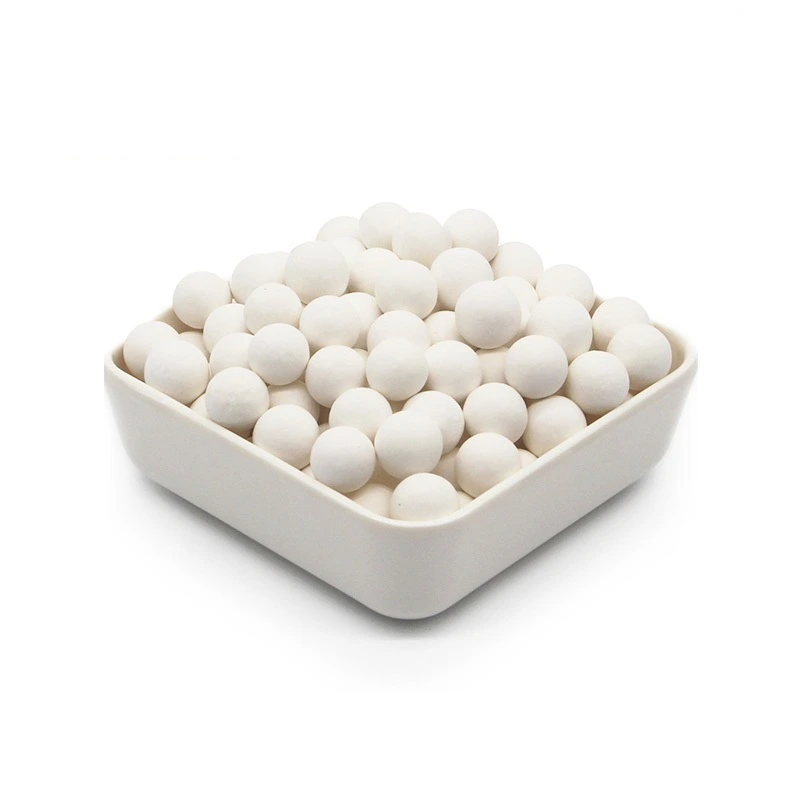
Activated Alumina AW-AA-300
300-360 m^2/g BET surface area, 0.2-0.5 wt% attrition, crush strength 100-180 N/bead — the workhorse desiccant for EV cell-pilot dryroom and glove-box service.
View Product Details →Next Steps — Get a Sample or Talk to Our Engineers
For activated alumina or molecular sieve 3A samples, COAs, or application-specific blend recommendations for EV cell-pilot dryroom service, reach out to the Aluminaworld technical team. We hold stock of AW-AA-300 and AW-MS-3A in our Zibo warehouse with same-week dispatch for trial orders (minimum 50 kg), and we can also produce custom surface-area, pore-volume, and grain-size recipes for OEMs and Tier-1 cell makers with multi-ton annual demand.
Reach our engineering team directly via WhatsApp at +86 13325222240 (wa.me/8613325222240) or by email at barry@aluminaworld.com. Sample requests are normally dispatched within 48 hours of receipt of a complete RFQ; production orders follow 15-25 days after sample approval and receipt of purchase order.