
1. Scope and Audience
This guide is for procurement engineers, sourcing managers, and trade-finance staff who issue industrial adsorbent purchase orders (molecular sieve 3A/4A/5A/13X, activated alumina, pseudo-boehmite, ATH, specialty alumina) in volumes between USD 50K and USD 2M per order, and who routinely negotiate between Letter of Credit at Sight (L/C at Sight) and Telegraphic Transfer split terms (typically T/T 30/70 or T/T 50/50). It assumes the reader has working familiarity with Incoterms 2020 (FOB / CIF / DDP / EXW) but may not have a structured framework for deciding when the L/C issuance fee is worth the cost — and when the wire-transfer discount the supplier offers is a hidden risk premium rather than a real saving.
If your PO is below USD 50K, payment-terms engineering rarely justifies the analytical overhead. Above USD 2M, you will typically layer trade-credit insurance (Euler Hermes, Coface) or a syndicated L/C, both outside this guide's scope. For a more compact decision framework across the wider PO envelope, see our 7-metrics procurement RFQ checklist; for the Incoterms side of the contract that sits next to payment terms, see FOB vs CIF vs DDP for industrial adsorbents.
The framework below is built around five cost lines — banking fees, documentary discrepancy cost, supplier risk premium, working-capital opportunity cost, and FX hedging cost — and yields a Total Cost of Payment (TCP) per order. The choice between L/C at Sight and T/T 30/70 (or 50/50, or 100% in advance) should follow the TCP, not the fee line.
2. What "Payment Terms" Actually Includes
The phrase "payment terms" in a procurement contract typically covers five distinct clauses, and most procurement teams only consciously negotiate the first two. The other three are where the hidden cost lives.
- Instrument — L/C at Sight, L/C at Usance (deferred payment), D/P at sight (URC 522), D/A (Documents against Acceptance), T/T in advance (full or split), Open Account (O/A), or Consignment. Each instrument carries a different risk-allocation between buyer and supplier.
- Schedule — when each payment milestone fires (PO confirmation / pre-shipment / on-board / arrival / net 30 / net 60). T/T 30/70 means 30% on PO confirmation and 70% on copy of Bill of Lading; T/T 50/50 means 50/50 split on PO and on B/L copy.
- Documentary conditions — what documents the supplier must present (Commercial Invoice, Packing List, Bill of Lading, Certificate of Origin, COA, MSDS, insurance policy, third-party inspection certificate, phytosanitary certificate for some jurisdictions). For L/C these are conditioned by UCP 600 / ISBP 745.
- Currency and FX clauses — currency of invoicing, currency of payment, FX risk allocation, hedging responsibility, force-majeure FX clauses for hyperinflationary jurisdictions.
- Default, dispute, and force-majeure clauses — what happens if the buyer refuses to take delivery, if the goods fail inspection, if a war or sanction event interrupts payment. These are often boilerplate but routinely become operative in distressed scenarios.
When a supplier offers "T/T 30/70" for a USD 200K molecular sieve PO, the buyer-side decision is rarely "30/70 vs L/C at Sight." It is "instrument A with documentary requirements B under schedule C in currency D with default clause E vs instrument F with different B/C/D/E." Procurement teams that focus only on the wire-transfer cost miss the bulk of the TCP.
3. L/C at Sight Mechanics: UCP 600 + ISBP 745
A Documentary Credit (L/C) at Sight is a payment undertaking issued by the buyer's bank (the issuing bank) to the supplier (the beneficiary). The issuing bank promises to pay the face amount of the L/C against the supplier's presentation of conforming documents. The legal framework is ICC Uniform Customs and Practice for Documentary Credits, UCP 600 (effective 2007, current revision), supplemented by ISBP 745 (International Standard Banking Practice for the Examination of Documents under UCP 600, 2013).
UCP 600 Article 14 sets the examination standard: the nominated bank has a maximum of 5 banking days following the day of presentation to examine the documents and determine whether they constitute a complying presentation. If they comply, the bank must pay, defer payment (per the L/C terms), or accept a draft. The issuing bank has its own 5 banking days to honour, per ISBP 745 paragraph A3. Total worst case from presentation to payment is therefore 10 banking days plus transit, plus any correction cycle if a discrepancy is found.
The supplier's documentation team must therefore produce documents that match the L/C text exactly. ISBP 745 paragraphs A1-A39 define what counts as a discrepancy. Common discrepancy categories from ICC DOCDEX statistics and ICC Trade Register reports (covering 2020-2024 L/C presentations globally):
- Date inconsistencies — shipment date, on-board date, invoice date, and L/C latest shipment date do not align (40-50% of rejections).
- Description of goods mismatch — invoice description deviates from L/C description (15-20%).
- Short / over shipment — quantity presented differs from L/C tolerance, typically ±5% allowed for tonnage under UCP 600 Article 30 but not for unit value or number of packages (10-15%).
- Late presentation — documents presented more than 21 calendar days after shipment date but before L/C expiry, per UCP 600 Article 14(c) (5-10%).
- Missing or unsigned documents — original Bill of Lading, signed commercial invoice, packing list, insurance policy (5-10%).
Each discrepancy costs the supplier 7-21 days of detention plus correction costs of USD 200-500 per presentation. If the supplier has to re-negotiate the L/C terms (extend shipment date, amend description), the advising bank typically charges USD 50-150 per amendment. The buyer-side cost is the working capital the supplier has tied up in finished goods awaiting payment — a cost the supplier recoups by embedding a risk premium in the unit price for future L/C orders.
4. T/T Variants: 30/70 vs 50/50 vs 100% in Advance
Telegraphic Transfer (T/T, also called wire transfer) is a direct bank-to-bank funds transfer. In adsorbent procurement, three variants are common:
- T/T 30/70 — 30% deposit on PO confirmation (triggers production start), 70% balance on copy of shipped Bill of Lading. Production lead time 25-40 days for molecular sieve, so the deposit floats as working capital for 25-40 days, the balance floats for 7-14 days post-shipment.
- T/T 50/50 — 50% on PO confirmation, 50% on B/L copy. Higher upfront commitment but lower total working-capital exposure.
- T/T 100% in advance — full payment on PO confirmation. Highest working-capital exposure but unlocks the largest supplier-side discount (typically 1.0%-3.0% off the 30/70 unit price, or 2.0%-5.0% off the L/C unit price).
Wire transfer fees are typically USD 25-50 per transfer for SWIFT MT103 with normal priority (1-2 banking days), USD 75-150 for same-day value. For a $200K PO, this is a trivial cost line. The real cost of T/T 30/70 is the working-capital opportunity cost on the 70% balance, which floats for 30-90 days depending on supplier's production schedule.
Wire transfers have no documentary requirements — once the funds arrive at the supplier's beneficiary account, payment is irrevocable under normal banking practice (recall of a SWIFT MT103 is possible only with both banks' consent and is rare). This is the key trade-off versus L/C: T/T is administratively simple but offers the buyer zero protection against shipment-quality defects; L/C is administratively heavy but the bank examines the documents before paying.
5. Hidden Cost #1: Documentary Discrepancy Cost (L/C only)
The documentary discrepancy cost under L/C is the single largest hidden cost most procurement teams underestimate. Per ICC Trade Register and DOCDEX data from 2020-2024, the global first-presentment rejection rate for documentary credits is approximately 50-70% — meaning more than half of all L/C presentations contain at least one discrepancy. The rejection does not mean payment is denied; it means the bank pauses payment pending correction or waiver from the issuing bank.
The cost of a discrepancy includes:
- Bank fees — USD 50-150 per amendment, USD 100-300 per negotiation cycle if the L/C requires re-presentation.
- Demurrage / detention — 7-21 days of finished-goods detention at the supplier's warehouse. For a $200K molecular sieve order occupying ~50 MT of warehouse space, this is USD 1,000-3,000 in carrying cost (storage + capital tied up).
- Corrective action — supplier's documentation team + buyer's trade-finance team each spend 4-8 hours correcting, emailing, courier-re-delivering corrected documents. At internal cost USD 50-100/hour, total cost is USD 400-1,600.
- Working-capital cost on the buyer side — if the L/C was meant to fund a refinery turnaround or an emergency stockout at the buyer's plant, a 7-21 day delay translates to lost production at the buyer's site (sometimes USD 10,000-100,000 per day in petrochemical/electronics applications).
For a single L/C discrepancy event on a $200K PO, total cost is typically USD 2,000-10,000 — a 1.0-5.0% effective tax on the PO value, far exceeding the L/C issuance fee of 0.125-0.25% (USD 250-500 for a $200K L/C).
Mitigation: most L/C discrepancies are preventable by exchanging draft documents 7-10 days before shipment. The buyer's trade-finance team should review the draft commercial invoice, packing list, and Bill of Lading against the L/C text using the ISBP 745 checklist. Suppliers who routinely present clean first-time (especially for repeated orders) reduce their discrepancy rate to 10-20%; suppliers presenting for the first time often hit 70-90%.
6. Hidden Cost #2: Supplier Risk Premium (T/T only)
When a buyer offers T/T 30/70 (or Open Account Net 60) instead of L/C at Sight, the supplier assumes commercial credit risk on the buyer for the duration of the deferral. The supplier prices that risk into the unit quote — explicitly, by adding a credit-risk premium, or implicitly, by refusing to extend credit terms to first-time buyers.
Empirically, across Chinese industrial adsorbent suppliers (based on bid panels we have run for buyers in the USA, EU, India, Middle East, and Southeast Asia over 2022-2026):
- T/T 100% in advance carries the largest discount — typically 1.0%-3.0% off the T/T 30/70 unit price, or 2.0%-5.0% off the L/C unit price.
- T/T 30/70 is the supplier's "neutral" position — no discount, no premium for a buyer with established credit history.
- L/C at Sight sometimes carries a small premium over T/T 30/70 (0.5%-1.5%) because the supplier must engage its advising bank and the documentary discipline adds internal cost — unless the buyer is in a high-risk jurisdiction (sanctioned, currency-control, or politically unstable), in which case the L/C premium can exceed 3%.
- Open Account Net 60/90 typically carries a 1.0%-2.5% premium or is refused outright for first-time buyers, and may require a credit insurance policy that the supplier passes through at 0.3%-0.8% of invoice value.
For a $200K PO, a 2.5% supplier risk premium = USD 5,000 — exceeding typical L/C banking fees of USD 1,000-3,000 but trading against working-capital exposure for the buyer. The buyer's working-capital cost is visible in the buyer's accounting; the supplier's risk premium is hidden in the unit quote.
7. Hidden Cost #3: Working-Capital Opportunity Cost (T/T 30/70 vs L/C)
The working-capital cost of T/T 30/70 is the cost to the buyer of having USD cash outstanding from PO confirmation to the date the supplier receives the 70% balance. Empirically, for industrial adsorbent procurement:
- On a T/T 30/70 PO, the buyer commits 30% (USD 60K on a $200K PO) at PO confirmation. This cash is tied up for the supplier's production lead time (typically 25-40 days for molecular sieve, 15-30 days for activated alumina, 30-45 days for pseudo-boehmite).
- The remaining 70% (USD 140K) is committed on copy of shipped B/L, typically 7-14 days after the goods are loaded. Total floating exposure on the balance: 7-14 days, plus transit time if the buyer is paying on B/L copy rather than on arrival.
- Under L/C at Sight, the buyer's working-capital exposure is only the L/C margin / collateral requirement (typically 10%-100% cash margin depending on the buyer's credit rating with the issuing bank). If the buyer's credit rating justifies a 10% margin, only USD 20K is locked as collateral until the L/C is drawn at shipment.
At a 7% annualized cost of capital (typical for a mid-sized industrial buyer in 2026):
- T/T 30/70 working-capital cost: USD 60K x 7% x 35/365 (production) + USD 140K x 7% x 10/365 (post-shipment) ≈ USD 672
- L/C at Sight with 10% margin: USD 20K x 7% x 35/365 ≈ USD 134
The working-capital cost difference (USD 538) is real but smaller than the supplier risk premium (USD 5,000). The framework correctly prioritizes the supplier premium as the larger cost line. However, for buyers with very high cost of capital (small-cap companies, leveraged buyers), the working-capital differential can dominate.
8. Hidden Cost #4: FX Hedging Cost
If the L/C or T/T is denominated in a currency other than the buyer's functional currency, the buyer must hedge the FX exposure from PO date to payment date. FX hedging cost is a function of the forward points (interest rate differential between the two currencies) and the chosen hedge instrument (forward, option, or natural hedge).
For USD/CNY (a common pair — buyer invoices in USD, supplier's cost base is in RMB), 90-day forward points are typically -150 to -250 pips (negative cost to the USD buyer). For a USD 200K exposure hedged via 90-day forward at -200 pips, the cost is approximately USD 400. For a 180-day exposure at -400 pips, the cost is approximately USD 800.
For USD/EUR (buyer in EU invoicing in EUR against a USD-priced supplier), 90-day forward points are typically -20 to -50 pips. For a USD 200K exposure, cost is approximately USD 40-100.
Options-based hedges cost more — typically 0.5%-1.5% of notional for at-the-money 90-day options (USD 1,000-3,000 for a $200K exposure). Options are appropriate when the buyer's CFO requires downside protection.
Natural hedges (matching the L/C currency to the buyer's functional currency) eliminate FX hedging cost entirely. If the buyer's functional currency is USD and the L/C is denominated in USD, there is no FX exposure on the payment itself.
9. Hidden Cost #5: Banking Fees Summary and Comparison
The visible banking fees are the smallest of the five cost lines but the easiest to compare. For a USD 200K PO:
| Fee Line | L/C at Sight | T/T 30/70 | T/T 100% in advance |
|---|---|---|---|
| Issuance fee (0.125%-0.25% per quarter) | USD 250-500 | n/a | n/a |
| Advising fee (0.05%-0.15%) | USD 100-300 | n/a | n/a |
| Confirmation fee (if required, 0.3%-1.5%/quarter) | USD 600-3,000 | n/a | n/a |
| Negotiation fee (0.1%-0.25%) | USD 200-500 | n/a | n/a |
| SWIFT wire transfer fee (per transfer) | n/a | USD 50-100 (2 transfers) | USD 25-50 (1 transfer) |
| Total banking fees (typical) | USD 1,000-3,000 (or 3,000-7,000 with confirmation) | USD 50-200 | USD 25-50 |
| Typical % of PO value | 0.5%-1.5% (or 1.5%-3.5% with confirmation) | 0.025%-0.10% | 0.0125%-0.025% |
The fee line says L/C at Sight is 5-30x more expensive than T/T. The full TCP framework says the documentary discrepancy cost (USD 2,000-10,000) and supplier risk premium (USD 2,000-5,000) almost always dwarf the fee spread.
10. Total Cost of Payment (TCP) Calculator Framework
Combine the five cost lines into a single comparison number per option. The TCP for a USD 200K PO, 90-day exposure, no FX hedging needed (matched currency), with a 7% buyer cost of capital and an 80% documentary-discrepancy probability (first-time supplier) versus 20% (repeat supplier with clean history), is:
| Cost Line | L/C at Sight (repeat) | L/C at Sight (new) | T/T 30/70 (repeat) | T/T 100% advance |
|---|---|---|---|---|
| Banking fees | USD 1,500 | USD 1,500 | USD 100 | USD 50 |
| Documentary discrepancy cost (expected value) | USD 600 | USD 4,000 | n/a | n/a |
| Supplier risk premium | USD 0 | USD 0 | USD 2,500 | -USD 4,000 (supplier discount) |
| Working-capital opportunity cost | USD 134 | USD 134 | USD 672 | USD 1,344 |
| FX hedging cost (matched currency) | USD 0 | USD 0 | USD 0 | USD 0 |
| Total Cost of Payment (TCP) | USD 2,234 | USD 5,634 | USD 3,272 | -USD 2,606 (net saving) |
| TCP as % of PO | 1.12% | 2.82% | 1.64% | -1.30% (saving) |
The numbers say T/T 100% in advance is the cheapest by TCP — but only because of the supplier discount. That discount reflects the supplier's willingness to forgo working-capital exposure and credit risk. For a buyer with strong cash position and a trusted repeat supplier, T/T 100% in advance is genuinely the lowest-TCP option. For a new supplier, L/C at Sight (despite its 1.12% TCP) is more prudent than T/T 100% in advance because the documentary discipline protects against shipment-quality issues.
The framework's main value is preventing the wrong question — "is L/C cheaper than T/T?" — and forcing the right question — "given this specific PO size, this supplier's history, and our cost of capital, which TCP is lowest?"
11. Worked Example: USD 200K, 28 MT Molecular Sieve 13X
Scenario: a polyethylene producer in Saudi Arabia is procuring 28 MT of molecular sieve 13X for a new ethylene cracker drying system. The supplier is Aluminaworld, the buyer is a first-time customer, the buyer's functional currency is USD. Production lead time 35 days, transit 28 days. Buyer's cost of capital is 8% (corporate borrowing rate in 2026), and the issuing bank requires 15% cash margin on L/C lines.
| Cost Line | L/C at Sight (confirmed) | T/T 30/70 | T/T 100% advance |
|---|---|---|---|
| PO value | USD 200,000 | USD 200,000 | USD 200,000 |
| Issuance + advising + negotiation (estimated) | USD 2,500 | USD 0 | USD 0 |
| Confirmation fee (0.5%/quarter) | USD 1,000 | USD 0 | USD 0 |
| SWIFT wire fee | USD 0 | USD 100 | USD 50 |
| Documentary discrepancy cost (first-time, 70% probability x USD 5,000) | USD 3,500 | n/a | n/a |
| Supplier risk premium (first-time T/T 30/70 typically +2.0%) | USD 0 | USD 4,000 | -USD 5,000 |
| Working-capital cost (L/C: 15% x USD 200K x 8% x 35/365 = USD 230; T/T 30/70: 30% x USD 200K x 8% x 35/365 = USD 460 + 70% x USD 200K x 8% x 14/365 = USD 430 = USD 890) | USD 230 | USD 890 | USD 1,534 |
| FX hedging cost (USD/USD, matched) | USD 0 | USD 0 | USD 0 |
| Total Cost of Payment | USD 7,230 (3.6%) | USD 4,990 (2.5%) | -USD 3,416 (saving of 1.7%) |
| Adjusted for non-monetary risk (shipment quality, supplier reliability) | L/C offers documentary protection; preferred for first-time buyer | T/T 30/70 acceptable for repeat supplier after 2-3 successful shipments | T/T 100% advance acceptable only with 3rd-party inspection certificate |
On pure TCP, T/T 100% advance wins. On TCP + non-monetary risk, the answer for a first-time buyer is L/C at Sight with confirmation — paying USD 7,230 (3.6% TCP) for documentary protection against supplier non-performance. For a repeat buyer, T/T 30/70 is acceptable at USD 4,990 (2.5% TCP). The framework makes the trade-off visible.
12. When L/C Makes Sense vs When T/T Does
The decision matrix is not "L/C is safer, T/T is cheaper" — it is conditional on three buyer-supplier variables:
| Condition | Recommended Term | Reasoning |
|---|---|---|
| First-time supplier, PO >USD 100K | L/C at Sight (confirmed if buyer is in sanctioned / high-risk jurisdiction) | Documentary discipline forces both parties to align on shipping documents before payment |
| Repeat supplier, PO >USD 500K, 2+ clean shipments | T/T 30/70 with 3rd-party inspection certificate (SGS/BV/TÜV) | Supplier risk premium drops to near zero; working-capital cost is manageable |
| Strategic supplier, annual volume >USD 5M, multi-year contract | Open Account Net 60 with credit insurance (Euler Hermes / Coface) | Largest working-capital optimization; credit insurance mitigates default risk |
| Buyer with constrained cash flow, PO >USD 100K | T/T 100% in advance (if supplier offers 2-3% discount) | Supplier discount > buyer's working-capital cost; net saving realized |
| Buyer in sanctioned / politically unstable jurisdiction | L/C at Sight with confirmation from a Tier-1 confirming bank | Confirmation adds a separate payment undertaking that survives issuing-bank disruption |
| Spot / urgent PO, supplier unknown | T/T 100% advance with 100% pre-shipment inspection | L/C adds 5-7 days of bank processing; T/T is faster; inspection protects quality |
Most procurement teams default to one of these patterns based on industry habit (L/C for new buyers, T/T 30/70 for repeat). The TCP framework replaces habit with a per-order decision driven by the five cost lines.
13. 5-Question Supplier Screening for Credit Terms
Before agreeing to deferred payment (T/T 30/70, Open Account, or D/A), the buyer's trade-finance team should answer five questions about the supplier. Each "no" answer is a flag to either escalate to L/C or to require additional documentary protections:
- Has the supplier shipped to a buyer in the same industry / application in the last 24 months? If no, the supplier may not understand the technical documentary requirements (e.g., COA vs pre-shipment sample testing for molecular sieve).
- Does the supplier's factory hold ISO 9001 and is the certificate current (verified by the issuing certification body's online register)? If no, the supplier's internal quality documentation may not be reliable for the COA-on-every-shipment discipline.
- Can the supplier produce an English-language COA and MSDS in the format required by the buyer's jurisdiction (e.g., GHS-compliant 16-section MSDS, REACH-compliant SDS for EU, GB/T 16483 for China export)? If no, plan for a 7-10 day document rework cycle.
- Does the supplier have a documented rejection/dispute resolution clause in their standard proforma invoice? If no, request one in writing before issuing the PO.
- Is the supplier's bank reference confirmable via SWIFT MT 110 or an alternative credit reference service? If no, treat as a first-time buyer-supplier relationship for purposes of payment terms, regardless of order history.
If any answer is no, escalate from T/T 30/70 to L/C at Sight, or add a third-party inspection requirement (SGS/BV/TUV pre-shipment inspection at the supplier's loading port, typically 0.3%-0.8% of PO value, USD 600-1,600 for a $200K PO). For a deeper treatment of supplier due diligence before first PO, see our 12-document remote supplier audit and the 7 pre-shipment QC checks; for single-vs-dual-source risk, see single vs dual source qualification; and for the freight-cost dimension that often interacts with payment terms, see freight-vs-density landed-cost analysis. For the related marine-cargo insurance premium that often sits alongside L/C clauses, see IATA vs IMDG insurance premium.
14. Frequently Asked Questions
FAQ 1: What hidden costs are not in the L/C issuance fee but still affect total payment cost?
Beyond the issuance fee (typically 0.125%-0.25% per quarter), the hidden costs are: (1) documentary discrepancy cost — ICC Banking Commission surveys show 50-70% of L/C presentations contain at least one discrepancy, with average rejection cost of USD 200-500 per presentation plus 2-4 weeks of detention; (2) advising bank fee (0.05%-0.15%), confirmation fee if required (0.3%-1.5% per quarter), and negotiation fee (0.1%-0.25%); (3) margin/collateral requirement on the L/C line of credit (typically 10%-100% cash margin depending on buyer credit rating); (4) opportunity cost of cash locked as margin; (5) FX hedging cost if the L/C is in a currency other than functional currency.
FAQ 2: Is T/T 30/70 always cheaper than L/C at Sight for a $200,000 adsorbent PO?
Not always. The Total Cost of Payment (TCP) framework depends on five variables: T/T wire fees (USD 25-50 per transfer), supplier discount for cash advance (typically 1%-3% if you go 100% T/T in advance), buyer's working capital cost (typically 5%-10% annualized), documentary risk premium the supplier embeds in the unit price when offering L/C, and FX hedging cost. For a $200K PO with a 60-day deferral under T/T 30/70, the supplier typically embeds a 1.5%-2.5% risk premium that L/C at Sight would eliminate — this can exceed all banking fees combined. Run the TCP calculator; do not assume T/T is cheaper from a fee line.
FAQ 3: What ISBP 745 / UCP 600 documentary discrepancies cause the most payment delays?
Per ICC Banking Commission DOCDEX statistics and ICC Trade Register reports, the top discrepancy categories are: (1) date inconsistencies — shipment date, on-board date, invoice date, and L/C latest shipment date do not align within ISBP 745 paragraph A4 (typically 40-50% of rejections); (2) description of goods mismatch — the goods description on the commercial invoice deviates from the L/C description; (3) short/over shipment — quantity presented differs from L/C tolerance (typically ±5% allowed for tonnage but not for unit value); (4) late presentation — documents presented more than 21 calendar days after shipment date but before L/C expiry; (5) missing or unsigned documents. A single discrepancy can cost 7-21 days of detention plus correction costs.
FAQ 4: How does a confirmed L/C differ from an unconfirmed L/C in cost?
An unconfirmed L/C is a payment undertaking by the issuing bank only — the advising bank merely authenticates the L/C. The supplier (beneficiary) bears the risk that the issuing bank fails to pay. A confirmed L/C adds the confirming bank's separate payment undertaking; if the issuing bank (often in a different jurisdiction) fails, the confirming bank pays. Confirmation fees are typically 0.3%-1.5% per quarter (or per annum pro-rated for short-term L/Cs). For a $200K L/C valid 90 days, confirmation can cost USD 600-3,000. Confirmation is essential when the issuing bank is in a country with sovereign/political risk (e.g., sanctioned jurisdiction, currency-control risk), or when the buyer's credit relationship is with a foreign branch that may freeze funds.
FAQ 5: What working capital cost does T/T 30/70 carry that L/C at Sight does not?
Under T/T 30/70, the buyer pays 30% on PO confirmation and 70% upon shipment copy/arrival — typically a 30-90 day floating exposure after the supplier begins production. At a 7% annualized cost of capital, a $200K order with $140K deferred 60 days costs approximately USD 1,610 in opportunity cost ($140,000 x 7% x 60/365). Under L/C at Sight, the buyer pays the issuing bank fee but no working capital is exposed until the L/C is drawn (which happens on shipment, not before). The trade-off is: T/T 30/70 = working capital exposure for 60-90 days; L/C at Sight = banking fee for similar tenor plus collateral margin.
FAQ 6: How does FX hedging cost affect total payment cost in a USD/RMB or USD/EUR transaction?
If the L/C or T/T is denominated in a currency other than the buyer's functional currency, the buyer must hedge the FX exposure from PO date to payment date. Forward FX points for USD/CNY 90-day are typically -150 to -250 pips (negative cost to buyer); for USD/EUR 90-day they are typically -20 to -50 pips. For a USD 200K exposure hedged via 90-day forward at -200 pips, the cost is approximately USD 400. If using options (which give downside protection with upside potential), the cost is typically 0.5%-1.5% of notional (USD 1,000-3,000). The cheapest FX hedge is matching L/C currency to functional currency, but this is only possible if both buyer and seller transact in the same currency.
FAQ 7: When is D/P (Documents against Payment) at sight an alternative to L/C at Sight?
D/P at sight (URDG 758 / URC 522) is a documentary collection where the supplier's bank releases shipping documents against buyer's payment. Cost is lower than L/C (typically 0.1%-0.3% flat) and no line-of-credit collateral is required. However, D/P carries no payment guarantee — if the buyer refuses to pay, the supplier's bank returns the documents and the supplier bears the loss. D/P is appropriate for established relationships with a trusted buyer where the trade volume justifies credit risk without letter-of-credit discipline. D/P is not appropriate for new suppliers, first-time relationships, or jurisdictions where buyer-side payment refusal is a commercial practice (some regions have 5-15% D/P refusal rates per ICC Trade Register).
FAQ 8: What is the typical supplier discount for switching from L/C to T/T 100% in advance?
Industrial adsorbent suppliers (Chinese manufacturers in our supplier panel) typically offer 1.0%-3.0% discount for 100% T/T in advance vs 30/70 T/T, and 2.0%-5.0% discount vs L/C at Sight. The discount reflects: (a) elimination of documentary processing cost on the supplier side (saves ~0.5-1 person-day per shipment); (b) elimination of credit risk for the supplier (especially for buyers in jurisdictions with political/sovereign risk); (c) elimination of bank charges on the supplier side (advising/negotiation fees). For a $200K PO, a 2.5% discount = USD 5,000 — this exceeds typical L/C banking fees of USD 1,000-3,000 but trades against working capital exposure for the buyer.
FAQ 9: What does UCP 600 article 14 say about payment under L/C?
UCP 600 Article 14 ('Standard for Examination of Documents') establishes the payment mechanic: the nominated bank has a maximum of 5 banking days following the day of presentation to examine that presentation and determine if it is a complying presentation. If the bank determines the presentation complies, it must pay, defer payment, or accept per the L/C terms. If discrepancies are found, the bank may approach the issuing bank for a waiver of discrepancies — but the issuing bank has its own 5 banking day window (per ISBP 745 paragraph A3) to decide. Total worst case is 10 banking days plus correction time. This is why pre-shipment document checking by both parties' trade-finance teams is essential.
FAQ 10: How can a procurement engineer pre-empt L/C documentary rejection?
Five pre-shipment practices: (1) shared draft document review — exchange draft commercial invoice, packing list, and Bill of Lading between buyer's trade-finance team and supplier's documentation team 7-10 days before shipment; (2) use the L/C draft checklist against ISBP 745 paragraphs A1-A39; (3) confirm the L/C latest shipment date allows production + 7 days buffer; (4) confirm goods description on L/C exactly matches supplier's invoice wording; (5) if the supplier is new, request a 'silent confirmation' or a third-party quality inspection certificate (SGS/BV/TUV) to add a documentary anchor that supports the L/C narrative.
15. Next Steps and CTA
Use the Total Cost of Payment framework on your next adsorbent PO. The five cost lines (banking fees, documentary discrepancy cost, supplier risk premium, working-capital opportunity cost, FX hedging cost) replace the single-fee-spread comparison most procurement teams default to, and convert a habit decision into a per-order decision driven by the buyer's actual exposure.
If you are evaluating payment terms for an upcoming molecular sieve, activated alumina, pseudo-boehmite, or specialty alumina order, send the four inputs (PO value, supplier's quotation under different payment terms, your issuing bank's L/C margin policy, your functional currency) to our trade-finance team via WhatsApp. We will return the TCP table and a recommended term within 24 hours.
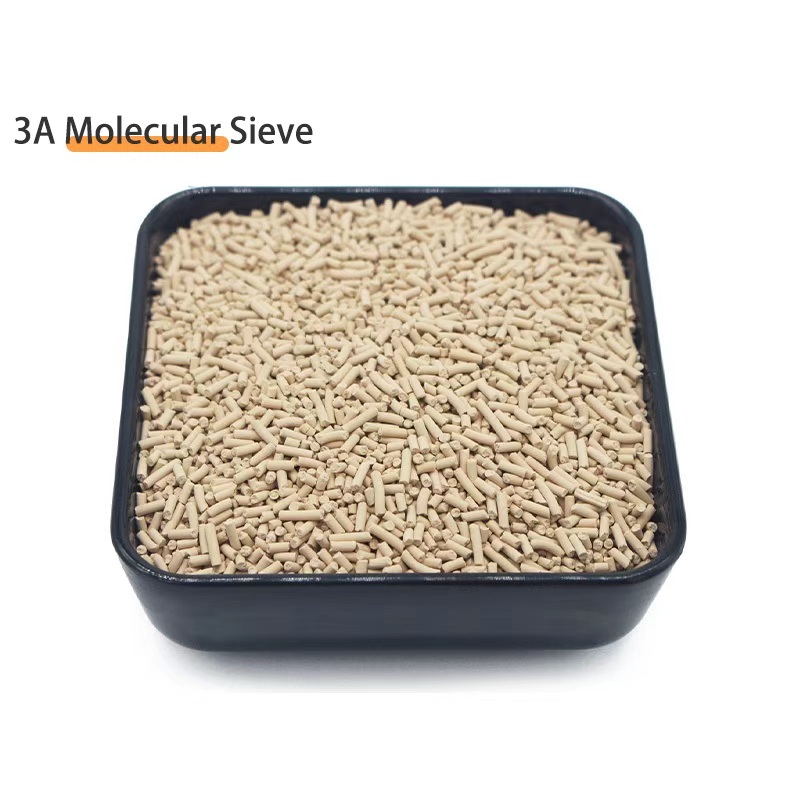
Molecular Sieve 13X (and 3A/4A/5A/LiLSX) — ISO 9001, MOQ 1 MT, Lead Time 15-25 Days
Type 13X (and 3A/4A/5A/LiLSX) molecular sieves from Zibo, Shandong — ISO 9001 certified manufacturer, BET surface area verified, COA on every shipment, free sample available.
View Product Details →Need a worked TCP calculation for your next adsorbent PO?