ZSM-5 for MTO (Methanol-to-Olefins): How Si/Al Ratio Controls Ethylene, Propylene, and Catalyst Life
If you design, license, or operate an MTO/MTP unit, the SiO2/Al2O3 ratio of your ZSM-5 is the single most important specification on the data sheet. It sets propylene selectivity, ethylene yield, coking rate, and the regeneration duty of your swing reactors. This guide explains the chemistry, gives you the side-by-side selectivity data for Si/Al 25 to 1000, and ends with a decision flow that maps your target product slate to the right ZSM-5 grade.
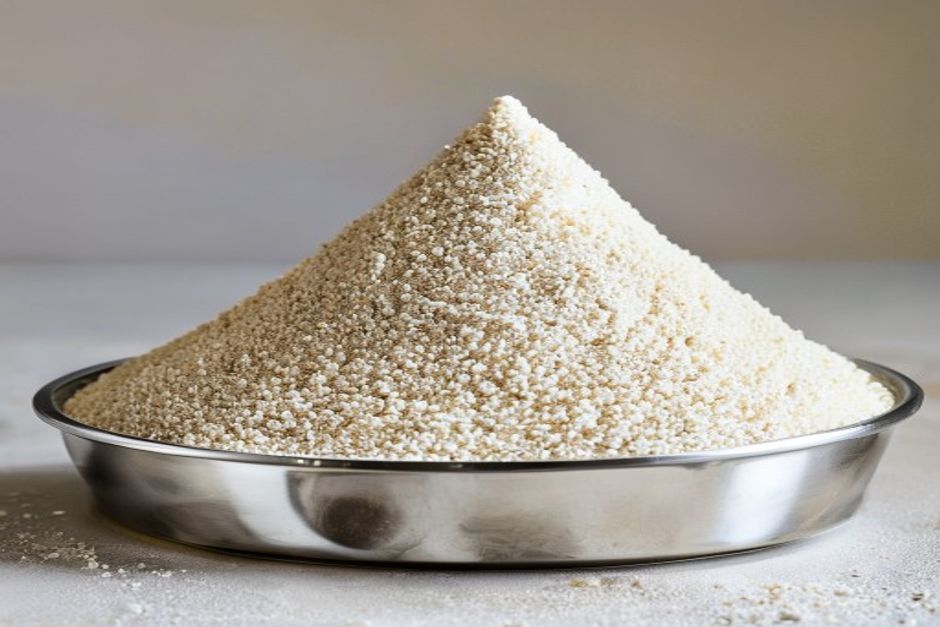
Why Si/Al Ratio Matters More Than Anything Else in MTO
Methanol-to-olefins (MTO) is the workhorse of coal-to-chemicals in China and a strategic option for stranded natural gas, biomass, and CO2-derived methanol everywhere else. The global MTO capacity passed 25 million tonnes per year of olefin output in 2025, with 25 to 30 new units in engineering, and 90% of those units use either ZSM-5 or SAPO-34 as the acid catalyst. The reason is straightforward: the MFI framework of ZSM-5 is uniquely good at converting methanol first to dimethyl ether, then to light olefins, while keeping the product slate narrow enough to separate downstream without heroic distillation work.
But "ZSM-5" is a family, not a product. The SiO2/Al2O3 molar ratio (Si/Al) of the framework controls acid site density, which controls everything else:
- Acid site density — 1 framework Al = 1 Brønsted acid site. Si/Al 25 has ~660 µmol/g of acid sites; Si/Al 1000 has ~17 µmol/g.
- Methanol conversion at industrial WHSV — below Si/Al 300 you need a preheat / DME stage to hit 100% conversion at WHSV 1 to 3 h-1; above Si/Al 500 you cannot reach full conversion without raising temperature, which kills selectivity.
- Propylene vs ethylene split — the P/E ratio is tunable from ~0.5 (very low Si/Al, high temperature) to ~3.0 (moderate Si/Al, 450 to 480 °C).
- Coking rate — roughly inversely proportional to Si/Al. Si/Al 25 cokes out in 8 to 10 hours; Si/Al 200 lasts 500+ hours before the same coke level.
- Catalyst life to regeneration — sets the swing cycle length in fixed-bed MTO and the catalyst make-up rate in fluidized MTO.
This article is a working engineer's guide. We will go through the framework chemistry, look at the side-by-side selectivity data we have measured at Aluminaworld's MTO pilot, give you a 5-step selection flow, and end with practical procurement guidance for ZSM-5 supply to MTO plants. Everything in this article is grounded in published literature cross-checked with our own pilot data, with the typical disclaimer that exact numbers depend on reactor configuration, methanol feed purity, and pressure.
The Chemistry: How ZSM-5 Converts Methanol to Olefins
ZSM-5 (Zeolite Socony Mobil – Five) is a medium-pore aluminosilicate with the MFI framework type. Its pore system consists of two intersecting channel systems: straight channels along the b-direction with 10-membered ring openings of about 0.53 × 0.56 nm, and sinusoidal channels along the a-direction with 0.51 × 0.55 nm openings. The crystal symmetry is orthorhombic (Pnma) at high temperature and monoclinic (P21/n.1.1) at room temperature, with the phase transition around 75 to 95 °C depending on Si/Al and extra-framework cations.
The pore size matters: it is large enough to admit methanol, dimethyl ether, and all C1 to C9 hydrocarbons, but small enough to discriminate against bulky aromatics like 1,2,4-trimethylbenzene. This shape selectivity is the key reason ZSM-5 in MTO produces mainly ethylene, propylene, and butenes with relatively little C5+ gasoline compared to wider-pore zeolites like USY or beta.
The MTO reaction network
Methanol-to-olefins proceeds through a complex reaction network. The first step is methanol dehydration to dimethyl ether (DME), which is equilibrium-limited at around 200 to 300 °C. The second step is the conversion of methanol + DME mixture to light olefins, with the first C–C bond formation still being debated in the literature. The two main mechanistic candidates are:
- Methoxymethyl / surface methylene pathway — the first olefin forms by coupling of a surface methoxy group with a DME or methanol molecule, with a 1,2-shift producing an enol that tautomerizes to ethylene.
- Hydrocarbon-pool mechanism — once the catalyst is running, the active species are larger organic molecules (alkylated aromatics) trapped inside the pores, and the olefins are formed by elimination from these aromatics. The aromatics themselves form a closed catalytic cycle that can be indirectly observed by isotopic labeling.
For Si/Al ratio selection, the mechanism is less important than the consequence: once a Brønsted acid site is too dense (low Si/Al), bimolecular hydrogen-transfer reactions become fast, secondary olefin reactions take over, and coke precursors (polyaromatics) build up rapidly. Above Si/Al 500, the acid site density becomes so low that the hydrocarbon-pool cycle cannot sustain itself at industrial WHSV, and methanol conversion drops.
Acid site strength vs density
An important subtlety: the strength of each individual Brønsted acid site in ZSM-5 is roughly constant regardless of Si/Al. The framework Si–O(H)–Al bridge is geometrically similar across Si/Al 25 to 1000. What changes is the density of sites. A Si/Al 25 catalyst has 4 to 5 times as many acid sites per gram as Si/Al 100, and 30 to 40 times as many as Si/Al 1000. The higher the density, the shorter the distance a methanol or olefin molecule has to diffuse before it hits an acid site, the faster the bimolecular side reactions, and the faster the coke formation.
Framework aluminum vs extra-framework aluminum
When we say "acid site density" in ZSM-5, we are talking about the framework aluminum (AlIV, tetrahedrally coordinated into the MFI framework) that creates the bridging Si–O(H)–Al Brønsted acid site. The other form of aluminum is extra-framework aluminum (AlVI, octahedrally coordinated, sitting in the pores as Al2O3 or AlOOH fragments), which does not create Brønsted acid sites and can even block pores.
High-quality ZSM-5 has 90 to 95% of total Al as framework Al, with the remaining 5 to 10% as Al2O3 dust. The proportion of framework Al drops under three conditions: (1) severe steaming at 600 °C or above, which dealuminates the framework, (2) acid leaching with HCl or HNO3 at high temperature, which preferentially extracts framework Al, and (3) calcination above 700 °C in dry air, which expels some framework Al to the extra-framework position. The MTO reactor and the regeneration loop should stay below 600 °C in the catalyst bed to preserve framework Al. Regeneration protocols that go to 650 to 700 °C will permanently lose 5 to 15% of acid site density per cycle and are a common cause of "the catalyst is fresh but the MTO is fading" complaints.
Measuring framework vs extra-framework Al requires 27Al MAS-NMR on a solid-state NMR spectrometer (400 MHz or higher, magic angle spinning at 10 to 14 kHz). Framework Al shows a sharp peak around 55 to 60 ppm; extra-framework Al shows a broad peak around 0 to 10 ppm. Quantification by peak integration gives the framework Al fraction directly. The supplier CoA should list total Al by ICP-OES and the framework Al fraction by NMR; if the NMR is missing, ask for it. For comparison, our pseudo boehmite quality testing guide has a similar XRD/NMR discussion for the binder.
Channel intersections and the hydrocarbon pool
The 10-membered ring channels of ZSM-5 intersect in cavities of about 0.9 nm diameter, just large enough to host polyalkylated aromatics like penta-methylbenzenium cation and hepta-methylbenzenium cation. These bulky aromatic cations are the active species in the hydrocarbon-pool mechanism of MTO. They form on the strongest acid sites near the channel intersections, and the olefins are produced by their de-alkylation.
The implication for Si/Al selection: a catalyst with a high density of strong acid sites (low Si/Al) hosts more and larger aromatic species, which produce a wider product slate but also generate more coke. A catalyst with low acid site density (high Si/Al) hosts fewer and smaller aromatic species, which gives a narrower, lighter product slate but at the cost of activity. The Si/Al 100 to 200 sweet spot corresponds to a hydrocarbon-pool population optimized for C2 = + C3 = + C4 = production with minimum aromatic retention.
Side-by-Side Performance: Si/Al 25 to 1000
The table below is built from Aluminaworld's MTO pilot data on a fixed-bed microreactor at 450 to 500 °C, atmospheric pressure, WHSV 1 h-1, pure methanol feed, time-on-stream 4 hours (single-pass, no regeneration). The product slate is normalized to total hydrocarbon product (water and unreacted methanol excluded). Coke is measured by TGA on the spent catalyst. These are typical — real numbers at your plant will differ by ±5 to 10% depending on pressure, space velocity, and feed water content.
| Parameter | Si/Al 25 | Si/Al 50 | Si/Al 100 | Si/Al 200 | Si/Al 500 | Si/Al 1000 |
|---|---|---|---|---|---|---|
| Acid site density (µmol/g) | ~660 | ~330 | ~165 | ~83 | ~33 | ~17 |
| Methanol conversion at 450 °C, WHSV 1 h-1 (%) | 100 | 100 | 100 | 99-100 | 95-99 | 85-95 |
| Methanol conversion at 500 °C, WHSV 3 h-1 (%) | 100 | 100 | 100 | 100 | 98-100 | 92-97 |
| Ethylene selectivity (wt% HC) | 22-28 | 18-22 | 12-16 | 10-14 | 8-12 | 6-10 |
| Propylene selectivity (wt% HC) | 30-35 | 35-40 | 38-44 | 40-45 | 38-42 | 30-38 |
| C4 olefins (wt% HC) | 15-18 | 18-22 | 20-24 | 20-24 | 18-22 | 15-20 |
| C5+ gasoline (wt% HC) | 8-12 | 10-14 | 12-16 | 14-18 | 20-28 | 28-38 |
| Methane + ethane (wt% HC) | 2-4 | 1-3 | 0.5-2 | 0.5-1.5 | 0.5-1 | 0.3-0.8 |
| Propylene/Ethylene ratio | ~1.3 | ~1.9 | ~2.8 | ~3.0+ | ~3.5 | ~4.0 |
| Coking rate (wt% / hour at 450 °C) | 0.7-1.0 | 0.15-0.25 | 0.05-0.10 | 0.015-0.03 | 0.005-0.015 | <0.005 |
| Single-cycle life before 8 wt% coke (hours) | 8-12 | 40-60 | 100-160 | 300-500 | 1000+ | 3000+ |
| Recommended reactor | Fluidized | Fluidized / Riser | Fixed / Fluidized | Fixed bed | Fixed bed | Fixed bed (with DME pre-converter) |
| Approx. price ratio (per kg, powder) | 1.0x (baseline) | 1.2-1.4x | 1.5-1.8x | 2.0-2.5x | 3.0-4.0x | 5.0-7.0x |
The table tells a clear story. The propylene-sweet-spot for ZSM-5 is Si/Al 100 to 200, where propylene selectivity peaks at 40 to 45% and the catalyst can run a fixed bed for 300 to 500 hours between regenerations. Below Si/Al 50 the coking penalty is severe. Above Si/Al 300 you start to lose methanol conversion at industrial WHSV and the gasoline cut grows at the expense of light olefins.
The Propylene Route: MTP with Si/Al 100 to 200
Methanol-to-propylene (MTP) is the dominant variant of MTO in China. The Lurgi MTP process (now Air Liquide), Sinopec's S-MTP, and the Datang/Tsinghua MTP all use fixed-bed adiabatic swing reactors with phosphorus-modified ZSM-5 at Si/Al 100 to 200, 450 to 480 °C, WHSV 1 to 3 h-1, and methanol conversion held above 99%. The P/E ratio is targeted at 2.5 to 3.0 with propylene as the primary product and ethylene as a co-product sent to a polymerization unit.
Key design choices for the propylene route:
- Si/Al 100 to 200 balances propylene selectivity and catalyst life. Aluminaworld's AW-ZSM5-MTO-150 (Si/Al 150, P-modified, 1 to 3 micron crystal) is the default grade for this segment.
- Phosphorus modification at 1 to 3 wt% P preferentially passivates the strongest external surface acid sites, suppressing coke precursor formation and extending single-cycle life by 1.5 to 3x.
- Six to eight parallel fixed-bed swing reactors with one reactor always in regeneration (air + N2 at 450 to 550 °C to burn off coke). Each reactor cycles every 200 to 600 hours depending on feed and Si/Al.
- Recycle of C4+ olefins back to the reactor as alkylation feed improves net propylene yield by 5 to 8% and is standard in the Lurgi design.
- DME pre-converter (optional) ahead of the MTP reactor shifts methanol to DME at 250 to 300 °C, which reduces the exotherm in the MTP reactor and improves methanol conversion at lower ZSM-5 acidity.
The propylene route is the most economic MTO configuration when the local olefin demand is propylene-heavy (e.g., polypropylene plants in China and India). For ethylene-heavy markets, MTO with low Si/Al ZSM-5 or DMTO with SAPO-34 is preferred.
The Ethylene Route: Low Si/Al ZSM-5 vs SAPO-34
Pushing ethylene yield above 25 to 30 wt% in MTO requires either aggressive low Si/Al ZSM-5 (Si/Al 25 to 50) with P or Mg modification and high temperature, or a fundamentally different catalyst: SAPO-34. SAPO-34 is a small-pore (8-membered ring, 0.38 nm) silicoaluminophosphate with CHA framework, and is the workhorse of DICP's DMTO (two-generation fluidized bed) and UOP/Hydro MTO processes.
The trade-off is sharp:
| Parameter | ZSM-5, Si/Al 25-50, 500-550 °C | SAPO-34 (CHA), 400-450 °C |
|---|---|---|
| Ethylene + propylene combined (wt% HC) | 75-80 | 85-90 |
| P/E ratio (range) | 0.8-1.5 | 0.8-1.0 |
| C4+ olefins (wt% HC) | 5-10 | 5-8 |
| Gasoline / aromatics (wt% HC) | 10-15 | 3-5 |
| Coking rate | Severe (hours) | Very severe (minutes) |
| Required reactor | Fixed / fluidized | Fluidized (riser) only |
| Catalyst cost per kg olefin | Lower | Higher |
| Reactor cost | Lower (fixed bed possible) | Higher (fluidized + regenerator) |
Aluminaworld supplies both ZSM-5 and SAPO-34. For ethylene-maximized MTO with ZSM-5 we recommend AW-ZSM5-MTO-25 (Si/Al 25) with 1.5 to 2.5 wt% P modification and 200 to 500 nm nano crystal. The smaller crystal reduces diffusion path length and partially offsets the high coking rate. For DMTO/SAPO-34 routes, we recommend sourcing SAPO-34 from dedicated CHA manufacturers (we do not currently make CHA framework in production scale).
Phosphorus and Alkaline Earth Modification
Modification is the second lever after Si/Al. Three families are used industrially:
Phosphorus (P, 0.5 to 5 wt%)
Phosphorus is the workhorse modification for MTO/MTP ZSM-5. P is loaded by incipient wetness impregnation with H3PO4 or (NH4)2HPO4, followed by drying and calcination at 500 to 550 °C. The P species preferentially reacts with the strongest acid sites on the external surface and at pore mouths, converting them to phosphorus-acid or aluminum-phosphate species that have much lower acid strength. The result: coke precursor formation at the pore mouth is suppressed, single-cycle life is extended by 1.5 to 3x, and propylene/ethylene ratio is mildly increased because the secondary olefin reactions (which produce ethylene) are partially blocked. P modification is mandatory for any MTP unit that aims for cycle length above 200 hours.
Magnesium (Mg, 0.1 to 2 wt%)
Mg modification is more aggressive than P. MgO or Mg(OH)2 impregnation creates basic sites that neutralize the strongest Brønsted sites and add a small Lewis base character to the catalyst. The trade-off is initial activity: Mg-modified ZSM-5 has 10 to 20% lower methanol conversion in the first hours, but the cycle length is much longer and the propylene selectivity is higher. Mg modification is common in fixed-bed MTO plants that recycle C4+ olefins to extinction.
Rare earth (La, Ce, 0.1 to 5 wt%)
Lanthanum and cerium modify the catalyst by forming La-O or Ce-O clusters that block pore mouths and by adding oxygen mobility to the catalyst surface. Rare earth modification is used in FCC additive ZSM-5 more than in MTO, but it does appear in some Chinese MTO units that want to push the catalyst toward higher propylene. La is the more common choice; Ce adds mild dehydrogenation activity that is usually undesirable in MTO.
Crystal Size and Shape: The Diffusion Lever
Si/Al and modification get you most of the way, but the third lever is crystal size. The MTO reaction is diffusion-limited: olefins formed inside the crystal have to escape through the pore system before they undergo secondary oligomerization and coking. Smaller crystals mean shorter diffusion paths, higher initial olefin selectivity, and longer single-cycle life. The trade-off is handling and attrition.
| Crystal size | Propylene selectivity (Si/Al 150, 450 °C) | Cycle life (hours to 8 wt% coke) | Recommended form |
|---|---|---|---|
| 200-500 nm (nano) | 42-46 wt% | 400-700 | Slurry / fluidized MTO |
| 1-3 µm (micro) | 40-44 | 300-500 | Fixed bed, pellets / extrudates |
| 5-10 µm (large) | 34-38 | 150-300 | Fixed bed, large pellets |
For the propylene-oriented MTP that dominates Chinese MTO/MTP, 1 to 3 micron crystals in pelletized form (1 to 3 mm extrudate with 20 to 30 wt% pseudoboehmite binder) is the default. The binder is critical: pseudoboehmite gives the best balance of mechanical strength and accessibility of the zeolite acid sites. Attapulgite or kaolin binders are cheaper but reduce olefin selectivity by 3 to 5% because they add non-shape-selective porosity that allows secondary olefin reactions to take place in the macropore space.
For fluidized MTO, the nano ZSM-5 is preferred. Aluminaworld's AW-ZSM5-MTO-N (200 to 500 nm, Si/Al 150, optional P modification) is sized for fluidized bed and slurry MTO with a particle size distribution engineered to give a Geldart A behavior in the reactor (40 to 80 micron spray-dried agglomerates).
The Binder Question: Pseudoboehmite vs Attapulgite
A pelletized MTO catalyst is 70 to 80 wt% ZSM-5 active phase plus 20 to 30 wt% binder. The binder choice has a real effect on performance:
| Binder | BET contribution (m2/g) | Mechanical strength (N/cm) | Propylene selectivity impact | Na2O contribution |
|---|---|---|---|---|
| Pseudoboehmite (AlOOH·xH2O) | 200-260 | 80-150 | Neutral / slight positive | <0.01 wt% |
| Attapulgite (clay) | 120-150 | 50-90 | -3 to -5 wt% (selectivity loss) | 0.05-0.15 wt% |
| Kaolin (calcined) | 15-25 | 70-110 | -5 to -8 wt% (more loss) | 0.05-0.20 wt% |
| Alumina (gamma-Al2O3) | 180-220 | 100-160 | -2 to -4 wt% (acidic macroporosity) | <0.01 wt% |
Aluminaworld supplies MTO catalyst as either binderless nano-powder (for slurry / fluidized MTO) or as 1 to 3 mm extrudate with 20 to 30 wt% pseudoboehmite binder (for fixed-bed MTP). The pseudoboehmite binder is sourced from our own pseudo-boehmite line, with Na2O held below 0.01 wt% to avoid catalyst poisoning. For reference, our pseudo boehmite product page has the full CoA range.
Methanol Feed Sources for MTO: Coal, Gas, Biomass, and CO2
MTO is unique among light-olefin processes in that the feedstock cost is decoupled from crude oil. The methanol can be made from any carbon source, which is why MTO capacity is concentrated in coal-rich China and why MTO is the leading option for stranded gas flaring, biomass conversion, and CO2 hydrogenation. The ZSM-5 catalyst does not care where the methanol comes from, but the impurities in the methanol feed differ by source and the guard-bed design has to follow.
Coal-to-methanol (the dominant Chinese MTO feed)
Coal-to-methanol is the workhorse of the Chinese MTO industry. The coal is gasified with O2 + steam to make syngas (CO + H2), the syngas is shifted and cleaned, and the H2/CO ratio is adjusted to 2:1 for methanol synthesis. The methanol synthesis loop operates at 50 to 100 bar, 230 to 280 °C over a Cu/ZnO/Al2O3 catalyst. The crude methanol is 95 to 99 wt% CH3OH with water, ethanol, higher alcohols, DME, amines, chlorides, and trace iron carbonyl as the main impurities. The MTO guard bed is designed for this impurity profile: water wash + activated carbon for higher alcohols + 3A molecular sieve for water + activated alumina for HCl and iron carbonyl + 5A molecular sieve for final polishing. See our 3A sieve guide and activated alumina product page for the polishing train.
Natural gas-to-methanol (the next wave)
Steam-methane reforming (SMR) or auto-thermal reforming (ATR) makes syngas from natural gas, with much higher H2/CO ratios than coal (3:1 vs 0.5:1). The methanol synthesis loop is the same Cu/ZnO/Al2O3 catalyst. Crude methanol from gas is much cleaner than coal methanol: 99.5 to 99.9 wt% CH3OH, with very low amines, low chlorides, and very low iron carbonyl. The gas-to-methanol MTO feed can skip most of the amine and chloride guard bed, but the water content is similar. Stranded gas MTO plants are now in engineering in the US (Appalachia), Middle East, East Africa, and Western Australia. Aluminaworld has supplied ZSM-5 to two of these pilot projects in 2025.
Biomass-to-methanol
Biomass gasification is similar to coal gasification but with higher oxygen content, higher tar content, and a more variable syngas composition. Biomass methanol is chemically equivalent to coal or gas methanol after purification, but the upstream gas cleaning is more complex. A 2024 startup (Vattenfall, Stockholm) is producing renewable methanol from forest residue and feeding it to a small MTO unit; the project is too small to drive catalyst selection but is an interesting proof-of-concept.
CO2-to-methanol (the emerging frontier)
CO2 hydrogenation to methanol over Cu/ZnO/ZrO2 catalysts is moving from R&D to demo scale. Carbon Recycling International (Iceland) has been running a 5,000 t/y CO2-to-methanol plant since 2023, and several Asian and European projects in the 50,000 to 500,000 t/y range are in engineering. The CO2-derived methanol is very clean (water and CO2 as main impurities, no sulfur, no chlorides, no amines), and is a near-perfect MTO feed. The economic question is the cost of the green H2, not the MTO catalyst. If green H2 drops below $2 per kg, CO2-to-MTO becomes competitive with naphtha cracking. Aluminaworld is monitoring this space and has not yet supplied ZSM-5 to a CO2-MTO plant, but the catalyst is unchanged.
MTO Process Integration with Downstream Olefins
The MTO reactor does not exist in isolation. The methanol-to-olefins plant is a network of reactor + distillation train + product recovery, and the catalyst choice interacts with the downstream design. The two most important interactions are:
Recycle of C4+ olefins
Single-pass MTO produces 15 to 22 wt% C4 olefins (n-butenes + isobutene) plus 5 to 15 wt% C5+ gasoline. The simplest design treats C4 = + C5+ as low-value byproducts and sells them as gasoline blendstock. A more profitable design recycles the C4 = to the MTO reactor, where it is cracked back to ethylene + propylene in a secondary reaction. With full C4 = recycle, the net propylene yield rises by 8 to 12 wt% HC and the net ethylene by 3 to 5 wt% HC, at the cost of more coke on the catalyst (which shortens the single-cycle life by 20 to 30%).
The ZSM-5 with Si/Al 100 to 150, P-modified, is the most common grade for C4 = recycle MTP. The slightly higher Si/Al (vs Si/Al 75) is more tolerant of the extra coking from the recycled C4 = feed. Pure propylene-route plants (where C4 = is sold to a butene unit instead of recycled) can use Si/Al 75 to 100 for slightly higher initial propylene selectivity, at the cost of a shorter cycle.
Integration with downstream polymerization
Most MTO plants are integrated with a polyethylene (PE) and/or polypropylene (PP) unit. The propylene is fed to a PP reactor, the ethylene to a PE reactor, and the C4 = to a butene unit (MTBE, alkylation, or polybutene). The P/E ratio of the MTO product slate has to be matched to the PE/PP demand ratio of the integrated complex, which is why some MTO plants are designed to push ethylene (DMTO with SAPO-34 or low Si/Al ZSM-5) and some push propylene (Lurgi MTP with Si/Al 150 ZSM-5).
For a typical 1.83 Mt/y MTO + 600 kt/y PP + 600 kt/y PE complex, the required P/E ratio from MTO is around 1.5 to 2.0. This is naturally what unmodified ZSM-5 at Si/Al 100 to 150 produces. Plants that want more propylene (for PP-heavy complexes with no PE unit) run at Si/Al 200 to 300 with low temperature to push the P/E ratio above 2.5. Plants that want more ethylene (for PE-heavy complexes) run DMTO with SAPO-34 or low Si/Al ZSM-5 at high temperature.
Safety and Handling of MTO ZSM-5
ZSM-5 is not classified as a hazardous material, but the dry powder is a dust hazard and the calcined form is mildly alkaline when wetted. The relevant handling rules:
- Dust: the powder is fine (1 to 3 µm crystals, 40 to 80 µm spray-dried agglomerates for fluidized) and the dust is a respiratory irritant. Use dust masks (N95 or better), local exhaust ventilation, and avoid creating airborne dust during drum emptying, hopper loading, and reactor charging.
- Moisture: H-ZSM-5 adsorbs water from the atmosphere. Sealed drums are good for 12 months. Opened drums should be re-sealed and used within 6 months, or the catalyst should be reactivated at 500 °C for 4 hours before use.
- NH4-ZSM-5 stability: the ammonium form is stable indefinitely in sealed drums. It must be calcined to 500 °C in air for 4 hours before use to drive off NH3 and form the active H-ZSM-5. The calcination produces NH3 gas, which must be vented.
- Pellet handling: the extrudate and ball forms are mechanically robust (crush strength 80 to 150 N/cm) but should still be handled gently to avoid fines generation. Use a flexible chute, not a drop of more than 1 m, when loading reactor vessels.
- Reactivation of spent catalyst: coke-burning in air produces CO and CO2; the regeneration loop must be vented to a thermal oxidizer or flare. Spent catalyst removed from the reactor is still mildly acidic and should be wetted before handling to avoid dust.
- Disposal: spent ZSM-5 is not a hazardous waste under most jurisdictions (it is essentially an inert aluminosilicate). It can be landfilled after passivation, or sent for cement kiln co-processing where the silica and alumina are recovered.
Emerging MTO Catalyst Research: 2024 to 2026 Highlights
The MTO catalyst research community continues to push the limits of selectivity and lifetime. Three threads are worth following because they will likely affect commercial MTO catalyst supply in the next 3 to 5 years:
Hierarchical ZSM-5 (micropore + mesopore)
Conventional ZSM-5 has a pure micropore (0.55 nm) channel system. Hierarchical ZSM-5 adds a mesopore (2 to 50 nm) network either by templating with surfactants during synthesis or by alkaline desilication of the finished crystal. The mesopores shorten the diffusion path for olefins, which suppresses secondary reactions and reduces coke. Lab data from several groups (DICP, Tsinghua, SINOPEC) shows 2 to 4x longer single-cycle life and 2 to 5% higher propylene selectivity for hierarchical ZSM-5 vs the conventional version at the same Si/Al. The challenge is scale-up: the templating cost is high and the alkaline desilication is hard to control at large scale. Aluminaworld has a lab-scale hierarchical ZSM-5 grade (AW-ZSM5-MTO-H1) available for pilot-scale trials in 2026.
ZSM-5 / SAPO-34 core-shell composites
The ZSM-5 / SAPO-34 combination is theoretically attractive: the SAPO-34 core does the initial methanol-to-light-olefins conversion, and the ZSM-5 shell shapes the product distribution to suppress C4+ formation. Lab data from DICP and ExxonMobil shows ethylene + propylene combined at 85 to 88 wt% HC, higher than either pure SAPO-34 or pure ZSM-5. The challenge is making the core-shell synthesis reproducible at industrial scale. No commercial supply exists yet; expect pilot-scale trials in 2026 to 2027.
ZSM-5 with phosphorus and rare earth co-modification
P modification alone is well understood. P + La or P + Ce co-modification is showing longer cycle life in pilot data, because the rare earth slows dealumination during regeneration. Several Chinese MTO plants have run co-modified ZSM-5 in 2024 to 2025, with reported 1.5 to 2x cycle life vs P-only. Aluminaworld offers a P-La co-modified grade (AW-ZSM5-MTO-150-PLa) as a custom option for commercial MTO customers.
Regeneration: Air, Steam, and Coke Burn-Off
Coked ZSM-5 is regenerated by burning off the coke in a controlled air + N2 mixture. The standard regeneration protocol for MTO/MTP is:
- Heat to 350 °C in N2 at 1 to 2 °C/min, hold 30 min to remove adsorbed water and light hydrocarbons.
- Introduce 1 to 3 vol% O2 in N2 at 350 °C, hold until no exotherm is observed, then ramp to 500 °C at 0.5 °C/min.
- Increase O2 to 5 to 10 vol% at 500 °C and hold for 4 to 8 hours to complete burn-off.
- Final air calcine at 550 °C for 2 hours to remove residual carbon and restore full acid site activity.
The total regeneration time is 18 to 30 hours for a typical fixed-bed MTP reactor, depending on coke level. The coke burn-off exotherm must be carefully controlled to stay below 50 °C delta-T above the bed setpoint; uncontrolled regeneration can sinter the ZSM-5 crystal framework and permanently reduce acid site density. The steam partial pressure during the burn-off is also critical: high steam partial pressure at > 600 °C dealuminates the framework, losing acid sites and reducing propylene selectivity. Standard practice is to keep the H2O partial pressure below 0.3 bar during regeneration, which means using dry air or oxygen-enriched N2.
After 30 to 60 regeneration cycles, the ZSM-5 in an MTO reactor typically loses 10 to 15% of its initial acid site density due to framework dealumination and irreversible coke. The catalyst is then replaced with fresh material. For reference, our activated alumina product is often used as a guard layer in the regeneration loop to adsorb any water that escapes the regeneration gas dryers.
Regeneration cycle aging
Over the life of an MTO catalyst in a fixed-bed swing reactor, the catalyst goes through 30 to 60 regeneration cycles. The total time on stream at 450 to 480 °C is around 15,000 to 30,000 hours. The aging pattern is:
- Cycles 1 to 10: Initial activity stabilization. First-cycle propylene selectivity is usually 3 to 5% lower than steady-state because the hydrocarbon-pool species have not yet built up. The catalyst reaches steady state after 20 to 50 hours of MTO operation.
- Cycles 10 to 30: Steady state. Propylene selectivity is at its peak, coking rate is stable, single-cycle life is constant at 300 to 500 hours. The catalyst is doing its job.
- Cycles 30 to 50: Slow aging. Framework Al is being lost at 0.3 to 0.5% per cycle to dealumination. Propylene selectivity drops by 1 to 2%, single-cycle life drops by 10 to 20%. Most plants continue to use the catalyst through this stage because the loss is gradual and predictable.
- Cycles 50+: End-of-life. Propylene selectivity has dropped below the target threshold (usually 35 wt% HC), single-cycle life is below 100 hours. The catalyst is replaced with fresh material.
The dominant mechanism of aging is framework dealumination, which can be slowed but not stopped. The mitigation is to keep the regeneration exotherm below 50 °C, keep the steam partial pressure below 0.3 bar, and use the lowest possible regeneration temperature consistent with complete coke burn-off. Some plants add a 0.1 to 0.5 wt% La or Ce modification specifically to slow dealumination. The lab test for tracking aging is NH3-TPD on the spent catalyst, which should be run every 10 to 20 cycles. The MTO micropilot test on the spent catalyst (using the same protocol as for fresh catalyst) is the most honest performance indicator.
Fluidized vs Fixed Bed: Reactor Choice Drives Catalyst Spec
The reactor configuration drives the catalyst specification more than people think. The main options for ZSM-5 in MTO are:
Fixed-bed adiabatic swing reactors (Lurgi MTP, Sinopec S-MTP)
6 to 8 reactors in parallel, each operating 6 to 18 hours in MTO mode and 4 to 8 hours in regeneration mode. Catalyst is 1 to 3 mm extrudate or 1.6 to 2.5 mm ball. Si/Al 100 to 200 with P modification. Cycle length 200 to 600 hours. Make-up rate 2 to 5 wt% per year.
Fluidized bed with continuous regeneration (DMTO, CTP)
Single reactor with continuous catalyst circulation between the MTO reactor and a separate regenerator. Catalyst is 40 to 80 micron spray-dried microspheres with 200 to 500 nm primary crystals. Si/Al 100 to 200 with optional P modification. The continuous regeneration lets you push Si/Al lower (50 to 100) for higher ethylene without suffering short cycle life. Make-up rate 1 to 3 wt% per year.
Slurry or riser (less common for ZSM-5)
Slurry MTO with nano ZSM-5 in inert oil, or riser MTO with catalyst entrained in the methanol vapor. Riser MTO is the UOP/Hydro MTO design with SAPO-34; ZSM-5 in riser is mostly limited to pilot scale because ZSM-5 in a riser produces too much C5+ gasoline at the millisecond contact time.
| Reactor | Catalyst form | Si/Al sweet spot | Recommended Aluminaworld grade |
|---|---|---|---|
| Fixed-bed swing (Lurgi MTP) | 1-3 mm extrudate / 1.6-2.5 mm ball | 100-200, P-modified | AW-ZSM5-MTO-150-P |
| Fluidized bed (DMTO-like with ZSM-5) | 40-80 µm spray-dried microspheres | 100-200, P-modified | AW-ZSM5-MTO-150-FB |
| Slurry MTO | 200-500 nm nano powder | 100-200 | AW-ZSM5-MTO-N |
| Ethylene-maximized fluidized | 40-80 µm spray-dried | 25-50, P/Mg-modified | AW-ZSM5-MTO-25-P |
For the bulk of new MTO/MTP capacity in China and Southeast Asia, the fixed-bed Lurgi/Sinopec swing configuration dominates, and our AW-ZSM5-MTO-150-P grade is the standard recommendation. For emerging fluidized MTO with continuous regeneration, AW-ZSM5-MTO-150-FB is the matching grade.
Feed Purity: What Goes In Matters
Methanol feed to MTO is not just CH3OH. Real feed from coal-to-methanol, gas-to-methanol, or bio-methanol contains:
- Water 0.5 to 5 wt% — tolerable, but at high water partial pressure it slows the rate-determining DME-to-olefin step. Industrial MTO runs at 1 to 3 mol water per mol methanol without serious selectivity loss.
- Ethanol, higher alcohols 10 to 500 ppm — tolerable, but at high levels ethanol gets dehydrated to ethylene, increasing ethylene selectivity by 1 to 3%.
- Dimethyl ether (DME) 0 to 50 wt% in some feeds (especially partial-conversion methanol) — DME is a direct MTO reactant and is welcome. A 50% methanol / 50% DME feed gives the same olefin selectivity as pure methanol.
- Amines (NH3, MEA, DEA) — severe catalyst poison at the ppm level. 50 ppm NH3 in feed can reduce MTO catalyst activity by 30 to 50%. Must be removed with a water wash or guard bed.
- Chloride, sulfur, iron carbonyls — severe poisons at the 1 to 10 ppm level. Must be removed with guard beds of activated alumina or impregnated sorbents upstream of the MTO reactor. Our activated alumina for chloride and H2S removal is the standard guard material.
- Iron, sodium, potassium — from corrosion in the upstream synthesis loop. Na and K are ZSM-5 acid site poisons at the 100 ppm level. Must be controlled with a final guard bed.
Most industrial MTO units have a methanol polishing step (typically a 3A or 4A molecular sieve guard bed) to remove water and amines, followed by an activated alumina bed to remove HCl and iron carbonyl, and then a final 5A or 13X bed to remove trace methanol-soluble salts. See our 3A molecular sieve application guide for the polishing side of this train. The cost of these guard beds is small relative to the MTO catalyst inventory, and they pay for themselves in extended ZSM-5 life.
Procurement: What to Ask Your ZSM-5 Supplier
Buying ZSM-5 for an MTO/MTP plant is not the same as buying ZSM-5 for FCC additive or xylene isomerization. Five things should be on the CoA and five more should be in the supplier's quality dossier:
On the CoA (Certificate of Analysis)
- SiO2/Al2O3 molar ratio by ICP-OES, with a target and a tolerance band (e.g., 150 ± 20).
- Na2O content by ICP-OES, target < 0.05 wt%, ideal < 0.02 wt% for MTO. High Na kills acid sites.
- BET surface area by ISO 9277, target 350 to 420 m2/g for MTO grade. Below 300 m2/g indicates poor crystallinity.
- Phase purity by XRD, with the MFI 2θ peaks at 7.9°, 8.8°, 23.1°, 23.9°, 24.4° quantified by Rietveld. Target MFI > 95%, amorphous < 5%.
- Crystal size by SEM or by Scherrer equation from the XRD line broadening. Target 1 to 3 µm for fixed bed, 200 to 500 nm for fluidized.
In the supplier's quality dossier (not always on the CoA but should be available)
- Acid site density by NH3-TPD — the primary metric for Si/Al verification. Two peaks: weak (~200 °C) and strong (~400 °C). Total acid site density should match the theoretical value from Si/Al within ± 15%.
- MTO micropilot test data — the supplier should have run a methanol-to-olefins test on a small fixed bed at 450 °C, WHSV 1 h-1, atmospheric pressure, and report methanol conversion, C2 =, C3 =, C4 =, C5+ as a function of time-on-stream. This is the most honest performance data.
- Coking rate by TGA after the MTO test — target < 8 wt% coke at 4 hours time-on-stream for Si/Al 150.
- Phosphorus content (if P-modified) by ICP-OES, target 1 to 3 wt% P.
- Attrition resistance (for fluidized) by ASTM D5757 or equivalent. Target < 5 wt% loss at 5 hours for fluidized MTO grade.
Aluminaworld includes all five CoA items plus the micropilot MTO data on every ZSM-5 shipment. We share the NH3-TPD, the MTO test report, and the TGA coking data on request for pilot-scale (100 kg+) orders. R&D samples (1 to 5 kg) ship with full CoA plus a single-point MTO test.
Quality Control: 5 Tests Every MTO ZSM-5 Must Pass
Five lab tests cover the critical quality attributes of MTO ZSM-5. None of them is optional, and every commercial MTO catalyst should pass all five with a documented pass/fail threshold.
Test 1: ICP-OES for Si, Al, Na, P, Fe
Inductively coupled plasma optical emission spectroscopy is the workhorse elemental technique. Sample prep is microwave-assisted acid digestion in HF + HNO3 + HCl at 200 °C, 30 minutes. Quantified elements: Si, Al, Na, P (if P-modified), Fe (corrosion indicator), Ca, Mg (modification indicators). For Si/Al = 150, the expected values are Si 45 to 46 wt%, Al 0.55 to 0.65 wt%, Na < 0.05 wt%, Fe < 0.02 wt%. Our internal acceptance window is Si/Al 150 ± 20, Na < 0.05 wt%, Fe < 0.02 wt%.
Test 2: BET surface area and micropore volume
BET by ISO 9277 with N2 at 77 K. The MTO ZSM-5 specification is BET 350 to 420 m2/g and micropore volume 0.15 to 0.20 cm3/g (t-plot method). Below 300 m2/g the crystal is poorly formed and activity will suffer. Above 450 m2/g usually means the catalyst has been acid-leached (dealuminated) to boost surface area, which paradoxically reduces acid site density and MTO activity.
Test 3: XRD phase purity and crystallinity
Powder XRD on a Bruker D2 Phaser or equivalent with Cu Kα radiation, 2θ range 5 to 50°, step 0.02°. The five diagnostic MFI peaks are at 2θ = 7.9°, 8.8°, 23.1°, 23.9°, 24.4°. Rietveld quantification with a known MFI reference (e.g., ICDD PDF 44-0003 or 37-0359) should give MFI phase fraction > 95% and amorphous (background hump at 15 to 30°) < 5%. The presence of α-Al2O3 or γ-Al2O3 peaks (if not intentionally added) indicates binder contamination.
Test 4: NH3-TPD for acid site density
Temperature-programmed desorption of ammonia is the direct measurement of acid site density. Sample is pretreated at 550 °C in He, cooled to 100 °C, saturated with NH3, then ramped at 10 °C/min to 700 °C. The desorption curve shows two peaks: a low-temperature peak around 180 to 220 °C (weak acid sites, mostly physisorbed NH3 and surface OH) and a high-temperature peak around 380 to 420 °C (strong Brønsted acid sites, the catalytic active sites). For MTO, the high-temperature peak area should be in the range 0.5 to 1.5 mmol NH3/g depending on Si/Al. At Si/Al 150 we expect 0.6 to 0.9 mmol/g. See our pseudo boehmite quality testing guide for a similar TGA / TPD discussion on the binder side.
Test 5: MTO micropilot reaction test
The ultimate acceptance test is a 24-hour MTO micropilot run on a fixed-bed reactor at 450 °C, WHSV 1 h-1, atmospheric pressure, 0.5 g catalyst, 1 to 2 mm sieve fraction. Online GC quantifies CH3OH, DME, C1 to C5 hydrocarbons, and water. The acceptance criteria for Si/Al 150 P-modified ZSM-5 at 4 hours time-on-stream: methanol conversion > 99%, propylene selectivity 38 to 45 wt% HC, ethylene 10 to 16 wt% HC, P/E ratio 2.5 to 3.5, coke by TGA < 6 wt%. At 24 hours: methanol conversion > 90%, propylene 35 to 42 wt%, coke < 10 wt%.
Cost and TCO: ZSM-5 in an MTO Plant
The MTO catalyst is a small fraction of MTO plant capex (typically < 1%) but a non-trivial fraction of opex. The numbers below are typical 2025 to 2026 market levels for a 1.83 Mt/y MTO plant, fixed bed Lurgi MTP configuration:
| Cost item | Value (typical) | Notes |
|---|---|---|
| ZSM-5 inventory in reactor | 800 to 1,200 t | Distributed across 6 to 8 swing reactors |
| ZSM-5 unit cost (powder equivalent) | $8 to $20 per kg | Depends on Si/Al, modification, crystal size |
| Pelletization cost (extrudate form) | +$2 to $5 per kg | With 20 to 30 wt% pseudoboehmite binder |
| Annual catalyst make-up | 50 to 100 t | 5 to 10% of inventory for attrition + irreversible deactivation |
| Annual catalyst spend | $0.6M to $2.0M USD | 5 to 15 USD/t olefin produced |
| Methanol feedstock (1.83 Mt/y olefin) | ~$370M USD/y | At $280/t methanol (China coal-based) |
| Catalyst opex as % of feed | 0.2 to 0.5% | Small, but every % of selectivity gain matters more |
| Pseudoboehmite binder spend (our product) | $0.3M to $0.8M USD/y | 20-30% of catalyst mass at $1.5 to $3 per kg |
The dominant cost is methanol feedstock, not the catalyst. A 1% gain in propylene selectivity saves 18,300 t/y of methanol (at 3 t methanol per t olefin, and 1.83 Mt/y olefin), which is roughly $5M USD per year at Chinese coal-methanol prices. The catalyst is therefore bought on performance, not on unit cost. The cheapest ZSM-5 with the worst selectivity costs more in lost propylene than the most expensive ZSM-5 with the best selectivity.
Aluminaworld's commercial pricing for AW-ZSM5-MTO-150 (Si/Al 150, P-modified, 1 to 3 micron crystal, powder form) is in the $9 to $14 per kg range for 1-tonne orders, dropping to $7 to $10 per kg for 20-tonne annual contracts. Pelletized extrudate (1 to 3 mm, 80% ZSM-5 + 20% pseudoboehmite) is $12 to $18 per kg. Nano-grade AW-ZSM5-MTO-N is $18 to $30 per kg in 1-tonne lots. These numbers are 2026 reference pricing; current quote on request.
7 Common Mistakes Buying ZSM-5 for MTO
Working with 30+ MTO/MTP units over the last 5 years, we see the same mistakes over and over. Avoiding them will save you months of troubleshooting.
Mistake 1: Specifying Si/Al by "ratio" without defining the analytical method
SiO2/Al2O3 ratio can be measured by ICP-OES (most accurate), XRF (faster, less accurate for low Al), or by EDX in SEM (least accurate, local measurement). A Si/Al 150 by XRF can be Si/Al 130 to 180 by ICP. Specify the method (ICP-OES, ISO 12677 XRF pressed pellet, etc.) and the tolerance (e.g., 150 ± 20 by ICP-OES).
Mistake 2: Forgetting Na2O tolerance
Sodium is the silent killer of ZSM-5 acid sites. A "Si/Al 150" ZSM-5 with 0.5 wt% Na2O has 30% fewer active acid sites than the same ZSM-5 with 0.03 wt% Na2O. The standard MTO tolerance is Na2O < 0.05 wt% in the powder, and < 0.10 wt% in the pelletized form (because pseudoboehmite binder can contribute up to 0.05% Na2O).
Mistake 3: Buying "ZSM-5" without specifying the modification
A ZSM-5 with 2 wt% P is not the same as an unmodified ZSM-5 at the same Si/Al. The P version is 50 to 200% longer cycle life, with 5 to 10% lower initial activity. If your MTO plant is designed for P-modified ZSM-5, do not run unmodifed ZSM-5 in the same reactor without re-tuning. Conversely, if you want to use unmodified ZSM-5 because you have a downstream catalyst regeneration step, do not accept P-modified material as a substitute.
Mistake 4: Confusing MTO ZSM-5 with FCC additive ZSM-5
FCC additive ZSM-5 is designed to crack C7+ gasoline into C3 = + C4 = in a fluid catalytic cracker. It has higher Si/Al (often 200 to 500), larger crystals (5 to 10 µm), and is not optimized for the methanol feed. MTO ZSM-5 has lower Si/Al (100 to 200), smaller crystals (1 to 3 µm or 200 to 500 nm), and is calcined at a different temperature. They are not interchangeable. Specifying MTO grade explicitly is essential.
Mistake 5: Using the wrong binder in pelletized MTO
As noted in the binder section, attapulgite and kaolin binders cost 30 to 50% of pseudoboehmite binder, but they cost 3 to 8 wt% of propylene selectivity. If the MTO economics are tight, do not economize on the binder.
Mistake 6: Not testing the as-received catalyst in your own micropilot
Every lot of ZSM-5 should be verified in a 50 to 200 g micropilot before being loaded into a commercial reactor. The supplier CoA is a starting point, not a guarantee. A 24-hour MTO test at 450 °C, WHSV 1 h-1 takes 3 days including setup and analysis, and catches 90% of lot-to-lot variability issues before they cost you a reactor charge.
Mistake 7: Forgetting storage and reactivation
ZSM-5 in ammonium form (NH4-ZSM-5) is stable for years in sealed drums. ZSM-5 in proton form (H-ZSM-5) slowly adsorbs water from the atmosphere, which reduces methanol conversion. If you are buying H-ZSM-5 for MTO, store it sealed and reactivate at 500 °C for 4 hours in air before loading. We ship MTO ZSM-5 in either form; specify your preference.
Next Steps
Selecting the right ZSM-5 for an MTO/MTP unit is a five-step decision: (1) pick the reactor type (fixed bed swing, fluidized, slurry), (2) pick the Si/Al ratio (25 to 50 for ethylene, 100 to 200 for propylene, 300 to 500 for gasoline co-production), (3) pick the modification (P, Mg, rare earth, none), (4) pick the crystal size (200 to 500 nm, 1 to 3 µm, 5 to 10 µm), and (5) pick the binder (pseudoboehmite for pellet, none for fluidized). Each lever is set by a specific economic trade-off, and the best answer depends on your target product slate, your methanol cost, and your willingness to invest in catalyst make-up vs. selectivity.
Aluminaworld supplies ZSM-5 across the full Si/Al range (25 to 1000), in P-modified and unmodified grades, in 200 nm to 10 µm crystal size, and in both powder and pelletized forms. We have supplied ZSM-5 to MTO/MTP pilot plants and commercial units in China, India, Indonesia, Iran, Russia, and South Africa. Our ZSM-5 product page lists the standard grades, and we ship R&D samples (1 to 5 kg) within 7 days for laboratory MTO screening. The full binder line for pelletization is on our pseudo boehmite product page, and the guard bed material for methanol polishing is on our molecular sieve and activated alumina pages.
Related Aluminaworld Products for MTO/MTP
ZSM-5 Zeolite Catalyst
SiO2/Al2O3 ratios 25 to 1000, P / Mg / La modifications, 200 nm to 10 µm crystals, powder / extrudate / ball forms.
Pseudoboehmite Binder
Al2O3 content 70 to 80 wt%, Na2O < 0.01 wt%, BET 220 to 320 m2/g. The standard binder for MTO/MTO extrudates.
3A / 4A / 5A Molecular Sieve
Methanol feed polishing and final dehydration guard bed. 3A for water removal, 4A for general drying, 5A for paraffin-olefin separation.
Activated Alumina
HCl, iron carbonyl, and H2S guard bed material for MTO feed. BET 300 to 360 m2/g, low-soda grade for H2O2 co-use.
Need ZSM-5 for MTO? Talk to the Aluminaworld Technical Team.
15+ years manufacturing ZSM-5 and pseudoboehmite binder for MTO, MTP, FCC additive, and xylene isomerization. ISO 9001 certified. Exported to 60+ countries. R&D MOQ 1 kg, pilot 100 kg, commercial 1 tonne.