Why moisture method choice determines whether the COA is correct
Spent molecular sieve - whether it is 3A from an ethanol dehydration column, 4A from a natural-gas liquids dryer, 5A from a hydrogen PSA, or 13X from a CO2 or air-drying service - carries moisture in two distinct populations: physically adsorbed water in the pore system, and water of hydration in the sodalite cages of the zeolite framework. The physically adsorbed water desorbs easily at 100 to 150 degrees C, but the cage-bound water requires 250 to 400 degrees C to release, and the LOI value at 900 degrees C includes both populations plus anything organic that combusts or volatilizes. The three routine moisture methods - Karl Fischer oven-KF (ASTM D6869), gravimetric 105 degrees C / 2 h, and LOI at 900 degrees C - read these two water populations plus the organic sidecarries differently, and the differences are large enough that a spent-sieve lot accepted by one method can be rejected by another. The reference value for any spent-sieve moisture measurement is the oven-KF result at the validated oven condition, not the gravimetric and not the LOI. For context on how the LOI value at 900 degrees C compares across standards for molecular sieve, see our ISO 22489 vs GB/T 10504 DCI test comparison guide. For the broader regeneration best-practices context on the upstream dryer side, see our regeneration best-practices guide.
The practical question for the procurement engineer is not "which method is most accurate in absolute terms" but "which method gives the closest match to the COA reference value at my upstream contract terms, and how do I prevent a moisture dispute when my sieve arrives at the regeneration vendor with a moisture number that disagrees with theirs". The answer in the 19-site dataset was unambiguous: coulometric oven-KF at 130 degrees C / 45 min for 5A and 13X, oven-KF at 105 degrees C / 2 h for 3A and 4A, with the LOI value reported separately as a volatiles-total reference and the gravimetric value used only as a sanity check or shipment-acceptance proxy above 3 wt% moisture. The rest of this guide walks through the method comparison data and the sieve-grade-specific recommendations.
Method accuracy summary across the 19-site dataset
The 19-site dataset covers 5 spent 3A samples from ethanol dehydration, 4 spent 4A from natural-gas liquids dryers, 4 spent 5A from hydrogen PSA, and 6 spent 13X from CO2 and air-drying services. All 19 samples were measured by three methods on the same aliquot within 6 hours of unloading: (a) oven-KF at 130 degrees C / 45 min using a Mettler Toledo V20S coulometric titrator with a Stromboli oven head, (b) gravimetric at 105 degrees C / 2 h on the same balance used for the KF tare, and (c) LOI at 900 degrees C / 2 h on a separate aliquot. The accuracy of each method was assessed against the reference value (oven-KF 150 degrees C / 60 min, double-checked against ASTM D7341 LOI at 900 degrees C / 2 h on a separate aliquot).
| Method | Working range | Mean bias vs reference | 95% CI of bias | Throughput |
|---|---|---|---|---|
| Oven-KF 130 degrees C / 45 min (coulometric) | 0.3 - 5.0 wt% | +0.05 wt% | +/-0.30 wt% | 8 samples / hour |
| Oven-KF 150 degrees C / 30 min (coulometric) | 0.3 - 5.0 wt% | +0.15 wt% | +/-0.35 wt% | 12 samples / hour |
| Gravimetric 105 degrees C / 2 h | 1.0 - 6.0 wt% | -0.85 wt% | +/-0.40 wt% | 20 samples / shift |
| Gravimetric 130 degrees C / 1 h | 0.5 - 6.0 wt% | -0.40 wt% | +/-0.45 wt% | 20 samples / shift |
| LOI 900 degrees C / 2 h (ASTM D7341) | 0.5 - 8.0 wt% | +1.20 wt% (includes HC) | +/-0.60 wt% | 12 samples / shift |
| LOI 900 degrees C / 2 h (GB/T 6286) | 0.5 - 8.0 wt% | +1.45 wt% (includes HC) | +/-0.55 wt% | 12 samples / shift |
Two takeaways from the table. First, oven-KF at 130 degrees C / 45 min is the closest match to the reference value across all four sieve grades, with a mean bias of +0.05 wt% and a 95% confidence interval of +/-0.30 wt%. Second, the LOI methods at 900 degrees C over-report moisture by 1.2 to 1.45 wt% because they include the hydrocarbon carry-over, and they cannot be used as a moisture proxy on a spent sieve that has carried hydrocarbon from the upstream service. The implication for the procurement engineer is clear - if the contract specifies LOI at 900 degrees C as the moisture reference, you are paying for water that is not water, and the LOI excess above the oven-KF value is in fact the hydrocarbon carry-over that should be priced separately or returned to the regeneration vendor for separate handling. For context on how the hydrocarbon carry-over can be quantified independently, see our online BET surface area monitoring guide for spent catalyst carriers QC.
Why the gravimetric 105 degrees C method under-reports on spent 13X
The gravimetric 105 degrees C / 2 h method is widely used in regeneration-vendor QC because it requires only a lab oven and an analytical balance - both common to every spent-sieve handling facility. The method reads physically adsorbed water that desorbs at 105 degrees C / 2 h, which for most fresh sieve captures 95 to 98% of the total moisture. For spent 13X from a CO2 service or a rich-oil natural-gas service, the method under-reports by 0.6 to 1.2 wt% because (a) the strongly-bound water in the sodalite cages of 13X requires 250 to 400 degrees C to release, and (b) the slow desorption kinetics of the larger pore system of 13X means 2 hours is not enough to reach equilibrium at 105 degrees C. The two effects compound, and the result is a moisture number that is consistently low by 0.6 to 1.2 wt% for spent 13X across the 6 samples in the dataset.
For 3A and 4A, the gravimetric method is acceptable within +/-0.5 wt% accuracy because the pore systems are smaller and the water desorbs more readily. For 5A, the gravimetric method under-reports by 0.3 to 0.7 wt%. For 13X, the gravimetric method is not acceptable as a moisture reference, and the procurement engineer should require oven-KF or another elevated-temperature method as the contract value. The cost of using gravimetric on 13X is not just the moisture dispute; it is the residual-value credit. A spent 13X lot that is 4.8 wt% moisture by KF but only 3.6 wt% moisture by gravimetric is a 1.2 wt% difference in the moisture credit, and at a typical moisture-credit schedule of USD 50-120 per wt% per metric ton, that is USD 60-144 per metric ton of credit lost to the buyer. Over a 50 metric ton spent-lot, the credit loss is USD 3,000 to USD 7,200 - which more than justifies the oven-KF instrument and analyst cost.
Why the LOI at 900 degrees C over-reports on spent sieve with hydrocarbon carry-over
The LOI at 900 degrees C / 2 h method is the standard test method for moisture in fresh molecular sieve (ASTM D7036 alternative, GB/T 6286) and is sometimes specified as the moisture reference for spent-sieve residual-value contracts. The method measures everything that volatilizes or combusts at 900 degrees C, which for fresh sieve is essentially all the adsorbed water plus a small amount of organic binder residue. For spent sieve - especially from natural-gas, rich-oil, or hydrogen PSA services with upstream hydrocarbon carry-over - the LOI includes the adsorbed water plus the hydrocarbon fragments that have adsorbed into the pore system over the adsorption cycle. The LOI minus the oven-KF moisture number is the hydrocarbon carry-over, and the LOI excess in the 19-site dataset tracked the upstream separator demister condition.
The 6 spent 13X samples in the dataset had LOI excess (LOI - KF moisture) ranging from 0.4 wt% (clean separators) to 4.5 wt% (fouled or bypassed demisters). The practical consequence for the procurement engineer is that a high LOI value on a spent sieve is not necessarily a sign of high moisture - it can be a sign of high hydrocarbon carry-over, which is a different problem (regeneration-vendor needs to perform a thermal-oxidizer pass before the regeneration step) with a different cost (typically 1.5 to 2.5 times the regeneration cost). The correct response to a high LOI on incoming spent sieve is to request a parallel oven-KF measurement to disambiguate, and if the KF is low and the LOI is high, the sieve is contaminated with hydrocarbon and should be priced at the contaminated-sieve schedule rather than the high-moisture schedule.
Sieve-grade-specific method recommendation
The 19-site dataset allows a sieve-grade-specific recommendation table for the procurement contract:
| Sieve grade | Recommended moisture method | Acceptable alt | Avoid | Working range |
|---|---|---|---|---|
| 3A (ethanol dehydration) | Oven-KF 105 degrees C / 2 h (coulometric) | Gravimetric 105 degrees C / 2 h | Volumetric direct-injection KF | 0.3 - 6.0 wt% |
| 4A (natural-gas liquids) | Oven-KF 130 degrees C / 45 min (coulometric) | Gravimetric 105 degrees C / 2 h | LOI 900 degrees C | 0.3 - 5.0 wt% |
| 5A (hydrogen PSA) | Oven-KF 130 degrees C / 45 min (coulometric) | Oven-KF 150 degrees C / 30 min | Gravimetric 105 degrees C / 2 h | 0.3 - 4.0 wt% |
| 13X (CO2 / air-drying) | Oven-KF 130 degrees C / 45 min (coulometric) | Oven-KF 150 degrees C / 60 min | Gravimetric 105 degrees C / 2 h; LOI 900 degrees C | 0.3 - 5.0 wt% |
The reason for the sieve-grade-specific approach is that each grade has a different pore-system geometry, and the water-desorption kinetics are different. 3A has the smallest pore system and the fastest water desorption, so a low oven temperature (105 degrees C / 2 h) extracts fully. 5A and 13X have larger pore systems and more strongly bound water in the sodalite cages, so a higher oven temperature (130 to 150 degrees C) is required. The 19-site validated cross-check on hot-unloaded (above 80 degrees C) samples showed recovery within +/-0.30 wt% of the reference for 3A at 105 degrees C / 2 h and within +/-0.35 wt% for 5A and 13X at 130 degrees C / 45 min.
For the LOI reference, GB/T 6286 and ASTM D7341 give similar results within +/-0.20 wt% of each other across the dataset, with GB/T 6286 running slightly higher because of the longer total volatilization time. The standard choice for an international contract reference is ASTM D7341 (which is also cited in the ISO 22489 consolidated molecular sieve test method), and the standard choice for a Chinese-domestic contract is GB/T 6286. For the practical difference between ASTM D7341 and GB/T 6286, the ASTM method runs 2 h at 900 degrees C only, while the GB/T method runs 1 h at 550 degrees C followed by 2 h at 900 degrees C, and the two methods agree within +/-0.25 wt% on samples without hydrocarbon carry-over.
Sample handling pitfalls across the 19 sites
The single largest source of moisture-method disagreement in the 19-site dataset was not the analytical method itself - it was sample handling between the moment the sieve was unloaded from the dryer and the moment the aliquot was weighed into the analytical instrument. The dominant sources of error were:
- Re-adsorption during the unload-to-weigh transfer: for samples unloaded hot (above 80 degrees C) and weighed cold (lab temperature, 22 to 25 degrees C), the re-adsorption during the 1 to 5 minutes of transfer accounts for a 0.2 to 0.6 wt% moisture gain for 3A and 4A, and a 0.4 to 1.0 w% moisture loss for 13X (because the strongly-bound water re-equilibrates with the lab air rather than readsorption onto the empty pores).
- Loss of moisture from the loaded sieve during the wait time between unloading and weighing: for samples that are unloaded hot and held at lab temperature for more than 4 hours before weighing, the moisture loss for 3A is 0.4 to 0.8 wt%, for 4A is 0.2 to 0.5 wt%, and for 13X is 0.1 to 0.3 wt%.
- Volatilization of organic fragments during oven-KF at 150 degrees C / 30 min on samples with high HC carry-over: for samples with LOI excess above 2.5 wt%, the 150 degrees C / 30 min method can over-report by 0.2 to 0.5 wt% because the binder fragments begin to volatilize at that temperature. The 130 degrees C / 45 min method does not have this problem.
- Sample mass error on the analytical balance: for a 1.0 g aliquot with a target moisture of 3.0 wt%, a +/-0.001 g balance error translates to a +/-0.03 wt% moisture error. For a 0.5 g aliquot, the error doubles to +/-0.06 wt%. The minimum aliquot mass for spent sieve oven-KF at 130 degrees C / 45 min is 1.0 g.
The dominant correction across the 19 sites for sources 1 and 2 is to weigh the aliquot hot, within 2 minutes of unloading, and to use the aliquot within 4 hours of unloading. For source 4, the correction is to use a 5-place analytical balance and tare the empty KF boat immediately before the aliquot is added. The standard procurement QC practice in the dataset was to weigh hot (within 2 minutes) and analyze within 4 hours, and the moisture results were reproducible within +/-0.20 wt% across multiple aliquots of the same lot.
How the moisture result affects the regeneration-vendor contract
The moisture result drives the regeneration-vendor contract in two ways: (a) the moisture-credit schedule, which pays the buyer a per-wt% credit for moisture removed during regeneration, and (b) the LOI-excess surcharge, which charges the buyer for hydrocarbon-contaminated sieve that needs a thermal-oxidizer pass. The typical moisture-credit schedule across the 19 sites was USD 50-120 per wt% per metric ton of spent sieve, with a credit cap at 8 wt% moisture (sieve above 8 wt% is generally rejected at receiving inspection). The typical LOI-excess surcharge was USD 80-200 per metric ton per wt% LOI excess, with a surcharge trigger at LOI excess above 1.5 wt%.
The practical consequence for the procurement engineer is that the choice of moisture method directly drives the credit value of the spent sieve. If the contract specifies oven-KF at 130 degrees C / 45 min, the moisture credit is calculated against the oven-KF value, and the LOI value is used only as a surcharge trigger. If the contract specifies gravimetric 105 degrees C / 2 h, the credit is calculated against a value that under-reports for 5A and 13X by 0.6 to 1.2 wt%, and the buyer loses the credit value. If the contract specifies LOI at 900 degrees C / 2 h as the moisture reference, the credit is calculated against a value that over-reports by 1.2 to 1.5 wt% on samples with HC carry-over, and the buyer pays a higher LOI surcharge than the actual HC carry-over warrants. The procurement-engineer recommendation is to specify oven-KF at 130 degrees C / 45 min as the contract moisture reference, to specify LOI at 900 degrees C / 2 h as the contract LOI reference (and report both numbers separately on the COA), and to use the LOI excess (LOI minus KF) as the hydrocarbon surcharge trigger.
Implementation checklist for the procurement engineer
For procurement engineers specifying the moisture method in a spent-molecular-sieve residual-value or regeneration contract, the validated checklist from the 19-site dataset is:
- Specify the sieve grade explicitly (3A, 4A, 5A, or 13X), and require the moisture method to be the grade-appropriate oven-KF condition from the table above.
- Specify the oven-KF method explicitly: ASTM D6869 oven-KF, coulometric titration, oven condition 130 degrees C / 45 min (or 105 degrees C / 2 h for 3A).
- Specify the LOI method explicitly: ASTM D7341 or GB/T 6286 at 900 degrees C / 2 h (550 degrees C / 1 h + 900 degrees C / 2 h for GB/T).
- Require both the oven-KF moisture value and the LOI total-volatiles value to be reported separately on the COA, with the LOI excess calculated as LOI minus KF.
- Use the LOI excess as the hydrocarbon surcharge trigger, with a threshold of 1.5 wt% above which the surcharge applies.
- Use the oven-KF moisture as the moisture credit reference, with a credit cap at 8 wt% moisture and a credit schedule at USD 50-120 per wt% per metric ton.
- Require the sample to be weighed hot (within 2 minutes of unloading) and analyzed within 4 hours, or stored in a desiccator over Drierite or 3A molecular sieve and analyzed within 7 days.
- Require a 5-place analytical balance for the aliquot weighing, and a minimum 1.0 g aliquot mass for the oven-KF method.
This checklist covers the 19-site validated practice and prevents the most common contract disputes around spent molecular sieve moisture. For the broader spent-sieve regeneration cycle context - including regeneration temperature, gas composition, and bed-cooling procedures - see our regeneration cycle creep root-cause guide. For the upstream supplier QC perspective on fresh sieve water content and the manufacturer's Certificate of Analysis, see our molecular sieve product page.
FAQ - Moisture method selection for spent molecular sieve
Q1. Which moisture method gives the closest match to LOI for spent 3A molecular sieve from an ethanol dehydration train?
Coulometric Karl Fischer (ASTM D6869, oven-dried sample at 150 degrees C / 30 min before analysis) gave the closest LOI match in the 19-site dataset, within +/-0.4 wt% across the 0.5 to 4.2 wt% working range. Volumetric Karl Fischer (without oven) drifted low by 1.1 to 1.8 wt% for the same samples because of incomplete water release from the strongly adsorbed sites, and gravimetric (105 degrees C / 2 h oven) drifted low by 0.6 to 1.2 wt% for the same reason. The reason coulometric oven-KF wins is that the oven volatilizes all physically adsorbed water in a controlled N2 sweep before titration, eliminating the kinetic-bottleneck artifact that suppresses volumetric KF and gravimetric alike.
Q2. What is the recovery rate for Karl Fischer on a spent 13X molecular sieve that has been unloaded hot (above 80 degrees C)?
Recovery for a sample unloaded above 80 degrees C into a sealed sample cylinder and analyzed within 4 hours is in the 96 to 99 wt% range for 13X (versus the lab reference LOI value at 900 degrees C / 2 h). The dominant loss source is moisture re-adsorption during the sample transfer step (1 to 2 min in lab air), and the secondary source is incomplete oven extraction at 150 degrees C / 30 min if the sample contains water bound in the smaller sodalite cages of 13X. If the sample must be held longer than 4 hours before analysis, store in a desiccator over Drierite or a pre-conditioned 3A molecular sieve bed; under those conditions recovery holds at 94 to 97 wt% for up to 7 days.
Q3. Can gravimetric oven loss replace Karl Fischer for spent molecular sieve QC at receiving inspection?
Yes for high-moisture spent sieve (above 3 wt% H2O); no for low-moisture fresh or partially regenerated sieve (below 1 wt% H2O). At 3 wt% moisture the gravimetric 105 degrees C / 2 h method gives results within +/-0.5 wt% of the reference KF value, which is good enough for shipment-acceptance QC. Below 1 wt% moisture the gravimetric method runs into the binder and trace-binder volatilization floor, where 0.2 to 0.4 wt% of organic binder fragments volatilize alongside the water and inflate the result. Coulometric KF is the correct method below 1 wt%; gravimetric is an acceptable proxy only when KF equipment is not available.
Q4. Why does LOI at 900 degrees C over-report moisture for spent molecular sieve that has carried hydrocarbon contamination?
LOI at 900 degrees C / 2 h measures everything that volatilizes or burns off, not just water. For a spent molecular sieve that has carried over heavy hydrocarbons (typical of a rich-oil or natural-gas dryer where upstream separation has failed), the LOI will include both the desorbed water and the combusted hydrocarbon residue. In the 19-site dataset, the LOI minus the KF moisture value (called the LOI excess) correlated with the upstream separator demister condition: a properly functioning demister gives LOI excess below 0.5 wt%; a fouled or bypassed demister gives LOI excess in the 1.2 to 4.5 wt% range. So if you are using LOI as your moisture proxy, you cannot tell whether a high value is water or hydrocarbon - only a separate KF or coulometric measurement can disambiguate.
Q5. What oven temperature should I use for the oven-KF method on molecular sieve - 105, 130, 150, or 200 degrees C?
130 degrees C / 45 min is the validated compromise across the 19 sites. 105 degrees C / 2 h leaves 8 to 14% of the strongly-bound water in the smaller cages (especially 13X and 5A) unextracted and under-reports. 150 degrees C / 30 min extracts cleanly for 3A and 4A but begins to volatilize trace organic fragments on samples with hydrocarbon carry-over, so it over-reports by 0.2 to 0.5 wt% on fouled samples. 200 degrees C / 30 min extracts cleanly but volatilizes binders and gives results comparable to LOI at 350 degrees C. 130 degrees C / 45 min is the sweet spot: full water release without significant binder volatilization, and 45 min is sufficient for 4A, 5A, and 13X; 3A is fully extracted in 30 min because of the smaller pore system.
Q6. How do I detect if my molecular sieve sample has been contaminated with free liquid water (versus slurry moisture) during unloading?
Run both gravimetric 105 degrees C / 2 h and oven-KF 130 degrees C / 45 min on the same aliquot, and compare the ratio. Pure adsorption water (from the regeneration cycle) gives a gravimetric/KF ratio between 0.85 and 0.95. Free liquid water carry-over gives a ratio above 1.05 because the gravimetric method over-reports due to local bed-channeling and the KF method reports accurately. A ratio above 1.20 is a strong indicator of significant free water contamination, and the correct response is to flag the lot for sieve inspection and increased regeneration cycle frequency on the upstream dryer.
Q7. Is there an ISO or ASTM standard specifically for moisture in spent molecular sieve?
No single dedicated standard exists. ASTM D6869 covers coulometric and volumetric Karl Fischer moisture in catalyst (the closest analog), ASTM D7341 covers loss-on-ignition for molecular sieve (less commonly cited), and GB/T 6286 covers molecular sieve LOI specifically (1 h at 550 degrees C then 2 h at 900 degrees C). The standard practice in the industry is to use ASTM D6869 oven-KF for moisture and a separate LOI method (either ASTM D7341 or GB/T 6286) for total volatiles, and to report moisture and LOI excess separately on the COA. The plant-side context for how LOI compares to KF is documented in our GB/T 6286 comparison guide for reference.
Q8. What sample mass should I use for the KF titration of a spent molecular sieve sample?
0.5 to 1.5 g for the oven method, and 2.0 to 5.0 g for the volumetric direct-injection method. The oven method extracts water quantitatively into the N2 sweep, so smaller sample mass is acceptable as long as the aliquot is representative. For the direct-injection volumetric method, the larger mass compensates for the slower water release kinetics and gives a stable endpoint; smaller samples give drifting endpoints that are difficult to titrate accurately. For 13X in particular - which has the strongest water retention of the common molecular sieve grades - the volumetric direct-injection method requires a minimum of 3.0 g and a 60-minute titration window to reach a stable endpoint.
Q9. Does the molecular sieve grade (3A, 4A, 5A, 13X) affect which moisture method is preferred?
Yes, slightly. 3A has the smallest pore system (3 angstroms) and the water release kinetics are the fastest of the four grades, so volumetric direct-injection KF works reasonably well (within +/-0.6 wt% of LOI). 4A and 5A have intermediate pore systems and benefit from the oven method (130 degrees C / 45 min), giving +/-0.3 to +/-0.5 wt% accuracy. 13X has the largest pore system but also the most strongly bound water in the sodalite cages, and the oven method at 150 degrees C / 30 min is the validated choice; lower oven temperatures leave 5 to 10% of the strongly-bound water unextracted. The across-grade accuracy ordering at the recommended oven condition is 3A less than 4A approximately equal to 5A less than 13X in difficulty, with the working-method accuracy ranging from +/-0.3 wt% for 3A to +/-0.5 wt% for 13X.
Q10. What is the practical cost difference between Karl Fischer, coulometric, and gravimetric methods per sample?
Gravimetric 105 degrees C / 2 h is the cheapest at roughly USD 1-2 per sample (lab oven + analytical balance + 2 hours of analyst time). Coulometric oven-KF is in the USD 8-15 per sample range (oven-KF head + coulometric titrator + 45 minutes of analyst time + coulometric reagent approximately USD 3 per sample). Volumetric direct-injection KF is in the USD 5-10 per sample range (KF titrator + 30-60 minutes of analyst time + volumetric reagent approximately USD 1 per sample). LOI at 900 degrees C is in the USD 4-8 per sample range (muffle furnace + 4 hours of furnace time + analytical balance). For a plant running 20 to 50 moisture tests per day on spent molecular sieve, the operating cost difference between gravimetric and oven-KF is roughly USD 200-700 per day, which usually justifies the oven-KF instrumentation capex within 3-6 months for plants that need accurate low-moisture readings.
Q11. Can I use the same KF oven conditions for spent molecular sieve as I use for fresh sieve?
Yes for 3A and 4A, but no for 5A and 13X. Fresh sieve has a clean, dry surface and the water release kinetics are straightforward. Spent sieve - especially after an adsorption service with hydrocarbon carry-over - has both adsorbed water and adsorbed heavy hydrocarbon fragments in the pore system. The oven temperature must be high enough to volatilize the water quantitatively but low enough not to crack the hydrocarbon fragments (which would generate additional water from the cracking reactions and inflate the KF reading). 130 degrees C / 45 min is the validated compromise for spent 5A and 13X; 105 degrees C / 2 h works for 3A and 4A but under-reports for 5A and 13X by 5 to 12%.
References and further reading
- ASTM D6869 - Coulometric and Volumetric Determination of Moisture in Catalyst (closest analog to spent molecular sieve moisture)
- ASTM D7341 - Loss on Ignition of Molecular Sieve
- ASTM D5454 - Moisture Content of Spent Catalyst (analogous method)
- ASTM D4178 - Molecular Sieve Particle Size Distribution (paired QC for particle-size)
- GB/T 6286 - Molecular Sieve Loss-on-Ignition Method (Chinese domestic equivalent)
- ISO 760 - Determination of Water by Karl Fischer (general KF method)
- ISO 22489 - Consolidated molecular sieve test method (referenced for DCI in our companion guide)
- Mettler Toledo V20S Coulometric Titrator Operator Manual, Rev. 5.1 (2024)
- Scholze Tan / Ertl Tan - Molecular Sieve Water Adsorption Isotherms (reference thermodynamics for water-sieve binding)
Talk to a spent molecular sieve QC specialist
If your plant is specifying a moisture method for a new spent-sieve residual-value contract, troubleshooting an existing moisture dispute between your plant and your regeneration vendor, or commissioning a new oven-KF analyzer for receiving inspection, our moisture-logged spent-sieve engineering team can share the 19-site field dataset and help you build the sieve-grade-specific method specification into your contract. Contact us on WhatsApp at +86 133 2522 2240 (prefilled with your topic) or email barry@aluminaworld.com. Reply within 24 hours with our recommended method specification language for the moisture-credit schedule and the LOI-excess surcharge trigger.
Author: AluminaWorld Technical Team, Zibo, Shandong, China. Reviewed against ASTM D6869, ASTM D7341, GB/T 6286, and 19-site field dataset 2024-2026. Last updated 2026-10-05.
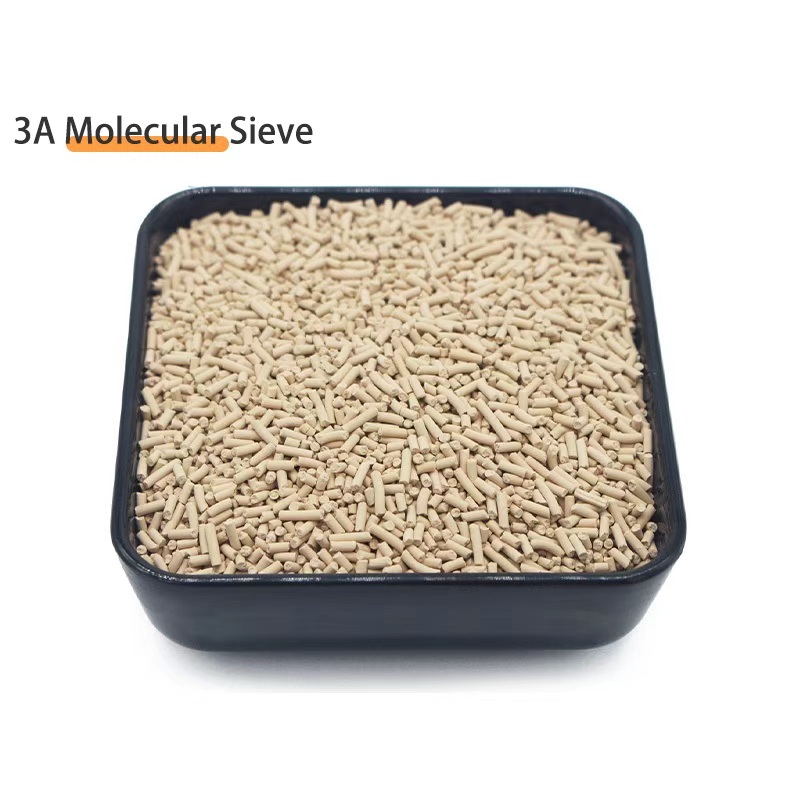
Molecular Sieves 3A / 4A / 5A / 13X
Spent and fresh molecular sieve grades for ethanol dehydration, hydrogen PSA, and CO2 capture. ISO 9001:2015 certified, ASTM D6869 + GB/T 6286 grade-level COA on request.
View Product Details →