This guide is for the procurement engineer or trade-finance officer who owns an industrial adsorbent import file, buying molecular sieve, activated alumina, alumina powder or pseudo-boehmite against a documentary letter of credit. The seven discrepancy causes below are the ones that most often cost an importer a demurrage week and a waiver request.
Why. adsorbent shipments attract more L/C rejections than generic cargo
A letter of credit is a promise by an issuing bank to pay a nominated bank, provided the documents match the credit. It is a documentary instrument, not a sale contract. UCP 600 Article 5 puts it plainly: banks deal with documents and not with goods, services or performance to which the documents may relate. If the documents do not say the same thing as the credit, the payment does not happen, and the goods sit at the port while the parties negotiate.
Adsorbent shipments raise the discrepancy rate above the average for dry bulk cargo for three reasons. The first is a dense technical vocabulary in the goods description. A molecular sieve grade is specified as type, crystal structure, binder, pellet diameter and mesh size: 3A, 5A or 13X, with a nominal pellet diameter in millimetres and a particle size distribution quoted as a mesh cut. If the credit says MOL SIEVE 3A, 1.6mm, 25kg bag and the invoice says molecular sieve type 3A, 1.6mm pellets, 25 kg net per bag, the two do not match character for character, and a strict examining bank can raise a discrepancy on that alone. ISBP 745 permits a description that corresponds with, rather than mirrors, the credit, but correspondence is a judgement the issuing bank makes in consultation with the applicant, not the supplier.
The second is the number of distinct line items. One container is frequently a mixed consignment: 3A sieve for one application, 5A for another, activated alumina for a third, each on its own mesh size, in its own packaging, at its own net weight, so a bill, packing list and invoice with six lines each give the examining bank six chances to find a mismatch.
The. UCP 600 framework: what the examining bank actually does
When the documents arrive at the nominated bank, it has five banking days from the day after presentation to check them. If they do not comply, the nominated bank may itself refuse to issue its reimbursement undertaking, or it may forward the documents, and the issuing bank then issues the refusal notice. There are therefore two examination cycles inside the life of the credit.
ISBP 745 paragraph A1 states that examination is a strictly documentary process, and paragraph A27 confirms that a goods description may correspond with, rather than be a replica of, the description in the credit. That is a narrow permission, not a general licence, and whether a description corresponds is decided by the issuing bank in consultation with the applicant.
| Article | Subject | Meaning for an adsorbent import |
|---|---|---|
| Art. 2 | Definition of discrepancy | Any difference from the credit. No materiality test. |
| Art. 5 | Documents vs goods | Banks deal with documents only. A perfect shipment documented wrongly is non-complying. |
| Art. 14 | Examination | Maximum five banking days, on the face of the documents. |
| Art. 16 | Discrepancy notices | One notice must state every discrepancy. Later ones cannot be added. |
| Art. 18 | Commercial invoice | Issued by the beneficiary, made out to the applicant, in the credit's currency. Date up to 21 days before shipment. |
| Art. 19 | Transport document | Bill of lading must show goods on board, the vessel, and the stated port. |
| Art. 28 | Insurance document | Coverage at least 110% of CIF or CIP. The commonest arithmetic failure. |
| Art. 29 | Extension of expiry | If no expiry is stated, 21 days after shipment, never beyond 90 days. |
| Art. 30 | Tolerance | 5% quantity tolerance unavailable when the credit states quantity in packing units. |
| Art. 36 | Charges wording | "Charges" must not appear with "freight collect" or "freight payable at destination". |
Discrepancy 1. commercial invoice description and amount mismatch
This is the highest-frequency rejection on adsorbent cargo, and it comes in three main forms. The first is description drift. A supplier-side reword, a different binder designation, an extra performance figure such as a bulk density that does not appear in the credit, or a translated technical term all create a difference between the invoice and the credit. The rule is unglamorous: transcribe the credit's goods description into the invoice verbatim, and put additional technical information into a separate document the credit does not require.
The second is the unit of measurement, a standard problem in the metals and minerals trade that has migrated into adsorbents. while the credit says MT and the packing list shows 24,860 kg in 40 bags. A bank reading the invoice as 24.860 MT where the credit expects 25 MT will raise a discrepancy on quantity. Make the invoice show the quantity in the unit the credit uses, stated unambiguously: 25.000 MT (25,000 kg), 1,000 bags x 25 kg net.
The third is the amount, and tolerance is the relevant concept. UCP 600 Article 30 allows the drawings to exceed the credit amount by up to 5% in certain conditions, A conservative reading is that a 1,000-bag consignment where the credit says 1,000 bags has no quantity tolerance at all. The same applies to additional charges: a supplier who presents freight, insurance and inspection fees as separate invoice lines, when the credit is on FOB terms and requires a single invoice for the CIF value, creates both an amount mismatch and a description conflict.
Discrepancy 2. bill of lading defects: on-board notation, notify party, transhipment
The bill of lading carries the highest absolute number of discrepancies, The carrier issues it, and the exporter influences it only through the shipping instructions submitted before loading.
4.1 The missing on-board notation
A port-to-port bill that does not carry the printed legend SHIPPED ON BOARD with the vessel name and shipment date, and that is not itself titled as a shipped-on-board bill, evidences shipment only from the date of issue of the document. UCP 600 Article 20 addresses this.
4.2 The wrong notify party
If the credit names a notify party, the bill must name that party. The most common adsorbent-related version of this error is a buyer that specifies notify to its bank and then changes its bank, or a buyer whose trading company and paying bank are different entities, and the shipping instructions go out with the old notification.
4.3 Prohibited transhipment
A credit for a single-port shipment commonly states that transhipment is not allowed, and the bill then shows the goods transhipped at a hub port, The fix is to request a through bill of lading from the origin carrier so the document shows a single port of loading and a single port of discharge. Where the carrier will only issue a transhipment bill, the credit must permit transhipment, and that permission must be obtained at credit opening.
| Bill of lading field | Requirement (UCP 600 / ISBP 745) | Typical adsorbent rejection |
|---|---|---|
| On-board notation | Art. 20 — required unless titled "SHIPPED ON BOARD" | Port-to-port bill without the dated vessel legend; shipment date defaults to document date |
| Vessel and voyage | Art. 20 — vessel name and port of loading shown | Carrier amends the vessel after loading and re-issues, creating an inconsistent set |
| Notify party | Art. 20 — must be as stated in the credit | Exporter's bank or wrong trading entity named instead of the buyer's bank |
| Transhipment | Art. 20(c)(ii) — permitted unless prohibited | Hub transhipment on a credit stating "no transhipment allowed" |
| Description of goods | Art. 20 — must correspond with the credit | Carrier applies a generic commodity description and omits the grade |
| Ports | Art. 20 — loading and discharge ports must match | Consignee requests a door-delivery discharge port the credit does not name |
| Weight and packages | Art. 20 — package count and weight shown | Carrier prints a rounded tonnage that does not reconcile with the packing list |
| Freight wording | Art. 36 — no "freight collect" or "freight payable at destination" | "Freight collect" on a credit on FOB terms with prepaid freight required |
Discrepancy 3. insurance certificate under-coverage
The insurance certificate is the second most common rejection and the easiest to prevent, because the rule is arithmetic and the arithmetic is frequently done wrong. The first error is applying 110% to the wrong base. UCP 600 Article 28(f) requires coverage of at least 110% of the CIF or CIP value. If the credit is on FOB terms and insurance is bought separately by the buyer's insurer, coverage is normally calculated on 110% of CIF, which is 110% of FOB plus 110% of the freight and the premium itself.
The third error is the deductible. A certificate showing a 10% deductible is acceptable under a credit that does not mention deductibles, but if the credit requires the full value without a deductible, then a deductible on the certificate is a discrepancy.
For adsorbent cargo one substance matters and is often overlooked. Certain grades of molecular sieve and some activated alumina formulations are classified under the International Maritime Dangerous Goods regime, and where the goods are declared as such the insurance certificate must describe them consistently with the transport document. If the bill declares the goods as MOL SIEVE 3A and the certificate describes them as zeolite granules, non-hazardous, the examining bank may see a conflict between two documents.
Discrepancy 4. certificate of analysis issued by the wrong party
This discrepancy is specific to industrial material shipments, and a buyer who specified an independent certificate and receives a manufacturer's certificate cannot cure it. The rule comes from ISBP 745: where a credit requires a certificate issued by an independent inspection company or a nominated third party, one issued by the beneficiary, the applicant, or a party acting for either is a discrepancy.
The second half of this discrepancy is content. The certificate must cover the goods actually shipped and must do so in the terms the credit uses. The usual pattern is that the inspection company tests per the credit's stated methods: for 13X typically ASTM D3464, for 3A, 4A and 5A the ASTM D3616 family, with ASTM D3159 for water content, ASTM D4058 for attrition and ASTM D7084 for bulk crush strength.
The practical control is to put the certificate requirement into the shipping instructions to the inspection company. Review the draft against the credit before the original is issued. A draft review takes minutes; an issued-certificate correction takes a demurrage week.
Discrepancy 5. quantity, packing and weight reconciliation failures
Packing-unit discrepancies deserve their own category because they are structural rather than textual, and because they are frequent on bagged and drummed adsorbent cargo. The reconciliation chain is short and every link has to hold: the packing list states the number of bags, the net weight per bag and the total net weight; Where any link breaks, the bank has two conflicting figures.
Three failure modes recur. The first is gross-weight rounding: carriers print weights to the nearest 10 or 100 kg while the factory packing list shows exact figures, and a difference that crosses the tolerance the credit sets on quantity is a discrepancy even though bills routinely show rounded figures. The second is the net weight basis: a packing list that states only gross weight and leaves net weight to be derived from the bag count is not a net weight statement, and a credit requiring a stated net weight needs an explicit total figure. The third is Article 30(b): where the credit states the quantity in bags, drums or pallets, the 5% tolerance does not apply, so a consignment of 1,030 bags against a credit for 1,000 bags is a hard discrepancy regardless of the invoice value.
Discrepancy 6. date, expiry and late shipment
Date discrepancies are mechanical and, on paper, simple. In practice they are the most common reason a shipment that is physically fine fails to pay. Each has a different consequence when it is missed.
A shipment later than the latest shipment date cannot be cured by a document change, because it concerns an act rather than a document. The cure is an amendment extending the latest shipment date, at a fee plus fresh issuance charges. Given a typical lead time of 15 to 25 days for adsorbent production plus sailing time, a one-week delay in a mill or a vessel booking is what pushes a shipment past a date set with reasonable but not generous margin.
A late presentation against the expiry date is similarly mechanical. The documents must be presented to the nominated bank by the expiry date. Where the credit states no expiry date, Article 29 sets 21 days after shipment as the deadline, and never later than 90 days after shipment. Where the documents are couriered, the presentation is deemed made when received by the nominated bank, not when handed to the courier, so transit time between two banks in different jurisdictions is a real risk.
Discrepancy 7. inconsistent documentation, wrong beneficiary, missing document
The final category groups failures that come from the document set rather than from one document. The first is general inconsistency across the set, which Article 14(d) prohibits in terms.
The second is the wrong beneficiary. Article 18 requires the commercial invoice to appear to be issued by the beneficiary. A common failure in Chinese adsorbent supply chains involves a trading intermediary: the manufacturer produces, the export company contracts, and the credit names one beneficiary while the invoice is issued by the other, or by both. Where the credit is not transferrable, the party named in it must be the one that issues the invoice and the transport document, and the supply contract has to be structured that way before the credit is opened.
The third is the missing document, which Article 14 treats as a discrepancy in its own right. The commonest omission on adsorbent shipments is the inspection or weight certificate issued by an independent surveyor at the loading port, which many buyers add to the credit and which is easy to omit from the shipping instructions because it is not part of the transport booking.
The. pre-presentation review: the checklist that prevents all seven
Every discrepancy above is preventable by a structured review before the documents leave the exporter's bank. It takes one to two hours for a typical five-document set, and should be done by someone who has the credit in front of them and who did not assemble the documents.
| # | What to compare | Discrepancy caught |
|---|---|---|
| 1 | Credit description line against the invoice, character by character | Description drift |
| 2 | Unit of measurement on invoice, packing list and credit | kg vs MT |
| 3 | Invoice total against credit amount and stated tolerance | Amount over-draw |
| 4 | Packing units against Article 30(b) tolerance availability | Bag count over-draw |
| 5 | Ports on the bill against the credit, and transhipment status | Wrong discharge port, prohibited transhipment |
| 6 | On-board notation present, dated, naming the vessel | Missing on-board |
| 7 | Notify party on the bill against the credit | Wrong notify party |
| 8 | Insured value against 110% of CIF, and clauses wording | Under-coverage, wrong clauses |
| 9 | Certificate issuer and test methods against the credit | Wrong issuer, wrong method |
| 10 | All dates against the latest shipment date and expiry date | Date conflict, late presentation |
| 11 | Every credit-required document is physically in the folder | Missing document |
| 12 | Issuer of each document against the credit and shipping instructions | Wrong beneficiary, wrong packer |
What. a discrepancy actually costs: quantifying the exposure
Buyers tend to treat a discrepancy as an administrative irritation, and that framing produces bad outcomes, because the true cost lands on the logistics side rather than the finance side. The direct cost is comparatively small: re-presentation charges at a Chinese bank typically run 150 to 400 US dollars per presentation, The financing cost is proportional to the length of the delay: on a 25 MT shipment of 13X molecular sieve at a typical landed value of USD 30,000 to 45,000, a working capital facility priced at 6% to 9% annual costs roughly USD 60 to 90 per week in interest alone. Neither is the main issue.
The main exposure is the demurrage clock and the supply line. Once the documents are refused, the buyer cannot release them to the carrier, so the goods cannot clear. Container detention at a European or US port is commonly USD 80 to 150 per container per day after a short free period, so a three-week refusal cycle on one 20-foot container can add USD 1,700 to 4,500 in demurrage, Where the buyer runs a continuous plant on the adsorbent, the exposure extends beyond money: a PSA unit or air drying package that runs out of sieve because a payment is held up is a production interruption, and no bank will compensate for that.
The strategic cost affects the next order. Repeated discrepant presentations can affect pricing, tenor and the willingness to extend documentary credits at all, so a buyer with a clean record is materially stronger the next time it asks for a 120-day confirmed irrevocable credit at a competitive fee.
Preventing. the discrepancy: contract and credit design
First, write the goods description once and reuse it. If the description needs to change, it changes before the credit is opened. Specify the grade, the pellet or particle form, the nominal size in millimetres, the mesh cut, the binder type and the packaging with net weight per unit, and nothing else in that field. Every extra datum placed in the goods description is another datum that can conflict with another document.
Second, specify the test methods by number, not by name. A certificate of analysis is a weak requirement because every supplier can satisfy it with a document that tests nothing. A certificate issued by an independent inspection company naming SGS, Bureau Veritas, Intertek or TUV, showing equilibrium water capacity by ASTM D3464 for 13X or ASTM D3616 for 3A, 4A and 5A, water content by ASTM D3159, attrition index by ASTM D4058, bulk crush strength by ASTM D7084, particle size by ASTM D2180, sampled per ASTM D5357, is a strong requirement, because it fixes the issuer, the methods and the sampling basis.
Third, decide the shipment structure before the credit is opened. If the consignment will be a mixed loading across several grades and mesh sizes, either specify that mixed goods are permitted in the credit description, with the number of lots and the tolerance on each line, or split the shipments and use partial shipment provisions deliberately. If the goods will move on more than one vessel, request transhipment permission in the credit at the outset.
Fourth, align the terms of payment with the document set you can actually produce. A 90-day at-sight letter of credit against a supplier who cannot issue an independent inspection certificate at the loading port, or who cannot commit to an on-board notation on a port-to-port bill, is a credit that is going to fail.
Frequently. asked questions
What is the most common cause of an L/C rejection on an adsorbent shipment?
A mismatch between the commercial invoice and the letter of credit, which accounts for the largest share of discrepancies on adsorbent shipments. Typical triggers are a goods description that differs in wording, a weight in a unit the credit does not accept, an invoice value outside the allowed tolerance, or freight and insurance shown as separate invoice lines when the credit requires them inside the FOB value. Second is the bill of lading, where an on-board notation is missing, the notify party is wrong, or the shipment shows transhipment when the credit prohibits it.
How long does the issuing bank have to examine the documents?
Under UCP 600 Article 14 the nominated bank, the confirming bank if any, and the issuing bank each have a maximum of five banking days following the day of presentation to determine compliance. If the issuing bank finds the presentation non-complying, it must give a single notice stating the discrepancy within the close of the fifth banking day, and that notice is a refusal to honour. Once refused, the presenter must correct the discrepancy and re-present within the expiry date, or seek a waiver, which is a negotiation with the applicant and the slowest route of all.
What is a discrepancy, and does it have to be material?
Under UCP 600 Article 2 a discrepancy is a difference between the documents presented and the terms of the credit, and the banks do not test materiality the way commercial parties do. Article 14 requires the nominated bank to determine, on the documents alone, whether they appear on their face to constitute a complying presentation. In practice a trivial typographical inconsistency can be a valid discrepancy and can justify refusal to honour.
Which documents must match exactly on an adsorbent shipment?
Five fields carry the highest rejection risk. First the goods description: the credit defines it, and the invoice, packing list and bill of lading must not conflict with each other or with the credit. Second the quantity and unit of measurement. Third the amount, which must fall within the credit amount and any stated tolerance. Fourth the ports, which must match the credit. Fifth the dates: Article 18 permits an invoice date up to 21 calendar days before shipment, but the bill of lading date must not be later than the latest shipment date.
Does the certificate of analysis need to appear on the documents, and who should issue it?
This is where adsorbent shipments differ from generic cargo. If the credit calls for a certificate of analysis, it must be issued by the party named in the credit. Most buyers name an independent inspection company rather than the manufacturer, because a manufacturer's own certificate carries a commercial conflict. A factory-issued certificate where the credit requires a third-party one is a discrepancy even when every number on it is correct. Where no issuer is named, an SGS, Bureau Veritas, Intertek or TUV certificate is generally accepted. The certificate must cover the goods actually shipped, with the same grade, particle size and test methods, and must not conflict with the invoice.
How much does a discrepancy cost the buyer in practice?
Three costs stack. The direct cost is financing on delayed payment: if the credit is a 90-day at-sight instrument and the presentation is rejected and re-presented after a waiver, the buyer may lose three to six weeks of financing on a working capital line. The indirect cost is re-presentation and bank charges, typically a few hundred to a few thousand US dollars. The third and often largest cost is downstream: a rejected presentation means the buyer cannot release the documents to the carrier, so the demurrage clock keeps running. On a 20-foot container at a European or US port, a week of detention can exceed the value of the freight.
What can we do if the bank issues a refusal notice?
Four options, in descending order of speed. First check whether the discrepancy is genuine, because some are the bank's misreading of a compliant document. Second, if it is minor and a tolerance covers it, a single corrected document may be enough. Third, request a waiver from the instructing party, meaning the buyer instructs its bank to ask the issuing bank to honour despite the discrepancy; the issuing bank may grant it, grant it with conditions, or refuse. Fourth, and most expensively, amend the credit, which extends the expiry and usually the latest shipment date at a fee and means the whole set must be re-checked against the amended terms.
How should a supplier prepare the document set to minimise rejection risk?
Build the set from the credit outward rather than from the shipment inward. Draft the commercial invoice first, transcribing the credit's goods description, unit of measurement, amount and ports. The packing list then mirrors the invoice line for line, with the same grade, mesh size, net and gross weights and package count. The bill of lading is prepared by the carrier from the shipping instructions, so those instructions must reproduce the credit wording. The certificate of analysis is issued to the specification in the credit, and the insurance certificate against the credit's Institute Cargo Clauses requirement and the minimum insured amount, typically 110% of CIF.
Who should pay for the independent inspection certificate, and can the cost be added to the invoice?
The cost is normally the buyer's, because the buyer specifies the inspection requirement in the credit, but the commercial reality is that the exporter often arranges and pays for the SGS, Bureau Veritas or Intertek certificate so the inspector works to the exporter's shipping instructions. What matters is whether the cost may appear on the commercial invoice. If the credit is on FOB terms and covers the invoice value, adding the inspection fee as a separate invoice line creates an amount that does not match the credit, and that is a discrepancy. Agree in the proforma invoice that the fee is either inside the FOB value or settled outside the documentary credit, and write that into the shipping instructions to the inspection company.
Does a transhipment bill of lading have to be refused by the buyer?
Not necessarily. UCP 600 Article 20 permits transhipment unless the credit prohibits it, so a transhipment bill is only a discrepancy where the credit states that transhipment is not allowed. The practical question is whether you should want one. A transhipment bill exposes the consignment to a second handling event, a longer dwell and a higher breakage or moisture risk, and it splits the cargo across two carriers, so claims must be pursued against two parties in two jurisdictions. For a bagged adsorbent consignment, where moisture ingress and bag breakage are the main transit risks, a through bill from the origin carrier is the better outcome. If the vessel schedule will not allow it, take the transhipment permission in the credit at opening.
Related. technical reading and product links
The document set and the physical goods must agree with each other, If you are reading this because a presentation was refused, these are the pieces that interact most often with the L/C process:
- How to read a Certificate of Analysis for an industrial sorbent — what each field means and how to spot a certificate that tests the wrong property.
- Auditing an adsorbent supplier remotely: 12 documents to request before the first purchase order.
- Sourcing molecular sieve from China: 7 QC checks to run before loading vessels.
- Why some lots of molecular sieve dust more than others: pre-shipment attrition index and sampling plan.
- Incoterms 2025 adsorbent shipment risk transfer: CIP vs DAP vs EXW cost model.
- FOB vs CIF vs DDP for industrial adsorbents: where risk passes and who insures.
- Payment terms engineering: L/C at sight vs T/T hidden cost.
- IMDG dangerous goods classification for adsorbents and alumina powders.
On the product side, the grades most often shipped against documentary credits are molecular sieve in the 3A, 4A, 5A and 13X grades, activated alumina for air drying and defluorination, alumina powder pseudo-boehmite for catalyst and separator coating binders, and catalyst carrier
Next. steps
If you have a credit open now, pull it out and run the twelve checks above against the document set you hold, or the set your supplier says they will present. If you are about to open a credit, send us the draft with the goods description, the required documents and the shipment plan, and we will tell you which of the seven causes is most likely to bite you. We supply 3A, 4A, 5A and 13X molecular sieve, activated alumina, alumina powder and pseudo-boehmite with COA and MSDS on every shipment, MOQ 1 MT, lead time 15 to 25 days, and free samples.
Send us your credit draft. We will review the goods description, the document list and the shipment structure against UCP 600 and ISBP 745
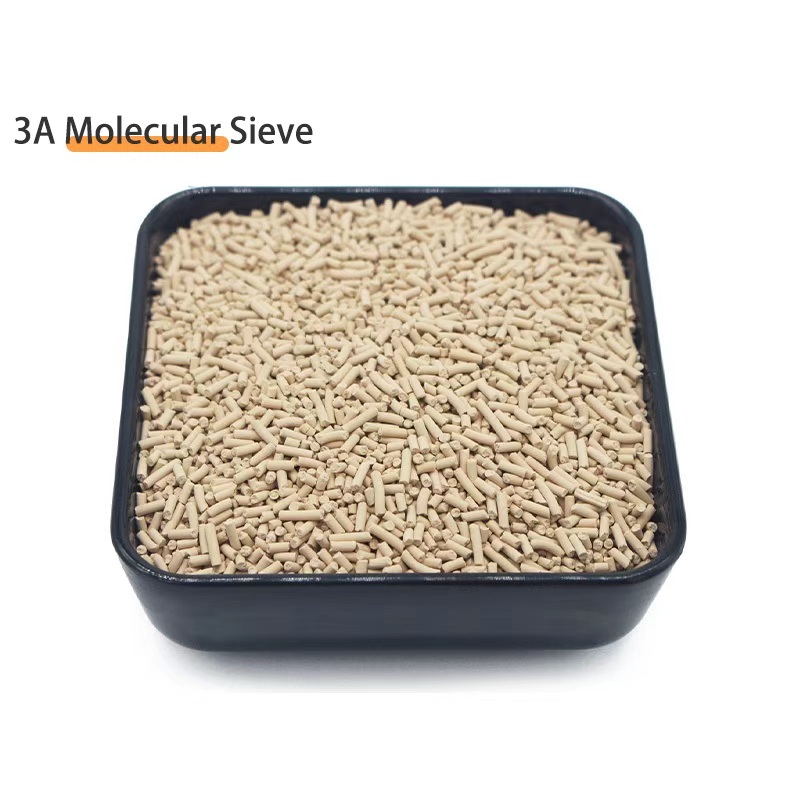
Molecular Sieve 3A / 4A / 5A / 13X
Type 3A, 4A, 5A and 13X zeolites with COA and MSDS on every shipment, batch-retained samples for L/C document verification, and equilibrium capacity reported by ASTM D3464 and ASTM D3616.
View Product Details →