13X vs 5A Molecular Sieve for Medical Air Drying: Dew Point, CO2 Control, and Safe Bed Design
13X offers broad, high-capacity adsorption and can be valuable for CO2 or high-moisture guard duty; 5A is often the more selective default for deep water removal after proper pretreatment. This engineering guide explains where each grade belongs in a medical compressed-air dryer and how to validate the finished air.
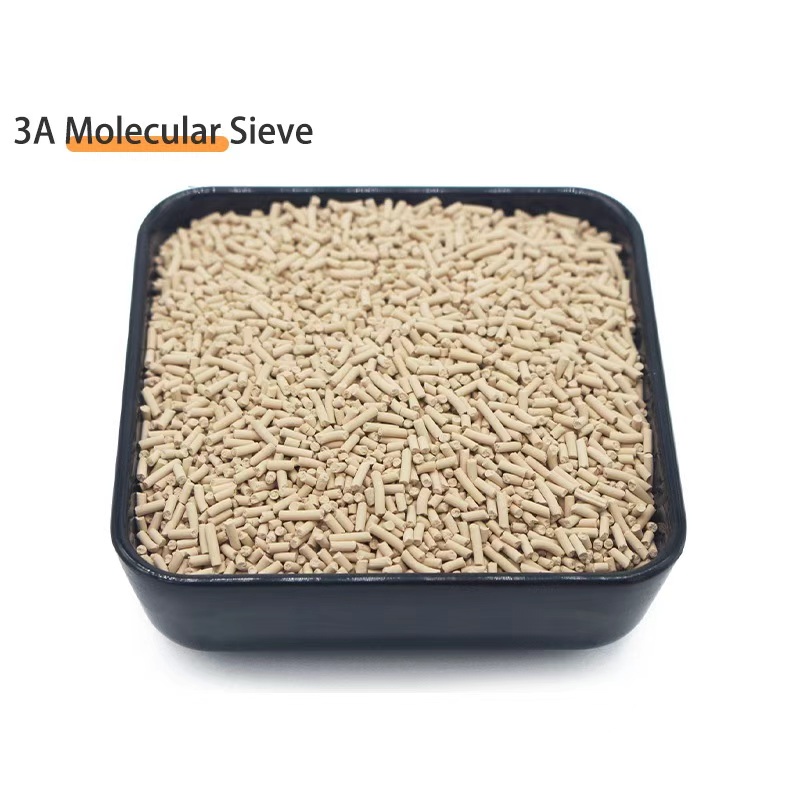
Short answer: select by contaminant duty, not by capacity alone
For a medical compressed-air dryer whose primary job is deep water removal, 5A molecular sieve is usually the more selective default; 13X is more useful as a carbon-dioxide and high-capacity guard or polishing layer. That is a design starting point, not a certification claim. The final system must satisfy the applicable medical-air specification at the point of use, with validated filtration, regeneration, dew-point measurement, and contaminant testing.
This distinction matters because medical air is not simply “dry air.” A hospital pipeline can feed ventilators, anaesthesia machines, surgical tools, dental equipment, and laboratory devices. Each user cares about moisture, oil, particles, carbon monoxide, carbon dioxide, and microbiological control in a different way. The dryer is only one part of the treatment train, and zeolite selection cannot compensate for a leaking valve, a failed coalescer, or a compressor that sends liquid oil downstream.
This guide compares 13X and 5A in the context of compressed-air drying. It explains the pore chemistry, water and CO2 behavior, pressure-dew-point targets, layered-bed options, sizing logic, regeneration constraints, field failure modes, standards, and total cost of ownership. Values labelled typical or industry range are engineering ranges for preliminary design; they are not a substitute for the product CoA, a dynamic adsorption test, or the equipment supplier’s validated data.
- 13X is normally the stronger broad-capacity adsorbent and the more useful CO2 guard.
- 5A is normally the cleaner selective drying choice when the gas is well pretreated and deep moisture removal is the main duty.
- A layered bed often gives a better engineering compromise than forcing one grade to perform every function.
- Medical-air compliance belongs to the finished gas system and point-of-use test, not to the bag label on the sieve.
1. Scope, definitions, and the decision engineers actually need to make
The phrase “medical air drying” can describe several different machines. A reciprocating compressor feeding a hospital ring main has a different moisture load and cycling pattern from a screw compressor feeding a portable medical-air package. A plant that produces breathing air for a healthcare facility may use a heatless twin-tower dryer; a larger central utility plant may use a heat-regenerative or blower-purge dryer. Some systems use a separate refrigerated aftercooler and only a polishing adsorber. Others combine a high-capacity guard bed, a coalescing train, and a final desiccant bed.
Before comparing 13X and 5A, define the boundary conditions: normal and peak flow, inlet pressure and temperature, compressor type, aftercooler outlet temperature, liquid water risk, oil carryover, regeneration gas source, switching-cycle duration, required pressure dew point, allowable pressure drop, and the applicable medical-air standard. Without those inputs, “13X has more capacity” is not enough to make a safe purchase decision.
| Design input | Why it changes the sieve decision | Minimum information to collect |
|---|---|---|
| Flow, Nm³/h | Sets water mass per cycle, bed diameter, velocity, and pressure drop. | Normal, peak, turndown, and future expansion flow. |
| Pressure and temperature | Adsorption equilibrium and regeneration load change strongly with pressure and temperature. | Inlet pressure range; aftercooler outlet; regeneration temperature. |
| Water load | Determines working capacity and mass-transfer-zone length. | Inlet dew point or measured moisture at worst case. |
| CO2 and oil vapour | 13X may be valuable as a guard; hydrocarbon loading can damage either grade. | Compressor oil type, CO2 trend, coalescer and carbon-stage data. |
| Target outlet quality | Controls whether one bed, a layered bed, or a separate polishing stage is needed. | Pressure dew point and contaminant limits at point of use. |
| Maintenance philosophy | Determines whether the bed can be sampled, regenerated, and replaced predictably. | Dew-point alarms, valve service interval, planned shutdown window. |
A practical procurement statement should therefore say “5A for selective moisture removal in a validated medical-air dryer, with a 13X guard layer where CO2 or high water loading requires it,” or “13X as the primary guard/polishing medium where the verified contaminant profile justifies broad adsorption.” It should not say simply “molecular sieve, medical grade.”
2. The pore chemistry: why 13X and 5A behave differently
Both grades are crystalline aluminosilicates. Their frameworks contain negatively charged aluminosilicate sites balanced by exchangeable cations. Water is strongly polar and is attracted to those cations and to the internal surface. The practical difference is the aperture and cation arrangement: 5A is a calcium-exchanged A-type zeolite with an effective opening near 5 Å, while 13X is a sodium-exchanged X-type zeolite with a larger opening around 8–10 Å.
The larger aperture of 13X gives molecules with larger kinetic diameters more access to the internal pore volume. That is useful when the bed must adsorb carbon dioxide or a broad range of polar contaminants, and it generally produces high water capacity. The same broad access can make 13X less forgiving when the feed contains oil vapour, heavy hydrocarbons, or poorly controlled contaminants. 5A presents a narrower molecular environment and is frequently selected for water drying where the feed has already been cleaned.
Water is not the only adsorbate in a medical-air system
Water loading is usually the first calculation, but the bed sees the complete gas history. A compressor can deliver aerosols, oil vapour, rust particles, desiccant fines, and degraded elastomer fragments. A hospital system can also experience humidity spikes after maintenance, condensate drain failure, or a long unheated start. If these materials reach the zeolite, measured static capacity becomes irrelevant because the mass-transfer zone becomes contaminated or the bed pressure drop increases.
13X and 5A are adsorbents, not filters. The inlet train must remove liquid and aerosols before the molecular sieve. A common arrangement is aftercooler and automatic drain, particulate prefilter, coalescing filter, optional oil-vapour guard, molecular-sieve dryer, and final dust filter. The exact arrangement must be validated by the equipment OEM and the healthcare quality specification.
| Property | 13X molecular sieve | 5A molecular sieve | Design implication |
|---|---|---|---|
| Framework / cation | X-type, sodium form | A-type, calcium-exchanged | Different pore geometry and adsorption energetics. |
| Nominal aperture | About 8–10 Å industry range | About 5 Å industry range | 13X admits a broader molecule range. |
| Primary strength | High water capacity and broad polar adsorption | Selective deep drying with established industrial use | Choose 13X for guard duty; 5A for selective drying where pretreatment is good. |
| CO2 behavior | Strongly adsorbs CO2 under many dryer conditions | Not normally the first choice for CO2 guarding | CO2 breakthrough must be tested, not assumed. |
| Contamination sensitivity | Sensitive to liquid water and hydrocarbons like all zeolites; broader co-adsorption can matter | Sensitive to oil, liquid water, and dust; narrower aperture does not make it a filter | Pretreatment controls life more than the label. |
| Typical particle forms | Beads or pellets, often 1.6–2.5 mm or 2.5–5 mm | Beads or pellets, often 1.6–2.5 mm or 2.5–5 mm | Particle size is a pressure-drop and mass-transfer compromise. |
These are generic industry distinctions. A particular bonded bead can outperform another grade with a nominally better chemistry if its crush strength, binder distribution, pore accessibility, activation state, or particle-size distribution is poor. Compare lot-level performance under the actual cycle rather than ranking products by the zeolite name alone.
3. Pressure dew point: convert the quality target into a bed duty
Pressure dew point is the temperature at which water begins to condense at the stated pressure. It must be reported with the pressure because the same gas has different water concentration at different absolute pressures. A dryer specified for “-40°C dew point” is incomplete unless the pressure basis and measurement location are stated. The sensor should be located where the medical-air quality is actually controlled, not only at the dryer outlet during a favorable cycle.
ISO 8573-1 provides a widely used classification system for compressed-air purity, including humidity, liquid water, particles, and total oil. Medical-air systems may also be governed by EN 12021 or a national healthcare standard. Some projects target a pressure dew point around -40°C; others require -50°C or -70°C because of outdoor piping, cold rooms, or critical equipment. The dryer should be selected from the worst combination of flow, ambient temperature, inlet moisture, and regeneration condition.
For preliminary design, engineers often convert a water-vapour pressure or dew-point value into a moisture mass flow, then apply a validated working capacity. A simplified relation is: water load per cycle = dry-air flow × water concentration at inlet × adsorption time. The working capacity is the difference between loading at the end of adsorption and the residual loading after regeneration. Static water capacity at saturation is not the working capacity of a cyclic medical-air dryer.
| Target / class direction | Typical engineering meaning | What to verify |
|---|---|---|
| Near +3 to +10°C PDP | General plant air or non-critical service; may be insufficient for medical distribution. | Healthcare specification and coldest downstream point. |
| Around -20 to -40°C PDP | Common dry-air design range; many systems choose -40°C or lower. | Measurement pressure, sensor accuracy, worst-case flow. |
| Around -50 to -70°C PDP | Deep drying for cold climate, critical equipment, or validated process need. | Regeneration capacity, switching leakage, and sensor response. |
| Class 1 / 2 / 3 humidity claims | ISO 8573-1 class language must be tied to measured water concentration or PDP. | Do not infer class only from sieve grade or supplier brochure. |
| Medical-air point of use | Final pipework, receiver, filters, and contamination events can change the result. | Test at representative terminal outlets and during peak demand. |
The right question for the sieve vendor is not “What is your maximum water capacity?” It is “What dynamic working capacity do you support for our inlet condition, adsorption time, regeneration pressure, regeneration temperature, and target PDP?” That question exposes whether a value is a static laboratory number or a usable design number.
4. 13X for medical air: strengths, limits, and guard-bed logic
13X is often selected when a dryer must handle high water loading or remove more than water. Its larger pore structure and sodium cation field provide high affinity for polar molecules. In a properly pretreated system, a 13X bed can provide a useful combination of water capacity and CO2 adsorption. It is especially interesting where compressor-room air has a persistent carbon-dioxide load, where a guard stage is required before another adsorbent, or where the plant wants a robust high-capacity first layer.
That does not mean 13X should automatically fill the entire medical-air tower. Broad adsorption can make the bed a sink for contaminants that should have been removed by filters. If oil vapour or heavy organic material loads the first section, the bed may show reduced regeneration, temperature excursions, and early dew-point breakthrough. A 13X guard layer can be a sensible sacrificial component, but it should be sized and monitored as such.
When 13X is the better first layer
- High and variable inlet moisture after the aftercooler, especially during start-up or drain failures that are controlled but not impossible.
- A validated CO2-removal duty before a sensitive downstream process or a final drying layer.
- A layered bed where the first section is deliberately replaceable and the second section provides deep polishing.
- A high-capacity adsorption stage in a dryer with enough regeneration heat, purge gas, and pressure-swing control.
When 13X is a poor shortcut
- Using 13X to compensate for missing coalescing or oil-vapour filtration.
- Filling a small medical-air dryer with 13X without checking pressure drop, heat release, and regeneration time.
- Claiming CO2 compliance without a calibrated gas analysis at the specified flow and end of cycle.
- Operating with a low-temperature purge that never desorbs the strongly held contaminant load.
A 13X bed that is intended to control CO2 should have a CO2 monitoring plan. Water dew point alone cannot show whether CO2 is approaching the mass-transfer-zone outlet. This is a frequent source of false confidence: the dew-point sensor remains normal while another contaminant is breaking through.
5. 5A for medical air: selective drying and operating discipline
5A is a practical choice when the inlet air is clean and the primary specification is low water content. Its calcium-exchanged A-type framework has a smaller nominal aperture and a different adsorption balance from 13X. In many dryer designs, it provides a predictable moisture-removal layer without intentionally taking on as broad a contaminant duty as 13X.
The word “selective” should not be misunderstood. 5A still adsorbs water strongly and can still be damaged by liquid water, oil, and excessive heat. Its smaller aperture does not protect it from bad pretreatment. A liquid slug can fracture pellets, block interparticle voids, and create a pressure-drop problem before the chemical capacity is consumed.
5A’s design advantages
- Good fit for deep water removal after liquid, aerosol, and oil-vapour protection.
- A narrower pore system that can reduce the need to treat the bed as a broad hydrocarbon guard.
- Established supply availability in bead and pellet sizes suitable for twin-tower dryers.
- A straightforward replacement strategy when the bed’s only validated duty is moisture control.
5A’s design cautions
- Do not specify it as the sole CO2 control measure without a test program.
- Do not use static capacity in place of dynamic working capacity for a rapid switching cycle.
- Check the calcium-exchanged grade, binder, crush strength, attrition, and particle-size distribution by lot.
- Use a final particulate filter downstream because any bed can generate fines during loading, cycling, or thermal shock.
5A is often the economical answer for the water-only part of a medical-air train. It becomes a poor choice when the actual duty has been quietly expanded to include CO2 removal, oil-vapour capture, or high contaminant shock without changing the upstream equipment.
6. Side-by-side performance ranges: what the table can and cannot tell you
The table below uses typical industry ranges for preliminary engineering. Actual values vary with crystal exchange, binder, activation, measurement method, particle size, and test pressure. For purchasing, require the supplier to state the method and conditions for every number.
| Parameter | 13X typical industry range | 5A typical industry range | Why it matters in medical air |
|---|---|---|---|
| Static water capacity, 25°C | About 20–27 wt% under a high-relative-humidity test | About 18–24 wt% under comparable test conditions | Not equal to cyclic working capacity. |
| Working water capacity | Often about 8–15 wt%, cycle-dependent | Often about 8–14 wt%, cycle-dependent | Use dynamic test data at the actual cycle. |
| CO2 adsorption tendency | High; often selected as a guard function | Moderate to lower for a dedicated moisture-only duty | Use a CO2 analyzer if CO2 is in the specification. |
| Bulk density | About 0.60–0.72 kg/L, product-dependent | About 0.62–0.75 kg/L, product-dependent | Changes bed mass, vessel volume, and shipping weight. |
| Crush strength | Typically specified by bead diameter; verify lot CoA | Typically specified by bead diameter; verify lot CoA | Low strength creates fines and filter loading. |
| Attrition | Often specified below 0.10–0.20 wt% by test method | Often specified below 0.10–0.20 wt% by test method | Test method and screen size must be stated. |
| Regeneration | Temperature and purge depend on cycle and contaminant load | Temperature and purge depend on cycle and contaminant load | Insufficient regeneration causes cumulative capacity loss. |
| Particle size | Common 1.6–2.5 mm or 2.5–5 mm ranges | Common 1.6–2.5 mm or 2.5–5 mm ranges | Smaller particles improve transfer but raise pressure drop. |
Do not compare a 13X value measured at saturation with a 5A value measured after a dynamic breakthrough test. Ask for matched test conditions: absolute pressure, temperature, relative humidity or water partial pressure, flow, particle size, preconditioning temperature, and endpoint definition. A vendor that cannot explain the test conditions is not giving you a design value.
7. Layered beds: using each grade where it creates the most value
A layered bed is often the most defensible solution when the air-quality risk includes both water and a non-water contaminant. Instead of asking 5A to remove CO2 or asking 13X to be the only moisture medium, the designer allocates each layer a clear job. The feed-side layer sees the largest contaminant shock; the downstream layer sees a cleaner gas and protects the outlet specification.
Example architecture for a two-tower medical-air dryer
- Inlet cooler and automatic condensate drain: remove bulk liquid before filtration.
- Coalescing filter: remove liquid aerosols and compressor oil droplets.
- Optional activated-carbon or vapour-control stage: reduce oil vapour where the compressor and healthcare specification require it.
- Feed-side 13X guard layer: provide broad adsorption and sacrificial CO2/high-water capacity where validated.
- Downstream 5A polishing layer: provide selective deep drying.
- Outlet dust filter: capture fines and protect the medical-air distribution system.
The proportions are not universal. A preliminary split might be 20–40% 13X and 60–80% 5A by bed volume, but that is only a starting hypothesis. If CO2 loading is negligible and the feed is exceptionally clean, the 13X layer may add little value. If the target includes validated CO2 removal, the 13X layer may need more mass and a dedicated breakthrough monitor. If the dryer uses a short cycle, transfer-zone data may dominate the calculation.
| Layer | Primary purpose | Typical failure signal | Recommended validation |
|---|---|---|---|
| Liquid / coalescing protection | Stop water and oil aerosols from reaching zeolite. | Drain alarms, filter differential pressure, visible liquid. | Filter efficiency, drain test, aerosol challenge if required. |
| 13X guard | Broad water/CO2 adsorption or sacrificial capacity. | CO2 trend or temperature front moves toward outlet. | CO2 test, dynamic water test, thermal profile. |
| 5A polishing | Deep water removal at the final section. | Outlet PDP rises while CO2 remains normal. | PDP at end of adsorption, dynamic breakthrough. |
| Outlet dust filter | Prevent fines entering medical-air line. | Increasing differential pressure or particle alarm. | Particle count, differential-pressure trend. |
Do not randomly blend 13X and 5A. Random mixing makes it difficult to know which section is exhausted, changes the pressure-drop profile, and complicates replacement. A designed layer with a retaining screen and a documented fill height is easier to commission and audit.
8. Bed sizing: from water load to a defensible sieve mass
A first-pass mass calculation is simple; a reliable bed design is not. Start with the water entering during one adsorption half-cycle. If the dry-air mass flow is m_air and the inlet/outlet humidity difference is Δw, the water load per adsorption period is approximately m_water = m_air × Δw × t_ads. Divide by the validated working capacity W_work and apply a utilization factor for the mass-transfer zone, thermal gradients, switching leakage, and ageing.
A practical preliminary equation is: m_sieve = (m_water per cycle) / (W_work × U), where W_work is expressed as kg water per kg sieve and U is a utilization factor, often 0.60–0.85 as an industry design range depending on confidence in the data. If the input is a static capacity, it is not W_work. It must be reduced or replaced by dynamic test data.
After calculating mass, check the vessel geometry. Bed depth must be sufficient for the mass-transfer zone; bed diameter must keep superficial velocity and pressure drop within the dryer design; particle diameter must balance transfer rate against pressure drop; and the vessel-to-particle diameter ratio should avoid excessive wall effects. The Ergun relationship is useful for a first pressure-drop estimate, but the final value should include screens, retainers, valves, filters, and thermal cycling.
| Sizing step | Calculation / check | Common mistake |
|---|---|---|
| 1. Moisture load | Use worst-case inlet water concentration, flow, and adsorption time. | Using average flow or a compressor nameplate only. |
| 2. Dynamic capacity | Use loading at adsorption endpoint minus residual loading after regeneration. | Using a brochure saturation value. |
| 3. Utilization | Apply mass-transfer-zone and ageing allowance. | Assuming 100% of the bed is active at the outlet. |
| 4. Bed volume | Volume = sieve mass / bulk density. | Ignoring bulk-density variation between lots. |
| 5. Velocity | Check superficial velocity, entrainment, and valve flow. | Selecting a small particle to improve kinetics without pressure-drop check. |
| 6. Pressure drop | Estimate packed-bed drop and add internals/filter losses. | Checking only the empty vessel. |
| 7. Regeneration | Verify heat and purge can remove water and co-adsorbates. | Sizing adsorption capacity without sizing regeneration. |
A worked example illustrates the logic. Assume a 1,000 Nm³/h medical-air dryer, 7 barg adsorption pressure, a 60-second adsorption period, and a conservative calculated water load of 1.8 kg per bed cycle after the aftercooler and filters. If validated dynamic working capacity is 0.10 kg/kg and the design utilization is 0.70, the preliminary mass is 1.8 / (0.10 × 0.70) = 25.7 kg. That number must then be checked against a real water breakthrough test, bed depth, switching losses, and the regeneration step. It is not a purchase quantity by itself.
For a layered bed, calculate each layer against its assigned duty. The 13X mass may be based partly on CO2 loading and the 5A mass on water loading. If the 13X guard is sacrificial, set a replacement criterion and do not count its full static capacity forever. The correct design can be heavier than a water-only calculation because it protects the system from a contaminant that is not visible in the dew-point signal.
9. Regeneration: why the cycle can erase a good specification
Regeneration restores adsorption sites by lowering the adsorbate partial pressure and, where necessary, raising temperature. In a heatless dryer, purge gas and pressure reduction do most of the work. In a heated or blower-purge dryer, thermal energy improves desorption and reduces purge consumption. The right cycle depends on the bed mass, contaminant, pressure, temperature, valve timing, and target residual loading.
13X can hold CO2 and other polar contaminants strongly. If the design expects the 13X to guard CO2, the regeneration step must be validated for that load. A cycle that is adequate for water may not restore the original CO2 capacity. 5A used only for water may be easier to regenerate, but a water-rich bed still requires enough purge and time to avoid cumulative loading.
Regeneration checks for the OEM and buyer
- Measure purge flow, not only purge-valve position.
- Confirm regeneration outlet temperature and moisture, not only heater setpoint.
- Trend the bed temperature front during regeneration and adsorption.
- Check valve leakage during isolation and equalization.
- Define a cold-bed start-up procedure after long shutdowns.
- Validate that the regeneration gas is cleaner and drier than the bed outlet requirement.
- Do not expose zeolite to uncontrolled liquid water or a temperature ramp that causes pellet fracture.
A useful field indicator is the difference between the end-of-regeneration condition and the first adsorption cycle after switching. If the first cycle is always weak, the regeneration may be incomplete. If both towers gradually degrade, suspect feed contamination, valve leakage, or an undersized regeneration step before blaming the zeolite grade.
10. Pretreatment and filtration: the real determinant of medical-air bed life
Molecular sieve is a precision adsorbent, not a substitute for the compressor-room treatment train. Liquid water can destroy void volume and fracture beads. Oil can coat the crystal surface and block pores. Rust and filter media can create fines. A high-temperature compressor discharge can increase the water load and accelerate binder damage. These failures are avoidable when the inlet protection is specified as part of the dryer, not treated as an accessory.
| Contaminant | Likely source | Why it damages 13X / 5A | Control action |
|---|---|---|---|
| Liquid water | Aftercooler drain failure, receiver carryover, condensation. | Pellet fracture, channeling, blocked voids, severe capacity loss. | Reliable drain, separator, high-level alarm, coalescing stage. |
| Oil aerosol | Compressor lubrication, seal failure, flooded filter. | Coats surfaces and increases pressure drop. | Coalescing filter and differential-pressure alarm. |
| Oil vapour | Compressor type, high temperature, carbon carryover. | Competitive adsorption and slow regeneration. | Vapour-control stage; verify with oil-vapour test. |
| Particles / rust | Pipework corrosion, filter failure, installation debris. | Fines generation, valve damage, outlet contamination. | Particulate filtration and clean loading SOP. |
| CO2 | Ambient air and compressor-room conditions. | 13X may load strongly; 5A is not a universal CO2 solution. | Measure if included in the quality specification. |
| Microbial contamination | Wet filters, drains, stagnant pipework. | Not solved by zeolite; medical-air hygiene risk. | Hygienic design, maintenance, and validated testing. |
For a medical application, every filter should have a differential-pressure trend and a defined replacement criterion. A new sieve bed installed behind a failed coalescer is not a new bed in any meaningful engineering sense. Record filter changes, drain tests, sieve lot numbers, activation state, fill height, and first-day dew point so that a future performance loss can be traced.
11. Standards and compliance: separate material quality from air quality
ISO 9001 certification describes a supplier’s quality-management system; it does not certify that a specific molecular sieve meets a medical-air requirement. ISO 8573-1 classifies compressed-air purity, including humidity, particles, and oil. EN 12021 is a relevant reference for compressed medical gases in many European contexts, but the applicable edition and local implementation must be confirmed by the healthcare operator and equipment OEM. Other projects may follow national pharmacopeia, hospital engineering, or regulatory requirements.
At the material level, specify test methods for water adsorption or dynamic capacity, particle-size distribution, bulk density, crush strength, attrition, loss on ignition, and packaging integrity. ISO 13320 is commonly associated with laser-diffraction particle-size analysis, ISO 9277 with BET surface area, and ASTM D4058 with attrition testing for molecular sieve-type materials. These methods describe measurements; they do not replace the dryer performance test.
- Define the final-air standard and the sampling location.
- Define pressure dew point and contaminant limits under normal and peak demand.
- Require lot-level CoA and retained samples.
- State the test method, preconditioning, endpoint, and units for capacity values.
- Require packaging, activation, seal integrity, and shelf-life information.
- Validate the installed dryer under worst-case inlet moisture and regeneration conditions.
- Keep material CoA, dryer commissioning records, calibration certificates, and maintenance logs together.
Do not put “medical grade” on a purchase order without defining what it means. A clear specification might state “5A, bead size 1.6–2.5 mm, lot-level water-capacity test by agreed method, attrition limit by ASTM D4058 or equivalent, sealed activated packaging, no visible fines, CoA supplied, to be used in a dryer validated to [named standard].”
12. Cost and total cost of ownership: the cheapest kilogram is rarely the cheapest dryer
13X often has higher apparent capacity and 5A can have a lower purchase price, but media price is only one line in the budget. The system pays for vessel volume, valves, heater or purge gas, compressor electricity, filter changes, unplanned service, disposal, and the cost of medical-air downtime. A guard layer that prevents one contamination event may be worth more than years of small media savings.
| 10-year cost item | 5A-only reference design | 13X + 5A layered design | How to model it |
|---|---|---|---|
| Initial sieve fill | Lower-to-medium media cost; mass based on water duty. | Higher media variety and added guard mass. | Use delivered cost plus activation and freight. |
| Vessel / internals | May be compact if water duty is modest. | May require extra bed height or separate guard vessel. | Include screens, retainers, valves, and pressure-vessel changes. |
| Regeneration energy | Often predictable for moisture-only duty. | May rise if CO2 or co-adsorbates are regenerated. | Use measured heater, purge, and compressor kWh. |
| Filter replacement | Depends mainly on compressor and pretreatment. | Additional guard layer may protect polishing bed and filters. | Include differential-pressure and oil-vapour service. |
| Unplanned downtime | Higher if CO2 or contaminant duty was assumed but not tested. | Potentially lower if guard is monitored and replaceable. | Assign a cost per hour of medical-air interruption. |
| Replacement / disposal | Simpler one-grade replacement. | More complex but can replace guard only. | Use planned sampling and layer-specific criteria. |
For illustration only, consider a 1,000 Nm³/h dryer with a five-year planned media replacement. Suppose a 5A-only fill costs USD 2,400 delivered and a layered design costs USD 3,600. If the layered design adds USD 250 per year in regeneration energy but avoids one USD 12,000 contamination-related service event over ten years, it is economically superior even before assigning a value to medical-air downtime. These figures are placeholders for the method, not a quotation or a claim about your site.
The correct TCO worksheet should contain measured or quoted values for electricity, purge fraction, service labour, valve maintenance, filters, vessel modifications, media freight, disposal, and downtime. Ask the sieve supplier for capacity and service-life assumptions, but keep the system model under the dryer OEM’s control.
13. Failure modes: diagnose the symptom before changing grades
A rising dew point does not automatically mean that 5A should be replaced by 13X. The same symptom can be caused by water carryover, a broken drain, a leaking switching valve, a short regeneration cycle, a failed heater, a wrong fill height, a sensor fault, or a blocked outlet filter. Replacing media before checking the process often repeats the failure with a more expensive grade.
| Observed symptom | Likely causes | First checks |
|---|---|---|
| PDP rises at end of adsorption | Saturated bed, excess inlet water, short cycle, low working capacity. | Inlet PDP, flow, cycle timer, regeneration outlet moisture. |
| PDP is good then slowly degrades over weeks | Cumulative contamination, valve leakage, incomplete regeneration. | Oil-vapour history, switching-valve seat test, bed temperature trend. |
| CO2 rises while PDP remains normal | 13X guard exhausted or missing; analyzer or sampling problem. | CO2 calibration, guard-layer temperature front, inlet CO2. |
| Pressure drop rises quickly | Liquid slug, fines, dust filter blockage, bed settlement. | Filter ΔP, drain operation, screen condition, loading records. |
| One tower underperforms | Unequal fill, valve timing, heater, purge restriction. | Compare tower flow, pressure, temperature, and valve sequence. |
| High first-cycle dew point after shutdown | Cold or incompletely regenerated bed, humid start-up air. | Start-up SOP, warm-up, regeneration completion. |
If the media is suspected, sample the inlet, middle, and outlet sections separately. A single composite sample can hide a front-end contamination layer and lead to the wrong replacement decision. Record color, fines, oil odour, pellet integrity, bulk density, and any obvious layer migration. Send retained samples to an agreed laboratory with the original CoA.
14. Procurement specification: 18 lines that prevent an expensive misunderstanding
A good molecular-sieve purchase specification is short enough for a buyer to use and detailed enough for an engineer to audit. The following checklist can be adapted to 13X, 5A, activated alumina, or a layered package:
- Grade: 13X, 5A, or a defined layered-bed arrangement.
- Form: bonded bead or pellet; state whether powder is prohibited.
- Nominal particle size and permitted distribution.
- Bulk density range and test method.
- Water-capacity method, test conditions, and acceptance value.
- Dynamic working-capacity data or a clearly labelled static value.
- Crush strength by particle-size class.
- Attrition method, screen size, revolution count, and limit.
- Loss on ignition or residual moisture at shipment.
- CO2 capacity or breakthrough data if CO2 is in the duty.
- Binder chemistry or extractables statement where relevant.
- Packaging: hermetic seal, desiccant or activation status, and net weight.
- Shelf-life and warehouse storage limits.
- Lot number, production date, and retained sample policy.
- CoA format and pre-shipment approval process.
- Sample quantity and pilot-test support.
- Incoterm, port, lead time, and replacement-lot continuity.
- Technical contact for start-up and failure analysis.
The term “activated” should be defined. Some suppliers ship a material that is thermally activated and sealed; others ship a material intended for customer activation before use. If the packaging is opened in a humid warehouse, the customer may consume a meaningful fraction of capacity before the bed is loaded. The receiving SOP should include seal inspection and an opening-to-loading time limit.
15. Commissioning and validation: prove the bed before connecting it to patient-critical demand
Commissioning begins with a clean, dry vessel and ends with a documented gas-quality result at the required point of use. Do not load a fresh zeolite bed into a vessel containing construction dust, oil residue, weld slag, or wet filter media. Confirm screens, retainers, support layers, thermocouples, valves, and drains before the adsorbent is poured.
- Verify grade, lot, particle size, packaging, and activation status against the purchase order.
- Photograph the sealed drums and record opening time, operator, and humidity.
- Inspect the vessel and screens; vacuum fines without introducing oil or water.
- Load each layer to a measured height and record mass and bulk-density calculation.
- Install a downstream dust filter before the first cycle.
- Run a controlled activation or regeneration according to the supplier/OEM procedure.
- Check switching-valve timing, equalization, purge flow, and regeneration temperature.
- Measure outlet PDP at end of adsorption during normal and peak flow.
- Measure CO2 or other specified contaminants if included in the quality requirement.
- Repeat the test after stabilization and retain the commissioning report.
For medical air, a single good dew-point reading is not validation. Test across several cycles, during peak flow, after a cold start, and at representative terminal points when the standard requires it. Confirm sensor calibration and sample-line integrity. The best sieve grade will not produce a valid result if the sample is taken from a warm, dead-leg line or the instrument has not equilibrated.
16. Worked engineering scenarios
Scenario A: hospital central plant, low oil, -40°C PDP target
The hospital has a refrigerated aftercooler, reliable drains, a coalescing filter, low measured oil carryover, and a stable 7 barg inlet. The design target is approximately -40°C pressure dew point at the dryer outlet and the final medical-air specification is verified at the ring main. In this case, a 5A polishing bed is a sensible baseline. A small 13X guard is justified only if the site has a measured CO2 or high-water event history, or the OEM’s validated design uses it to protect the 5A layer.
Scenario B: portable medical-air package with variable ambient humidity
The package sees hot, humid ambient air, frequent start-stop operation, and limited service space. The largest risk is a moisture spike and poor regeneration after a short run. A layered arrangement with a robust inlet separator, coalescing protection, and a high-capacity guard can be more reliable than simply increasing 5A mass. The design must prioritize start-up control, condensate drainage, bed heating, and a short-cycle dynamic test. The smallest possible vessel is not the objective if it produces an unstable dew point.
Scenario C: medical-air system with persistent CO2 concern
The air-quality program finds that the compressor room has elevated CO2 and the system specification includes a measured CO2 limit. Dew point remains within target, so the existing alarm does not detect the risk. In this case, 13X should be evaluated as a dedicated guard or first layer, with a CO2 analyzer and a defined guard replacement criterion. 5A may remain downstream for deep water polishing, but it should not be credited as the main CO2-control mechanism without evidence.
Scenario D: failed dryer after a drain malfunction
A drain failure sends liquid water into a 13X/5A bed. Outlet pressure drop rises, the dew point oscillates, and the downstream dust filter loads quickly. Changing only the outlet sensor or switching from 5A to 13X will not repair the bed. Isolate, identify the wet section, inspect screens and valves, replace damaged media, clean the vessel, verify drains, and recommission under a controlled cycle. The incident should be recorded against the lot and equipment history.
17. What to ask a molecular-sieve supplier before the trial
A serious technical discussion should begin with the application, not the product catalogue. Send the supplier a one-page data sheet containing the gas flow, pressure, temperature, inlet dew point, CO2, oil, cycle, regeneration gas, bed dimensions, target PDP, and applicable standard. Then ask for matched recommendations.
- Which grade is primary and which contaminant is it intended to remove?
- Are the capacity figures static, dynamic, or working capacity after regeneration?
- What are the exact test pressure, temperature, humidity, particle size, and endpoint?
- What is the expected service life under the stated oil and water pretreatment?
- Can you supply a separate 13X guard and 5A polishing grade for a layered trial?
- What activation state is shipped, and how long may the sealed package remain open before loading?
- Which tests are included on the CoA, and can retained samples be supplied?
- What particle-size distribution and attrition limit apply to the customer’s pressure-drop design?
- What regeneration temperature, purge fraction, and cycle time do you recommend?
- How will you support a failure analysis if PDP or CO2 breaks through early?
Aluminaworld’s product discussions can include molecular sieve beads, activated alumina pre-treatment, and related alumina products. A quote is more useful when it includes the operating envelope and pilot objective rather than only the required tonnes. For a medical-air system, the final equipment integrator, healthcare operator, and compliance authority remain responsible for selecting and validating the complete treatment train.
19. Operating envelope: turn a material recommendation into a control strategy
A molecular-sieve recommendation is incomplete until the operating envelope is written into the dryer control logic. The bed does not experience one stable condition. During a hospital day, demand moves from low night flow to morning peak, compressor staging changes, the receiver pressure falls, and the aftercooler temperature follows the room. If the dryer changes towers on a timer that was selected only at nominal flow, the actual mass-transfer zone can reach the outlet during peak demand. The correct control strategy therefore uses the material selection and the equipment controls together.
For a 5A polishing bed, the key control variables are end-of-adsorption dew point, adsorption pressure, purge flow, regeneration pressure, regeneration temperature, equalization timing, and switching-valve leakage. For a 13X guard bed, add the contaminant-specific variable: carbon dioxide, oil vapour, or another specified adsorbate. A dew-point sensor cannot serve as the only indicator for a 13X bed credited with CO2 control. The system needs a separate measurement plan or a validated guard-replacement interval.
Record the normal operating envelope as ranges rather than single setpoints. A useful commissioning sheet might state normal flow 700–1,000 Nm³/h, peak flow 1,200 Nm³/h, adsorption pressure 6.5–7.5 barg, inlet temperature 25–40°C after the cooler, regeneration pressure below a defined absolute limit, purge flow as a measured percentage of product flow, and outlet PDP measured after the bed has reached steady cycling. The values must be filled with site data; the ranges here are only an example of how to structure the document.
- Low-load operation: confirm that the cycle does not over-dry or overheat the bed when flow is low and purge is poorly distributed.
- Peak-load operation: verify that the mass-transfer zone remains inside the bed and the pressure drop does not trigger a compressor trip.
- Cold start: define how long the bed regenerates before it is connected to the medical-air header.
- Drain failure: use a high-level alarm and a controlled shutdown so a liquid slug cannot become an invisible media-life event.
- Valve leakage: compare tower pressure decay and equalization behaviour, not just the final outlet dew point.
The most useful trend is not one data point but the slope of performance. A stable outlet PDP with slowly rising regeneration moisture may be normal; a stable PDP with a quickly rising pressure drop is not. A tower that always needs one extra regeneration cycle after a long shutdown is telling the operator that the start-up procedure needs improvement. Make these observations part of the maintenance record before they become a medical-air interruption.
20. Measurement uncertainty: why a “good” dew-point result can still be wrong
Medical-air dryer testing is vulnerable to sampling errors. The sample line may contain condensed water, the line may be too long, the sensor may be installed after a warm section, or the instrument may be exposed to a pressure different from the stated measurement condition. A fast response sensor can show a low value at the beginning of a test and a higher value after the line equilibrates. That is why the sampling procedure belongs in the validation protocol.
Use a calibrated instrument suitable for the expected pressure dew-point range. Confirm the pressure at the sensor, the sample flow, the sample-line material, and the stabilization time. Do not use a wet or contaminated sample line after a filter change and conclude that the molecular sieve is exhausted. When the specification includes CO2, use a gas analyzer with a documented calibration and take the sample at a representative location. If the result is near a limit, repeat the measurement with an independent instrument or laboratory method.
| Measurement control | What can go wrong | Good practice |
|---|---|---|
| Pressure basis | PDP number is quoted without pressure, making comparisons invalid. | Record absolute or gauge pressure at the sensor and use the same basis for every test. |
| Sample line | Leaks, dead legs, permeation, or trapped condensate bias the result. | Use a short, clean, suitable line with a controlled sample flow. |
| Sensor response | Reading is captured before the line and bed reach equilibrium. | Define stabilization time and repeat after a complete adsorption cycle. |
| CO2 analyzer | Analyzer drift or cross-sensitivity hides guard-layer breakthrough. | Calibrate with traceable gas and document zero/span checks. |
| Point of use | Dryer outlet passes while downstream piping adds contamination or moisture. | Sample the ring main or terminal outlet required by the quality plan. |
Measurement uncertainty is especially important when choosing between 13X and 5A. If the measured difference between two trial beds is smaller than the uncertainty of the sensor, the test has not separated the products. Use a longer trial, more cycles, controlled flow, and a defined acceptance margin. A well-written test plan prevents an apparently cheaper grade from winning on a measurement artefact.
21. Change management: replacing one grade without creating a new risk
Switching from 13X to 5A, or from a 5A-only bed to a layered 13X/5A bed, is a process change. Even when the vessel dimensions stay the same, the water front, heat release, regeneration requirement, pressure drop, and contaminant history change. The change should be reviewed by the equipment owner, quality representative, maintenance team, and the supplier or OEM. A purchase order is not a change-control document.
Start with a gap assessment. Compare the existing bed mass and fill height with the new bulk density. Check whether the particle-size range matches the support screens and whether the new bed changes the Ergun pressure-drop estimate. Review the regeneration heater capacity and purge-flow measurement. Decide whether the old 13X front layer is contaminated; do not pour fresh 5A on top of an unknown bed and call it a hybrid. Mark the layer boundary and create a sample map before start-up.
The change package should include the old and new CoAs, the reason for the change, a risk assessment, a revised P&ID or bed drawing, loading instructions, activation instructions, test methods, acceptance criteria, alarm settings, and a rollback or contingency plan. For a medical-air system, include the authority or healthcare operator’s sign-off path. If the finished air specification requires an independent test, schedule it before returning the dryer to normal service.
- Document the media identity: grade, supplier, lot, particle size, activation state, and packaging condition.
- Document the bed geometry: mass, height, layer order, density, screen and retainer arrangement.
- Document the control change: adsorption time, regeneration time, heater setpoint, purge flow, and alarm limits.
- Document the validation: PDP, CO2 if applicable, oil, particles, and point-of-use sampling results.
- Document the first 30 days: daily trend review, filter differential pressure, drain tests, and any alarm events.
A supplier should be willing to support this change with a sample plan and technical review. If a vendor says that 13X and 5A are interchangeable because both are “molecular sieve,” the response should be to ask for matched dynamic data and a system-level risk assessment. They are related materials, not interchangeable control components.
18. Related products and engineering resources
For a practical project, the following pages are useful starting points. The product pages describe available material families; the related articles explain testing, handling, and bed-design issues that can change the result.
Related technical reading: activated alumina vs molecular sieve for compressed-air drying, adsorbent-bed pressure drop and the Ergun equation, molecular sieve storage and handling, molecular sieve attrition rate, and LiLSX vs 5A vs 13X for oxygen concentrators.
Frequently Asked Questions
Should I use 13X or 5A molecular sieve for medical air drying?
For most medical-air drying duties, 5A is the safer default when the design objective is deep water removal without broad co-adsorption of carbon dioxide and hydrocarbons. 13X is preferred as a guard or polishing layer when carbon dioxide, residual oil vapour, or higher water capacity is the primary concern. The final choice must be confirmed against the dryer OEM, the required pressure dew point, ISO 8573-1 class, EN 12021 or local medical-air specification, and the validated contaminant profile.
Does 5A remove carbon dioxide from medical compressed air?
5A can adsorb water very effectively, but its pore geometry and calcium cation field are not normally selected as the principal carbon-dioxide guard. A dedicated 13X guard layer or upstream activated-carbon/oil-removal stage is more appropriate when CO2 or hydrocarbon breakthrough is a validated risk. Do not claim medical-air compliance from sieve type alone; test the finished air at the point of use.
Why is 13X not always the best desiccant for medical air?
13X has high water and carbon-dioxide capacity, but it also has broader adsorption and can be more sensitive to liquid contamination, heavy hydrocarbons, and regeneration mistakes. If it is loaded where only water removal is required, its additional capacity may not pay back the pressure-drop, co-adsorption, regeneration, or replacement risks. A layered bed can use 13X where its strengths matter and 5A or activated alumina where selective drying is sufficient.
What pressure dew point is normally required for medical air?
The required pressure dew point depends on the jurisdiction, healthcare standard, plant design, and point of use. Many medical compressed-air systems specify a pressure dew point around -40°C or lower, while critical or cold-climate systems may require -50°C or -70°C. ISO 8573-1 provides the humidity classification framework; EN 12021 and national healthcare rules may add application-specific limits. Treat the project specification, not a generic internet value, as controlling.
Can 13X and 5A be mixed in one dryer bed?
They can be installed as a deliberately designed layered bed, but random mixing is not recommended. Put the guard material on the feed side according to the contaminant threat, use retainers and screens that prevent migration, and validate the mass-transfer-zone position. Mixed grades also complicate sampling, replacement, and post-service diagnosis. A clear layer boundary is easier to inspect and replace.
How much molecular sieve is needed for medical air?
The required mass depends on inlet flow, adsorption pressure, cycle time, regeneration method, water load, target dew point, bed diameter, superficial velocity, working capacity, and safety factor. A preliminary calculation is m = water load per cycle divided by validated working capacity, followed by checks for mass-transfer-zone length, residence time, pressure drop, and bed geometry. A supplier should not size the bed from Nm3/h alone.
What pretreatment is required before 13X or 5A?
Medical-air dryers should prevent liquid water, compressor oil, rust, desiccant dust, and bulk particles from reaching the molecular sieve. Typical trains include aftercooling and condensate drainage, coalescing filtration, particulate filtration, an oil-vapour control stage where required, and properly sized switching valves. The exact filter grade and arrangement must be validated by the dryer manufacturer and the medical-air quality specification.
How often should 13X or 5A be replaced in a medical-air dryer?
There is no universal replacement interval. A well-operated bed may run several years, while liquid carryover, oil contamination, high inlet temperature, poor regeneration, or valve leakage can shorten life dramatically. Trend outlet dew point, regeneration pressure and temperature, bed pressure drop, cycle timing, and contaminant alarms. Replace based on verified performance loss or the validated preventive-maintenance plan, not a calendar date alone.
What standards should be included in a molecular-sieve purchase specification?
The specification should reference the finished-air requirement, ISO 8573-1 humidity and contaminant classes where applicable, EN 12021 or the governing medical-air standard, the dryer OEM test method, and product tests such as water adsorption, crush strength, attrition, particle-size distribution, bulk density, and loss on ignition. ISO 9001 controls the supplier quality system, but it does not by itself guarantee a sieve grade or medical-air result.
Can Aluminaworld supply samples for a medical-air dryer trial?
Aluminaworld can discuss 5A, 13X, activated alumina, and layered-bed sample programs for R&D or pilot validation. The normal request should include gas composition, inlet pressure and temperature, flow range, target pressure dew point, cycle description, bed dimensions, regeneration gas, contaminant history, and the applicable healthcare standard. We can then recommend a sample plan and provide lot-level CoA data, while the equipment OEM remains responsible for final system validation.
Next Steps for Your Medical-Air Dryer Project
The safest choice between 13X and 5A is the one supported by a complete contaminant profile, a dynamic cycle calculation, and a finished-air validation plan. For a water-only duty with good pretreatment, 5A is often the economical and selective baseline. For CO2 or high-capacity guard duty, 13X may create more value. For mixed risks, a layered bed with an explicit replacement criterion is usually easier to operate than an undefined blend.
Send Aluminaworld the inlet flow, pressure, temperature, dew point, CO2 and oil data, bed dimensions, cycle timing, regeneration method, target pressure dew point, and applicable medical-air standard. We can discuss 13X, 5A, activated alumina, sample quantities, and lot-level CoA requirements for your trial.
- WhatsApp: +86 133 2522 2240 — include “medical air 13X vs 5A” in your message.
- Email: barry@aluminaworld.com
- R&D sample: typically 5 kg per selected grade, subject to application review.
- Bulk supply: discuss 500 kg MOQ, packaging, activation state, lead time, and FOB/CIF options from Qingdao Port.
Aluminaworld Technical Team supports industrial adsorbent selection from its Zibo, Shandong manufacturing base. Product data must be matched to the customer’s equipment and validated at the point of use; no molecular-sieve grade by itself is a substitute for medical-air system certification.
Need 13X or 5A for a Medical-Air Dryer?
Send your flow, pressure, dew point, CO2, cycle, and bed dimensions for a technical sample discussion.