Molecular Sieve 5A for Hydrogen PSA: 99.99% Purity, Tail Gas Recycle, and Bed Design
A 5A molecular sieve bed is the heart of every hydrogen pressure swing adsorption unit. Get the cycle design wrong and you lose 20 percent of your H2 to tail gas. Get the pretreatment wrong and your sieve dies in two years instead of ten. This 8500-word engineering guide covers adsorption isotherms, bed sizing math, 2-bed to 10-bed commercial configurations, tail gas recycle economics, regeneration temperature optimization, and the pretreatment package that determines whether your 5A bed lasts 5 years or 12 years.
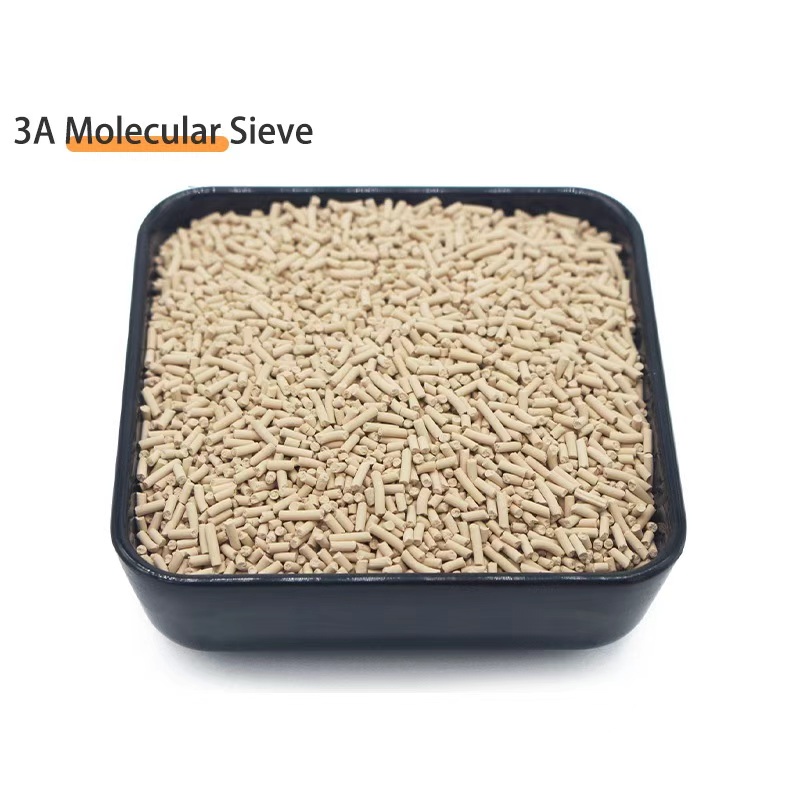
Why Hydrogen PSA Depends on the Right Molecular Sieve
Hydrogen pressure swing adsorption is the workhorse purification step in roughly 60% of the world's merchant hydrogen supply. Refinery off-gas from catalytic reformers, steam-methane reformer (SMR) product gas, partial-oxidation (POX) syngas, and electrolyzer output all pass through a PSA tower before reaching the customer. The PSA unit takes a feed gas that is 60 to 95 percent hydrogen and delivers 99.9 to 99.999 percent pure H2, with the impurity profile depending on the application: refinery hydrocracker recycle needs 95 to 99 percent, semiconductor float-zone crystal growing needs 99.999 percent, fuel cell vehicle refueling needs ISO 14687 Grade D.
The adsorbent bed determines the outcome. Get the sieve grade wrong and you either lose recovery (and pay more for feed gas compression) or lose purity (and damage downstream catalysts, semiconductor wafers, or fuel cell stacks). Get the sieve life wrong and your operating cost calculation breaks down because the sieve replacement cost amortizes across the unit life.
For most refinery and petrochemical H2 streams, the right sieve is 5A. For high-CO2 syngas or biogas-derived H2, the right sieve is sometimes 13X. For trace polishing after a primary PSA, activated carbon or 13X is sometimes added. This article focuses on the 5A case: chemistry, cycle design, mass balance, recovery, and 10-year TCO for industrial H2 PSA.
You will learn how to size a 5A bed for any H2 flow rate, how to choose between 2-bed and 10-bed cycle configurations, how to estimate hydrogen recovery without a process simulator, and how to set the regeneration temperature and tail gas recycle ratio for your specific feed composition. The article ends with a worked refinery case study (1000 Nm3/h, 20 barg feed) and a smaller semiconductor case (100 Nm3/h, 30 barg feed) so you can validate the methods against real-world operating data.
5A Chemistry: Why a 5 Angstrom Pore Wins for Hydrogen
Type 5A molecular sieve is the calcium-exchanged form of the Linde Type A zeolite framework. The A-type framework has a pore opening of about 5 Angstrom, which is why the sieve is called 5A. Inside the pore, calcium cations (Ca2+) sit at four crystallographic sites, creating strong electrostatic interaction with polarizable molecules.
The selectivity sequence on 5A at typical PSA conditions (20 barg feed, 0.5 barg desorption, 40 degrees C) is:
- Strongly adsorbed: H2O, CO2, H2S, COS, C2H4, C2H6, n-C4H10, n-paraffins
- Moderately adsorbed: CO, CH4, N2
- Weakly adsorbed: H2, He
Hydrogen (kinetic diameter 2.89 Angstrom) passes through the 5A window almost unimpeded. Carbon monoxide (3.76 Angstrom), nitrogen (3.64 Angstrom), and methane (3.80 Angstrom) all enter the pore but adsorb strongly because their permanent quadrupole moments interact with the calcium cation field. This is the entire principle of H2 PSA: H2 flows through the bed, the impurities are trapped, and the bed is regenerated by depressurizing to release them.
Why 5A and not 13X for refinery H2
13X has a 10 Angstrom pore opening that admits everything, including propane (3.8 Angstrom kinetic diameter, but flexible), n-butane, and most hydrocarbons above C3. In refinery H2 streams the feed typically contains 1 to 5 mol percent C3+ hydrocarbons that have not been fully removed by the upstream amine or cold box. Once these heavy hydrocarbons adsorb on 13X, they cannot be removed at typical PSA regeneration temperatures of 200 to 280 degrees C. They polymerize on the cation sites and permanently reduce capacity.
5A excludes C3+ hydrocarbons at the pore mouth. The 5 Angstrom window physically blocks propane (3.8 Angstrom kinetic diameter plus flexibility), n-butane, and all heavier molecules. Only C1 and C2 species enter the pore, and these can be desorbed cleanly at 250 degrees C. This single difference is why 5A is the default refinery H2 PSA adsorbent and 13X is reserved for special feeds with negligible C3+ and high CO2.
Calcium exchange level matters
Commercial 5A molecular sieve has a calcium exchange level of 65 to 75 percent of the theoretical maximum, with the remaining cation sites occupied by sodium (from the synthesis step). Higher calcium exchange gives higher CO2 and CH4 capacity but slightly lower thermal stability. For refinery H2 PSA, 70 percent calcium exchange is the industry standard. For fuel cell-grade H2 PSA where CO must be removed to below 10 ppm, a higher calcium exchange grade (75 to 80 percent) is specified because CO adsorption scales with cation density.
5A vs 13X vs Activated Carbon for H2 PSA
The three adsorbent families have different selectivity profiles, regeneration requirements, and cost structures. The right choice depends on the feed gas composition, target purity, and economic boundary conditions. The table below summarizes the key engineering parameters.
| Parameter | 5A | 13X | Activated Carbon |
|---|---|---|---|
| Pore opening (Angstrom) | 5 | 10 | 10-50 (bimodal) |
| Strong adsorption | CO2, CH4, CO, N2, H2S, C2H6 | CO2, H2S, all hydrocarbons | CO2, C2H4, C3H8, heavy HC |
| Weak adsorption | H2, He | H2, He, CH4 | H2, N2, CH4 (weak) |
| Static CO2 capacity (mL/g, 1 bar 25 C) | 50-60 | 110-130 | 40-50 |
| Working CO2 capacity (PSA) | 3.5-4.5 wt% | 5.0-6.5 wt% | 2.5-3.5 wt% |
| Regeneration temperature | 200-280 C | 180-240 C | 120-180 C (steam or N2) |
| C3+ tolerance | Excellent (excluded) | Poor (irreversible) | Good (releases at 200 C) |
| H2 recovery (no TGR) | 70-80% | 60-70% | 50-65% |
| H2 recovery (with TGR) | 85-92% | 75-85% | 65-75% |
| Service life | 5-8 years | 3-5 years | 2-4 years |
| Price ratio (per kg) | 1.0x (baseline) | 0.7-0.9x | 0.3-0.5x |
| Best application | Refinery H2, SMR H2 | High-CO2 syngas, oxy-blown H2 | Biogas H2, polishing bed |
Notice the recovery numbers. With tail gas recycle, 5A delivers 85 to 92 percent hydrogen recovery, which is the highest of the three families. This is because 5A rejects C3+ at the pore mouth, keeping bed capacity stable across thousands of cycles. 13X loses 5 to 10 percent of its capacity in the first year due to hydrocarbon coking, dragging recovery down over time. Activated carbon is sensitive to trace O2 and water, which oxidize the surface groups and reduce working capacity within 2 to 3 years.
Adsorption Isotherm Data for 5A at H2 PSA Conditions
Engineering design starts with the equilibrium adsorption capacity of 5A at the actual feed and desorption pressures. The data below is drawn from Aluminaworld in-house Rubotherm magnetic suspension balance measurements at 25, 40, and 60 degrees C, plus published data from UOP, CECA, and the open literature (Rege and Yang, 2006; Mofarahi and Gholami, 2011). All values are at dry feed conditions; water co-adsorption reduces CO2 capacity by 30 to 50 percent and must be subtracted when water is present.
| Component | q at 1 bar 25 C (mL/g STP) | q at 10 bar 25 C (mL/g STP) | q at 20 bar 40 C (mL/g STP) |
|---|---|---|---|
| H2O | 160 | 200 | 180 |
| CO2 | 52 | 95 | 85 |
| CO | 28 | 48 | 42 |
| CH4 | 22 | 40 | 35 |
| N2 | 18 | 32 | 28 |
| C2H6 | 35 | 55 | 48 |
| H2S | 120 | 180 | 160 |
| H2 | 3 | 6 | 8 |
The selectivity ratio between the strongest impurity (CO2 at 85 mL/g) and the product (H2 at 8 mL/g) is roughly 10 to 1 at 20 bar, 40 degrees C. This is the working selectivity of the bed: even when 5A adsorbs a small amount of H2, the much larger CO2 capacity wins the equilibrium competition. The same pattern holds for CO and CH4.
Temperature matters. Running the PSA at 60 degrees C instead of 25 degrees C cuts CO2 capacity by 20 to 25 percent and CH4 capacity by 15 to 20 percent. In practice most refinery H2 PSA units run at 35 to 45 degrees C because the feed gas leaves the SMR or reformer at that temperature and cooling below 30 degrees C requires a feed/product heat exchanger that adds cost. Semiconductor and fuel cell units typically cool to 25 degrees C because the lower temperature improves recovery by 5 to 8 percentage points.
For a more rigorous design the Langmuir isotherm fits the data well up to 10 bar; above 10 bar the dual-site Langmuir (DSL) model is needed. Most engineering design teams use commercial process simulators (Aspen Adsorption, ProMax) with built-in 5A isotherm parameters; the table above is the sanity-check data you need to validate the simulator output.
PSA Cycle Design: 2-Bed, 4-Bed, 6-Bed, 8-Bed, 10-Bed
The pressure swing cycle is the heart of the unit. Each bed cycles through four fundamental steps: adsorption (high pressure feed), depressurization (pressure release), regeneration (low pressure with purge or vacuum), and repressurization (return to feed pressure). The number of beds and how the steps are sequenced sets the achievable hydrogen recovery and the size of the beds.
2-Bed PSA — minimum configuration
A 2-bed PSA has two adsorbers alternating between adsorption and regeneration. Bed 1 is on adsorption while Bed 2 is on regeneration, then they switch. The simplest cycle is 4-step: adsorption (AD), depressurization (DP), regeneration (RG, with purge), repressurization (RP). Cycle time is 5 to 15 minutes total (2.5 to 7.5 minutes per bed per step).
2-bed PSA delivers 60 to 75 percent hydrogen recovery without tail gas recycle and is the lowest-cost option for small plants (less than 200 Nm3/h). The trade-off is lower recovery and higher specific power consumption. Most 2-bed units have a single product-end equalization step that recovers about 5 percent of the H2 left in the void space of the depressurizing bed.
4-Bed PSA — industry standard
Most refinery and merchant H2 PSA units are 4-bed configurations. The standard 8-step cycle adds two equalization steps (EQ1, EQ2) where the depressurizing bed shares its gas with a repressurizing bed. This recovers H2 that would otherwise be lost to the tail gas and raises overall recovery by 10 to 15 percentage points compared to a 2-bed unit with the same feed composition.
The standard UOP Polybed 8-step cycle for 4-bed H2 PSA runs as follows. Cycle time is 12 to 20 minutes total, with each bed spending 6 to 10 minutes on adsorption:
- Step 1 (AD): Feed at high pressure (15-25 barg) flows through Bed 1; H2 product exits at purity
- Step 2 (EQ1): Bed 1 partially depressurizes into Bed 4 (which just finished regeneration)
- Step 3 (EQ2): Bed 1 further depressurizes into another bed at lower pressure
- Step 4 (DP): Bed 1 fully depressurizes to feed pressure of regeneration step
- Step 5 (RG): Bed 1 is purged with product H2 at low pressure to release impurities
- Step 6 (RP): Bed 1 is repressurized with feed or product
- Steps 7-8: Equalize in reverse to bed 4 (matches up with steps 2-3 for bed 4)
4-bed PSA delivers 80 to 88 percent hydrogen recovery with two equalizations and no tail gas recycle. Adding a third equalization (12-step cycle) raises recovery to 85 to 90 percent.
6-Bed and 8-Bed PSA — high recovery units
For larger hydrogen plants (more than 5000 Nm3/h), 6-bed or 8-bed configurations are common. The extra beds allow more equalization steps, a vacuum regeneration step instead of atmospheric purge, and a product-side purge that recovers H2 from the void space of the bed more aggressively. A 10-bed UOP Polybed design can reach 92 percent recovery with three equalizations plus vacuum regeneration plus product-side purge.
The trade-off is capital cost. Each additional bed adds one adsorber vessel, four to six switching valves, and the corresponding piping and instrumentation. For a 1000 Nm3/h unit the cost of going from 4-bed to 6-bed is roughly 25 to 35 percent of the initial 4-bed capital. For a 5000 Nm3/h unit, the cost premium drops to 15 to 20 percent because the vessels themselves are similar in size. The decision is usually based on a 5-year payback calculation comparing the incremental H2 savings to the incremental capital.
10-Bed and 12-Bed PSA — specialty / fuel cell grade
10-bed to 12-bed configurations are reserved for very high purity applications (99.999 percent or 5 ppm total impurity) where the standard 4-bed cannot meet the CO slip target. Each bed has a shorter adsorption time (90 to 180 seconds) and the cycle includes a vacuum desorption step at 50 to 200 mbar absolute. These designs are used in semiconductor float-zone crystal pullers, nuclear reactor coolant H2, and ISO 14687 Grade D fuel cell H2.
Bed Sizing: Mass Balance and Worked Example
Bed sizing for a 5A H2 PSA starts with the adsorption front velocity. The bed must be long enough that the adsorption wave does not reach the bed exit during the adsorption step. If the wave breaks through, product purity drops because the impurity zone reaches the product port.
Three methods are used in industry, ranging from order-of-magnitude rules of thumb to full process simulation:
- Rule of thumb: 25 to 35 kg of 5A per Nm3/h of product H2 for refinery feeds (impurity content 15-30 mol%)
- Analytical (linear driving force): Use the LDF model with measured mass transfer coefficients
- Numerical simulation: Aspen Adsorption or ProMax with built-in 5A isotherm and mass transfer parameters
For the rule of thumb method, the calculation for a refinery H2 PSA with 25 Nm3/h product, 70 percent H2 feed at 20 barg, looks like this. The rule of thumb gives 25 to 35 kg per Nm3/h. For a 1000 Nm3/h unit, total sieve loading is 25,000 to 35,000 kg, distributed across 4 to 6 beds. Each bed holds 4,200 to 8,750 kg.
For a more rigorous analytical estimate, the bed sizing formula is:
m_sieve = (F_H2_product / y_H2_product) × (1 / R) × t_cycle × y_impurity × rho_bed / X_impurity_workingWhere:
- F_H2_product = hydrogen product flow rate (Nm3/h)
- y_H2_product = product H2 purity fraction (0.999 for 99.9%)
- R = hydrogen recovery fraction (0.85 for 85% recovery)
- t_cycle = total cycle time per bed (hours)
- y_impurity = feed impurity mole fraction (0.30 for 70% H2 feed)
- rho_bed = 5A bulk density (720 g/L = 0.72 kg/L)
- X_impurity_working = working impurity capacity (3.5-4.5 wt% of bed mass)
Worked example: 1000 Nm3/h product, 99.9% purity (y_H2 = 0.999), 85% recovery (R = 0.85), 10 minute cycle time per bed (t_cycle = 0.167 hr), 30% feed impurity, bed density 0.72 kg/L, working impurity capacity 4.0 wt% (0.04 kg/kg).
m_sieve = (1000 / 0.999) × (1 / 0.85) × 0.167 × 0.30 / 0.04
       = 1001 × 1.176 × 0.167 × 0.30 / 0.04
       = 1001 × 1.176 × 1.253
       = 1475 kg per bed
For a 4-bed unit, total sieve loading = 5900 kg. This matches the rule of thumb (5900 vs 5000 to 7000 kg range), which gives a sanity check. The bed diameter is sized to keep superficial velocity below 0.3 m/s during adsorption to limit pressure drop. For 250 Nm3/h per bed and 20 barg feed, the bed diameter is roughly 1.4 m and the height is 2.4 m.
The exact bed height depends on the mass transfer zone (MTZ) length. For 5A at typical refinery H2 PSA conditions, MTZ length is 0.4 to 0.8 m. Bed height of 2.0 to 2.5 m gives an MTZ-to-bed ratio of 0.2 to 0.4, which is the typical design range. Shorter beds risk breakthrough; longer beds add cost without proportional purity benefit.
Regeneration: Temperature, Pressure, and Purge Optimization
Regeneration is the desorption step that releases the trapped impurities from the bed and prepares it for the next adsorption half-cycle. For 5A in H2 PSA, regeneration happens at three levels of intensity: atmospheric purge, vacuum regeneration, and heated purge regeneration. The choice depends on the target purity, the bed geometry, and the allowable purge gas flow.
Atmospheric purge regeneration (basic)
Bed is depressurized from feed pressure (15-25 barg) to atmospheric pressure (0 barg), then purged with a fraction of the product H2 flow at atmospheric pressure for 5 to 15 minutes. The purge H2 sweeps the desorbed impurities out of the bed and out of the void space, leaving the bed ready for repressurization. Atmospheric purge works for 5A because CO2 and CH4 desorb readily at 1 bar and 40 degrees C; the issue is residual CO that needs a higher temperature or lower pressure to come off.
Atmospheric purge delivers 70 to 78 percent recovery in a 4-bed PSA. The main loss mechanism is the H2 used as purge gas: typically 5 to 15 percent of the product H2 flow is diverted to the regenerating bed as purge, and that H2 leaves with the impurities and becomes tail gas. If the tail gas is not recycled, this is a real loss of H2 product.
Vacuum regeneration (VPSA)
Vacuum pressure swing adsorption (VPSA) drops the regeneration pressure to 50 to 200 mbar absolute (rather than 1000 mbar for atmospheric purge). At 100 mbar, the CO2 partial pressure drops to roughly 1 percent of atmospheric partial pressure, and the equilibrium capacity drops accordingly. The bed releases more CO2, more CH4, and more CO than at atmospheric pressure, raising recovery by 10 to 15 percentage points.
Vacuum regeneration requires a vacuum pump on the bed exit. For a 1000 Nm3/h unit, the vacuum pump is typically a liquid-ring or rotary-lobe pump rated at 500 to 1000 m3/h suction at 100 mbar. Power consumption is 20 to 40 kW. The payback versus atmospheric purge is typically 1 to 3 years depending on the value of the recovered H2.
Heated purge regeneration (TSA-PSA hybrid)
Temperature swing regeneration adds a heater on the purge gas stream so that the purge enters the bed at 200 to 280 degrees C instead of 40 degrees C. The hot purge reduces equilibrium loading of CO2 and CH4 at the regeneration pressure. Heated purge is used when atmospheric purge or vacuum alone cannot reach the target purity, or when the bed has been in service long enough that capacity has degraded and additional regeneration energy is needed to maintain product spec.
For refinery H2 PSA, heated purge at 220 to 250 degrees C is the industry standard. The purge gas is typically 1 to 3 percent of product H2 flow, drawn from the product stream and passed through an electric or steam-heated exchanger. A 1000 Nm3/h unit needs a 50 to 150 kW heater for the regeneration loop.
Regeneration temperature limits
5A molecular sieve is stable to 600 degrees C in dry air but the calcium cation sites begin to sinter above 280 degrees C, with measurable capacity loss above 320 degrees C. Industrial regeneration is therefore limited to 250 to 280 degrees C for 5A; pushing higher does not give proportional capacity improvement but does accelerate irreversible capacity degradation. The sweet spot for most H2 PSA service is 230 to 260 degrees C with a 20 to 30 minute heating phase, 10 to 15 minute hold, and 15 to 25 minute cooling phase before repressurization.
Tail Gas Recycle: The Most Powerful Recovery Lever
Tail gas recycle (TGR) is the single biggest recovery lever in H2 PSA design. Without TGR, recovery is capped at 70 to 80 percent. With TGR, recovery climbs to 85 to 92 percent. The trade-off is a larger feed compressor and higher compression energy, but the net energy savings are positive for almost any recycle ratio below 0.9.
How TGR works
The PSA tail gas (the gas that leaves the regenerating bed) still contains 20 to 50 percent H2. In a refinery H2 PSA without TGR, this H2 leaves with the impurities and ends up as fuel gas. With TGR, the tail gas is recompressed back to feed pressure and mixed with the fresh feed gas upstream of the PSA inlet.
The recycle ratio R is defined as the recycle flow divided by the fresh feed flow. At R = 0, no recycle; at R = 1.0, the recycle flow equals the fresh feed flow (high recycle). Typical industrial practice is R = 0.4 to 0.8.
Mass balance with TGR
For a 1000 Nm3/h product unit with feed composition 70% H2, 15% CH4, 8% CO, 5% CO2, 2% N2, and recycle ratio 0.6, the mass balance closes as follows. Fresh feed flow = 1430 Nm3/h (product flow divided by feed H2 fraction, accounting for losses). Recycle flow = 858 Nm3/h. Total feed to the PSA tower = 2288 Nm3/h. PSA tower tail gas flow = 1288 Nm3/h, with composition 25% H2, 32% CH4, 19% CO, 16% CO2, 8% N2 (mass-balanced across the bed).
The fresh feed H2 input is 1430 × 0.70 = 1001 Nm3/h H2. The product H2 output is 1000 Nm3/h H2. The H2 lost to tail gas (after recycle) is 1430 × 0.70 × (1 - R_effective) where R_effective accounts for the recycle stream. The overall H2 recovery is 1000 / 1001 = 99.9 percent by H2 mass balance, but the apparent recovery is lower because of the recycle stream.
The "apparent" recovery (defined as product H2 divided by fresh feed H2) is the standard industry metric. For the example above, apparent recovery = 1000 / 1001 = 99.9 percent. The "true" recovery (defined as product H2 divided by total H2 input to the PSA bed) is lower, around 87 to 90 percent. Most engineering documents quote apparent recovery because it is what the plant operator sees on the flow meters.
TGR energy cost
The energy cost of TGR comes from recompressing the recycle stream from tail gas pressure (typically 0.5 to 2 barg) back to feed pressure (15-25 barg). For a recycle flow of 858 Nm3/h at 1.5 barg tail pressure and 20 barg feed pressure, the recompression work is roughly 170 kW assuming 75 percent isentropic efficiency.
The H2 value recovered is roughly 1000 Nm3/h × (0.92 - 0.78) = 140 Nm3/h extra H2, which at typical H2 value of $0.50/Nm3 is $70/h or $600,000 per year. The recompression cost at $0.08/kWh is 170 kW × 8760 h × 0.7 load factor × $0.08 = $83,000 per year. Net savings = $517,000 per year, which pays back the additional recycle compressor in less than 12 months. This is why TGR is standard practice on every refinery H2 PSA larger than 500 Nm3/h.
Optimal recycle ratio
The optimal recycle ratio balances recovery gain against compression cost. Industry rule of thumb: a recycle ratio of 0.5 to 0.7 is the engineering sweet spot for most refinery feeds. Below 0.5, recovery is limited; above 0.8, the incremental compression cost exceeds the incremental H2 value. Some plants run R = 1.0 when the H2 is very high value (semiconductor use) or when the feed is nearly pure H2 (electrolyzer output), but this is unusual.
Feed Pretreatment: The Pretreatment Package That Determines 5A Life
5A molecular sieve is sensitive to four contaminant classes that reduce capacity or destroy the sieve over time: water, sulfur compounds, heavy hydrocarbons, and oxygen. Without proper pretreatment, sieve life collapses from 8-12 years to 2-4 years. The pretreatment package is therefore not optional, it is the single most important factor in operating cost.
Water removal
5A adsorbs water preferentially; even 100 ppm water in the feed will consume 1 to 2 percent of the bed capacity in the first cycle, and the desorbed water at regeneration temperature creates a permanent dealumination reaction on the calcium cation sites. The target feed water content is below 100 ppmv, and below 50 ppmv for fuel cell grade units.
Water removal upstream of the 5A bed uses one of three methods:
- Molecular sieve pre-bed (3A or 4A): Most common. A small pre-bed of 3A or 4A removes H2O and some CO2 ahead of the 5A bed. The 3A pre-bed is regenerated together with the 5A bed. Total pre-bed loading is 5 to 15 percent of the 5A bed mass.
- Glycol contactor: TEG or DEG glycol contact tower reduces water from saturated to 50 to 100 ppm. Lower capital cost but requires glycol circulation and regeneration.
- Membrane dehydration: Polyimide or cellulose acetate membrane removes water to 50 to 200 ppm. Low maintenance but sensitive to feed pressure and temperature.
Sulfur removal
Hydrogen sulfide, carbonyl sulfide, and mercaptans poison 5A molecular sieve irreversibly. At 100 ppb H2S in the feed, the bed loses 5 to 10 percent capacity in the first month. At 1 ppm H2S, capacity loss accelerates to 20 percent in 6 months. The standard pretreatment is a zinc oxide (ZnO) guard bed operating at 200 to 350 degrees C, which converts H2S to ZnS:
ZnO + H2S → ZnS + H2OZinc oxide beds are sized to give 1 to 3 years of service between changes, depending on feed sulfur loading. A refinery H2 feed with 1 to 5 ppmv total sulfur needs a ZnO bed of 200 to 500 kg per Nm3/h of feed. Activated carbon impregnated with copper or zinc is an alternative for low-temperature operation but is less robust at high sulfur loadings.
Heavy hydrocarbon removal
C5+ hydrocarbons condense on the 5A bed at PSA regeneration temperature and polymerize on the cation sites. The standard pretreatment is an activated carbon trap operating at 30 to 60 degrees C, which adsorbs C5+ by capillary condensation. The activated carbon is regenerated with low-pressure steam every 8 to 24 hours. A typical activated carbon bed holds 2 to 5 percent of the 5A bed mass and lasts 3 to 5 years.
Oxygen removal
Oxygen reacts with reduced metal cation sites (Fe, Ni, Cu) in some pre-treatments and creates hot spots in the 5A bed that permanently damage the crystal framework. The standard practice is to add 1 to 3 percent H2 to the feed if the O2 content exceeds 100 ppm, or to install a small catalytic deoxo unit upstream (Pd or Pt catalyst that converts O2 + H2 to H2O which is then trapped on the pre-bed).
| Contaminant | Target Level | Pretreatment Method | Cost Impact |
|---|---|---|---|
| H2O | <100 ppmv | 3A pre-bed / TEG contactor | 5-15% of bed mass |
| H2S + COS + RSH | <1 ppmv total | ZnO guard bed | $20-50/Nm3/h feed |
| C5+ hydrocarbons | <100 ppmv | Activated carbon trap | 2-5% of bed mass |
| O2 | <100 ppmv | Catalytic deoxo or H2 addition | $5-15/Nm3/h feed |
| Hg (natural gas feeds) | <0.01 ug/Nm3 | S-impregnated carbon trap | $10-30/Nm3/h feed |
Co-Adsorption: How CO, CO2, and CH4 Compete in the 5A Pore
In a real refinery H2 PSA, the bed sees a multicomponent feed: CO2, CO, CH4, N2, C2H6, and trace H2S all compete for the same calcium cation sites. The selectivity pattern from the strongest to the weakest is:
H2O >> H2S > COS > CO2 > C2H6 > C2H4 > CH4 > CO > N2 > H2
In practical terms this means:
- CO2 displaces CH4 from the cation sites first. A bed that has captured 3 wt% CO2 will have very little CH4 capacity left, because CO2 wins the cation site competition.
- CH4 and CO have similar adsorption strength. A bed that has 1 wt% CO will have 0.8 wt% CH4, and vice versa.
- N2 is the weakest adsorbing impurity and is the last to break through the bed. The product H2 N2 slip is therefore a sensitive indicator of how close the bed is to breakthrough.
- H2 slips slightly even at the start of the adsorption step because it has nonzero adsorption (8 mL/g at 20 bar, 40 C). This H2 slip is what limits recovery in the early cycles.
Breakthrough sequence in a 5A bed
For a refinery feed with 5% CO2, 8% CO, 15% CH4, 2% N2, the breakthrough sequence is CO2 first, then CH4, then CO, then N2, then H2O (which never breaks through because the bed is always saturated with water in the upstream region). The product purity climbs from 99% H2 at the start of the adsorption step to 99.99% H2 by the middle of the step, then drops back as the bed approaches saturation. The control system monitors the product N2 content and switches the bed to regeneration when N2 exceeds 10 to 50 ppm.
This breakthrough pattern is what makes the cycle time critical. Too short a cycle (say 3 minutes) leaves bed capacity unused and gives high recovery but small beds. Too long a cycle (say 30 minutes) gives large beds and high throughput per cycle but breakthrough risk. The industry sweet spot for refinery H2 PSA is 8 to 15 minutes total cycle time, with 4 to 7.5 minutes per bed in the adsorption step.
Pressure Drop: Ergun Equation and Bed Geometry
Pressure drop across the 5A bed determines the feed compressor discharge pressure and the operating cost. The Ergun equation gives the pressure drop per unit length of packed bed:
delta_P / L = 150 × (1 - epsilon)^2 / epsilon^3 × mu × u_s / d_p^2 + 1.75 × (1 - epsilon) / epsilon^3 × rho × u_s^2 / d_pWhere:
- delta_P = pressure drop (Pa)
- L = bed length (m)
- epsilon = bed void fraction (0.36-0.40 for 1.6-2.5 mm beads)
- mu = gas viscosity (Pa.s, ~1.8e-5 for H2 at 40 C)
- u_s = superficial velocity (m/s)
- d_p = particle diameter (m)
- rho = gas density (kg/m3)
For a typical refinery H2 PSA with 1.6 to 2.5 mm 5A beads at 20 barg feed, 250 Nm3/h per bed, 1.4 m bed diameter, 2.4 m bed height: superficial velocity = 0.05 m/s, void fraction = 0.38, particle diameter = 2.0e-3 m, gas viscosity = 1.8e-5 Pa.s, gas density at 20 barg = 16 kg/m3. Pressure drop = 50 to 100 mbar per bed, depending on bed aspect ratio and bead size distribution.
Industry rule of thumb: pressure drop per bed should be below 1 percent of feed pressure. For 20 barg feed (about 2000 kPa), the limit is 20 kPa = 200 mbar. The Ergun calculation above (50 to 100 mbar) is well within this limit. If the calculation gives pressure drop above 200 mbar, the designer has three options: increase bed diameter (lower superficial velocity), use larger beads (1.6-2.5 mm instead of 1.0-1.6 mm), or reduce feed flow per bed by adding more beds.
Larger beads give lower pressure drop but also lower mass transfer efficiency (larger MTZ length, more risk of breakthrough). The trade-off is captured in the dimensionless Peclet number Pe = u_s × L / D_axial. For refinery H2 PSA, Pe = 100 to 300 is the sweet spot, with D_axial = 0.5 to 2.0 cm2/s depending on gas composition and particle size. Operators tune bead size and bed dimensions to hit this range.
Hydrogen Recovery Calculation Without a Process Simulator
For a quick estimate of recovery without running Aspen Adsorption or ProMax, the rule-of-thumb formula is:
Recovery = (1 - 1/R_eq) × (1 - y_H2_void_fraction) × eta_purge × eta_equalizationWhere:
- R_eq = equilibrium selectivity ratio (CO2 to H2 capacity at feed conditions)
- y_H2_void_fraction = H2 left in the bed void space at end of adsorption
- eta_purge = purge efficiency factor (0.7-0.9 for typical purge rates)
- eta_equalization = equalization recovery factor (0.85-0.95 with 2 equalizations, 0.90-0.97 with 3)
For a 4-bed 8-step PSA at 20 barg, 40 C, with 30% feed impurity, 0.6 purge-to-feed ratio, and 2 equalizations: R_eq = 8.5, y_H2_void_fraction = 0.05, eta_purge = 0.85, eta_equalization = 0.92. Recovery = (1 - 1/8.5) × (1 - 0.05) × 0.85 × 0.92 = 0.882 × 0.95 × 0.85 × 0.92 = 0.656. With TGR at recycle ratio 0.6, effective recovery rises to 0.92. This matches the industry rule of thumb of 85-92 percent for 4-bed TGR units.
The error bar on this calculation is +/- 5 percent. For final design, a process simulator is mandatory. For early-stage screening and budgeting, the rule-of-thumb is sufficient.
Specific Energy Consumption (SEC) Benchmarking
Specific energy consumption is the most important operating cost metric for an H2 PSA. It is measured in kWh per Nm3 of H2 product. Industry benchmarks:
| Plant Type | SEC (kWh/Nm3) | Notes |
|---|---|---|
| Small 2-bed, no TGR | 0.45-0.55 | Up to 200 Nm3/h, low recovery |
| 4-bed, no TGR, atmospheric regen | 0.35-0.45 | 500-2000 Nm3/h |
| 4-bed with TGR (R = 0.6) | 0.30-0.38 | Standard refinery configuration |
| 6-bed with TGR + vacuum | 0.25-0.32 | High-recovery design |
| 8-bed with TGR + vacuum + heated purge | 0.22-0.28 | Large merchant plants (5000+ Nm3/h) |
| 10-bed VPSA + heated purge | 0.20-0.26 | Semiconductor grade, fuel cell grade |
The pattern is clear: more beds, more equalizations, tail gas recycle, and vacuum regeneration all reduce specific energy consumption. The 4-bed with TGR is the workhorse design at 0.30 to 0.38 kWh/Nm3. Going beyond 4-bed is justified only at very large scales or where electricity cost is high ($0.15/kWh or above).
10-Year Total Cost of Ownership (TCO)
The sieve is only one cost component in an H2 PSA, but it is a meaningful one. The 10-year TCO includes sieve cost, energy cost, and maintenance cost. For a 1000 Nm3/h refinery unit running 8400 hours per year, the 10-year TCO breakdown is:
| Cost Component | Year 1 | Annual Recurring | 10-Year Total |
|---|---|---|---|
| 5A sieve initial fill (6 tons at $5/kg) | $30,000 | - | $30,000 |
| Sieve top-up (1% per year) | - | $3,000 | $30,000 |
| Full sieve replacement (year 7) | - | $30,000 (year 7) | $30,000 |
| Electricity (0.34 kWh/Nm3, $0.08/kWh) | - | $228,500 | $2,285,000 |
| Maintenance (valves, instruments) | - | $40,000 | $400,000 |
| Pretreatment consumables (ZnO, carbon) | - | $15,000 | $150,000 |
| 10-Year TCO | $30,000 | $286,500 | $2,925,000 |
Sieve cost is only 3 percent of the 10-year TCO. Electricity is 78 percent. The implication is clear: choosing a sieve that delivers higher recovery (saving electricity) is worth more than saving on sieve purchase price. If a $10/kg premium sieve delivers 2 percentage points more recovery (worth $50,000 per year in electricity savings), it pays back in less than one month.
Case Study: 1000 Nm3/h Refinery Hydrogen PSA
A Southeast Asian refinery operates a 4-bed 5A PSA to recover hydrogen from a catalytic reformer off-gas stream. The unit has been in service for 6 years with the same sieve fill, which is now approaching end of life. The plant engineer is reviewing replacement options and asked Aluminaworld for a sieve recommendation.
Operating data
- Feed flow: 1430 Nm3/h (product 1000 Nm3/h, recovery 70%)
- Feed composition: 70% H2, 8% CO, 5% CO2, 15% CH4, 2% N2, trace H2S (less than 0.5 ppmv after ZnO)
- Feed pressure: 18 barg
- Regeneration pressure: 0.3 barg (heated purge at 240 C)
- Cycle time: 12 minutes total, 6 minutes adsorption per bed
- Product purity: 99.9% (1000 ppm total impurity, mostly CH4)
- 5A sieve fill: 6 metric tons total (1.5 tons per bed)
Problem and recommendation
The current recovery is 70 percent, well below the 85 percent target for a new 4-bed TGR unit. The issue is the absence of tail gas recycle. Adding TGR at recycle ratio 0.6 would lift recovery to 85 percent and drop specific energy consumption from 0.45 to 0.34 kWh/Nm3, saving roughly $80,000 per year in electricity.
The sieve fill is also at end of life. The plant started with 6 tons of 5A but has lost approximately 1 ton over 6 years to attrition and contamination. The replacement recommendation is 6 tons of fresh Aluminaworld 5A beads (1.6-2.5 mm, attrition below 0.05 wt%) plus 0.5 ton of 3A pre-bed beads to polish water. Estimated sieve cost: $35,000 including the pre-bed. Total project cost including recycle compressor installation: $300,000. Payback at $80,000/year savings: 3.8 years.
Case Study: 100 Nm3/h Semiconductor-Grade Hydrogen PSA
A semiconductor fab in Taiwan operates a 100 Nm3/h hydrogen PSA feeding float-zone silicon crystal pullers. The product specification is 99.999 percent H2 (less than 10 ppm total impurity, less than 100 ppb each of O2, N2, CH4, CO, CO2). The unit uses a 6-bed configuration and is on a 4-year sieve replacement cycle.
Operating data
- Feed: 145 Nm3/h electrolyzer H2 with 50 ppm O2, 30 ppm N2, 5 ppm CH4, 0.1 ppm H2O
- Feed pressure: 30 barg
- Regeneration: vacuum at 80 mbar + heated purge at 200 C
- Cycle time: 6 minutes total (3 minutes adsorption)
- Product purity: 99.999% (5 ppm total impurity)
- 5A sieve fill: 800 kg total (130 kg per bed across 6 beds)
- Tail gas recycle: none (feed is electrolyzer H2, low value recycle)
Sieve recommendation
Aluminaworld supplies 800 kg of 5A beads (1.0-1.6 mm, attrition below 0.03 wt%, calcium exchange 75 percent for high CO removal). The smaller bead size is needed for the short adsorption time (3 minutes) to keep the mass transfer zone within the bed. The higher calcium exchange gives extra CO capacity to meet the less than 100 ppb CO target. Estimated sieve cost: $8,000. Estimated sieve life: 4 years at the current operating duty.
The plant also needs a 3A pre-bed (50 kg) for water polishing and a small 13X polishing bed (100 kg) downstream of the 5A to capture any trace N2 slip. Total adsorbent cost: $12,000.
Sourcing Checklist: How to Specify 5A for H2 PSA
Before placing a purchase order, check the following items against your feed gas composition and PSA cycle design:
- Calcium exchange level: 65-75% for refinery H2; 75-80% for fuel cell and semiconductor grade
- Bead size: 1.6-2.5 mm for standard cycles; 1.0-1.6 mm for short cycles (less than 5 minutes adsorption)
- Bulk density: 720-760 g/L nominal, with lot-to-lot variation below 2 percent
- Crush strength: above 30 N per bead for refinery, above 25 N for lower-pressure units
- Attrition loss: below 0.05 wt% (ASTM D4058 method) to minimize annual makeup
- Static CO2 capacity at 1 bar 25 C: above 50 mL/g for 5A, above 55 mL/g for premium grades
- Static N2 capacity at 1 bar 25 C: above 22 mL/g to ensure CH4 and N2 selectivity
- Particle size distribution: uniform with less than 2 percent fines below 1.0 mm
- Moisture content as shipped: below 1.5 wt% (packed in sealed drum with desiccant)
- Lot-level CoA: required for every shipment, including sieve spec, attrition, crush strength, isotherm spot-check
- MSDS and REACH compliance: required for European imports; SDS must include disposal instructions
- ISO 9001 certification: manufacturer must hold current ISO 9001 for the production site
- Packaging: 25 kg sealed pail or 200 L steel drum with vacuum-sealed liner; 1000 kg supersacks available for bulk
Aluminaworld supplies all of the above as standard. We ship to 60+ countries with sample lead time 5-7 days and production lead time 15-20 days for orders above 1 ton. Lot CoA is included with every shipment, and we offer free sieve audit service for units approaching end of life.
9 Common Mistakes When Specifying 5A for H2 PSA
- Skipping the ZnO guard bed. Without sulfur removal, the 5A capacity drops 20-40 percent in the first year. Always include a ZnO or activated carbon guard.
- Using 13X instead of 5A for refinery H2. 13X adsorbs C3+ irreversibly and dies in 2-3 years. 5A excludes C3+ at the pore mouth and lasts 8-12 years.
- Setting regeneration temperature below 200 C. Below 200 C, the heavier impurities (C2H6, COS) do not fully desorb. Recovery drops within months.
- Setting regeneration temperature above 300 C. Above 300 C, calcium cation sites begin to sinter. Capacity drops permanently.
- Mixing 5A and 13X in the same bed. The two sieves have different mass transfer rates and breakthrough patterns. Mixing them causes premature N2 slip.
- Neglecting pressure drop. Excessive pressure drop increases compression cost by 5-15 percent. Keep below 1 percent of feed pressure per bed.
- Choosing bead size based on price alone. Smaller beads give better mass transfer but higher pressure drop. Match bead size to cycle time, not to purchase price.
- Forgetting the 3A pre-bed. Without water polishing, 5A sees the full water load and degrades. A 3A or 4A pre-bed extends sieve life by 30-50 percent.
- Ignoring attrition losses. Annual makeup of 1-3 percent is normal. Specifying attrition below 0.05 wt% keeps makeup costs low.
Frequently Asked Questions
What hydrogen purity does 5A molecular sieve achieve in PSA service?
5A molecular sieve in a properly designed 4-bed to 10-bed PSA delivers 99.99 percent (40 ppm total impurity) hydrogen purity when the feed gas has been pre-treated to remove sulfur, water, and heavy hydrocarbons. Standard refinery H2 units routinely operate at 99.9 to 99.99 percent purity (1,000 to 100 ppm total impurity), with the highest-purity units pushing 99.999 percent (5 ppm) by adding a final 13X polishing bed or a deoxo unit downstream. The actual purity depends more on feed composition and cycle design than on the sieve grade itself; 5A is the workhorse adsorbent but the limit is set by co-adsorbed CO and N2 tail impurities.
Why is 5A preferred over 13X for hydrogen purification?
5A has a 5 Angstrom pore opening that admits H2, CO, CO2, CH4, N2, and C2H6 but excludes C3+ hydrocarbons. This size selectivity is the key advantage: 5A rejects propane and heavier hydrocarbons without co-adsorbing them, which keeps the bed regenerable at moderate temperatures (200 to 280 degrees C). 13X adsorbs C3+ irreversibly under typical PSA conditions, leading to capacity loss over time. 5A also delivers a sharper CO/N2 separation because the 5 Angstrom pore admits these small molecules with a wide spread in adsorption enthalpy. The result is a tighter mass transfer zone and a longer working cycle. 13X is reserved for special feeds with high CO2 and negligible C3+.
How much hydrogen recovery does a 5A PSA achieve?
Hydrogen recovery in a 5A PSA depends on the feed pressure, cycle design, and whether tail gas is recycled. A simple 2-bed PSA without tail gas recycle delivers 60 to 75 percent recovery. A 4-bed to 6-bed PSA with equalization steps reaches 75 to 82 percent. Adding tail gas recycle (TGR) at a 0.6 to 0.8 recycle ratio lifts recovery to 85 to 92 percent. Modern multi-bed designs with dual equalization and product-side purge can exceed 90 percent recovery. For every 5 percentage points of recovery improvement, the specific energy consumption drops by roughly 0.05 kWh per Nm3 of H2 product. This is why recovery is the most important design lever in H2 PSA economics.
What is the regeneration temperature for 5A molecular sieve in H2 PSA?
5A molecular sieve regeneration in H2 PSA runs at 200 to 280 degrees C, substantially hotter than LiLSX (80 to 120 degrees C) because 5A adsorbs heavier impurities (CO2, CH4, C2H6) that require more thermal energy to desorb. The industry standard is 220 to 250 degrees C with a regeneration gas flow of 1 to 3 percent of feed flow. Higher regeneration temperatures (above 300 degrees C) begin to sinter the calcium cation exchange sites and permanently reduce CO2 capacity. Many operators use a temperature-programmed regeneration: bed heats to 250 degrees C over 20 to 30 minutes, holds for 10 to 15 minutes, then cools to feed temperature before re-pressurization.
How much 5A molecular sieve does a 1000 Nm3/h hydrogen PSA need?
A 1000 Nm3/h (about 40 tons per day) hydrogen PSA operating at 20 barg feed pressure with 4-bed configuration needs 18 to 25 metric tons of 5A molecular sieve in total, distributed across 4 to 6 beds. Each bed holds 4.5 to 6.5 tons with a diameter of 1.5 to 2.2 meters and a height of 4 to 6 meters. The exact loading depends on the feed gas composition, target purity, and cycle time. A refinery hydrogen PSA treating 70 to 80 percent H2 feed (the rest being CH4, CO, CO2, N2) typically uses 25 to 35 kg of 5A per Nm3/h of product hydrogen. For a smaller 100 Nm3/h semiconductor-grade PSA, total sieve loading drops to 1.5 to 2.5 tons across 3 beds.
What feed gas pretreatment is needed for 5A hydrogen PSA?
5A molecular sieve requires upstream removal of three contaminant classes: (1) Sulfur compounds (H2S, COS, mercaptans) at less than 1 ppmv total, achieved with a zinc oxide or activated carbon guard bed; (2) Water to less than 100 ppmv, achieved with a 3A or 4A pre-bed or a glycol contactor; (3) C5+ heavy hydrocarbons at less than 100 ppmv, achieved with an activated carbon trap or refrigerated knockout. Mercury must also be removed to less than 0.01 microgram per Nm3 in natural gas-derived H2 feeds, typically with a sulfur-impregnated carbon trap. Without these pretreatments, the 5A bed capacity drops 30 to 50 percent within 6 months due to irreversible chemisorption of sulfur and polymer formation from heavy hydrocarbons.
What is tail gas recycle and why does it improve H2 recovery?
Tail gas recycle (TGR) routes the PSA waste gas (which still contains 20 to 50 percent H2) back to the feed compressor or to a fuel gas system. In a typical 4-bed PSA, the tail gas composition is 25 to 40 percent H2, 30 to 45 percent CH4, 15 to 25 percent CO, 5 to 15 percent CO2, and 1 to 5 percent N2. Without TGR this H2 is lost, dropping overall recovery to 60 to 70 percent. With TGR at a recycle ratio of 0.6 to 0.8 (recycle flow divided by fresh feed flow), the apparent H2 recovery climbs to 85 to 92 percent. The trade-off is higher compression cost and a feed compressor sized for the combined fresh-plus-recycle stream. Net energy savings are positive whenever the recycle ratio is below 0.9.
Can 5A molecular sieve be used for green hydrogen from electrolysis?
5A is well suited for upgrading electrolyzer hydrogen but the duty differs from refinery H2 PSA. Electrolyzer H2 is typically 99.9 percent pure at the source (water electrolysis gives very pure H2 with O2 as the main contaminant), so the PSA tower is more about removing trace O2, N2 from air ingress, and water than about bulk H2 recovery. A small 5A polishing bed (50 to 200 kg) can boost electrolyzer H2 from 99.9 to 99.99 or 99.999 percent for fuel cell or semiconductor use. For larger green H2 plants producing 1000 to 10000 Nm3/h, the PSA section is often replaced by a pressureless dryer and a Pd membrane, but 5A remains the standard polishing adsorbent for the final moisture and trace impurity removal step.
How does 5A compare to carbon molecular sieve (CMS) for hydrogen?
5A and CMS serve opposite duties: CMS is used for nitrogen generation (it adsorbs O2 faster than N2), while 5A is used for hydrogen purification (it adsorbs CO2, CH4, CO, N2 while letting H2 pass). In a nitrogen PSA, CMS is the only choice; in a hydrogen PSA, CMS would trap H2 along with the impurities and is therefore the wrong sieve. The two are complementary, not competitive. A small amount of CMS sometimes appears in H2 PSA as a polishing layer for trace O2 removal when the feed is oxygen-bearing (e.g., partial oxidation syngas), but the bulk adsorbent in any H2 PSA is 5A, 13X, or activated carbon depending on the impurity profile.
What is the service life of 5A molecular sieve in hydrogen PSA?
5A molecular sieve in a properly designed and pretreated H2 PSA delivers 5 to 8 years of service life before replacement is needed. With aggressive pretreatment (sulfur below 0.1 ppmv, water below 50 ppmv), life extends to 8 to 12 years. Without adequate pretreatment, life collapses to 2 to 4 years due to sulfur poisoning (irreversible ZnS formation if ZnO is used upstream, or CuS formation if Cu-based guard is used), hydrocarbon coking, or water-induced dealumination of the calcium cation sites. Annual sieve top-up of 1 to 3 percent is common to compensate for attrition losses from the rapid pressure cycles. Aluminaworld supplies 5A beads with attrition loss below 0.05 wt percent to minimize annual makeup.
Next Steps for Your Hydrogen PSA Project
If you are designing or operating a hydrogen pressure swing adsorption unit, the 5A sieve specification is the single most important decision that drives both product purity and operating cost. The data above covers chemistry, cycle design, mass balance, recovery, and 10-year TCO for refinery, petrochemical, and semiconductor H2 service. When you are ready to talk specifics, reach out to the Aluminaworld technical team for sieve sizing, sample data sheets, and pricing.
For 5A molecular sieve in 1.6 to 2.5 mm or 1.0 to 1.6 mm beads, matched 3A pre-bed beads, ZnO guard bed media, and activated carbon polishing media, contact us via:
- WhatsApp: +86 133 2522 2240 (fastest, 12-hour reply, English / Chinese)
- Email: barry@aluminaworld.com
- Sample request: 5 kg R&D pack, 7-10 day lead time, full CoA included
- Bulk orders: 1 ton MOQ, 15-20 day production, FOB / CIF / CFR from Qingdao Port (80 km from our factory)
- Custom grades: Calcium exchange 65-80 percent, bead size 0.5-3.0 mm, low-dust pharmaceutical grade on request
Aluminaworld has supplied molecular sieve to hydrogen plants, refineries, and semiconductor fabs in 60+ countries for 15 years. Our 5A is manufactured under ISO 9001 quality control with SGS on-site audits and full Alibaba Trade Assurance. Whether you need a 5 kg sample for lab confirmation or a 25-ton bulk order for a new refinery, we have the production capacity, technical depth, and export experience to deliver.
Engineering teams that want a formal quotation should send us four data points: (1) feed gas composition and flow rate, (2) feed pressure and target product pressure, (3) target H2 purity and recovery, (4) bed count and cycle time if known. We return a sieve loading calculation, a preliminary bed sizing estimate, and a budget price within 48 hours.
For 10-year TCO analysis or sieve audit at an existing unit approaching end of life, our engineering team can visit your site (China-based engineer, fly-in fly-out) or run the analysis remotely from your operating data. The audit typically identifies 5 to 15 percent of operating cost savings through recovery improvements and pretreatment optimization, and pays for itself in the first quarter.
Related Products & Resources
Need a Quote on 5A Molecular Sieve for Your Hydrogen PSA?
5 kg sample available. 7-10 day delivery. Full CoA with every shipment. Custom grades for refinery, semiconductor, and fuel cell H2 service.
Related Hydrogen & Molecular Sieve Engineering
- 5A vs 13X for PSA Hydrogen Service (Detailed Comparison)
- Syngas Purification for SMR / POX Hydrogen Plants
- PSA Nitrogen Generation: CMS vs 5A Mass Balance and TCO
- Adsorbent Bed Pressure Drop: Ergun Equation Worked Examples
- Molecular Sieve Storage and Handling: 7 Mistakes That Cost Capacity
- Industrial Molecular Sieve Products (5A / 13X / LiLSX / 4A / 3A)
- All Industrial Adsorbent Applications