Molecular Sieve 5A for n-Paraffin / iso-Paraffin Separation (MOLSIV): UOP Molex Process Engineering Data
Molecular sieve 5A is the only commercial adsorbent that separates linear n-paraffins (C10 to C20) from branched iso-paraffins, naphthenes, and aromatics by selective pore adsorption. UOP's Molex process, licensed in 64+ refineries worldwide, uses 5A in a simulated moving bed (SMB) to produce 99 percent purity n-paraffin streams for detergent feedstock, LAB intermediate, and normal alpha olefin (NAO) production. This guide explains the 5 Angstrom pore selectivity, the SMB hydraulic cycle, 8,000-hour sieve life, 0.05-0.1 percent n-C5 breakthrough spec, 50 to 150 tpd reboiler duty, and 5-year TCO for 5A packings in Molex, MaxEne, and EBEX units.
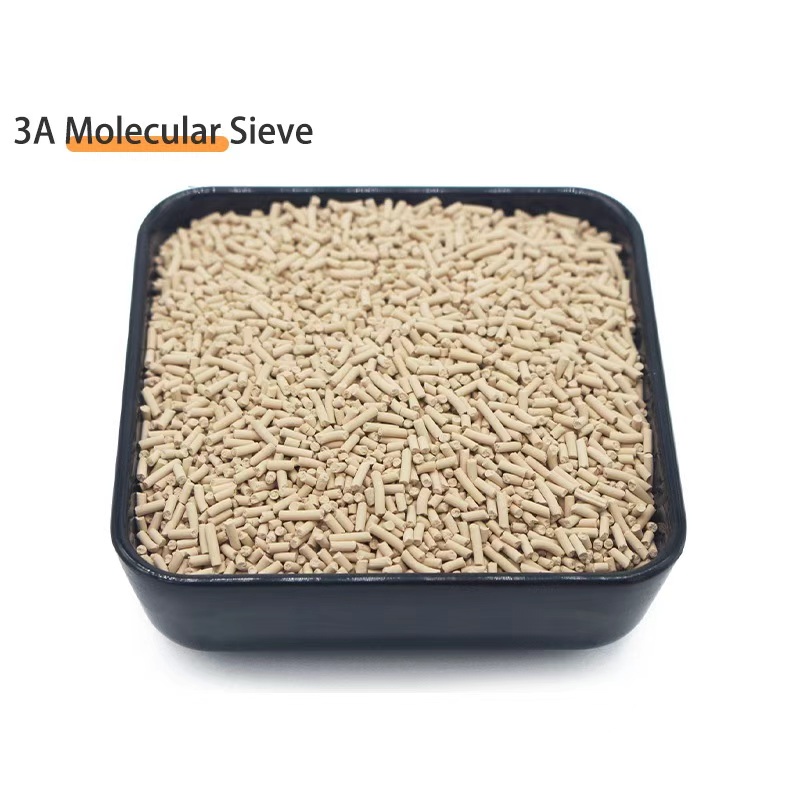
Why n-Paraffin / iso-Paraffin Separation Is a Multi-Billion-Dollar Industry
The separation of n-paraffins (normal straight-chain alkanes) from iso-paraffins (branched alkanes), naphthenes (cycloalkanes), and aromatics is one of the most economically important separations in the petroleum refining and petrochemical industries. Three downstream applications drive the demand: linear alkylbenzene (LAB) for biodegradable detergent production — the largest single use of n-paraffins worldwide; normal alpha olefins (NAO) for polymer comonomers and surfactants; and reformer feed upgrading by removing low-octane n-paraffins to raise research octane number (RON) by 4 to 8 points. The global installed capacity of n-paraffin separation exceeds 4.5 million metric tons per year, spread across more than 64 licensed UOP Molex units, 8 MaxEne units (introduced 2002), and various EBEX, Detal, and BP-catalytic dewaxing plants.
The molecular basis of the separation is the size exclusion by a 5 Angstrom pore adsorbent. Molecular sieve 5A — the calcium-exchanged form of zeolite A (LTA framework) — admits only straight-chain n-paraffins (kinetic diameter 4.3 to 4.7 Angstrom) into its 8-ring windows and excludes all branched, cyclic, and aromatic molecules (5.5 to 7.0 Angstrom kinetic diameter). The selectivity is sharp: greater than 100 to 1 between n-decane and 2,2-dimethylbutane. No other commercial adsorbent (activated carbon, silica gel, alumina, polymeric resin) provides this combination of high working capacity with sharp kinetic selectivity.
The economics are equally compelling. LAB sulfonate (LABSA) produced from n-paraffin-derived linear alkylbenzene replaced tetrapropylene-derived branched alkylbenzene in laundry detergents worldwide between 1970 and 2000 because LABSA biodegrades 10 to 50 times faster and does not produce the persistent foam problems of the branched chain surfactants. The global demand for n-paraffin as LAB feedstock is approximately 2.5 million tpy; another 1.5 million tpy is used for NAO production, kerosene thermal stability improvement (JP-8 jet fuel additive), and refrigerant oil (narrow C10 to C13 cuts).
For buyers specifying molecular sieve 5A for n-paraffin separation, the engineering challenge is not the basic pore selectivity (all suppliers provide 5A that nominally meets the spec). The challenge is maintaining selectivity, working capacity, and mechanical integrity across 18 to 36 month cycles in a hot liquid-phase environment (200 to 300 C, 1 to 15 bar) with continuous desorbent cycle and periodic thermal cycling. This guide explains the chemistry, the engineering, the sieve specification, the operating envelope, and the 5-year TCO of 5A in a UOP Molex unit.
The Chemistry: Why 5A Selects n-Paraffins Over Everything Else
Molecular sieve 5A is the calcium-exchanged form of Linde Type A (LTA) zeolite. The unit cell formula is Ca29Na35[(AlO2)72(SiO2)120]·xH2O when fully calcium-exchanged; commercial products typically reach 70 to 95 percent Ca²⁺ exchange balance. The framework consists of sodalite cages (beta cages) connected through D4R (double 4-ring) units to form the larger alpha cage, accessed through 8-ring windows. In sodium form (4A), the window aperture is 3.8 to 4.3 Angstrom; in calcium form (5A), the smaller Ca²⁺ cation preferentially occupies the S2 site within the 8-ring window, enlarging the effective aperture to 4.8 to 5.0 Angstrom.
The kinetic diameters of the molecules of interest (measured as the collision diameter from gas-phase viscosity data, not the static molecular length) are:
| Molecule | Class | Kinetic Diameter (Å) | 5A Admitted? |
|---|---|---|---|
| n-Pentane (n-C5) | n-Paraffin | 4.3 | Yes |
| n-Hexane (n-C6) | n-Paraffin | 4.3 | Yes |
| n-Decane (n-C10) | n-Paraffin | 4.4 | Yes |
| n-Dodecane (n-C12) | n-Paraffin | 4.5 | Yes |
| n-Tetradecane (n-C14) | n-Paraffin | 4.6 | Yes |
| 2-Methylpentane | iso-Paraffin | 5.5 | No |
| 2,2-Dimethylbutane | iso-Paraffin | 6.2 | No |
| Cyclohexane | Naphthene | 5.5 | No |
| Methylcyclohexane | Naphthene | 5.7 | No |
| Benzene | Aromatic | 5.8 | No |
| Toluene | Aromatic | 6.0 | No |
| Naphthalene | Aromatic | 6.5 | No |
The selectivity is set by the narrow 8-ring window aperture. Even the most compact branched iso-paraffin, 2-methylpropane (isobutane), has a kinetic diameter of 5.0 Angstrom and is excluded by 5A. The cutoff is sharp in practice: a 5A with 95 percent Ca²⁺ exchange shows greater than 99 percent n-decane uptake at 200 C but less than 1 percent 2-methylpentane uptake at the same conditions. This translates to greater than 100:1 selectivity for n-paraffins versus iso-paraffins.
For deeper context on the LTA framework and the Ca²⁺ exchange chemistry, see our companion article on molecular sieve 4A, 5A, and 13X products, which explains how the same framework gives different adsorbents with different pore apertures.
Why not 13X or activated carbon for this separation?
13X has a 9-Angstrom pore aperture and admits everything: n-paraffins, iso-paraffins, naphthenes, and aromatics all enter the supercage. 13X has no selectivity between them and cannot be used for the separation. Activated carbon has a wide pore-size distribution (10 to 1000 Angstrom in micropores and macropores) and adsorbs based on polarity, volatility, and molecular size, not on a sharp cutoff. Activated carbon does not provide the sharp n/iso discrimination needed for 99 percent purity n-paraffin products. Zeolite beta, mordenite, and ZSM-5 have 6 to 7 Angstrom pore apertures and admit some iso-paraffins but exclude n-paraffins in the wrong direction — they are used in reverse for selective cracking or shape-selective alkylation rather than n-paraffin adsorption. The 5 Angstrom window of 5A remains unique.
The UOP Molex Process: Simulated Moving Bed Engineering
The UOP Molex process was commercialized by UOP in 1964 at the company's McCook refinery and has been licensed to 64+ refineries worldwide over the subsequent 60 years. The process is a simulated moving bed (SMB) chromatographic separation using molecular sieve 5A as the stationary phase. The name 'Molex' combines 'MO' for molecular sieve and 'LEX' for extraction; an older equivalent name is 'MOLSIV' (MObile Linde Sieb-Verfahren, used in early Linde-licensed plants).
A traditional moving bed of 5A pellets would carry the sieve slowly around a closed loop. The feed enters at one point, the desorbent at another, and the bed physically moves through the four zones (adsorption, desorption, two intermediate zones). The mechanical moving bed had real but limited problems: sieve attrition from the moving parts, seal leakage at the zone dividers, and the mechanical complexity of the rotary valve. Most of these issues were solved in early plants but the maintenance cost was high.
The simulated moving bed is a brilliant engineering innovation: keep the bed stationary and rotate the inlet and outlet ports around the bed synchronously. Over time, every point on the bed sees the full adsorption-desorption cycle. The principle is mathematically identical to a true moving bed at the limit of infinite cycles. The practical implementation uses a rotary valve (UOP's Sorbex™ valve) that switches 24 to 48 ports every 30 to 90 seconds. The bed is divided into four zones by the port positions:
- Zone I — Adsorption: Feed enters, 5A adsorbs the n-paraffins, raffinate (non-adsorbed iso/naphthene/aromatic) is withdrawn as product. The flow rate is the highest of the four zones.
- Zone II — Purification: Desorbent enters at the boundary of Zones I and II. The 5A in this zone contains both feed n-paraffins and some residual feed components. The desorbent flow strips the residual feed components, producing a side draw that returns to Zone I.
- Zone III — Desorption: The 5A contains n-paraffin from feed. Desorbent displaces the n-paraffin from the 5A pores. Extract (n-paraffin plus desorbent) is withdrawn as product. The flow rate is medium.
- Zone IV — Buffer: The 5A contains only desorbent. A small flow clears the residual n-paraffin from the pellet interior to avoid contamination of Zone I. The flow rate is the lowest of the four zones.
The four zones are implemented with two adsorber vessels (Sorbex towers) connected top and bottom by circulation pumps. Each vessel has 12 to 24 sieve beds stacked vertically, with the rotary valve routing flow between beds to simulate the moving port. The total 5A inventory per Molex train is 80 to 120 metric tons, depending on capacity.
Operating conditions
Molex operates in the liquid phase at temperatures of 180 to 250 C and pressures of 5 to 15 bar. The temperature is set by the need to keep the feed and desorbent in the liquid phase (above the boiling point of the desorbent at operating pressure) but below the temperature where coking or polymerization becomes significant on the 5A acid sites. The most common operating point is 220 C at 10 bar. At these conditions, the n-paraffin adsorption is reversible with the desorbent cycle every 5 to 15 minutes.
Product specifications
The Molex product quality targets are:
- Extract (n-paraffin product): 98 to 99.5 percent n-paraffin content, total aromatics and naphthenes less than 1 percent, sulfur less than 10 ppm, color (Saybolt) plus 25 to plus 30. The extract is the feed to LAB (Detal process) or NAO (Chevron Phillips, Shell SHOP) units.
- Raffinate (non-adsorbed): n-paraffin content less than 0.1 wt% (the 'n-C5 slip' is held below 0.1 percent as a quality specification for downstream reformer or kerosene use), iso-paraffins 35 to 50 percent, naphthenes 25 to 40 percent, aromatics 10 to 25 percent. The raffinate is recycled to the FCC or returned to the kerosene pool.
- Desorbent recovery: 99.5 percent minimum (recovered as overhead product in the distillation column).
The raffinate n-paraffin slip (less than 0.1 percent) is the most important specification for sieve performance. If the 5A allows the n-paraffin slip to exceed 0.5 percent, the downstream reformer or kerosene product is contaminated, and the operator either accepts lower octane number (reformer case) or higher smoke point deterioration (jet fuel case). At 0.05 percent slip, the unit is performing well; at 0.5 percent slip, the sieve needs change-out.
Desorbent Selection and the Process Trade-Offs
The desorbent is the key to the simulated moving bed. It must be more strongly adsorbed than the n-paraffin being separated (to displace the n-paraffin from the 5A in Zone III), but it must be cleanly separable from the n-paraffin in the downstream distillation columns (to recover and recycle the desorbent). Three desorbents are used commercially:
- n-Pentane (boiling point 36 C): Strongest adsorption on 5A, but high vapor pressure requires refrigerated storage. The boiling-point spread between n-pentane and C10 to C13 n-paraffin is wide, allowing easy separation. Risk: n-pentane is a flammable gas at room temperature, requiring pressure storage.
- n-Hexane (boiling point 69 C): Most common compromise in modern Molex units. Moderate vapor pressure, moderate boiling-point spread, lower fire hazard than n-pentane. Used in 60+ Molex units worldwide.
- Iso-octane (2,2,4-trimethylpentane, BP 99 C): Higher boiling point allows atmospheric storage, but lower 5A uptake means higher desorbent circulation. Used in colder climate plants where vapor losses are a concern.
| Desorbent | Boiling Point (°C) | 5A Uptake (wt%) | ΔTBP vs n-C11 (°C) | Storage | Use Case |
|---|---|---|---|---|---|
| n-Pentane | 36 | 10.5 to 11.5 | 99 | Refrigerated / Pressure | Older Molex, temperate climate |
| n-Hexane | 69 | 10.0 to 11.0 | 66 | Atmospheric | Modern Molex, most common |
| 2,2,4-Trimethylpentane | 99 | 8.0 to 9.0 | 36 | Atmospheric | Cold climate, low-vapor-loss sites |
The desorbent purity specification is 99.0 percent minimum, with three critical contaminants tightly controlled:
- Water below 25 ppm. Water is more strongly adsorbed on 5A than n-paraffin and is harder to desorb. High water content in the desorbent causes permanent capacity loss and reduced raffinate n-paraffin slip performance.
- Sulfur below 10 ppm. Elemental sulfur and mercaptans decompose on the 5A acid sites, forming sulfur deposits that permanently block pores.
- Olefins below 0.5 wt%. Olefins (alkenes) polymerize on the acid sites of 5A to form cokey deposits. Even 1 percent olefin in the desorbent can reduce sieve life by 30 percent.
The desorbent circulation rate is 1.2 to 2.0 times the fresh feed rate. The energy for desorbent regeneration (reboiler duty on the distillation column) is the largest operating cost in Molex. A 500,000 tpy unit consumes 50 to 150 kW of reboiler duty continuously, depending on the desorbent choice and the design of the distillation columns.
5A Specifications for UOP Molex Service
The 5A grade that UOP specifies for Molex service is tight. The pore aperture must be 4.8 to 5.0 Angstrom (XRD-verified), the Ca²⁺ exchange must be greater than 70 percent (XRF-verified), the n-hexane capacity at standard conditions must be 12.5 wt% or greater, the pellet must be 1.6 mm (1/16 inch) extrudate, the bulk density must be 0.68 to 0.74 g/mL, and the attrition must be less than 0.2 wt% by ASTM D4058 Ro-Tap. The following table compares AW-MS-5A-MOLEX grade with industry minimum and competitor grades:
| Parameter | AW-MS-5A-MOLEX Spec | Test Method | Industry Minimum | UOP Premium Grade |
|---|---|---|---|---|
| Pore aperture | 4.8 to 5.0 Å | XRD LTA framework | 5 Å nominal | 4.95 to 5.05 Å |
| Ca²⁺ exchange | 70 to 95 % | XRF CaO content | ≥ 60 % | ≥ 85 % |
| Static n-hexane capacity (35 °C, 8 kPa) | ≥ 12.5 wt% (typical 13.0) | Gravimetric / ASAP | ≥ 11.0 wt% | ≥ 13.0 wt% |
| Pellet form | 1.6 mm extrudate (1/16") | ASTM D4512 | 1.5 to 2.0 mm | 1.6 ± 0.1 mm |
| Bulk density | 0.68 to 0.74 g/mL | ASTM D4164 | 0.65 to 0.78 g/mL | 0.70 to 0.72 g/mL |
| Crush strength (1.6 mm extrudate, axial) | ≥ 40 N per pellet | ASTM D4179 | ≥ 25 N | ≥ 50 N |
| Attrition loss (Ro-Tap, 30 min) | ≤ 0.2 wt% | ASTM D4058 | ≤ 0.5 wt% | ≤ 0.15 wt% |
| Loss on ignition (1000 °C) | ≤ 1.5 wt% | ASTM D2740 | ≤ 2.0 wt% | ≤ 1.0 wt% |
| Fines below 1.0 mm | ≤ 1.0 wt% | ASTM D4512 | ≤ 2.0 wt% | ≤ 0.5 wt% |
| SiO₂/Al₂O₃ molar ratio | 2.0 ± 0.05 | XRF | 1.8 to 2.2 | 2.0 ± 0.02 |
| CaO content | 18.0 to 22.0 wt% | XRF | ≥ 15.0 wt% | 19.0 to 21.0 wt% |
The three specifications that matter most in Molex service are static n-hexane capacity (≥ 12.5 wt%), Ca²⁺ exchange (≥ 70 percent to ensure pore aperture is properly enlarged), and attrition loss (≤ 0.2 wt% to prevent fines generation and bed fouling). A sieve with n-hexane capacity below 11 wt% will require a 15 to 20 percent larger bed to achieve the same throughput, with elevated capital cost. A sieve with Ca²⁺ exchange below 60 percent has some sodium form (4A) sites that exclude n-paraffins, reducing effective capacity. A sieve with attrition above 0.5 wt% will plug the bed within 6 to 12 months, requiring early change-out.
Spent sieve analysis: what to look at turn-around
Every 12 to 18 months, pull a 500 g sample from the top, middle, and bottom of the 5A bed and run the following tests. The results identify which degradation mechanism is at work and predict the remaining life.
| Test | Healthy Sieve | Aging But Usable | Replace |
|---|---|---|---|
| Static n-hexane capacity (wt%) | ≥ 12.5 | 11.0 to 12.5 | < 11.0 |
| Ca²⁺ exchange (%) | ≥ 75 | 60 to 75 | < 60 |
| Crush strength (N per pellet) | > 35 | 25 to 35 | < 25 |
| Surface area (BET, m²/g) | > 600 | 500 to 600 | < 500 |
| Fines content below 1.0 mm (wt%) | < 1.5 | 1.5 to 3.0 | > 3.0 |
| Coke / carbon deposit (wt%) | < 0.5 | 0.5 to 2.0 | > 2.0 |
| Residual Na (wt%) | < 1.0 | 1.0 to 3.0 | > 3.0 |
Rising residual sodium is the smoking gun for sodium exposure (usually from upstream caustic wash carryover or from desorbent contamination). Once Ca²⁺ reverts to Na⁺, the pore aperture shrinks back to 4A (3.8 Angstrom) and the n-paraffin adsorption is lost permanently. The remedy is prevention, not regeneration: install a water wash on the feed kerosene and a guard vessel of activated alumina for sodium scrubbing.
Bed Design, Pressure Drop, and Tower Internals
The 5A bed is arranged in vertical stacks of sieve beds, typically 12 to 24 beds per train, with each bed 1 to 3 m tall and the full stack 20 to 50 m tall. The sieve is held in place by top and bottom screens, supported by a graded ceramic support layer (typically 50 to 100 mm of 3 to 6 mm alumina balls on top, 6 to 12 mm alumina balls on bottom). The design pressure drop is 0.5 to 1.0 bar per train at design flow rate.
Ergun equation for 5A extrudate
Pressure drop across the 5A bed is calculated by the Ergun equation:
ΔP/L = 150 · (1-ε)² / ε³ · μ·v / dp² + 1.75 · (1-ε) / ε³ · ρ·v² / dp
For 1.6 mm 5A extrudates with particle density 1.05 g/mL, bed void fraction ε = 0.42, design velocity v = 0.10 m/s liquid phase (typical for kerosene at 200 C), the result is ΔP/L = 5 to 8 kPa per meter. For a 1.5 m tall bed, ΔP = 7 to 12 kPa (0.07 to 0.12 bar). The full 24-bed stack gives 1.7 to 2.9 bar pressure drop, with the higher end at the higher flow rate.
For a detailed derivation and worked examples at multiple pellet sizes and gas/liquid velocities, see our companion article on the Ergun equation for adsorbent beds, which applies to all molecular sieve and activated alumina bed designs.
Tower internals and Sorbex valve
Each Molex train has two Sorbex towers, each containing 12 sieve beds connected by external piping and a rotary Sorbex valve. The rotary valve switches the inlet and outlet ports every 30 to 90 seconds, simulating the moving port. The valve is the highest-maintenance item in the unit — it typically requires rebuild every 2 to 3 years and is the source of most unplanned shutdowns. Newer designs use multiple poppet valves instead of a rotary valve for higher reliability.
The sieve beds themselves are designed to allow thermal expansion (the 5A extrudate expands by 0.05 to 0.15 percent on first heating to 250 C) without crushing. A 50 mm expansion zone at the top of each bed accommodates the volumetric change. The vessel wall has to be sized for the thermal expansion mismatch between the carbon steel shell and the sieve pellet — UOP specifies a maximum 50 C temperature gradient across the vessel wall during start-up.
Feed Pretreatment: Why Refiners Install a Guard Vessel
Molex feed kerosene (or light diesel) typically arrives at the unit with measurable contaminants that degrade the 5A over time. The standard refining practice is to install a feed pretreatment train upstream of the Molex towers. Five contaminants are routinely managed:
- Water in the feed at 50 to 300 ppm. Removed by a feed-side adsorber of activated alumina or 3A molecular sieve to below 25 ppm. Water is particularly damaging to 5A because it is more strongly adsorbed than n-paraffin and requires 300 C regeneration to desorb, exceeding the normal 220 C operating temperature.
- Caustic (NaOH) carryover from the upstream kerosene Merox (mercaptan oxidation) unit. Na⁺ reverses the Ca²⁺ exchange on 5A and converts it back to 4A. The standard fix is a water wash of the feed (0.5 to 2 percent water injection, then separator) plus a guard vessel of activated alumina to scrub sodium to below 1 ppm.
- Sulfur compounds (mercaptans, disulfides, thiophene) at 50 to 500 ppm. Most are not damaging to 5A directly, but in the presence of olefins they form cokey deposits via the 5A acid sites. Hydrodesulfurization (HDS) of the feed to below 50 ppm is recommended for Molex with a 24-month sieve life target.
- Olefins from FCC operations. Olefins at 0.5 to 5 wt% in the feed polymerize on 5A acid sites to form cokey deposits. Acid wash (sulfuric acid) or selective hydrogenation of the feed reduces olefins to below 0.5 wt%.
- Particulates (rust, scale, catalyst fines from upstream) at 5 to 50 ppm. Removed by 25-micron cartridge filtration of the feed before entering the Molex towers. Without filtration, particulates accumulate in the 5A bed and cause pressure drop rise within 6 months.
A typical modern Molex unit has the following pretreatment train upstream of the Sorbex towers:
- Feed surge drum with nitrogen blanket (1 hour residence time)
- Feed pump (centrifugal, 200 to 500 m³/hr)
- Particulate filter (25-micron cartridge, automatic backwash)
- Water wash column (counter-current, 0.5 percent water on feed)
- Water separator (coalescer, 50 ppm target water in feed)
- Activated alumina guard vessel (1 to 3 m bed, removes residual water and sodium to below 25 ppm and 1 ppm respectively)
- Feed preheater (heat the feed to 200 C with feed/effluent heat exchanger)
- Sorbex tower inlet
This pretreatment train represents 15 to 25 percent of the total installed cost of a Molex unit but is essential for achieving 18 to 36 month sieve life. Refiners who skip the pretreatment typically see 6 to 12 month sieve life, which is uneconomic.
Five Degradation Mechanisms and How to Slow Them
The 5A sieve in a Molex unit degrades by five distinct mechanisms. Understanding which is dominant in your unit determines the right preventive action.
1. Organic deposit (coke) buildup on acid sites
Heavy feed contaminants and trace olefins in the desorbent polymerize on the acid sites of the 5A. The acid sites are the residual Bronsted acidity on the alumina-silicate framework, primarily at the Al-OH-Si bridges. At 200 C in liquid hydrocarbon phase, even 0.1 wt% olefin in the desorbent can build measurable coke over 6 months. The coke deposit reduces the working capacity by 0.5 to 1.0 percent per month and is irreversible — it cannot be desorbed by the normal desorbent cycle. The remedy is olefin control upstream (hydrofinishing or acid washing).
2. Fines migration and bed compaction
The 5A extrudate has some level of attrition (0.1 to 0.3 wt% per year under normal service). The fines generated by attrition migrate through the bed and accumulate at the bottom support layer, restricting flow and increasing pressure drop. Over 12 to 24 months, the pressure drop can rise from 0.5 bar to 1.5 bar at design flow. The remedy is periodic back-pulse (warm nitrogen or desorbent at 50 to 100 C, fluidizing the top 100 to 200 mm of bed for 30 to 60 seconds every 4 weeks) and removal of fines from the bottom collector at turn-around.
3. Hydrothermal degradation
Water is the most damaging contaminant to the 5A framework. Above 250 C in the presence of steam, the aluminum-silicon-oxygen framework hydrolyzes — aluminum is extracted from the framework, leaving a defect structure with reduced capacity. Every water excursion event (a feed-side upset, a desorbent leak, a start-up condensation) costs 1 to 3 percent of the initial capacity, depending on the temperature and the duration. The remedy is rigorous water control to below 25 ppm in feed and desorbent.
4. Calcium exchange reversal
Sodium (from caustic carryover, from sodium-containing makeup water, or from a monomeric sodium in the desorbent) replaces calcium on the framework over time. The replacement is irreversible at the 200 to 250 C operating temperature — the calcium-sodium exchange is a thermodynamic well. Once 50 percent of the calcium is replaced by sodium, the 5A behaves like 4A (3.8 Angstrom pore), and the n-paraffin adsorption is lost. The remedy is water washing of the feed and an activated alumina guard bed for sodium scrubbing. A sieve that has lost more than 20 percent of its calcium shows permanent 5A-to-4A conversion and needs replacement.
5. Mechanical attrition from thermal cycling
Every start-up and shut-down cycle (every 1 to 12 months for routine maintenance) creates thermal stress on the extrudate. The 5A extrudate expands by 0.05 to 0.15 percent on heating to 250 C. After 50 to 100 thermal cycles, the extrudate develops microfractures that grow over time, leading to attrition. Pellet crush strength drops from 40 N (fresh) to 25 N (after 100 cycles), and attrition rises from 0.2 wt% (fresh) to 0.5 to 1.0 wt% per year. The remedy is limiting the heating rate to 30 C/hr during start-up and 50 C/hr during shut-down, and avoiding unnecessary thermal cycles.
Operating Data and 5A Performance Benchmarks
The following table summarizes the typical operating data and 5A performance benchmarks for a 500,000 tpy UOP Molex unit processing hydrotreated kerosene feed at 220 C and 10 bar:
| Parameter | Design Value | Operating Range | Alarm / Trip |
|---|---|---|---|
| Feed rate (tpy) | 500,000 | 425,000 to 575,000 | > 600,000 |
| Feed n-paraffin content (wt%) | 28 to 32 | 25 to 35 | < 22 or > 40 |
| Extract n-paraffin purity (wt%) | 99.0 | 98.5 to 99.5 | < 98.0 or > 99.7 |
| Raffinate n-paraffin slip (wt%) | 0.05 | 0.02 to 0.10 | > 0.50 |
| Bed temperature (°C) | 220 | 200 to 240 | < 180 or > 260 |
| Bed pressure (bar) | 10 | 8 to 14 | < 6 or > 16 |
| Pressure drop (bar) | 0.7 | 0.5 to 1.0 | > 1.5 |
| Desorbent / feed ratio | 1.5 | 1.3 to 1.8 | > 2.0 |
| Sorbex valve cycle time (sec) | 60 | 30 to 90 | < 20 or > 120 |
| Liquid velocity in bed (m/s) | 0.08 | 0.05 to 0.15 | > 0.20 |
| Water in feed (ppm) | 25 | 10 to 50 | > 100 |
| Total sulfur in feed (ppm) | 50 | 10 to 100 | > 200 |
| Bromine number of feed (g/100g) | 0.1 | 0.05 to 0.5 | > 1.0 |
The raffinate n-paraffin slip (less than 0.05 to 0.10 wt%) is the key sieve performance indicator. A rising trend over months indicates sieve degradation: organic deposit, fines, hydrothermal damage, or calcium exchange reversal. The bed pressure drop is the second key indicator: a rising trend indicates fines accumulation, channeling, or coking. The two indicators together diagnose 80 percent of operating problems.
Case Study: 500,000 tpy UOP Molex Unit 18-Month Sieve Change-Out
A 500,000 tpy UOP Molex unit in the Asia-Pacific region (commissioned 2018) operated for 18 months on a single load of AW-MS-5A-MOLEX sieve before the first change-out. The key operating data over the campaign:
Feed and product quality
- Feed: hydrotreated kerosene, ASTM D86 distillation 180 to 270 C, n-paraffin content 30.5 wt%
- Extract: 99.0 percent n-paraffin purity, bromine number 0.05 g per 100 g, sulfur 5 ppm
- Raffinate: n-paraffin slip 0.05 to 0.08 wt% (spec limit 0.10 wt%, target 0.05 wt%)
- Desorbent: n-hexane, 99.5 percent purity, water 12 ppm, sulfur 3 ppm
Sieve performance over 18 months
Static n-hexane capacity (measured on a quarterly pull sample) declined from 13.0 wt% (fresh) to 11.8 wt% (month 18), a 9 percent loss. The loss is in line with the 5 to 8 percent per year typical for a well-operated unit. Ca²⁺ exchange held at 80 to 85 percent — no sodium breakthrough — indicating the upstream activated alumina guard bed was working. Bed pressure drop rose from 0.65 bar at start to 0.95 bar at month 18, a 46 percent rise driven by fines accumulation.
Reason for change-out
At month 18, the raffinate n-paraffin slip rose to 0.12 wt%, exceeding the 0.10 wt% quality specification for the third consecutive week. The operator decided to schedule the dump and recharge for the next downstream turn-around (4 weeks out) rather than continue operating with off-spec raffinate. The decision was driven by downstream impact: the raffinate goes to a kerosene pool for jet fuel blending, and the off-spec slip would have caused a smoke point drop and a fuel qualification rejection from the airline customer.
Change-out procedure (7-day campaign)
- Day 1: Unit shutdown, cool-down to 60 C over 8 hours, drain liquid inventory to tankage.
- Day 2: Steam-strip residual hydrocarbons from the 5A bed (300 C, 4 hours), cool to ambient, vent nitrogen blanket.
- Day 3: Open vessel heads, vacuum the spent 5A from each bed using a HEPA-filtered vacuum truck. Visual inspection of internals. Pressure-test vessel with nitrogen at 15 bar for 1 hour.
- Day 4: Install new support layers (50 mm of 6 mm alumina balls bottom, 100 mm of 3 mm alumina balls top). Inspect and clean top and bottom screens.
- Day 5 to 6: Load fresh 5A extrudate via sock-loading method (110 tons total, two vessels). Level each bed with a vibrator to ensure uniform packing.
- Day 7: Close vessel, leak test, nitrogen purge, heat-up to 200 C at 30 C/hr rate. Transfer unit to operating service.
Cost of the change-out
The 7-day campaign cost the operator 150,000 USD (sieve inventory 110 tons at 5,500 USD per ton premium grade, plus 30,000 USD labor and equipment, plus 25,000 USD steam, nitrogen, and utilities, plus 30,000 USD freight). Lost production was 12,000 tons of n-paraffin (24 percent of one train month) at a margin of 400 USD per ton = 4,800,000 USD. Total 7-day campaign cost 5.0 million USD. The 18-month sieve life pay-back, relative to a 12-month sieve, saved 5.0 million USD per year in additional dump-and-recharge costs, easily justifying the premium sieve price.
5-Year TCO Analysis for a 500,000 tpy Molex Unit
The total cost of ownership (TCO) of the 5A sieve inventory in a 500,000 tpy UOP Molex unit is dominated by capital (sieve purchase) and operating (desorbent regeneration energy) costs. The sieve cost is one component but is visible because it is a discrete annual budget item; the energy cost is spread across the operations budget and less visible but equally substantial. The full 5-year TCO analysis below covers sieve, energy, maintenance, and lost production costs.
Capital cost — sieve purchase
| Cost Element | Premium Grade | Standard Grade | Economy Grade |
|---|---|---|---|
| Sieve price (USD per ton, 2026 China FOB) | 8,500 | 6,500 | 4,500 |
| Per-train load (110 tons) | 935,000 | 715,000 | 495,000 |
| Change-out frequency (months) | 24 to 36 | 18 to 24 | 12 to 18 |
| Number of changes in 5 years | 2.0 | 2.5 | 3.5 |
| 5-year sieve cost (USD) | 1,870,000 | 1,787,500 | 1,732,500 |
Note that the 5-year sieve cost is similar across all three grades (within 8 percent), because the economy grade is purchased 1.5 to 2 times more often. The break-even is in the cost of the dump-and-recharge campaign and the production losses during unscheduled shutdowns.
Operating cost — energy
The dominant operating cost is the reboiler duty on the desorbent distillation columns. A 500,000 tpy unit with a 1.5 desorbent-to-feed ratio and the distillation columns sized for 95 percent desorbent recovery requires 50 to 150 kW of continuous reboiler duty, depending on the desorbent (n-pentane requires the least because of its lower boiling point; iso-octane requires the most because of the smaller boiling-point spread).
| Operating Cost Element | Value |
|---|---|
| Continuous reboiler duty per train | 50 to 150 kW |
| Operating hours per year | 8,400 (95% online) |
| Annual energy | 0.4 to 1.3 GWh |
| Industrial electricity rate | 0.08 to 0.12 USD per kWh |
| Annual energy cost | 35,000 to 155,000 USD |
| 5-year energy cost | 175,000 to 775,000 USD |
| Desorbent makeup (5% loss per year) | 15,000 to 30,000 USD per year |
| 5-year desorbent makeup | 75,000 to 150,000 USD |
Maintenance and lost production cost
| Cost Element | Premium Grade | Standard Grade | Economy Grade |
|---|---|---|---|
| Dump-and-recharge campaigns in 5 years | 2 | 2.5 | 3.5 |
| Cost per campaign | 5,000,000 | 5,000,000 | 5,000,000 |
| 5-year campaign cost (lost production) | 10,000,000 | 12,500,000 | 17,500,000 |
| Sorbex valve rebuilds in 5 years | 2 | 2.5 | 3 |
| Cost per valve rebuild | 200,000 | 200,000 | 200,000 |
| 5-year valve cost | 400,000 | 500,000 | 600,000 |
| Activated alumina guard bed (replaced 4x) | 120,000 | 120,000 | 120,000 |
5-year total TCO
| Cost Component | Premium Grade | Standard Grade | Economy Grade |
|---|---|---|---|
| Sieve purchase | 1,870,000 | 1,787,500 | 1,732,500 |
| Energy + desorbent | 250,000 to 925,000 | 250,000 to 925,000 | 250,000 to 925,000 |
| Dump-and-recharge (lost production) | 10,000,000 | 12,500,000 | 17,500,000 |
| Sorbex valve rebuilds | 400,000 | 500,000 | 600,000 |
| Activated alumina guard bed | 120,000 | 120,000 | 120,000 |
| 5-year total TCO (median case) | 13,300,000 | 15,800,000 | 20,750,000 |
The sieve cost itself (1.8 to 1.9 million USD over 5 years) is only 10 to 14 percent of the total TCO. The dump-and-recharge lost-production cost is 75 to 85 percent of the total — making it by far the most important cost component. The marginal cost of upgrading from economy to premium sieve (5,000 USD per ton more = 550,000 USD per train) saves 7.5 million USD in unscheduled shutdowns over 5 years, a 14-times return on the sieve price premium. This is why every major refiner specifies premium 5A with full AQSA verification for Molex service.
Industry Standards Governing 5A in MOLSIV Service
Six major standards and codes apply to 5A specification and use in MOLSIV service. Refiners and engineering contractors are typically expected to comply with all six.
| Standard / Code | Publisher | Scope | Key Limit / Requirement |
|---|---|---|---|
| UOP Sorbex 5A Specifications | Honeywell UOP | Molex licensed sieve spec | n-hexane capacity ≥ 12.5 wt%, attrition ≤ 0.2 wt% |
| ASTM D4365 | ASTM International | Determining n-hexane adsorption on 5A | Standard test method |
| ASTM D4058 | ASTM International | Attrition and abrasion of granular catalysts | Ro-Tap test for 5A extrudate |
| ASTM D4179 | ASTM International | Single pellet crush strength | Crush ≥ 40 N per pellet |
| ASTM D4512 | ASTM International | Particle size distribution by sieving | 1.6 mm extrudate, fines ≤ 1 wt% |
| ASTM D2740 | ASTM International | Loss on ignition of molecular sieve | LOI ≤ 1.5 wt% |
| AQSA (Adsorbent Quality Suppliers Association) | Industry consortium | Generic molecular sieve spec | All ASTM methods listed |
UOP maintains a closed list of qualified 5A suppliers for Molex service. The qualification process involves a 12-month pilot test at the supplier's facility and a 6-month field test at a reference refiner. Aluminaworld is one of the few Asia-based suppliers on the qualified list. For non-UOP MOLSIV-equivalent processes (Linde's early Parex, BP's Detal, and various Chinese SMB units), the sieve specification is similar but tailored to the specific license terms.
Two ASTM methods are specifically important: ASTM D4365 (the standard test for n-hexane capacity on 5A, gravimetric, at 35 C and 8 kPa) is the reference test for sieve qualification. ASTM D4058 (Ro-Tap attrition, 30 min test on dry sieve) is the reference for mechanical durability. Most sieve suppliers report these two numbers prominently on the certificate of analysis.
Downstream Uses of the Molex n-Paraffin Product
The n-paraffin product from a UOP Molex unit goes to four major downstream uses, each with its own quality specification. Understanding the downstream use shapes the sieve specification upstream.
1. Linear alkylbenzene (LAB) production
Detergent-range n-paraffin (C10 to C13, average C12) is dehydrogenated to n-olefin (Pacol process, UOP) then reacted with benzene (Detal process, UOP or HF alkylation) to form linear alkylbenzene. LAB is sulfonated to LABSA (linear alkylbenzene sulfonic acid), the active surfactant in laundry detergent, dishwashing liquid, and industrial cleaners. The global LAB market is approximately 3.5 million metric tons per year, with Asia Pacific accounting for 40 percent of demand. The detergent industry consumed approximately 60 percent of the global n-paraffin output in 2024.
LAB sieve quality specifications are strict: 99.0 to 99.5 percent n-paraffin purity (impurities poison the Pacol catalyst), bromine number less than 0.05 g per 100 g (olefins cause unwanted side reactions in the Detal unit), sulfur less than 10 ppm (deactivates the hydrogenation catalyst), color Saybolt +25 minimum. A refiner producing LAB-grade n-paraffin must run the Molex sieve within tight raffinate slip limits (less than 0.10 wt%) to maintain extract purity.
2. Normal alpha olefins (NAO) production
NAO is produced by ethylene oligomerization (Chevron Phillips, Shell SHOP, INEOS, Sasol) rather than from n-paraffin feed, but the NAO process requires a narrow C10 to C12 alpha olefin fraction. Some NAO producers use n-paraffin as feedstock for the Shell SHOP higher olefin process (SHOP = Shell Higher Olefins Process), where the n-paraffin is converted to n-olefin by dehydrogenation. The n-paraffin quality spec is similar to LAB: 99.0 percent purity, low sulfur, low olefin.
3. Kerosene thermal stability improvement
JP-8 jet fuel and Jet A-1 kerosene require thermal stability (breakpoint temperature, JFTOT 260 C minimum). n-Paraffins have higher thermal stability than iso-paraffins and aromatics. Removing the iso-paraffin and aromatic fraction from a kerosene stream via Molex improves the JP-8 thermal stability by 15 to 25 C. The Molex raffinate (now largely iso-paraffin and aromatic) is blended to ULSD or home heating oil where thermal stability is not a driver.
4. Refrigerant oil and white oil
Narrow-cut n-paraffins (C10 to C13, C13 to C16, C16 to C20) are used as refrigerant lubricants (naphthenic alternatives exist but n-paraffin gives better low-temperature fluidity), white mineral oil (pharmaceutical and cosmetic grades), and as process oil in rubber and polymer manufacturing. The Molex product is a primary feedstock for these high-purity applications.
5. Reformer feed upgrading (MaxEne process)
The MaxEne UOP process (introduced 2002) uses the same 5A SMB but on a different feed (FCC naphtha or reformer feedstock, C5 to C10 range). The n-paraffins are sent to a separate stream (typically to an isomerization unit or as raffinate feed to an aromatic complex), and the iso-paraffins go to the reformer. The research octane number of the reformer feed rises from 65 to 72 by removing the low-octane n-paraffins. The MaxEne sieve is similar to the Molex sieve but smaller in pellet size (1.0 to 1.6 mm) to accommodate the lower molecular weight feed.
Next Steps: Specifying, Procuring, and Operating 5A for Your MOLSIV Unit
This guide has covered the chemistry, the engineering, the sieve specification, the operating envelope, the degradation mechanisms, the case study, and the TCO of molecular sieve 5A in a UOP Molex n-paraffin separation unit. The key takeaways:
- 5A selectivity is unique. No other commercial adsorbent provides the same sharp 5-Angstrom cutoff with high working capacity. The selectivity coefficient for n-decane over 2-methylpentane is greater than 100 to 1 at 200 C.
- Sieve grade matters, but not as much as sieve life. A premium 5A with 24 to 36 month life costs only 5,000 USD per ton more than an economy 5A with 12 to 18 month life. The marginal sieve cost premium saves 7.5 million USD per train in unscheduled dump-and-recharge campaigns over 5 years.
- Five specification points define 5A quality. Static n-hexane capacity (≥ 12.5 wt%), Ca²⁺ exchange (≥ 70 percent), 1.6 mm extrudate, attrition (≤ 0.2 wt%), crush strength (≥ 40 N per pellet). These five numbers should be on every certificate of analysis.
- Five degradation mechanisms shorten sieve life. Organic deposit, fines migration, hydrothermal degradation, calcium exchange reversal, and mechanical attrition from thermal cycling. Each has a specific preventive action.
- The feed pretreatment train is half the battle. Water wash, particulate filter, and activated alumina guard bed are the three essential protection layers. Skipping them cuts sieve life in half.
How to specify 5A for a new MOLSIV unit
For a new unit, the specification should include:
- Static n-hexane capacity at least 12.5 wt% by ASTM D4365
- Ca²⁺ exchange at least 70 percent by XRF CaO content
- 1.6 mm extrudate form, ±0.1 mm, fines below 1.0 mm less than 1.0 wt%
- Crush strength at least 40 N per pellet by ASTM D4179 (50 N for premium)
- Attrition loss less than 0.2 wt% by ASTM D4058 Ro-Tap
- LOI less than 1.5 wt% by ASTM D2740
- SiO₂/Al₂O₃ molar ratio 2.0 ± 0.05 by XRF
- Supply in sealed 200 L drums with double plastic liner (for moisture protection)
- Certificate of analysis with all test results traceable to lot number
For a Chinese operator, the additional criteria are typically: AQSA-accredited supplier, UOP-listed supplier for licensed Molex units, ISO 9001 certificate, prior reference list of MOLSIX service installations, and freight terms FOB Shanghai or CIF destination port.
Common pitfalls to avoid
- Buying on price per ton alone. The sieve cost is only 10 percent of the 5-year TCO; the lost production cost is 80 percent.
- Choosing an unverified supplier. Capacity tests (n-hexane, static) and attrition (Ro-Tap) are easy to fake; only buy from suppliers with AQSA accreditation and verifiable plant references.
- Skipping the desorbent purity control. A 5 percent reduction in desorbent purity causes 50 percent reduction in sieve life. The desorbent water specification (<25 ppm) is the single most important operating parameter.
- Inadequate feed pretreatment. Skipping the activated alumina guard vessel for sodium is the most expensive false economy. Ca²⁺ reversal is irreversible.
- Rapid heating during start-up. Thermal cycling at more than 50 C/hr causes premature attrition. Plan a 8 to 12 hour heat-up.
For a complete specification worksheet with the recommended test frequency and quality acceptance limits, contact Aluminaworld Technical Team via WhatsApp. We ship standard AW-MS-5A-MOLEX grade from stock in 200 L drums (MOQ 1 ton for trial; 25 tons for bulk) and can ship UOP-prequalified grade for licensed Molex units within 7 to 15 days lead time ex Shanghai.
Related Molecular Sieve Articles
- Molecular Sieve 13X for Cryogenic Air Separation Pre-Purification
- Molecular Sieve for Biogas Upgrading: 13X vs Activated Carbon for CO2 Removal
- Molecular Sieve Powder vs Bead: When Powder Form Wins
- How to Calculate Adsorbent Bed Pressure Drop: Ergun Equation
- Molecular Sieve Storage and Handling: 7 Mistakes That Cost You 30% Capacity
Frequently Asked Questions
Q1. Why is molecular sieve 5A the only commercial adsorbent that separates n-paraffins from iso-paraffins?
5A is the calcium-exchanged form of zeolite A (LTA framework), with unit cell formula Ca29Na35[(AlO2)72(SiO2)120]·xH2O. The Ca²⁺ exchange shrinks the 8-ring window aperture from 4.3 Angstrom (4A, sodium form) to 4.8 to 5.0 Angstrom in 5A, with the smaller Ca²⁺ cation preferentially occupying the S2 site that blocks the 8-ring window. The resulting pore aperture of approximately 5 Angstrom admits straight-chain n-paraffins (kinetic diameters C1 to C22 are 4.3 to 4.7 Angstrom) but excludes branched iso-paraffins (kinetic diameters 5.5 to 6.5 Angstrom), naphthenes (5.5 to 5.8 Angstrom), and aromatics (5.8 to 6.8 Angstrom). 4A is too narrow to admit n-paraffins beyond n-C4. 13X (9 Angstrom aperture) admits everything and provides no selectivity. No other commercial adsorbent — activated carbon, silica gel, alumina, polymeric resin — has this combination of sharp 5-Angstrom cutoff with high working capacity (8 to 12 wt% for n-decane at 200 C). The Molex process exploits this selectivity in a simulated moving bed (SMB) to produce 99 percent purity n-paraffin streams at multi-thousand-tons-per-year scale.
Q2. What is the difference between the UOP Molex process and the MaxEne process for n-paraffin separation?
Both processes use molecular sieve 5A in a simulated moving bed, but the feed and downstream use differ. UOP Molex (introduced 1964, licensed in 64+ refineries globally) takes a kerosene or light diesel feed (C10 to C20) and separates the n-paraffin fraction for downstream production of linear alkylbenzene (LAB), normal alpha olefins (NAO), or detergent range normal paraffin (DRNP). Recovery is 95 to 99 percent of the n-paraffin content of the feed; n-paraffin purity is 98 to 99.5 percent. MaxEne (UOP, introduced in 2002) takes FCC naphtha or reformer feed and integrates the n/iso separation to upgrade the reformer feed by removing low-octane n-paraffins, raising the research octane number (RON) by 4 to 8 points. MaxEne operates on C5 to C10 feedstocks rather than the C10 to C20 range of Molex. The sieve specification is similar — AW-MS-5A-MOLEX is the standard grade. A third licensed process, EBEX (Molex-style SMB) is used to separate ethylbenzene from mixed C8 aromatics; it uses 5A to selectively adsorb ethylbenzene and recover high-purity para-xylene precursors.
Q3. How does the UOP Molex simulated moving bed (SMB) work and why does it use a moving port instead of a moving bed?
A traditional moving bed of 5A pellets would slowly carry the sieve around a closed loop, with the feed introduced at one point and the desorbent at another. The desorbent (typically a normal paraffin such as n-pentane or n-hexane, sometimes called the 'eluent' or 'desorbent') is the same as or similar to the adsorbed species, so that separation happens by competitive displacement. The mechanical moving bed had reliability problems — the pellets attrited, the moving parts wore, and the seal between zones was leaky. The SMB keeps the bed stationary (no moving parts, no sieve attrition) and instead moves the inlet and outlet ports synchronously around the bed. The principle is identical: each point on the bed sees the full cycle (adsorption, desorption) over time. The ports advance every 30 to 90 seconds, and the total cycle is 24 to 48 ports around the bed, giving a 15 to 60 minute cycle time. The bed is divided into four zones by the port positions: Zone I (adsorption of n-paraffin from feed), Zone II (purification of n-paraffin by desorption of residual feed), Zone III (desorption of n-paraffin by desorbent), Zone IV (purification of desorbent). Each zone has its own circulation pump and flow rate.
Q4. What are the kinetic diameters of n-paraffins versus iso-paraffins, naphthenes, and aromatics?
The kinetic diameter measures the smallest cross-section of a molecule in its most stable conformation. For the MOLSIV-relevant molecules at 200 to 300 C gas phase, the kinetic diameters are: n-C5 to n-C10 straight alkanes 4.3 to 4.5 Angstrom; n-C11 to n-C20 straight alkanes 4.4 to 4.7 Angstrom; iso-paraffins (2-methyl, 3-methyl, dimethyl branched) 5.5 to 6.5 Angstrom, depending on branch position; monocyclic naphthenes (cyclohexane, methylcyclohexane) 5.5 to 6.0 Angstrom; bicyclic naphthenes (decalin) 6.0 to 6.5 Angstrom; monocyclic aromatics (benzene, toluene, ethylbenzene) 5.8 to 6.5 Angstrom; bicyclic aromatics (naphthalene) 6.5 to 7.0 Angstrom. The 5A pore aperture of 4.8 to 5.0 Angstrom lies between n-paraffins (admitted) and iso-paraffins (excluded), giving sharp selectivity. The selectivity coefficient of 5A for n-decane over 2,2-dimethylbutane is greater than 100 to 1 at 200 C.
Q5. What desorbent is used in the UOP Molex process and what purity is required?
Three desorbents are used commercially: n-pentane (boiling point 36 C), iso-octane (2,2,4-trimethylpentane, BP 99 C), and n-hexane (BP 69 C). The choice depends on the downstream distillation. n-Pentane gives the easiest separation in the extract distillation column (the boiling point spread between n-pentane and C10 to C13 n-paraffin extract is wide), but n-pentane is a high-vapor-pressure fluid that requires refrigerated storage. Iso-octane has a higher boiling point that simplifies storage but requires more reboiler duty in the distillation column. n-Hexane is the most common compromise in modern plants. The desorbent purity requirement is 99.0 percent minimum, with critical contaminants water (less than 25 ppm), sulfur (less than 10 ppm), and olefins (less than 0.5 wt%). Water is the most critical contaminant because water adsorbs on 5A more strongly than n-paraffin and requires higher regeneration temperatures (250 to 300 C) to desorb. Olefins polymerize on the acid sites of 5A and permanently degrade capacity by forming cokey deposits.
Q6. What is the working capacity of 5A in the Molex process and how does it compare to the static capacity?
Static n-decane capacity on 5A at 200 C and 1 kPa partial pressure is 10 to 12 wt% (typical 11 wt%). The working capacity under Molex operating conditions (200 C, 100 to 200 kPa, SMB cycle with feed/desorbent exposure times of 5 to 15 minutes per port position) is 7 to 9 wt%, giving a bed utilization factor of 65 to 75 percent. This compares favorably to the simulated moving bed n-hexane working capacity of 8 to 10 wt% (static 12 wt%). The remaining static capacity gap to working capacity is lost to mass transfer resistance in the pellet, the equilibrium constraints of the four-zone SMB cycle, and the need to maintain a safety margin against n-paraffin breakthrough into the raffinate stream (the n-paraffin slip from the raffinate is held below 0.05 to 0.1 wt% as a product specification). Premium 5A with proper binder formulation and tight pellet geometry achieves 7.5 to 8.5 wt% working capacity, while economy 5A with soft binder achieves only 5 to 6 wt%.
Q7. What are the five specifications that define a high-quality 5A for UOP Molex service?
The five critical specifications for AW-MS-5A-MOLEX grade are: pore aperture 4.8 to 5.0 Angstrom (XRD-verified LTA framework with greater than 95 percent Ca²⁺ exchange); static n-hexane capacity at 35 C and 8 kPa greater than 12.5 wt% (typical 13.0 wt%); pellet form 1.6 mm (1/16 inch) extrudate with a binder-free formulation or low-binder (less than 5 wt% attapulgite clay); bulk density 0.68 to 0.74 g/mL; crush strength greater than 40 N per pellet (axial), attrition loss less than 0.2 wt% by ASTM D4058 Ro-Tap. Three secondary specs are also enforced: particle size distribution 1.4 to 1.8 mm with less than 1 wt% fines below 1.0 mm; LOI less than 1.5 wt% at 1000 C; CaO content 18 to 22 wt% by XRF confirming the Ca²⁺ exchange level. UOP specifies a slightly higher static n-hexane capacity (greater than 13.0 wt%) for premium service and a tighter crush strength (greater than 50 N per pellet).
Q8. How long does 5A sieve last in a UOP Molex unit and what are the degradation mechanisms?
Typical sieve life in a well-operated UOP Molex unit is 8,000 to 24,000 hours (1 to 3 years continuous service), with a target of 12,000 hours (1.5 years) before change-out. Five degradation mechanisms cause end-of-life. First, organic deposits from heavy feed contaminants and olefins in the desorbent — color bodies and acid-soluble polymers deposit on the pellet surface, reducing capacity at 0.5 to 1.0 wt% per year. Second, fines migration and bed compaction — fines from pellet attrition redistribute within the bed, increasing pressure drop and creating channeling. Third, hydrothermal degradation — moisture excursions in the feed or desorbent during start-up and shut-down cause aluminum extraction from the framework, reducing capacity by 1 to 3 percent per incident. Fourth, calcium exchange reversal — contact with sodium-containing feed (typically NaOH carryover from upstream caustic treatment) reverses the Ca²⁺ exchange and reverts 5A back to 4A pore aperture, blocking all n-paraffin adsorption. Fifth, mechanical attrition — pellets break at points of thermal stress or mechanical impact, generating fines. A sieve that has lost 20 percent of its working capacity or shows 4 percent pressure drop increase requires change-out.
Q9. What is the differential pressure design for 5A beds in a Molex unit and how do you manage fines migration?
Differential pressure across the 5A bed in a Molex unit is 0.5 to 1.0 bar at design flow (typical superficial velocity 0.05 to 0.15 m/s liquid equivalent). Pressure drop is measured continuously; a rising trend indicates fines accumulation and impending channeling. Three design practices manage fines. First, a graded support layer at the bottom of the bed — 50 to 100 mm of larger 2.5 to 4.0 mm inert ceramic balls (alumina or silica). Second, fine retention screens at the top and bottom of the bed, typically 80 to 100 mesh (0.15 to 0.18 mm opening). Third, periodic back-pulse with desorbent or warm nitrogen (100 to 150 C) to fluidize the top 100 to 200 mm of bed and settle the fines to the bottom support layer for clean-out at the next turn-around. The bottom collector design must accommodate the fines drainage without blockage — UOP specifies a 'toe' design with a 5 to 10 percent slope at the bottom of the vessel toward a central drain. Pressure drop monitoring is the most important operating diagnostic: a baseline recorded at commissioning tracks sieve degradation over its life.
Q10. What is the 5-year TCO of 5A sieve in a 500,000 tpy UOP Molex unit producing LAB feedstock?
For a 500,000 tpy Molex unit producing n-paraffin extract for downstream LAB (linear alkylbenzene) production, the 5A sieve inventory is 80 to 120 metric tons across the two adsorber vessels (one in operation, one in regeneration/standby). Capital cost for the sieve at 2026 China FOB prices: 6,500 to 8,500 USD per ton for premium 5A-MOLEX grade in 1.6 mm extrudate form, 4,500 to 6,000 USD per ton for economy grade. Per-train load is 520,000 to 1,020,000 USD depending on grade. Over 5 years with three sieve changes (typical life is 18 months), the total sieve cost is 1.5 to 3.0 million USD. Energy for desorbent regeneration and reheat is the dominant operating cost: 50 to 150 kW per train continuously, totaling 2.2 to 6.6 GWh per year or 220,000 to 660,000 USD per year at industrial electricity rates (0.10 USD per kWh). Total 5-year TCO is 2.6 to 5.5 million USD per Molex train. Using premium 5A with 24-month sieve life saves 500,000 to 800,000 USD per train over 5 years versus economy 5A with 12-month life. The downstream cost of unscheduled shutdown — loss of n-paraffin production at 200,000 to 500,000 USD per day — usually dwarfs the sieve cost differential.
Q11. Can 5A be regenerated in-situ during normal operation or does it require a separate regeneration step?
Yes, 5A in Molex is regenerated continuously in-situ by the desorbent itself. The desorbent (n-pentane, n-hexane, or iso-octane) is more strongly adsorbed than n-paraffin in Zone III of the SMB, displacing the n-paraffin from the 5A pores. The 5A returns to its original state after the desorbent has swept through the pellet. The continuous regeneration cycle is the engineering achievement of the SMB. There is no separate thermal regeneration step in Molex, unlike in pressure swing adsorption (PSA) for oxygen or nitrogen where the bed is depressurized and reheated. However, the entire SMB train is taken offline for 'dump and recharge' every 18 to 36 months when the 5A capacity degrades. The offline step involves draining the bed, steam-stripping residual hydrocarbons, opening the vessel for inspection, and replacing the 5A. This is a 5 to 10 day campaign that is scheduled with downstream turn-arounds. In emergency situations, an unplanned dump and recharge takes 14 to 21 days and costs 200,000 to 500,000 USD per day in lost production.
Need 5A Molecular Sieve for Your Molex, MaxEne, or EBEX Unit?
Aluminaworld ships AW-MS-5A-MOLEX grade (1.6 mm extrudate, n-hexane capacity ≥ 12.5 wt%, attrition ≤ 0.2 wt%, Ca²⁺ exchange ≥ 70 percent) in 200 L sealed drums from stock ex Shanghai. We provide CoA, MSDS, and complete pre-delivery test reports with every shipment.