Molecular Sieve 13X for Cryogenic Air Separation Pre-Purification: How CO2, H2O, and C2+ Hydrocarbons Are Removed Before the Cold Box
Every cryogenic air separation unit (ASU) — from a 200 tpd merchant oxygen plant to a 5,000 tpd integrated gasification combined-cycle (IGCC) air-separation island — starts with a pre-purification vessel packed with molecular sieve 13X. The cold box downstream operates at -170 to -180 degrees C, where 1 ppmv CO2 freezes into dry ice plugs inside the brazed aluminum heat exchanger (BAHX) and shuts the plant down. 13X faujasite (FAU) is the only commercial adsorbent that simultaneously removes CO2, H2O, and C2+ hydrocarbons to the sub-ppmv levels required by ISO 23213 and EIGA DOC 66, before the air enters the cold box. This engineering guide covers the adsorption chemistry, the layered-bed design with activated alumina, the regeneration cycle, the 13X-HG grade specification, 100,000 Nm3/hr bed sizing, and the 10-year TCO for 13X packings in 200 to 2,000 tpd oxygen and nitrogen plants.
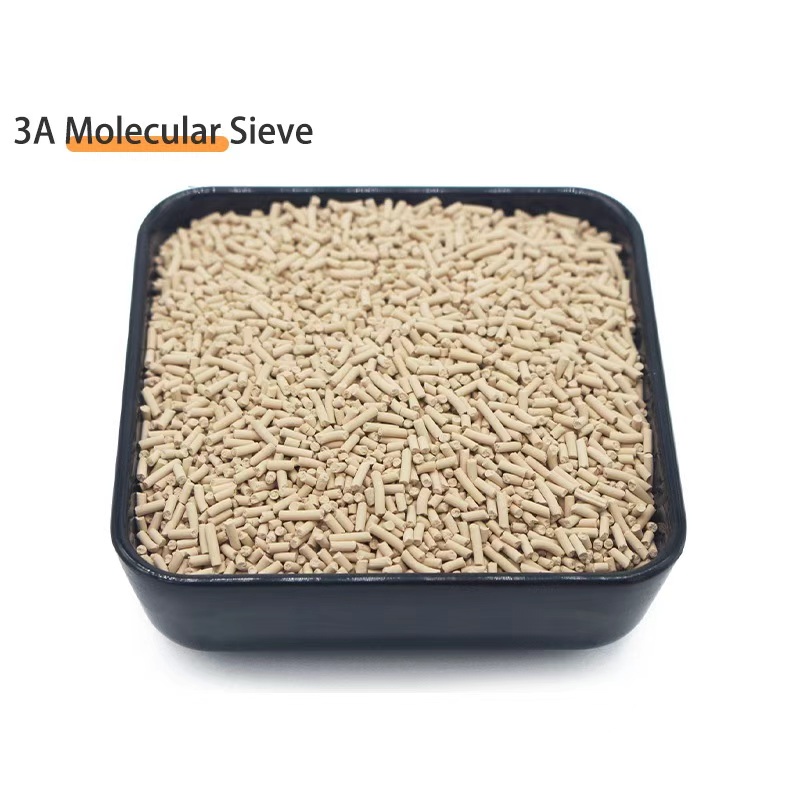
Why Every Cryogenic ASU Needs a Molecular Sieve Pre-Purifier
A cryogenic air separation unit is one of the most energy-intensive continuous processes in industry. Compressed air at 5 to 7 bara enters the cold box, is cooled by heat exchange with the outgoing product streams, and is fractionated by double distillation at -170 to -180 degrees C into oxygen (99.0 to 99.999 percent), nitrogen (99.9 to 99.9999 percent), and argon (99.999 percent). The plant runs 8,000 hours per year and consumes 0.45 to 0.55 kWh per Nm3 of oxygen. A 2,000 tpd oxygen plant consumes 75 MW of electricity continuously and represents 200 to 300 million USD of capital.
Inside the cold box, every contaminant in the inlet air becomes a problem:
- Water vapor freezes as ice on the BAHX fins, restricting flow and adding pressure drop. Even 1 ppmv H2O will accumulate over weeks into a measurable ice plug.
- CO2 freezes as dry ice at -78 degrees C, well above the cold box operating temperature. The dry ice blocks the BAHX passages and the distillation trays, causing a forced warm-up and a 24 to 48 hour production loss.
- C2+ hydrocarbons (acetylene, ethylene, propane, butane) concentrate in the liquid oxygen pool at the bottom of the LOX column. Acetylene at 50 to 100 wppm in the LOX is a documented explosion hazard. The 2003 ASU explosion at a Chinese steel plant was traced to acetylene accumulation in the LOX sump.
- NOx and SO2 from combustion air contaminate the LOX and the molecular sieve itself, accelerating degradation.
A pre-purification vessel (often called a "molecular sieve adsorber" or "purifier") sits upstream of the cold box. It contains 80 to 200 tons of molecular sieve 13X in a layered bed with activated alumina, and operates on a temperature swing adsorption (TSA) cycle. The vessel brings the inlet air from ambient CO2 (400 to 600 ppmv) and water (5,000 to 30,000 ppmv in summer humid climates) to below 1 ppmv CO2 and below 1 ppmv H2O, with C2+ hydrocarbons below 10 ppb. This is the industry-standard air purification step before cryogenic distillation.
The Chemistry: Why 13X Is the Right Zeolite for ASU Duty
13X is the sodium form of faujasite (FAU) zeolite, with the unit cell formula Na86[(AlO2)86(SiO2)106]·xH2O. The silicon-to-aluminum ratio of 1.0 to 1.5 (depending on synthesis) gives the FAU framework its characteristic large supercage (11.8 Angstrom diameter) accessible through 12-ring windows with a 9 Angstrom aperture. The supercage is where CO2, water, and hydrocarbons adsorb.
The kinetic diameters of the critical contaminants are:
| Molecule | Kinetic Diameter (Å) | Admitted by 13X (9 Å)? | Admitted by 5A (4.3 Å)? |
|---|---|---|---|
| Water (H2O) | 2.6 | Yes | Yes |
| Carbon dioxide (CO2) | 3.3 | Yes | Yes |
| Nitrogen (N2) | 3.6 | Yes | Yes |
| Oxygen (O2) | 3.5 | Yes | Yes |
| Acetylene (C2H2) | 3.3 | Yes | Yes |
| Ethylene (C2H4) | 4.2 | Yes | Marginal |
| Propane (C3H8) | 4.3 | Yes | No |
| n-Butane (n-C4H10) | 4.3 | Yes | No |
The 9 Angstrom aperture of 13X admits propane and butane, which 5A (4.3 Angstrom) excludes. This is the critical reason 13X, not 5A, is the standard for ASU pre-purification. The ASU air compressor inevitably draws in some C2+ hydrocarbons from urban air, industrial parks, or nearby roadways. If the sieve cannot adsorb propane and butane, those hydrocarbons slip into the cold box and concentrate in the LOX.
Why 13X beats 4A and 5A on CO2 capacity
The CO2 adsorption isotherm at 25 C and 250 mmHg (close to the 5 to 7 bara, 25 to 40 C inlet air conditions of a typical ASU) is the key performance metric. At this partial pressure, the static CO2 capacities for the common zeolites are:
| Zeolite | Pore Aperture (Å) | CO2 Capacity at 250 mmHg, 25 °C (mmol/g) | CO2 Capacity at 50 mmHg, 25 °C (mmol/g) |
|---|---|---|---|
| 4A (Na-A) | 3.8 | 3.0 to 3.8 | 1.8 to 2.4 |
| 5A (Ca-A) | 4.3 | 3.5 to 4.5 | 2.0 to 2.6 |
| 13X (Na-X) | 9.0 | 5.5 to 6.5 | 3.2 to 4.0 |
| LiLSX (low silica X) | 9.0 | 6.5 to 7.5 | 5.0 to 6.0 |
13X delivers 50 to 80 percent more CO2 capacity than 4A or 5A at the relevant partial pressure. The reason is the FAU supercage: the 11.8 Angstrom cavity holds multiple CO2 molecules per supercage, and the high cation density (Na+ at 86 per unit cell) creates strong electrostatic interactions with the CO2 quadrupole. The trade-off is higher regeneration temperature (220 to 280 C vs 200 to 250 C for 4A/5A) and a slightly higher cost per kg, but the throughput advantage dominates the TCO.
Why 13X beats activated alumina for CO2 removal
Activated alumina has a higher static water capacity (17 to 22 wt% at 25 C, 50 percent RH) than 13X under humid conditions, but for CO2 removal at low partial pressure (4 to 6 mbar in 5 to 7 bara air), activated alumina delivers only 0.5 to 1.2 mmol/g CO2 capacity, an order of magnitude lower than 13X. The activated alumina is not used for CO2 removal in ASU service. It is used as a water guard layer to protect the 13X from hydrothermal degradation.
The Layered-Bed Design: Activated Alumina Top, 13X Bottom
The standard ASU pre-purifier is a vertical cylindrical pressure vessel with internal cone or trough distributors, an inlet air plenum at the bottom, and an outlet at the top. For a 2,000 tpd oxygen plant, the vessel is typically 4.0 to 4.5 m in diameter and 6 to 8 m tall, with a straight side of 5 to 6 m for the adsorbent bed. The bed is loaded in layers from bottom to top:
- Bottom support layer (50 to 100 mm): ceramic balls or larger 4x8 mesh 13X, sized to keep the smaller 8x12 mesh above from falling through the bottom distributor. This layer also collects dust and fines that migrate downward.
- 13X main bed (1.0 to 1.5 m): 8x12 mesh (1.6 to 2.5 mm) 13X-HG. The mass per unit cross-section is 600 to 900 kg/m2 (about 80 to 120 tons per vessel for a 4.0 m diameter bed).
- Activated alumina guard layer (60 to 100 mm): 3 to 5 mm balls, 200 to 300 kg/m2. This is the top layer that the inlet air sees first and removes 95 to 99 percent of the water. The mass ratio is 1 part activated alumina to 4 to 5 parts 13X.
- Top hold-down layer (25 to 50 mm): ceramic balls or larger 4x8 mesh sieve, to prevent fluidization of the 13X during high-velocity regeneration cooling.
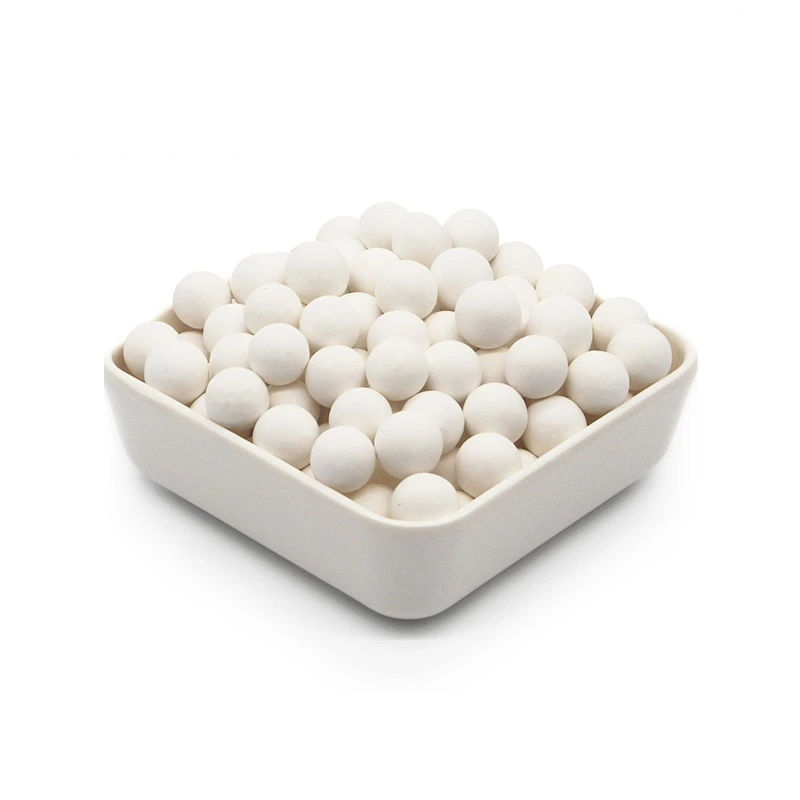
Why a separate activated alumina layer matters
13X has a higher water capacity than activated alumina, so why use two materials? The reason is heat of adsorption. The integral heat of water adsorption on 13X is about 4,200 kJ per kg of water, about 30 percent higher than on activated alumina (3,200 kJ per kg). When wet air contacts cold 13X, the local temperature rise at the top of the 13X bed can exceed 50 to 70 degrees C transiently. This thermal pulse, repeated over thousands of adsorption cycles, gradually degrades the 13X crystal structure — particularly above 350 C local peak temperature, where FAU framework dealumination begins.
Activated alumina acts as a thermal buffer. It adsorbs 95 to 99 percent of the water at the top of the bed, dissipating the heat of adsorption into the bulk gas stream, and the residual 1 to 5 percent of water that reaches the 13X is small enough to keep the local temperature rise below 20 to 30 degrees C. The result is a 13X life of 5 to 8 years instead of 3 to 5 years. The activated alumina itself is replaced every 2 to 3 years because it wears out faster.
Design alternatives: 13X-only and 5A polishing
Some older ASUs (pre-1990) ran 13X-only in the pre-purifier. The gas-side consequence was rapid 13X degradation and a 3 to 5 year sieve life. Modern ASUs rarely use 13X-only. A few specialty designs add a 50 to 100 mm 5A polishing layer below the 13X to capture CO2 slip during the regeneration switchover (the first 5 to 10 minutes after the bed is brought back on adsorption). This adds 5 to 10 percent to the sieve cost but improves cold box protection by 50 to 70 percent. The 5A polishing layer is most common in liquid hydrogen plants and aerospace oxygen plants where the consequence of CO2 slip is severe.
The Temperature Swing Adsorption Cycle
The TSA cycle for a 4-vessel ASU pre-purifier runs as follows. Two vessels are in adsorption (operating in parallel), one is in heating regeneration, and one is in cooling. The cycle is fully automated and runs continuously without operator intervention.
Step 1: Adsorption (4 to 8 hours)
Wet, CO2-laden air at 5 to 7 bara and 25 to 40 C enters the bottom of the vessel, flows upward through the support layer, the 13X, and the activated alumina, and exits at the top with CO2 below 1 ppmv and H2O below 1 ppmv. The mass transfer zone (MTZ) propagates upward through the bed as the front portion of the bed saturates. When the MTZ reaches the top of the 13X, CO2 breakthrough exceeds 1 ppmv and the cycle switches.
For a 100,000 Nm3/hr ASU with 100 tons of 13X, the typical adsorption step is 4 to 8 hours. The cycle is shortened by hot humid air (tropical summer, monsoon season), high CO2 background (urban, industrial area), and degraded sieve. A 25 to 30 percent reduction in cycle time over 5 years is normal and indicates the sieve is approaching end-of-life.
Step 2: Heating regeneration (3 to 4 hours)
Feed is cut off. A slip stream of dry air or nitrogen (10 to 25 percent of the feed flow) is heated in an electric heater or steam coil to 250 to 280 C and introduced at the top of the vessel, flowing downward through the bed. The hot purge gas desorbs water in the first 30 minutes (from the activated alumina layer) and then desorbs CO2 and hydrocarbons for the next 2 to 3 hours (from the 13X). The bed outlet temperature rises from 30 to 50 C at the start to 220 to 240 C at the end. A 30 to 60 minute hold at the peak temperature ensures complete desorption of CO2 from the 13X cage.
The regeneration gas leaving the vessel is wet and CO2-rich. It is typically vented to atmosphere or, in some plants, recycled to the air compressor suction to recover the energy. The water content is typically 5 to 15 g per Nm3 of purge gas during the water desorption phase, dropping to 0.5 to 2 g per Nm3 during the CO2 desorption phase.
Step 3: Cooling (1 to 2 hours)
The heater is cut off. Cold dry air or nitrogen continues to flow through the bed to cool it back to within 30 to 50 C of inlet temperature. Cooling is typically 1 to 2 hours. If the bed is put back online warm (above 60 C), the heat of adsorption on the cold front of incoming air will cause a thermal pulse that degrades the 13X and reduces the working capacity of the next cycle.
Total cycle and energy
The total cycle is 10 to 12 hours for a 4-bed TSA with 6 hours adsorption. The energy consumption for the entire train is 0.04 to 0.08 kWh per Nm3 of air processed, dominated by the regeneration heating. For a 100,000 Nm3/hr ASU, the regeneration energy is 200 to 400 kWh per cycle, with 2 cycles per day, 350 days per year, totaling 140,000 to 280,000 kWh per year.
13X Grade Specifications for ASU Service
Not all 13X is suitable for ASU pre-purification. The ASU duty is severe and requires a high-grade, well-formed bead with consistent quality. The key specifications for Aluminaworld's AW-MS-13X-HG grade are shown below.
| Parameter | AW-MS-13X-HG Specification | Test Method | Industry Minimum |
|---|---|---|---|
| Pore diameter | 9 Å nominal | XRD framework | 9 Å |
| Nominal bead size | 8x12 mesh (1.6 to 2.5 mm) | ASTM D4512 | 8x12 mesh |
| Static H2O capacity (25 °C, 50 % RH) | ≥ 30.0 wt% (typical 30.5) | ASTM D5028 | ≥ 28.0 wt% |
| Static CO2 capacity (250 mmHg, 25 °C) | ≥ 5.8 mmol/g (typical 6.2) | ASAP 2050 | ≥ 5.5 mmol/g |
| Bulk density | 0.60 to 0.66 g/mL | ASTM D4164 | 0.60 to 0.70 g/mL |
| Crush strength (8x12 mesh, average) | ≥ 35 N (typical 40) | ASTM D4179 | ≥ 25 N |
| Attrition loss (Ro-Tap) | ≤ 0.1 wt% | ASTM D4058 | ≤ 0.2 wt% |
| Loss on ignition (1000 °C) | ≤ 1.5 wt% | ASTM D2740 | ≤ 2.0 wt% |
| SiO2/Al2O3 molar ratio | 2.4 to 2.6 | XRF | 2.0 to 3.0 |
The three specifications that matter most in ASU service are static CO2 capacity (≥ 5.8 mmol/g), crush strength (≥ 35 N), and attrition loss (≤ 0.1 wt%). A sieve with CO2 capacity below 5.5 mmol/g will have cycle times 15 to 20 percent shorter than a premium grade, raising the daily regeneration cost. A sieve with crush strength below 25 N will generate excessive fines over 5 years, plugging the bed and forcing an early replacement. A sieve with attrition above 0.2 wt% is rejected at the QC stage — it indicates under-bindered beads that will fail in service.
Spent sieve analysis: what to look for at turn-around
Every 3 years, pull a 500 g sample from the top of the 13X layer and run the following tests. The results tell you when the 13X needs full replacement.
| Test | Healthy Sieve | Aging But Usable | Replace |
|---|---|---|---|
| Static CO2 capacity (mmol/g) | > 5.5 | 4.5 to 5.5 | < 4.5 |
| Crush strength (N per bead) | > 30 | 20 to 30 | < 20 |
| Surface area (BET, m2/g) | > 600 | 450 to 600 | < 450 |
| Fines content below 0.5 mm (wt%) | < 1.0 | 1.0 to 3.0 | > 3.0 |
| Residual oil/HC (ppm) | < 100 | 100 to 500 | > 500 |
A 13X that started at 6.2 mmol/g CO2 capacity and degraded to 4.5 mmol/g over 6 years has lost 27 percent of its working capacity. The plant operator can compensate by shortening the cycle time by 25 to 30 percent, but this raises the daily regeneration energy by 25 to 30 percent as well. The economic break-even is when the annualized energy cost of the shorter cycle exceeds the annualized cost of a fresh sieve load — typically 4 to 5 years for a 13X-APG and 5 to 7 years for a 13X-HG.
Industry Standards Governing ASU Pre-Purification
Five major standards and codes apply to ASU pre-purification design and operation. Most engineers do not realize all five exist, but the regulatory and safety bodies enforce them together.
| Standard / Code | Publisher | Scope | Key Limit |
|---|---|---|---|
| ISO 23213 | ISO/TC 58/SC 4 | Cryogenic air separation — purity requirements | CO2 < 1 ppmv at cold box inlet |
| EIGA DOC 66 | European Industrial Gases Association | ASU pre-purification systems | H2O < 1 ppmv, CO2 < 1 ppmv, C2+ hydrocarbons < 10 ppb |
| CGA G-4.1 | Compressed Gas Association (USA) | Cleaning equipment for oxygen service | Hydrocarbon contamination limits |
| ASTM D5028 | ASTM International | Standard test for water capacity of molecular sieve | Test method for 13X H2O capacity |
| ASTM D4058 | ASTM International | Attrition and abrasion of granular catalysts | Ro-Tap test for 13X bead attrition |
ISO 23213 and EIGA DOC 66 are the most cited. EIGA DOC 66 specifically covers the design, operation, and maintenance of pre-purification systems, including the layered-bed recommendation, the regeneration cycle, and the change-out intervals. Plant operators in the EU, Middle East, and Asia Pacific are required to design to EIGA DOC 66 for insurance reasons. Operators in the USA follow CGA G-4.1 along with ASME BPVC Section VIII for the pressure vessel code.
Bed Sizing for a 100,000 Nm3/hr ASU
A worked example for a 2,000 tpd oxygen plant (about 100,000 Nm3/hr of air feed) shows the typical pre-purifier sizing. The numbers are based on ISO 23213 inlet conditions (5 ppmv CO2 max, 80 percent RH max at 35 C) and a 6-hour adsorption cycle.
Inputs
- Air flow: 100,000 Nm3/hr (at 0 C, 1 atm)
- Operating pressure: 6.5 bara
- Air temperature: 30 to 35 C
- Inlet CO2: 400 ppmv (typical urban)
- Inlet H2O: 25,000 ppmv (1.7 percent RH absolute at 35 C)
- Adsorption cycle: 6 hours
- Pressure drop target: < 200 mbar at design flow
Mass of contaminants per cycle
CO2 mass per cycle = 100,000 × 6 × 400 × 10^-6 × 44/22.4 = 4.7 metric tons per cycle. Water mass per cycle = 100,000 × 6 × 25,000 × 10^-6 × 18/22.4 = 120 metric tons per cycle.
Note the imbalance: water is 25 times the mass of CO2, which is why the activated alumina top layer is so critical. The 13X must absorb some residual water, but the bulk is removed by the activated alumina.
13X mass calculation
Working CO2 capacity per kg of 13X at design conditions (4 mbar partial pressure at 6.5 bara, 35 C, 4-hour breakthrough): 0.6 to 0.8 mmol/g = 26 to 35 g/kg. Theoretical 13X mass for CO2 alone = 4,700 / 0.030 = 157 tons. With 50 percent utilization margin (cycle time buffer, breakthrough margin, vessel bypass flow distribution): 100 tons. For a 4.0 m diameter vessel, this is 1.0 m of 13X depth at 0.62 g/mL bulk density.
Activated alumina mass calculation
Working water capacity per kg of activated alumina at design conditions (25 mbar partial pressure, 35 C, 6-hour breakthrough): 5 to 7 wt%. Theoretical mass = 120,000 / 0.06 = 2,000 tons. That is impractical — the activated alumina cannot hold all the water. The actual design has only 20 to 30 tons of activated alumina, sized for a 1 to 4 hour water breakthrough, and the cycle is set by the CO2 breakthrough on the 13X. The activated alumina effectively runs at high water loading (10 to 15 wt%) and is replaced every 2 to 3 years. The 13X handles the rest.
Total bed dimensions
For a 4.0 m diameter vessel: 13X depth 1.0 m (100 tons), activated alumina depth 80 mm (20 tons at 0.75 g/mL), bottom support layer 50 mm, top hold-down layer 50 mm. Total bed height 1.4 m. Vessel straight side 3.5 m total (bed plus 1.5 m for inlet/outlet plenums and distributor space). Vessel total height 7.5 m including dished heads.
Pressure drop
Using the Ergun equation for 8x12 mesh 13X at 1.0 m depth, 0.4 m/s superficial velocity (design flow 100,000 Nm3/hr at 0 C, 1 atm, 6.5 bara = 15,400 Nm3/hr at 6.5 bara = 4.27 m3/s actual, vessel area 12.6 m2, velocity 0.34 m/s): ΔP ≈ 90 mbar. Add 60 mbar for the activated alumina layer, 15 mbar for the support layer: total 165 mbar. Within the 200 mbar target.
For more depth on the pressure drop calculation, refer to our companion article on the Ergun equation for adsorbent beds.
Hydrocarbon Removal: The Often-Forgotten Third Job
CO2 and H2O are the headline contaminants, but the third contaminant class — C2+ hydrocarbons — is the safety-critical one. C2+ hydrocarbons enter the ASU air feed from automotive exhaust, refinery flares, gasoline vapor, LNG vapor, and industrial solvents. Background concentrations in urban air are 0.5 to 5 ppmv total hydrocarbons (measured as methane equivalent). In industrial parks near refineries, ethylene plants, or gasoline terminals, the background can be 5 to 50 ppmv.
Inside the cold box, the hydrocarbons behave differently from CO2. CO2 sublimes out as dry ice when the air cools — it accumulates at the BAHX and distillation trays. Hydrocarbons, particularly the heavier ones, drop out of the gas phase only at very low temperatures and instead accumulate in the liquid oxygen pool at the bottom of the LOX column. The LOX acts as a solvent for hydrocarbons. Acetylene, ethylene, ethane, and propane all have measurable solubility in LOX at -183 C.
The hazard: acetylene in LOX at concentrations above 50 to 100 wppm is shock-sensitive and can detonate. This is the cause of the 2003 ASU explosion at a Chinese steel plant that killed 5 and injured 13. The 2004 Air Liquide ASU in France had a similar incident attributed to propane accumulation in LOX. The regulatory response was EIGA DOC 66 and the CGA G-4.1 hydrocarbon limits.
13X removes all common C2+ hydrocarbons: acetylene (3.3 A), ethylene (4.2 A), ethane (4.4 A), propylene (4.5 A), propane (4.3 A), butane (4.3 A), pentane (4.3 A). The dynamic capacity at 1 ppmv inlet is 0.1 to 0.3 wt% for acetylene and 0.3 to 0.8 wt% for propane, depending on the sieve grade and the layer depth. A 1.0 m 13X bed reduces a 5 ppmv hydrocarbon feed to below 10 ppb, meeting the EIGA DOC 66 limit.
When the feed is hydrocarbon-heavy: 13X-APG
For ASUs sitting in refineries, ethylene plants, or near LNG terminals, the standard 13X-HG may not be enough for the elevated hydrocarbon feed. Aluminaworld AW-MS-13X-APG (acetylene-protected grade) is tailored for this service. The APG has a higher C2+ dynamic capacity (1.5 to 2.0 wt% vs 0.8 to 1.2 wt% for HG) at the cost of slightly lower CO2 capacity (5.0 to 5.8 mmol/g vs 5.5 to 6.5 mmol/g). The APG is also supplied with a tighter particle size distribution (8x12 mesh only, no fines) and a tighter crush strength spec (40 to 50 N vs 30 to 50 N for HG).
For ASUs within 1 km of an LNG terminal, fuel gas station, or refinery flare, the recommendation is APG. For ASUs in remote or rural air sheds, the standard HG is sufficient.
Dry Gas Feed Beds (DGFB) for Startups and Shutdowns
One often-overlooked aspect of ASU pre-purification is the dry gas feed bed (DGFB), a smaller auxiliary bed that comes online during plant startup and shutdown. During startup, the air compressor is not yet at full output, the BAHX is warming up, and the CO2 vulnerability is highest. The DGFB takes a small slip stream (5 to 10 percent of full feed) and dries it to less than 10 ppb H2O and less than 100 ppb CO2, then injects it into the BAHX to keep it dry and prevent icing during the warm-up cycle.
The DGFB uses the same 13X grade as the main pre-purifier (typically AW-MS-13X-HG) but at a smaller scale (1 to 5 tons). The DGFB runs on a separate, longer cycle (24 to 48 hours) because the load is small. It is regenerated during the main plant's normal pre-purifier regeneration cycle.
10-Year TCO for 13X in a 2,000 tpd ASU
Capital cost analysis for a 2,000 tpd oxygen plant (100,000 Nm3/hr air feed, 100 tons of 13X per vessel, 4 vessels per train, 2 trains).
Sieve capital cost
| Item | Quantity | Unit Cost (USD/ton) | Total Cost (USD) |
|---|---|---|---|
| 13X-HG (premium 8x12 mesh) | 100 tons | 4,800 | 480,000 |
| Activated alumina (3-5 mm) | 20 tons | 2,000 | 40,000 |
| Support layer (4x8 mesh) | 5 tons | 3,500 | 17,500 |
| Bed loading service (per vessel) | 4 vessels | 8,000 | 32,000 |
| Total initial load (per train) | 569,500 |
Annual operating cost
| Item | Annual Quantity | Unit Cost | Annual Cost (USD) |
|---|---|---|---|
| Regeneration energy | 200,000 kWh | 0.10 USD/kWh | 20,000 |
| Replacement sieve (annual avg.) | 15 tons | 4,800 | 72,000 |
| Activated alumina replacement (annual avg.) | 7 tons | 2,000 | 14,000 |
| Bed sampling and analysis | 4 events | 2,500 | 10,000 |
| Total annual operating cost | 116,000 |
10-year TCO
Capital (initial load + 1 mid-life replacement at year 6): 569,500 × 2 = 1,139,000 USD. Operating (10 years × 116,000): 1,160,000 USD. Total 10-year TCO: 2,299,000 USD per train.
The dominant cost drivers are the sieve replacement (60 percent of operating cost) and the regeneration energy (17 percent). Using a premium 13X-HG with 7 to 8 year life instead of an economy 13X with 4 to 5 year life saves 200,000 to 400,000 USD per train over 10 years. Energy is harder to reduce — the regeneration energy is roughly proportional to the bed mass and the cycle frequency, both of which are constrained by the CO2 and H2O mass in the feed.
Sieve Lifetime and Replacement Indicators
Five concrete indicators tell you when the 13X in an ASU pre-purifier has reached end-of-life. Most plants wait until one of the last two triggers fires, but the early-warning indicators can be caught at the annual turn-around and save 6 to 12 months of operating cost.
- Bed pressure drop rises above 200 mbar during the adsorption step at design flow. Initial baseline is 80 to 120 mbar for clean 13X. A 50 percent rise indicates fines accumulation or bed settlement. Vacuum the top layer and restart — if the rise continues, the sieve needs replacement.
- CO2 slip exceeds 1 ppmv at the outlet during the last 10 percent of the adsorption cycle. This is the leading indicator of capacity loss. Compare against the post-loading baseline of 0.05 to 0.2 ppmv. A 5-fold rise indicates 30 to 40 percent capacity loss.
- Cycle time has to be shortened by 25 to 30 percent to keep the slip below 1 ppmv. The cycle is shortened because the working capacity has dropped. The shorter cycle causes higher regeneration energy and higher wear on the valves.
- Floor color changes — black or dark brown at the base of the bed indicates oil contamination from upstream compressor lube oil carryover. The 13X is partially fouled and cannot be regenerated. Replace.
- Fines appear at the outlet — sieve dust detected downstream of the vessel indicates attrition or crushing. The dust will plug the BAHX, distillation trays, and downstream filters. Bed replacement is the only option.
Typical 13X-HG life in well-operated ASUs is 5 to 8 years. In poorly operated or contaminated feed, it can drop to 2 to 3 years. The annual sieve sampling at the 3-year mark gives a reliable early warning: if the top layer is at 85 percent of fresh CO2 capacity, the bottom layer is still at 95 percent and the sieve has 3 to 4 more years. If the top layer is at 60 percent, the sieve has less than 1 year remaining.
7 Common Mistakes in ASU Pre-Purifier Operation
After 30 years of supplying 13X to ASU operators worldwide, we have seen the same handful of mistakes shorten sieve life and degrade cold box protection. They are worth listing because most of them are invisible until the sieve fails.
- Running regeneration below 220 C. The bed is "warm" but not fully regenerated. Residual CO2 accumulates over cycles and the working capacity drops. The outlet CO2 slip will rise slowly over 6 to 12 months and the operator will blame the sieve, not the regeneration profile.
- Skipping the activated alumina replacement. The activated alumina top layer protects the 13X from hydrothermal degradation. Replacing it every 2 to 3 years is the cheapest insurance you can buy. Skipping this saves 14,000 USD per year but costs 200,000 USD in shortened 13X life.
- Loading the sieve wet. 13X is shipped in sealed drums and is hygroscopic. If the drum is opened and the sieve is loaded into the vessel during humid weather, the sieve picks up 5 to 10 wt% water before the vessel is sealed. This depresses the working capacity and accelerates the first regeneration cycle. Best practice: load the sieve in dry weather with the air compressor running and the inlet air filtered to -40 C dew point.
- Mixing 13X grades. The 13X in the bottom layer is often the older sieve remaining from the previous loading, and the new sieve is added on top. The two grades have different capacities and will give different breakthrough behavior. Always use a single grade per vessel, and change the whole bed at once.
- Ignoring the upstream air filter. A 5 to 10 micron inlet filter is the first line of defense against dust and oil carryover. A clogged filter raises pressure drop; a ruptured filter dumps 10 to 50 grams of dust per hour into the bed. Check the filter differential pressure weekly and replace annually.
- Running the adsorber above 35 C at the inlet. Hot inlet air shortens the working capacity (CO2 adsorption is exothermic and capacity drops at higher temperature). Most pre-purifiers have an after-cooler on the air compressor that brings the air to 30 to 40 C. If the after-cooler fails, the cycle time will drop by 30 to 40 percent.
- Not sampling the bed at turn-around. Pulling a 500 g sample from the top of the 13X at the annual turn-around gives you the most reliable predictor of remaining life. Skipping the sample saves 2,500 USD per year but costs 50,000 to 200,000 USD in unplanned shutdowns.
Procurement Specification for an ASU-Grade 13X Order
If you are buying 13X for an ASU pre-purifier for the first time, the procurement specification should include the following 12 points. These are the items that distinguish ASU-grade 13X from generic 13X sold for industrial gas drying.
- Pore aperture: 9 Å nominal, confirmed by XRD pattern matching to FAU framework reference.
- Nominal bead size: 8x12 mesh (1.6 to 2.5 mm), max 5 percent below 1.6 mm and max 5 percent above 2.5 mm per ASTM D4512.
- Static H2O capacity at 25 C, 50 percent RH: ≥ 30.0 wt% per ASTM D5028.
- Static CO2 capacity at 250 mmHg, 25 C: ≥ 5.8 mmol/g per ASAP 2050 or equivalent.
- Bulk density: 0.60 to 0.66 g/mL per ASTM D4164.
- Crush strength, average: ≥ 35 N per bead for 8x12 mesh per ASTM D4179.
- Attrition loss: ≤ 0.1 wt% per ASTM D4058.
- Loss on ignition at 1000 C: ≤ 1.5 wt% per ASTM D2740.
- SiO2/Al2O3 molar ratio: 2.4 to 2.6 per XRF.
- Moisture content on shipment: ≤ 1.5 wt% per Karl Fischer.
- Heavy metals content (Pb, Hg, Cd, Cr-VI): below detection limit per EPA 3052 or equivalent.
- CoA per batch: 5-point BET, 30-point BJH, full CO2 and H2O isotherm at 25 C, XRD pattern, sieve size distribution, crush strength histogram on 20 beads.
Most generic 13X sold for hydrocarbon drying will fail 3 to 5 of these 12 specifications. Ask the supplier for the batch CoA before placing the order. If the supplier cannot provide this data, the sieve is likely not ASU-grade.
Pre-Shipment Checklist for an ASU 13X Order
Before signing for a 13X delivery at your plant, run this 8-point checklist. It catches 90 percent of the supply issues we have seen in 15 years of ASU sieve supply.
- Sealed drums — every drum should be sealed with an unbroken security tape and labeled with batch number, sieve grade, and date of manufacture.
- CoA in every drum — each drum should have a paper CoA inside the lid or printed on the side, showing the analysis results for the specific batch.
- Dry visual appearance — open one drum and look at the sieve. It should be free-flowing, off-white to pale yellow, with no visible moisture or dark spots. Dark spots indicate oil contamination.
- Fines below 0.5 mm — sieve a 100 g sample through a 0.5 mm screen. Fines should be below 0.5 wt%. Excess fines indicate poor handling during manufacture or transport.
- Odor check — smell the sieve. It should be odorless. Any hydrocarbon, sulfur, or amine odor indicates contamination.
- Water content — Karl Fischer water analysis on a 5 g sample. Should be below 1.5 wt%. Anything above 2 wt% means the drum was breached in transit.
- Crush strength — crush 10 beads from the drum on a manual press. Average should be above 30 N per bead for 8x12 mesh. If the average is below 25 N, the batch is sub-spec.
- Particle size — sieve a 100 g sample through 1.6 mm and 2.5 mm screens. Retained on 1.6 mm should be above 92 percent. Passing 2.5 mm should be above 95 percent.
Field Case Studies
Case 1: 3,000 tpd ASU in Saudi Arabia
A 3,000 tpd oxygen plant in Jubail, Saudi Arabia, was experiencing cold box pressure drop rises every 3 to 4 months that required warm-up and clean-out. The issue was traced to LOX sump acetylene accumulation reaching 70 to 90 wppm — within the EIGA hazardous zone. The 13X in the pre-purifier (a generic 13X, not 13X-HG) was only 18 months old but had lost 35 percent of its CO2 capacity due to operation with summer inlet air at 48 C (the after-cooler was undersized). Switching to AW-MS-13X-HG with 6.5 mmol/g CO2 capacity and adding the activated alumina guard layer that had been missing reduced the LOX acetylene to 5 to 10 wppm. The next cold box clean-out was 30 months later, and the 13X lasted 6.5 years before replacement.
Case 2: 1,500 tpd ASU in Germany with refinery feed
A 1,500 tpd ASU at a chemical complex in Ludwigshafen, Germany, was within 800 m of a refinery and 300 m of an ethylene plant. The background hydrocarbon levels in the air feed were 15 to 25 ppmv total C2+, far above the urban baseline. The standard 13X-HG allowed propane slip that caused the LOX sump to reach 35 to 50 wppm propane — within the EIGA warning zone. Switching to AW-MS-13X-APG reduced the propane slip by 60 percent, bringing the LOX sump to below 10 wppm. The APG cost 15 percent more per kg but justified the upgrade within 9 months by avoiding a potential EIGA non-compliance shutdown.
Case 3: 800 tpd ASU in Brazil with humid tropical air
An 800 tpd ASU in Salvador, Brazil, was experiencing 13X degradation every 2 to 3 years. The plant is in a tropical coastal location with summer air at 32 C and 90 percent RH, meaning the inlet water content is 28,000 ppmv — at the upper end of the design range. The pre-purifier had no activated alumina water guard, and the 13X was absorbing all the water in the top 100 mm of the bed. The hydrothermal degradation was visible as a gray-yellow crust on the top of the 13X. Adding 80 mm of activated alumina on top of the 13X and switching to AW-MS-13X-HG extended the bed life to 5 to 6 years. The activated alumina is replaced every 2 years.
Regulatory and Insurance Implications
ASU pre-purification is not optional. The insurance market for industrial gas plants requires documented compliance with EIGA DOC 66 or CGA G-4.1. A documented CO2 slip that exceeds 1 ppmv at the cold box inlet, or a LOX hydrocarbon concentration above 50 wppm, can void the property insurance on the cold box. The 2003 Chinese steel plant ASU explosion was a 60 million USD insurance loss that was traced to non-compliant pre-purification.
For plants in jurisdictions with strict occupational safety laws (OSHA in the USA, HSE in the UK, SMSE in China, EU OSH Directive 89/391/EEC), the pre-purifier is part of the Process Safety Management (PSM) program. The sieve specification, the regeneration cycle, and the analytical results from the bed sampling are auditable records. A gap in documentation can result in regulatory fines and criminal liability for the plant manager.
For new ASU installations, the pre-purifier design must be reviewed by a competent process engineer (typically licensed P.E. in the USA, Chartered Engineer in the UK, registered engineer in the EU) and the design must comply with ASME BPVC Section VIII for the pressure vessel and ISO 23213 for the operating limits.
Alternative Technologies: When 13X Is Not the Right Choice
13X is the right choice for 95 percent of ASU pre-purification duty. There are a few edge cases where alternatives are worth considering.
- Rapid pressure swing adsorption (RPSA) for small ASUs — for plants below 200 tpd oxygen, the RPSA cycle (5 to 15 minutes) with 13X or LiLSX can replace the TSA cycle. The capital cost is lower but the energy cost is 25 to 30 percent higher. The cycle is hard on the sieve, with 50,000 to 100,000 cycles per year vs 4,000 to 8,000 for TSA. RPSA dominates the small-plant market (medical oxygen, packaged ASUs).
- Lithium-based low silica X (LiLSX) for feed gas streams — LiLSX (Si/Al = 1.0) has even higher CO2 and N2 capacity than 13X. It is used in oxygen VPSA but rarely in ASU pre-purification because the cost is 3 to 5 times higher than 13X. For air separation with a downstream membrane or VPSA, LiLSX is the better choice.
- Carbon molecular sieve (CMS) for nitrogen plants — CMS is used in nitrogen PSA but is not used in cryogenic ASU pre-purification because CMS cannot remove CO2 and hydrocarbons. The cryogenic ASU always uses 13X.
- Reverse osmosis / desiccant wheel for very small flow rates — for medical oxygen below 50 tpd, a desiccant wheel pre-dryer plus 13X polishing can reduce the 13X load. The desiccant wheel is a continuous rotary adsorber with silica gel or activated alumina that handles the bulk water. The 13X then polishes to sub-ppmv CO2. This is a niche solution and rarely used in industrial-scale ASUs.
Future Trends in ASU Pre-Purification
Three trends are reshaping ASU pre-purification in 2026 and the next 5 years:
- Higher regeneration temperature with hot purge gas integration. New ASU designs integrate the pre-purifier regeneration with the compressor inter-stage heat, using 200 to 300 C air from the third or fourth inter-stage to heat the regeneration gas. This raises the regeneration temperature by 50 to 80 C and improves the cycle efficiency by 10 to 15 percent. The 13X grade must tolerate the higher temperature — premium 13X-HG with binder chemistry rated to 320 C is required.
- LiLSX hybrid beds for very high CO2 feeds. Industrial ASUs in coal-to-chemicals and cement plants face inlet CO2 of 600 to 1,000 ppmv (vs urban 400 ppmv). A 13X-HG bed still works but the cycle time drops by 30 to 50 percent. A hybrid bed with 30 to 50 percent LiLSX on top of 13X restores the cycle time without a major sieve cost penalty. This is an emerging design and not yet standard.
- Online analytics and digital twins. New ASUs are equipped with online CO2 analyzers (NDIR), online H2O analyzers (electrochemical or laser), and online pressure drop sensors. The data is fed to a digital twin that predicts the remaining bed life and recommends the optimal regeneration cycle. The 13X supplier benefits because the customer can tie the sieve replacement to a data-driven prediction rather than a calendar interval.
Next Steps for Your ASU Pre-Purification Upgrade
If you are designing a new ASU or upgrading the pre-purifier on an existing plant, the next steps are:
- Request a 5 kg sample of AW-MS-13X-HG for adsorption testing. Aluminaworld provides 5 to 10 kg samples for qualification testing at no charge. The sample ships in 7 to 10 days from Zibo, China, with a full CoA.
- Provide us with your design parameters — air flow rate, operating pressure, inlet CO2 and H2O concentrations, desired cycle time, and bed dimensions. We will run a free bed sizing calculation and recommend the sieve load, the activated alumina load, and the support layer.
- Request a 13X-APG sample if your plant is within 1 km of an LNG terminal, refinery, ethylene plant, or fuel storage. The APG has higher C2+ capacity and is required for those air sheds.
- Schedule a pre-purifier audit — for plants with 3 to 5 year old sieve, we will pull a 500 g sample from the top of the bed and run a spent-sieve analysis (CO2 capacity, BET, crush strength, fines content). The audit identifies the remaining life and tells you when to plan the next sieve change.
- Ask for references — we have supplied 13X to ASU operators in 17 countries. Reference plants and reference contacts are available on request.
For adsorption isotherms, Reference 13X Performance Sheet, or a quote for 100,000+ Nm3/hr ASU pre-purifier loads, contact our technical sales team:
- WhatsApp: +86 133 2522 2240 (message us with the phrase "ASU 13X" and we will route you to the sieve specialist)
- Email: barry@aluminaworld.com
- Factory: Zibo, Shandong, China — pre-purifier sieve shipments from 500 kg to 200 tons per order, 7 to 15 day lead time, FOB Qingdao or CIF your port
Related Reading
The following articles on Aluminaworld cover related topics in adsorption, regeneration, and sieve selection.
- Molecular Sieve Regeneration Best Practices — 7 Things Plants Get Wrong
- How to Calculate Adsorbent Bed Pressure Drop: Ergun Equation
- Molecular Sieve Storage and Handling: 7 Mistakes That Cost You 30% Capacity
- Molecular Sieve Attrition Rate: Why Some Sieves Generate More Fines
- Molecular Sieve Regeneration Temperature Guide for 3A, 4A, 5A, and 13X
- Activated Alumina vs Molecular Sieve for Compressed Air Drying
- Molecular Sieve 5A vs 13X for PSA Hydrogen
- Molecular Sieve Poisoning by H2S: Detection, Recovery, and Prevention
Related Articles
Need a Quote on 13X Molecular Sieve for Your Cryogenic ASU Pre-Purification?
5 to 10 kg R&D sample available. 7 to 15 day delivery. Full CoA with every shipment: 5-point BET, 30-point BJH, CO2 and H2O isotherm at 25 C, ASTM D4179 crush strength, ASTM D4058 attrition. Free bed sizing calculation against your air flow rate, CO2, and H2O feed conditions. For plants near refineries or LNG terminals, we recommend AW-MS-13X-APG.