Pseudo Boehmite for Hydrodesulfurization: Pore Structure Design for CoMo and NiMo Catalysts
Pseudo boehmite is not an HDS catalyst by itself. It is the shapeable precursor whose chemistry, peptization, drying, and calcination create the gamma-alumina pore network that later carries CoMo or NiMo. This buyer-engineer guide shows how to translate feed severity and reactor constraints into a defensible precursor, carrier, impregnation, QC, pilot, and total-cost specification.
By Aluminaworld Technical Team. All numerical ranges identified as “typical” are industry screening values, not guaranteed plant performance. Final catalyst design requires formulation-specific testing with representative feed.
The Direct Answer: Design the Finished Pore Network, Not the Powder Number
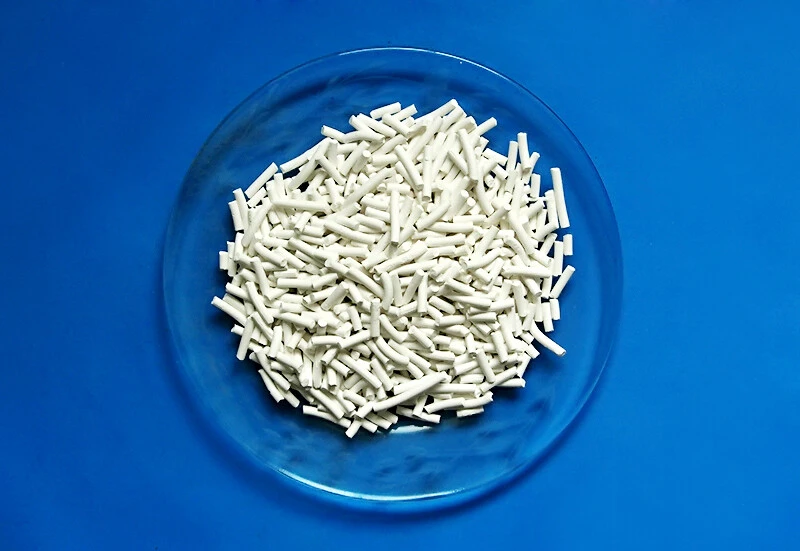
At a catalyst-support production line in Zibo, pseudo boehmite begins as a washed, filtered, and dried aluminium oxyhydroxide powder. The powder may look uniform and may carry an attractive BET value, yet neither appearance nor powder BET determines whether a commercial HDS extrudate will work. The decisive properties emerge after the material is wetted with acid, mixed to a controlled rheology, pushed through a die, dried without cracking, calcined into transition alumina, filled with a metal solution, dried again, and converted to a sulfided active phase. Every operation changes pore mouths, connectivity, shrinkage, strength, and the fraction of internal area that a liquid hydrocarbon can actually reach.
The practical design rule is therefore simple: begin with the feed and reactor, define a target pore architecture for the finished calcined carrier, and work backward to the pseudo boehmite precursor and forming recipe. For a relatively clean middle distillate, a connected mesopore network can balance molybdenum dispersion and transport. As the feed becomes heavier, more aromatic, higher in nitrogen, or richer in nickel, vanadium, iron, silicon, asphaltenes, and sediment, the support needs wider transport pathways and more tolerance for pore-mouth deposition. If the design pursues surface area alone, the catalyst may look excellent in nitrogen adsorption and disappoint in liquid-feed pilot service.
This article deliberately does not repeat four adjacent guides. The gel-versus-powder guide explains form and handling; the 70/75/80 alumina-content guide explains grade chemistry; the surface-area-versus-pore-volume guide establishes the textural trade-off; and the five-method QC guide explains laboratory procedures. Here the focus is the engineering chain that connects those precursor measurements to an HDS carrier and, finally, to a refinery decision.
Scope boundary: the ranges below are technically plausible starting windows assembled from common hydroprocessing practice, public standards, and the currently published Aluminaworld product ranges. They are not a claim that one pore diameter, one grade, or one support will deliver a stated sulfur conversion in every refinery. Use them to design a qualification program, not to replace one.
From Pseudo Boehmite to Gamma Alumina: Where the Pores Come From
Pseudo boehmite is a poorly crystalline aluminium oxyhydroxide, commonly represented as AlOOH with additional structural or adsorbed water. Its small crystallites assemble into agglomerates separated by voids. Those intra-agglomerate and inter-agglomerate voids become the raw material for the pore network. When the powder is acid-peptized, some agglomerates break down and the primary particles form a colloidal network. When that network is shaped and dried, capillary forces pull particles together. During calcination, dehydroxylation removes chemically bound water, transition alumina develops, and necks form between particles. The resulting void geometry is inherited from the precursor but rewritten by processing.
This is why the phrase “same pseudo boehmite” can be misleading. Two batches with similar Al2O3 and powder BET may differ in crystallite dimension, aggregate hardness, acid dispersibility, residual sodium or sulfate, particle-size distribution, and water demand. Under the same mixer settings they can produce pastes with different torque. Under the same die they can produce different pressure, die swell, surface tearing, and density. Under the same calcination profile they can shrink differently. A buyer who specifies only dry-basis alumina and BET leaves the most important process responses uncontrolled.
For HDS, gamma-rich transition alumina is attractive because it offers a useful combination of area, pore volume, surface hydroxyl chemistry, metal anchoring, thermal stability, formability, and cost. The support is not chemically “inert” in the simplistic sense. Surface hydroxyls interact with molybdate and promoter precursors; acid-base properties influence dispersion; residual sodium can neutralize acidic sites or alter metal-support interactions; sulfate or chloride can change peptization and downstream chemistry. The support participates in how the active phase is assembled even though the sulfided metal edges perform the key catalytic functions.
The process team should therefore separate three specifications. The first is the incoming pseudo boehmite powder specification. The second is the calcined blank-carrier specification after shaping but before metals. The third is the finished catalyst specification after impregnation and activation steps. Conflating them creates false acceptance: a powder can pass while the blank carrier fails pore volume, or a blank carrier can pass while the impregnated catalyst loses accessible volume because metal oxides block narrow pores.
What the HDS Reaction Network Demands from the Support
Hydrodesulfurization removes sulfur by reacting organosulfur compounds with hydrogen to form hydrogen sulfide and desulfurized hydrocarbons. Simple thiols, sulfides, and some thiophenes are comparatively easy. Alkyl-substituted dibenzothiophenes, especially molecules sterically shielded near the sulfur atom, are more difficult. Deep desulfurization is not one reaction but a network that includes direct C-S bond scission and hydrogenation-assisted pathways. The active sulfide phase, promoter, stacking, edge structure, hydrogen partial pressure, inhibition by hydrogen sulfide and nitrogen compounds, and liquid transport all influence the observed rate.
The support has to serve two masters. It needs enough accessible internal area to disperse molybdenum and the cobalt or nickel promoter without forming excessive crystallites during preparation. It also needs pores wide and connected enough for the actual feed molecules to reach active sites under liquid-filled trickle-bed conditions. Maximizing the first goal often narrows pores; maximizing the second can reduce area and mechanical strength. Pore-structure design is the controlled compromise between metal dispersion, molecular access, poison capacity, coke tolerance, pellet integrity, and reactor pressure drop.
Feed class changes the compromise. Straight-run naphtha contains relatively small sulfur molecules and creates modest internal diffusion stress. Ultra-low-sulfur diesel service has a more demanding endpoint and must convert refractory substituted dibenzothiophenes in the presence of aromatics and nitrogen inhibitors. Vacuum gas oil brings larger molecules, a higher boiling range, more nitrogen, and stronger diffusion and fouling concerns. Residue hydrotreating adds asphaltenes, microcarbon residue, sediment, and metals that can deposit near pore mouths. A support designed for a naphtha guard or mild distillate service should not be copied into residue duty merely because both use CoMo or NiMo.
Reactor configuration matters too. Fixed-bed trickle flow imposes wetting and pressure-drop constraints. Graded beds may use larger, stronger, more open particles at the inlet and more active particles downstream. Ebullated-bed or slurry concepts impose different attrition and circulation requirements. The buyer should tell the precursor supplier which part of the catalyst system is being designed. “HDS grade” is not a complete application description.
Use the Right Pore Language: Size, Throat, Connectivity, and Accessibility
IUPAC classifies pores by width: micropores below 2 nm, mesopores from 2 to 50 nm, and macropores above 50 nm. That classification is useful but not sufficient for catalyst design. A pore body may be wide while its entrance throat is narrow. A support may have high total volume in dead-end cavities that contribute little to through-transport. Two materials can share the same mean diameter while one has a narrow unimodal distribution and the other has a broad or bimodal distribution. Nitrogen sorption can characterize much of the mesopore network, while mercury intrusion extends information into larger transport pores but uses high pressure and a non-wetting liquid. Neither method alone is a perfect map of a liquid-filled working catalyst.
The arithmetic mean is especially dangerous. For an idealized cylindrical-pore network, a hydraulic estimate is d ≈ 4V/A, where V is pore volume and A is BET area with consistent units. This estimate is useful as a sanity check, not a replacement for the distribution. A carrier with 0.55 cm3/g and 220 m2/g gives an estimated diameter of about 10 nm. The same average could hide mostly 6 nm pores plus a smaller macropore fraction, or a broad continuum from 4 to 30 nm. Those structures can behave differently during impregnation and during heavy-feed operation.
Tortuosity describes how indirect the transport path is compared with a straight path. Constrictivity describes how bottlenecks reduce transport. Effective diffusivity is often expressed conceptually as bulk or pore-liquid diffusivity multiplied by porosity and constrictivity and divided by tortuosity. These terms are difficult to derive from a routine COA, but the design team can infer their combined effect through uptake tests, impregnation uniformity, model-compound reaction, and full-feed pilot performance. A narrow COA tolerance does not eliminate the need for functional testing.
For purchasing, ask for the adsorption and desorption isotherms, not only a reported BET and one BJH mean. Ask which branch and model were used, the degassing conditions, the relative-pressure range, and whether thickness-curve or tensile-strength-effect corrections were applied. For larger pores, ask for the mercury intrusion curve and note the contact angle and pressure model. Method transparency is part of the specification.
Illustrative Development-Screening Windows by HDS Service
The table below is an author-generated development map, not an industry consensus, catalogue specification, licensor recommendation, or purchase limit. It describes finished blank supports after forming and calcination, before active metals. Metal impregnation commonly reduces measured BET and pore volume. The numerical bands are deliberately broad examples used to frame experiments; actual windows depend on licensor recipe, feed, shape, strength target, calcination state, adsorption method, and pilot evidence.
| Service | Feed challenge | Typical blank BET | Typical pore volume | Pore-design emphasis | Qualification priority |
|---|---|---|---|---|---|
| Naphtha hydrotreating | Small molecules; olefin control may matter | 180-280 m2/g | 0.40-0.65 cm3/g | Controlled mesopores; strong metal dispersion | Selectivity, exotherm, sulfur endpoint |
| ULSD diesel HDS | Refractory sulfur; nitrogen and aromatics inhibit | 180-280 m2/g | 0.45-0.75 cm3/g | Connected 7-15 nm-class mesopore network | 4,6-DMDBT conversion, H2 use, cycle stability |
| VGO pretreat / HDS-HDN | Higher endpoint, nitrogen, aromatics, precursors to coke | 150-250 m2/g | 0.55-0.90 cm3/g | Broader mesopores with transport-pore contribution | HDN, metals tolerance, pressure-drop growth |
| Residue hydroprocessing | Asphaltenes, sediment, CCR, Ni/V/Fe deposition | 80-200 m2/g | 0.70-1.20 cm3/g | Hierarchical meso/macroporosity and guard grading | Metal capacity, pore-mouth life, attrition, run length |
Notice what the table does not say. It does not assign one pseudo boehmite “grade” to one feed without processing. The powder must be converted to the blank support and measured after the exact shaping and calcination recipe. The product-page powder values are not equivalent to the blank-carrier values in this table and must not substitute for them without conversion and remeasurement. The table also does not guarantee performance from texture. Active-phase chemistry, promoter ratio, impregnation pH, chelation, drying, sulfiding, reactor hydrodynamics, and feed contaminants can overwhelm an otherwise reasonable support.
The wider windows for heavier service reflect a stronger role for transport and deposition capacity. That does not mean “largest pore wins.” If too much volume is moved into large pores, area falls, metal dispersion may deteriorate, bulk density and volumetric activity may decline, and strength can become difficult. The objective is hierarchical access: enough smaller mesopore surface for active phase, enough larger pathways for supply and product removal, and a geometry that survives loading and years of differential stress.
Precursor Chemistry and Impurities: Pore Design Starts Before Peptization
Commercial pseudo boehmite can be produced through several aluminium-chemistry routes, including precipitation from sodium aluminate and aluminium salts, neutralization routes, hydrolysis of aluminium alkoxides, and related proprietary processes. Route labels alone do not define quality. What matters to an HDS catalyst maker is the resulting crystallite habit, agglomerate structure, acid response, residual ion profile, consistency, cost, and ability to deliver the target blank-carrier texture after the customer's process.
Sodium deserves explicit control because residual sodium can alter surface acidity and metal-support interaction. Sulfate and chloride deserve explicit control because they can influence peptization, corrosion, active-phase preparation, and final catalyst behavior. Iron, silica, calcium, and other trace components may be harmless at one level and problematic at another. A procurement specification should state limits tied to a validated formulation rather than copy an arbitrary “ultra-pure” table. Paying for lower impurity than the process needs may add cost without benefit; accepting an uncontrolled impurity because the average is low creates batch risk.
Particle-size distribution affects mixing and paste rheology, but laser D50 should not be mistaken for crystallite size. A 40-micrometre agglomerate can be made of nanoscale crystallites and may disintegrate under acid and shear. Another powder with the same D50 may contain hard aggregates that remain as defects. Use laser diffraction under a defined dispersion protocol, then pair it with acid-dispersion response, mixer torque, microscopy where useful, and extrudate defects. ISO 13320 gives the framework for laser diffraction, but dispersant, refractive index, sonication, obscuration, and calculation model must still be agreed.
The currently published Aluminaworld pseudo boehmite product line spans dry-basis Al2O3, powder D50, BET, pore volume, impurity, and peptization ranges. Those values are useful for choosing samples, but an HDS RFQ should request actual lot COAs and define the customer's conversion test. A powder specification becomes meaningful only when it predicts the blank-carrier result with acceptable batch-to-batch variation.
Peptization: Control Acid Demand, Dispersion, and Green Structure
Peptization converts a water-wetted pseudo boehmite powder into a cohesive, extrudable colloidal system. Nitric acid is common in alumina support preparation because nitrate can be removed during controlled thermal treatment and avoids introducing chloride into a chloride-sensitive formulation. Acetic acid and other organic acids may be used for specific rheology or burnout behavior. Hydrochloric acid can disperse alumina effectively, but chloride consequences must be understood. The correct acid is the one validated for the entire formulation, not the one that gives the lowest mixer torque in a cup test.
Acid demand is normally expressed relative to dry alumina, but the exact metric must be defined: moles acid per mole Al2O3, weight percent acid solution on powder, or pH endpoint can produce confusingly different numbers. A robust development plan runs an acid-demand curve rather than one point. At each dose, measure paste torque, extrudability, green strength, drying shrinkage, calcined strength, BET, pore volume, and pore-size distribution. The optimum usually lies between under-peptized crumbly paste and over-peptized dense gel.
Water-to-solids ratio is coupled to acid. More water can lower extrusion pressure but increase drying time and capillary shrinkage. Less water can preserve open structure but raise pressure, heat the paste, and create tearing or poor consolidation. Powder surface area, agglomerate strength, temperature, mixing order, and aging all change the apparent water demand. Record paste temperature and energy input, not only mixing time. Two mixers can deliver very different shear in ten minutes.
Aging after acid addition allows the colloidal network to equilibrate. Too little aging can produce a paste whose viscosity changes during extrusion; too much can make the paste difficult to process or change pore-former distribution. Scale-up changes heat removal and mixing uniformity, so a laboratory recipe should be translated through specific energy, torque profile, solids basis, and temperature rather than through clock time alone.
Extrusion and Shape: Build Access Without Sacrificing Bed Mechanics
Most fixed-bed HDS catalysts use cylindrical, trilobe, quadrilobe, or related extrudates. Multi-lobed shapes increase external geometric area and reduce diffusion length relative to a solid cylinder of similar envelope diameter. They can also change packing, void fraction, wetting, crush behavior, and pressure drop. A shape advantage on paper disappears if length distribution is broad, fins break during loading, or the die produces variable density.
The extrusion formulation may contain pseudo boehmite, water, acid, pore former, binder or rheology modifier, and sometimes part of the active formulation depending on the manufacturing route. Each additive must be evaluated after burnout. A pore former can create larger voids, but excessive addition may reduce strength or leave interconnected weakness. An organic binder can improve green handling, but its decomposition rate can create internal pressure and cracks. Recycled fines can improve yield, yet their thermal history and surface chemistry may change paste behavior. Document recycle fraction as a controlled variable.
Die pressure and specific extrusion energy are process fingerprints. Rising pressure can indicate lower moisture, higher acid response, finer effective particles, lower temperature, or a blocked die. Falling pressure can indicate excess water, over-peptization, warmer paste, or lubrication changes. Trend these signals by lot. A finished extrudate test cannot always reconstruct what went wrong after the paste has been calcined.
Length-to-diameter distribution should be part of the release data because fragments influence bed voidage and pressure drop. The Ergun-equation pressure-drop guide explains the particle-size and void-fraction relationship in detail. For HDS, use a packed-bed test with the actual shape and representative loading method rather than treating nominal diameter as a sufficient pressure-drop descriptor.
Drying and Calcination: Preserve the Network While Creating Transition Alumina
Drying is often treated as a simple prelude to calcination, yet it can create irreversible gradients. Water leaves the external region first. Capillary pressure pulls particles together, soluble species migrate, and the surface can form a denser shell. If external drying is too fast, the interior remains wet while the shell shrinks, creating cracks or a density gradient. Controlled humidity, air velocity, bed depth, and temperature are therefore pore-structure variables.
Calcination removes residual water and organics and transforms the precursor to transition alumina. The useful range for a high-area gamma-rich support is formulation-specific, but many development programs screen several hundred degrees Celsius around the region where dehydroxylation and stable burnout are achieved without excessive sintering. Temperature alone is not a recipe. Heating rate, hold time, bed depth, gas flow, oxygen, water vapour, precursor chemistry, pellet diameter, and furnace temperature uniformity all influence the result.
As thermal severity increases, primary particles and crystallites grow, smaller pores can disappear, surviving pores become wider, and BET area tends to decline. Pore volume may rise, fall, or redistribute depending on shrinkage and burnout. A table that claims one universal BET at one temperature is not transferable across precursors. Build a calcination response surface for the actual powder and shape.
| Thermal stage | Dominant event | Main risk | Control signal | Release check |
|---|---|---|---|---|
| Ambient to moderate drying | Free-water removal | Skin formation and migration | Humidity, airflow, mass-loss curve | Moisture uniformity, visible cracks |
| Late drying / preheat | Bound-water change and additive softening | Internal stress and deformation | Ramp rate, exhaust moisture | Length, straightness, green strength |
| Organic burnout | Pore-former and binder decomposition | Hot spots, carbon residue, cracks | O2/CO/CO2 in exhaust, heat release | LOI/carbon, colour, integrity |
| Transition-alumina formation | Dehydroxylation and structural rearrangement | Under-conversion or excessive sintering | Core temperature and residence time | XRD, BET, pore distribution, strength |
Thermogravimetric and differential-thermal analysis can identify mass-loss and heat-release regions for a new formulation. Use those data to set safe ramps, then verify at pilot furnace scale because heat and mass transfer change with batch depth. A small crucible does not reproduce a production tray, belt, or rotary kiln.
Pellet Geometry, Strength, and Pressure Drop Are Part of Pore Design
Internal pore architecture cannot be separated from external geometry. Reducing equivalent pellet radius improves diffusion, but smaller particles increase packed-bed pressure drop and may be more vulnerable to breakage. Multi-lobed shapes shorten characteristic diffusion paths and increase external area, but thin lobes can chip. Higher porosity aids transport, yet usually reduces density and strength unless the microstructure is carefully engineered.
Single-pellet crush data provide a distribution of individual failure loads. Bulk crush evaluates collective behavior under a bed-like load. Attrition or abrasion tests examine fines generation under a specified motion. These tests answer different questions and should not be converted into one “strength” number. ASTM D4179 addresses single-pellet crush strength of formed catalysts and carriers; ASTM D7084 addresses bulk crush; ASTM D4058 addresses attrition and abrasion of formed catalysts and carriers. ASTM D5757 is an air-jet attrition method for FCC catalysts and should not be casually applied to fixed-bed HDS extrudates.
Report geometry with the mechanical result. A newton-per-pellet value is strongly influenced by diameter, length, and loading orientation. For extrudates, force per unit length may be more comparable, but the method must still be explicit. Record sample conditioning because moisture can affect alumina strength. Give mean, median, standard deviation, and low-tail percentiles where possible; a high average can hide a population of weak pieces that creates loading fines.
Before scale-up, pack a representative column using the intended loading method and measure void fraction, bulk density, pressure drop, breakage after loading, and unloading fines. Include support balls or grading media if they are part of the commercial design. The correct carrier is the one that provides accessible active volume per reactor pressure-drop allowance, not the one with the highest area per gram.
Mass Transfer in a Liquid-Filled HDS Pellet
Hydroprocessing catalysts operate in a gas-liquid-solid environment. Hydrogen must transfer into the liquid, liquid must wet the catalyst, reactants must diffuse through liquid-filled pores, and products must diffuse out. It is therefore misleading to treat operating diffusion as purely gas-phase Knudsen diffusion. Knudsen concepts can matter in dry pores or gas-dominant systems, but effective diffusivity for a wetted HDS pellet is governed largely by liquid-phase molecular diffusion modified by porosity, tortuosity, constriction, adsorption, and molecule-pore interactions.
The Thiele modulus is a useful screening tool for internal diffusion. For an ideal first-order reaction in a simple geometry, it compares reaction rate with diffusion rate. A large modulus indicates that reaction is fast relative to internal transport and the pellet interior is underused; a small modulus indicates that intrinsic kinetics dominate. Real HDS has multiple reactions, inhibition, changing properties along the bed, and non-ideal pellet geometry, so the modulus should be viewed as a model, not a plant guarantee.
Illustrative diffusion screening calculation
Assume an equivalent diffusion radius R = 0.80 mm, an apparent first-order rate constant k = 1.0 × 10⁻³ s-1, and effective liquid-filled pore diffusivity Deff = 2.0 × 10⁻¹⁰ m2/s. These are hypothetical screening inputs, not Aluminaworld performance claims.
For the simplified relation φ = R × sqrt(k/Deff): φ = 0.00080 × sqrt(0.001 / 2.0×10⁻¹⁰) ≈ 1.79.
For an ideal sphere, η = (3/φ2)[φ/tanh(φ) − 1], giving an effectiveness factor of approximately 0.84. In this simplified example, about 84% of the intrinsic pellet activity is expressed. Reducing equivalent radius or increasing connected effective diffusivity improves utilization. A trilobe requires geometry-specific modelling rather than blind use of the spherical equation.
The Weisz-Prater criterion offers another diagnostic using observed rate, pellet dimension, concentration, and effective diffusivity. If a pilot shows apparent activation energy far below intrinsic laboratory data, activity scaling with particle size, or strong benefit from crushed catalyst, internal diffusion is likely. External film transfer and maldistribution can produce similar symptoms, so use multiple diagnostics.
A suitably designed hierarchical pore network may provide alternative pathways and storage volume and may delay pore-mouth blockage in some heavy-feed services. It can also reduce area, density, or strength, so the benefit must be demonstrated with representative-feed deactivation testing. Pilot tests should track not only initial conversion but also pressure drop, metals profile through pellet radius, pore-volume loss by size class, and deactivation rate.
Calculation 1: Use 4V/A as a Sanity Check, Not a Specification
The relation d = 4V/A follows from an ideal cylindrical-pore model. With V in cm3/g and A in m2/g, conversion gives d in nanometres as approximately 4000V/A. Using BET area as an approximate pore-wall area, a blank support at 0.55 cm3/g and 220 m2/g gives a characteristic 4V/A diameter of about 10 nm. This is not an arithmetic mean, modal diameter, throat diameter, or direct prediction of liquid-feed accessibility. If a supplier reports those V and A values alongside a 25 nm “mean,” first identify the method and statistic; the difference may arise from a bimodal network, a distinct measurement range, or another valid calculation convention.
Now consider a second support at 0.80 cm3/g and 160 m2/g. The estimate is 20 nm. The second support may offer better access for a heavier feed, but it has less area per gram and may have lower bulk density or strength. If the reactor volume is fixed, compare area and accessible pore volume per litre of packed bed, not only per gram. A low-density high-volume support can appear superior gravimetrically and disappoint volumetrically.
The calculation should be run at three stages: blank calcined support, oxide-form finished catalyst, and sulfided or spent catalyst where measurement is safe and meaningful. Metal loading occupies volume and changes area. A support whose distribution has little margin may lose too much access after impregnation. Designing the blank to the final catalyst target avoids this predictable failure.
Calculation 2: Incipient-Wetness Volume and MoO3 Equivalent
Incipient-wetness impregnation fills the accessible pore volume with a metal-containing solution without leaving a bulk liquid phase. Start with a properly dried carrier and a pore-volume method correlated to the chosen solution. Water pore volume, nitrogen total pore volume, and liquid uptake can differ because wetting and accessibility differ. Run a dyed-water or non-reactive solution trial before committing an expensive metal batch.
Worked basis: 100 kg dry blank carrier
Illustrative MoO3-only calculation on a dry-carrier basis; this is not a validated impregnation recipe. It excludes promoter mass from the final denominator and must be rebuilt for the actual solution chemistry.
- Measured practical water uptake = 0.55 L/kg. The theoretical fill volume is 55 L for 100 kg carrier.
- Target finished catalyst = 15 wt% MoO3 equivalent. Required MoO3 mass x satisfies x/(100+x)=0.15, so x=17.65 kg.
- Required solution concentration = 17.65 kg / 55 L = 0.321 kg MoO3 equivalent per litre.
- Ammonium heptamolybdate tetrahydrate contains about 81.5 wt% MoO3 equivalent by stoichiometry. The ideal AHM concentration is therefore roughly 0.321/0.815 = 0.394 kg/L.
- Correct the laboratory recipe for actual assay, solution density, promoter or chelate volume, retained mixer liquid, evaporation, and analytical recovery. Confirm metal loading by XRF or another validated method.
A concentrated AHM solution near this calculated level may approach practical solubility or stability limits depending on temperature, pH, chelate, promoter, aging time, and final solution density. Measure final solution volume and assay, confirm wetting with the real solution, and consider split impregnation if crystallization or migration occurs.
This calculation exposes a common procurement problem. If two carriers have nominally the same BET but pore volumes of 0.45 and 0.65 L/kg, they require very different solution concentrations for the same one-step loading. A concentration that is soluble and stable for one carrier may crystallize or redistribute in the other. Pore volume is therefore a manufacturing constraint as well as a reactor-performance property.
Multiple impregnation can reduce solution-concentration stress and improve distribution, but each wetting, drying, and calcination step costs time and can move species. Co-impregnation, sequential impregnation, chelating agents, phosphorus, pH adjustment, and drying atmosphere all interact. Validate the full sequence on the selected carrier.
Metal Distribution: Uniform, Rim-Rich, and the Drying Step Between Them
After a carrier is filled, dissolved precursors continue to move until immobilized. Capillary flow during drying can carry species toward the external surface. Adsorption can immobilize one ion sooner than another. Changes in pH as water evaporates can precipitate compounds. Chelating agents can slow interaction and alter mobility. The final radial profile may be uniform, rim-rich, core-rich, or layered even when the initial solution was homogeneous.
There is no universal rule that an egg-shell profile is best for HDS. Rim-rich loading can reduce diffusion distance for fast reactions and protect unused interior area, but it can also expose active metals to early deposition or create local heat and coke. Uniform loading can use more of the pellet when diffusion is adequate. Heavy-feed guard and demetallization strategies may deliberately manage where contaminants deposit. Select the profile from reaction and deactivation objectives, then measure it by cross-section methods such as electron microscopy with elemental mapping, micro-XRF, or another validated technique.
Drying rate is a powerful distribution lever. Fast external evaporation tends to promote outward convective migration; slower or humidity-controlled drying can allow diffusion to counter migration. Carrier pore size, solution viscosity, precursor adsorption, pH, chelate, pellet radius, and temperature all change the balance. Record the metal profile after each major scale-up because a laboratory tray and production dryer rarely have the same heat and mass transfer.
The support buyer can help by providing consistent liquid uptake and pore distribution. Variability forces the catalyst manufacturer to chase solution volume and drying behavior lot by lot. For critical programmes, include impregnation uptake and a standard tracer-distribution test in supplier qualification, even if routine release later uses faster surrogate tests.
CoMo Versus NiMo: Match Active Chemistry and Support Transport
CoMo formulations are widely used when direct desulfurization is a primary objective and feed severity permits. NiMo formulations provide stronger hydrogenation functionality and are often preferred where nitrogen, aromatics, or refractory sulfur compounds make hydrogenation pathways more important, or where the hydrotreating step protects a downstream hydrocracker. The exact selection belongs to the catalyst formulator and process licensor.
Both systems usually rely on molybdenum sulfide slabs promoted at edge sites by cobalt or nickel. Activity depends on dispersion, slab length, stacking, promoter incorporation, sulfur state, support interaction, and accessibility. Strong metal-support interaction can stabilize small oxide species but may make full sulfiding harder. Weak interaction can facilitate sulfiding but allow larger crystallites. Additives and chelates are used to manage this balance.
Pore architecture affects how much solution can be introduced, how precursors distribute, how gases reach the oxide during calcination or activation, and how liquid feed reaches the sulfided phase. A narrow high-area support may disperse oxide beautifully and then restrict refractory molecules. An open low-area support may provide transport but form MoO3 crystallites or lower volumetric active-site density. The best support is formulation-specific.
When comparing CoMo and NiMo on two supports, hold more than metal weight constant. Compare actual metal uptake, promoter-to-molybdenum atomic ratio, oxide-phase dispersion, sulfiding protocol, active-phase morphology, packed density, pellet geometry, and accessible pore volume after loading. Otherwise a claimed “support effect” may actually be a loading or activation difference.
Sulfiding and Start-Up: The Pore Network Must Survive Activation
Safety boundary — not an operating instruction: sulfiding can involve toxic, potentially lethal H2S, high-pressure hydrogen, flammable liquids, and exothermic temperature excursions. Spent sulfided HDS catalyst may be pyrophoric when exposed to air and may contain hazardous Ni, V, Mo, Co, Fe, arsenic, coke, and other residues. Acid peptization and calcination can add corrosive-acid and NOx exposure. Sulfiding, unloading, passivation, sampling, regeneration, and disposal must follow the catalyst supplier or licensor procedure, the site's HAZOP/JSA, gas monitoring, inerting and passivation controls, PPE requirements, and applicable hazardous-waste law.
Commercial HDS catalysts are commonly supplied in an oxide or stabilized form and converted to the active sulfided state under a controlled procedure. Sulfiding agents, hydrogen partial pressure, temperature ramp, liquid wetting, space velocity, hold points, and exotherm management affect the resulting phase. The procedure is proprietary to the catalyst and must follow the licensor or supplier recommendation.
The pore network influences activation because sulfur-containing molecules and hydrogen must reach oxide species throughout the pellet. Poor wetting or restricted pores can create an under-sulfided core. Exotherms or overly aggressive ramps can damage dispersion. Water generated during oxide conversion and other volatiles must leave. A carrier selected solely from dry nitrogen sorption may behave differently under the activation liquid.
Do not publish or copy a generic sulfiding recipe into an operating instruction. The safe and effective profile depends on catalyst chemistry and unit design. For qualification, however, use the same activation protocol for comparison lots and document the resulting sulfur uptake, phase where available, and activity. A variable activation procedure destroys the ability to distinguish precursor effects.
Start-up data can provide texture clues. Delayed activity rise, unusual water or hydrogen sulfide profiles, strong temperature gradients, or sensitivity to wetting may indicate distribution or access issues. These observations need to be combined with analytical data; they should not be used to diagnose pore structure alone.
QC and Standards: Make Results Comparable Before Setting Tolerances
A credible HDS precursor specification names the property, method, sample condition, calculation settings, reporting basis, and tolerance. “BET by ISO” is incomplete if one lab degasses at 150 °C and another at 300 °C. “Pore volume by BJH” is incomplete if one uses adsorption and another desorption, or if one reports volume at a selected relative pressure while another reports a model integral. Method agreement comes before number agreement.
| Property | Relevant standard / practice | What it measures | What the purchase spec must add |
|---|---|---|---|
| Specific surface area | ISO 9277; ASTM D3663 | BET area by gas adsorption | Degassing, adsorptive, fit range, number of points, reporting basis |
| N2 isotherm | ASTM D4222 | Static volumetric adsorption/desorption data | Relative-pressure points, equilibrium criterion, sample mass |
| Mesopore distribution | ASTM D4641; ISO 15901 series | Distribution calculated from gas sorption | Branch, model, thickness curve, diameter definition |
| Larger-pore distribution | ASTM D4284; ISO 15901-1 | Mercury intrusion porosimetry | Contact angle, pressure range, intrusion/extrusion reporting |
| Total pore volume | ASTM D6761 or agreed sorption method | Total accessible volume under method conditions | Liquid, pretreatment, endpoint, dry basis |
| Single-pellet crush | ASTM D4179 | Individual formed-body failure load | Geometry, orientation, conditioning, sample count, statistics |
| Bulk crush | ASTM D7084 | Collective bed-like crushing response | Loading rate, endpoint, fines definition |
| Attrition / abrasion | ASTM D4058 | Fines generation of formed catalysts | Conditioning, sieve cut, duration, acceptance statistic |
| Powder particle size | ISO 13320 | Laser-diffraction size distribution | Dispersion medium, sonication, optical model, D10/D50/D90 |
For chemical composition, define the validated technique, calibration, digestion or fusion route, detection limits, and whether results are as-received, dry basis, or calcined basis. XRF is common for major and minor oxides; ICP methods may be preferred for trace elements. There is no value in quoting an unrelated standard merely to make the COA look sophisticated.
Run a laboratory cross-check before enforcing tight tolerances. Exchange split samples among supplier, buyer, and a third-party lab. If repeatability and reproducibility are wider than the proposed specification band, the band is unenforceable. Resolve method bias first.
A Practical Incoming-QC and Conversion Protocol
Incoming powder QC should be fast enough for every lot and predictive enough to catch process risk. A practical routine panel includes identity, dry-basis Al2O3 or LOI, selected impurities, D10/D50/D90 under a fixed dispersion protocol, powder moisture, bulk density where useful, BET under agreed conditioning, and a peptization or acid-dispersion response. Keep retain samples and trend control charts by lot.
The more powerful test is a standard conversion. Use a fixed water and acid recipe, fixed mixer specific energy, fixed aging, a laboratory die or standard formed body, controlled drying, and a reference calcination profile. Measure extrusion torque or pressure, yield, defect rate, shrinkage, blank BET, pore volume, distribution, crush, and abrasion. This converts a complex powder into the functional intermediate the buyer actually needs.
For shortlisted suppliers, perform a standard impregnation with a safe tracer or the real metal formulation where facilities permit. Check liquid uptake, radial distribution, drying migration, and final texture. If a powder passes incoming chemistry but repeatedly misses converted texture, the powder limits or conversion recipe need revision.
The Aluminaworld catalyst-carrier portfolio can provide a shaped reference alongside precursor samples. Comparing a supplier-formed carrier with the buyer's own converted precursor helps separate raw-material effects from forming-process effects. It does not eliminate pilot testing, but it accelerates root-cause work.
Pilot Qualification: Test Deactivation, Not Only Fresh Activity
A powder-to-catalyst program should move through gates. Bench conversion establishes formability and texture. Small reactor tests with a model sulfur compound help compare intrinsic formulation behavior. Representative-feed pilot tests then evaluate the combined effects of inhibition, hydrogenation, transport, wetting, and deactivation. Commercial adoption follows only after the risks are understood.
Use representative feed characterization: density, distillation, sulfur species or at least total sulfur, basic and total nitrogen, aromatics, CCR, viscosity, metals, sediment, and contaminants relevant to the unit. A model compound cannot reproduce a real diesel or VGO. Conversely, a full feed can hide mechanism. The best program uses both.
Pilot reporting should include catalyst loading and dilution method, particle geometry, reactor dimensions, temperature profile, pressure, hydrogen-to-oil ratio, liquid hourly space velocity, activation procedure, run time, product sulfur and nitrogen, hydrogen consumption, pressure drop, and material balance. Initial activity after a few hours is not enough. Track stable activity and deactivation over a duration long enough to distinguish transient wetting or sulfiding from real behavior.
After the run, section pellets by bed position and, where feasible and formally approved, by radius. Spent-catalyst handling requires passivation or inert methods, gas testing, appropriate PPE and engineering controls, and an approved laboratory procedure; routine air exposure, crushing, BET preparation, or sectioning must never be assumed safe. Measure coke, metals deposition, BET, pore-volume loss, strength, and active-phase condition only under that plan. A support that gives equal initial conversion but slower pore-mouth blockage can have much higher commercial value. This is the type of evidence a simple COA cannot supply.
Failure Modes and Diagnostic Fingerprints
High initial activity followed by rapid decay can indicate narrow access, coke-prone chemistry, under-designed poison capacity, unstable active-phase dispersion, or activation problems. Compare fresh and spent pore distributions and radial coke or metal profiles. If pore volume disappears first in the smallest transport class and deposits concentrate at the rim, access is likely part of the problem.
Rising reactor pressure drop can come from feed solids, corrosion products, coke, gums, support-ball failure, poor grading, or catalyst breakage. Analyze fines chemistry and size. Alumina-rich fragments implicate mechanical integrity; iron-rich solids point upstream; carbonaceous sticky fines suggest feed or reaction. Do not blame “pore size” before identifying the solids.
Good powder COA but inconsistent extrusion points to variables not captured by the COA: aggregate hardness, acid demand, moisture, particle-size tail, mixing temperature, recycle, or dispersibility. Add a standard conversion test and torque curve. The mechanical-strength standards guide explains why average crush alone misses weak tails.
Metal loading outside target may reflect wrong dry basis, pore-volume drift, solution assay, retained moisture, mixer hold-up, precipitation, or sampling. Recalculate mass balance on a carrier-dry basis and verify solution concentration. If uptake differs by lot at constant nitrogen pore volume, investigate wetting and pore accessibility rather than forcing volume.
Low sulfur activity with apparently correct loading can arise from poor dispersion, hard-to-sulfide species, promoter imbalance, support impurities, pore blockage, incomplete activation, or analytical bias. Characterize active phase and repeat activation under controlled conditions before changing precursor grade.
Calculation 3: Ten-Year TCO Shows Why Cycle Length Beats Powder Price
A refinery does not buy pseudo boehmite directly for a reactor; it buys catalyst performance, cycle length, reliability, and risk. The precursor may be a modest fraction of finished catalyst cost. Optimizing its invoice price while shortening catalyst life is false economy.
Illustrative 50,000 bbl/day unit
Assumptions: 30,000 kg catalyst charge; finished catalyst price USD 15/kg; handling and disposal or reclamation net cost USD 2/kg; ten-year horizon; 365 days/year; no discounting; no downtime or product-value penalty included.
24-month cycle: charges at years 0, 2, 4, 6, and 8 = 5 charges = 150,000 kg. Catalyst cost = USD 2.25 million. Net handling/disposal = USD 0.30 million. Total = USD 2.55 million.
36-month cycle: charges at years 0, 3, 6, and 9 = 4 charges = 120,000 kg. Catalyst cost = USD 1.80 million. Net handling/disposal = USD 0.24 million. Total = USD 2.04 million.
Ten-year throughput = 50,000 × 365 × 10 = 182.5 million barrels. The direct catalyst-and-handling difference is USD 0.51 million, or about USD 0.0028 per barrel. A real turnaround avoided or delayed can be worth far more than this simplified direct cost. The example illustrates the framework; it does not claim that pore structure alone extends a cycle from 24 to 36 months.
A full TCO model adds hydrogen use, temperature escalation, product giveaway, off-spec risk, pressure-drop limit, guard replacement, regeneration yield, metal credit, logistics, inventory, disposal classification, downtime, and lost margin. It also discounts cash flows and assigns probability to technical failure. Compare carriers through how they affect these drivers, not just dollars per kilogram.
| TCO driver | How pore architecture can influence it | Evidence required |
|---|---|---|
| Fresh activity | Accessible dispersion and internal utilization | Matched pilot at equal metals and activation |
| Deactivation rate | Coke and metals access, pore-mouth tolerance | Long-duration representative-feed run |
| Pressure drop | Strength, fines, geometry, deposit distribution | Packed-bed and pilot pressure-drop trend |
| Metal utilization | Impregnation capacity and radial distribution | Mass balance, microscopy / elemental mapping |
| Regeneration / reclamation | Thermal stability and retained accessible volume | Regenerated texture, strength, activity, metal assay |
Supplier Audit: Twelve Questions That Expose Real Process Control
- What is the manufacturing route and which raw-material lots are traceable? You do not need proprietary chemistry, but you need lot genealogy and change control.
- How are sodium, sulfate, chloride, iron, silica, and calcium controlled? Ask for methods, detection limits, and historical distributions, not one perfect COA.
- How is particle size dispersed before laser analysis? A D50 without dispersion protocol is not comparable.
- What is the standard acid-demand or peptization test? Request the full recipe and repeatability.
- Can the supplier run a standard conversion to calcined carrier? This is more predictive than powder appearance.
- Are BET and pore data generated internally or externally? Either is acceptable if calibration, conditioning, and traceability are sound.
- Can raw isotherm and pore-distribution files be supplied? A capable supplier should be able to provide more than one summary number for qualification lots.
- How are retain samples stored and for how long? Retains are essential for investigating a catalyst lot months later.
- What changes trigger customer notification? Raw-material source, washing, dryer, classifier, process conditions, and test method can all matter.
- What is the scale-up path from 5 kg to 500 kg and beyond? Confirm that a hand-prepared sample is representative of production.
- How are nonconforming lots segregated? Look for barcode or documented lot control, physical segregation, and release authority.
- Can the supplier support root-cause work? The useful partner can compare retains, repeat conversion, and discuss process trends rather than sending a replacement COA.
ISO 9001 certification supports a management system; it does not certify that one pseudo boehmite grade will meet an HDS activity target. Use the certificate as one audit input and verify technical controls directly.
How to Map Published Aluminaworld Ranges into an HDS Sample Plan
The published Aluminaworld pseudo boehmite page lists standard families spanning approximately 70 to 78% minimum dry-basis Al2O3, 180 to 320 m2/g powder surface area, 0.3 to 0.8 cm3/g pore volume, D50 bands from roughly 20 to 100 micrometres, and progressively lower impurity options. These are powder-level screening data, not the shaped and calcined blank-carrier values used in this HDS design discussion. Powder and carrier results can differ through peptization, shaping, drying, calcination, crushing for analysis, conditioning, and method. They are broad catalogue ranges, not a finished HDS catalyst specification, and should not be copied directly into a reactor purchase order.
A sensible sample plan chooses two or three precursor candidates that bracket acid response and texture. Convert all candidates with the buyer's standard recipe. If one candidate needs a materially different water or acid demand, adjust only through a pre-agreed second-stage optimization; do not secretly tune every recipe until all powders look equal. The first screening should reveal raw-material process response.
Pair precursor work with a formed reference such as the AW-CC-BF01 butterfly/trilobe-family carrier or another geometry from the carrier portfolio when relevant. The published formed-carrier ranges include configurable BET, pore volume, density, and strength. Actual HDS qualification still requires the correct composition, test methods, metal formulation, and pilot.
Related materials can solve adjacent process needs but should not be substituted blindly. Activated alumina may serve in guard, drying, or other catalyst contexts; calcined alumina powder is a different, largely alpha-alumina product family for ceramics and refractories. Clear product taxonomy prevents a procurement team from treating all materials called “alumina” as interchangeable.
A Five-Gate Decision Workflow for HDS Pseudo Boehmite
Gate 1: Define feed and reactor severity
Document boiling range, sulfur, nitrogen, aromatics, hydrogen partial pressure, metals, CCR, sediment, target product sulfur, cycle length, bed position, and geometry constraints. Decide whether the candidate is for active HDS, HDN-rich pretreat, guard grading, residue demetallization, or another role.
Gate 2: Translate severity into a blank-carrier target
Set screening ranges for BET, total pore volume, full mesopore distribution, larger-pore fraction, bulk density, geometry, strength, abrasion, and liquid uptake. Use a range wide enough for method reproducibility and optimization. State test conditions.
Gate 3: Translate the blank target into precursor process response
Specify dry-basis chemistry, impurity limits, particle distribution, moisture, acid response, and a standard conversion result. Confirm that production lots reproduce mixer torque, extrusion behavior, shrinkage, texture, and strength.
Gate 4: Validate impregnation and active-phase formation
Run mass balance, uptake, radial profile, texture after loading, oxide-state characterization where appropriate, and standardized activation. Compare CoMo or NiMo formulations at equal analytical basis and geometry.
Gate 5: Prove performance and deactivation
Use model compounds for mechanism and representative feed for reality. Track conversion, selectivity, hydrogen use, deactivation, pressure drop, fines, coke, metals deposition, and spent texture. Build TCO from validated performance. Only then lock the commercial precursor and supplier-control plan.
Standards and Technical References Worth Keeping in the Project File
For porous-material nomenclature and adsorption best practice, use the IUPAC technical report by Thommes and co-workers, “Physisorption of gases, with special reference to the evaluation of surface area and pore size distribution,” Pure and Applied Chemistry 87 (2015), DOI 10.1515/pac-2014-1117. For BET measurement, use ISO 9277 and, for catalysts and carriers, ASTM D3663. ASTM D4222 addresses nitrogen adsorption-desorption isotherms; ASTM D4641 addresses pore-size calculation from nitrogen desorption; ASTM D4284 and ISO 15901-1 address mercury intrusion; ASTM D6761 addresses total pore volume.
For hydrodesulfurization context, consult authoritative hydrotreating texts and reviews rather than supplier marketing summaries. Examples include Topsøe, Clausen, and Massoth, Hydrotreating Catalysis; Song's review of deep desulfurization in Catalysis Today 86 (2003), DOI 10.1016/S0920-5861(03)00412-7; and heavy-oil hydroprocessing references by Ancheyta and Speight. Use current licensor guidance for commercial formulation and start-up decisions.
For mechanical testing, maintain ASTM D4179, D7084, and D4058 in the project method list. For particle sizing, use ISO 13320. Always check the current edition and scope before placing a standard number in a contract. Standards evolve, and a method appropriate to a powder or FCC microsphere may not be appropriate to a fixed-bed HDS extrudate.
Frequently Asked Questions
What pseudo boehmite grade should I start with for a diesel ULSD HDS catalyst?
Start with a peptizable, low-sodium pseudo boehmite whose dry-basis alumina, impurity profile, particle-size distribution, and acid-dispersion behavior are stable from lot to lot. After extrusion and calcination, many diesel HDS development programs screen gamma-alumina supports around 180 to 280 square metres per gram BET, 0.45 to 0.75 cubic centimetres per gram total pore volume, and a mesopore distribution centred broadly in the 7 to 15 nanometre region. These are industry-typical screening windows, not a universal recipe. The final target depends on feed boiling range, nitrogen, refractory sulfur species, metal loading, pellet geometry, operating pressure, and cycle objective. Qualify the precursor through your actual forming, calcination, impregnation, sulfiding, and pilot-test sequence rather than accepting the powder COA alone.
Is BET surface area or pore volume more important for HDS catalyst design?
Neither number is sufficient by itself. BET surface area indicates how much internal surface is available for active-phase dispersion, while pore volume and pore-size distribution indicate whether liquid feed molecules can reach that surface and whether an impregnation solution can fill the support without uncontrolled redistribution. For a clean distillate, moderate-to-high area with a controlled mesopore network can be effective. As feed becomes heavier, wider transport pores and accessible pore volume usually gain importance. A useful screening estimate is the hydraulic mean pore diameter, approximately four times pore volume divided by BET area, but the full adsorption and intrusion distributions are more informative. Specify BET, total pore volume, mesopore distribution, macropore fraction, and mechanical strength together.
How does pseudo boehmite become gamma alumina for a CoMo or NiMo catalyst?
Pseudo boehmite is a poorly crystalline aluminium oxyhydroxide precursor. Acid peptization breaks down agglomerates and creates an extrudable colloidal network. The shaped body is dried under controlled humidity and temperature, then calcined. Dehydroxylation converts the precursor to transition alumina, normally gamma-rich material in the temperature range selected for high-area catalyst supports. Crystal rearrangement, neck growth between primary particles, organic burnout, and shrinkage determine the final pore network. The active metals are then introduced by incipient-wetness or another impregnation route, dried, calcined or otherwise stabilized according to the formulation, and converted to the sulfided CoMoS or NiMoS state before service. Every step can change pore accessibility, so the starting powder cannot define final catalyst texture on its own.
What pore size is best for hydrodesulfurization catalysts?
There is no single best pore size. Small naphtha and middle-distillate molecules can use a comparatively tighter mesopore network, while vacuum gas oil and residue services need broader mesopores and sometimes a deliberate macropore contribution to reduce transport and pore-mouth blockage. Industrial development often begins with mesopores in roughly the high-single-digit to mid-teen nanometre range for distillate hydrotreating, then shifts part of the volume toward larger mesopores or macropores for heavier feeds. The relevant value is not only a mean diameter: pore connectivity, throat size, tortuosity, pore-volume distribution, pellet radius, and liquid-filled effective diffusivity all matter. Use real feed pilot data to choose the distribution.
How do I calculate impregnation solution volume from carrier pore volume?
For incipient wetness, start with the measured water pore volume of the calcined, dry carrier under an agreed method. Multiply that value by the dry carrier mass and a wetting factor established in a small trial. A carrier at 0.55 millilitres per gram requires a theoretical 55 litres to fill 100 kilograms. A first laboratory trial may use slightly less or more depending on solution surface tension, trapped air, pore accessibility, and mixer losses. If the target is 15 weight percent MoO3 on the finished catalyst, one kilogram of carrier requires about 0.1765 kilograms MoO3 equivalent because 0.1765 divided by 1.1765 equals 0.15. At 0.55 litres per kilogram, the solution must contain about 0.321 kilograms MoO3 equivalent per litre before practical corrections.
Does a higher pseudo boehmite peptization index guarantee a stronger HDS extrudate?
No. Peptization index is useful for checking how readily the powder disperses under a defined acid recipe, but final strength also depends on solids content, acid-to-alumina ratio, mixing energy, aging, extrusion pressure, die design, drying stress, calcination shrinkage, pore former, binder, pellet dimensions, and moisture after storage. Excessive peptization can create a dense paste that extrudes smoothly yet shrinks too much and loses transport porosity. Insufficient peptization can produce cracks and weak interfaces. Treat peptization as one controlled input and confirm single-pellet crush, bulk crush, attrition or abrasion, length distribution, and packed-bed pressure drop on the finished shaped carrier.
Should I choose CoMo or NiMo for an HDS catalyst on pseudo-boehmite-derived alumina?
CoMo is commonly selected when sulfur removal is the dominant objective and hydrogenation demand is moderate. NiMo is commonly selected when the feed contains more nitrogen, aromatics, or refractory sulfur compounds and a stronger hydrogenation function is beneficial. That rule is only a starting point. Pressure, hydrogen partial pressure, feed endpoint, nitrogen, aromatics, sulfur chemistry, required product sulfur, and integration with hydrocracking determine the choice. Pore architecture must support the selected chemistry: the support needs enough area for controlled molybdenum dispersion, enough connected pore volume for impregnation, and transport paths that remain accessible after promoter addition, drying, calcination, sulfiding, and coke or metals deposition.
Which standards should be listed on an HDS catalyst-support purchase specification?
Reference a standard only for the property it actually measures. ISO 9277 or ASTM D3663 covers BET specific surface area; ASTM D4222 covers nitrogen adsorption and desorption isotherms by static volumetric measurement; ASTM D4641 covers calculation of pore-size distributions from nitrogen desorption isotherms; ISO 15901 and ASTM D4284 address porosity and pore-size evaluation, including mercury intrusion for larger pores; ASTM D6761 covers total pore volume; ASTM D4179 covers single-pellet crush strength; ASTM D7084 covers bulk crush strength; ASTM D4058 covers attrition and abrasion of formed catalysts; and ISO 13320 covers laser-diffraction particle sizing. State sample conditioning and calculation settings because a method number alone does not make two laboratories comparable.
Can spent HDS catalyst be regenerated without changing its pore structure?
Regeneration can remove coke, but it cannot guarantee restoration of the fresh pore structure. Controlled oxidative treatment may reopen blocked pores, while severe temperature or local oxygen excursions can sinter transition alumina, enlarge surviving pores, reduce BET area, alter active-phase dispersion, and weaken pellets. Deposited nickel, vanadium, iron, silicon, arsenic, or other contaminants may remain and continue to obstruct pore mouths. A regenerated lot should therefore be tested for carbon removal, metals deposition, BET, pore-volume distribution, crush or abrasion, and activity with representative feed. Regeneration feasibility is a catalyst-life decision, not a simple furnace-cleaning decision, and metal reclamation may be the better route after heavily contaminated service.
What should I send a pseudo boehmite supplier before requesting an HDS sample?
Send the intended catalyst route and the conditions that control texture: feed family and boiling range; sulfur, nitrogen, aromatics, Conradson carbon and metals where relevant; CoMo or NiMo formulation; target metal loading; extrusion shape and nominal diameter; acid and binder system; drying and calcination profile; target BET, pore volume and pore distribution after calcination; mechanical-strength method; pilot quantity; and the comparison grade already in use. Also state whether sodium, iron, silica, sulfate, chloride, calcium, or other impurities have hard limits. This lets the supplier propose a realistic precursor window and prevents a meaningless sample comparison based only on powder whiteness or nominal Al2O3 content.
Next Steps: Turn Your Feed and Formulation into a Qualification Matrix
Start with one page of inputs: feed family and severity, CoMo or NiMo intent, target metal loading, pellet geometry, blank-carrier texture, strength method, calcination route, activation route, pilot quantity, and commercial forecast. Aluminaworld can then propose precursor and formed-carrier samples that bracket the development window rather than sending a generic white powder with a generic COA.
For the first technical exchange, send a current reference COA and your converted-carrier result if available. You may redact proprietary catalyst composition. The most useful numbers are dry-basis chemistry, D10/D50/D90, acid recipe, water demand, blank BET and pore distribution, liquid uptake, crush or abrasion method, and the gap you are trying to close. If a parameter is uncertain, mark it as a target for joint testing instead of inventing a tight specification.
Aluminaworld supplies pseudo boehmite precursors, configurable alumina catalyst carriers, and related alumina materials from Zibo, Shandong. Samples and production lots are supplied with batch COA; custom texture work is subject to feasibility, sample conversion, and buyer qualification.
- WhatsApp: +86 133 2522 2240 — send “HDS PBM” plus your feed and target blank-carrier range.
- Email: barry@aluminaworld.com — attach a reference COA or non-confidential test matrix.
- R&D sample: ask for available sample mass, current lot data, and conversion guidance.
- Commercial order: confirm approved lot window, packaging, moisture protection, retain policy, and change notification in the PO.
Related Products and Engineering Guides
Published chemistry, PSD, BET, pore-volume, impurity, and sample ranges. Alumina Catalyst Carriers
Balls, trilobes, extrudates, rings, and macroporous options. Surface Area vs Pore Volume
How FCC, HDS, and reforming priorities differ. Five Pseudo Boehmite QC Methods
BET, XRD, TGA, peptization, and PSD workflows. 70% vs 75% vs 80% Al2O3
Choose grade chemistry before optimizing texture. Ergun Pressure-Drop Guide
Connect geometry, voidage, flow, and fines to bed hydraulics.
Qualifying Pseudo Boehmite for CoMo or NiMo HDS?
Send your target blank-carrier texture, impurity limits, forming route, and pilot quantity. We will reply with an available sample plan, current-lot COA, and the technical questions needed before a quote.