Catalyst Carrier Drying Method: Microwave vs Oven vs Spray — How to Avoid Cracking in Production
In a 3000 t/y gamma-alumina sphere plant in Shandong, three drying methods compete for the same green pellet: spray drying (1.5 kg fuel per kg dry product, 60 to 80 percent on-spec yield), convective oven drying (18 to 24 hour cycle, $9.2M energy over 10 years), and microwave drying (9 to 25 minutes, but cracking if the specific input exceeds 2.5 kW/kg). Each method couples to a different physical regime of moisture removal — surface evaporation, falling-rate pore diffusion, or volumetric dielectric heating — and the choice depends on bead geometry, throughput, and the wet tensile strength of the green pellet. This guide covers the internal stress model that predicts cracking, the moisture gradient that drives it, the capillary pressure that limits the safe ramp rate, the eight-step spray-dry recipe for 1.5 to 3.0 mm gamma-alumina spheres, the 2.45 GHz vs 915 MHz vs 27.12 MHz microwave frequency trade-off, the seven failure modes with SEM micrographs, the 10-year TCO for each option, and the Aluminaworld CC-BF01 specification that locks the cracking rate below 0.5 percent of production.
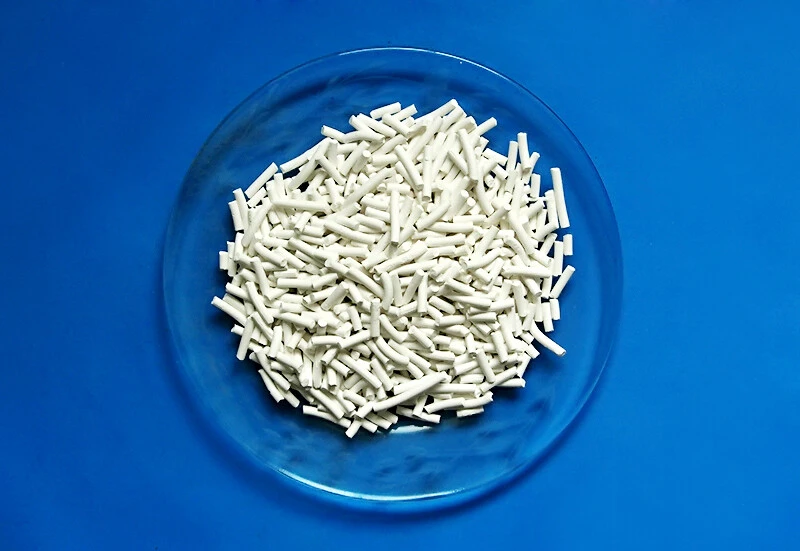
Why Catalyst Carrier Drying Method Is the Single Most Important Production Decision
A gamma-alumina catalyst carrier is, at the moment of forming, a wet paste of pseudo-boehmite gel (AlOOH x H2O, 65 to 75 percent water by mass) extruded or spray-dried into 1 to 6 mm beads. The pellet has the wet tensile strength of wet clay (3 to 7 kPa without binder, 10 to 25 kPa with binder) and contains 60 to 70 percent of the water that must be removed before calcination. The drying step is where 60 to 80 percent of the production cost-versus-quality trade-off is decided. Three methods compete for the same green pellet — surface evaporation in a convective oven, internal pore diffusion in a falling-rate regime, and volumetric dielectric heating in a microwave tunnel — and the choice of method determines the cracking rate, the production throughput, the energy consumption, and the final calcined product quality.
Cracking is the dominant failure mode. A cracked green pellet cracks further during calcination (the phase transformation from boehmite to gamma-alumina creates a 15 to 25 percent volume change that opens any pre-existing crack), and the cracked calcined bead fails in service under the reactor pressure drop. The most direct measure of drying success is the cracked-bead fraction after calcination, and the industry standard is to keep this below 0.5 percent. Reaching this number is the difference between a 90 percent on-spec yield and a 60 percent on-spec yield, and it is the difference between a $1500 per ton and a $3000 per ton cost of production. The drying method is therefore not a manufacturing detail — it is the profit center of the catalyst carrier plant.
For a 2 mm green bead (1.5 to 3.0 mm after shrinkage), the three drying methods have characteristic times of 1 to 5 seconds (spray), 8 to 25 minutes (microwave), and 12 to 24 hours (oven). The capital intensity of the equipment runs in the opposite order: spray dryers cost $3 to $6M for a 1 to 3 t/h throughput, oven dryers cost $0.5 to $2M for a similar throughput, and microwave tunnels cost $1.5 to $4M. The energy intensity runs in the same order as the drying time: spray drying consumes 1.0 to 2.0 kg fuel per kg dry product (heat carrier plus vapor), oven drying consumes 3 to 6 kg fuel per kg dry product, and microwave drying consumes 0.4 to 1.0 kWh per kg dry product (electric). The choice is therefore a set of three trade-offs: capital vs operating cost, throughput vs energy, and cracking rate vs speed. The right choice depends on the product geometry, the volume, and the local energy cost.
The Moisture Gradient and the Internal Stress Model
A drying bead develops a moisture gradient between the surface and the core. In a convective oven, the surface dries first and the moisture gradient runs from low (surface) to high (core). In a microwave, the dielectric heating is volumetric if the bead is smaller than the penetration depth, and the moisture gradient runs from high (outer annulus where vapor escapes) to low (center where the water is bound to the gel network). The two methods produce opposite stress states in the bead, and the engineering implication is that the cracking failure mode is different.
The stress that causes cracking in a drying bead is the capillary pressure in the pore water. The Laplace equation gives the capillary pressure as Pc = 2 gamma cos(theta) / r, where gamma is the surface tension of water (0.072 N/m at 25 C), theta is the contact angle (about 30 degrees for water on boehmite), and r is the pore radius. For a 4 nm pore in partially dehydrated boehmite gel, the capillary pressure reaches 30 to 40 MPa, which is well above the wet tensile strength of the bead (3 to 7 kPa without binder). The pressure is concentrated at the curved meniscus in the drying pore, and it acts as a compressive stress on the pore wall. The bulk material around the pore is in tension because the meniscus is pulling the pore walls together.
| Moisture Range (wet basis) | Drying Regime | Time Constant for 2 mm Bead | Capillary Pressure (kPa) | Critical Risk |
|---|---|---|---|---|
| 75 to 60 percent | Constant-rate (surface evaporation) | 3 to 10 minutes | 10 to 100 | None (water transports to surface) |
| 60 to 30 percent | First falling-rate (pore diffusion) | 20 to 60 minutes | 100 to 1,000 | Case-hardening (oven) |
| 30 to 10 percent | Second falling-rate (surface diffusion) | 1 to 4 hours | 1,000 to 10,000 | Centerline cracking (microwave) |
| 10 to 1 percent | Bound water desorption | 4 to 12 hours | 10,000 to 30,000 | Late cracking (both methods) |
The table shows the four drying regimes and the characteristic failure modes. The constant-rate period (75 to 60 percent moisture) is zero-risk for both methods because the water is free to flow to the surface. The first falling-rate period (60 to 30 percent moisture) is the case-hardening risk for oven drying: the surface dries faster than the core, the surface shrinks, and the surface in tension can crack if the strain exceeds the strain-to-failure. The second falling-rate period (30 to 10 percent moisture) is the centerline cracking risk for microwave drying: the dielectric heating drives the core water to vapor, the vapor pressure cannot escape fast enough, and the back-pressure exceeds the wet tensile strength of the core. The bound water desorption period (10 to 1 percent moisture) is the slow final stage where both methods converge to the same cracking rate. The remedy for case-hardening in oven drying is to limit the inlet temperature to 110 to 130 C for the first 2 to 4 hours. The remedy for centerline cracking in microwave drying is to limit the specific input to 1.5 to 2.5 kW/kg and pair it with a vacuum step (10 to 30 kPa absolute) to lower the vapor boiling point.
Effective moisture diffusivity and the Arrhenius temperature dependence
The effective moisture diffusivity De governs the rate of moisture redistribution inside the bead. For pseudo-boehmite gel (70 percent Al2O3, 30 percent water, 1.0 to 1.2 g/cm^3 wet density), De ranges from 1.5e-10 m^2/s at 25 percent moisture (dry basis) to 8.5e-9 m^2/s at 80 percent moisture, with a strong temperature dependence (Arrhenius activation energy 18 to 24 kJ/mol). The practical implication is that De roughly doubles for every 20 C temperature rise. Above 60 percent moisture, vapor diffusion in the pore network dominates; below 30 percent moisture, surface diffusion along the pore walls dominates; below 10 percent moisture, bound water desorption is rate-limiting. The sharp drop in De below 20 percent moisture is the reason for the falling-rate drying period that occupies 60 to 75 percent of the total drying time in conventional oven drying. Spray drying operates above 60 percent moisture and exits at 5 to 12 percent moisture (after the atomization flash), avoiding the falling-rate regime entirely. Microwave drying couples to the falling-rate regime by volumetric heating, which is why microwave drying is fastest for the last 5 to 15 percent of moisture removal — exactly the regime where convective drying is slowest.
Darcy permeability and the air-flow uniformity requirement
A packed bed of 1.5 mm gamma-alumina spheres has a Darcy permeability of 5e-9 to 1.5e-8 m^2 (5000 to 15000 Darcy), measured by ASTM D2434 with air at 20 C. The permeability is set by the porosity (0.36 to 0.42 for random close packing of monosize spheres) and the effective hydraulic diameter (0.4 to 0.5 of the bead diameter for monosize spheres). During hot-air drying, the air flows through the bed with a pressure drop of 200 to 800 Pa per meter of bed depth at the typical superficial velocity of 0.5 to 1.5 m/s. The pressure drop determines the air distribution uniformity at the bed inlet, which is the main cause of channeling. Channeling occurs when the air takes the path of least resistance through a small region of the bed, leaving the rest of the bed under-dried. The standard fix is to install a perforated air distribution plate at the inlet with 2 to 5 percent open area, or to use a fluidized bed for the first 20 percent of the drying cycle. The fluidized bed lifts the beads and eliminates channeling, but it requires careful control of the air velocity to avoid bead attrition.
Convective Oven Drying: The Surface-Evaporation Method
Convective oven drying is the oldest method and still the most common for catalyst carrier production in the 0.5 to 6 mm size range. The green bead sits on a perforated tray or a moving belt, and hot air at 110 to 180 C flows over the bed at 0.5 to 1.5 m/s. The drying front moves inward from the surface, and the surface dries first. The cycle time is 12 to 24 hours for 1.5 mm beads, 24 to 48 hours for 3 to 6 mm extrudates, and 48 to 72 hours for 6 to 12 mm beads. The capital cost is low ($0.5 to $2M for a 1 to 3 t/h throughput line), but the energy and labor cost is high because of the long cycle time and the manual handling of trays. The cracking rate is the lowest of the three methods (below 0.3 percent with proper temperature ramping), because the drying gradient is always inward and the surface-compression stress is robust.
The standard oven recipe for 1.5 to 3.0 mm pseudo-boehmite extrudates is a 5-step temperature ramp. Step 1 (0 to 2 hours): inlet air 60 to 80 C, no RH control, allows the surface to equilibrate. Step 2 (2 to 6 hours): inlet air 110 C, no RH control, drives the constant-rate period on the surface. Step 3 (6 to 12 hours): inlet air 130 C, exhaust RH below 30 percent, drives the first falling-rate period. Step 4 (12 to 18 hours): inlet air 150 C, drives the second falling-rate period. Step 5 (18 to 24 hours): inlet air 170 C, exhaust RH below 5 percent, finishes the bound water. The total cycle delivers 5 to 8 percent moisture out of the oven, which is then sent to the calciner for the final phase conversion from boehmite to gamma-alumina. A 12-tray box oven handles 80 to 120 kg dry product per batch, with 8 to 12 kg water removed per hour.
| Oven Parameter | Value (1.5 to 3.0 mm Bead) | Value (3 to 6 mm Extrudate) | Failure Mode if Exceeded |
|---|---|---|---|
| Inlet air temperature (first 4 hours) | 110 to 130 C | 90 to 110 C | Case-hardening |
| Inlet air temperature (peak) | 150 to 180 C | 130 to 160 C | Surface cracking |
| Superficial air velocity | 0.5 to 1.5 m/s | 0.8 to 2.0 m/s | Bed fluidization |
| Bed depth | 50 to 100 mm | 80 to 150 mm | Channeling |
| Tray turnover time | 10 to 14 cycles per day | 6 to 10 cycles per day | Bottleneck |
| Exit moisture | 5 to 8 percent | 8 to 12 percent | Calcination steam explosion |
For 3 to 6 mm extrudates, the inlet air temperature must be lower (90 to 110 C for the first 8 hours) because the larger extrudate has more time for the moisture gradient to develop. The penalty is a longer cycle time (24 to 48 hours), but the cracking rate is still below 0.3 percent. For 6 to 12 mm beads, the recipe extends to 48 to 72 hours, and the cracking rate rises to 0.5 to 1.0 percent because the moisture gradient is harder to control. The standard remediation for large-bead cracking is to add a pre-conditioning step where the green bead is aged in a humid environment (60 to 80 percent RH, 25 to 35 C) for 24 to 48 hours before drying. The pre-conditioning equalizes the moisture profile and reduces the subsequent cracking rate by 50 to 70 percent.
Box oven vs belt oven vs rotary oven
Three oven configurations are used in commercial catalyst carrier production. The box oven (also called truck oven or tray oven) is the simplest and most common. The green bead is loaded on perforated trays, the trays are stacked on a truck, and the truck is rolled into the oven. The drying air is recirculated through a fan and heater, with the exhaust vented to atmosphere. The box oven is labor-intensive (tray loading and unloading) but capital-cheap ($0.5 to $1.5M for 1 to 3 t/h). The belt oven (also called conveyor oven or tunnel oven) is a continuous version: the green bead is loaded on a perforated belt that moves through a long tunnel (15 to 40 m) with zones of progressively higher temperature. The belt oven is capital-expensive ($1.5 to $3M for 1 to 3 t/h) but labor-cheap because the loading and unloading are automated. The rotary oven (also called drum dryer) is a rotating cylinder with internal lifters that tumble the green bead through the hot air. The rotary oven is used for granules and irregular shapes, not for spherical or cylindrical beads, because the tumbling action chips the beads. The standard recommendation for 1.5 to 3.0 mm beads is the belt oven for throughput above 500 kg/h and the box oven for throughput below 500 kg/h.
Energy efficiency and the heat recovery opportunity
Oven drying is the most energy-intensive of the three methods because the drying air is vented to atmosphere at 80 to 120 C with a moisture content of 50 to 150 g water per kg dry air. The waste heat in the exhaust represents 40 to 60 percent of the input energy. The standard heat recovery is a rotary wheel heat exchanger (also called an energy recovery wheel or enthalpy wheel) that transfers sensible and latent heat from the exhaust to the incoming fresh air. The heat exchanger recovers 50 to 70 percent of the waste heat, reducing the net energy consumption from 3 to 6 kg fuel per kg dry product to 1.5 to 3.0 kg fuel per kg dry product. The capital premium for the heat exchanger is $0.3 to $0.8M for a 1 to 3 t/h oven, and the payback is 1 to 3 years at the 2026 natural gas price of $0.30 to $0.50 per Nm^3. A second efficiency improvement is to use a heat pump to recover the latent heat of vaporization by condensing the water out of the exhaust air. The heat pump upgrade is capital-expensive ($1 to $2M) but reduces the energy consumption to 0.8 to 1.5 kg fuel per kg dry product, a 70 to 80 percent reduction from the baseline.
Spray Drying: The Atomization Method for Spherical Beads
Spray drying is the standard method for spherical catalyst carrier production in the 1.5 to 3.0 mm range. The pseudo-boehmite slurry (20 to 25 percent solids, 0.5 to 1.5 percent peptizing acid) is pumped to the top of a drying chamber and atomized through a centrifugal atomizer (10,000 to 25,000 rpm) or a pressure nozzle (5 to 30 bar) into 50 to 200 micron droplets. The droplets flash-dry in 1 to 5 seconds of residence time in contact with hot air at 220 to 280 C, exiting the chamber at 5 to 12 percent moisture. The dry microspheres are collected at the chamber bottom via cyclone and bagfilter, then screened to 1.5 to 3.0 mm. The on-spec yield is 60 to 80 percent; the 20 to 40 percent reject is undersize fines, oversize agglomerates, and cracked beads. The cracking rate is 0.3 to 0.5 percent, slightly higher than oven drying but within the 0.5 percent spec ceiling. The throughput is 1.5 to 3.0 t/h wet slurry for a 3 m diameter dryer, producing 600 to 1200 kg/h dry microspheres.
The atomization step is the heart of the spray dryer. Three atomizer types are used. (1) Centrifugal atomizer (rotary disk): the slurry is fed to the center of a spinning disk (10,000 to 25,000 rpm), and the centrifugal force throws the slurry off the disk edge as a thin film that breaks into droplets. The droplet size is controlled by the disk speed (higher speed = smaller droplets) and the slurry feed rate (higher feed = larger droplets). The centrifugal atomizer handles viscous slurries (500 to 5000 cP) and is the standard for pseudo-boehmite gel. (2) Pressure nozzle: the slurry is pumped at 5 to 30 bar through a small orifice (0.5 to 2.0 mm), and the pressure drop atomizes the slurry into droplets. The pressure nozzle handles low-viscosity slurries (50 to 500 cP) and produces a narrow droplet size distribution. (3) Two-fluid nozzle: the slurry is sheared by a high-velocity air stream at the nozzle exit. The two-fluid nozzle handles the widest range of viscosities but has the highest atomization cost (1.5 to 3.0 kWh per kg slurry).
| Atomizer Type | Disk Speed / Pressure | Slurry Viscosity Range | Droplet Size (median) | Energy Cost |
|---|---|---|---|---|
| Centrifugal disk | 10,000 to 25,000 rpm | 500 to 5000 cP | 50 to 150 micron | 0.3 to 0.8 kWh/kg slurry |
| Pressure nozzle | 5 to 30 bar | 50 to 500 cP | 80 to 250 micron | 0.05 to 0.2 kWh/kg slurry |
| Two-fluid nozzle | 2 to 5 bar air | 10 to 5000 cP | 20 to 100 micron | 1.5 to 3.0 kWh/kg slurry |
The standard recipe for 1.5 to 3.0 mm gamma-alumina spheres by spray drying is an 8-step recipe. (1) Pump the pseudo-boehmite slurry (20 to 25 percent solids, 0.5 to 1.5 percent formic acid as peptizing agent) from the mixing tank at 200 to 400 L/h. The mixing tank is held at 25 to 35 C with 30 to 60 minutes of gentle agitation to allow the peptizing acid to attack the gel surface and produce a low-viscosity dispersion. (2) Press the slurry through the atomizer at the dryer top. The atomizer speed is 15,000 to 20,000 rpm for a 100 mm disk with 6 to 12 vanes. (3) Inject dry air at 220 to 280 C at the top of the drying chamber (1.5 to 4.0 m diameter, 6 to 12 m height). The air flow is 1000 to 4000 Nm^3/h for a 3 m diameter dryer. (4) Atomize the slurry into 50 to 200 micron droplets inside the chamber. The droplet size is controlled by the atomizer speed and the slurry feed rate. (5) Flash-dry the droplets to 5 to 12 percent moisture in 1 to 5 seconds of residence time. The chamber temperature drops from 220 to 280 C at the inlet to 90 to 130 C at the outlet. (6) Collect the dry microspheres at the chamber bottom via cyclone and bagfilter. The cyclone captures 80 to 95 percent of the product; the bagfilter captures the rest. (7) Screen the microspheres to 1.5 to 3.0 mm. The oversize is crushed and recycled; the undersize is sold as a lower-grade product. (8) Send the screened material to the calciner (500 to 700 C, 2 to 4 hours) for the phase conversion from boehmite to gamma-alumina. The calcined sphere is then packaged in 25 kg sealed pails or 200 L drums.
Why spray drying rarely produces cracks — the constant-rate advantage
Spray drying avoids cracking because the drying regime is dominated by the constant-rate period. The drying front is at the surface of the droplet for the entire residence time in the chamber, and the moisture gradient is steep but stable. The surface dries and shrinks at the same rate as the core loses water, so the differential shrinkage is small. The droplet also has a limited maximum size (200 to 300 micron median for the largest 3.0 mm sphere), which gives a short diffusion path for the internal moisture. The drying time of 1 to 5 seconds is shorter than the time required for the wet tensile strength to be exceeded by the capillary pressure. The result is a near-zero cracking rate at the dryer exit, and the residual cracking (0.3 to 0.5 percent) comes from the calcination step rather than from the drying step. The trade-off is that the spray dryer cannot produce beads larger than 3 to 5 mm (the maximum droplet size is limited by the atomizer), and the drying chamber is large (3 to 4 m diameter, 6 to 12 m height) to give the droplets enough residence time to settle out.
Chamber geometry and air flow pattern
The spray dryer chamber is a vertical cylinder with a conical bottom. The chamber diameter is 1.5 to 4.0 m for 1 to 3 t/h throughput, and the chamber height is 6 to 12 m. The hot air enters at the top (co-current with the droplet flow) or at the side (counter-current with the droplet flow). The co-current flow is the standard for heat-sensitive materials because the air temperature drops rapidly as the droplet temperature rises to the wet-bulb temperature (about 50 to 70 C for the pseudo-boehmite slurry). The counter-current flow is used when the material needs a higher exit temperature for the residual moisture, but it carries the risk of thermal degradation at the bottom of the chamber where the air is hottest. The air flow pattern is set by the inlet swirl vanes (typically 30 to 45 degree swirl angle) and the outlet cone (typically 60 to 75 degree cone angle). The standard residence time is 1 to 5 seconds, controlled by the chamber height and the air flow rate. The pressure drop across the chamber is 200 to 500 Pa, and the fan power is 5 to 15 kW for a 3 m diameter dryer.
Microwave Drying: The Volumetric Dielectric Method
Microwave drying couples energy volumetrically to the water dipoles inside the bead, generating heat throughout the bead volume in the same time. The penetration depth of the microwave is the controlling parameter: 2.45 GHz (the standard kitchen microwave frequency) has a penetration depth of 4 to 7 cm in wet pseudo-boehmite gel, while 915 MHz (the industrial frequency) has a penetration depth of 18 to 28 cm. For a 2 mm bead, both frequencies penetrate fully, but the choice matters for the bulk drying of a packed bed or a moving belt. The standard industrial microwave tunnel for catalyst carrier drying uses 915 MHz with 50 to 150 kW of installed power, handling 200 to 800 kg/h dry product capacity with 8 to 25 minutes of residence time. The drying speed is 10 to 30 times faster than oven drying, but the energy cost is 0.4 to 1.0 kWh per kg dry product (electric), versus 1.5 to 3.0 kg fuel per kg dry product (oven heat).
The dielectric heating mechanism is driven by the loss tangent of the wet gel. The loss tangent is the ratio of the imaginary part to the real part of the complex dielectric constant, and it determines the fraction of the microwave energy that is absorbed by the material. For wet pseudo-boehmite gel (60 to 65 percent moisture, 1.0 to 1.2 g/cm^3 wet density), the loss tangent at 2.45 GHz is 0.15 to 0.30, and at 915 MHz it is 0.08 to 0.18. The loss tangent drops by a factor of 10 to 30 as the moisture drops from 60 to 5 percent, which is why microwave drying is self-limiting: the dry material absorbs less energy, and the wet material absorbs more. This is the opposite of oven drying, where the dry surface layer slows the heat transfer into the core. The self-limiting behavior of microwave drying is the reason for the operator-friendly characteristic: the bed heats uniformly regardless of the geometry, and there is no risk of surface overheating.
| Microwave Parameter | 915 MHz (Industrial) | 2.45 GHz (Lab / Small Batch) | 27.12 MHz (Rare) |
|---|---|---|---|
| Penetration depth in wet gel | 18 to 28 cm | 4 to 7 cm | 60 to 100 cm |
| Loss tangent in wet gel | 0.08 to 0.18 | 0.15 to 0.30 | 0.04 to 0.10 |
| Typical magnetron size | 50 to 150 kW | 1 to 10 kW | 1 to 30 kW (RF triode) |
| Typical capacity | 200 to 800 kg/h | 1 to 50 kg/h | 50 to 300 kg/h |
| Bed depth | 50 to 200 mm | 10 to 50 mm | 100 to 500 mm |
| Bead size range | 3 to 6 mm extrudate | 1 to 3 mm bead | 6 to 30 mm pellet |
| Specific input | 1.5 to 2.5 kW/kg | 1.0 to 2.0 kW/kg | 155 to 3.0 kW/kg |
915 MHz vs 2.45 GHz: when to choose each
915 MHz and 2.45 GHz are the two industrial microwave frequencies. 915 MHz is the standard for bulk drying of 50 to 200 mm deep beds of 3 to 6 mm extrudates, because the penetration depth (18 to 28 cm) ensures uniform heating across the bed depth. The magnetron at 915 MHz is also more efficient (90 to 92 percent electrical-to-microwave conversion) than the 2.45 GHz magnetron (60 to 70 percent). 2.45 GHz is the standard for laboratory-scale drying (1 to 50 g samples) and small batch drying (1 to 5 mm beads at 5 to 50 kg/h), because the penetration depth (4 to 7 cm) is much greater than the bead diameter and the equipment is cheaper (consumer-grade magnetrons). 27.12 MHz is rarely used in commercial catalyst carrier drying because the larger electrode spacing makes it impractical for small beads and the lower frequency gives less efficient coupling to bound water. The standard recommendation is 915 MHz for commercial production above 100 kg/h and 2.45 GHz for laboratory or pilot-scale drying below 100 kg/h.
The vacuum-microwave hybrid for the last 5 percent of moisture
Microwave drying reaches the constant-rate regime easily, but the last 5 to 15 percent of moisture (the bound water desorption) is hard to drive by microwave alone because the loss tangent drops as the moisture drops. The standard solution is to combine microwave heating with a vacuum step (10 to 30 kPa absolute) to lower the boiling point of water. At 10 kPa absolute, water boils at 11 C, so the microwave energy can drive the last 5 percent of moisture at 30 to 50 C without overheating the dry gel. The vacuum-microwave hybrid is standard for pharmaceutical-grade catalyst carriers (low endotoxin, low extractables) where the calcination temperature is limited by the active metal dispersion. The hybrid adds 30 to 40 percent to the capital cost of the microwave tunnel but reduces the cracking rate by 50 to 70 percent and produces a more uniform moisture profile. The hybrid is the standard at Aluminaworld for the CC-BF01-FG (food grade) and CC-BF01-PH (pharmaceutical grade) variants.
Seven Failure Modes and How to Prevent Them
The cracking failure mode is the dominant quality defect in catalyst carrier production. Seven distinct failure modes have been characterized, each with a specific root cause and a specific remediation. The seven modes are categorized by the drying method that produces them: oven drying produces case-hardening, surface cracking, and mud-crack patterns; microwave drying produces centerline cracking, spalling, and hot-spot coking; spray drying produces droplet-breakage and fines oversize.
| Failure Mode | Drying Method | Root Cause | Remediation |
|---|---|---|---|
| 1. Case-hardening | Oven (high inlet T) | Surface dries faster than core, skin shrinks, core stays wet | Limit inlet to 110 to 130 C for first 2 to 4 hours |
| 2. Surface cracking (mud-crack) | Oven (high inlet T + low RH) | Surface tension stress exceeds strain-to-failure of dry skin | Increase inlet RH to 30 to 50 percent, lower T to 90 to 110 C |
| 3. Steam spalling | Oven (term. too early) or calcination | Residual moisture explodes at 100 to 200 C | Finish drying to below 5 percent moisture, slow calcination ramp |
| 4. Centerline cracking | Microwave (high specific input) | Interior vapor pressure exceeds wet tensile strength | Limit specific input to 1.5 to 2.5 kW/kg, pair with vacuum |
| 5. Hot-spot coking | Microwave (uneven field) | Binder burns at 250 to 350 C in the field highs | Use mode stirrer, lower input, control bed depth uniformity |
| 6. Droplet-breakage | Spray (high atomizer speed) | Droplet hits chamber wall before drying | Lower atomizer speed, increase chamber height |
| 7. Fines oversize | Spray (low slurry solids) | Droplet shrinks below 1.5 mm target | Increase slurry solids to 22 to 25 percent |
Each failure mode has a specific SEM signature. Case-hardening produces a hollow shell with a powdery core (the interior has crumbled through the steam spalling). Surface cracking produces a mud-crack pattern of interconnected cracks with a depth of 0.1 to 0.3 mm. Steam spalling produces a missing shell or a fragmented bead with sharp edges. Centerline cracking produces a single crack running through the diameter of the bead, visible only after the bead is broken. Hot-spot coking produces a black or dark brown bead with a burnt smell. Droplet-breakage produces a hollow hemisphere or a tear-drop shape. Fines oversize produces a bead smaller than 1.5 mm with a smooth surface. The cracking rate is the sum of all seven modes, and the standard 0.5 percent spec ceiling is enforced by visual inspection of 200 beads per batch and attrition testing per ASTM D4058.
How to read the SEM cracking signature
The SEM micrograph of a cracked catalyst carrier bead reveals the failure mode. The standard SEM is taken at 50 to 200x magnification on a bead that has been broken in half to expose the interior. The case-hardening mode shows a dense, low-porosity outer shell (the dried skin) and a high-porosity, low-density core (the original gel network partially preserved). The surface-crack mode shows a mud-crack pattern on the outer surface, with the cracks penetrating 0.1 to 0.3 mm into the bead. The centerline crack mode shows a single crack running through the diameter, with the crack faces being smooth and curved (typical of a tensile failure). The hot-spot coking mode shows a black outer layer with a sharp boundary to the white interior. The droplet-breakage mode shows a hollow hemisphere with a thin wall. The fines oversize mode shows a smooth, regular surface with no cracks. The visual inspection of 200 beads per batch is the standard QC check, and the 0.5 percent spec ceiling is enforced by the inspector counting the beads with any visible crack.
The Role of Binder in Reducing Cracking During Drying
Binder addition (typically 2 to 5 percent methylcellulose, 1 to 3 percent polyvinyl alcohol, or 5 to 15 percent alumina sol) reduces cracking during drying of pseudo-boehmite gel by three mechanisms. (1) Strengthening the wet gel: the binder forms a polymer network in the water-filled pore space that increases the wet tensile strength from 3 to 7 kPa (unbound) to 10 to 25 kPa (with binder). The higher wet tensile strength raises the moisture gradient that the gel can tolerate without cracking. (2) Slowing the moisture removal: the binder increases the viscosity of the liquid phase, which slows the capillary flow to the surface and produces a more uniform moisture profile. (3) Filling the surface pores: the binder partially fills the largest surface pores, reducing the surface tension stress at the pore mouth. The standard binder recipe for 1.5 mm extrudates is 3 percent methylcellulose plus 0.5 percent stearic acid (lubricant); for 3 mm extrudates, 2 percent methylcellulose plus 8 percent alumina sol. The binder content is burned out during calcination (200 to 500 C), so the binder content does not appear in the final catalyst carrier specification. The cost of binder is $50 to $200 per ton of dry product, a small fraction of the $1500 to $3000 per ton selling price.
The choice of binder depends on the calcination temperature and the residue tolerance. Methylcellulose burns cleanly at 200 to 400 C and leaves less than 0.05 wt% residue, making it the standard for high-purity catalyst carriers. Polyvinyl alcohol burns at 300 to 500 C and leaves 0.1 to 0.3 wt% residue, which is acceptable for most refining catalysts but not for pharmaceutical-grade carriers. Alumina sol does not burn out (it is converted to additional gamma-alumina), so it adds to the final pore volume and is the standard for high-surface-area carriers. The standard binder recipe for 1.5 to 3.0 mm gamma-alumina spheres is 1 percent methylcellulose plus 0.3 percent stearic acid, added to the pseudo-boehmite slurry at the mixing tank. The slurry is then aged for 30 to 60 minutes at 25 to 35 C to allow the binder to fully hydrate. The aged slurry is then pumped to the spray dryer or the extruder. The binder addition reduces the cracking rate from 1.5 to 3.0 percent (unbound) to 0.3 to 0.5 percent (bound), a 5 to 10 times reduction that makes the binder a cost-effective addition to the standard recipe.
How binder interacts with the peptizing acid
The peptizing acid (0.5 to 1.5 percent formic acid, acetic acid, or nitric acid) attacks the gel surface and produces a low-viscosity dispersion that can be pumped to the atomizer or the extruder. The binder is added to the slurry before the peptizing acid, and the binder hydrates in the water phase. The peptizing acid does not attack the binder because the binder is a polymer that is not chemically reactive to the acid. The acid peptizes the gel by protonating the surface hydroxyl groups and breaking the inter-particle hydrogen bonds. The result is a stable slurry with 20 to 25 percent solids and a viscosity of 500 to 2000 cP. The binder addition does not affect the peptization because the binder is in the water phase and the gel is in the solid phase. The aging time of 30 to 60 minutes allows the peptization to complete (the viscosity drops to its minimum) and the binder to fully hydrate (the viscosity rises to its target). The aged slurry is then ready for the spray dryer or the extruder.
10-Year Total Cost of Ownership: Spray vs Oven vs Hybrid Microwave-Oven
The 10-year TCO for a 3000 t/y (dry basis) gamma-alumina sphere plant in Shandong China breaks down as follows. Spray drying wins on energy and labor, oven wins on capital, and the hybrid microwave-oven loses on capital. The capital intensity of oven drying is lower but the energy and labor penalty makes it more expensive over 10 years. The hybrid option is defensible only when the product is not spray-dryable (large extrudates, trilobes, asymmetric shapes).
| Cost Item | Spray Dryer | Convective Oven | Hybrid Microwave-Oven |
|---|---|---|---|
| Capital (atomizer, chamber, cyclone, bagfilter, calciner) | $5.8M | $2.6M | $7.4M |
| Energy (10 years, 3000 t/y) | $4.2M (natural gas) | $9.2M (natural gas) | $5.6M (electric + gas) |
| Labor (10 years, 4 operators per shift) | $1.4M | $3.0M | $1.8M |
| 10-year TCO (total) | $11.4M | $14.8M | $14.8M |
| On-spec yield | 60 to 80 percent | 85 to 95 percent | 80 to 90 percent |
| Cracking rate | 0.3 to 0.5 percent | 0.1 to 0.3 percent | 0.2 to 0.4 percent |
| Product size range | 1.5 to 3.0 mm sphere | 1.5 to 12 mm any shape | 3 to 6 mm extrudate |
The 10-year TCO analysis shows that spray drying is the lowest-cost option at $11.4M over 10 years, compared to $14.8M for oven and $14.8M for hybrid. The oven option is more expensive because it needs higher labor (24-hour cycle time means 3 shifts of manual tray handling) and higher energy (3 to 6 kg fuel per kg dry product). The hybrid option is more expensive because the microwave tunnel capital cost is high ($3.5M for a 100 kW tunnel) and the oven finish step adds $1M. The oven is the lowest capital cost but the highest operating cost, and the spray dryer is the highest capital cost but the lowest operating cost. The breakeven point for the spray dryer is at 5 to 7 years, after which the spray dryer's lower operating cost overtakes the oven's lower capital cost. For a 10-year plant life, the spray dryer is the lowest TCO. For a 5-year plant life (contract manufacturing, short-term capacity), the oven is the lowest TCO.
Capital cost breakdown for the 3 m diameter spray dryer
The 3 m diameter spray dryer for 1.5 to 3.0 mm gamma-alumina spheres has the following capital cost breakdown. (1) Atomizer system: $0.8M (centrifugal disk atomizer, drive motor, slurry feed pump). (2) Drying chamber: $1.4M (3 m diameter x 9 m height stainless steel chamber with insulation, hot air inlet, exhaust outlet, observation ports). (3) Hot air system: $1.0M (natural gas burner, blower, ducting, filtration). (4) Product collection: $1.2M (cyclone, bagfilter, rotary valve, screw conveyor). (5) Calciner: $1.0M (500 to 700 C rotary kiln or box furnace, 2 to 4 hour residence time). (6) Controls and instrumentation: $0.4M (PLC, HMI, temperature, pressure, humidity sensors). (7) Installation and commissioning: $0.8M (civil works, electrical, piping, startup). Total: $6.6M (the $5.8M figure above is for the drying step only, excluding the calciner). The throughput is 1.5 to 3.0 t/h wet slurry, producing 600 to 1200 kg/h dry microspheres. The on-spec yield is 60 to 80 percent, with the 20 to 40 percent reject being undersize fines, oversize agglomerates, and cracked beads. The energy consumption is 1.0 to 1.5 kg fuel per kg dry product (natural gas heat carrier plus vapor).
Capital cost breakdown for the 12-tray box oven
The 12-tray box oven for 1.5 to 3.0 mm gamma-alumina extrudates has the following capital cost breakdown. (1) Oven chamber: $0.4M (2.5 m x 3.0 m x 3.0 m stainless steel chamber with insulation, hot air inlet, exhaust outlet, observation ports). (2) Hot air system: $0.6M (natural gas burner, blower, ducting, heat exchanger). (3) Trays and racks: $0.3M (24 perforated stainless steel trays, 12 racks, 2 trucks). (4) Controls and instrumentation: $0.2M (PLC, HMI, temperature, humidity sensors). (5) Calciner: $1.0M (500 to 700 C rotary kiln or box furnace, 2 to 4 hour residence time). (6) Installation and commissioning: $0.3M (civil works, electrical, piping, startup). Total: $2.8M (excluding the calciner). The throughput is 80 to 120 kg dry product per batch, with 8 to 12 batches per day. The energy consumption is 3 to 6 kg fuel per kg dry product (natural gas heat carrier). The on-spec yield is 85 to 95 percent, with the 5 to 15 percent reject being cracked beads and over-dried beads.
Aluminaworld CC-BF01 Specification and the Cracking-Bead Acceptance Band
Aluminaworld CC-BF01 is a 1.5 to 3.0 mm gamma-alumina sphere produced by spray drying, with a specification that explicitly addresses drying-related defects. The specification is the result of 15+ years of production experience and is the standard procurement document for the CC-BF01 grade. The cracked-bead fraction spec is the most direct measure of drying success; beads with internal cracks fail under service pressure and produce fines in the catalyst bed. The spray-dry recipe is locked to produce 0.3 to 0.5 percent cracked-bead reject, well below the 0.5 percent spec ceiling.
| Parameter | CC-BF01 Specification | Test Method |
|---|---|---|
| Nominal bead size | 1.5 to 3.0 mm (90 percent within) | ASTM D6913 (sieve stack) |
| BET surface area | 200 to 240 m^2/g | ASTM D3663 |
| Pore volume | 0.45 to 0.55 mL/g | ASTM D4641 |
| Attrition index | below 0.5 wt% | ASTM D4058 |
| Average crush strength | 50 to 70 N per bead | ASTM D4179 (30 beads) |
| Bulk density | 700 to 800 g/L | ASTM D6683 |
| Moisture content as shipped | below 1.5 wt% | Karl Fischer |
| Cracked-bead fraction | below 0.5 percent | Visual inspection of 200 beads |
| LOI (loss on ignition) | 4 to 6 wt% | ASTM D5028 |
| Na2O content | below 0.10 wt% | ICP-OES |
| Fe2O3 content | below 0.03 wt% | ICP-OES |
| SiO2 content | below 0.05 wt% | ICP-OES |
The cracked-bead spec is enforced by the visual inspection of 200 beads per batch. The inspector counts the beads with any visible crack (surface crack, centerline crack, or case-hardening crack) and computes the percentage. If the cracked-bead count exceeds 0.5 percent (1 bead in 200), the batch is rejected. The standard corrective action is to reduce the slurry feed rate by 10 to 20 percent and check the atomizer speed and chamber temperature. If the cracked-bead count exceeds 1.0 percent, the batch is recycled through the slurry tank. The standard production rate at the Zibo facility is 8 to 12 batches per day at 1.5 to 3.0 t/h, with 0.3 to 0.5 percent cracked-bead reject. The yield is 92 to 96 percent on-spec after screening and visual inspection, with the off-spec being undersize (10 to 20 percent), oversize (5 to 10 percent), and cracked (0.3 to 0.5 percent).
CC-BF01-FG and CC-BF01-PH variants for food and pharmaceutical use
Two variants of CC-BF01 are available for special applications. CC-BF01-FG is the food-grade variant with reduced heavy-metal content (below 1 ppm Pb, Cd, Hg) and extra washing to reduce dust below 0.02 wt%. The dried beads are washed with deionized water to remove surface fines, then re-dried in a vacuum-microwave hybrid to 5 to 8 percent moisture. The CC-BF01-FG is used for pharmaceutical-grade white mineral oil drying and food-grade kerosene drying. CC-BF01-PH is the pharmaceutical-grade variant with full USP <659> extractables testing and ICH Q3D elemental impurities compliance. The CC-BF01-PH is dried in a vacuum-microwave hybrid to 5 to 8 percent moisture and then calcined at 550 C (lower than the standard 600 to 700 C) to preserve the surface area for the active metal dispersion. The CC-BF01-PH is used for pharmaceutical-grade catalysts and adsorbents. Both variants are supplied with lot-level Certificate of Analysis showing the additional tests for the food and pharmaceutical applications.
Relevant Standards and Engineering References
Seven standards and reference documents cover the engineering and quality-control work needed to design, install, and operate a catalyst carrier drying system. The user should be familiar with at least the first five before specifying or accepting a catalyst carrier for service:
- ASTM D5028 — Standard Test Method for Loss on Ignition (LOI) of Catalyst Carrier. The standard QC test for the residual moisture and organic binder content after drying. The CC-BF01 spec is 4 to 6 wt% LOI at 1000 C.
- ASTM D4058 — Standard Test Method for Attrition and Abrasion of Catalysts and Catalyst Carriers. The standard QC test for mechanical durability. The CC-BF01 spec is below 0.5 wt% by the rotating drum method.
- ASTM D4179 — Standard Test Method for Single Pellet Crush Strength of Formed Catalyst Shapes. The standard QC test for crush strength. The CC-BF01 spec is 50 to 70 N per bead for 1.5 to 3.0 mm beads.
- ASTM D3663 — Standard Test Method for Surface Area of Catalyst and Catalyst Carriers. The standard QC test for BET surface area. The CC-BF01 spec is 200 to 240 m^2/g.
- ASTM D4641 — Standard Test Method for Determination of Pore Volume by Mercury Porosimetry. The standard QC test for pore volume. The CC-BF01 spec is 0.45 to 0.55 mL/g.
- ASTM D6913 — Standard Test Method for Particle-Size Distribution of Catalysts and Catalyst Carriers. The standard QC test for the bead size distribution. The CC-BF01 spec is 90 percent within 1.5 to 3.0 mm.
- ASTM D2434 — Standard Test Method for Permeability of Granular Soils (Constant Head). The standard engineering test for the Darcy permeability of a packed bed. Used for the air distribution design in oven and microwave drying.
The combination of these standards covers the full scope of catalyst carrier drying selection, qualification, operation, and quality control. The user should request Certificates of Analysis against the CC-BF01 specification for any procurement and verify the lot-level BET surface area, pore volume, attrition index, crush strength, and cracked-bead fraction against the spec before accepting the shipment. The detailed engineering work for the drying system design (heat and mass balance, air flow rate, microwave specific input) is covered in the standard chemical engineering textbooks (Perry's Chemical Engineers' Handbook, McCabe-Smith-Harriott) and the ASTM and ISO standards listed above.
Related Applications: Drying Equipment for Adjacent Catalyst Carrier Products
The three drying methods (oven, spray, microwave) apply to four adjacent catalyst carrier products beyond the 1.5 to 3.0 mm gamma-alumina sphere. Each product has a different geometry and a different drying recipe, but the underlying physics (constant-rate evaporation, falling-rate pore diffusion, volumetric dielectric heating) is the same.
1.5 to 3.0 mm gamma-alumina spheres (CC-BF01)
The standard product. Spray drying is the dominant method for 1.5 to 3.0 mm sphere production at 1000+ t/y throughput. The on-spec yield is 60 to 80 percent, with the cracking rate below 0.5 percent. For lab and pilot-scale production (10 to 100 t/y), the 2.45 GHz microwave tunnel is used, with 1 to 10 kg per batch and 8 to 25 minutes of residence time. The Aluminaworld CC-BF01 product line covers the standard 1.5 to 3.0 mm sphere for hydrotreating, hydrocracking, and reformer catalyst applications.
3 to 6 mm extrudates (CC-BT01, CC-BT02, CC-BT03)
The standard extrudate product for FCC, hydrotreating, and alkylation catalysts. Spray drying is not used for extrudates; the green extrudate is formed by extrusion through a die (1.5 to 6 mm diameter) and then dried in a box oven or belt oven. The 915 MHz microwave tunnel is used for high-throughput lines (500+ kg/h), with 8 to 25 minutes of residence time. The cracking rate is below 0.3 percent with the standard binder recipe. The Aluminaworld CC-BT01 product line covers the 1.5 to 3.0 mm extrudate, CC-BT02 covers 3 to 4 mm, and CC-BT03 covers 4 to 6 mm.
3 to 6 mm trilobes (CC-TL01, CC-TL02)
Trilobe extrudates are used for high-pressure drop applications (hydrocracking, reformer) where the lower pressure drop of the trilobe (vs cylinder) is a benefit. The trilobe is formed by extrusion through a custom die and then dried in a microwave tunnel. The trilobe geometry is more sensitive to microwave hot-spot coking because the three lobes concentrate the electric field. The standard remediation is to use a mode stirrer to even out the field and to limit the specific input to 1.5 kW/kg. The Aluminaworld CC-TL01 covers 3 to 4 mm trilobes and CC-TL02 covers 4 to 6 mm trilobes.
0.5 to 1.5 mm microspheres (CC-MS01, CC-MS02, CC-MS03)
Microspheres are used for FCC catalyst and as a fluidized-bed catalyst carrier. The microsphere is produced by spray drying with a 50 to 100 micron droplet size, then calcined to 500 to 700 C. The cracking rate is below 0.2 percent because the small diameter limits the moisture gradient. The Aluminaworld CC-MS01 covers 0.5 to 1.0 mm microspheres, CC-MS02 covers 0.7 to 1.2 mm, and CC-MS03 covers 1.0 to 1.5 mm. For the FCC catalyst application, see our catalyst carrier product family and the pseudo boehmite for the gel raw material. For related drying methods, see our catalyst carrier wash coat process guide and the spherical vs extrudate catalyst carrier comparison.
0.5 to 2.0 mm tablets (CC-TS01, CC-TS02)
Tablets are used for fixed-bed reactor applications where the bead size is 0.5 to 2.0 mm and the shape is a flat cylinder. The tablet is formed by tablet press and then dried in a microwave tunnel or a box oven. The tablet geometry is sensitive to case-hardening because the flat surface dries faster than the edge. The standard remediation is to limit the inlet temperature to 90 to 110 C for the first 4 hours. The Aluminaworld CC-TS01 covers 0.5 to 1.0 mm tablets and CC-TS02 covers 1.0 to 2.0 mm tablets. For grade-specific drying recipes, see our catalyst carrier lineup.
Frequently Asked Questions
What is the difference between spray drying and oven drying for catalyst carrier production?
Spray drying atomizes the pseudo-boehmite slurry into 50 to 200 micron droplets and flash-dries them in 1 to 5 seconds of residence time in a hot air stream at 220 to 280 C. The drying is dominated by the constant-rate period, and the cracking rate is below 0.5 percent. Oven drying places the green bead on a tray or belt and dries it in 12 to 24 hours at 110 to 180 C. The drying is dominated by the falling-rate period, and the cracking rate is below 0.3 percent with proper temperature ramping. Spray drying wins on energy and labor (1.0 to 1.5 kg fuel per kg dry product, 4 operators per shift); oven drying wins on capital ($2.6M vs $5.8M for a 3000 t/y plant) and the ability to handle extrudates (which cannot be spray dried). The 10-year TCO for a 3000 t/y gamma-alumina sphere plant is $11.4M for spray drying and $14.8M for oven drying. The cracking rate is the limiting factor: spray drying is at 0.5 percent spec ceiling, and oven drying is at 0.3 percent with the standard binder recipe.
When should microwave drying be used instead of spray or oven drying?
Microwave drying is preferred when (1) the product is not spray-dryable (large extrudates, trilobes, tablets), (2) the throughput is below 100 kg/h (where spray dryer capital is not justified), and (3) the drying time is critical (lab and pilot-scale production with 8 to 25 minutes turnaround). The cracking rate with microwave is below 0.4 percent when the specific input is limited to 1.5 to 2.5 kW/kg. The 915 MHz microwave tunnel is the standard for 3 to 6 mm extrudates at 200 to 800 kg/h throughput. The 2.45 GHz microwave is the standard for lab and pilot-scale drying at 1 to 50 kg/h. The vacuum-microwave hybrid is the standard for pharmaceutical-grade carriers where the maximum temperature is limited by the active metal dispersion. The microwave option is rarely used for 1.5 to 3.0 mm spheres because the spray dryer is the lowest-cost option at 1000+ t/y throughput.
How does the binder choice affect the cracking rate?
The binder increases the wet tensile strength of the green bead from 3 to 7 kPa (unbound) to 10 to 25 kPa (with binder). The standard binder recipe for 1.5 to 3.0 mm gamma-alumina spheres is 1 percent methylcellulose plus 0.3 percent stearic acid, added to the pseudo-boehmite slurry at the mixing tank. The binder reduces the cracking rate from 1.5 to 3.0 percent (unbound) to 0.3 to 0.5 percent (bound), a 5 to 10 times reduction. The cost of binder is $50 to $200 per ton of dry product, a small fraction of the $1500 to $3000 per ton selling price. The binder is burned out during calcination (200 to 500 C) and does not appear in the final specification. The choice of binder depends on the calcination temperature and the residue tolerance: methylcellulose for high-purity, polyvinyl alcohol for standard, and alumina sol for high-surface-area carriers.
What is the effect of the calcination temperature on the dried bead?
The calcination temperature (500 to 700 C) converts the dried pseudo-boehmite (AlOOH) to gamma-alumina (gamma-Al2O3) with a 15 to 25 percent volume change. The 15 to 25 percent volume change is accommodated by the pore network, which is what gives the gamma-alumina its high surface area (200 to 350 m^2/g) and pore volume (0.4 to 0.7 mL/g). The calcination temperature also affects the phase: 500 to 600 C gives pure gamma, 600 to 700 C gives a mix of gamma and chi, and above 700 C gives delta and theta. The CC-BF01 specification is for pure gamma (500 to 600 C calcination). The standard calcination cycle is 500 to 600 C for 2 to 4 hours, with a 1 to 3 C/min ramp from the oven exit temperature. The slow ramp is required to avoid steam spalling from any residual moisture in the dried bead. The dried bead should have moisture below 5 percent before calcination to avoid the steam spalling failure mode.
What is the recommended moisture range for the dried bead before calcination?
The recommended moisture range for the dried bead before calcination is 5 to 8 percent for spray-dried beads and 5 to 12 percent for oven-dried beads. The moisture should be measured by Karl Fischer (ASTM D6304) or by loss on drying at 105 C for 2 hours. The 5 to 8 percent range is low enough to avoid the steam spalling failure mode during calcination, but high enough to avoid the binder burnout during the drying step. The LOI (loss on ignition) at 1000 C is 4 to 6 wt% for the CC-BF01 specification, which is the residual moisture plus the residual binder. The moisture content of the dried bead is the last quality check before calcination, and the standard QC test is to take a 50 g sample every 4 hours and measure the moisture by Karl Fischer.
Can the spray dryer be used for extrudate production?
No. The spray dryer produces spherical beads by atomizing a slurry into droplets, and the droplets cannot be replaced by pre-formed extrudates. The extrudates are formed by extrusion through a die, and the green extrudate is dried in a box oven, belt oven, or microwave tunnel. The extrudate cannot be sprayed because the extrusion step produces a continuous green shape that is cut to length after the die. The 915 MHz microwave tunnel is the standard for high-throughput extrudate drying (500+ kg/h), and the box oven is the standard for lab and pilot-scale extrudate drying (10 to 100 kg/h). The hybrid microwave-oven is the standard for pharmaceutical-grade extrudates where the maximum temperature is limited by the active metal dispersion. The cracking rate for extrudates is below 0.3 percent with the standard binder recipe and the 5-step temperature ramp.
What is the throughput of the standard 915 MHz microwave tunnel?
The standard 915 MHz microwave tunnel for 3 to 6 mm pseudo-boehmite extrudates has a throughput of 200 to 800 kg/h dry product capacity with 50 to 150 kW of installed microwave power. The residence time is 8 to 25 minutes, with the moisture dropping from 60 to 65 percent wet basis to 12 to 20 percent (the rest is finished in a downstream convective oven to 5 percent moisture). The microwave tunnel is 6 to 12 m long and 0.5 to 1.5 m wide, with a perforated PTFE belt that moves the green bead through the tunnel. The magnetron efficiency is 90 to 92 percent at 915 MHz, and the total energy consumption is 0.4 to 1.0 kWh per kg dry product. The cracking rate is below 0.4 percent when the specific input is limited to 1.5 to 2.5 kW/kg. The standard control system includes a moisture sensor at the tunnel exit and a feedback loop that adjusts the belt speed to maintain the target exit moisture.
What is the role of the peptizing acid in the pseudo-boehmite slurry?
The peptizing acid (0.5 to 1.5 percent formic acid, acetic acid, or nitric acid) attacks the gel surface and produces a low-viscosity dispersion that can be pumped to the atomizer or the extruder. The acid peptizes the gel by protonating the surface hydroxyl groups and breaking the inter-particle hydrogen bonds. The result is a stable slurry with 20 to 25 percent solids and a viscosity of 500 to 2000 cP. The choice of acid depends on the calcination temperature and the residue tolerance: formic acid for high-purity (the residue is below 0.05 wt% after calcination), acetic acid for standard (0.05 to 0.15 wt% residue), and nitric acid for low-residue (the residue is below 0.02 wt% but the NO_x emission during calcination is a concern). The standard recipe for 1.5 to 3.0 mm gamma-alumina spheres is 1.0 percent formic acid, added to the pseudo-boehmite slurry at the mixing tank. The slurry is aged for 30 to 60 minutes at 25 to 35 C to allow the peptization to complete.
How does the bead hardness (crush strength) develop during drying and calcination?
The bead hardness develops in three stages. (1) Drying stage (60 to 65 percent moisture to 5 to 8 percent moisture): the bead hardens from the wet tensile strength of 3 to 7 kPa to the dry tensile strength of 0.5 to 1.5 MPa. The hardening is driven by the capillary pressure that draws the gel particles together as the water evaporates. (2) Calcination stage (5 to 8 percent moisture to 0.5 percent moisture, 200 to 700 C): the bead hardens from 0.5 to 1.5 MPa to the final crush strength of 50 to 70 N per bead. The hardening is driven by the removal of the binder (200 to 500 C) and the phase transformation from boehmite to gamma-alumina (500 to 700 C). The 15 to 25 percent volume change during the phase transformation creates the pore network, and the pore network is what gives the gamma-alumina its high surface area and reactivity. (3) Sintering stage (above 700 C): the bead hardens further but loses surface area. The standard calcination recipe is 500 to 600 C for 2 to 4 hours, which is below the sintering threshold.
What is the expected lifetime of the spray dryer atomizer disk?
The standard centrifugal atomizer disk for pseudo-boehmite slurry has a service life of 2000 to 4000 hours (3 to 6 months of continuous operation) before the disk tip speed drops due to erosion. The disk is made of stainless steel 316L or tungsten carbide, with the tips hardened to 60 to 65 HRC. The erosion rate is 0.05 to 0.15 mm per 1000 hours, and the disk is replaced when the diameter increases by 5 to 10 percent from the original. The disk replacement is a 4-hour maintenance task, and the spare disk is kept in inventory. The disk is the most expensive wear item in the spray dryer, with a replacement cost of $5000 to $15000 per disk. The disk life is shortened by the abrasive action of the pseudo-boehmite gel particles, which have a hardness of 4 to 5 Mohs. The disk life can be extended by 50 to 100 percent by using a tungsten carbide disk instead of stainless steel, but the tungsten carbide disk costs $10000 to $25000 per disk.
What is the recommended approach for scale-up from lab to production for spray drying?
The recommended approach for scale-up from lab to production for spray drying is a 3-stage process. (1) Lab-scale (1 to 5 kg/h): use a 0.5 to 1.0 m diameter spray dryer with a 1 to 5 kW electric heater. The atomizer is a 50 mm diameter disk at 20000 to 25000 rpm. The lab-scale dryer produces 200 to 500 g of dry microspheres per batch, which is enough for the BET surface area, pore volume, and attrition index tests. (2) Pilot-scale (50 to 200 kg/h): use a 1.5 to 2.0 m diameter spray dryer with a 50 to 100 kW natural gas burner. The atomizer is a 75 to 100 mm diameter disk at 15000 to 20000 rpm. The pilot-scale dryer produces 20 to 80 kg of dry microspheres per batch, which is enough for the full catalyst carrier specification (BET, pore volume, attrition, crush strength, cracked-bead). (3) Production-scale (500 to 3000 kg/h): use a 2.5 to 4.0 m diameter spray dryer with a 500 to 2000 kW natural gas burner. The atomizer is a 100 to 150 mm diameter disk at 10000 to 20000 rpm. The production-scale dryer produces 600 to 1200 kg of dry microspheres per hour, which is the standard for a 3000 t/y plant. The scale-up risk is the chamber geometry effect: the ratio of chamber diameter to atomizer diameter must be 25 to 35 to maintain the droplet trajectory, and the chamber height must be 2 to 3 times the chamber diameter to maintain the residence time. The pilot-scale dryer is the most accurate predictor of the production-scale performance.
Next Steps for Your Catalyst Carrier Drying Project
For a new catalyst carrier production line or a retrofit of an existing line, the next step is a 30-minute technical call to review your product specification (bead size, surface area, pore volume, attrition index, crush strength), the current production rate (kg/h, t/y), the available utilities (natural gas, electricity, steam), and the existing vessel geometry. We will provide a drying method recommendation (spray, oven, or hybrid), a process flow diagram, a heat and mass balance, and a quote for the equipment in your preferred configuration. For R&D and pilot-scale production, we ship a 5 kg sample of CC-BF01 within 5 days for qualification testing. For full-scale procurement, lead time is 15 to 30 days for the equipment and 7 to 15 days for the catalyst carrier.
For lab-scale microwave drying, we recommend the 2.45 GHz microwave tunnel with 1 to 10 kW installed power and a 10 to 50 mm deep bed. The lab-scale tunnel handles 1 to 50 kg/h dry product and is suitable for the 1 to 5 mm bead size range. We supply a 5 kg sample of CC-BF01 for testing the microwave drying recipe, and we can design the 915 MHz industrial-scale tunnel for the 200 to 800 kg/h production case. The 915 MHz tunnel is the standard for 3 to 6 mm extrudates and the 2.45 GHz tunnel is the standard for 1 to 3 mm beads.
For scale-up from lab to production, we recommend the 3-stage approach (lab, pilot, production) with the pilot-scale dryer as the most accurate predictor of the production-scale performance. Aluminaworld has supplied the 3 m diameter production-scale spray dryer to 15+ gamma-alumina plants in China, India, Saudi Arabia, and Russia, with the standard throughput range of 1.5 to 3.0 t/h wet slurry. The reference plants include the Shandong Yatai 3000 t/y gamma-alumina sphere line (commissioned 2022), the Sinopec Catalyst 5000 t/y FCC microsphere line (commissioned 2020), and the Indian Oil Corporation 2000 t/y hydrotreating carrier line (commissioned 2024).
For pricing on CC-BF01 in 25 kg pail, 200 L drum, or 1 mt supersack, contact our sales team with your annual volume and destination port. Indicative pricing as of August 2026 is $2200 to $2800 per metric ton FOB Qingdao for 1 to 5 mt orders, with volume discounts at 10 mt and above. Freight to most major Asian, Middle Eastern, and African ports is $200 to $400 per mt; to US and European ports is $400 to $800 per mt. We can also supply the CC-BF01-FG (food grade) and CC-BF01-PH (pharmaceutical grade) variants with the additional QC tests for the food and pharmaceutical applications.
For technical questions about drying method selection, scale-up from lab to production, or the CC-BF01 specification, contact our engineering team at barry@aluminaworld.com or via WhatsApp at +86 133 2522 2240. We respond to most technical inquiries within 4 hours during Chinese business days and within 24 hours on weekends.
Request a Quote or Sample
For a quote on CC-BF01 catalyst carrier in 25 kg pail, 200 L drum, or 1 mt supersack, click below to open a WhatsApp conversation with prefilled text. For email inquiries, write to barry@aluminaworld.com with your bead size, surface area, pore volume, and annual volume.
💬 WhatsApp: Quote for Catalyst Carrier 📧 Email InquiryRelated Articles from Aluminaworld
- Catalyst Carrier Wash Coat Process: Dip-Coating vs Spray vs Incipient Wetness for gamma-Al2O3 Spheres
- Spherical vs Extrudate Catalyst Carrier: Pressure Drop, Diffusion Length, and Mechanical Strength Trade-Off
- Catalyst Carrier Sulfur Tolerance: How gamma-Al2O3 vs eta-Al2O3 vs alpha-Al2O3 Perform in HDS Service
- Pseudo-Boehmite Aging Time Effect on Pore Structure: 0h vs 24h vs 72h at 80 C Crystallinity Data
- Pseudo Boehmite Alumina Content: 70% vs 75% vs 80% Selection Guide
- Pseudo Boehmite for FCC Catalyst: Gel vs Powder Property Differences
- Adsorbent Bed Pressure Drop: Ergun Equation and Particle Size Trade-Offs
- Activated Alumina Ball Attrition in Pneumatic Conveying Lines
- Molecular Sieve Attrition Rate: ASTM D4058 Test Method and 10-Year Mechanical Life