A spent adsorbent bed is a liability in one party’s accounts and an asset in another’s, and that asymmetry is the basis of every buy-back program. The plant-side procurement engineer is offered money for waste by a supplier who wants the material back, and the better written the offer, the more likely it is to be worth less than it appears. This guide sets out the four commercial models manufacturers use, the value-capture mechanism behind each, the seven terms that decide the outcome, a defensible way to value 20 MT of spent 13X against the real alternative cost of new media and disposal, and the clauses to write into the supply agreement. Figures are industry-typical ranges offered as a negotiating baseline.
Why a manufacturer wants your spent adsorbent back
Spent molecular sieve and activated alumina are not inert waste. A 20 MT container of spent 13X from a PSA air-drying unit holds the same aluminosilicate framework, binder and crystal structure as new material, minus the adsorbed load. Whoever re-activates it recovers a product competing with virgin zeolite at a fraction of the manufacturing cost. Your disposal cost becomes their margin, and that is the value-capture mechanism at the centre of every program on the market.
The regeneration economics are real rather than a pretext. Virgin zeolite requires a kaolin or synthetic aluminosilicate feed, binder forming and an activation furnace at 500-650 deg C consuming roughly 1.8-2.4 GJ per MT of finished sieve. Re-activating spent media needs a hot purge, typically 180-300 deg C, on a dry product-gas sweep; the crystal framework and exchange capacity survive, and most of the working capacity returns. That energy and raw-material delta sustains a real secondary market, which is why these offers deserve reading.
Captive-grade resale is the second mechanism. Re-activated material rarely comes back to you as 13X. Broken beads, dust and binder-degraded material are blended into general-purpose 3A and 4A drying grades or into alumina formulations with lower strength and surface-area requirements, and the manufacturer’s activated alumina and alumina powder lines absorb the balance. Where re-activation is uneconomic the material still has an outlet in blended adsorbents or cementitious filler, so almost no spent zeolite is worthless to a producer with a furnace.
Competitive intelligence is the third mechanism and the one least likely to appear in the proposal. A buy-back reveals which supplier won your last campaign, what grade and mesh you run, your duty (PSA, TSA, hydrogen purification or CO2 polishing), how many years the bed lasted and its condition at change-out. A supplier who knows your residual capacity can price it precisely, so expect the offer to be shaped by information you handed over for free, and be suspicious of a valuation that knows more than your own records do.
Finally, your buy-back may be worth more than its material value if it carries a documented recycled-content premium. ISO 14021 governs self-declared recycled-content claims and mass-balance models, so a manufacturer willing to put a verified percentage on its certificate is buying a marketing asset as well as feedstock. Ask whether a premium applies and whether it is paid to you or retained as supplier margin.
The four commercial models manufacturers use
Four structures cover almost all programs in the market. They differ in who takes title, who owns the re-activated material, and whether the return value reaches you as cash, a discount on new media, or service capacity. Models 1 and 3 are the common shapes; Model 4 is where the economics genuinely improve for both sides and where the negotiating difficulty concentrates.
Model 1 — outright resale of the spent material. You sell the spent media to the manufacturer as a material at an agreed rate per tonne, normally ex-works. Title and risk pass at a named transfer point and the manufacturer decides what to do with it. This is fast and requires no qualification of a returned product, but you keep none of the value in the re-activated media. It is also the model most often dressed as a sustainability service when the commercial reality is simply a purchase of waste at a discount to your disposal cost.
Model 2 — toll regeneration with retained ownership. You keep title, the manufacturer regenerates the media and returns it against a tolling fee and a stated mass loss. You recover part of your capacity at a unit cost below new material, in exchange for mechanical degradation: binder is not replaced, so crush strength and attrition resistance fall with every cycle. Cap permitted reuses and specify a minimum retained working capacity at each return, measured to a named method, so tolling cannot quietly become a disposal service with a fee attached.
Model 3 — supplier-funded regeneration credit. The manufacturer funds the return logistics and the regeneration, then issues a credit against your next purchase order instead of returning material. Economically this is Model 1 with a marketing wrapper, with one important difference: the credit is a discount on new media rather than cash, and a discount is worth less than the cash equivalent of the material you surrendered, because it only has value if you buy from that supplier at the price you would otherwise have negotiated. It also needs no separate approval, which is why it is the most frequently offered model.
Model 4 — closed-loop consignment. The manufacturer retains ownership from the moment the media is installed. You pay for use, through a per-cycle fee or a rate per tonne of throughput, and at change-out they remove the spent media and re-activate it for the next cycle. This is the strongest structure for both parties and the hardest to negotiate, because you are buying capacity rather than a product and your change-out becomes a service obligation. Watch the minimum throughput commitment, the availability guarantee, and who owns the unused service life remaining at contract end.
What each model hides in the commercial terms
The four models are the visible part. The outcome is decided by terms underneath them, and seven clauses account for most of the difference between a program worth 150 USD per tonne of spent media and one worth 40.
Freight basis and Incoterm. Ex-works at the works means you pay the return haulage, container repositioning, import entry and, across a border, waste-shipment paperwork and possibly a financial guarantee. Get the credit stated delivered at your gate, or have the return freight quoted at a fixed rate per tonne and netted off the credit.
Testing and analysis charges. Free analysis is rarely free. It is usually deducted from the credit at 150-600 USD per lot, you pay for obtaining the sample, and referee testing at an accredited laboratory costs more again. Cap the analysis and verification charges, and state which party pays when the referee number disagrees with the manufacturer’s.
The valuation formula. Market price for spent 13X is not a price. A defensible formula publishes a base rate by grade with coefficients for residual working capacity, moisture, fines above a threshold, contaminant load, mesh and lot size. Ask for the table itself, and for what the manufacturer pays for material that fails your grade, because the out-of-spec outlet price is often a fraction of the in-spec price and determines your downside when a lot is marginal.
Contamination liability. Where spent media carries amine, solvent, oil or H2S residue, the works may reject the load at the gate and recharge freight, or accept it against an indemnity. Clauses making you indemnify the manufacturer for contamination they did not test for are unacceptable when the contamination is inherent to your process. The obligation should be to disclose the duty and sampling data, not to warrant the cleanliness of a bed you no longer control.
Force majeure on the return leg. A plant outage, port congestion, an export restriction on waste or a missed loading window can leave a container of spent media standing at your gate. The clause must say who carries the risk and what happens next: the supplier collects, the credit is paid regardless, or the material reverts to your disposal obligation with freight recharged.
Minimum tonnage and suspension windows. Most programs run on full containers, with 20 MT on a 40 ft high-cube common for zeolite and 25 MT for denser grades. Below the threshold you may face a minimum-lot administration fee of 300-800 USD or a refusal, and some suppliers suspend intake when their re-activation plant is full. Ask for the threshold and the acceptance calendar in writing.
Disputes, weight basis and payment timing. Who tests, whose result governs, how a split sample is handled, and what happens when the referee number lands between the two. Then the weight basis: gross or net of container, and any moisture deduction. A 20 MT credit settled on 19.2 MT net weight is a 4 percent haircut the brochure does not mention. Finally, confirm whether the credit is cash, an offset or a rebate, and whether it survives termination. The remote supplier document audit and the MOQ negotiation tactics cover the two commercial instruments a buy-back is usually attached to.
Valuing spent media honestly: capacity, dust and contamination
A buy-back credit is only comparable with the disposal route if both sides are on the same basis: valuing the spent media on residual working capacity measured by a defensible method, subtracting the penalties the material has accumulated, and netting the freight and analysis cost of executing the return. Most disputes here are not about the chemistry; they are about which of those three steps was performed.
Residual working capacity is a dynamic number, not a certificate number
Static equilibrium water capacity on a dried sample tells you the pore volume is open. It does not tell you how much the bed will take up under a real feed at a real breakthrough point. The number that governs commercial value is dynamic working capacity: the mass of water removed from a humid feed before the exit dew point is exceeded, per unit mass of adsorbent. For PSA air drying with 13X, change-out typically occurs with 40-70 percent of fresh dynamic capacity remaining; below roughly 30 percent the material is written off. Static and dynamic performance are not linearly related, and the relationship is set by bed geometry, which is why static bed height against dynamic capacity matters here.
Two measurement routes are defensible. The first is a laboratory dynamic water adsorption test to GB/T 8770-2014 on a properly sampled, dried sample, run against a fresh reference lot of the same grade so the result is a percentage of a known baseline rather than an absolute. The second is your own plant data: the measured breakthrough curve from the last cycle, extrapolated back to a reference feed humidity and flow rate. Plant data is more representative of the duty but only as good as the feed conditions at the time, and a bed that ran at low load with a dry feed shows a flattering curve. Fix the method and reference lot first.
Sampling is where residual value is won or lost. Spent media is not homogeneous: the inlet section carries the highest contaminant loading and most water, the outlet section is lightly loaded, and the bed top may carry dust from the support screens. A grab sample from a discharge chute tells you little. The plan should follow probability sampling principles under ASTM E105, and the field mechanics are covered in ASTM E300 field sampling of a spent molecular sieve bed. Insist on a witnessed sample, a sealed split you retain, and referee testing of that split.
The dust and degradation penalty
Fresh 13X beads typically show an attrition loss of 0.2 percent or less by mass under ASTM D4058, and a bulk crush strength to ASTM D7084 on the finer fractions. Spent media commonly arrives at 1-5 percent fines: the binder has been thermally cycled, the surface repeatedly wetted and dried, and the material handled through a vessel, a bag and a truck. Fines cost three ways: they reduce usable bead mass per container, they signal lost mechanical integrity, and they block the inlet screen on the next charge.
The valuation consequence is a threshold, not a gradient: below a stated fines level the lot prices at base rate, above it the price falls sharply, and above a second threshold it is rejected. Ask where the thresholds sit and how fines are counted. Screen-fraction fines below 0.6 mm and the ASTM E11 sieve analysis are different measurements, and measuring fines on the in-spec fraction while shipping the out-of-spec fraction shrinks the credit.
Contaminant loading: water, oil, amines and H2S
Water is the quietest and most common way a credit evaporates. On a gross container weight, roughly an eighth of what you are paid for is water you shipped back. The contractual fix is a net-weight basis with a stated moisture correction, or a credit per dry tonne. Oil, at 0.5-3 percent on hydrocarbon service, is not just a weight penalty: it requires solvent washing before re-activation and is frequently the reason a lot crosses a waste classification boundary.
Amine is the most expensive contaminant, and it is specific to CO2 capture and polishing duty. A 13X bed downstream of an MDEA or DEA absorber can arrive with single-digit to low-tens weight percent of absorbed amine and carbamate. That load cannot be thermally driven off: it needs chemical treatment, it corrodes equipment, and it has pushed spent zeolite into the hazardous category in some jurisdictions. The failure mode is documented in amine carryover into 13X polishing beds. On sour service, 2-10 percent sulfur as H2S is not recoverable for CO2 duty at all, so such material goes to a lower-grade blend, which is why its credit is low.
| Valuation component | How it should be measured | Effect on credit (industry-typical) |
|---|---|---|
| Residual working capacity | Dynamic water adsorption to GB/T 8770-2014, referenced to a fresh lot of the same grade | Linear or stepped coefficient; change-out at 40-70 percent of fresh |
| Fines and dust | Mass loss after attrition to ASTM D4058, plus ASTM E11 sieve distribution | Threshold at 1-2 percent; step deduction above; rejection above 4-5 percent |
| Residual moisture | Loss on ignition at 550 deg C, or Karl Fischer | 8-15 percent of spent mass; credit must be paid on dry weight or corrected |
| Oil and hydrocarbon | Solvent extraction, with the solvent specified | 0.5-3 percent; triggers washing cost and may change waste classification |
| Amine and carbamate | Total nitrogen or organic carbon on the extract | Single-digit to low-tens percent; often disqualifies 13X re-activation |
| Sulphur as H2S | Total sulphur after digestion | 2-10 percent on sour service; downgraded to blended use only |
Worked example: 20 MT of spent 13X from a PSA air-drying unit
The numbers below are illustrative, using industry-typical values rather than commercial terms. They assume a 20 MT charge of 13X on a three-year change-out, new 13X delivered at USD 2,200 per MT, non-hazardous landfill disposal at USD 180 per MT, vessel unload, packaging, container sealing and sampling labour at USD 90 per MT, and a clean PSA duty with no amine or H2S.
The alternative cost of new media plus disposal
The comparison is not credit versus zero. It is the total cash position of the change-out under each route. Disposing of the spent media and buying new 13X costs USD 2,470 per tonne of spent media handled, or USD 49,400 across the 20 MT. Every offer must be judged against that USD 49,400, not against the sticker price of the media, and both analyses should sit on the same page so a change-out is not justified on one basis and the buy-back on another.
Three offers compared on the same basis
Offer A is an outright resale at USD 165 per tonne ex-works, with a USD 450 analysis charge deducted and return freight at USD 110 per tonne paid by you. Offer B is a supplier-funded regeneration credit of USD 190 per tonne applied to the next purchase order, with freight and analysis at the supplier’s cost. Offer C is an outright resale at USD 200 per tonne with the analysis charge capped at USD 300 and freight re-tendered at USD 85 per tonne.
| Cash position for the 20 MT change-out (USD) | Route 1: dispose and replace | Offer A: ex-works resale | Offer B: supplier-funded credit | Offer C: resale, retendered freight |
|---|---|---|---|---|
| New 13X purchased, 20 MT at 2,200/MT | (44,000) | (44,000) | (44,000) | (44,000) |
| Disposal and load-out avoided | 0 | 5,400 | 5,400 | 5,400 |
| Credit received | 0 | 3,300 | 3,800 | 4,000 |
| Return freight paid by you | 0 | (2,200) | 0 | (1,700) |
| Analysis and referee charges | 0 | (450) | 0 | (300) |
| Net cash position | (49,400) | (43,350) | (40,200) | (42,000) |
| Net saving against Route 1 | — | 6,050 | 9,200 | 7,400 |
Offer B looks strongest on this arithmetic: no freight of your own, no analysis charge, and a higher headline rate. But it is a credit against a purchase from that supplier, so the real figure must include what you give up by not re-tendering the next 20 MT. If a re-tender would have saved USD 200 per MT, Offer B’s true advantage falls to USD 5,200 and Offer A’s USD 6,050 becomes better, because Offer A leaves your next purchase free. Run the re-tender first, in parallel with the buy-back negotiation, so you know what the credit has to beat.
Waste classification, environmental liability and the cross-border return
The buy-back is a waste movement until it is not, and the moment of classification is decided by your own regulator rather than by the agreement you sign. In the European Union, spent molecular sieve from a gas-treatment duty is commonly classified under EWC 19 01 07 with the hazardous mirror 19 01 07* where the load is contaminated, alumina-based media under 10 03 05, and spent absorbents under 15 02 03 with 15 02 02* when contaminated with hazardous substances. Classification is done case by case by the waste holder, with the mirror code applied whenever a hazardous characteristic is exhibited. Treat any code in a supplier’s material as a starting point only.
End of waste, and what a recycled-content claim requires
Article 6 of Directive 2008/98/EC sets the conditions under which a recovered material ceases to be waste: it must be used for specific purposes, a market must exist, it must meet the technical requirements for that use, and the use must not cause adverse environmental or health impacts. EU-wide end-of-waste criteria currently exist for metal scrap, glass cullet and copper scrap; none exist for spent adsorbents, so the determination is case by case and national. In practice, media returned under a consignment model may not be regaining the legal status of a purchased product, and the ISO 14021 recycled-content claim must be supported by a documented chain of custody, with mass-balance allocation where that is how it is calculated. A percentage on a datasheet is not evidence.
Basel, the Waste Shipments Regulation and the return leg
Cross-border return is where the programme becomes a regulated waste shipment. Under the Basel Convention, spent zeolite is not itself a listed waste, so classification usually runs on contamination and on national law: a load carrying halogenated solvent residue has to be assessed against Annex II entries such as Y41 and Y45, and the spent activated carbon entry A4160 in Annex I is the closest analogue for how spent sorbent is treated. Article 1(1)(b) also captures any waste considered hazardous by the domestic legislation of the export, import or transit party, so a non-hazardous-looking zeolite can still be controlled waste. Inside the EU, shipments are governed by Regulation (EC) No 1013/2006 until most provisions of Regulation (EU) 2024/1157 apply from 21 May 2026, with most export rules from 21 May 2027. That window is when a three-year take-back programme can straddle two regimes, so the agreement must say which regime each shipment falls under and who holds the notification.
When solvent-contaminated media is hazardous
Spent media carrying solvent, amine or heavy-metal contamination is hazardous in some jurisdictions and non-hazardous in others, and the same truck can be refused at the works on one side of a border and accepted on the other. Two consequences follow. First, the cost asymmetry is large: non-hazardous landfill gate fees run USD 90-260 per MT, while hazardous landfill and incineration routes can run USD 400-1,200 per MT, so a misclassification is a five-figure error on a 20 MT lot. Second, handling a vessel full of spent adsorbent fines carries a dust hazard: where amine, oil or solvent residue is present, opening a bed can put the area into Zone 21 or Zone 22 under IEC 60079-10-2, and the vessel area classification under IEC 60079-10-1 must reflect the change-out activity, not only normal operation. Confirm segregation, ventilation and earthing before the first lot, and get the classification in writing.
The contract clause checklist
A buy-back arrangement should sit inside the supply agreement as a numbered annex with its own definitions, not as a side letter. The clauses below decide the outcome, in the order they usually need to be agreed: valuation basis, measurement method, logistics, acceptance thresholds and remedy. Defining “spent material”, “accepted lot”, “dry tonne” and “credit” once at the top of the annex prevents every downstream argument.
| Clause | What to write | Failure it prevents |
|---|---|---|
| Valuation basis | Published rate table by grade with published coefficients; credit on dry weight | Unilateral repricing of a lot after shipment |
| Measurement method | GB/T 8770-2014 dynamic capacity, ASTM D4058 attrition, ASTM E11 sieve, LOI at 550 deg C | Two labs reporting one property by different methods |
| Sampling and witness | Witnessed sampling, sealed split retained by buyer, referee arrangement on a 5-10 percent band | Disputes with no tie-break |
| Acceptance thresholds | Numeric limits for residual capacity, fines, moisture and contamination, the price effect of each, and an ISO 2859-1 AQL for acceptance | Rejection at the works after shipment |
| Contamination and liability | Disclosure of duty and analysis data; no warranty outside your control; indemnity capped | Charges for contamination inherent to your process |
| Logistics and force majeure | Delivered-at-gate credit or fixed freight rate; who carries risk on a missed loading window | Freight recharges and stranded containers |
| Termination and credit | Credit survives termination, payable within 30 days, capped annual value or volume | Unused credit evaporating when the supply agreement ends |
Piloting one lot before committing
Run the first program as a single container with no multi-year commitment, and make the pilot deliver information as well as money. Sample the bed properly, send your own split to an independent laboratory alongside the supplier’s, record the load-out labour hours and the actual freight invoice, and compare the settled credit against a disposal quote for the same lot on the same date. Stress the model too: ask for the credit as cash rather than an offset, confirm what the supplier will pay for the next, cleaner lot, and check that its ISO 9001:2015 and ISO 14001:2015 certificates cover the regeneration line, not only the virgin-media plant. The operating history is the asset being sold, and the ranked causes of lengthening regeneration cycles and regeneration best practices determine whether a returned lot is worth more than a low-grade blend. Qualification of the replacement material is covered in the molecular sieve quality checklist and the pre-shipment inspection scope.
Only after one lot has settled cleanly on cash, on your own test numbers and on the actual freight invoice should you negotiate the standing programme. The baseline is the 13X molecular sieve replacement price net of avoided disposal, with the credit expressed as a percentage of that delivered price. Whether the material is destined for catalyst carrier lines, blended drying grades or the activated alumina portfolio depends on what the analytical data supports, and the supplier’s laboratory should say which outlet it intends to use before you agree a rate.
Frequently asked questions
Is it normal for a supplier to offer money for spent adsorbent?
Yes. Re-activated zeolite competes with virgin material at a fraction of the manufacturing cost, and spent media still carries the aluminosilicate framework, so a producer with a furnace has a commercial reason to buy it. The offer is normal; the terms need scrutiny.
How much is spent molecular sieve actually worth?
Industry-typical gross rates for clean, water-only spent 13X run roughly USD 120-260 per tonne ex-works, with materially lower rates for amine, solvent or sulphur-loaded material. Rates vary by lot, so treat any single figure as a baseline.
Should we accept a credit against the next purchase order?
Only if you have run a parallel re-tender and know the price the credit has to beat. A credit is worth less than the cash equivalent unless you buy from that supplier at the price you would otherwise have negotiated, and it ties your next order to the spent-media rate.
Who should pay for the return freight?
Ideally the supplier, because they set the price to reflect the delivered position. At minimum, have freight quoted at a fixed rate per tonne and netted off the credit, so an ex-works rate cannot be cut by a later freight increase.
Can we regenerate the media ourselves instead of selling it?
Yes: thermal swing at 180-300 deg C on a dry purge restores most of the working capacity, but you need the furnace time, gas handling and a degradation allowance. For most plants the capital and downtime make tolling or resale the better comparison.
Does the credit depend on residual working capacity?
It should, and the mechanism is usually a published coefficient in a rate table. If capacity appears nowhere in the valuation, ask why: a rate ignoring residual capacity is set by what the buyer can use, not what the media is worth.
Why is the credit quoted on a lower weight than we loaded?
Spent zeolite holds 8-15 percent adsorbed water, so a credit settled on gross weight pays for water you shipped. Ask for a dry-weight basis or explicit moisture correction, with the method stated, usually loss on ignition at 550 deg C.
Is spent 13X from a CO2 capture bed worth anything?
Usually much less. Amine and carbamate loading of single-digit to low-tens weight percent needs chemical treatment, corrodes equipment and can push the load into the hazardous category, so the credit collapses. Test the amine loading first.
What minimum tonnage do these programs require?
Most run on full containers, commonly 20 MT for zeolite and 25 MT for denser grades. Below the threshold expect a minimum-lot administration fee of 300-800 USD or a refusal. Confirm the threshold before fixing your change-out date.
Does returning spent media create a waste shipment for cross-border moves?
Very possibly. Classification follows the law of the exporting country, and Basel Convention Article 1(1)(b) captures waste considered hazardous domestically, so a non-hazardous-looking zeolite can be controlled waste. Inside the EU, Regulation (EC) No 1013/2006 applies until Regulation (EU) 2024/1157 takes effect on 21 May 2026.
Can the supplier refuse the load after we have shipped it?
They can, under a lot acceptance clause, and the cost of a refusal falls on you unless the contract caps it. Set numeric thresholds for residual capacity, fines, moisture and contamination before the first shipment, and require the price effect of each to be published, not case by case.
Is a consignment model better than a one-off resale?
For a plant with steady PSA throughput and a predictable change-out calendar, usually yes: it captures the re-activated value and removes the disposal cost. It also converts your change-out into a service obligation, so the throughput commitment, availability guarantee and unused service life need care.
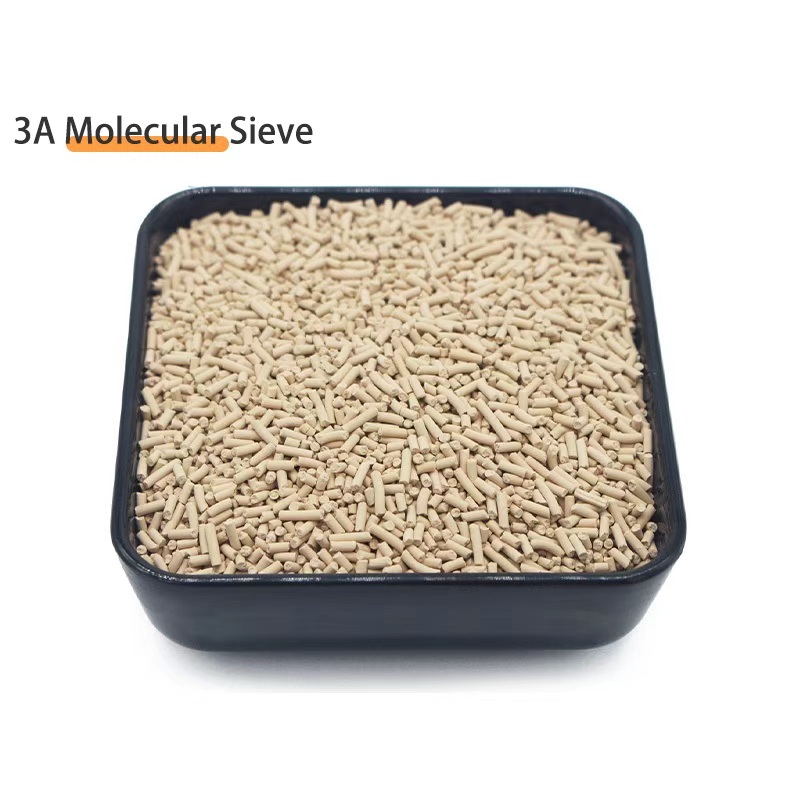
Molecular Sieve 3A / 4A / 5A / 13X
Type 3A, 4A, 5A and 13X zeolite with a certificate of analysis and MSDS on every shipment, lot-level traceability, and order quantities from 1 MT up to full-container tonnage with standard export packing.
View Product Details →Next steps
Establish three things first: the tonnage and grade of your next change-out, the process duty behind it, and what your current disposal route costs per tonne. Send the spent media profile, the contamination history and the disposal quote, and the valuation can be rebuilt on the basis a supplier would use: residual dynamic working capacity to GB/T 8770-2014, fines to ASTM D4058, moisture by loss on ignition, and freight on the actual return route.
From there, one container is enough to test the whole structure. The aim is not the largest possible credit but a settled payment on numbers you produced yourself, with freight, analysis and acceptance terms understood before a multi-year programme is signed. If the pilot works, fold the valuation basis, sampling method and acceptance thresholds into the supply agreement as a numbered annex, so the terms are fixed before the next change-out rather than renegotiated under time pressure.
Send us the spent media profile and the tonnage you are dealing with. We will work out the residual working capacity, the realistic credit range and the contract terms that make the buy-back worth more than a disposal credit.