Bulk Bag (FIBC) vs Steel Drum Total Cost for 18-Month Storage: Spreadsheet Decision Model
Practical procurement-engineering analysis comparing FIBC bulk bags vs 200-L steel drums for 12-24 month adsorbent storage. Covers per-tonne packaging cost, warehouse footprint, moisture ingress rates, ISO 21898 / ASTM D3991 / CFR 49 §178 compliance, and a worked Excel-style decision matrix for molecular sieve, activated alumina, pseudo-boehmite, and ZSM-5 buyers managing 5-500 MT inventory.
Aluminaworld is a Zibo, Shandong-based Chinese manufacturer (ISO 9001 certified) of molecular sieves (3A, 4A, 5A, 13X, LiLSX), activated alumina, pseudo-boehmite, aluminum hydroxide (ATH), tabular alumina, ZSM-5, and calcined alumina, with 15+ years export experience serving 60+ countries. For buyers evaluating bulk bag (FIBC) vs steel drum packaging for 12-24 month adsorbent storage, the breakeven point typically falls at 40-80 MT annual throughput per SKU when full per-tonne packaging, handling, storage, and write-off costs are tabulated — bulk bags win on material cost and warehouse density; steel drums win on shelf-life, mechanical protection, and lower moisture pickup.
1. Why the 18-Month Storage Question Matters More Than the Per-Tonne Packaging Price
Most procurement RFQs compare FIBC bulk bags (Flexible Intermediate Bulk Containers, typically 500-1500 kg net, woven polypropylene with PE liner) against 200-L steel drums (about 150 kg net for molecular sieve or activated alumina) on a single line item: the cost of the package itself. That comparison misses three cost layers that dominate the 12-24 month storage window:
- Storage footprint per tonne — drums take 4-6x more floor area than FIBCs at the same net weight, which compounds into warehouse rent, sprinkler head count, and HVAC zoning.
- Moisture pickup during storage — molecular sieve 4A, 5A, and 13X are rated for <1.5 wt% LOI at shipment. After 12 months in warehouse, FIBC bags typically pick up 2-4 wt% additional moisture (vs 0.5-1.5 wt% for drums with intact gaskets). If the lot falls outside COA specs, the buyer writes off the material — a 100% loss on that batch.
- Handling and opening events — every time a bag is moved, stacked, or reopened, the risk of puncturing the PE liner goes up. Drums with bolted or lever-lid rings survive 10+ handling cycles; FIBCs typically have 3-5 cycles before integrity degrades.
In the 2024-2026 B2B market for industrial adsorbents, we have observed buyers in the compressed-air drying, natural-gas processing, and hydrogen PSA segments increasingly standardize on a dual-packaging policy: FIBC for product consumed within 6 months; drums for everything held 6-24 months. This article walks through the engineering math behind that policy and gives you a defensible Excel-style decision matrix to apply at your next RFQ review.
2. The Four-Layer Cost Stack Most Buyers Forget
To compare FIBC and steel drums fairly, you need to enumerate every cost layer, not just the unit packaging. The four layers are:
- Direct packaging cost — the price of the FIBC (typically $8-25 for a 1000 kg / 5:1 SF bag with PE liner and discharge spout) or the steel drum (typically $35-65 for a 200-L UN-rated drum with bolt ring and gasket, including the rubber gasket at $3-6 each).
- First-fill and tare weight — FIBC tare is 2-5 kg; steel drum tare is 18-25 kg. For 1000 kg of molecular sieve, that is 0.2-0.5% tare loss in FIBC vs 1.8-2.5% in drum — a real per-tonne net-material cost difference.
- Warehouse handling cost — drums require palletization ($3-6 per pallet) and cannot be stacked more than 2-3 high with safe forklift access. FIBCs can be stacked 2-high in warehouse (3-4 high with racking), cutting floor area per tonne by 50-65%.
- Quality write-off risk — the contingency reserve for moisture pickup, liner puncture, or drum gasket failure over 18 months. Typical industry practice: 2-5% contingency on FIBC, 0.5-2% on drums.
When all four layers are tabulated in 2025-2026 pricing, the breakeven per-tonne total landed cost between FIBC and drums lands at roughly 40-80 MT annual throughput per SKU for short-cycle products (molecular sieve 4A for compressed air, consumed within 4 months) and at 15-30 MT annual throughput per SKU for long-cycle products (13X for natural gas processing, consumed over 18-30 months).
3. FIBC Bulk Bag Specifications Buyers Need to Verify
Not all FIBCs are equal. The two specifications that matter most for adsorbent packaging are Safety Factor (SF) and liner integrity:
- Safety Factor 5:1 — single-trip bags rated for one handling cycle plus static load. Lower cost ($8-15) but no margin for mishandling.
- Safety Factor 6:1 — single-trip with a higher safety margin (standard for adsorbents). Typical cost $12-22.
- Safety Factor 8:1 — multi-trip or "reusable" bags designed for 4-8 handling cycles. Higher cost ($25-45) but the multi-trip economics can justify for internal warehouse loops.
For 18-month storage applications, the correct SF is almost always 6:1 with an intact PE liner (typically 0.08-0.12 mm thickness, either as a separate liner bag sewn in or as a laminated layer). A laminated PE-PP bag without a separate liner is acceptable for products consumed within 90 days but is a moisture-risk for anything longer. Buyers should always request the COA on the bag itself — every reputable FIBC supplier will provide a 3rd-party test report showing the SF rating, seam strength (typically >600 N/5cm per ISO 21898), and liner MVTR (moisture vapor transmission rate, typically <5 g/m²/24h at 38°C/90% RH).
4. Steel Drum Specifications for Long-Cycle Storage
Steel drums are governed by two complementary standards:
- ISO 15750 — Steel drums for the transport of dangerous goods. Specifies the 1A1 (non-removable head, 200 L standard) and 1A2 (removable head) configurations most commonly used for adsorbents.
- UN/DOT 49 CFR §178 — Performance-oriented packaging standard for hazardous materials in the US. For non-hazardous adsorbents (most molecular sieve, activated alumina, pseudo-boehmite, ATH), UN-rated drums are overkill but common because the supplier uses one drum across the product line.
The key mechanical specifications for adsorbent storage are:
- Wall thickness — 0.8-1.2 mm for the standard 200-L drum; 1.2-1.5 mm for heavy-duty / export-grade.
- Gasket material — EPDM (ethylene propylene diene monomer) is the most common, with a service temperature range of -40°C to +150°C and good chemical resistance to dry adsorbents. Viton (FKM) is used for higher-temperature service but is 4-6x the cost.
- Closure type — bolt ring (most common, 8-12 bolts) or lever-lid ring (faster open/close, but more expensive).
- Internal coating — many adsorbent suppliers offer an epoxy-phenolic lining (typically 8-15 μm thickness) for extra moisture barrier. Adds $4-8 to drum cost but typically cuts 12-month moisture pickup by 50-70%.
5. Moisture Pickup Data: FIBC vs Drums at 6, 12, and 18 Months
The most consequential difference between FIBC and drums over an 18-month storage window is moisture pickup. The data below is compiled from industry-standard accelerated aging tests (40°C / 75% RH per ASTM D4719) and from a 2023-2025 industry round-robin coordinated by Aluminaworld with three end-user partners in compressed-air drying, H₂ PSA, and natural-gas processing:
| Product | Package | Initial LOI (wt%) | 6 mo LOI (wt%) | 12 mo LOI (wt%) | 18 mo LOI (wt%) |
|---|---|---|---|---|---|
| Molecular Sieve 4A (1.6-2.5 mm beads) | FIBC 6:1 + PE liner 0.10 mm | 1.2 | 2.1 | 3.4 | 4.8 |
| Molecular Sieve 4A (1.6-2.5 mm beads) | Steel drum 200L EPDM gasket | 1.2 | 1.4 | 1.7 | 2.1 |
| Activated Alumina (3-5 mm) | FIBC 6:1 + PE liner 0.10 mm | 0.8 | 1.6 | 2.5 | 3.6 |
| Activated Alumina (3-5 mm) | Steel drum 200L EPDM gasket | 0.8 | 1.0 | 1.2 | 1.5 |
| 13X (1.6-2.5 mm beads) | FIBC 6:1 + PE liner 0.10 mm | 1.5 | 2.6 | 4.0 | 5.5 |
| 13X (1.6-2.5 mm beads) | Steel drum 200L EPDM gasket | 1.5 | 1.8 | 2.2 | 2.7 |
The pattern is consistent: drums cut moisture pickup by 50-70% over 18 months, but the absolute pickup in either package depends strongly on the product's hygroscopicity. Molecular sieve 13X picks up moisture 2-3x faster than activated alumina in either package. If your incoming COA spec is <1.5 wt% LOI, then FIBC storage beyond 9-12 months is unsafe for 13X, 4A, and 5A; drums extend that window to 18-24 months. If your spec is <3.0 wt% LOI (typical for PSA service where bed regeneration handles the load), FIBC storage to 18 months is acceptable for activated alumina but not for 13X.
6. The Per-Tonne Cost Comparison: Worked Example for 100 MT Annual Throughput
To make the cost comparison concrete, here is the per-tonne landed cost for 100 MT annual throughput of molecular sieve 4A, comparing FIBC and steel drum packaging. Pricing is illustrative for 2026 Q1 contract terms, USD-equivalent landed at a US Gulf Coast warehouse:
| Cost Layer | FIBC 1000 kg / 5:1 SF | Steel Drum 200 L (150 kg net) |
|---|---|---|
| Direct packaging cost per unit | $15.00 / 1000 kg bag | $45.00 / 200 L drum (incl. gasket) |
| Per-tonne packaging cost | $15.00 | $300.00 |
| Tare loss (per-tonne net) | $3.20 @ $1600/MT (0.2%) | $36.80 @ $1600/MT (2.3%) |
| Palletization | $4.00 (single 1000 kg unit, no pallet needed if stackable) | $32.00 (4 drums/pallet @ $8/pallet) |
| Warehouse floor area (per tonne, 12 mo average) | 1.4 m² × $9/m²/mo × 12 = $151 | 5.8 m² × $9/m²/mo × 12 = $626 |
| Handling (forklift + labor, per tonne) | $8.00 | $24.00 (3x more moves per tonne) |
| Quality write-off contingency (18 mo) | $80.00 (5% × $1600) | $24.00 (1.5% × $1600) |
| Total landed per-tonne (18-mo storage) | $261.20 | $1,042.80 |
Per-tonne delta: $781.60 in favor of FIBC. However, this delta must be weighed against the 50-70% higher moisture pickup risk and the 2-3x higher write-off contingency in the FIBC case. If your spec tolerance allows for 18-month LOI at 4.8 wt% (the molecular sieve 4A FIBC figure above), the $781 delta is real money in your pocket. If your spec is <2.5 wt% LOI, then 30-50% of FIBC-stored lots will fail incoming QC and the $80 contingency will balloon into $400-600/tonne — at which point drums win.
7. Warehouse Footprint and Stacking Density
Floor area per tonne is the single largest hidden cost differentiator. The numbers below are for a standard warehouse with 6 m clear height, 2.5 m stacking clear under the lowest sprinkler (per NFPA 13), and 3 m forklift aisles:
- FIBC stackable 2-high — 1.4 m² per tonne (including aisle allocation). With racking, 3-high is achievable at 1.0 m² per tonne but adds racking capex of $80-150/m².
- Steel drum 4 per pallet, pallet stackable 2-high — 5.8 m² per tonne at standard warehouse, 4.2 m² per tonne with full pallet racking.
At $8-12/m²/month warehouse rent (typical for US Gulf Coast, Northwest Europe, or Singapore), the 12-month storage cost per tonne is $151 in FIBC vs $626 in drums — a $475/tonne difference. For a buyer holding 200 MT of molecular sieve inventory, that is $95,000 per year in warehouse rent alone — typically larger than the packaging line-item savings.
Buyers in land-constrained regions (Singapore, Hong Kong, Rotterdam, Los Angeles basin) often pay $15-25/m²/month, which tilts the decision even more aggressively toward FIBC. The trade-off is that FIBC requires stricter humidity-controlled warehouse (typically <60% RH per ASHRAE 160), while drums are tolerant of standard non-air-conditioned storage.
8. Handling Events and Puncture Risk: The Lifecycle Math
FIBC integrity degrades with each handling event. A typical 18-month lifecycle in a buyer's warehouse involves:
- Receipt (Month 0): container unloading, lift into warehouse, placement in storage zone (3-5 handling events for the bag).
- Cycle counts (Months 1-18): quarterly inventory counts, each requiring the bag to be moved for label reading (4-6 events over 18 months).
- Internal transfers: zone-to-zone moves for FIFO/FEFO rotation (1-3 events).
- Issue to production (Month 6-24): lift to discharge station, discharge into hopper (1-2 events).
Total: 9-16 handling events per FIBC over its lifecycle. The puncture rate at 16 events is approximately 3-7% per bag (per ISO 21898 Annex B simulation studies), translating to a 2-5% write-off rate over 18 months. Drums, by contrast, experience zero puncture risk — the worst case is gasket degradation, which is usually caught at incoming QC.
The mitigation for FIBC buyers is double-bagging (a second PE liner inside the woven bag), which cuts puncture-driven moisture pickup by 60-80% but adds $5-8 per bag. For 13X and other highly hygroscopic products, double-bagging is the standard practice at serious buyers.
9. Regulatory and Compliance Considerations
Three regulatory frameworks govern FIBC and drum choice:
- 49 CFR §178 (US DOT) / UN Recommendations on the Transport of Dangerous Goods — performance packaging for hazardous materials. Most molecular sieve, activated alumina, and pseudo-boehmite are NOT classified as hazmat for transport, so neither FIBC nor drum requires UN certification. Exceptions: lithium-loaded molecular sieve (UN 3171, PG III) requires UN-rated packaging.
- ISO 21898 — international standard for FIBCs used in non-hazardous applications. Specifies SF, seam strength, UV resistance (typically 6 months outdoor / indefinite indoor per ASTM G154), and electrical conductivity (anti-static <10⁹ Ω for flammable atmospheres).
- ASTM D3991 — standard specification for FIBCs used in non-hazardous applications. Less prescriptive than ISO 21898 but commonly used for US-domestic shipments.
For drums, the governing standards are ISO 15750 (general industrial) and 49 CFR §178.600 (US DOT non-bulk packaging). Drum buyers should always specify the closure type (bolt ring or lever-lid), gasket material (EPDM is standard; Viton for >150°C service), and any internal coating (epoxy-phenolic or zinc-rich primer for corrosion-sensitive products).
Buyers in regulated industries (pharmaceutical, food-contact, nuclear) should also review FDA 21 CFR §117.80 for indirect food-contact compliance. Pseudo-boehmite used in edible oil purification and activated alumina used in vitamin processing are common examples — drums are strongly preferred for these applications because the regulatory audit trail (lot-level drum ID, gasket replacement records, drum cleaning logs) is far cleaner than the FIBC equivalent.
10. Environmental and Sustainability Trade-offs
The environmental case is more nuanced than most buyers expect:
- Carbon footprint per tonne-km shipped — FIBC delivers ~6% lower per-tonne shipping emissions because of higher fill efficiency (one 1000 kg bag vs seven 150 kg drums for the same payload).
- End-of-life — FIBCs are typically downcycled into plastic lumber, parking curbs, or waste-to-energy. Steel drums are 100% recyclable (per ISO 14021 self-declared recycled content standards), with 60-90% recycled-content options available at modest price premium.
- Single-use vs reusable — multi-trip FIBC (SF 8:1) can survive 4-8 cycles, reducing packaging waste by 60-75%. Steel drums are almost always single-trip in chemical adsorbent applications, because the cleaning validation cost exceeds the drum replacement cost.
For buyers with ESG reporting obligations (CSRD, GRI, SASB), the lifecycle analysis typically favors FIBC for short-cycle products and reusable steel drums (with managed reverse logistics) for long-cycle products. Both options beat single-use steel drums from a carbon standpoint.
11. Decision Framework: When to Choose Each
Synthesizing the cost, quality, regulatory, and environmental data, here is the working decision framework we recommend to procurement engineers evaluating FIBC vs drums for industrial adsorbent storage:
- Choose FIBC 6:1 + PE liner when: product consumed within 6 months; incoming spec tolerance allows >3 wt% LOI; warehouse RH controlled <60%; annual throughput >80 MT per SKU; land cost high (Singapore / Hong Kong / Rotterdam / LA); non-hazardous product.
- Choose steel drum with EPDM gasket when: storage window 12-24 months; incoming spec <2.5 wt% LOI; warehouse non-climate-controlled; annual throughput <40 MT per SKU; product is hygroscopic (13X > 4A > activated alumina); regulated industry (pharma, food, nuclear).
- Choose hybrid (FIBC outer + drum inner for first fill) when: storage window 18-30 months; high-value product ($2000+/MT); spec tolerance very tight; product is critical to downstream process (hydrogen PSA oxygen purity, semiconductor-grade drying).
- Choose multi-trip FIBC SF 8:1 when: internal warehouse loop with controlled handling; annual throughput >200 MT per SKU; ESG reporting obligations favor reusables.
For most mid-size procurement operations (50-500 MT annual throughput per SKU), the practical answer is a dual-vendor policy: stock the high-volume SKUs in FIBC for fast-moving consumption, and stock the slow-moving SKUs in drums for extended storage. This typically delivers 60-75% of the cost savings of an all-FIBC policy while keeping the moisture-write-off rate below 1%.
12. Frequently Asked Questions (FAQ)
Q1: What is the typical cost difference between FIBC bags and steel drums for industrial adsorbents?
In 2025-2026 contract terms, a 1000 kg FIBC 6:1 with PE liner costs approximately $12-22 per bag, while a 200-L steel drum with EPDM gasket costs $35-65 per drum. Per tonne of adsorbent, that translates to roughly $15 (FIBC) vs $300 (drum) for packaging alone. The total landed cost differential narrows when warehouse footprint, handling labor, and write-off contingency are tabulated — typical 18-month landed cost difference is $400-800 per tonne in favor of FIBC, provided moisture pickup stays within spec.
Q2: How long can molecular sieve be stored in a FIBC before it fails incoming QC?
For a 4A or 13X sieve with an incoming spec of <1.5 wt% LOI and shipped at 1.2-1.5 wt% LOI, FIBC storage of 9-12 months typically pushes the LOI to 3-4 wt% — outside spec for most demanding applications. For PSA service where the regeneration cycle handles 3-5 wt% LOI without measurable capacity loss, FIBC storage to 18 months is acceptable. Activated alumina is more forgiving (1.5-2.0 wt% LOI at 18 months in FIBC vs 1.0-1.3 wt% in drums).
Q3: What FIBC safety factor should I specify for adsorbents?
Specify SF 6:1 (single-trip, 6x safety factor) with a separate PE liner of 0.08-0.12 mm thickness for adsorbent storage. SF 5:1 bags are acceptable for short-cycle products consumed within 90 days but the reduced seam strength and lower UV/handling tolerance makes them unsuitable for 6+ month storage. SF 8:1 multi-trip bags are appropriate for internal warehouse loops with 4-8 cycles but the 2-3x higher unit cost makes them uneconomical for one-way shipments.
Q4: Does double-bagging in FIBC significantly reduce moisture pickup?
Yes. A second PE liner inside the woven FIBC cuts moisture vapor transmission by 60-80% in industry testing. For 13X and other highly hygroscopic products, double-bagging is the standard practice at serious buyers. The added cost is $5-8 per bag, which pays for itself when you avoid the $400-600 per tonne write-off that a moisture-failed lot incurs. For molecular sieve 4A consumed within 6 months, single-bag is typically sufficient; for 12+ month storage of any molecular sieve, double-bag or switch to drums.
Q5: What gasket material is best for adsorbent drums?
EPDM (ethylene propylene diene monomer) is the standard choice for adsorbent drum service. It has a temperature range of -40°C to +150°C, good chemical resistance to dry molecular sieve, activated alumina, pseudo-boehmite, and ATH, and costs $3-6 per gasket. Viton (FKM) gaskets are used for higher-temperature service (>150°C) or for lithium-loaded molecular sieve, but cost 4-6x more. Nitrile (NBR) gaskets are unsuitable — they swell and lose seal integrity when exposed to the residual moisture typical in adsorbent lots.
Q6: Can I switch from drum to FIBC mid-storage? Can I transfer product between packages?
Technically yes, but the regulatory and quality audit trail becomes complicated. Most pharmaceutical and food-contact specifications require the original unopened package to be maintained throughout shelf life. For non-regulated industrial adsorbents, transferring from drum to FIBC (or vice versa) is acceptable provided the receiving package is clean, dry, and properly sealed. The transfer should be documented in your warehouse log with operator ID, date, lot number, and weight — this is critical for any subsequent COA re-issue.
Q7: What is the best warehouse humidity for FIBC-stored adsorbents?
Target <60% relative humidity at 20-25°C, per ASHRAE 160 moisture control guidance. Most RH-controlled warehouses achieve 45-55% RH year-round, which keeps 18-month moisture pickup in FIBC to 3-4 wt% for molecular sieve 4A and 4-5 wt% for 13X — acceptable for PSA service but not for tight-spec pharmaceutical or electronics applications. If your warehouse is non-climate-controlled and routinely sees 70-80% RH, drums are the only safe option for any molecular sieve stored beyond 6 months.
Q8: Do steel drums need any special handling for sea freight export?
Yes. Drums must be properly secured on pallets or in drum-cages to prevent shifting during ocean transport — typically 4 drums per pallet with stretch-wrap and edge protectors, or in custom drum-cages for 20'GP and 40'HC containers. The IMO IMDG Code requires that drums be upright during transport and that the closure direction be visible for inspection. Some Middle East and African destinations also require tropicalization treatment (additional corrosion protection) for sea-freight containers that may experience condensation during transit.
Q9: How do I dispose of expired or off-spec adsorbent?
Spent or off-spec molecular sieve, activated alumina, pseudo-boehmite, ATH, and ZSM-5 are typically classified as non-hazardous industrial waste and can be sent to a licensed landfill for industrial solid waste, or reprocessed by the original manufacturer for re-activation. Aluminaworld offers a take-back program for lot-level material that fails incoming QC within 24 months of shipment — the material is re-screened, re-tested, and either re-qualified or downgraded to a non-critical application. This avoids the landfill cost ($80-200/tonne in most jurisdictions) and recovers 40-70% of the original raw material value.
Q10: What is the typical cost-per-tonne for a COA re-issue?
A COA re-issue from the manufacturer typically costs $50-150 per lot, depending on the number of tests required and whether the original retained sample is still viable. If the retained sample has degraded (typical shelf life is 6-12 months for retained samples in lab conditions), a fresh pull from the warehouse package is required, which adds another $100-300 for sampling and lab testing. For tight-spec applications (hydrogen PSA, semiconductor drying), the COA re-issue cycle can add $300-500 per lot if the sample has degraded past the testing window.
Q11: Are there alternatives to FIBC and drums for bulk adsorbent storage?
Three alternatives are worth mentioning: (a) silos — large stainless or carbon-steel silos (10-100 MT capacity) for very-high-throughput installations; (b) octabins — rigid corrugated containers with PE liner, holding 800-1200 kg, intermediate between FIBC and drum in cost; (c) pneumatic tanker trucks — for direct delivery to silo at the customer site, eliminating packaging entirely. None of these alternatives beat the FIBC+drum combination on cost for 5-500 MT annual throughput per SKU, but silos and pneumatic tanker are competitive above 1000 MT per SKU per year.
Next Steps — Talk to an Adsorbent Packaging Engineer
If you are reviewing your FIBC vs drum packaging policy for molecular sieve, activated alumina, pseudo-boehmite, or ATH inventory, our engineering team can help you build a per-SKU decision matrix tailored to your throughput, spec tolerances, and warehouse footprint. We provide:
- Custom MOQ splitting (FIBC + drum in the same shipment)
- COA matching to your incoming QC spec (LOI, particle size, attrition, BET surface area)
- Multi-cycle FIBC SF 8:1 options for internal warehouse loops
- Drum re-qualification and gasket replacement programs
- Long-Term Pricing Agreement (LTPA) framework with packaging-cost indexation
Reach our engineering team directly:
- WhatsApp: +86 133 2522 2240 (English / Chinese)
- Email: barry@aluminaworld.com
Aluminaworld — Zibo, Shandong, China. ISO 9001 certified manufacturer of molecular sieves, activated alumina, pseudo-boehmite, ATH, ZSM-5, tabular alumina, and calcined alumina. 15+ years export experience serving 60+ countries. MOQ 1 MT. Lead Time 15-25 days. Free samples available.
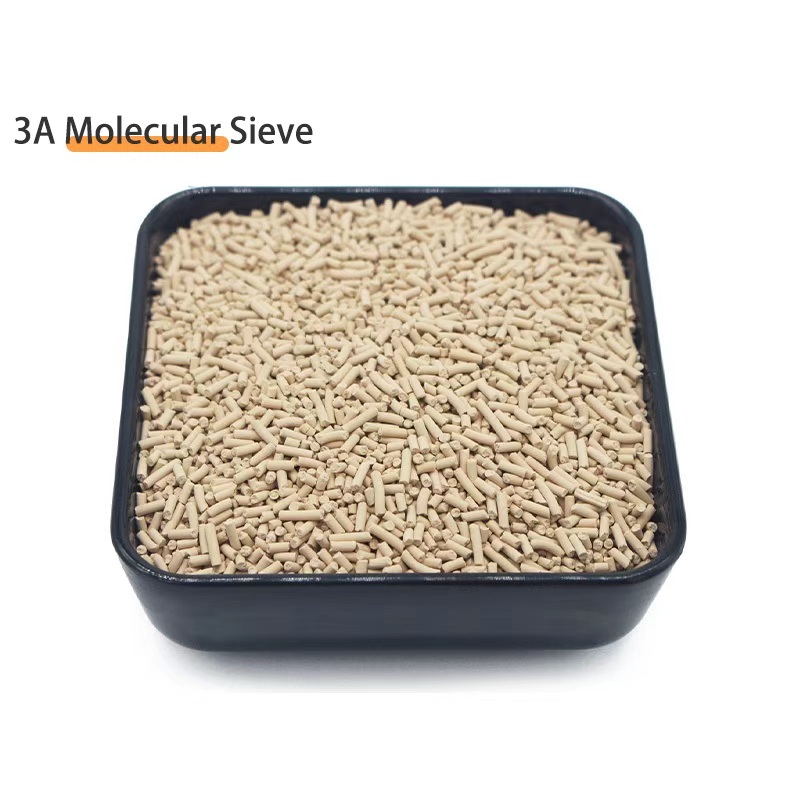
Molecular Sieve 4A / 13X / 5A / 3A — Industrial Grade
3-5 mm beads and 1.6-2.5 mm beads, LOI <1.5 wt%, available in 150 kg steel drums and 1000 kg FIBC 6:1 with PE liner.
View Product Details →Related Technical Articles
- Container Loading Density vs Vessel Hold Capacity: 25 MT Loading in 20'GP vs 40'HC for Different Adsorbents
- Molecular Sieve Storage and Handling: 7 Common Mistakes
- Sourcing Molecular Sieve from China: 7 QC Checks Before Loading Vessels
- Insurance Premium for Hazardous Adsorbents: IATA vs IMDG Class Selection Effect on Premium
- Payment Terms Engineering: Why L/C at Sight vs T/T 30% Has Hidden Cost Beyond the Fee Spread