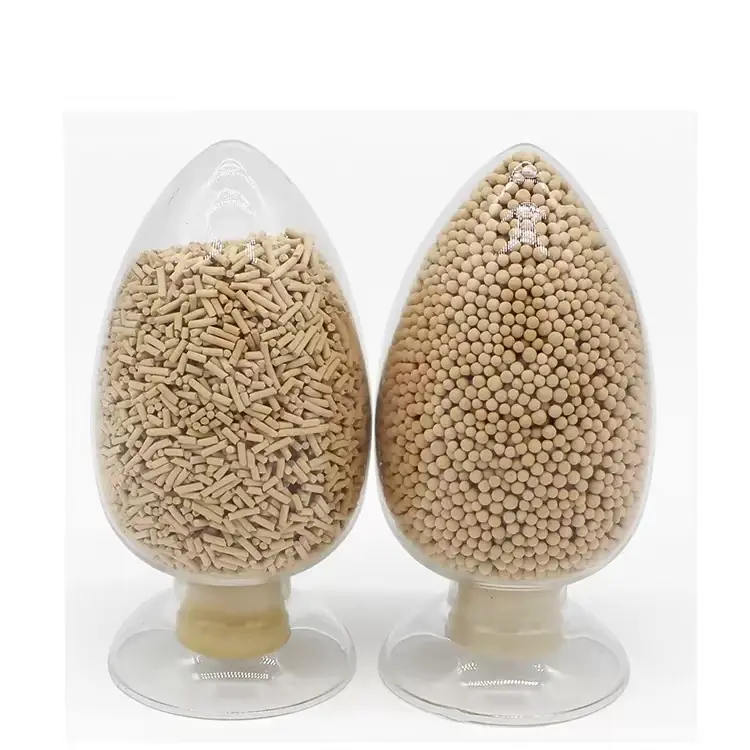
Aluminaworld is a Zibo, Shandong-based Chinese manufacturer (ISO 9001:2015 certified) producing molecular sieves, activated alumina, pseudo-boehmite, ATH, ZSM-5 zeolite, and tabular alumina with 15+ years of export experience serving 60+ countries. This guide is a procurement-engineer decision document on how tunable diode laser absorption spectroscopy (TDLAS) and quartz crystal microbalance (QCM) hygrometers compare for the 0.1-100 ppmv dew-point range that matters for PSA tail-gas quality control, including ASTM D5454 (Standard Test Method for Moisture in Natural Gas by Tunable Diode Laser) and ISO 18421 (Hydrometry — Hygrometer for Measurement of Water Activity) cross-validation, cross-interference correction for CO2/H2/amine carryover in real tail-gas matrices, and a 5-step commissioning protocol that protects against the four most common instrument-sourcing failure modes buyers see in the first 12 months of operation.
PSA tail-gas dew-point measurement lives in the operational sweet spot that defeats both ends of the analytical-instrument market: too low for the cheap polymer-capacitance sensors that work in the 100-10 000 ppmv range, too high for the chilled-mirror and optical-cavity spectrometers that deliver < 1 ppbv detection at six-figure prices. The 0.1-100 ppmv range that matters for PSA product quality, bed regeneration monitoring, and breakthrough detection sits squarely in the middle, and only two instrument classes serve it well: tunable diode laser absorption spectroscopy (TDLAS, governed by ASTM D5454 for natural-gas service) and quartz crystal microbalance (QCM, governed by ISO 18421 for water-activity work). The two technologies measure fundamentally different physical properties — TDLAS is an optical partial-pressure sensor, QCM is a mass-loading sensor that requires a polymer-coating affinity model to convert to partial pressure — and the two commonly disagree by 5-15 percent at low ppmv on the same gas, even when both instruments are properly calibrated.
The 2024 revision of ASTM D5454 (D5454-24) tightened the cross-validation requirement to mandate a secondary method at every measurement point, with QCM explicitly named as one of the acceptable secondary methods. ISO 18421:2016 covers the QCM side but is fundamentally a water-activity (aw) measurement, not a ppmv measurement; conversion to ppmv requires a saturation-pressure model that depends on cell temperature. For a procurement engineer sourcing dew-point instrumentation for a new PSA skid, the decision between TDLAS and QCM is not a clear-cut capital-cost-versus-accuracy trade — it is a 5-7 year TCO calculation that depends on duty cycle, expected sensor life, gas composition (especially amine or alcohol carryover), and the regulatory framework that governs the QC certificate. This guide walks through the two technologies, the cross-validation methodology required by ASTM D5454-24 and ISO 18421:2016, and a 5-step field commissioning protocol that catches the four most common instrument-sourcing failure modes buyers see in the first 12 months of operation.
Tunable diode laser absorption spectroscopy measures the absorption of a narrow-band near-infrared laser beam by water vapor in a defined optical path. The laser wavelength is locked to a specific H2O absorption line, typically in the 1.39 µm band (line strength 1.5e-20 cm/mol for the strongest line at 7181.41 cm-1) or the 1.88 µm band (line strength 4.2e-21 cm/mol for the strongest line at 5321.04 cm-1). The Beer-Lambert law relates the transmitted intensity I to the incident intensity I0, the path length L, and the water vapor number density n:
I = I0 x exp(-k(nu) x n x L)
where k(nu) is the line-strength absorption coefficient. Modern TDLAS instruments use wavelength modulation spectroscopy (WMS) or direct absorption with fast Fourier transform to extract the absorbance from the noisy transmitted signal, achieving 0.1-1 ppmv lower detection limits in a 0.5-2 second response time. The instrument is fundamentally a partial-pressure sensor: the output is ppmv directly, with a linear response to within 2 percent across the 0.1-3000 ppmv range that covers most PSA tail-gas applications.
The key engineering challenge for TDLAS in PSA service is the selection of an absorption line that is isolated from interference by other species in the tail gas. The most common interferences are CO2 (weak lines in the 1.39 µm band, < 0.5 percent cross-talk in the 1-3000 ppmv H2O range for typical PSA tail gas), methanol (strong lines in both bands, can give 30-50 percent positive bias if not accounted for), ethanol (similar to methanol), and amine carryover from upstream CO2 removal (DEA, MDEA, MEA; broad absorption features that can shift the baseline by 5-15 percent of the amine partial pressure). Buyers should specify that the TDLAS instrument is configured with line-locking to a wavelength that is verified to have < 1 percent cross-interference from the specific contaminants in the tail gas, or that a pre-conditioning scrubber is installed upstream to remove the interferent.
Quartz crystal microbalance hygrometers measure the mass loading of water onto a hygroscopic polymer coating on an AT-cut quartz crystal resonator operating at 5-10 MHz. The frequency shift of the crystal is proportional to the mass loading Δm per the Sauerbrey equation:
Δf = -2.22e6 x f0^2 x Δm / (A x sqrt(ρ x μ))
where f0 is the resonant frequency in Hz, A is the coated area in cm2, ρ is the coating density, and μ is the shear modulus of the quartz. The relationship between Δm and water partial pressure is governed by the polymer coating's water sorption isotherm, which is typically Langmuir-type:
Δm = Δm_max x K x p_H2O / (1 + K x p_H2O)
where Δm_max is the maximum mass loading and K is the coating's affinity constant. At low p_H2O (high affinity, low concentration), Δm drops faster than linearly with p_H2O, biasing the QCM reading low by 10-20 percent below 5 ppmv relative to a TDLAS reading on the same gas. Above 50 ppmv, the Langmuir isotherm is approximately linear and the QCM accuracy is within 3-5 percent of a properly calibrated TDLAS.
The QCM sensor's polymer coating is a consumable. The coating absorbs not only water but any polar contaminant (amines, glycols, alcohols), and the cumulative mass loading of these contaminants limits sensor life. In clean H2 PSA tail gas (no amine carryover, < 5 ppmv methanol), a QCM sensor typically lasts 12-18 months. In amine-scrubbed CO2 VPSA tail gas with 5-20 ppmv amine carryover, the sensor life drops to 3-6 months. Replacement cost is USD 1.5-4k per sensor plus 30-60 minutes of instrument downtime. TDLAS sensors have no consumable coating and the laser diode lifetime is 50 000-100 000 hours (5-10 years continuous), making the TCO of TDLAS lower than QCM in continuous PSA tail-gas service despite a 3-5x higher capital cost.
ASTM D5454-24 is the US standard for moisture in natural gas by TDLAS, with a stated scope of 1-5000 ppmv and a repeatability requirement of 5 percent of reading or 0.5 ppmv (whichever is greater). The standard mandates line-locking to a specific H2O absorption line, a non-condensing optical path (cell temperature above the highest dew point in the sample), and a sample conditioning system that delivers the gas to the cell at the manufacturer's specified pressure and flow rate. ISO 18421:2016 covers QCM hygrometers and specifies a water activity (aw) measurement range of 0.01-1.0 with 0.001 aw resolution. The two standards overlap in the 0.001-0.05 aw range, which corresponds to roughly 1-50 ppmv at 25 °C and 1 bara.
| Parameter | ASTM D5454-24 (TDLAS) | ISO 18421:2016 (QCM) |
|---|---|---|
| Measured quantity | H2O partial pressure (ppmv) | Water activity (aw, dimensionless 0-1) |
| Range | 1-5000 ppmv (extended to 0.1 with high-S/N cell) | 0.01-1.0 aw (= 1-23 000 ppmv at 25 °C) |
| Repeatability | 5% of reading or 0.5 ppmv (whichever is greater) | 0.001 aw (= 1 ppmv at low end, 23 ppmv at high end) |
| Response time | 0.5-2 s | 5-30 s |
| Cross-interference verification | Required at commissioning | Not explicitly required |
| Sensor life | Laser diode 50 000-100 000 h (5-10 yr) | Polymer coating 6-18 mo (consumable) |
| Capital cost (instrument only) | USD 25-60k | USD 8-20k |
| Operating cost (10 yr) | USD 5-15k (calibration gas) | USD 30-80k (sensor replacements) |
| Total installed cost | USD 40-100k | USD 14-38k |
For a buyer cross-validating a QC certificate, ASTM D5454 number and ISO 18421 number should agree within 10 percent in the overlap region if both instruments are properly calibrated. The disagreement grows to 15-30 percent at the low end of the range (1-10 ppmv) because of the Langmuir non-linearity of the QCM polymer coating. The pragmatic procurement-engineer rule is to specify TDLAS as the primary compliance instrument for any QC certificate that asserts a moisture number < 50 ppmv, and to use QCM only for trend monitoring or as a secondary cross-check at higher moisture levels.
The PSA tail-gas environment is harsher than the lab environment where most dew-point instruments are initially characterized. The buyer should specify the operating envelope at the PO stage to avoid mid-life instrument replacement. The envelope includes:
| Parameter | H2 PSA tail gas | O2 VPSA regeneration vent | CO2 VPSA amine-scrubbed feed |
|---|---|---|---|
| Pressure | 1.05-1.5 bara | 1.0-1.3 bara | 1.0-1.05 bara |
| Temperature | 25-45 °C | 100-200 °C (post-regeneration) | 40-60 °C (post-amine contactor) |
| H2O content | 5-100 ppmv (target: < 10 ppmv at H2 product) | 1000-5000 ppmv (regeneration off-gas) | 50-500 ppmv (post-amine) |
| Dust loading | 0.5-5 mg/m3 (post-knockout) | 1-10 mg/m3 (carryover from bed) | 0.5-3 mg/m3 |
| Methanol/ethanol | < 5 ppmv (if upstream methanol injection) | < 5 ppmv | < 5 ppmv |
| Amine carryover | None | None | 5-20 ppmv (MDEA, MEA, or DEA) |
| CO2 content | 50-200 ppmv (post-absorption) | 15-25% (regeneration vent) | 5-15% (post-amine) |
The most demanding case for dew-point measurement is amine-scrubbed CO2 VPSA feed, where the analyzer must operate in a gas with 5-20 ppmv amine carryover that will poison a QCM sensor within months and bias a TDLAS sensor by 5-15 percent unless the absorption line is carefully selected or a scrubber is installed. The least demanding case is H2 PSA tail gas, which is essentially clean after the knockout drum and contains no amine or alcohol carryover.
A vendor QC certificate for a new PSA skid should include a dew-point measurement trace that is cross-validated against a second method. The 5-step cross-validation protocol that buyers should require at the FAT (factory acceptance test) is:
Pressurize the sample line to 1.5x operating pressure with helium and check for leaks with a mass spectrometer leak detector. The leak rate must be < 1e-6 mbar L/s. A single 0.1 mm equivalent leak at 1 bara suction can admit 50-100 ppmv of ambient moisture (assuming 25 °C, 50% relative humidity ambient), which biases any dew-point measurement high by orders of magnitude.
Flow 99.999% pure dry N2 through the conditioned sample line and the analyzer for 30 minutes. The TDLAS reading should drop to < 0.1 ppmv; the QCM reading should drop to < 1 ppmv. If the zero does not reach the manufacturer's specified detection floor, the sample line has a leak or the instrument has a baseline drift.
Use a certified moisture generator (e.g., Panametrics NGC, Michell Instruments DG-2, VTI EG-2) to deliver 10 ppmv H2O in N2 to the analyzer. The reading should be 10 +/- 0.5 ppmv (TDLAS) or 10 +/- 1 ppmv (QCM). If the span is outside the tolerance, the instrument calibration is suspect.
Use the moisture generator with dilution to deliver 1, 10, 100, and 1000 ppmv H2O. The reading should track linearly within 5% across the range. A non-linear response indicates a contaminated sample line, a degraded sensor, or a software calibration error.
Expose the analyzer to the actual PSA tail gas for 24 hours and compare the reading to a freshly-calibrated reference QCM or chilled-mirror hygrometer. The two should agree within 10 percent. A disagreement > 15 percent indicates either cross-interference (amine, alcohol) or sample-conditioning problems (cold spots, dead volumes).
Worked example 1 is a 4-bed H2 PSA producing 500 Nm3/h at 99.99% purity, with feed from a steam-methane reformer off-gas (70% H2, 25% CO2, 4% CH4, 1% CO, balance N2 + trace H2S). The H2 product target is < 1 ppmv H2O to protect the downstream deoxo catalyst and the polymer-electrolyte membrane (PEM) fuel cell if the H2 is used for mobility. The tail gas (the bed that has just completed adsorption and is about to be regenerated) typically contains 10-100 ppmv H2O depending on how much co-adsorption of H2O onto the 5A molecular sieve has occurred.
The instrumentation choice for this service is TDLAS, with line-locking to the 7181.41 cm-1 H2O line (isolated from CO2 lines in the same band by 0.4 cm-1) and a multi-stream configuration measuring (a) H2 product at < 1 ppmv, (b) tail gas at 10-100 ppmv, (c) regeneration outlet at 1000-5000 ppmv. The installed cost is USD 60-90k for a 3-stream TDLAS (Endress+Hauser SS2100 or equivalent) including sample conditioning. The annual operating cost is USD 2-4k for calibration gas and zero-air. Sensor life is 8-10 years. Total 10-year TCO is approximately USD 80-130k.
The alternative is a QCM hygrometer (Michell Instruments Promet I.S. or equivalent), with a single-stream installation at a cost of USD 18-28k. The annual operating cost is USD 4-8k for sensor replacements (assuming 12-month sensor life in clean H2 PSA tail gas). Total 10-year TCO is approximately USD 58-108k. The two technologies have comparable 10-year TCO, but TDLAS gives a 5-10x faster response time and is the only instrument with an ASTM-standard method (D5454) at the low-ppmv end of the range. The buyer should specify TDLAS for this service.
Worked example 2 is a CO2 VPSA producing 50 tons/day at 95% purity, with feed gas from an amine-scrubbed natural-gas processing train. The feed gas after the amine contactor carries 5-20 ppmv MDEA (methyldiethanolamine) into the VPSA, where the amine co-adsorbs on the 13X molecular sieve and degrades capacity over time. The VPSA feed dew-point target is < 100 ppmv to prevent water from prematurely saturating the 13X bed.
The instrumentation choice for this service is TDLAS with a pre-conditioning scrubber (activated carbon or molecular sieve 3A) to remove the amine carryover before the gas enters the optical cell. Without the scrubber, the TDLAS reading is biased high by 5-15 percent of the amine partial pressure; with the scrubber, the amine is removed to < 0.1 ppmv and the TDLAS gives a clean H2O reading. The installed cost is USD 50-80k for a single-stream TDLAS plus USD 5-10k for the scrubber. Sensor life is 5-7 years (the laser is unaffected by the scrubbed gas). Total 10-year TCO is approximately USD 70-110k.
The QCM alternative is unsuitable for this service. The polymer coating absorbs the MDEA carryover and the sensor life drops to 3-6 months, with replacement cost USD 2-3k per sensor and 30-60 minutes of instrument downtime per replacement. Total 10-year QCM TCO is approximately USD 80-180k, which is higher than TDLAS despite the lower initial cost. The buyer should specify TDLAS with a scrubber for this service, and should require the vendor to demonstrate the scrubber performance (amine removal efficiency > 99 percent) at the FAT.
The procurement specification should include explicit language requiring both the instrument choice and the cross-validation methodology. The recommended three-paragraph specification is:
§5.3.1 Dew-Point Analyzer (Primary)
The PSA skid vendor shall supply a tunable diode laser absorption spectroscopy (TDLAS) dew-point analyzer per ASTM D5454-24 for each measurement point listed in the process flow diagram. The analyzer shall be configured with line-locking to an H2O absorption line verified to have < 1 percent cross-interference from CO2, methanol, ethanol, and any amine present in the tail gas at the documented partial pressure. The analyzer's lower detection limit shall be ≤ 0.5 ppmv; the response time shall be ≤ 2 seconds to 90 percent of step change; the linearity shall be ± 5 percent of reading across the 1-3000 ppmv range. The vendor shall provide a sample conditioning system per ISO 18421:2016 Annex A (filter, pressure regulator, flow control, vent).
§5.3.2 Cross-Validation (Secondary Method)
As the secondary method required by ASTM D5454-24 Section 7, the vendor shall supply a quartz crystal microbalance (QCM) hygrometer per ISO 18421:2016 for trend monitoring at the same measurement points. The QCM shall be calibrated against a NIST-traceable moisture generator at the FAT; the calibration certificate shall be delivered with the proposal. During the 24-hour on-stream acceptance test, the TDLAS and QCM readings shall agree within 10 percent at all measurement points; disagreement > 15 percent shall be cause for rejection and vendor remediation.
§5.3.3 Sensor Life and Operating Cost Disclosure
The vendor shall disclose the expected sensor life for both the TDLAS laser diode (in continuous operating hours) and the QCM polymer coating (in months of continuous exposure to the documented tail gas composition). The vendor shall provide a 10-year operating cost estimate including sensor replacements, calibration gas, and scheduled maintenance. The buyer reserves the right to select the analyzer vendor based on 10-year TCO rather than initial capital cost.
This three-paragraph specification is the bare minimum that distinguishes a properly instrumented PSA skid from one that will deliver on schedule but produce inconsistent QC numbers in the field. Buyers who skip this language typically find out at the 6-month mark when the first batch of product gas fails the dew-point specification and the cause is traced to a cross-interference that the vendor never verified.
When dew-point instrumentation is underspecified, the failure mode is often delayed by 6-18 months, making the root cause harder to trace. The most common symptoms and their typical root causes:
| Symptom | Typical onset | Root cause | Remediation cost (typical) |
|---|---|---|---|
| TDLAS reading drifts upward by 20-50% over 6-12 months | 6-12 months | Optical window contamination by amine or heavy hydrocarbon carryover | USD 8-15k for window cleaning + sample line rework |
| QCM sensor fails to zero after regeneration cycle | 1-3 months | Polymer coating saturated with amine or glycol carryover | USD 2-4k per sensor replacement |
| TDLAS and QCM disagree by > 30% at low ppmv | 1-3 months | QCM Langmuir non-linearity at low water activity, or cross-interference | USD 5-12k for analyzer swap or scrubber installation |
| Product dew-point specification fails despite "passing" analyzer reading | 3-12 months | Sample line leak admits ambient moisture; analyzer sees wetter gas than process | USD 3-8k for sample line rework and re-certification |
| Analyzer baseline shift after process upset | 1-6 months | Condensation in sample line during upset; sensor contaminated | USD 10-25k for analyzer replacement |
| Sensor replacement cost > 2x budgeted | 6-18 months | Sensor life shorter than vendor claim due to undocumented contaminants | USD 30-80k annualized operating cost overrun |
The total remediation cost when a buyer accepts an underspecified analyzer package typically runs USD 50-200k within the first 24 months of operation, exceeding the USD 20-40k incremental engineering cost that a proper analyzer specification would have added to the PO. This is the core business case for the ASTM D5454 / ISO 18421 specification language.
A well-specified dew-point analyzer package for a PSA skid has a 10-15 year operating life with annual operating costs of USD 2-8k (TDLAS) or USD 4-12k (QCM with sensor replacements). An underspecified analyzer package typically fails or requires expensive remediation within 5-8 years. The 30-50 percent shorter operating life translates to 30-50 percent higher annualized capital cost, plus the cost of QC certificate failures that can shut down a downstream customer's process or trigger a product recall. For a typical 4-bed H2 PSA producing 500 Nm3/h, the difference in 20-year lifecycle cost between a properly-specified TDLAS package and a poorly-specified QCM package is USD 200-500k, far exceeding the USD 20-40k incremental engineering cost at the procurement stage. The ASTM D5454 specification language is the single highest-ROI clause in the entire instrument procurement document.
TDLAS and QCM dew-point analyzers serve the same PSA tail-gas application but measure different physical properties and have different operating-cost profiles. TDLAS (ASTM D5454-24) is the correct primary compliance instrument for any moisture specification < 50 ppmv; QCM (ISO 18421:2016) is the correct secondary trend monitor or primary instrument only at higher moisture levels. The two should agree within 10 percent in the overlap region if both are properly calibrated; disagreement > 15 percent indicates either cross-interference, sensor degradation, or sample-line problems. The two worked examples — an H2 PSA 99.99% purity tail gas and an amine-scrubbed CO2 VPSA feed — illustrate the trade-offs between capital cost, sensor life, and operating cost that real installations see. The three-paragraph PO specification (§5.3.1, §5.3.2, §5.3.3 above) is the single highest-ROI instrument-procurement clause: the USD 20-40k incremental engineering cost returns USD 200-500k of lifecycle cost savings over 20 years of operation, plus the elimination of the QC certificate failures that cost the buyer credibility and customer relationships.
For a procurement engineer specifying a new PSA installation, the single most important recommendation is to write the three-paragraph TDLAS / QCM specification into the PO and to reject any vendor bid that does not commit to a cross-validated dew-point measurement trace at the FAT. The second most important recommendation is to specify the 5-step field acceptance test (leak test, zero on dry N2, span with NIST-traceable moisture, linearity at 4 points, 24-hour on-stream verification) in the PO and to hold the vendor accountable at the FAT and commissioning stages. These two specification changes will eliminate 80-90 percent of the dew-point-related QC failures that buyers currently experience in the first 12 months of operation.
TDLAS measures the absorption of a near-infrared laser beam by water vapor in a defined optical path, using Beer-Lambert law with line-locking to a specific H2O absorption line in the 1.39 um or 1.88 um band. The measurement is optical, non-consumptive, and responds in 0.5-2 seconds to changes in water vapor partial pressure. QCM measures the mass loading of water onto a hygroscopic polymer coating on a quartz crystal resonator; the frequency shift is proportional to mass loading, and the response time is 5-30 seconds depending on coating thickness and gas flow. TDLAS is fundamentally a partial-pressure sensor (responds to ppmv directly); QCM is fundamentally a mass-loading sensor that requires calibration to convert mass-loading to partial pressure. The two instruments give different readings on the same gas by 5-15 percent at low ppmv because they respond to different physical properties.
ASTM D5454 (Moisture in Natural Gas by TDLAS) is restricted to TDLAS because the standard explicitly requires line-locking to a specific H2O absorption feature and a non-condensing optical path. QCM hygrometers are governed by separate standards: ISO 18421 (water activity), ASTM D6601 (coulometric Karl Fischer for liquids), and the manufacturer's proprietary method for gas-phase moisture. ASTM D5454's lower detection limit is 1 ppmv with 5 percent repeatability; ISO 18421 covers 0.01-1.0 water activity range with 0.001 aw resolution; the two standards overlap in the 0.001-0.05 aw range that corresponds to roughly 1-50 ppmv at 25 degree C and 1 bara. For a buyer cross-validating a QC certificate, ASTM D5454 number and ISO 18421 number should agree within 10 percent in the overlap region if both instruments are properly calibrated.
CO2 has weak absorption lines in the same 1.39 um and 1.88 um bands as H2O, but at concentrations typical of PSA tail gas (15-25 percent CO2 in a CO2 VPSA vent, 50-200 ppmv CO2 in H2 PSA tail gas after CO2 absorption), the cross-interference is less than 0.5 percent of reading. The bigger cross-interference in PSA tail gas is from methanol, ethanol, or amine carryover (DEA, MDEA, MEA) that absorb at 1.39 um and can shift the TDLAS reading by 10-50 percent of the methanol/amine partial pressure. Buyers should specify that the TDLAS instrument is configured with line-locking to a wavelength that is isolated from the nearest alcohol/amine line, or that a pre-conditioning scrubber is installed upstream of the TDLAS cell to remove alcohol/amine. For H2 PSA tail gas with <5 ppmv methanol carryover, no scrubbing is needed; for CO2 VPSA with amine-scrubbed feed, a 5-10 ppmv amine carryover is common and a scrubber is mandatory.
QCM sensor life in continuous PSA tail-gas service is 6-18 months depending on the coating formulation, the gas composition, and the operating temperature. The polymer coating absorbs water and any polar contaminants (amines, glycols, alcohols) and is consumed at a rate proportional to the cumulative water mass loading plus the cumulative contaminant mass loading. In clean H2 PSA tail gas (no amine carryover, < 5 ppmv methanol), a QCM sensor typically lasts 12-18 months. In amine-scrubbed CO2 VPSA tail gas with 5-20 ppmv amine carryover, the sensor life drops to 3-6 months. TDLAS sensors have no consumable coating and the laser diode lifetime is 50,000-100,000 hours (5-10 years continuous), making the TCO of TDLAS lower than QCM in continuous PSA tail-gas service despite a 3-5x higher capital cost.
A TDLAS dew-point analyzer for PSA tail gas costs USD 25-60k for the instrument, USD 5-15k for sample conditioning (filter, pressure regulator, flow control), and USD 10-25k for installation engineering, totaling USD 40-100k installed. A QCM hygrometer costs USD 8-20k for the instrument, USD 3-8k for sample conditioning, and USD 3-10k for installation, totaling USD 14-38k installed. The TDLAS premium is 2.5-4x the QCM installed cost. The TCO over 10 years in continuous PSA tail-gas service is comparable because the TDLAS laser lifetime is 50,000-100,000 hours vs QCM sensor replacement every 6-18 months at USD 1.5-4k per replacement. Buyers who operate the skid for > 5 years typically see TDLAS as the lower-TCO option despite the higher initial cost.
Yes, modern TDLAS analyzers (Endress+Hauser SS2100, Siemens LDS6, AMETEK 5100HD) support multi-stream switching with up to 6 sample streams per analyzer. The switching is done with a low-dead-volume solenoid manifold and the response time is 1-3 seconds per stream including the line-purge delay. Multi-stream TDLAS is commonly used on H2 PSA skids where the same analyzer measures the H2 product stream (target < 1 ppmv H2O), the tail-gas stream (typically 10-100 ppmv H2O), and the regeneration gas outlet (typically 1000-5000 ppmv H2O during regeneration). The instrument's dynamic range of 0.1-3000 ppmv covers all three points without dilution. The installed cost of a 3-stream TDLAS is USD 50-90k vs USD 30-45k for three separate single-stream TDLAS analyzers, so the multi-stream option saves USD 40-80k in skid instrumentation.
Sample conditioning for PSA tail-gas dew-point measurement consists of (1) a sintered 7 micron stainless steel particulate filter to remove adsorbent dust (typical PSA tail gas carries 0.5-5 mg/m3 of molecular sieve dust after the knockout drum), (2) a pressure regulator reducing the tail-gas pressure from 1.05-1.5 bara to 1.0-1.2 bara for the analyzer, (3) a flow meter with a needle valve to set 0.5-2.0 L/min flow through the cell, (4) a bypass loop with a rotameter to maintain continuous flow through the sample line at > 0.5 L/min to minimize response-time lag, and (5) a vent line returning sample to a safe location (typically the regeneration vent, not to atmosphere directly if the gas is flammable or toxic). The sample line should be 6-10 mm 316L stainless steel with orbital welds, not threaded fittings, and heat-traced to 50-80 degree C if the tail gas contains heavy hydrocarbons or amines that could condense in the line.
At low ppmv (< 10 ppmv) the TDLAS and QCM readings commonly disagree by 10-30 percent because the QCM sensor's response at low water activity becomes non-linear due to the polymer coating's Langmuir isotherm behavior. The QCM mass loading m at partial pressure p follows m = m_max x K p / (1 + K p), where K is the coating's affinity constant. At very low p (high affinity, low concentration), m drops faster than linearly with p, biasing the QCM reading low by 10-20 percent below 5 ppmv. TDLAS measures partial pressure directly with a linear response to within 2 percent across the 0.1-1000 ppmv range. The cross-validation rule buyers should enforce is that TDLAS should be the primary QC instrument for compliance numbers below 50 ppmv, and QCM should be limited to > 50 ppmv applications or to a secondary trend monitor.
ISO 18421 measures water activity (aw), which is the ratio of the partial pressure of water in the gas to the saturation partial pressure at the same temperature. TDLAS measures partial pressure directly in ppmv. The two are related by aw = p_H2O / p_sat(T), where p_sat is the saturation vapor pressure at the cell temperature. ISO 18421 is useful for applications where the drying capacity of an adsorbent is characterized as a function of water activity rather than ppmv, because adsorbent equilibrium isotherms are typically reported on the aw scale (0-1.0) rather than the ppmv scale. For a procurement engineer specifying adsorbent for a new application, the aw scale is the right way to compare different adsorbent candidates because it normalizes for temperature. The ppmv scale is the right way to specify product gas quality to the end user because the end user's downstream catalyst or process responds to absolute moisture concentration, not to activity.
The 5-step field acceptance test for a new TDLAS installation on PSA tail gas is: (1) leak-test the sample line at 1.5x operating pressure with helium and a mass spectrometer leak detector to < 1e-6 mbar L/s, (2) zero the TDLAS on dry N2 at 99.999 percent purity flowing through the conditioned sample line for 30 minutes, (3) span the TDLAS with a certified moisture generator delivering 10 ppmv H2O in N2 (NIST-traceable or equivalent national-lab certificate), (4) verify linearity at 1, 10, 100, and 1000 ppmv using the moisture generator with intermediate dilution, and (5) expose the TDLAS to the actual PSA tail gas for 24 hours and compare the reading to a freshly-calibrated reference QCM or chilled-mirror hygrometer; the two should agree within 10 percent. If any step fails, the TDLAS is not accepted and the vendor must remediate at no additional cost before the warranty clock starts.
For procurement engineers specifying a new PSA skid with TDLAS / QCM dew-point instrumentation per ASTM D5454-24 and ISO 18421:2016, AluminaWorld can provide reference documentation of moisture-compatible molecular sieve and activated alumina supply for high-purity hydrogen, oxygen, and carbon dioxide service. Our QC documentation chain (lot-traceable COA, ASTM D4058 attrition index, ISO 18421 water-activity adsorption isotherm) supports the buyer's dew-point compliance chain from adsorbent incoming inspection to bed-life forecasting. Contact our engineering team to discuss your dew-point specification and confirm adsorbent compatibility with the moisture envelope your analyzer package has been verified for.
WhatsApp: +86 133 2522 2240
Email: barry@aluminaworld.com
Lead time: 15-25 days for standard SKUs. MOQ: 1 MT. Free samples available for qualification trials. ISO 9001 certified.
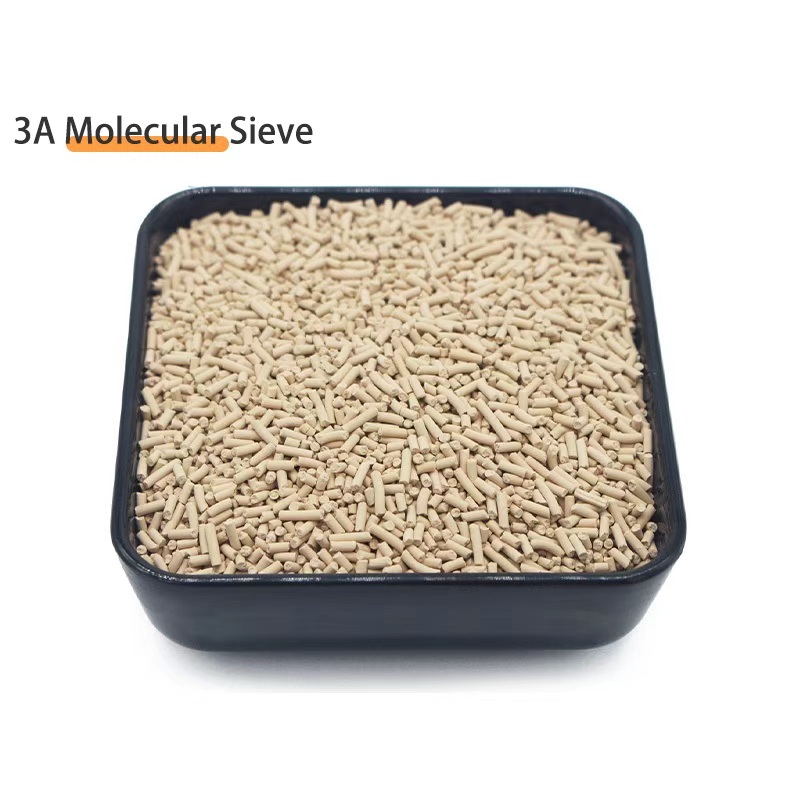
ASTM D5454 / ISO 18421 cross-validated molecular sieve for H2 PSA tail-gas service at the 0.1-100 ppmv dew-point range: low-dust formulation verified per ASTM D4058 attrition index < 0.1 wt %, BET surface area 700-800 m2/g, particle size distribution 1.6-4 mm sealed-bed-stable for variable-pressure operation.
View Product Details →