Most buyers treat the MSDS as a regulatory checkbox. They download it, hand it to their EHS team, and move on to negotiating price. This is a mistake. For molecular sieve and other industrial adsorbents, the MSDS contains seven specific technical specifications that, if you know how to read them, will tell you whether the supplier is offering a product that will actually perform in your plant, or one that will fail at month 18 and force a USD 50,000 emergency replacement.
This guide walks through the seven specs to look for, the red flags that signal a low-quality supplier, and how to use the MSDS in your purchase contract to lock in accountability. The article is based on our 15 years of supplying molecular sieve to buyers in 60 countries and the most common quality disputes we have seen and resolved.
1. Why the MSDS Matters More Than the Catalog
The marketing catalog a supplier sends you is designed to win the order. The MSDS, on the other hand, is a legally binding technical document. In the event of a quality dispute, an insurance claim, or a regulatory inspection, the MSDS is the document that counts. The numbers printed on a Chinese supplier's catalog page are aspirational; the numbers on the MSDS are contractual.
There are three practical reasons to read the MSDS carefully before placing an order. First, European REACH and US OSHA regulations require an MSDS for every imported chemical. Your customer's environmental health and safety team will demand the MSDS before approving the product for use, and the technical specs in section 9 of the MSDS are what they look at to assess operational risk. Second, the test methods cited in the MSDS tell you whether the supplier's quality control laboratory is operating to international standards or to internal shortcuts. Third, a clean and complete MSDS signals an organized, mature supplier. A vague or missing MSDS signals a trading company or small workshop that you cannot rely on for long-term supply.
If a supplier cannot or will not provide an MSDS in English (or your local language) before you place the order, walk away. The MSDS is also a useful proxy for how the supplier will handle future technical issues, product changes, and regulatory updates.
2. The 7 Critical Specs on a Molecular Sieve MSDS
2.1 Particle Size Distribution (Section 9)
Particle size distribution, or PSD, is the most commonly fudged specification on an MSDS. A well-prepared MSDS will show the d10, d50, and d90 values with the test method cited, typically ASTM D6913 (sieve analysis) or the older ASTM D422. A vague MSDS will say "1-5 mm" or "various" without distribution data.
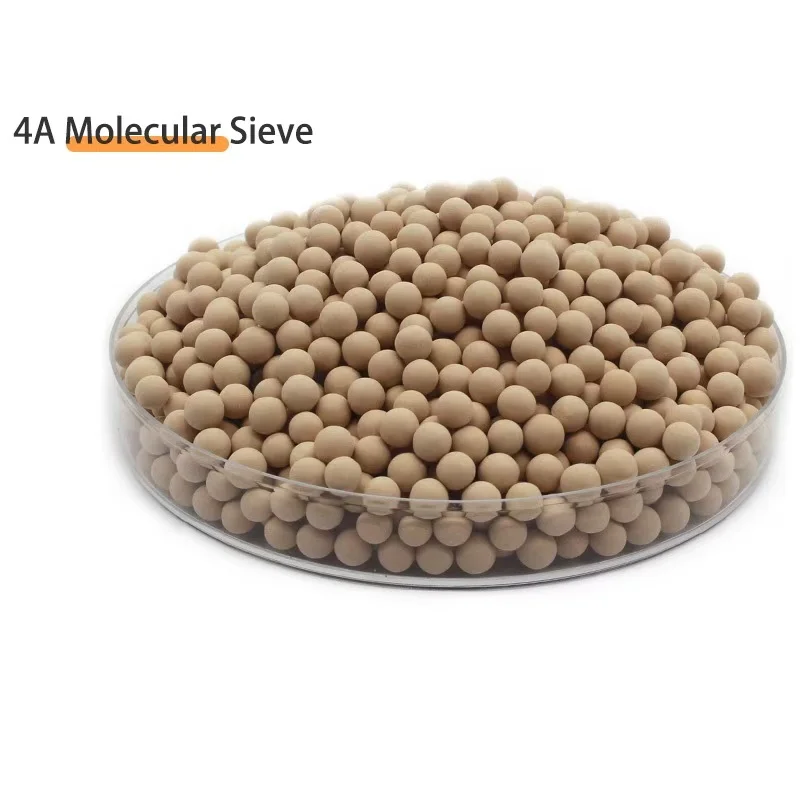
What to verify: For a 4A grade specified as 1.6 to 2.5 mm beads, the MSDS should show approximately d10 = 1.5 mm, d50 = 2.0 mm, d90 = 2.5 mm. If the values are missing, the sieve is not properly graded, and the bed will have channeling, high pressure drop, and reduced working life. A 10 percent deviation in d50 can reduce bed life by 30 percent.
Red flag: "1-5 mm" without further specification, or a particle size range that does not include the d10, d50, d90 values.
2.2 Bulk Density (Section 9)
Bulk density is a quick check on whether the supplier is using the right raw material and process. Acceptable bulk density ranges are 720 to 760 kg per cubic meter for 4A, 640 to 690 kg per cubic meter for 13X, and 740 to 780 kg per cubic meter for 3A. These ranges are tight because the type A zeolite crystal structure is well characterized.
What to verify: The test method should be ASTM D6683 (shovel-and-strike method) or ISO 9033. If the MSDS cites an internal method or no method, the actual bulk density is uncertain.
Why it matters: A 10 percent variance in bulk density changes your bed sizing calculation by 10 percent. A bed designed for 4.5 MT at 730 kg/m³ but actually filled with material at 660 kg/m³ will be under-sized by 10 percent and may fail early.
Red flag: No test method cited, or a bulk density outside the standard range for the grade.
2.3 BET Surface Area (Section 9)
BET surface area, measured by nitrogen adsorption at 77 Kelvin, is the single most important indicator of molecular sieve quality. Industry standard values are 700 to 800 m²/g for 4A, 700 to 900 m²/g for 13X, and 700 to 800 m²/g for 3A.
What to verify: The test method must be ASTM D3663 or an equivalent ISO method. A number without a method is meaningless.
Red flag: "High surface area" with no number, or a number without a method. A BET value of 400 to 600 m²/g indicates a damaged crystal structure, possibly from acid attack during manufacture or from overheating during activation.
2.4 Water Adsorption Capacity at 50 percent RH (Section 9)
Water adsorption capacity is the working spec that determines how much water your bed will actually remove. The standard test is ASTM D5028, which measures the mass percent of water adsorbed at 50 percent relative humidity and 25 degrees Celsius. The minimum acceptable values are 21 weight percent for 4A, 25 weight percent for 13X, and 20 weight percent for 3A.
What to verify: The test conditions must include the relative humidity and temperature. A spec that just says "water capacity 30 percent" without conditions is meaningless.
Red flag: A water capacity tested at 0 percent relative humidity. This inflates the number by a factor of 2 to 3, because 0 percent RH is above the saturation point of the sieve and measures the total pore volume rather than the working capacity. A 4A grade should show 21 to 23 weight percent at 50 percent RH, not 30 to 35 weight percent at 0 percent RH.
2.5 Attrition Loss (Section 9)
Attrition loss measures how much dust the sieve generates during handling, loading, and operation. A high attrition rate causes pressure drop, channeling, and contamination of downstream equipment. The standard test is ASTM D4058 (rotating drum test, 30 minutes at 50 rpm).
What to verify: Acceptable values are 0.1 weight percent or less for high-grade sieve, and 0.3 weight percent or less for standard grade. Numbers above 0.5 weight percent indicate either poor quality bead strength or improper thermal treatment during manufacture.
Red flag: No test method, or an attrition value above 0.5 weight percent.
2.6 Loss on Ignition (LOI, Section 9)
Loss on ignition is the mass lost when the sieve is heated to 1000 degrees Celsius. It represents the bound water in the zeolite structure plus any organic binder. The standard test is ASTM D1208 or equivalent.
What to verify: For as-shipped material, LOI should be 1 to 3 weight percent. For pre-calcined material, LOI should be less than 0.5 weight percent. A high LOI means you are paying for water weight in your shipment, and the sieve will lose additional mass during the first heating cycle in your adsorber.
Red flag: LOI above 5 weight percent, which indicates either improper drying at the supplier or storage in humid conditions.
2.7 pH and Heavy Metals (Section 9 and 11)
For industrial air drying, pH is typically 9 to 11. For drinking water treatment, pH must be within the range specified by the relevant drinking water standard (typically NSF 61 or equivalent). Heavy metals (Pb, Cd, Hg, As) must be below the limits set by your application. For food-grade or pharmaceutical-grade applications, a full heavy metals test report is mandatory.
What to verify: The pH test method should be a 10 percent slurry test, ASTM D1293 or equivalent. Heavy metals should be tested by ICP-OES or ICP-MS with detection limits below 1 ppm.
Red flag: No heavy metals test, especially for any application involving human contact or environmental discharge. The maximum acceptable lead content for food-grade applications is typically 10 ppm, and for pharmaceutical applications is typically 5 ppm.
The seven specifications above are the minimum set to verify. For specialized applications, additional specs may matter, such as the carbon dioxide adsorption capacity (Section 9) for PSA oxygen plants, or the crush strength (Section 9) for high-pressure natural gas dehydration. Always ask the supplier for the application-specific test data, not just the standard data sheet.
3. Common MSDS Red Flags: How to Spot a Bad Supplier
Beyond the individual specifications, there are patterns in the way a poorly-managed supplier prepares the MSDS that should trigger immediate caution. The table below summarizes the seven most common red flags we have seen in 15 years of reviewing competitor documents.
| # | Red Flag | What to Ask | Why It Matters |
|---|---|---|---|
| 1 | No test method cited for any spec | Request a CoA with method references | Numbers without methods are unverifiable |
| 2 | BET listed as "approximately 700" | Ask for actual test data from latest batch | Indicates batch-to-batch variation |
| 3 | No heavy metals test for food/pharma use | Reject the MSDS, request ICP test report | Regulatory non-compliance |
| 4 | MSDS older than 3 years with no recent revision | Request updated MSDS | Outdated regulatory information |
| 5 | Particle size as "1-5 mm" without distribution | Demand full PSD curve with d10/d50/d90 | Improper grading causes channeling |
| 6 | Water capacity tested at 0 percent RH | Reject, request re-test at 50 percent RH | Invalid test, inflated numbers |
| 7 | No REACH registration number for EU exports | Cannot import into EU | Customs hold, possible fines |
If the MSDS shows three or more of these red flags, the supplier is either operating an immature quality system or is a trading company reselling without technical oversight. In our experience, the lifetime cost of working with such a supplier is 3 to 5 times higher than working with a qualified manufacturer, even when the unit price is 10 to 15 percent lower.
4. How to Use the MSDS in Your Contract
The MSDS is the foundation for a quality-focused purchase contract. The most important clauses to add to your purchase order or master supply agreement are: the test methods referenced (not just the values), the requirement for a Certificate of Analysis per batch, the right to reject at port if test results deviate, and the right to send a sample to a third-party laboratory for verification testing.
Recommended Contract Language
For a typical 20 metric ton compressed air dryer order, the relevant clauses would read approximately as follows. The Seller warrants that the molecular sieve delivered under this contract conforms to the specifications in section 9 of the Safety Data Sheet dated [insert date], with all test methods referenced by ASTM standard number. Each shipment shall be accompanied by a Certificate of Analysis showing the actual test results for the specific batch, with the same test methods used for the original qualification. The Buyer reserves the right to reject any shipment within 30 days of receipt if the CoA test results deviate by more than 5 percent from the values in the SDS, or if the values do not meet the minimum specifications stated in this contract. The cost of any third-party verification testing shall be borne by the Seller if the third-party results confirm non-conformance.
When this language is in the contract, the supplier is on the hook for the actual performance, not just the catalog promise. The contract becomes a real risk-management tool, not just a price agreement.
The Third-Party Test Clause
Many Chinese suppliers accept third-party testing at the buyer's cost as a routine practice. The cost is typically USD 200 to 500 per test for a full ASTM D5028 and D3663 panel. If the third-party results match the supplier's CoA, the buyer pays. If they do not, the supplier pays and replaces the shipment at no additional cost. This clause alone eliminates 90 percent of the quality disputes we have seen over 15 years of export operations.
Before placing any order above USD 10,000 in value, request that the supplier accept a third-party test clause. The reputable suppliers will accept without hesitation. The suppliers who refuse, or who try to limit the clause to "SGS or Bureau Veritas only at our nominated lab," are the ones to avoid.
Frequently Asked Questions
Is an MSDS the same as a Certificate of Analysis (CoA)?
No. An MSDS (or SDS, in GHS terminology) is a regulatory document focused on safety, handling, transport classification, and emergency procedures. A Certificate of Analysis is a quality document showing actual test results for a specific production batch. Both are needed: the MSDS proves the product type is consistent and compliant, the CoA proves the specific batch meets your specification.
What is the regulatory difference between MSDS and SDS?
In 2012 the UN Globally Harmonized System (GHS) standardized the format and renamed the document from MSDS to SDS (Safety Data Sheet). The content is essentially the same 16 sections: identification, hazards, composition, first aid, firefighting, accidental release, handling, exposure controls, properties, stability, toxicology, ecology, disposal, transport, regulatory, and other. Old MSDS documents are still valid in some jurisdictions, but the SDS format is now mandatory in most major markets including EU, US, China, Japan, and Korea.
Can I import molecular sieve into the EU without REACH registration?
No. Under EU REACH (Registration, Evaluation, Authorisation and Restriction of Chemicals), all substances imported into the EU in quantities above 1 metric ton per year must be registered with the European Chemicals Agency (ECHA). A Chinese manufacturer exporting molecular sieve to the EU must either have a REACH registration themselves or use an Only Representative (OR) based in the EU. The OR's contact details must appear in section 1 of the SDS. Without a valid REACH number, customs will hold the shipment and the importer may face fines up to 50,000 EUR per shipment.
How often should a supplier update their MSDS?
Under GHS and OSHA Hazard Communication Standard, an MSDS must be reviewed and updated within 90 days of the supplier becoming aware of new hazard information or a change in composition. In practice, a well-managed supplier issues a new SDS version every 2 to 3 years, or immediately when the underlying product changes (different grade, different binder, different impurity profile). Buyers should reject MSDS documents older than 3 years or those without a recent issue date.
What is the typical shelf life of molecular sieve?
Molecular sieve has an indefinite shelf life when stored properly in sealed containers. The key risk during storage is moisture pickup from ambient air, which reduces the working capacity over time. In unopened original packaging (sealed steel drum or PE bag inside a sealed pail), molecular sieve retains 95 percent of its original capacity for at least 5 years. Once opened, the sieve should be used within 6 to 12 months to avoid significant capacity loss. If a batch has been stored open for more than 6 months, request a re-test of water capacity before use.
Related Buyer and Engineering Guides
How to Calculate Molecular Sieve Quantity for Your Dryer: A Buyer's Engineering Guide
Once you have verified the MSDS, use these 3 bed sizing formulas to order the correct quantity.
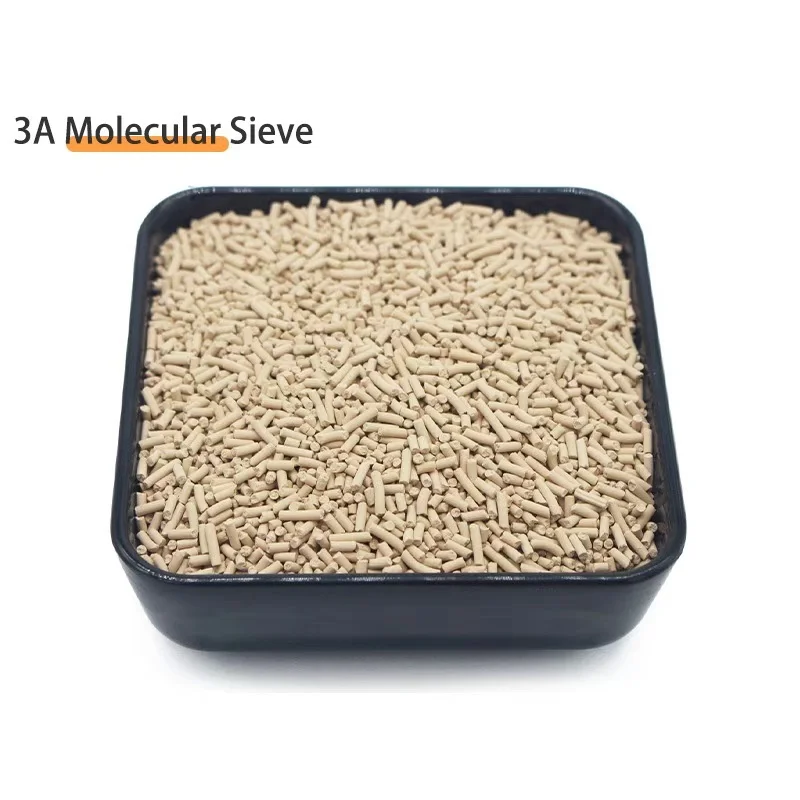
How to Verify Molecular Sieve Quality Before Bulk Shipment: 7-Test Checklist
The on-receipt inspection steps that catch the 5 percent of shipments that fail the MSDS spec.
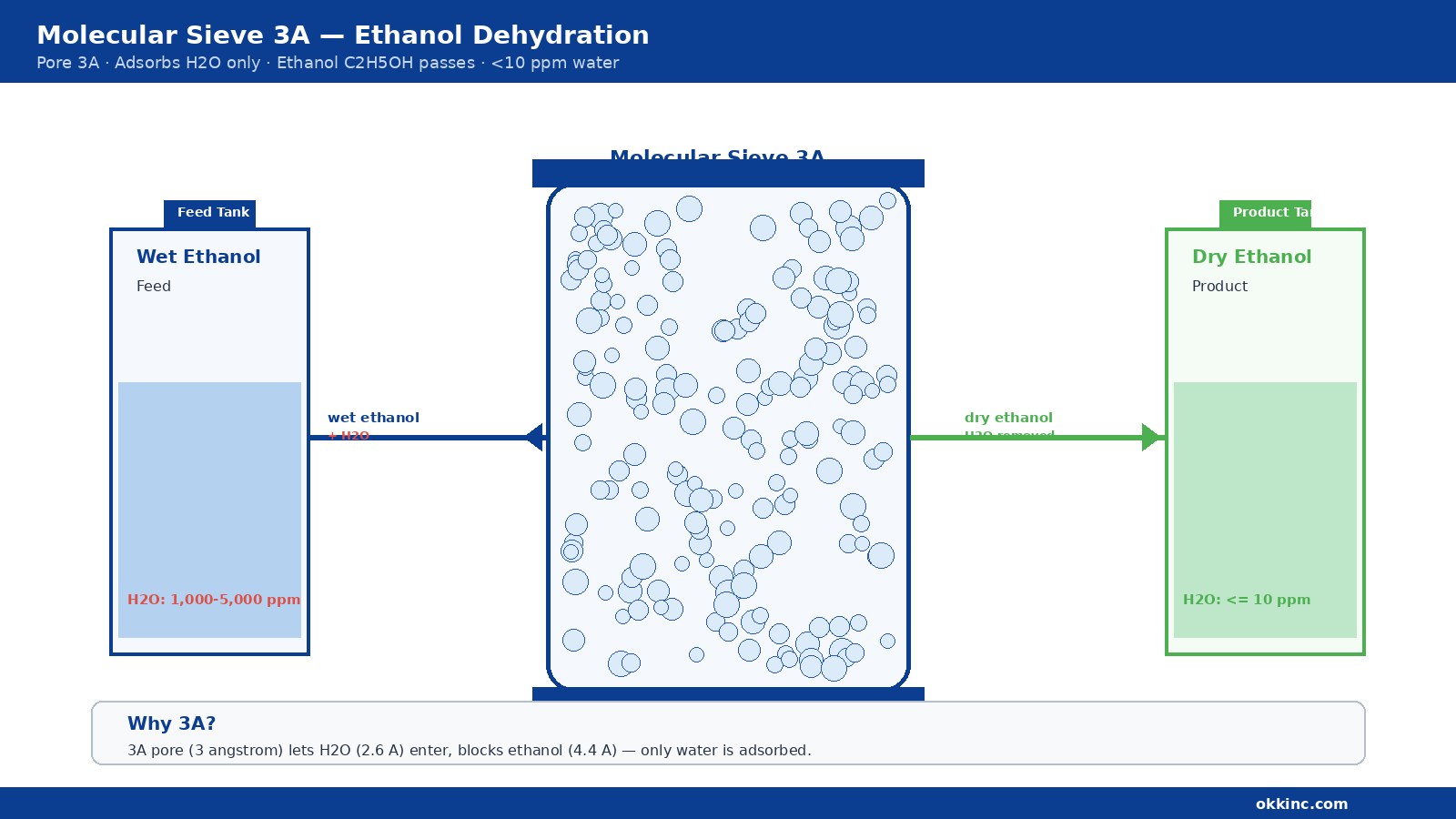
Molecular Sieve 3A: Ethanol Dehydration and Insulating Glass Applications
A worked example of MSDS verification for a Brazilian ethanol plant 3A shipment.
Need an MSDS for Your Application?
Tell us your feed conditions and target outlet spec. We will send you the current SDS for the relevant grade, a CoA from the most recent production batch, and a 1 kg free sample within 5 business days.