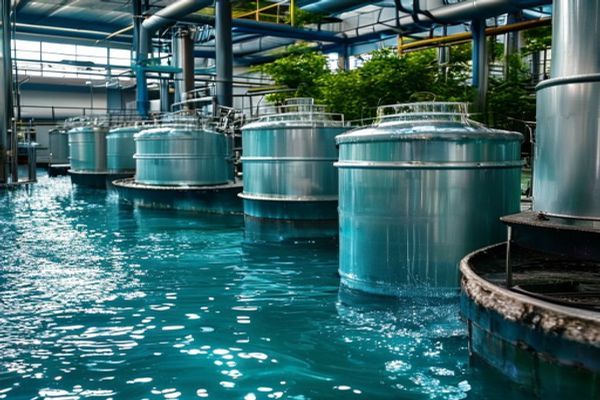
Activated alumina defluoridation is the most cost-effective method for removing excess fluoride from drinking water in communities where the natural groundwater exceeds 1.5 mg/L, the WHO recommended limit. India alone has over 20,000 community defluoridation plants, the vast majority using activated alumina as the primary adsorbent.
activated alumina surface area impact on fluoride removalAluminaworld supplies approximately 1,800 MT/year of defluoridation-grade activated alumina, primarily to NGO and government water projects in India, Bangladesh, Kenya, and Mexico. The work below is drawn from a flagship project in Rajasthan where we monitored breakthrough curves across 12 community-scale plants over 36 months.
The economics of defluoridation are dominated by bed replacement cost and regeneration frequency. Get both right and you can deliver safe drinking water at $0.15 to $0.30 per cubic meter; get them wrong and the cost triples within two years.
1. How Activated Alumina Adsorbs Fluoride: Surface Chemistry
Activated alumina removes fluoride through a ligand-exchange mechanism. The aluminum hydroxide sites on the activated alumina surface have hydroxyl groups that exchange with fluoride ions in water:
Al-OH + F- = Al-F + OH-
The equilibrium capacity depends on pH, with maximum uptake at pH 5 to 6. Above pH 7, hydroxide ions compete with fluoride; below pH 4, the alumina begins to dissolve. Most community systems pre-adjust pH to 5.5 to 6.0 using sulfuric acid or CO2 injection.
Equilibrium Capacity vs. pH
| pH | Capacity (mg F-/g) | % of Maximum |
|---|---|---|
| 4.0 | 3.5 | 70% |
| 5.0 | 4.8 | 96% |
| 5.5 | 5.0 | 100% (peak) |
| 6.0 | 4.7 | 94% |
| 7.0 | 3.2 | 64% |
| 8.0 | 1.8 | 36% |
The data above is for our standard defluoridation grade (0.5 to 1.0 mm beads, 320 m²/g surface area). Higher surface area grades (350+ m²/g) achieve 10 to 15% higher capacity but at higher media cost.
2. Breakthrough Curves from Rajasthan Field Study
The 12 plants we monitored in Rajasthan (in partnership with a local NGO) ranged from 5 m³/day (village scale) to 200 m³/day (town scale). All used the same feed water profile: fluoride 4.2 to 6.8 mg/L, pH 7.4 to 8.2, total dissolved solids 600 to 1,200 mg/L.
Bed Sizing for a 50 m³/day Plant
- Bed volume: 1.0 m³ (1,000 L activated alumina, bulk density 0.78 kg/L)
- Bed depth: 1.5 m in a 0.92 m diameter vessel
- Hydraulic loading: 10 m/hour (5 bed volumes per hour)
- Empty bed contact time (EBCT): 9 minutes
- Working capacity at pH 6.0: 4.0 mg F-/g (vs equilibrium 4.7 mg F-/g)
- Days per regeneration cycle at 5 mg/L feed: 28 to 35 days
Breakthrough Curve Shape
At EBCT of 9 minutes, the breakthrough curve is sharp: the bed maintains outlet fluoride below 0.5 mg/L for about 80% of the cycle, then breaks through within 5 to 7 days. Operators should regenerate when outlet reaches 1.0 mg/L (80% of WHO limit) to avoid unsafe water reaching consumers.
Shorter EBCT (under 6 minutes) gives longer total cycle but flatter breakthrough (less predictable). Longer EBCT (over 15 minutes) gives sharper breakthrough but wastes bed capacity. The 9-minute EBCT is the sweet spot for community-scale plants.
3. Regeneration Procedure and Cost Economics
The standard regeneration sequence for defluoridation activated alumina uses sodium hydroxide followed by acid neutralization:
- Backwash (10 min): Upward flow at 20 m/hour to remove particulates and reclassify the bed.
- NaOH regeneration (60 min): 1 to 2% NaOH solution, 3 to 4 bed volumes, downward flow.
- Rinse (15 min): Raw water at design flow to remove residual NaOH.
- Acid neutralization (45 min): 0.5 to 1% H2SO4 or HCl, 2 to 3 bed volumes, to restore pH.
- Final rinse (15 min): Raw water to remove acid and stabilize pH at 5.5 to 6.5.
Total regeneration time: 2.5 to 3 hours. During regeneration, the plant operates at 60 to 70% capacity using a parallel polishing unit.
Bed Life and Replacement Cost
With proper regeneration and pH control, activated alumina bed life in defluoridation service is typically 5 to 8 years. Attrition loss is the dominant failure mode: at 0.05% loss per regeneration cycle, with 10 to 12 regenerations per year, the bed loses 5 to 6% per year. After 5 to 8 years, the bed volume drops below design and replacement is needed.
For a 50 m³/day plant, annual operating cost (chemical + media replacement amortized + labor): $1,200 to $1,800. Per cubic meter treated: $0.07 to $0.10. Adding capital amortization brings total to $0.15 to $0.25 per m³, well within reach of community-scale water supply budgets in most developing regions.
Frequently Asked Questions
What is the fluoride removal capacity of activated alumina?
Between 1.8 and 5.0 mg F- per gram of alumina, depending on pH. Peak capacity is at pH 5.5. Real-world working capacity is typically 70 to 85% of equilibrium capacity.
Can activated alumina remove arsenic as well as fluoride?
Yes, but with lower capacity (about 2 to 3 mg As/g at pH 7). Arsenic removal works best with iron-impregnated activated alumina, which we can supply on request.
What is the minimum feed water quality for activated alumina defluoridation?
Turbidity below 5 NTU, iron below 0.3 mg/L, and pH adjustable to 5.5 to 6.5. Most groundwaters in fluoride-affected regions meet these criteria with simple prefiltration.
How often should I regenerate the bed?
When outlet fluoride reaches 1.0 mg/L (80% of WHO limit). For a 50 m³/day plant, this is typically every 28 to 35 days depending on inlet fluoride concentration.
Is the regeneration waste safe to discharge?
The NaOH + acid regeneration produces a neutral saline waste with elevated fluoride (50 to 200 mg/L). This must be neutralized and the fluoride precipitated before discharge. We provide waste handling guidance with each shipment.
Related Activated Alumina Articles
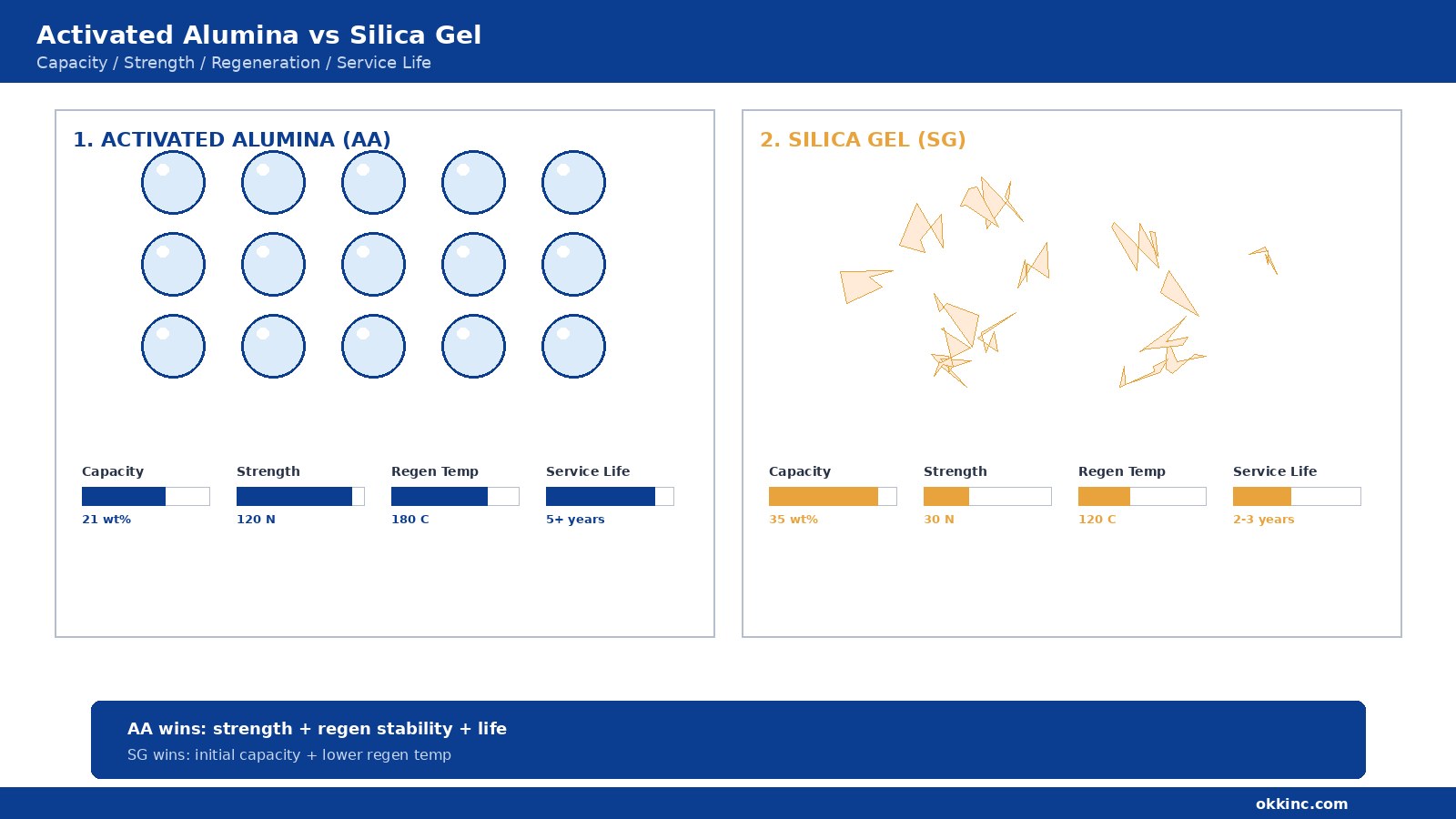
Activated Alumina vs Silica Gel: Which Desiccant Is Better for Industrial Drying?
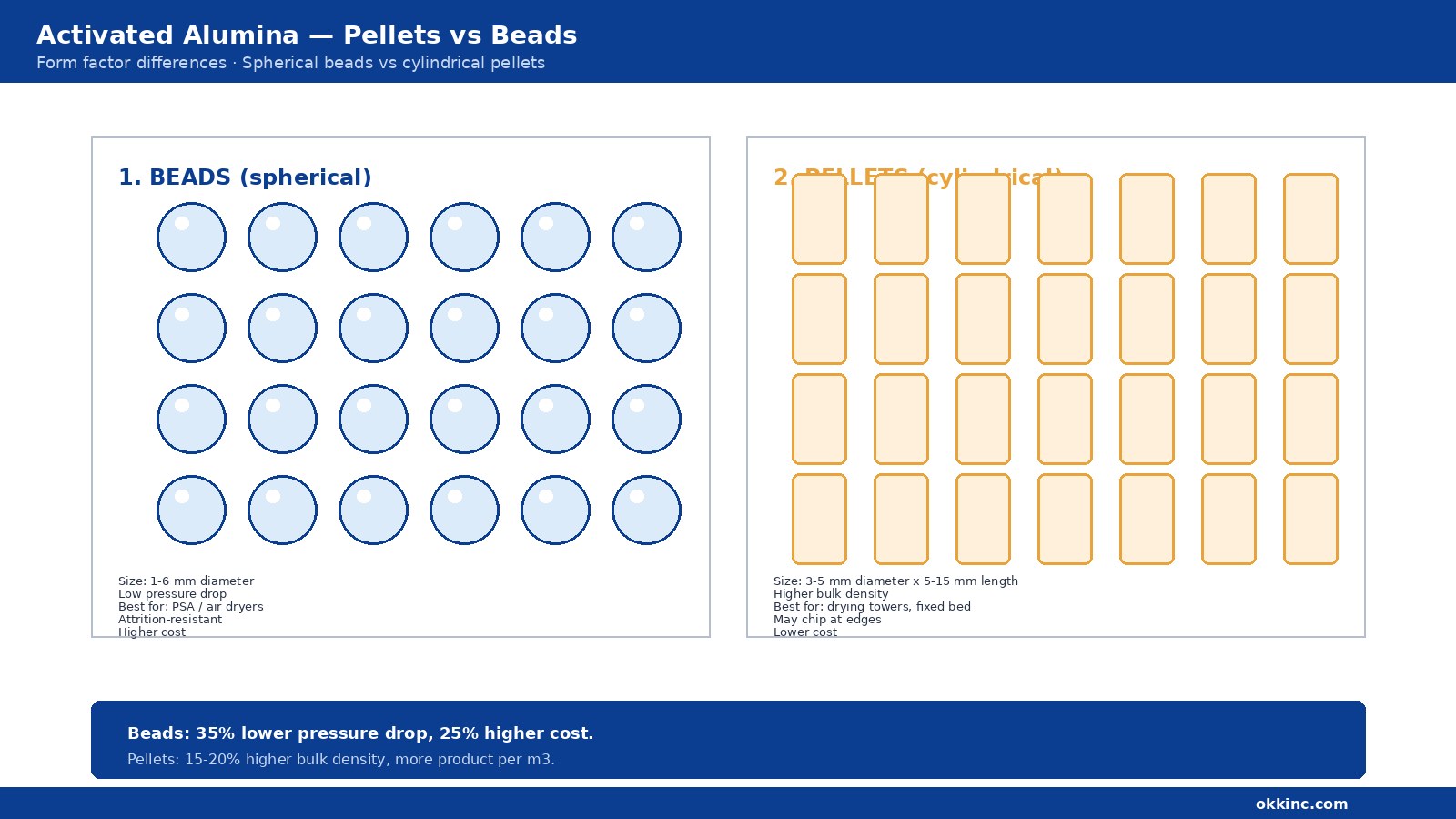
Activated Alumina Pellets vs Beads: Form Factor Differences in Industrial Use
Activated Alumina in Compressed Air Dryers: Pressure Dew Point Control
activated alumina surface area impact on fluoride removal
activated alumina pellet vs bead for water treatment
Molecular Sieve 3A Application Guide
Need a Quote or Free Sample?
Tell us your feed conditions and target outlet spec. Our engineers reply within 24 hours with a recommendation and a 1 kg free sample.