Compressed air is the fourth utility in most industrial plants, and activated alumina desiccant dryers are the workhorse for achieving pressure dew points of -20 to -40°C. This covers about 80% of industrial compressed air applications, from pneumatic tools and instrumentation to painting and food packaging.
activated alumina vs silica gel for compressed airAt Aluminaworld, we supply approximately 3,000 MT/year of activated alumina specifically for compressed air drying, supporting OEM dryer manufacturers in Italy, Germany, Turkey, India, and China. The data below reflects typical installation performance and the common failure modes we help customers troubleshoot.
Whether you are sizing a new dryer, troubleshooting an existing one, or comparing desiccant options, this guide covers the engineering decisions that drive 10-year operating economics.
1. Pressure Dew Point Targets by Application
Pressure dew point (PDP) is the temperature at which water vapor in compressed air condenses. Lower PDP means drier air. Different applications need different PDP levels:
| Application | Required PDP | Recommended Dryer |
|---|---|---|
| General pneumatic tools | +3°C | Refrigerated |
| Instrument air, painting | -20°C | Desiccant (single tower) |
| Pharmaceutical, food packaging | -40°C | Desiccant (dual tower) |
| Electronics, optics | -60°C | Desiccant + membrane |
| Cryogenic, LNG | -70°C and below | Desiccant + molecular sieve |
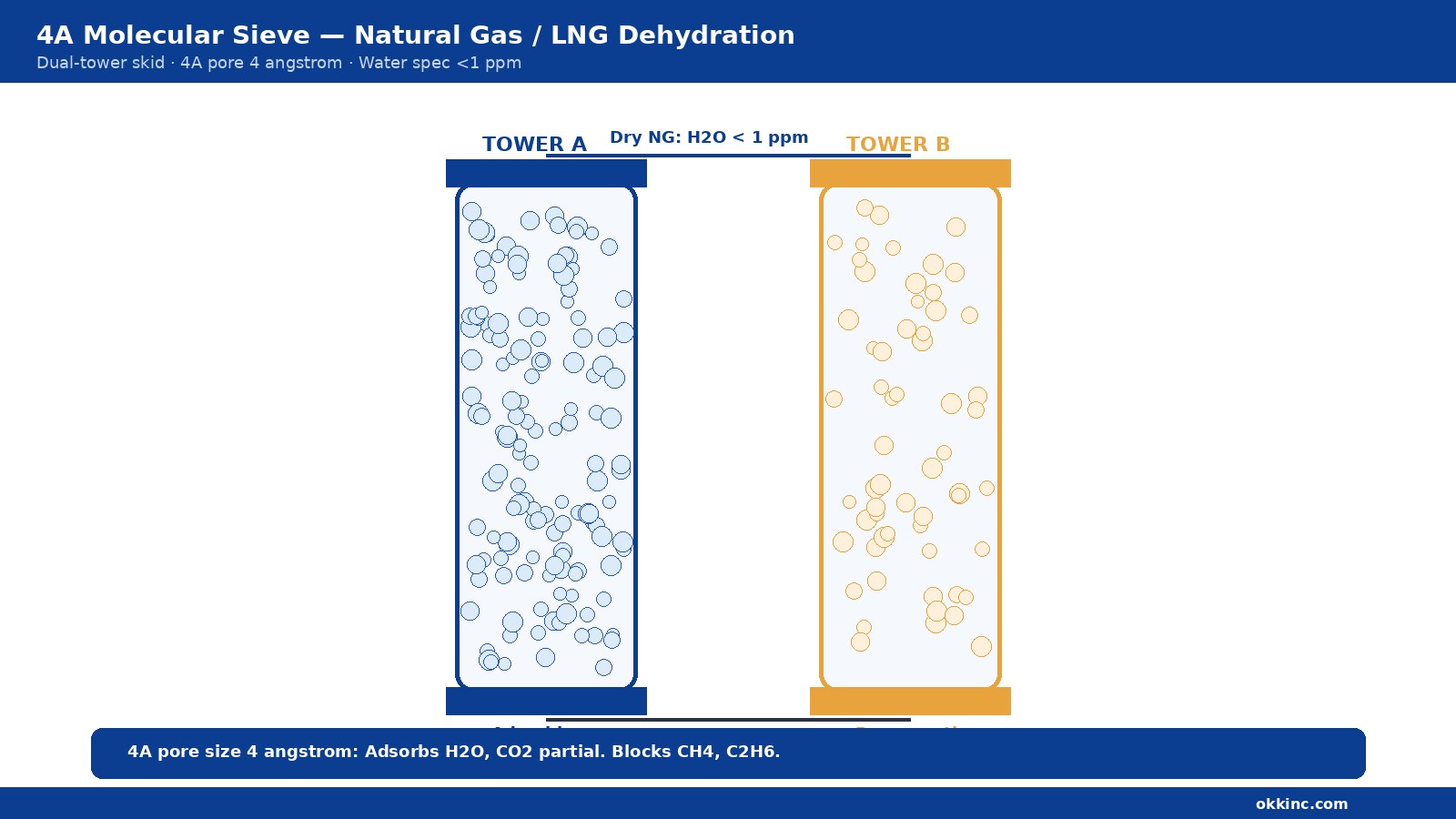
Activated alumina desiccant dryers cover the -20 to -40°C PDP range cost-effectively. Below -40°C, molecular sieve 4A becomes necessary; above -20°C, refrigerated dryers are more economical.
2. Single vs Dual Tower Dryer Configuration
Single Tower (Heat-of-Compression Regeneration)
Uses the heat of the compression process (typically 120 to 180°C) to regenerate the desiccant without an external heater. Lower operating cost, but requires stable compressor operation and cannot achieve PDP below -20°C reliably. Best for large flows (over 100 Nm³/min) where compressor heat is abundantly available.
Dual Tower (External Heater Regeneration)
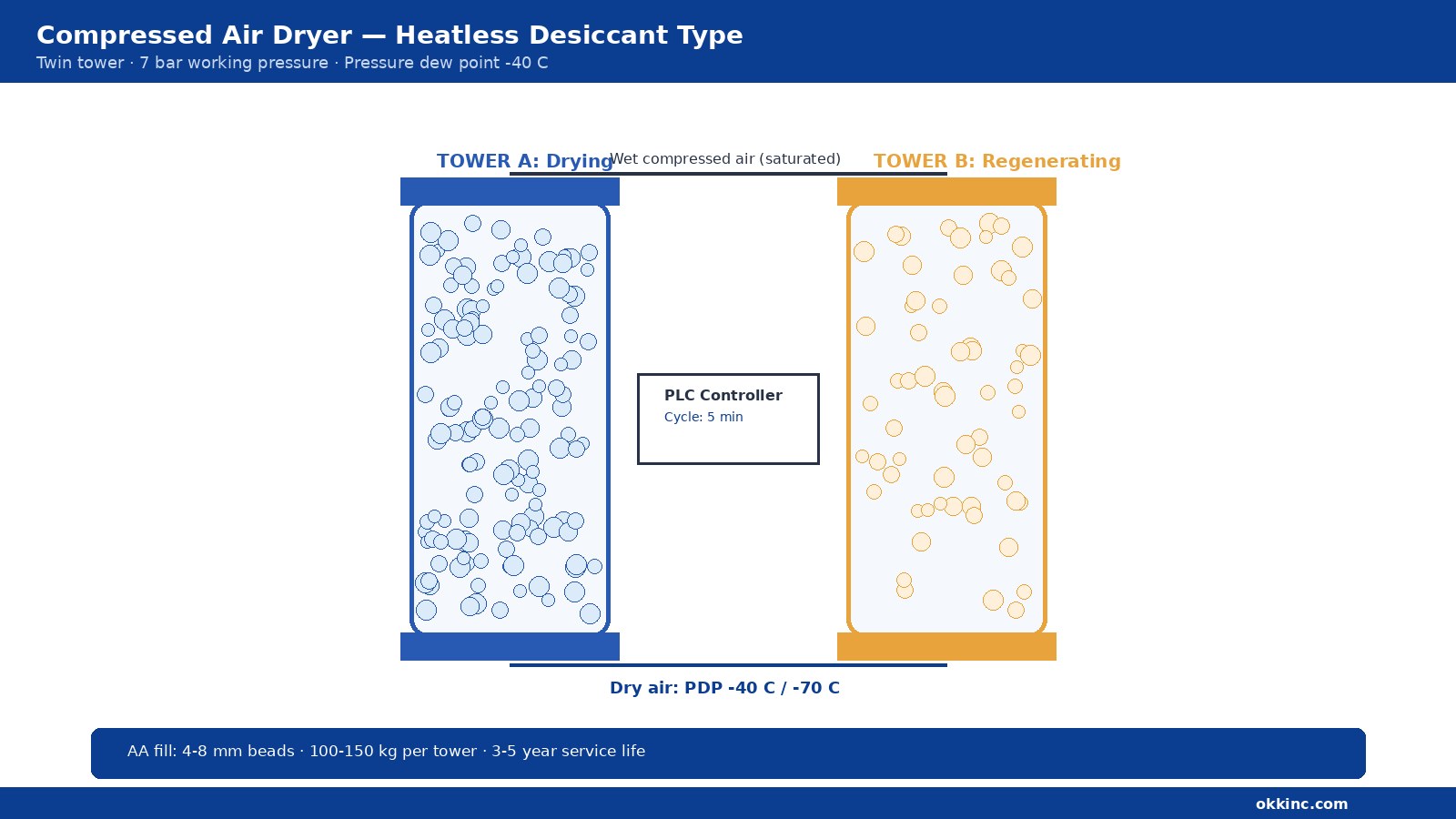
Two towers operating in parallel: one adsorbing while the other regenerates. Achieves -20 to -40°C PDP reliably. Cycle times typically 4 to 8 hours per tower. Best for critical applications and varying loads.
Sizing a Dual Tower Dryer for 50 Nm³/min
- Compressor inlet: 25°C, 60% RH (saturated compressed air at 7 bar)
- Water to remove: about 0.8 kg/h per 10 Nm³/min flow = 4.0 kg/h
- Working capacity at -20°C PDP: 8 to 10 wt%
- Bed mass per tower: 4.0 x 6 h / 0.09 = 267 kg
- Bed volume: 267 / 0.75 = 356 L per tower
- Typical vessel: 0.6 m diameter by 1.3 m straight side
For PDP -40°C target, the working capacity drops to about 5 wt%, doubling the required bed mass to 530 kg per tower. Most -40°C dryers use 0.8 m diameter vessels.
3. Common Operating Issues and Fixes
Issue 1: PDP Slipping (Outlet Air Getting Wetter)
Three likely causes: (a) bed saturation due to under-sized desiccant, (b) channeling from bed settlement or damaged distributor, (c) excessive inlet temperature above 50°C. Diagnostic: check inlet temperature first; if normal, sample the desiccant from the top of the bed for analysis.
Issue 2: Excessive Pressure Drop
Three likely causes: (a) bed compaction from water hammer, (b) particulate fouling from upstream filters, (c) bed settlement creating fines. Diagnostic: measure delta-P weekly; if rising by more than 0.1 bar/month, inspect the bed.
Issue 3: High Energy Consumption
Regeneration heater consumes 5 to 8 kW per 100 Nm³/min of air treated. If your consumption exceeds this, check: (a) heater insulation, (b) regeneration cycle time (longer than needed wastes energy), (c) ambient temperature (winter operation is more efficient).
For new installations, our engineering team can review your compressor specifications and recommend the optimal dryer size, desiccant grade, and cycle parameters. For troubleshooting, send us your operating data and we will diagnose within 48 hours.
Frequently Asked Questions
How long does activated alumina last in a dual tower dryer?
5 to 10 years depending on inlet temperature, cycle frequency, and upstream filtration. With proper prefilters (particulate + activated carbon), 8 to 10 years is achievable.
What is the difference between type A and type B dryer alumina?
Type A has 300 m²/g surface area (general purpose); Type B has 350+ m²/g (premium). Type B achieves 10 to 15% better capacity but costs 20% more. Worth it for high-flow or critical applications.
Can I switch from silica gel to activated alumina in my existing dryer?
Yes, with one caveat: activated alumina has higher bulk density, so the bed will be 30 to 40% heavier. Verify vessel weight rating and support structure first.
What prefiltration is required?
Particulate filter to 1 μm absolute, then activated carbon filter to remove compressor oil vapor. Without these, bed life drops by 60%.
Is there an environmental benefit to desiccant vs refrigerated dryers?
Desiccant dryers use 3 to 5x more energy than refrigerated dryers, but they achieve lower PDP. The right choice is application-dependent. For -20°C PDP and below, desiccant is the only option.
Related Activated Alumina Articles
Activated Alumina Defluoridation: Breakthrough Curves and Bed-Life Economics
Activated Alumina vs Silica Gel: Which Desiccant Is Better for Industrial Drying?
Activated Alumina Pellets vs Beads: Form Factor Differences in Industrial Use
activated alumina vs silica gel for compressed air
activated alumina surface area 300 vs 350 m2/g
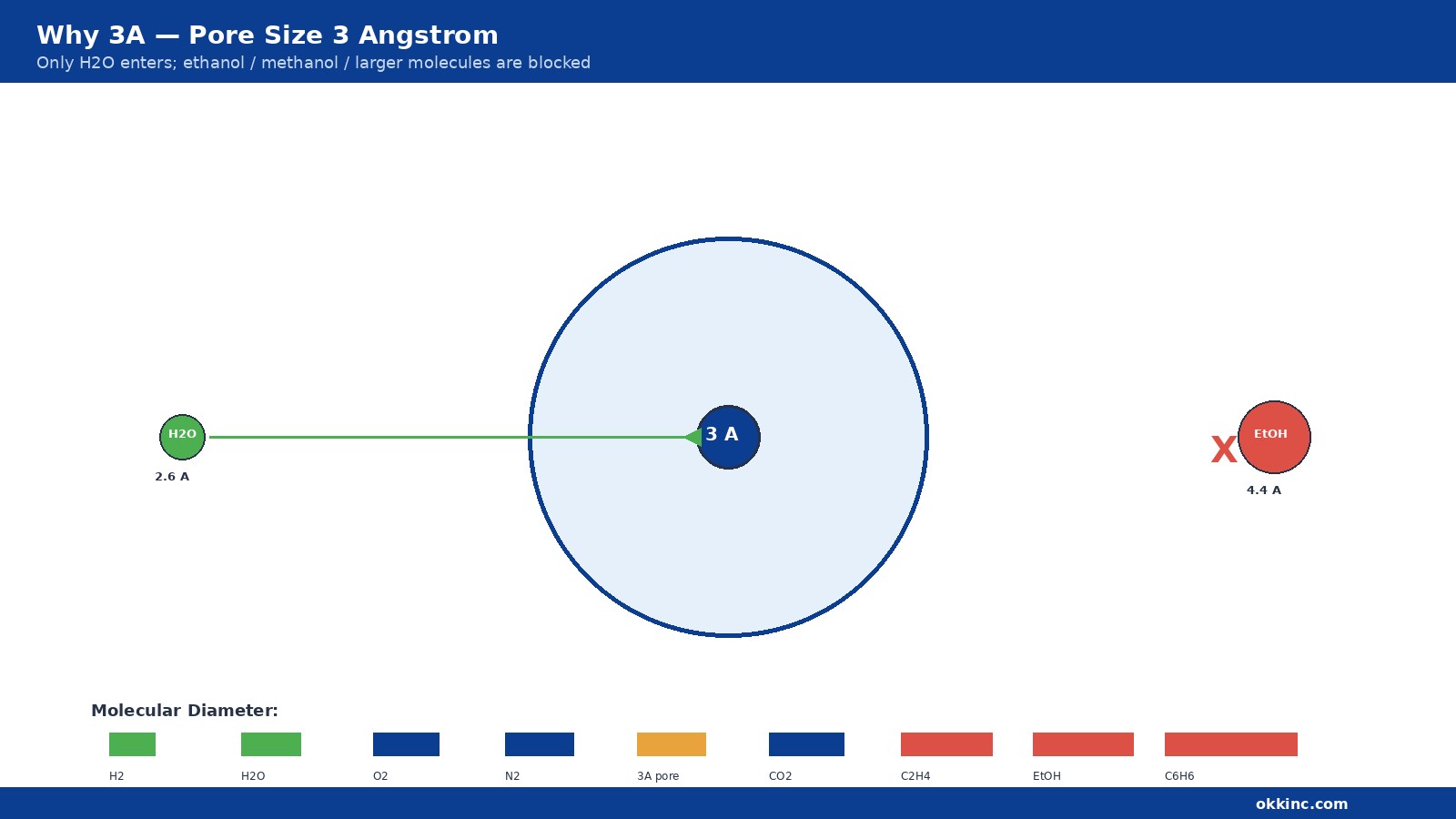
Molecular Sieve 3A Application Guide
Need a Quote or Free Sample?
Tell us your feed conditions and target outlet spec. Our engineers reply within 24 hours with a recommendation and a 1 kg free sample.