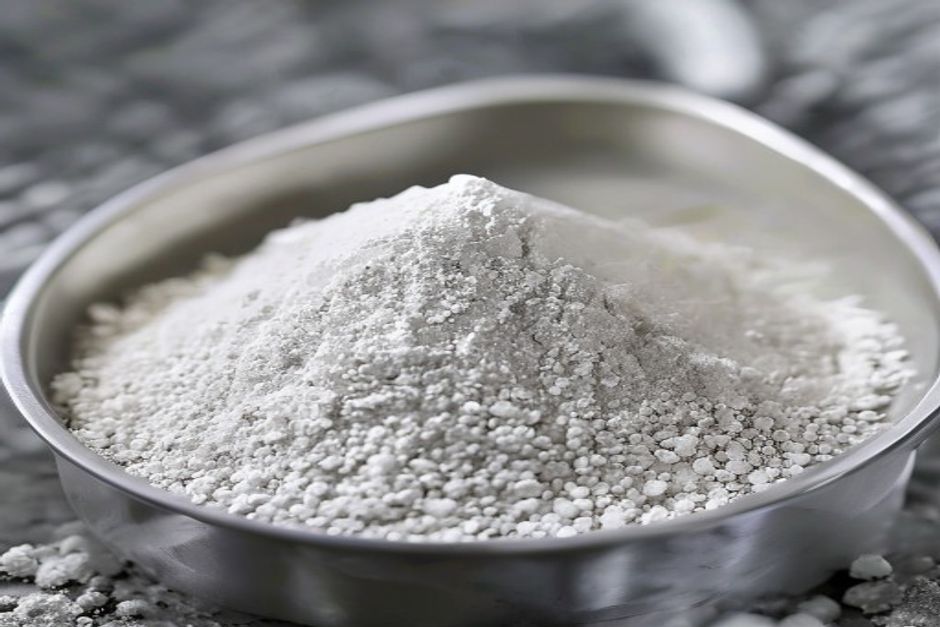
Aluminum hydroxide is the dominant filler in artificial marble (also called cultured marble or engineered stone), typically loaded at 55 to 65 wt% in an unsaturated polyester or acrylic matrix. The combination of high filler loading, fire safety, and stone-like aesthetics makes ATH the obvious choice for bathroom countertops, shower walls, and architectural surfaces.
ATH whiteness control for stone-look surfacesAt Aluminaworld, we supply approximately 25,000 MT/year of ATH specifically for artificial marble, supporting engineered stone manufacturers in China, India, Turkey, and the Gulf states. The data below reflects the formulation choices that drive consistent quality.
This article covers the grade selection, loading levels, and processing tips that deliver a high-quality, fire-safe, stain-resistant surface.
1. Why ATH for Artificial Marble: Three Roles Simultaneously
ATH plays three roles in artificial marble that no other filler can match:
- Filler (50 to 65 wt%). Provides bulk, reduces cost vs pure resin, gives the stone-like density and feel.
- Fire retardant. The decomposition to alumina + water at 200°C gives Class A fire rating under ASTM E84.
- Whiteness and color stability. Pure white ATH (whiteness at least 96%) gives a neutral base for tinting any color, and the high refractive index gives the surface depth and gloss.
Other fillers (calcium carbonate, talc, barytes) can match one or two of these roles but not all three. Calcium carbonate is cheaper but yellows over time and offers no fire protection. Talc gives fire protection but gray color limits tinting options. Barytes gives density but no fire protection and is gray.
2. Grade Selection for Artificial Marble
Particle Size Selection
Most artificial marble manufacturers use a bimodal ATH blend: 70% coarse (10 to 45 μm) + 30% fine (1 to 5 μm). The coarse particles reduce resin demand and cost; the fine particles fill the interstitial spaces and improve surface finish. A monomodal ATH (all one size) gives either poor packing (coarse only) or high resin demand (fine only).
Surface Treatment
Titanate-treated ATH (KR-TTS or equivalent) is the industry standard for artificial marble. The treatment provides:
- 30 to 50% lower resin viscosity at the same loading (better mold filling)
- 40 to 60% lower water absorption (less staining)
- Better impact strength and flexural strength
- Faster demold time (better productivity)
The premium for titanate-treated ATH is 25 to 35% over untreated, but the productivity gain typically pays back within 3 months.
Whiteness and Color
For white and light-colored artificial marble, use high-whiteness ATH (L value at least 96, b value below 1.0). For dark colors, standard grades (L value at least 94) are acceptable. Our ATH-LUX grade is specifically optimized for premium white and translucent applications, with L value at least 97 and iron content below 30 ppm.
3. Formulation and Processing Tips
Standard Formulation (Unsaturated Polyester Base)
| Component | Weight % |
|---|---|
| Unsaturated polyester resin | 25 to 30% |
| ATH (titanate-treated, bimodal) | 55 to 65% |
| Pigment paste | 1 to 3% |
| Curing agent (MEKP) | 1 to 2% |
| Accelerator (cobalt octoate) | 0.1 to 0.5% |
| Release agent, additives | 0.5 to 2% |
Mixing and Casting Tips
- Pre-mix ATH with resin before adding pigments. Ensures uniform dispersion of the high-loading filler.
- Vacuum degas the mix for 5 to 10 minutes. Removes air bubbles that would show up as surface defects.
- Add MEKP last, immediately before pouring. Working time is typically 8 to 15 minutes at room temperature.
- Cure at room temperature for 24 hours, then post-cure at 60 to 80°C for 4 hours. Ensures full crosslinking and dimensional stability.
- Demold, then sand and polish progressively (80, 220, 400, 800, 1500 grit). The polished surface reveals the ATH-filled matrix with its characteristic depth and gloss.
For new artificial marble formulations or troubleshooting existing ones, our technical team can review your process and recommend specific ATH grades and treatments. We supply free 5 kg samples for trial batches.
Frequently Asked Questions
What ATH grade gives the best surface gloss?
Fine-particle ATH (D50 below 5 μm) with tight particle size distribution gives the best surface gloss after polishing. Our ATH-GLOSS grade is optimized for this.
Does ATH affect the translucency of artificial marble?
Yes. Higher ATH loading reduces translucency. For translucent engineered stone (the onyx look), use 30 to 40% ATH loading with fine-particle grade. Higher loadings give more opaque marble looks.
How does ATH compare with calcium carbonate in cost?
Calcium carbonate is 30 to 50% cheaper per kg, but the total formulation cost is often similar because ATH's lower resin demand offsets the higher filler price.
Can I use ATH in acrylic solid surface?
Yes. ATH is widely used in acrylic solid surface (Corian-type products) at 50 to 60% loading. Use a finer grade than for polyester and ensure thorough surface treatment to maintain translucency.
What is the price for ATH used in artificial marble?
$500 to $900 per MT depending on grade and treatment. Titanate-treated grades for engineered stone typically run $700 to $900 per MT.
Related Aluminum Hydroxide Articles
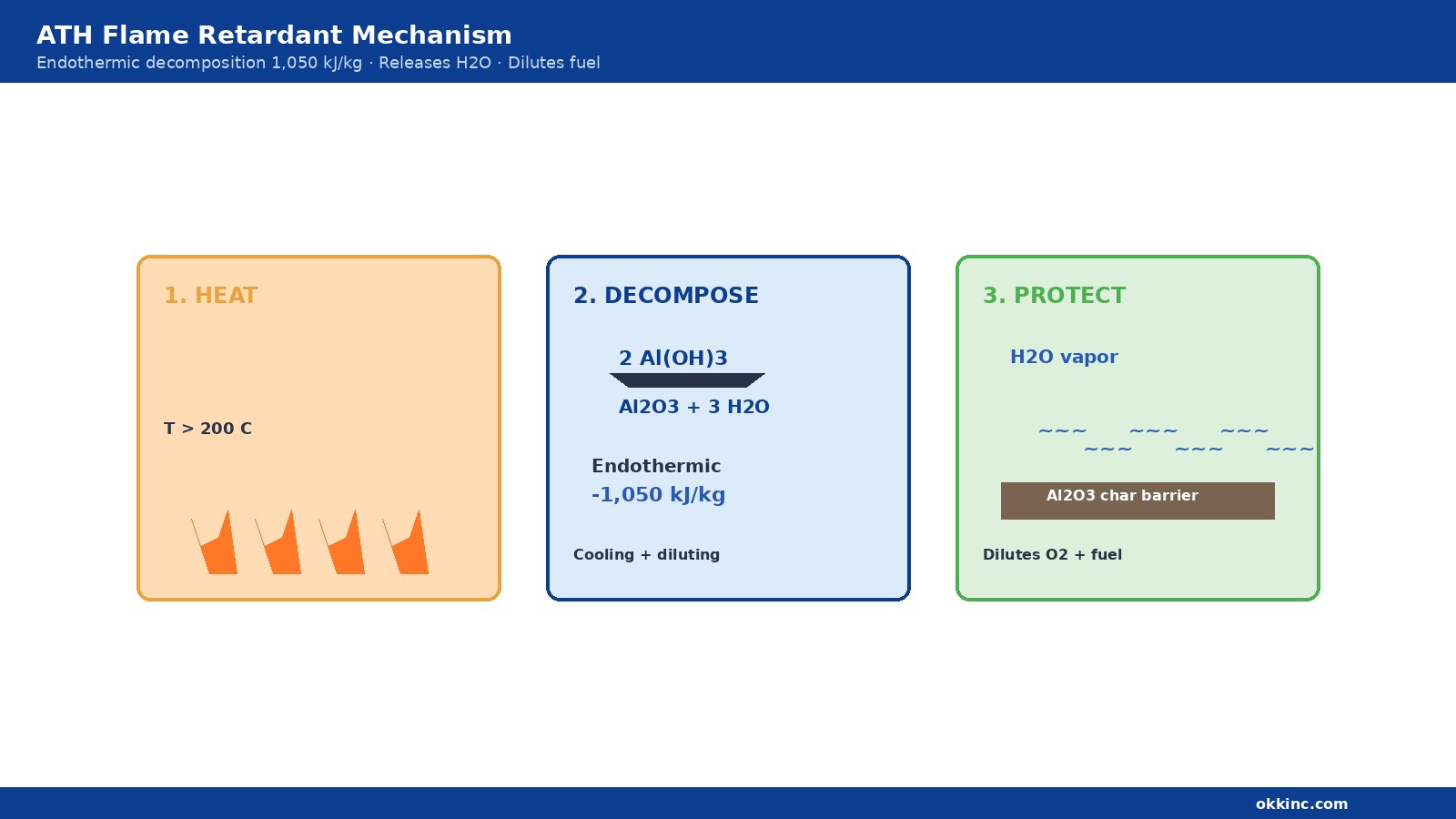
ATH Flame Retardant Mechanism: Why Aluminum Hydroxide Cools and Chars
ATH vs MDH Flame Retardant: Which Works Better in Your Polymer System?
Surface-Treated ATH: How Silane Coating Improves Polymer Loading and Dispersion
ATH whiteness control for stone-look surfaces
surface-treated ATH for polymer loading
Alumina Powder Ceramic Glaze Application
Need a Quote or Free Sample?
Tell us your feed conditions and target outlet spec. Our engineers reply within 24 hours with a recommendation and a 1 kg free sample.