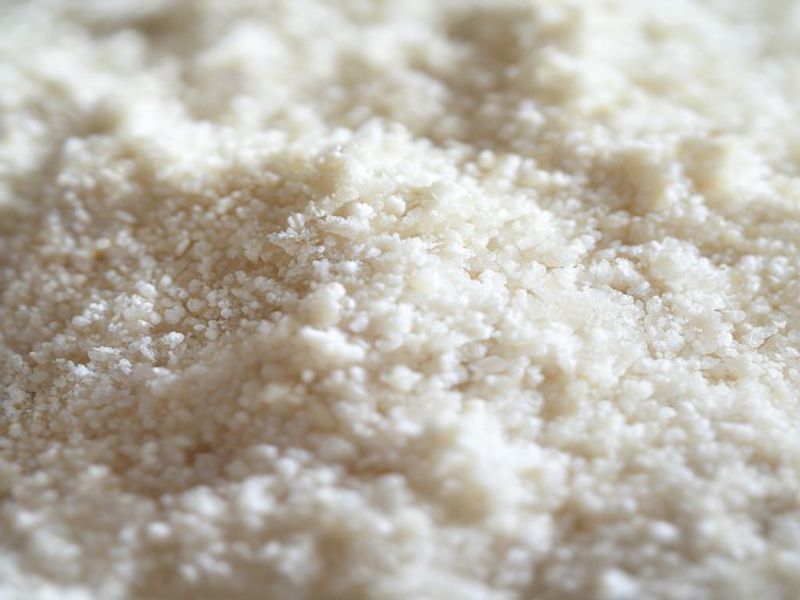
Surface-treated ATH is one of the most impactful yet under-appreciated advances in flame retardant technology. A 0.5 to 1.5% silane, stearate, or titanate coating on the ATH surface transforms a difficult-to-process, low-loading filler into a high-performance flame retardant that can be loaded at 65 to 75 wt% without catastrophic loss of mechanical properties.
ATH flame retardant mechanismAt Aluminaworld, we manufacture surface-treated ATH for cable, compound, and engineered stone applications. The data below reflects our standard treated grades and the performance our customers achieve versus untreated ATH.
This article explains the surface chemistry, the three most common treatment chemistries, and the quantitative benefits in real polymer systems.
1. How Surface Treatment Works: Bridging Polar and Non-Polar
ATH has a polar, hydrophilic surface (lots of -OH groups). Most polymers are non-polar (polyolefins) or weakly polar (EVA, polyester). The mismatch causes poor adhesion between filler and matrix, resulting in:
- High compound viscosity (poor filler dispersion)
- Low elongation at break (filler pulls out of matrix under stress)
- Poor impact strength (stress concentration at filler-matrix interface)
- Higher water absorption (ATH surface attracts moisture)
Surface treatment applies a coupling agent that has two functional ends: one bonds to the ATH surface (the polar head), the other is compatible with the polymer (the non-polar tail). The result is a filler particle that looks like the polymer to the surrounding matrix.
2. The Three Common Treatment Chemistries
1. Silane Treatment
Best for polyolefins (PE, PP) and EVA. Common silanes: amino-silane (AMEO), epoxy-silane (KH-560), methacryl-silane (KH-570). Treatment level: 0.5 to 1.0 wt% of ATH. Provides the strongest polymer-filler bond. Best for cable jacketing and high-performance LSZH compounds.
2. Stearate Treatment
Best for PVC and thermoset polyesters. Common stearates: calcium stearate, zinc stearate, stearic acid. Treatment level: 1.0 to 2.0 wt% of ATH. Lowest cost. Provides good dispersion but weaker polymer-filler bond than silane.
3. Titanate Treatment
Best for filled composites (engineered stone, cultured marble). Common titanates: isopropyl triisostearoyl titanate (KR-TTS), neopentyl(diallyl)oxy tri(dioctyl)pyrophosphate titanate (KR-138S). Treatment level: 0.5 to 1.5 wt% of ATH. Provides excellent water resistance and processing dispersion.
3. Quantitative Benefits in Real Compounds
Test 1: Tensile and Elongation in EVA + 65% ATH
| Property | Untreated ATH | Silane-Treated ATH |
|---|---|---|
| Tensile strength | 9.5 MPa | 13.2 MPa (+39%) |
| Elongation at break | 80% | 160% (+100%) |
| Melt flow index (190°C/2.16 kg) | 0.4 g/10min | 1.8 g/10min (+350%) |
| UL94 rating | V-0 | V-0 (same) |
| Limiting Oxygen Index | 38% | 38% (same) |
The flame retardancy metrics are the same (V-0, LOI 38%), but the mechanical properties and processability are dramatically better. The 4.5x improvement in melt flow index means the compound can be extruded at lower temperature and pressure, saving energy and reducing wear on processing equipment.
Test 2: Water Absorption in Polyester + 55% ATH (Engineered Stone)
- Untreated ATH: water absorption 0.45% after 24 h immersion
- Titanate-treated ATH: water absorption 0.18% after 24 h immersion (-60%)
- Boiling water absorption: 1.8% vs 0.9% (-50%)
Lower water absorption means less swelling, less staining, and less frost damage in cold climates. This is why engineered stone manufacturers specify titanate-treated ATH as standard.
Frequently Asked Questions
Which surface treatment should I choose for EVA cable compound?
Silane treatment (amino or epoxy silane) is the industry standard. Provides the best balance of mechanical properties, processing, and cost.
Can you apply custom treatments?
Yes. We can apply customer-specified silanes, titanates, or proprietary coupling agents. Minimum order: 5 MT. Development samples: 100 kg.
Does surface treatment affect flame retardancy?
No, the treatment is on the surface of the ATH particles, not within the crystal structure. Endothermic decomposition and water release are unchanged.
Is surface-treated ATH food-safe?
Yes. Our FDA-grade treated ATH uses only food-safe coupling agents. We provide certification with each shipment.
What is the price premium for treated ATH?
20 to 30% premium versus untreated. For LSZH cable and engineered stone applications, the premium pays back in 3 to 6 months through reduced processing issues and higher-quality finished products.
Related Aluminum Hydroxide Articles
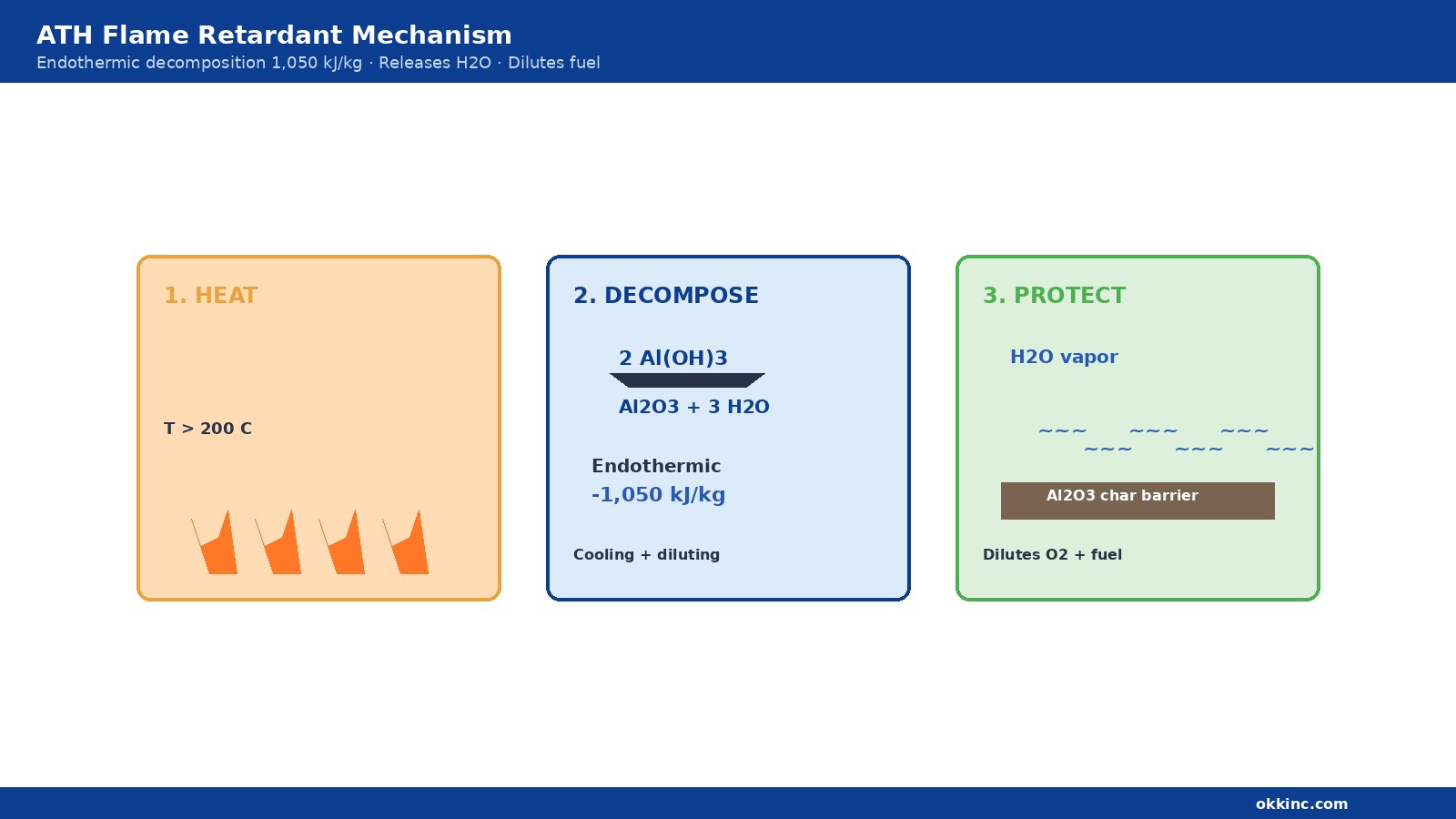
ATH Flame Retardant Mechanism: Why Aluminum Hydroxide Cools and Chars
ATH vs MDH Flame Retardant: Which Works Better in Your Polymer System?
ATH in Artificial Marble: How Aluminum Hydroxide Enables Stone-Look Surfaces
ATH flame retardant mechanism
ATH whiteness and particle size
Alumina Powder Ceramic Glaze Application
Need a Quote or Free Sample?
Tell us your feed conditions and target outlet spec. Our engineers reply within 24 hours with a recommendation and a 1 kg free sample.