Home / Blog
Blog
Notes on media & materials.
Short, practical articles — each one answers a question our customers actually ask. If your question isn't here, email us; it may become the next article.
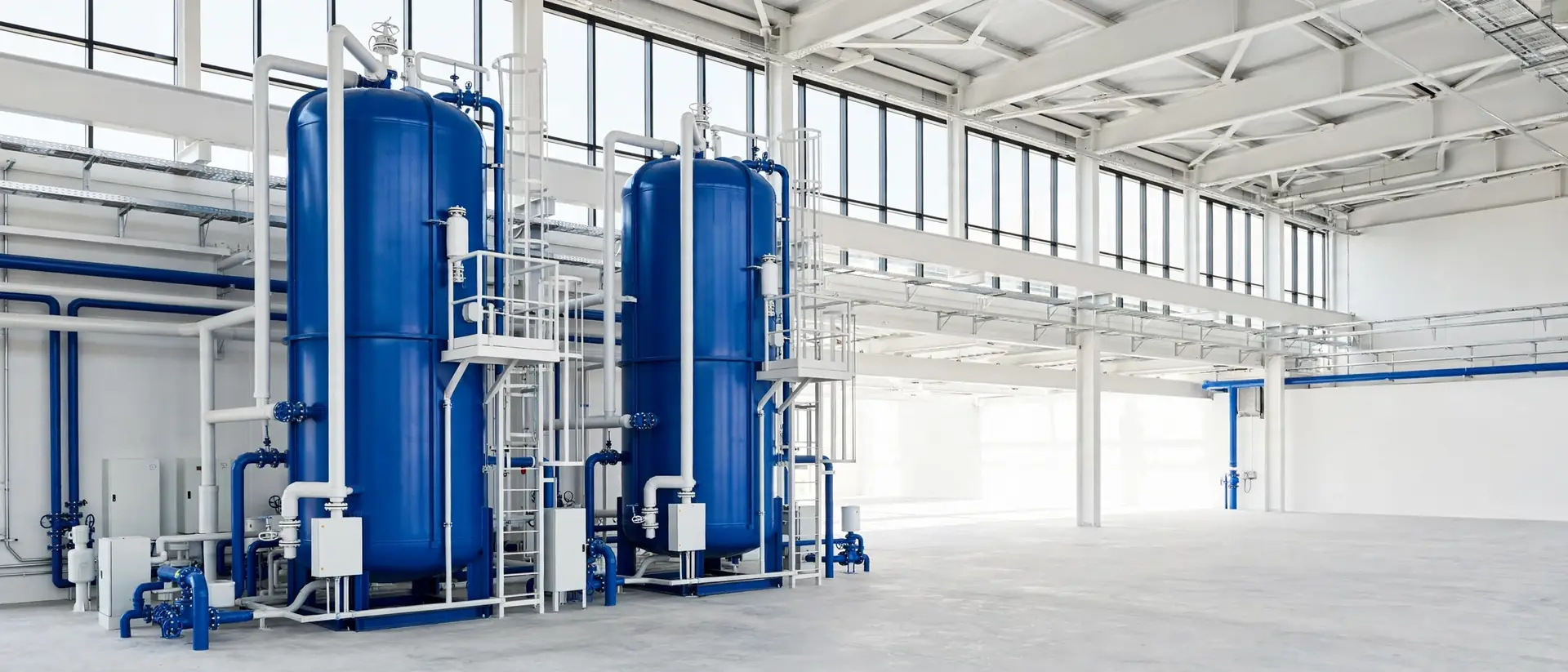
Air Separation
When to change out air-separation purification media
Bed life is not a calendar date. The signals that a purification bed is nearing its end — and the data to prepare before ordering its replacement.
Read Article →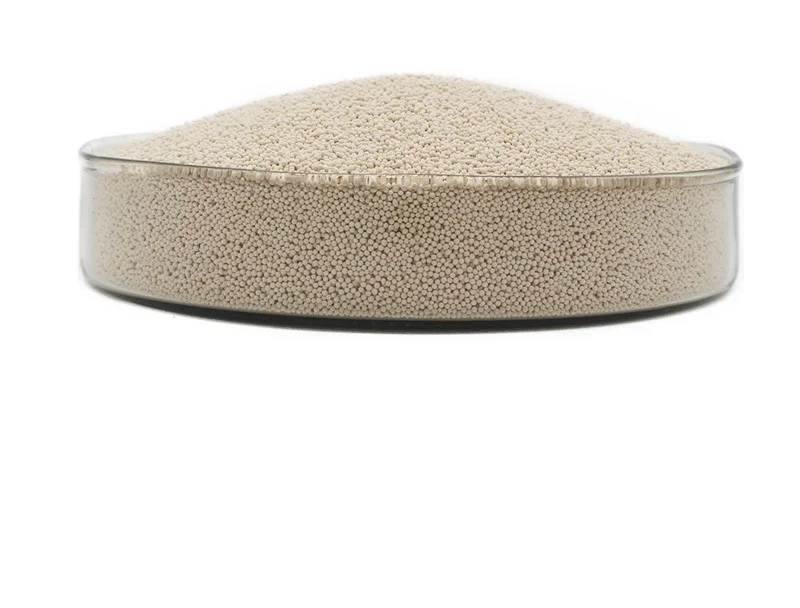
Insulating Glass
Why insulating glass uses 3A molecular sieve — and what to specify
Fogged units are usually a desiccant problem. Why 3A is the standard fill for sealed units, and the four properties that matter when buying it.
Read Article →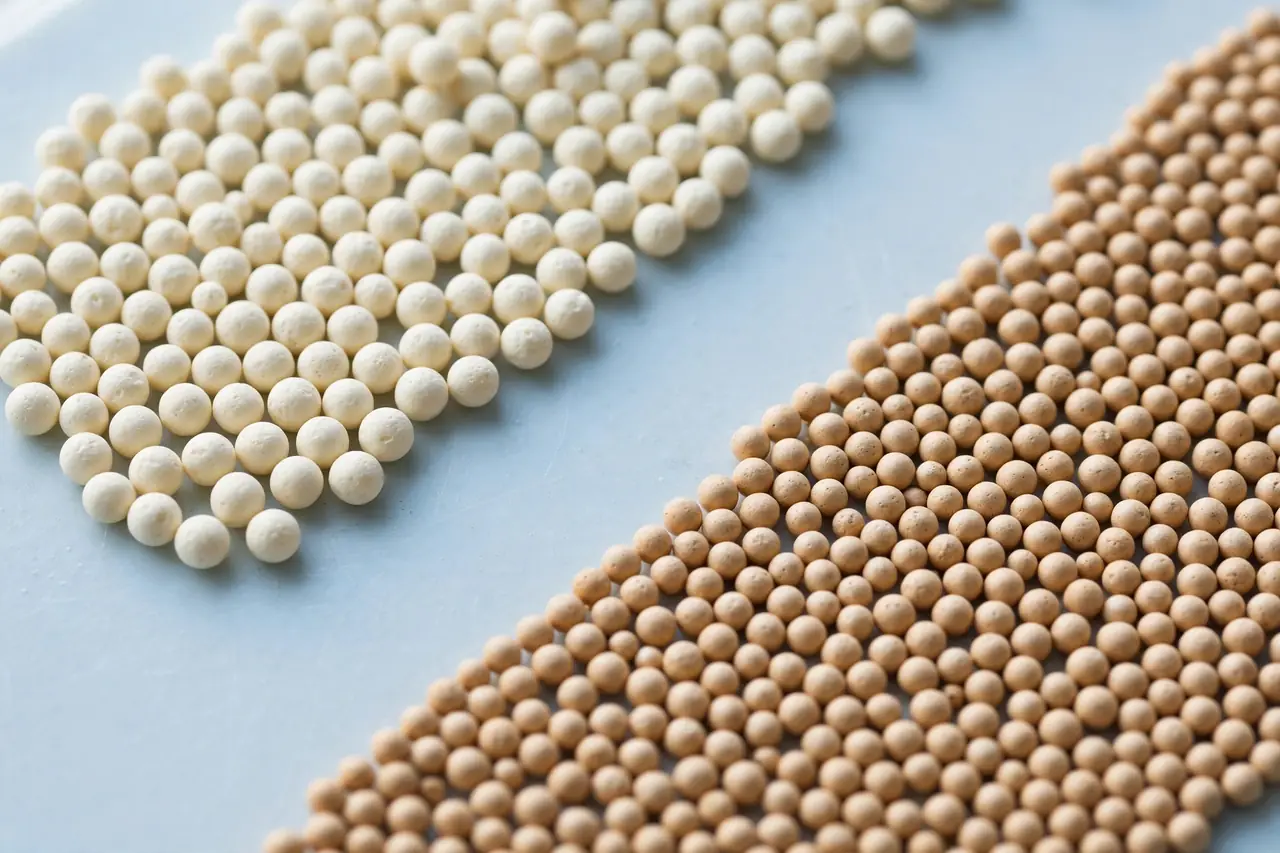
Ethanol
Ethanol dehydration with 3A molecular sieve: a buyer's checklist
From hydrous ethanol to fuel grade, vapour-phase dehydration on 3A is the standard route. The operating data a supplier needs to confirm a bed.
Read Article →Tell us your process.
Get a reply from an engineer.
Send your application, current media and quantity. We will confirm the right grade, share the datasheet, and quote a clear EXW price — no obligation.
All Technical Articles — browse the full index (244 articles)
- Polyol Dehydration with 3A Molecular Sieve: Viscosity, NCO Consumption, and 5-Year TCO for Polyurethane Foam Producers
- 3A Molecular Sieve for Refrigerant Drying: Why HFC, HFO, and CO2 Systems All Need the 3 Angstrom Pore
- Acid Gas Breakthrough in Molecular Sieve 13X: H2S/SO2 Poisoning Reversibility by Thermal Swing
- Activated Alumina Acid-Spill Recovery Procedure: When to Re-Bed vs Acid-Wash | AluminaWorld
- Activated Alumina in Ammonia Cracking for Hydrogen Carriers: Residual NH3 Slip Below 0.1 ppm - AluminaWorld
- Activated Alumina Ball Attrition in Pneumatic Conveying Lines: How to Specify 5 N/mm Crush Strength Minimum
- Activated Alumina Ball Attrition in Pneumatic Conveying Lines: How to Specify Mechanical Strength, Velocity, and Dust Limits
- Activated Alumina Ball Regeneration: Temperature and Flow Rate Optimization
- Activated Alumina Catalyst Carrier
- Activated Alumina in Compressed Air Dryers: Pressure Dew Point Control
- Activated Alumina Defluoridation: Breakthrough Curves and Bed-Life Economics
- Activated Alumina for H2O2 Production: How to Prevent Aluminum Leaching and Extend Working Solution Life
- Activated Alumina for Hydrogen Peroxide (H2O2) Working Solution: Aluminum Pickup Limit and 12-Month Service Life Case Study
- Activated Alumina for HF Defluoridation: Capacity vs Particle Size Curve
- Activated Alumina for LNG Pre-Drying Bed: Why It Saves 4A Sieve Cost
- Activated Alumina Munitions Propellant Drying Static Dissipation
- Activated Alumina for PE and PP Polymer Drying: How It Beats Molecular Sieve 3A on Energy and Service Life
- Activated Alumina Pellets vs Beads: Form Factor Differences in Industrial Use
- Activated Alumina for Pharmaceutical Process Air: GMP, FDA 21 CFR Part 211 Moisture Control, and Validation Protocol
- Activated Alumina Powder in Catalyst Manufacturing: How Surface Area, Pore Volume, and Phase Purity Control Catalyst Activity and Selectivity
- Regeneration Gas Composition Effect on Activated Alumina Capacity: Dry Air vs Nitrogen vs Methane — 7 Field Cases
- Regeneration Gas Composition Effect on Activated Alumina Capacity: Dry Air vs Nitrogen vs Methane — 7 Field Cases
- Activated Alumina in Sulfuric Acid and Oleum Plants: Compatibility Boundaries, Dry-Air Duty, and Safer Adsorbent Selection
- Activated Alumina Surface Area 300 vs 350 m2/g: Does It Matter for Adsorption?
- Activated Alumina Transformer Breathing
- Activated Alumina vs Molecular Sieve for Compressed Air Drying: Break-Even Pressure Dew Point, ISO 8573 Compliance, and 7-Year TCO
- Activated Alumina vs Silica Gel: Which Desiccant Is Better for Industrial Drying?
- Activated Alumina vs Silica Gel for Transformer Breathers: 5-Year Field Test
- How to Calculate Adsorbent Bed Pressure Drop: Ergun Equation, Real-World Examples, and Particle Size Trade-Offs for Molecular Sieve and Activated Alumina
- Hydrogen Refuelling Station Adsorbent Selection: SAE J2719 Grade D Compliance at 700 bar - AluminaWorld
- Adsorbent Static Bed Height vs Dynamic Working Capacity: How Compression Set Quietly Costs You 8-15% of a Working Bed
- Sizing a Heatless (PSA) vs Heated Purge Air Dryer: Purge Loss Percentage and Energy Trade-Off | AluminaWorld
- Adsorber Vessel Corrosion Under Desiccant Beds: Chloride Pitting, Stress Corrosion Cracking, and Liner Selection (RB vs FBE vs PTFE vs Alloy Overlay) - AluminaWorld
- Adsorber Vessel Internal Corrosion Under Cyclic Regeneration: Crevice Corrosion at Distributor Plate Welds
- Alumina Ceramic Ball as Catalyst Inert Support Packing — Loading and Bed Design | AluminaWorld
- Alumina Ceramic Ball for RTO (Regenerative Thermal Oxidizer) — Heat Storage Media Selection | AluminaWorld
- Alumina Polishing Slurry: How to Match pH, Particle Size, and Purity to Your Substrate
- Alumina Powder in Ceramic Glaze: Improving Hardness and Thermal Shock Resistance
- Alumina Powder as Paint Filler: Abrasion Resistance and Anti-Slip Coatings
- Alumina Powder Particle Size Distribution: Laser Diffraction vs Sedimentation (Stokes) — A Buyer's Guide
- Alumina Powder for Precision Polishing: Sapphire, Wafer, and Lens Finishing
- Alumina Powder for Thermal Interface Materials (TIM): Bimodal Packing to Reach 6 W/mK - AluminaWorld
- Why Cation-Modified Aluminium Oxide Outperforms Plain γ-Al₂O₃ in Compressed-Air Dryers — Meshcheryakov et al. (Applied Sciences, 2021) Translation
- Ammonia Slip from Blue Hydrogen: How Activated Alumina Polishing Stage Reduces NH3 from 200 ppm to <10 ppm
- Ammonia Synthesis Loop (Haber-Bosch) Purge Gas Molecular Sieve Bed: Hydrogen Recovery and 13X Saturation Kinetics
- API 521 Depressurization Vent Sizing Adsorber Vessels Two Phase Vs Single Phase Flow Regime
- ASTM D2650 Liquid Density by Hydrometer for Slurry Catalyst Slurries: When is Density > Surface Area for QC?
- ASTM D4365 Particle Size by Laser Diffraction for Irregular Catalyst Carriers: Calibration Pitfalls
- ATEX Zone Classification for PSA Skids Containing Molecular Sieve Dust: Dust Group IIIC Pitfalls
- ATH in Artificial Marble: How Aluminum Hydroxide Enables Stone-Look Surfaces
- ATH for EPDM Rubber: Surface Treatment Chemistry and Dispersion Engineering
- Ath Flame Retardant Cables
- Ath Flame Retardant Eva Foam
- ATH Flame Retardant Mechanism: Why Aluminum Hydroxide Cools and Chars
- ATH Flame Retardants for Polymers: A Technical Guide for Materials Scientists
- ATH Flame Retardant for TPU (Thermoplastic Polyurethane) — Loading Level and Mechanical Properties | AluminaWorld
- ATH Loading Calculation in LSZH Cable Compounds: A Practical Formulation Guide
- ATH Loading in LSZH Cable: 60% vs 65% Mechanical Properties Test
- ATH for Phenolic Resin (PF) in Brake Pads: Why Loading > 60% Wins Fade Tests (SAE J661 Data Inside)
- Ath Polypropylene Masterbatch Viscosity Drift Storage Time Humidity Re Exposure Limits
- ATH for Polyurethane (PU) Foam: 30% vs 50% Loading — Cone Calorimeter HRR Data
- ATH in SMC BMC Compounds: Loading, Viscosity, and Fire Test Results
- ATH for Solid Surface Countertops: Whiteness vs Particle Size Engineering
- ATH Surface Coatings for Polypropylene: Stearic Acid vs Vinyl Silane vs Titanate
- Surface-Treated ATH: How Silane Coating Improves Polymer Loading and Dispersion
- ATH vs Boron Nitride (BN) for Thermal Management: Dk, Df, and CTE Comparison
- ATH vs MDH Flame Retardant: Which Works Better in Your Polymer System?
- ATH vs MDH in Polyamide (PA6/PA66): Smoke Density Data, Cone Calorimeter Results, and Selection Logic
- ATH Whiteness 96% and Particle Size Distribution: Why Both Matter
- How to Audit an Adsorbent Supplier Remotely: 12 Documents to Request Before the First PO | AluminaWorld
- Battery Cell Dry Room Oxygen Sensor Calibration: How a Molecular Sieve Dryer Failure Silently Raises Your O2 Reading Drift
- Bed Top Channeling Diagnosis: Pressure Profile Tracing with Multi-Point Tap Ports
- Boehmite Coating on EV Battery Separators: Peel Strength, Thermal Shrinkage at 150 degC and Cost per m2
- Bulk Bag (FIBC) vs Steel Drum Total Cost for 18-Month Storage: Spreadsheet Decision Model
- Bulk Crush Strength (ASTM D7084) vs Attrition Index (ASTM D4058): Which Test Actually Predicts Bed Dust
- Calcined Alumina for Sapphire Substrate Lapping and Polishing — Particle Size Selection | AluminaWorld
- Calcined Alumina for Lithium Battery Separator Coating: Boehmite vs α-Al2O3 Comparison
- Calcined Alumina in LTCC / HTCC Ceramic Substrates: Sintering Shrinkage Control Within +/-0.2% - AluminaWorld
- Calcined Alumina for Refractory Castables: 5N vs 4N Purity Real-World Impact
- Calcined Alumina for Sapphire Crystal Growth (LED / Watch Industry): Na Impurity Limit <10 ppm Requirements
- Calcined Alumina for Thermal Spray: α-Al 2 O 3 Phase Purity Matters
- Calcined Alumina vs Tabular Alumina: Choosing the Right Alpha-Al2O3 Grade
- Carbon Capture Solvent Regeneration Column Molecular Sieve Polishing: MDEA-DEA Mixed Amine Carryover into 13X
- Case Study: Saudi LNG Plant Saves $400K/Year by Switching to Optimized 4A Beds
- Catalyst Carrier Attrition Index (ASTM D4058) vs Abrasion Index: 3 Buyer QC Methods Compared
- Catalyst Carrier Drying Method: Microwave vs Oven vs Spray — How to Avoid Cracking in Production
- Catalyst Carrier Sulfur Tolerance: How γ-Al2O3 vs η-Al2O3 vs α-Al2O3 Perform in HDS Service
- Catalyst Carrier Surface Area vs Pore Volume: Which Matters More for FCC, HDS, and Reforming Catalysts?
- Catalyst Carrier Wash Coat Process: Dip-Coating vs Spray vs Incipient Wetness for γ-Al2O3 Spheres
- Cavity Ring-Down Spectroscopy for Trace H2O in CO2 Feed: Why 1 ppmv Matters in DAC Columns
- CMP Slurry Settling: Pseudo-Boehmite vs Fumed Alumina for Sub-0.5 µm Polishing
- Compressed Air Dryer Oil Carryover Cracking: How Hydrocarbon Fouls 4A and 13X (IR Detection Method)
- 20FT vs 40FT Container Loading for Molecular Sieve, Activated Alumina, and ATH: How Many Tons Fit
- Container Loading Density vs Vessel Hold Capacity: 25 MT Loading in 20'GP vs 40'HC for Different Adsorbents
- 13X Molecular Sieve for Industrial Air Separation Unit (ASU) Pre-Purification: CO2, H2O, C2+ Removal Before Cold Box
- Direct Air Capture (DAC) Adsorbent Wheel Desiccant Cycle: Why Silica Gel Has Replaced Silica Gel and What Comes Next
- Desiccant Bed Channelling: How to Diagnose Maldistribution from Outlet Dew-Point Sawtooth Traces - AluminaWorld
- Desiccant Replacement Interval Economics NPV 2 Year Vs 4 Year Change Out Schedules
- E-Fuel (e-SAF/e-Diesel) Synthesis Loop: CO2 Capture from DAC-Fed Methanol Synthesis Catalyst Bed
- Emergency Adsorbent Discharge Vent Stack Height vs LFL — PSA / TSA / Sour-Gas Design Guide
- EV Battery Cell Manufacturing: Why Activated Alumina Dry Towers Replace Silica Gel in Pilot Lines
- Exothermic Spots in Molecular Sieve Bed: Runaway Adsorption Heating and Carbon Lay-Down Prevention
- Extend 13x PSA Molecular Sieve Life
- FDA 21 CFR 117.80 Indirect Food Contact Compliance for Activated Alumina in Edible Oil Purification
- Field Sampling Kit for a Spent Molecular Sieve Bed: ASTM E300 Procedure and Chain of Custody
- FOB vs CIF vs DDP for Industrial Adsorbents: Incoterms 2020 Risk Allocation for Chemical Cargo | AluminaWorld
- Freight vs Density: Why Bulk Density Decides Your Landed Cost per Kg of Adsorption Capacity - AluminaWorld
- Green Hydrogen Trailer Pre-Purification: Adsorbent Stack Selection for Trailers with <50 ppb Outlet Sulfur
- Heat Exchanger Sizing for Adsorbent Regeneration: LMTD Correction for Non-Ideal Gas Mixtures
- High Purity Alumina (HPA) for Lithium Battery Separator Coating: 4N vs 5N
- High-Purity Alumina for Semiconductor CMP Slurry: Metallic Impurity Budget in ppb and Wafer Defect Correlation - AluminaWorld
- How to Calculate Molecular Sieve Quantity for Your Dryer: A Buyer's Engineering Guide
- How to Calculate Molecular Sieve Replacement Frequency: 8 Industry Cases with Real Cycle Data
- How to Disperse ATH in Polymer: 4 Industrial Methods Compared
- How to Read a COA (Certificate of Analysis) for Activated Alumina and Molecular Sieve — A Buyer's Field Guide
- How to Read an MSDS for Molecular Sieve: 7 Specs Every Buyer Must Verify
- How to Test Activated Alumina Quality: 6 Lab Methods Used by Real Buyers
- How to Test Pseudo Boehmite Gel Quality: 5 Lab Methods Explained (BET, XRD, TGA, Peptization, PSD)
- How to Verify Molecular Sieve Quality Before Bulk Shipment: 7-Test Checklist
- Incoterms 2025 Effect on Adsorbent Shipment Risk Transfer: CIP vs DAP vs EXW Cost Model for Molecular Sieve and Activated Alumina Buyers
- Industrial Adsorbent Procurement RFQ Checklist: 7 Metrics Every Buyer-Engineer Should Demand from Suppliers
- Insurance Premium for Hazardous Adsorbents: IATA vs IMDG Class Selection Effect on Premium
- ISO 13320 Laser Diffraction vs ASTM D4464 Sieve Method for Fine Catalyst Powders Below 20 μm: When Equivalence Breaks and Why D50 Is Not Enough
- ISO 22489 vs GB/T 10504 Molecular Sieve DCI Test: Why Two Standards Give Different Numbers
- ISO 23251 Cryogenic Adsorber Piping Stress Analysis: Differential Settlement
- ISO 9001:2015 vs ISO 14001:2015 Dual Certification Audit Prep for Adsorbent Manufacturers
- ISO 9277 BET Surface Area vs single-Point Method: Why Two Labs Report Different m²/g | AluminaWorld
- Karl Fischer vs Coulometric vs Gravimetric Moisture for Spent Molecular Sieve: Recovery vs LOI Method
- Letter of Credit (L/C) Documentation Discrepancies for Industrial Adsorbent Shipments: Top 7 Rejection Reasons
- Liquid Hydrogen (LH2) Trailer Boil-Off Recovery by 5A Molecular Sieve: ISO 21010b vs ISO 21010a Trade-Off
- Li-Ion Battery Dryroom Desiccant: 3A vs 4A Molecular Sieve Selection for Dew Point Below -60 deg C
- Liquid Carryover from Pre-Dryer to Molecular Sieve Bed: Coalescer Sizing and Demister Pad Selection
- Liquid Hydrogen (LH2) Zeolite Pre-Drying: ISO 21010 Boil-Off Minimization and 13X Loading Targets
- Lithium Battery Electrode Coating Oven Solvent Recovery: Activated Alumina vs 3A vs 4A for NMP, DMF and Ethanol
- High Purity Alumina (HPA) for Li-ion Battery Separator Coating: 4N (99.99%) vs 5N (99.999%) Al2O3
- Long-Term Pricing Agreement (LTPA) Framework for Industrial Adsorbents: Price Review Triggers
- Loss on Ignition (LOI) vs Loss on Drying (LOD): The Spec Ambiguity That Causes Most Claims | AluminaWorld
- How the Na/Ca Cation Ratio on LTA 5A Decides What Gets Adsorbed — García-Pérez et al. (The Journal of Physical Chemistry B, 2006) Translation
- MCFC CO2 Removal: Activated Alumina vs Carbon Molecular Sieve for Molten Carbonate Fuel Cell Cathode Feed
- Mercury Intrusion vs Nitrogen Sorption for Catalyst Carrier Pore Analysis: When Each Lies | AluminaWorld
- Molecular Sieve 13x CO2 Capture Flue Gas PSA Vs Chemical Absorption TCO
- Molecular Sieve 13X for Cryogenic Air Separation Pre-Purification: How CO2, H2O, and C2+ Hydrocarbons Are Removed Before the Cold Box
- Molecular Sieve 13X for Direct Air Capture (DAC): CO2 Working Capacity at 415 ppm vs Amine Sorbents - AluminaWorld
- Molecular Sieve 13X for Jet Fuel JP-8 Drying — Aviation Fuel Water Removal | AluminaWorld
- 13X vs 5A Molecular Sieve for Medical Air Drying: Dew Point, CO2 Control, and Safe Bed Design
- Molecular Sieve 3A: Ethanol Dehydration and Insulating Glass Applications
- Molecular Sieve 3A for Jet Fuel (Jet A-1 / JP-8) Drying: Why 3 Angstrom Pore Beats 13X, 4A, and Silica Gel
- Molecular Sieve 3a Refrigerant Drying
- Molecular Sieve 4A for CNG Compressor Station and NGV Refueling Drying: ISO 15403 and GB 18047 Compliance, Bed Sizing, and -40 °C Pressure Dew Point Engineering Guide
- Molecular Sieve 4A for Detergent Builder: How Zeolite 4A Replaced STPP in Powder Detergent Formulations
- Molecular Sieve 4A for Ethylene and Ethylene Oxide Drying: Bed Design, Regeneration Parameters, and Acetylene Co-Adsorption
- Molecular Sieve 4A for Natural Gas and LNG Dehydration: Capacity and Cycle Design
- Molecular Sieve 4A for Natural Gas Pipeline Dew Point Control: Joule-Thomson Cooling, Hydrate Prevention, and ISO 18453 Compliance
- Molecular Sieve 4A vs TEG (Triethylene Glycol) Dehydration for Natural Gas — 10 Year TCO Comparison | AluminaWorld
- Molecular Sieve 4A vs 3A for Polyol and Polyurethane Drying: Viscosity Impact, Breakthrough Time, and Reactivation Cost
- Molecular Sieve 5 Uses
- Molecular Sieve 5A for Hydrogen PSA: 99.99% Purity, Tail Gas Recycle, and Bed Design
- Molecular Sieve 5A for n-Paraffin / iso-Paraffin Separation (MOLSIV): UOP Molex Process Engineering Data
- Molecular Sieve 5A vs 13X in PSA Hydrogen Purification: Which Grade Wins?
- Molecular Sieve Air Separation
- Molecular Sieve Attrition Rate: ASTM D4058 Test, Industry Specs, and How Dust Kills PSA Beds
- Molecular Sieve for Biogas Upgrading: 13X vs Activated Carbon for CO2 Removal
- Color Change in Molecular Sieve: A Diagnostic Pathway for Pink, Brown and Black Beds
- Molecular Sieve Drying for Green Hydrogen Electrolyzer Output: -70 degC Dew Point Spec and Deoxo Bed Integration
- Molecular Sieve Dusting Downstream of a Dryer: Filter DP Trending and Screen Mesh Selection - AluminaWorld
- Molecular Sieve Purification of Electronic-Grade Specialty Gases: NF3, SiH4 and Moisture Below 100 ppb - AluminaWorld
- Molecular Sieve Ethanol Dehydration 3a Vs 4a Energy Comparison
- Molecular Sieve For Biogas Upgrading
- Molecular Sieve for O2 Concentrator: LiLSX vs 5A vs 13X Performance Comparison
- Molecular Sieve for Refrigerant Drying (R134a, R410A, R32): Acid Number Control and Compressor Protection
- Molecular Sieve Poisoning by H2S: Detection, Recovery, and Prevention in Sour Gas Service
- Molecular Sieve Iron Sulfide Deposition from Sour Gas: Passivation Chemistry and Replacement Cycle | AluminaWorld
- Molecular Sieve Poisoning: 7 Common Causes and How to Extend Zeolite Life
- How to Test Molecular Sieve Powder: Particle Size Below 10 Micron - Laser Diffraction, Sedimentation, and 5 Buyer QC Methods
- Molecular Sieve Powder vs Bead: When Powder Form Wins (Paints, Adhesives, Polymer Additives)
- Molecular Sieve Regeneration Best Practices: Extend Sieve Life from 3 to 7 Years
- How to Regenerate Molecular Sieve: Temperature, Pressure and Cycle Best Practices
- Molecular Sieve Storage and Handling: 7 Mistakes That Cost You 30% Capacity
- Molecular Sieve for Syngas Purification: CO2, CO, and H2S Removal in SMR and Partial Oxidation Hydrogen Plants
- MOQ Negotiation Tactics for Industrial Adsorbent: Why 18 MT Beats 25 MT for Some Buyers and 25 MT for Others
- Multi-Bed Skid Vibration and Pulsation Analysis: API 617 Compliance for PSA Compressor Suction
- LiLSX Molecular Sieve for Industrial PSA Oxygen Plants: 50-5000 Nm3/h System Design
- Online BET Surface Area Monitoring for Spent Catalyst Carriers: Sampling Strategy Pitfalls
- Payment Terms Engineering: Why L/C at Sight vs T/T 30% Has Hidden Cost Beyond the Fee Spread
- Pellet Diameter vs Bed Pressure Drop: Why the 4x6 Mesh vs 8x12 Mesh Trade-Off Is More Complicated Than Vendor Tables Suggest
- PEM Electrolyzer Stack Hydrogen Recirculation Dryer: Why 4A is Wrong and 5A Needed at >35 bara Differential Pressure
- Photoresist Stripper Solvent Recovery: 4A Molecular Sieve Dehydration for NMP and PGMEA Recycling
- Photovoltaic Polysilicon Production: TCSS Trichlorosilane Dryer with 3A Sieve and Iron Carryover Pitfalls
- Post-Shutdown Bed Rewetting: Liquid Carryover Damage and the 48-Hour Recovery Procedure - AluminaWorld
- Pre-Shipment Inspection (PSI) Scope for Molecular Sieve: ASTM E105 Sampling Plan and ISO 2859-1 Pass/Fail Rules
- PSA Hydrogen Cycle Timing: Adsorption-to-Equalization Pressure Ratio Optimization for 99.99% Purity
- PSA Nitrogen Generation: CMS vs 5A Zeolite — Mass Balance, Purity, and TCO
- PSA Oxygen Sizing, Bed Depth, and 10-Year TCO: LiLSX vs 5A vs 13X for Industrial and Medical Plants
- Pseudo-Boehmite Aging Time Effect on Pore Structure: 0h vs 24h vs 72h at 80°C Crystallinity Data
- Pseudo Boehmite Alumina Content: 70% vs 75% vs 80% Selection Guide for Catalyst and Ceramic Engineers
- Pseudo Boehmite for FCC Catalyst: Gel vs Powder Property Differences
- Pseudo Boehmite For Lithium Battery Separator Coating
- Pseudo-Boehmite Gel Aging Failure: Why 72h Aging Produces Un-Peptizable Product and How to Recover the Batch | AluminaWorld
- Pseudo Boehmite for Hydrodesulfurization: Pore Structure Design for CoMo and NiMo Catalysts
- Pseudo-Boehmite Peptization Index: How to Read HCl, Formic Acid, and HNO₃ Demand Curves
- Pseudo-Boehmite for Sulfated vs Non-Sulfated FCC Catalyst: Why Sulfated PB is Replacing Acid-Peptized PB in Resid FCC
- Pseudo Boehmite for Toothpaste Abrasive — RDA Value and Formulation | AluminaWorld
- QC Hold vs Production Hold: How Much Inventory Buffer Buyers Should Hold for Ad-Sorbent Re-Qualification
- REACH SVHC Candidate List 2026 Update: Pseudo-Boehmite, ATH and ZSM-5 Status Check
- REACH and TSCA Status of Activated Alumina, ATH and Zeolites: What EU and US Buyers Must Verify Before Import | AluminaWorld
- Reactive Alumina for Epoxy Potting: 5N vs 3N Thermal Conductivity (W/mK) and CTE Data
- Reactive Alumina in Low-Soda Refractory Castables: Sintering Activity, Sodium-Defect Control, and Burned-Magnesia Bonding Chemistry
- Reading a Failed Crush-Strength Report: ASTM D4179 Outliers vs Genuine Batch Rejection - AluminaWorld
- Refrigerant Drying with 3A Molecular Sieve: Liquid Line vs Suction Line Driers, AHRI 710 Specs & Lifetime Cost
- Why Your Regeneration Cycle Keeps Getting Longer: 7 Root Causes Ranked by Frequency - AluminaWorld
- Retrofitting an Existing Dryer to a New Adsorbent: 9 Checks Before You Change the Desiccant Media
- Semiconductor FOUP Storage Atmosphere: Molecular Sieve vs Activated Carbon vs Nitrogen Purge
- Semiconductor Wet Bench Rinse Water: Why Mixed-Bed Ion Exchange Alone Misses Boron (Activated Alumina)
- SiC Epitaxial Reactor HCl Scrubber: Why Activated Alumina and Not Molecular Sieve for Low-Concentration Acid Gas
- Silencer / Exhaust Blower Sizing for PSA Regeneration Step: Noise Limit 85 dBA at Property Boundary
- Dual-Bed Silica Gel + Molecular Sieve Design for Industrial Drying: When One Tower Is Not Enough
- Sizing a Heatless (PSA) vs Heated Purge Air Dryer: Purge Loss Percentage and Energy Trade-Off | AluminaWorld
- Sole-Source vs Dual-Source Adsorbent Supply: Qualification Cost, Stock-Out Risk and Hidden Switching Cost Modelling | AluminaWorld
- Sourcing Molecular Sieve from China: 7 QC Checks Every Buyer-Engineer Should Run Before Loading Vessels (2026 Update)
- Spent Adsorbent Buy-Back Programs: 4 Manufacturer Models and Their Hidden Value Capture Mechanisms
- Spent Molecular Sieve Bed Sectioning: Layer-by-Layer Contamination Profiling from Top to Bottom for Failure Diagnosis | AluminaWorld
- Spherical vs Extrudate Catalyst Carrier: Pressure Drop, Diffusion Length, and Mechanical Strength Trade-Off
- Tabular Alumina for Catalyst Bed Support: 6×6 Mesh vs 1/4" Spheres vs Saddle Random Packing — Pressure Drop, Mass Distribution, and ASTM D4058 Attrition Data
- Tabular Alumina T-60 vs T-64 vs White Fused Alumina for Ladle Lining Castables: Particle Packing, Water Demand, and 1450°C Bulk Density — Procurement Guide
- Tabular Alumina vs White Fused Alumina: Cost-Performance in Technical Ceramics
- TDLAS vs Quartz Crystal Microbalance Dew-Point Measurement for PSA Tail Gas: ASTM D5454 vs ISO 18421 Cross-Validation
- Thermal Regeneration Heat Duty Calc Sensible Desorption Enthalpy Worked Example
- Transformer Breathing Silica Gel vs Molecular Sieve: 15-Year Cost Analysis
- UN Packaging, IMDG and Dangerous Goods Classification for Adsorbents and Alumina Powders: What Exporters Get Wrong on the First Container | AluminaWorld
- Vendor Audit Checklist for a Chinese Molecular Sieve Manufacturer: 12 On-Site Inspection Points
- Vessel Cleaning Cost vs Bed Replacement Decision: ROI Calculator Methodology for Molecular Sieve and Activated Alumina Trayed Beds
- Why Your Activated Alumina Disintegrates: Mechanical Strength Standards Explained
- Why Some Lots of Molecular Sieve Dust More Than Others: Pre-Shipment Attrition Index Sampling Plan
- Why Your PSA Oxygen Bed Doesn't Behave Like the Book — Neutron Scattering Reveals How 13X Holds N₂
- How a 3A Zeolite Bed Actually Behaves in Fuel-Ethanol PSA — Simo et al. (Industrial & Engineering Chemistry Research, 2009) Translation
- Zeolite 4A Ammonia Pickup: When 4A Fails in NH3 Service and 13X Should Be Substituted
- Zeolite Adsorbent Water Management in SOEC/SOFC Balance-of-Plant: Steam Purity and Silica Volatility - AluminaWorld
- ZSM-5 Channel Blockage Diagnosis: Mercury Intrusion vs N2 Physisorption | AluminaWorld
- ZSM-5 Catalyst Regeneration: Coke Removal Temperature Optimization for MTO, FCC, and Xylene Isomerization
- ZSM-5 for MTO (Methanol-to-Olefins): Si/Al Ratio Selection Guide for Ethylene and Propylene Yield
- ZSM-5 for Methanol-to-Propylene (MTP): Si/Al Ratio Engineering, Single-Pass Conversion 85%+, and Industrial Reactor Design
- ZSM-5 vs Beta Zeolite for Alkylation: Activity, Selectivity, Deactivation, and Industrial Selection Guide
- ZSM-5 Zeolite for Xylene Isomerization and Selective Toluene Disproportionation (STDP) | AluminaWorld
- ZSM-5 Zeolite Synthesis: Template-Free vs Template Method Comparison (TPABr, TEAOH, Seeds)